Free Daily Podcast Summary
Uncanny Valley | WIRED: Daily Summaries Delivered
by WIRED
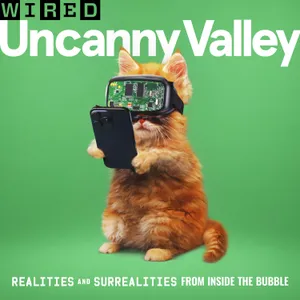
Welcome to Uncanny Valley—an insider look at the people, power, and influence of Silicon Valley—where each week, WIRED’s writers and editors bring you original reporting and analysis about some of the biggest stories in tech. On Tuesdays, The Big Interview with WIRED’s Global Editorial Director Katie Drummond in conversation with influential figures in culture, politics, business, science, and beyond for a discussion captured through the WIRED lens. On Thursdays, WIRED writers and editors Zoë Schiffer, Brian Barrett and Leah Feiger add you to the Slack group thread to let you into what they’re hearing from sources in Silicon Valley and D.C, read you into what trends you should be watching for and how WIRED is thinking about it all.
Latest Episodes
The most recent episodes — sign up to get AI-powered summaries of each one.
- 2 days ago44 min
Trump’s Pinky Swear AI Safety ‘Accord;’ An AI Agents Worth the Risk
This week, President Trump issued a new “morally binding” AI accord after a lunch meeting with tech executives, that basically says the AI labs are going to regulate themselves. We get into how a non-binding accord will affect AI safety. Plus! We’ll talk about OpenAI’s Developer Day, where CEO Sam Altman announced an AI agent for normies known as Dots. We also get into how AI agents are faring with their human colleagues. And Leah will not let us forget about the midterms – we bring you a quick rundown of the most extremist candidates running for office. Articles mentioned in this episode: Trump’s AI Safety ‘Accord’ Is a Fancy Pinky Swear These Extremists Are Running for Election in November A Pentagon Influencer Called Liberal Women a ‘Pestilence’ Who Will End Western Civilization The White House is Starting to Panic Over the Midterms I Think I Found an AI Agent Worth the Risk AI Agents Are About to Flood the Workforce I Built AI Clones of My Coworkers. Things Got Weird Why No One Wants To Date Tech Bros Join WIRED’s best and brightest on Uncanny Valley as they dissect the collision of tech, politics, finance, and business, from Alexis Ohanian's newest tech venture to the effects of inaccurate information from artificial intelligence (AI) chatbots on social protests. Learn more about your ad choices. Visit podcastchoices.com/adchoices
- 4 days ago31 min
There Is No ‘Existential Threat’ From AI Says Timnit Gebru
One of AI’s fiercest critics believes the doom talk is about founders making money, not saving humanity. Check out the new WIRED app. Join WIRED’s best and brightest on Uncanny Valley as they dissect the collision of tech, politics, finance, and business, from Alexis Ohanian’s newest tech venture to the effects of inaccurate information from artificial intelligence (AI) chatbots on social protests. Learn more about your ad choices. Visit podcastchoices.com/adchoices
- 1 weeks ago19 min
Inside the Network of Anonymous Men Destroying Young Women's Lives
Last year, Maddie Kowalski was a regular sophomore attending the University of Florida. That is until one day, a series of anonymous accounts on X started proliferating explicit, non-consensual videos of her. This week, Zoe sits down with WIRED’s senior writer Ej Dickson to discuss the burnerverse — a sprawling, loosely organized network of anonymous accounts that have turned the sexual humiliation of young women into an online participatory sport. Maddie Kowalski is one of countless young women who’ve had their lives destroyed by the burnerverse, a loosely connected online community of sports fans. Now she’s fighting back. Articles mentioned in this episode: A College Girl Was Exploited on Camera. A Network of Anonymous Men Got to Work Join WIRED’s best and brightest on Uncanny Valley as they dissect the collision of tech, politics, finance, and business, from the newest ventures to the effects of inaccurate information from artificial intelligence (AI) chatbots on social protests. Learn more about your ad choices. Visit podcastchoices.com/adchoices
- 1 weeks ago34 min
Patti Harrison Grew Up With Tech As Her North Star. Not Anymore.
Comedian Patti Harrison hates social media. She wishes she didn't have to use it at all. To her, the internet as a slop factory. One of her biggest concerns: intentionally created confusion meant to drive engagement online. So, Katie asks her why. Patti is our cover girl for the WIRED Women issue check out the 5 different covers here. Check out the new WIRED app. Join WIRED’s best and brightest on Uncanny Valley as they dissect the collision of tech, politics, finance, and business, from Alexis Ohanian’s newest tech venture to the effects of inaccurate information from artificial intelligence (AI) chatbots on social protests. Learn more about your ad choices. Visit podcastchoices.com/adchoices
- 2 weeks ago37 min
What Would the AI Apocalypse Look Like? We Went Looking for Answers
The debate of whether AI can kill us has been everywhere lately, but how exactly would an actual AI catastrophe look like? This week, the team went looking for answers and found the three real-world scenarios experts worry the most about — including hacked water supplies, bioweapons, and autonomous robots. We also discuss the highlights of Salesforce’s annual conference, where OpenAI’s Sam Altman and Anthropic’s Dario Amodei defended their positions on AI safety. Plus — Leah tells us how this backlash against AI has become a rare bipartisan flashpoint, to the point that Bernie Sanders and Steve Bannon shared a stage over it this week. Articles mentioned in this episode: China Isn’t Buying Silicon Valley’s Call for an AI Slowdown | WIRED Washington Won’t Be Regulating AI Anytime Soon | WIRED Why So Many AI Researchers Think the Machines Could Kill Everyone | WIRED OpenAI Wants to Know if an AI Industry Slowdown Would Even Be Legal | WIRED Join WIRED’s best and brightest on Uncanny Valley as they dissect the collision of tech, politics, finance, and business, from the newest ventures to the effects of inaccurate information from artificial intelligence (AI) chatbots on social protests. Learn more about your ad choices. Visit podcastchoices.com/adchoices
- 2 weeks ago34 min
If the US Collapses Soon, Don’t Blame Emily St. John Mandel
Emily St. John Mandel’s 2014 novel, Station Eleven, turned her into something of a pandemic prophet. This month, she’s releasing her newest novel, Exit Party, which imagines two possible American futures—totalitarian state and post-civil-war chaos. Join WIRED’s best and brightest on Uncanny Valley as they dissect the collision of tech, politics, finance, and business, from Alexis Ohanian’s newest tech venture to the effects of inaccurate information from artificial intelligence (AI) chatbots on social protests. Learn more about your ad choices. Visit podcastchoices.com/adchoices
- 3 weeks ago30 min
So, Can AI Kill Us All?; Apple’s Foldable iPhone; the Census’ Bad Data Problem
This week, an AI researcher's resignation from Anthropic went viral on social media after he claimed there's a real chance AI could wipe out humanity by decade's end. WIRED’s Will Knight joins Brian and Leah to assess whether the doom narrative is overblown or overdue. We also discuss Apple’s debut of its $2000 foldable iPhone, the iPhone Duo, and the new "always listening" Apple Watch features that have Brian feeling more than a little uneasy. Plus — a WIRED investigation found that the US Census Bureau used faulty data to create a misleading report touted by the Trump administration. Articles mentioned in this episode: OpenAI Just Claimed a Huge Math Discovery. Some Academics Are Crying Foul The AI Researcher Who Just Quit Anthropic Says It’s ‘Crunch Time for Humanity’ A US Census Report on Noncitizen Voting Used Bad Data to Reach Faulty Conclusions | WIRED Apple Debuts the iPhone Duo, Its First Folding iPhone | WIRED Join WIRED’s best and brightest on Uncanny Valley as they dissect the collision of tech, politics, finance, and business, from the newest ventures to the effects of inaccurate information from artificial intelligence (AI) chatbots on social protests. Learn more about your ad choices. Visit podcastchoices.com/adchoices
- 3 weeks ago29 min
MS NOW Wants to Turn Its Viewers Into a Fandom
When Rebecca Kutler accepted the job as president of cable news channel MS Now, formerly known as MSNBC, she knew what she was getting into. The top 3 cable news channel, MS was about to go into a massive re-brand having been spun off from NBC. Despite those betting against her, the rebrand has had continuous double-digit audience growth. No small feat these days for TV news. Katie talks to Rebecca about her plans to leverage its massive audience to create a fan community. First up: letting you chat with Rachel Maddow. Join WIRED’s best and brightest on Uncanny Valley as they dissect the collision of tech, politics, finance, and business, from Alexis Ohanian’s newest tech venture to the effects of inaccurate information from artificial intelligence (AI) chatbots on social protests. Learn more about your ad choices. Visit podcastchoices.com/adchoices
Get Uncanny Valley | WIRED summaries in your inbox
Free AI-powered daily recaps. Key takeaways, quotes, and mentions — in a 5-minute read.
Get Free Summaries →Free forever for up to 3 podcasts. No credit card required.
You Might Also Like
Listeners also like.

The AI XR Podcast.
Industry insiders interview top founders and executives on AI, spatial computing, VR/AR, and synthetic media.

On with Kara Swisher
Kara Swisher conducts candid, in-depth interviews with influential figures in tech, business, media, and politics.
Hard Fork
A weekly exploration of the latest developments in technology by New York Times journalists.

Breaking Points with Krystal and Saagar
Political analysis and interviews challenging mainstream narratives and holding power to account.

Better Offline
Ed Zitron investigates how tech’s powerful players shape society, from crypto scams to venture capital, through interviews and critical analysis.
The AI Daily Brief: Artificial Intelligence News and Analysis
A daily analysis of artificial intelligence news, exploring its creative potential, industry impacts, and ethical challenges.

Pivot
Sharp, unfiltered analysis of tech, business, and politics with bold predictions and lively debate.

Tech Won't Save Us
A critical look at the tech industry’s influence on society and the political consequences of its promises.

Close All Tabs
A tech journalist explores how digital culture, internet trends, and AI shape real-world behavior and societal norms.

Crazy/Genius
Explores how the internet shapes society, politics, and reality through discussions on AI, misinformation, and digital culture.
"The Cognitive Revolution"
Interviews with AI developers and researchers exploring the transformative impact of artificial intelligence on society and technology.

Taylor Lorenz’s Power User
Examines how technology and internet culture reshape society, fame, and free speech through weekly deep dives and policy discussions.
Mentions
Most frequently mentioned across all episodes.
People
Companies
About Uncanny Valley | WIRED
Welcome to Uncanny Valley—an insider look at the people, power, and influence of Silicon Valley—where each week, WIRED’s writers and editors bring you original reporting and analysis about some of the biggest stories in tech. On Tuesdays, The Big Interview with WIRED’s Global Editorial Director Katie Drummond in conversation with influential figures in culture, politics, business, science, and beyond for a discussion captured through the WIRED lens. On Thursdays, WIRED writers and editors Zoë Schiffer, Brian Barrett and Leah Feiger add you to the Slack group thread to let you into what they’re hearing from sources in Silicon Valley and D.C, read you into what trends you should be watching for and how WIRED is thinking about it all.
Customized Recaps
AI-powered recaps with compact key takeaways, quotes, and insights.
Straight to Your Inbox
Get key takeaways from Uncanny Valley | WIRED in a 5-minute read.
Save Hours Every Week
Stay current on your favorite podcasts without falling behind.
Frequently Asked Questions
What is Podzilla's Uncanny Valley | WIRED daily summary?
It's a free AI-powered email that summarizes new episodes of Uncanny Valley | WIRED as soon as they're published. You get the key takeaways, notable quotes, and links & mentions — all in a quick read.
How does the Uncanny Valley | WIRED podcast summary work?
When a new episode drops, our AI transcribes and analyzes it, then generates a personalized summary tailored to your interests and profession. It's delivered to your inbox every morning.
Is this an official Uncanny Valley | WIRED product?
No. Podzilla is an independent service that summarizes publicly available podcast content. We're not affiliated with or endorsed by WIRED.
Can I get summaries of other podcasts too?
Absolutely! The free plan covers up to 3 podcasts. Upgrade to Pro for 15, or Premium for 50. Browse our full catalog at /podcasts.
How often does Uncanny Valley | WIRED release new episodes?
Uncanny Valley | WIRED publishes every few days. Our AI generates a summary within hours of each new episode.
What topics does Uncanny Valley | WIRED cover?
Uncanny Valley | WIRED covers topics including Technology. Our AI identifies the specific themes in each episode and highlights what matters most to you.
Start getting Uncanny Valley | WIRED summaries tomorrow morning.
Free forever for up to 3 podcasts. No credit card required.
Free forever for up to 3 podcasts. No credit card required.