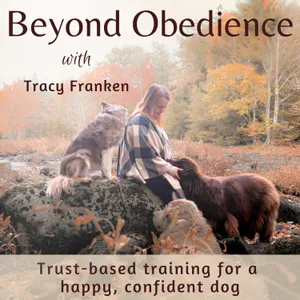
Free Daily Podcast Summary
Beyond Obedience | Dog Training, Dog Body Language, Anxious Dogs, Scared Dogs, Reactive Dogs: Daily Summaries Delivered
by Tracy Franken- Dog Trainer, Vet Tech, Dog Lover, 🐾
Do you wish you could enjoy life with your dog again? Are you struggling with a reactive, fearful, anxious, or misunderstood dog? Do walks, visitors, or everyday situations leave you feeling stressed, frustrated, or embarrassed? I'm Tracy Franken, a retired vet tech turned dog trainer. I discovered the secret to a life of ease with my dogs; through trust-based training, and a deeper understanding of dog behaviour, I'll help you build confidence, strengthen your relationship, and create a dog you can trust in the real world. Because lasting change starts with understanding the dog you love.
Latest Episodes
The most recent episodes — sign up to get AI-powered summaries of each one.
- 3 days ago27 min
244 | The Reactive Dog Win Nobody Talks About
Hey Dog Lover 🐾Does one bad reaction from your dog leave you wondering what you did wrong?Do you find yourself embarrassed, frustrated, or worried about what everyone else thinks when your dog loses it?What if progress with your reactive dog isn’t only about whether your dog reacts — but about what happens at your end of the leash too?In this episode, we’re talking about a kind of progress with reactive dogs that we don’t talk about nearly enough: learning to trust yourself.I’m sharing a real-life story from one of my students that reminded me just how much can change even when our dogs still have difficult moments. We’ll talk about why confidence doesn’t mean knowing your dog will never react, how too much conflicting advice can leave you second-guessing every decision you make, and why learning to ask the dog can help you stop searching for the perfect answer and start trusting yourself to figure out what to do next.Because maybe progress isn’t getting to the point where nothing ever goes wrong.Maybe it’s knowing that when something does, you can handle it.Hope you enjoy this one!Tracy xoxox🐾 NEXT STEPS 👣🐾 Join me for the FREE CALM DOWN, DOG! Bootcamp!October 20th, 21st & 22ndBeyondObedience.ca/bootcamp🐾 Take the Dogonality Quiz!BeyondObedience.ca/quiz🐾 Read the Beyond Obedience Blog!BeyondObedience.ca/blogRESOURCESContact → info@beyondobedience.caPodcast → BeyondObedience.ca/podcastConnect → Living Beyond Obedience Facebook Communityhttps://facebook.com/groups/LivingBeyondObedienceResources → BeyondObedience.ca/quizMerch → BeyondObedience.ca/storeCONNECT WITH ME!Step 1: Join the free Living Beyond Obedience community and connect with other dog lovers who want to understand their dogs, build better partnerships, and enjoy more of life together.https://facebook.com/groups/LivingBeyondObedienceStep 2: Take the Dogonality Quiz to discover how your dog’s unique personality shapes the way they learn, communicate, and experience the world.BeyondObedience.ca/quizStep 3: Ready to stop guessing what to do when your dog is struggling? Join me for the completely FREE CALM DOWN, DOG! Bootcamp, happening October 20th, 21st & 22nd.👉 BeyondObedience.ca/bootcampMusic Credit 🎶: Shawn TrotterShawnTrotter.com
- 6 days ago22 min
243 | Do This First When Your Dog is Reacting
Hey Dog Lover 🐾Your dog sees another dog.And suddenly they’re at the end of the leash barking, lunging, pulling, jumping around, completely losing their you-know-what.And you’re standing at the other end thinking:“What the heck am I supposed to do right now?”Do you ask them to sit?Tell them to look at you?Offer a treat?Turn around?Keep walking?Get the heck out of Dodge?When your dog is reacting, it’s really easy to start running through every training technique you’ve ever learned, desperately trying to figure out which one is going to make the behaviour stop.But before you do any of that, there’s one question I want you to ask yourself:“Am I even in this conversation?”Because your dog can be physically attached to you and still have absolutely nothing to do with you in that moment.And if you’re not part of the conversation, you’re going to have a very hard time influencing what happens next.In this episode, we’re talking about the very first thing to do when your dog reacts, and why it has less to do with finding the perfect technique and more to do with figuring out whether you and your dog are actually communicating.We’ll talk about:🐾 The first question to ask yourself when your dog starts reacting🐾 Why holding the other end of the leash doesn’t necessarily mean you’re part of the conversation🐾 The important difference between physical control and influence🐾 How to recognize when your dog is still able to communicate with you🐾 What to do when your dog is so overwhelmed that you have no influence in that moment🐾 Why creating distance doesn’t have to mean running away from the problem🐾 How your body, movement, position, leash, and communication can help you get back into the conversation🐾 Why there isn’t one right answer for every dog in every situationBecause sometimes you absolutely need physical control.Sometimes you need to hold that leash.Sometimes you need to get your dog out of there.But I don’t want you to confuse:“I physically stopped my dog from getting there”with:“I was able to influence my dog.”Those are two very different things.So the next time your dog is barking, lunging, pulling, or completely overwhelmed, before you start asking:“How do I stop this?”Start here:“Am I in this conversation?”If the answer is yes:Can I influence it?And if the answer is no:What needs to change so that I can get back into it?Because you cannot influence a conversation you’re not part of.And if you’re wondering HOW to become part of that conversation, how to use your body, movement, communication, and influence when your dog is struggling, that’s exactly what we’re going to be exploring together inside the free CALM DOWN, DOG! Bootcamp, happening October 20th, 21st and 22nd.I really think this is going to help you.Hope you enjoy this one!Tracy xoxoxRESOURCES🐾 Join me for the FREE CALM DOWN, DOG! Bootcamp!BeyondObedience.ca/bootcamp🐾 Take the Quiz!Dogonality Quiz🐾 Read the Blog!Beyond Obedience BlogCONNECT WITH ME!Contact → info@beyondobedience.caPodcast → Beyond Obedience PodcastConnect → Living Beyond Obedience Facebook GroupResources → Dogonality QuizMerch → Beyond Obedience Store🐾 NEXT STEPS 👣Step 1: Join the free Living Beyond Obedience community and connect with other dog owners who are learning to lead through trust, relevance, and understanding.Join Living Beyond ObedienceStep 2: Take the Dogonality Quiz to discover how your dog's unique personality shapes the way they learn, communicat
- 1 weeks ago21 min
242 | Is Your Dog’s Training Actually Making Things Worse?
Hey Dog Lover 🐾Your dog sees something they’re worried about.Their body gets tense.Maybe they want to move away.Maybe they start barking.Maybe everything about their body is telling you:I’m not comfortable here.So you ask them to sit.And they do.Success... right?Maybe.Because your dog may be sitting quietly beside you, but that doesn’t necessarily mean anything has changed about how they’re actually feeling.Sometimes we get so focused on changing what our dogs are doing that we forget to ask what’s happening to the dog underneath the behaviour.Sit.Stay.Heel.Place.Look at me.Stop barking.Stop moving.And when our dog complies, it can look like we’ve solved the problem.But have we?Or have we simply changed what the problem looks like?In this episode, we’re talking about what can happen when we become so focused on getting the behaviour we want that we stop reading the dog standing right in front of us.We’ll talk about:🐾 Why sitting doesn’t necessarily mean your dog is calm🐾 How stillness, silence, and compliance can sometimes hide what’s happening underneath the behaviour🐾 What can happen when your dog’s body is telling them to move and you’re asking them to stay still🐾 Why changing your dog’s body position isn’t necessarily the same as changing how they feel🐾 The important difference between managing your dog and influencing your dog🐾 Why management and physical control are sometimes absolutely necessary🐾 What it looks like when your information starts to matter to your dog🐾 How focusing only on obedience can cause us to miss what our dogs are communicating🐾 Why listening to your dog doesn’t mean they always get what they want🐾 The question I want you to ask instead of blindly following a training protocolThis isn’t an episode about never asking an uncomfortable dog to sit.It isn’t about throwing away your training.And it definitely isn’t about letting your dog make every decision.It’s about reading the room.What is happening with THIS dog in THIS moment?What are they communicating?What are you actually trying to accomplish?Because there’s a difference between:My dog didn’t bark.andMy dog felt safe enough that they didn’t need to bark.There’s a difference between:My dog sat while another dog passed.andMy dog was able to experience another dog passing and actually feel okay.And there’s a difference between physically controlling what your dog does and becoming someone who can influence the decisions they make.So the next time you reach for a sit, stay, heel, look at me, leave it, or whatever behaviour you’ve been taught to use, I want you to ask yourself:What am I actually trying to change here?Because sometimes the behaviour that looks best to us isn’t telling us the whole story about the dog underneath it.Hope you enjoy this one!Tracy xoxoxRESOURCES🐾 Join me for the FREE CALM DOWN, DOG! Bootcamp!BeyondObedience.ca/bootcamp🐾 Take the Quiz!Beyond Obedience Dogonality Quiz🐾 Read the Blog!Beyond Obedience BlogCONNECT WITH ME!Contact → info@beyondobedience.caPodcast → Beyond Obedience PodcastConnect → Living Beyond Obedience Facebook CommunityResources → Dogonality QuizMerch → Beyond Obedience Store🐾 NEXT STEPS 👣Step 1: Join the free Living Beyond Obedience community and connect with other dog owners who are learning to lead through trust, relevance, and understanding.Join Living Beyond ObedienceStep 2: Take the Dogonality Quiz to discover how your dog's unique personality shapes the way they learn, communicate, and respond to leadership.👉 <a href="https://ww
- 1 weeks ago24 min
241 | Want to Build a Deeper Connection With Your Dog? Stop Telling Them to “Look at Me”
Hey Dog Lover 🐾Your dog notices another dog coming down the road.Their ears go up.Their body changes.They’re looking at that dog because, for whatever reason, that dog matters to them.And what do we so often do?“Look at me.”“Look at me.”“LOOK AT ME.”But why?Your dog knows the other dog is there.You know the other dog is there.Everybody knows the other dog is there.So why are we trying so hard to get our dogs to stop paying attention to the world and pay attention to us?What if we did something completely different?What if we looked too?In this episode, we’re talking about what connection with your dog actually looks like and why I think we’ve gotten part of it a little bit backwards.Because connection can’t just be about getting your dog to pay attention to you.Connection also requires you to pay attention to your dog.We’ll talk about:🐾 Why I question our obsession with teaching dogs to “look at me” when something important is happening🐾 What your dog may actually be communicating when they stop, stare, listen, or notice something in their environment🐾 Why acknowledging what your dog sees doesn’t mean letting them make every decision🐾 The difference between distracting your dog from something and experiencing it with them🐾 Why being heard isn’t the same thing as getting your way🐾 How simply saying, “Yep, I see it too,” can change the conversation between you and your dog🐾 Why connection isn’t necessarily constant eye contact, a perfect heel, or a dog who is always focused on you🐾 How those tiny moments when you and your dog notice the same sound, sight, or experience can build connection🐾 Why caring about what matters to your dog can make you more relevant when you need your dog to care about what matters to youBecause maybe we’ve made connection a little too one-sided.Come into my world.Look at me.Listen to me.Walk with me.Care about what I care about.Ignore what I tell you to ignore.But what happens when we occasionally turn that around and say:Show me yours.The next time your dog suddenly stops and looks at something, try looking too.What did they notice?What changed?What are they experiencing?You don’t have to fix it.You don’t have to turn it into a training exercise.And you don’t necessarily have to let your dog do what they want to do next.Just get curious.Because maybe building a deeper connection with your dog isn’t about getting them to pay more attention to you.Maybe sometimes it starts when you pay more attention to them.Hope you enjoy this one!Tracy xoxoxRESOURCES🐾 Join me for the FREE CALM DOWN, DOG! Bootcamp!BeyondObedience.ca/bootcamp🐾 Take the Quiz!Beyond Obedience Dogonality Quiz🐾 Read the Blog!Beyond Obedience BlogCONNECT WITH ME!Contact → info@beyondobedience.caPodcast → Beyond Obedience PodcastConnect → Living Beyond Obedience Facebook CommunityResources → Dogonality QuizMerch → Beyond Obedience Store🐾 NEXT STEPS 👣Step 1: Join the free Living Beyond Obedience community and connect with other dog owners who are learning to lead through trust, relevance, and understanding.Join Living Beyond ObedienceStep 2: Take the Dogonality Quiz to discover how your dog's unique personality shapes the way they learn, communicate, and respond to leadership.👉 Take the Dogonality QuizStep 3: Ready to stop guessing what to do when your dog is struggling? Join me for the completely free CALM DOWN, DOG! Bootcamp, October 20th, 21st and 22nd.👉 Save Your Spot for CALM DOW
- 2 weeks ago22 min
240 | Your Dog Knows the Command. That’s Not the Problem.
Hey Dog Lover 🐾Come.Stay.Leave it.Off.Down.Let’s go.No.We humans are incredibly verbal.And somewhere along the way, we seem to have decided that because our dogs live with us, they must also be fluent in English.So when we say “come” and our dog doesn’t come, what do we do?We say it again.Usually louder.“COME!”As though the problem is that they didn’t hear the English the first time.Sometimes dog training looks an awful lot like shouting English as a second language at your dog.And then comes the sentence I hear all the time:“But my dog KNOWS come.”Okay.Maybe they do.But do they know what “come” means here?And even if they do, is the word really the entire conversation?In this episode, we’re talking about what we’re actually communicating to our dogs, what they’re paying attention to besides our words, and why knowing a command might not be the problem at all.We’ll talk about:🐾 What we really mean when we say “My dog knows this”🐾 Why knowing a command in one situation doesn’t necessarily mean your dog understands it everywhere🐾 Why we put so much responsibility on a single word like “come”🐾 Everything your dog is paying attention to besides what’s coming out of your mouth🐾 How movement, body language, spatial pressure, intention, and your history together are all part of the conversation🐾 What happens when your body and your mouth are saying two completely different things🐾 Why your dog may need a reason to choose you, not just a command telling them to🐾 How your relevance and relationship with your dog influence whether they follow your guidance🐾 Why relationship-based communication doesn’t mean we stop teaching or using cues🐾 The question I want you to ask instead of “What command should I use?”Because I absolutely use words with my dogs.I teach cues.Recall matters.Skills matter.But the word isn’t carrying the entire conversation.Your dog is also learning what you mean.Your movement.Your body.Your patterns.Your intentions.Your history together.Your relationship.So the next time you find yourself thinking:“My dog knows this. Why aren’t they listening?”Get curious.What are you actually communicating?What does your dog understand in this situation?And instead of immediately asking:“What command should I use?”Try asking:“What am I trying to communicate?”Because once you know the answer to that, the word becomes just one of the many ways you can say it.And maybe we can finally stop shouting English as a second language at our dogs.Hope you enjoy this one!Tracy xoxoxRESOURCES🐾 Join the Online Program Fearless Framework!https://beyondobedience.ca/fearless🐾 Take the Quiz!https://www.beyondobedience.ca/quiz🐾 Read the Blog!https://beyondobedience.ca/blogCONNECT WITH ME!Contact → info@beyondobedience.caPodcast → https://beyondobedience.ca/podcastConnect → https://facebook.com/groups/LivingBeyondObedienceResources → https://www.beyondobedience.ca/quizMerch → https://www.beyondobedience.ca/store🐾 NEXT STEPS 👣Step 1: Join the free Living Beyond Obedience community and connect with other dog owners who are learning to lead through trust, relevance, and understanding.https://facebook.com/groups/LivingBeyondObedienceStep 2: Take the Dogonality Quiz to discover how your dog's unique personality shapes the way they learn, communicate, and respond to leadership.👉 https://www.beyondobedience.ca/quizStep 3: Ready to stop second-guessing yourself and start understanding what y
- 2 weeks ago27 min
239 | The Goal Was Never a Well-Trained Dog
Hey Dog Lover 🐾What did you actually want when you brought your dog home?Probably a dog you could do life with.A dog you could walk with.Take places.Go on adventures with.Hang out with.A dog you enjoyed being around and who enjoyed being around you.And yes, you probably wanted them to listen to you. You wanted a good recall. Some basic manners. Because nobody wants to live with an absolute hooligan.But somewhere along the way, we started confusing training the dog with the actual goal.Sit.Stay.Come.Heel.Leave it.Place.Don’t jump.Don’t bark.Don’t pull.And suddenly, we’re measuring success by how well our dog performs the things we’ve taught them.But was that ever really the point?In this episode, we’re talking about why a well-trained dog and a dog who can successfully navigate the world aren’t necessarily the same thing, and what we might start paying attention to if obedience isn’t the ultimate goal.We’ll talk about:🐾 Why being well trained and being confident aren’t necessarily the same thing🐾 How a dog can perform beautifully and still feel uncomfortable, overwhelmed, or unsure🐾 Why compliance doesn’t tell us the whole story about what’s happening underneath the behaviour🐾 The difference between “I know how to do this” and “I believe I can handle this”🐾 Why I don’t want my dogs to need me for every answer🐾 How we move from “You’ve got me” to “I’ve got this”🐾 Why skills, boundaries, recall, and dog training still absolutely matter🐾 What we could start celebrating if obedience wasn’t our only measure of success🐾 Why training is a tool for helping our dogs navigate the human world, not the destinationBecause ultimately, I want something bigger than a dog who knows how to perform everything I’ve taught them.I want a dog who knows how to live successfully in the human world without losing who they are in the process.I want communication.Trust.Confidence.Skills.Boundaries.Freedom where freedom is appropriate.Guidance where guidance is needed.And a relationship strong enough to hold all of it.The name of this business is Beyond Obedience for a reason.Obedience isn’t bad.Training isn’t bad.But I don’t want my dog’s greatest accomplishment to be that they’re easy for humans to live with.I want the dog who once needed:“You’ve got me.”to eventually be able to say:“I’ve got this.”So train your dog.Teach them skills.Give them boundaries.But remember what all of that is supposed to serve.Training is a tool.It was never the goal.Hope you enjoy this one!Tracy xoxoxRESOURCES🐾 Join the Online Program Fearless Framework!https://beyondobedience.ca/fearless🐾 Take the Quiz!https://www.beyondobedience.ca/quiz🐾 Read the Blog!https://beyondobedience.ca/blogCONNECT WITH ME!Contact → info@beyondobedience.caPodcast → https://beyondobedience.ca/podcastConnect → https://facebook.com/groups/LivingBeyondObedienceResources → https://www.beyondobedience.ca/quizMerch → https://www.beyondobedience.ca/store🐾 NEXT STEPS 👣Step 1: Join the free Living Beyond Obedience community and connect with other dog owners who are learning to lead through trust, relevance, and understanding.https://facebook.com/groups/LivingBeyondObedienceStep 2: Take the Dogonality Quiz to discover how your dog's unique personality shapes the way they learn, communicate, and respond to leadership.👉 https://www.beyondobedience.ca/quizStep 3: Ready to stop second-guessing yourself and start un
- 3 weeks ago31 min
238 | Your Dog Said No. Now What?
Hey Dog Lover 🐾Your dog says no.Maybe they pull their paw away when you try to trim their nails.Maybe they move away when you reach toward them.Maybe they’re very clearly communicating:“I don’t want you to do this.”So... now what?Because I think we’ve created two extremes when it comes to listening to our dogs.On one side:“I’m the human. You’re the dog. We’re doing this whether you like it or not.”And on the other:“My dog said no, so I have to stop.”But healthy relationships aren’t quite that simple.Sometimes your dog is going to say:“Please don’t.”And sometimes you’re going to have to say:“I hear you. I know you don’t want me to do this. And I still need to do it.”In this episode, we’re talking about what it actually means to listen to your dog, respect their communication, and still make the decisions you sometimes need to make for their health, safety, and wellbeing.We’ll talk about:🐾 Why listening to your dog doesn’t mean they always get the answer they want🐾 The difference between being heard and getting your way🐾 Why your dog’s “no” might change the decision, how you do it, or when you do it🐾 What happens when something like nail care, grooming, medication, or veterinary care simply needs to happen🐾 Why HOW you do something matters just as much as what you do🐾 The difference between helping your dog through something and fighting them through it🐾 How much trust it takes for your dog to let you make a decision they disagree with🐾 Why one difficult interaction doesn’t mean you’ve damaged your relationshipBecause respecting your dog’s communication doesn’t mean:“If my dog says no, nothing they dislike can ever happen.”It means their communication matters.You hear them.You stay in the conversation.You adjust when you can.And when the answer still has to be no, you remain someone they can trust through it.So maybe the question isn’t simply:“Did I respect my dog’s no?”Maybe it’s:“What did my dog learn about me when I had to override it?”Because trust isn’t built by never doing something your dog doesn’t want.It’s built, in part, by how you show up when you have to.Hope you enjoy this one!Tracy xoxoxRESOURCES🐾 Join the Online Program Fearless Framework!https://beyondobedience.ca/fearless🐾 Take the Quiz!https://www.beyondobedience.ca/quiz🐾 Read the Blog!https://beyondobedience.ca/blogCONNECT WITH ME!Contact → info@beyondobedience.caPodcast → https://beyondobedience.ca/podcastConnect → https://facebook.com/groups/LivingBeyondObedienceResources → https://www.beyondobedience.ca/quizMerch → https://www.beyondobedience.ca/store🐾 NEXT STEPS 👣Step 1: Join the free Living Beyond Obedience community and connect with other dog owners who are learning to lead through trust, relevance, and understanding.https://facebook.com/groups/LivingBeyondObedienceStep 2: Take the Dogonality Quiz to discover how your dog's unique personality shapes the way they learn, communicate, and respond to leadership.👉 https://www.beyondobedience.ca/quizStep 3: Ready to stop second-guessing yourself and start understanding what your dog actually needs from you? Join the Fearless Framework.👉 https://beyondobedience.ca/fearlessMusic Credit 🎶: Shawn Trotterwww.shawntrotter.com
- 3 weeks ago25 min
237 | Why Training Isn’t Where to Start With a Fearful Dog
Hey Dog Lover 🐾If you have a fearful dog, chances are you've been told you need to build their confidence.More training. More exposure. More experiences. More opportunities to successfully accomplish things.Because training builds confidence, right?Well... maybe.But when I'm working with a fearful dog, confidence actually isn't where I start.Because before I want your dog to believe:“I've got this.”I want them to believe:“You've got me.”And that changes where we begin.Instead of focusing immediately on changing the dog, I focus on building trust between the dog and the person standing beside them.The progression I teach inside the Fearless Framework is simple:Trust you.Trust the situations you put them in.Trust themselves.And that last piece?That's where confidence comes from.In this episode, we're talking about why confidence may actually be the LAST thing we build with a fearful dog and why the relationship comes first.We'll talk about:🐾 Why I don't start by trying to make a fearful dog more confident 🐾 Whether dog training really does “build confidence” 🐾 The difference between being confident at doing things and feeling confident navigating the world 🐾 Why trust in YOU comes before trust in themselves 🐾 How your dog learns to trust the situations you put them in 🐾 What it means for your dog to “borrow” your confidence 🐾 Why successful experiences eventually allow your dog to need you less 🐾 How trust becomes the bridge to independenceBecause confidence isn't necessarily the thing we're working on.We're building trust. We're building communication. We're creating experiences that show your dog they can successfully navigate the world with you.And eventually...“You've got me” becomes “I've got this.”That's where confidence comes from.Hope you enjoy this one!Tracy xoxoxRESOURCES🐾 Join the Online Program Fearless Framework!https://beyondobedience.ca/fearless🐾 Take the Quiz!https://www.beyondobedience.ca/quiz🐾 Read the Blog!https://beyondobedience.ca/blogCONNECT WITH ME!Contact → info@beyondobedience.caPodcast → https://beyondobedience.ca/podcastConnect → https://facebook.com/groups/LivingBeyondObedienceResources → https://www.beyondobedience.ca/quizMerch → https://www.beyondobedience.ca/store🐾 NEXT STEPS 👣Step 1: Join the free Living Beyond Obedience community and connect with other dog owners who are learning to lead through trust, relevance, and understanding.https://facebook.com/groups/LivingBeyondObedienceStep 2: Why is my dog behaving that way?? Take the Dogonality Quiz to discover how your dog's unique personality shapes the way they learn, communicate, and respond to leadership.👉 https://www.beyondobedience.ca/quizStep 3: Ready to stop second-guessing yourself and start understanding what your dog actually needs from you? Join the Fearless Framework.👉 https://beyondobedience.ca/fearlessMusic Credit 🎶: Shawn Trotterwww.shawntrotter.com
Get Beyond Obedience | Dog Training, Dog Body Language, Anxious Dogs, Scared Dogs, Reactive Dogs summaries in your inbox
Free AI-powered daily recaps. Key takeaways, quotes, and mentions — in a 5-minute read.
Get Free Summaries →Free forever for up to 3 podcasts. No credit card required.
You Might Also Like
Listeners also like.

The Dog Trainer's Quick and Dirty Tips for Teaching and Caring for Your Pet
Practical advice for training dogs of all ages, from puppies to adults, covering behavior, obedience, and everyday care.

Your Family Dog Podcast
Trainer Tina Spring offers practical advice for families solving everyday dog behavior challenges.
Dysregulated Kids: Science-Backed Parenting Help for Behavior, Anxiety, ADHD and More
A therapist explains the brain science behind children's behavioral and emotional challenges and offers research-based parenting strategies.

Enrichment for the Real World
Emily Strong and Allie Bender discuss animal enrichment, care strategies, and caregiver well-being for pet guardians.

Calm Parenting Podcast
Practical strategies for managing strong-willed, defiant, or neurodivergent children without power struggles or yelling.

Decoded | Unlock The Secrets of Human Behavior, Emotion and Motivation
Analyzes subconscious patterns in human behavior and provides methods to change them.

Hunt-Find-Alert: K9 Search and Rescue Community
Examines K-9 search and rescue operations, working dogs, and their roles in emergency response and detection missions.

The Balanced, Beautiful and Abundant Show - Rebecca Whitman
A coach helps high-achieving women overcome burnout using a framework centered on spiritual, emotional, physical, and financial well-being.

Good Inside with Dr. Becky
A clinical psychologist provides practical guidance for handling common parenting challenges and improving parent-child relationships.

After Bedtime with Big Little Feelings
Honest conversations about modern parenting challenges with practical advice and emotional support from experienced guides.

The One You Feed | Personal Growth, Emotional Resilience & Purpose
Conversations with thought leaders explore personal growth, emotional resilience, and living with purpose through small, consistent actions.

Rooted in Wellness with Mona Sharma
A holistic nutritionist blends ancient wellness practices with modern science to address mind, body, and soul health.
About Beyond Obedience | Dog Training, Dog Body Language, Anxious Dogs, Scared Dogs, Reactive Dogs
Do you wish you could enjoy life with your dog again? Are you struggling with a reactive, fearful, anxious, or misunderstood dog? Do walks, visitors, or everyday situations leave you feeling stressed, frustrated, or embarrassed? I'm Tracy Franken, a retired vet tech turned dog trainer. I discovered the secret to a life of ease with my dogs; through trust-based training, and a deeper understanding of dog behaviour, I'll help you build confidence, strengthen your relationship, and create a dog you can trust in the real world. Because lasting change starts with understanding the dog you love.
Customized Recaps
AI-powered recaps with compact key takeaways, quotes, and insights.
Straight to Your Inbox
Get key takeaways from Beyond Obedience | Dog Training, Dog Body Language, Anxious Dogs, Scared Dogs, Reactive Dogs in a 5-minute read.
Save Hours Every Week
Stay current on your favorite podcasts without falling behind.
Frequently Asked Questions
What is Podzilla's Beyond Obedience | Dog Training, Dog Body Language, Anxious Dogs, Scared Dogs, Reactive Dogs daily summary?
It's a free AI-powered email that summarizes new episodes of Beyond Obedience | Dog Training, Dog Body Language, Anxious Dogs, Scared Dogs, Reactive Dogs as soon as they're published. You get the key takeaways, notable quotes, and links & mentions — all in a quick read.
How does the Beyond Obedience | Dog Training, Dog Body Language, Anxious Dogs, Scared Dogs, Reactive Dogs podcast summary work?
When a new episode drops, our AI transcribes and analyzes it, then generates a personalized summary tailored to your interests and profession. It's delivered to your inbox every morning.
Is this an official Beyond Obedience | Dog Training, Dog Body Language, Anxious Dogs, Scared Dogs, Reactive Dogs product?
No. Podzilla is an independent service that summarizes publicly available podcast content. We're not affiliated with or endorsed by Tracy Franken- Dog Trainer, Vet Tech, Dog Lover, 🐾.
Can I get summaries of other podcasts too?
Absolutely! The free plan covers up to 3 podcasts. Upgrade to Pro for 15, or Premium for 50. Browse our full catalog at /podcasts.
How often does Beyond Obedience | Dog Training, Dog Body Language, Anxious Dogs, Scared Dogs, Reactive Dogs release new episodes?
Beyond Obedience | Dog Training, Dog Body Language, Anxious Dogs, Scared Dogs, Reactive Dogs publishes 2x weekly. Our AI generates a summary within hours of each new episode.
What topics does Beyond Obedience | Dog Training, Dog Body Language, Anxious Dogs, Scared Dogs, Reactive Dogs cover?
Beyond Obedience | Dog Training, Dog Body Language, Anxious Dogs, Scared Dogs, Reactive Dogs covers topics including Kids & Family, Animals, Family, Pets & Animals. Our AI identifies the specific themes in each episode and highlights what matters most to you.
Start getting Beyond Obedience | Dog Training, Dog Body Language, Anxious Dogs, Scared Dogs, Reactive Dogs summaries tomorrow morning.
Free forever for up to 3 podcasts. No credit card required.
Free forever for up to 3 podcasts. No credit card required.