Free Daily Podcast Summary
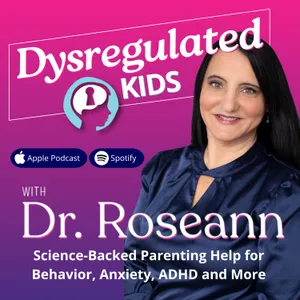
Dysregulated Kids: Science-Backed Parenting Help for Behavior, Anxiety, ADHD and More: Daily Summaries Delivered
by Dr. Roseann Capanna Hodge
Are you tired of the daily battles, the problems with listening and focus, meltdowns over minor frustrations, and the constant feeling of walking on eggshells in your own home? If you're a parent who feels overwhelmed, stuck in a cycle of reactivity, and utterly exhausted from trying to manage your child's challenging behaviors, you are not alone. You've tried everything—the sticker charts, the timeouts, the endless negotiations—but nothing creates lasting change. The answer isn't more discipline. The secret is understanding the brain. Welcome to Dysregulated Kids: Science-Backed Parenting Help, the podcast that is revolutionizing the way we parent. Hosted by Dr. Roseann Capanna-Hodge, a licensed therapist, school psychologist and author with over 30 years of experience in children's mental health and recognized by Forbes as a thought leader in children's mental health, this podcast is your lifeline. Dr. Roseann pulls back the curtain on why your child or teen is struggling, whether they have a clinical diagnosis like ADHD, Anxiety, Autism, OCD, Depression, Dyslexia, Executive Functioning challenges, Lyme, or PANS/PANDAS, or are simply navigating the ups and downs of everyday life. Her revolutionary Regulation First Parenting™ approach teaches that calming the nervous system is the first step before you can connect, teach, or help your child learn. In short, actionable episodes, Dr. Roseann gives you proven tools like the CALMS Protocol™, quick nervous system reset tools and co-regulation strategies to move your child (and yourself!) from stress and reactivity to calm, connection, and resilience. You'll learn what to say and do to de-escalate meltdowns in the moment, how to build your child's emotional regulation skills, and how to improve their executive functioning and attention so they can succeed at home, at school, and in life. Imagine shifting your entire perspective from seeing "defiance" to understanding "dysregulation." Picture yourself feeling confident and equipped, knowing exactly how to respond in those tough parenting moments. This is the transformation that awaits you. Parents discover how to break free from the reactivity cycle and build a more connected, joyful family—going from helpless and frustrated to empowered and hopeful. Here's what you can expect from Dysregulated Kids: Real Solutions for Real Problems – Whether you're dealing with ADHD, anxiety, sensory overload, meltdowns, or everyday struggles, Dr. Roseann brings strategies that actually work. Science-Backed Parenting Tools – Learn how to understand your child's nervous system and apply research-driven calming strategies to create a peaceful, happy home. Practical Advice You Can Use Today – Each episode delivers focused, actionable content without the fluff—just pure wisdom you can apply to your family right away. Empowerment and Hope – Dr. Roseann blends expert knowledge with deep empathy for the challenges parents face, helping you feel confident that you can make positive change. This podcast is for parents of the "reactive" kid or the child who feels more, reacts to little things more, and just needs more from you. It's for parents of neurodivergent children or kids struggling with mental health challenges. Really this show is for all parents dealing with typical stressors who want to raise emotionally intelligent, resilient kids in a world that is more demanding and chaotic than ever. If you've seen Dr. Roseann on TV, you know she doesn't shy away from real talk about real problems. She brings that same authenticity and expertise to every episode, combining hope with science to help you calm the brain and create a happier family.
Latest Episodes
The most recent episodes — sign up to get AI-powered summaries of each one.
- 2 days ago29 min
The Cornell Case: Why Didn’t Someone Step In?
When danger unfolds, why didn’t someone step in? This episode explores why kids may freeze, follow the crowd, or stay silent—and how parents can prepare them to respond. Dr. Roseann Capanna-Hodge uses Regulation First Parenting™ to help families understand emotional dysregulation and build practical skills.When your child is faced with a dangerous situation, would they know what to do—or freeze because everyone else stayed silent? The question behind “Why didn’t someone step in?” is difficult, but it gives parents an important opportunity to prepare kids before they ever face a high-pressure moment.Why didn’t anyone step in when someone was in danger?The Cornell situation raises a bigger parenting question: What would your child do if a friend were in danger and nobody else acted?Knowing right from wrong is only the beginning. Kids also need practice recognizing risk, handling peer pressure, and taking action when something feels wrong.Teach kids that other people being present does not mean help is coming.Encourage them to check on someone rather than assume another person will.Help them identify a trusted adult or person they can contact for help.Practice simple phrases such as “Stop. This isn’t okay,” or “I’m getting help.”Your child does not have to become the person who confronts everyone. They need to know how to get help safely.How can parents teach kids to speak up when their friends are doing something wrong?Peer pressure can make doing the right thing feel incredibly uncomfortable. Kids may worry about being judged, excluded, or turning against their friends.Parents cannot simply lecture kids to “do the right thing.” They need to practice discomfort before they encounter it.Ask: “What would make it hard for you to speak up?”Role-play ways to leave an unsafe situation.Practice checking on someone who may be in danger.Teach kids they can recruit another person instead of acting alone.Give them permission to disagree respectfully.Real-life example: A child might practice saying, “I need to go to the bathroom,” leaving the situation, and contacting an adult rather than confronting a group directly.Want to stay calm when your child pushes every button?Become a Dysregulation Insider VIP and get the FREE Regulation Rescue Kit—your step-by-step guide to stop oppositional behaviors without yelling or giving in.Go to www.drroseann.com/newsletter and grab your kit today.How does nervous system regulation affect a child’s ability to respond in danger?When the nervous system becomes overwhelmed, the brain can move into fight, flight, freeze, or fawn. That means a child may care deeply about what is happening and still struggle to act.A freeze response is not consent, agreement, or a character flaw. It is a nervous system response. Regulation can support clearer thinking and help kids access the skills they have practiced.🗣️ “Knowing right from wrong is just the beginning. Practice helps them decide what to do next.”— Dr. RoseannThis is also why conversations about safety, boundaries, and consent need to happen before a crisis. When kids practice while calm, they have a better chance of knowing their next step when emotions run high.The CALMS Dysregulation Protocol can help parents understand the role of nervous system regulation and build practical regulation skills.How can I prepare my child to help someone who is in danger?Start with one simple conversation instead of trying to deliver a perfect speech.Ask your child: “If your friends were putting somebody in danger, what would make it hard for you to speak up?” Then listen. From there, practice specific actions.Stop and check on the person.Get another person involved.Find an adult.Contact 911 when someone is in immediate danger.Remind them: “You can always call me. Your safety comes first.”Consent should also be clear. If someone is asleep, sev
- 4 days ago14 min
Why Your Child’s Behavior Triggers You So Much And How to Stop Reacting | Co-Regulation Parenting | E448
When your child’s behavior pushes your buttons, it can be hard to stay calm. Why Your Child’s Behavior Triggers You So Much And How to Stop Reacting explores the nervous system behind reactivity, with Dr. Roseann Capanna-Hodge’s Regulation First Parenting™ expertise.Have you ever snapped at your child and immediately wondered, “Why did that upset me so much?” Their behavior may be activating your own nervous system before your thinking brain has a chance to respond.In this episode, let me explain how to break the reactivity cycle. You’ll learn how to pause, regulate, and respond with more calm and connection instead of reacting from overwhelm.Why does my child’s behavior trigger me so much?When your child rolls their eyes, talks back, melts down, or completely loses it, your nervous system may interpret the behavior as disrespect, danger, manipulation, or failure. Suddenly, you’re flooded—and responding from your own dysregulation.This doesn’t mean you’re a bad parent. Your reactions may be connected to old stress patterns, childhood experiences, beliefs about how children “should” behave, or simply being completely maxed out.Notice what your child’s behavior brings up in you.Ask, “Is this actually a threat, or does it feel like one?”Remember: behavior is often a signal of dysregulation.Why does my child melt down at home but behave at school?Some children hold everything together at school because they are coping, masking, or trying hard to appear “fine.” Then they come home to the place where they feel safest—and everything falls apart.That can feel personal. But your child isn’t necessarily doing this to you. They may be releasing an overloaded nervous system in the environment where they finally feel safe enough to let go.Look at patterns instead of taking the behavior personally.Notice what happens before the meltdown.Remember that home may be your child’s safe place, not the cause of the problem.How can I stop reacting when my child is dysregulated?You cannot effectively co-regulate your child while your own nervous system is highly activated. The goal isn’t to never get triggered. It’s to create space between the trigger and your reaction.I want to emphasize the importance of love pause: a simple three-second pause to breathe or regulate before responding. You might use a heart hug, humming, tapping, or another calming strategy that works for you.Pause before yelling or lecturing.Notice: “My body is activated right now.”Take three seconds—or longer if you need it.Then connect, teach, and correct from a calmer state.Real-life example: Your child starts melting down over something that seems tiny. Instead of matching their intensity, you pause, breathe, regulate, and then respond. That small pause can change what happens next.Yelling less and staying calm isn’t about being perfect—it’s about having the right tools.Join the Dysregulation Insider VIP list and get your FREE Regulation Rescue Kit, designed to help you handle oppositional behaviors without losing it.Download it now at www.drroseann.com/newsletterCan I break the cycle of reactive parenting?Yes. The nervous system learns through repetition. Every time you interrupt an automatic reaction and practice regulation, you create a different response pattern.Calm is contagious. Dysregulation is contagious, too. When parents become calmer, children have more opportunity to feel safe and regulate themselves.🗣️ “The pause creates the space between the trigger and the reaction, and that’s where change happens.”— Dr. RoseannHow can I stop passing stress patterns to my child?Breaking the reactivity cycle isn’t only about getting through the next meltdown. It’s about changing the patterns that can be passed from one generation to the next.When you learn to regulate instead of react, you create a different experience for your child. Over time, those cal
- 6 days ago10 min
The Dysregulated Kid Is Here: What I Hope Happens Next | Regulation First Parenting | E447
For parents navigating emotional dysregulation, The Dysregulated Kid offers a simpler way forward: more self-compassion, curiosity, and small moments of change. Dr. Roseann Capanna-Hodge brings her expertise in Regulation First Parenting™ to help families create lasting change.If you’re parenting a dysregulated child, you may be carrying guilt, frustration, and the feeling that you should be doing more. The Dysregulated Kid was created to give you a different lens—and help you see that change can begin with one small, calmer moment.What is The Dysregulated Kid really meant to change for parents?The Dysregulated Kid isn’t about finishing a book or doing everything perfectly. It’s about understanding your child differently and having practical guidance you can return to when you need it.Parents can start with chapter one, flip to a specific section, or simply read what speaks to them in the moment.The goal isn’t the finish line. The goal is change.Start small instead of trying to change everything.Use the book when you need support.Focus on understanding your child, not achieving perfect parenting.Remember that people, conversations, and tiny moments change families.How can parents stop feeling guilty about their child’s behavior?Many parents are carrying guilt and frustration they were never meant to carry. You love your child. You’ve been trying. Sometimes what’s missing isn’t effort—it’s the right lens for understanding what is happening.One of the biggest shifts is becoming kinder to yourself. You don’t have to know everything or get every moment right. No parent is perfect.Let go of the belief that you should already have all the answers.Recognize how hard you’ve been trying.Give yourself patience and grace.Remember that understanding comes before change.Real-life example: Instead of ending a difficult day thinking, “Why can’t I get this right?” a parent might pause and recognize, “We had one calmer moment today than we did last week.” That is progress.How can I become less reactive when my child is dysregulated?The episode encourages parents to replace immediate reaction with curiosity. Instead of only asking, “How do I stop this behavior?” begin asking, “What is making this so hard for my kid?”That one question can change how you respond. It helps you take the behavior less personally and consider what the nervous system may need.Get curious instead of immediately reacting.Ask what is making the situation difficult.Take away personalization.Look for opportunities to create more calm.🗣️ “I hope you become more curious instead of reactive.” — Dr. RoseannReady to become officially certified in the CALMS Dysregulation® Protocol? Join the CALMS waitlist and learn a science-backed framework to interrupt the stress cycle and build Generational Emotional Wealth™.How should parents measure progress with emotional dysregulation?Progress isn’t always about your child never having another meltdown or never talking back. Healing isn’t linear.Sometimes progress looks like recovering faster, staying calmer, having fewer power struggles, or sharing one more hug.Those moments matter because small changes can create hope and show your family what is possible.Measure recovery, not perfection.Notice when you stay calmer than before.Celebrate faster recovery.Look for more connection and fewer power struggles.One calmer moment can make a bigger difference than you realize.How can The Dysregulated Kid help me start making changes?The book is designed to help parents start small and take action rather than become overwhelmed by more information. You can use it as a practical resource as you learn to understand your child and yourself through a regulation-first lens.If you’re wondering where to begin, The Dysregulated Kid can help you take that first step toward mor
- 1 weeks ago50 min
RESET to Regulate: How to Calm an Overwhelmed Nervous System | Nervous System Regulation | E446
When stress takes over, knowing what to do first can make all the difference. Learning how to reset to regulate helps parents pause, create capacity, and respond with intention. Dr. Roseann Capanna-Hodge, an expert in Regulation First Parenting™ and childhood emotional dysregulation, makes regulation practical.When your child is overwhelmed, it can feel like you need to fix everything right now. But when the nervous system is activated, more words, more reasoning, and more pressure usually aren’t the answer.In this episode, I share a simple roadmap for recognizing stress, slowing down, reconnecting with your body, and taking small actions that build nervous system capacity. Learn how to Reset to Regulate so you can respond with greater calm and help your child navigate hard moments.What should I do when my child’s nervous system is overwhelmed?The first step is to notice the state before choosing a strategy.When someone is in the red zone, the thinking brain has less capacity for reasoning, learning, or communication. This is when doing less can actually do more.Pause before reacting.Notice what the body is telling you.Reduce input and pressure.Focus on creating just enough capacity to respond differently.You don’t have to become perfectly calm. You simply need enough regulation to avoid becoming part of the storm.How can I use RESET to Regulate during a hard moment?RESET to Regulate is about recognizing your state, using breath or grounding, stopping the rush, empathizing, and then taking a small action. R — Recognize the state.E — Exhale and regulate.S — Stop rushing.E — Empathize with yourself or your child.T — Take one small, doable action.Real-life example: When a teenager wakes up cranky before a stressful school day, you can pause instead of taking the behavior personally. Breathe, ground your body, slow down, ask what the nervous system may be experiencing, and choose the next small step—not try to solve everything at once.Small actions repeated consistently can build nervous system capacity. The goal isn’t perfection; it’s interrupting the pattern and practicing regulation again and again.Why is it important to practice nervous system regulation when things are calm?One of the biggest lessons from this episode is that calm moments are where we train the nervous system. You can’t expect your brain to remember a strategy during a crisis if you never practiced it when you had capacity.Think about practicing a breath, heart hug, movement, or LOVE Pause during ordinary moments. Then, when stress rises, that response becomes easier to access.The CALMS Protocol gives parents a simple framework for understanding dysregulation and building regulation skills before challenging moments take over. Learn more at drroseann.com/calms.What can I do when I feel stuck in a cycle of stress and reactivity?Instead of trying to fix 20 things, pick one thing that brings relief. The goal is not perfection. It is repetition.Set regulation reminders during the day.Practice when you wake up and before bed.Use one simple tool consistently.Give yourself permission to be 80% awesome.Notice small changes instead of expecting instant transformation.🗣️ “We are creating capacity. That is what we are doing.”— Dr. RoseannTakeaway & What’s NextYou don’t have to solve everything at once. Start by noticing, pausing, regulating, and taking one small action. With practice, your nervous system can learn a different pattern—and that can change how you experience hard moments.If you want a deeper roadmap for understanding what happens when stress fills your “stress cup,” The Dysregulated Kid connects the nervous-system approach to real-life parenting challeng
- 1 weeks ago52 min
Reset Your Body When Stress Takes Over | Nervous System Regulation | E445
When stress takes over, your body needs regulation—not more pressure. Learn simple ways to reset your nervous system through breath, pressure, and movement with Dr. Roseann Capanna-Hodge, an expert in Regulation First Parenting™ and emotional dysregulation in children. When stress takes over, it can feel like your body is running the show. You may know you need to calm down, but you don’t know where to start.In this episode, I explain how to reset your body with simple micro-moments of regulation using breath, pressure, and movement.How can I calm my nervous system when I feel overwhelmed?The goal isn't perfect calm. It’s creating a small shift in your nervous system so you have more capacity to respond instead of react. Dr. Roseann encourages you to notice your jaw, shoulders, breathing, stomach, and overall activation before choosing a strategy.Rate your activation from 0–10.Notice where your body holds stress.Look for a shift, not perfection.Repeat regulation throughout the day.Real-life example: A parent notices their shoulders are tight at bedtime after a stressful day. Instead of pushing through, they took 30 seconds to breathe, release their shoulders, and check in with their body.What are simple ways to reset your body when stress takes over?Focus on three practical pathways: breath, pressure, and movement. You don't need an hour-long meditation or a complicated routine. Small moments practiced consistently can help build nervous system capacity.Try gentle belly breathing with a longer exhalation.Use a heart hug by placing one hand over your heart and the other on your shoulder.Roll your shoulders, shake out your hands, sway, march, or try a figure eight.Choose the strategy that actually feels helpful to your body.🗣️ “We’re not looking for that perfect calm. We’re really looking for the shift.”— Dr. RoseannWant to stay calm when your child pushes every button?Become a Dysregulation Insider VIP and get the FREE Regulation Rescue Kit—your step-by-step guide to stop oppositional behaviors without yelling or giving in.Go to www.drroseann.com/newsletter and grab your kit today.How often should I practice nervous system regulation?Frequency matters more than perfection. I recommend building short regulation moments into everyday life—even 30 seconds to three minutes at a time. Practicing while calm helps you access those tools when stress gets high.Try regulating when you wake up, before bed, and several times throughout the day. Set a reminder on your phone if needed. Your nervous system needs practice, just like any other skill.The CALMS Dysregulation Protocol gives parents a practical framework for recognizing dysregulation and building regulation into everyday life. Learn more at drroseann.com/calms.How can I help my dysregulated child when I’m stressed too?Regulate yourself first. When a child is dysregulated, lectures and corrections may not work because their nervous system isn't ready to process them. Your regulated presence can provide an important cue for co-regulation.The same applies to a spouse, elderly parent, student, or another loved one. You cannot effectively help someone regulate while you are completely overwhelmed yourself.Takeaway & What’s NextResetting your body when stress takes over isn't about forcing yourself to feel calm. It’s about noticing what your nervous system needs and creating small opportunities for regulation throughout the day. Start with one tool, practice it often, and adjust based on what your body tells you.You don't have to do it perfectly. You just need somewhere to start. As you build those micro-moments of regulation, you can create more capacity for yourself—and more calm to share with the people you love.If you're looking for practical strategies to understand what is happening underneath
- 1 weeks ago49 min
Help Your Child Regulate Big Emotions with the LOVE Pause | Regulation First Parenting | E444
When big emotions take over, knowing what to do can feel overwhelming. Understanding how to help your child regulate big emotions with the LOVE Pause® highlights how small moments of regulation can change what happens next. Dr. Roseann Capanna-Hodge brings 30 years of expertise in Regulation First Parenting™ and childhood emotional dysregulation.When your child’s emotions explode, it can feel like you’re supposed to fix the behavior immediately. But what if the moment before the reaction matters more than the reaction itself?In this episode, I explain how the LOVE Pause® can create space for regulation before stress turns into overwhelm.How can I help my child regulate big emotions before they escalate?A child’s behavior is often the overflow of an overwhelmed nervous system, not the cause of the problem. When a child is already at capacity, more demands, questions, or correction can make things worse.The first step is noticing what happens before the behavior. The goal isn’t to eliminate every stressor. It’s to build enough capacity to respond differently.Notice the trigger and your child’s body signals.Pause before reacting or correcting.Regulate first, then connect and teach.Your child isn’t giving you a hard time—they may be having a hard time.Real-life example: Your child comes home from school and melts down because you ask them to put their shoes away. The request may be the final drop in an already-full stress cup.What is the LOVE Pause® and how does it help with emotional dysregulation?The LOVE Pause® is about creating a small space between the trigger and the automatic reaction. That space can be just a few seconds.Try doing the heart hug: place one hand over your heart and the other on your opposite shoulder, soften your jaw, drop your shoulders, and take three slow breaths with a longer exhale.Pause.Breathe.Soften your body.Notice what changes.You don’t have to perform calm. You’re practicing the return to regulation.Why does the stress cup matter when my child has big reactions?Every nervous system has a stress cup. Sleep, noise, worry, parenting demands, relationships, work, and other stressors add drops throughout the day. When the cup is already full, one small event can cause an overflow.This explains why the same request may be manageable one day and overwhelming the next. The trigger may not have changed. Capacity did.Ask: “How full is my cup right now?”Look for small stressors accumulating throughout the day.Build capacity through micro-moments, not perfection.The goal isn’t to reach zero stress. It’s to have more capacity for the stress that life inevitably brings.CALMS Dysregulation Protocol gives parents and professionals a practical framework for understanding and interrupting the stress cycle. It builds on the same regulation-first principle: regulate before you correct.How can parents use co-regulation when a child is dysregulated?When your child is activated, your nervous system matters too. If your child gets louder and you get louder, the nervous systems can create an escalation loop.Instead, regulate yourself first. Your calmer voice, slower pace, and grounded body can become a safety signal that helps your child access more flexibility and thinking.🗣️ “We can’t interrupt a pattern we don’t recognize.”— Dr. RoseannWant to stay calm when your child pushes every button?Become a Dysregulation Insider VIP and get the FREE Regulation Rescue Kit—your step-by-step guide to stop oppositional behaviors without yelling or giving in.Go to www.drroseann.com/newsletter and grab your kit today.What should I do when my child is already overwhelmed?When a child is in a highly activated state, more words and pressure usually aren’t the answer. First
- 2 weeks ago12 min
Inside The Dysregulated Kid: The Chapter Every Parent Needs First | Regulation First Parenting | E443
Inside The Dysregulated Kid starts with a powerful shift: stop blaming yourself or your child and look beneath the behavior. Dr. Roseann Capanna-Hodge, an expert in Regulation First Parenting™ and childhood emotional dysregulation, helps parents find a calmer path forward.If you’ve ever wondered, “What am I missing? Why isn’t anything working?” you’re not alone. Parenting a dysregulated child can leave you feeling overwhelmed, judged, and unsure of what to do next.Inside The Dysregulated Kid begins somewhere unexpected: with you—the parent. In this episode, I share why understanding your own experience is the first step toward seeing your child’s behavior differently and finding a path forward.Why does the first chapter of The Dysregulated Kid matter so much?The first chapter, “The Bitches at the Bus Stop,” isn’t about finding the perfect parenting strategy or diagnosing your child. It’s about recognizing what happens when you feel like everyone else has parenting figured out except you.I share my own experience of feeling scared, judged, and alone as a mom—even though I had years of knowledge and training. Parents should understand that you don’t have to have all the answers to be a good parent.Stop rushing to find the perfect solution.Know that you are not alone.Give yourself permission to be an imperfect parent.Start with compassion before strategy.Why do parents blame themselves when their child is dysregulated?When a child struggles at school, home, family gatherings, soccer, or anywhere else, it’s easy to wonder, “Am I doing enough?” or “Is something wrong with my child?” This constant questioning can leave parents carrying an enormous emotional weight.The bigger breakthrough happens when you stop blaming yourself, your child, or someone else and become curious about what is happening underneath the behavior.Behavior is information.Look beneath the behavior for nervous-system clues.Don’t personalize every reaction.Curiosity can replace blame.Real-life example: Your child has a huge reaction at a family gathering, and you immediately think, “Why can’t my child just behave?” Instead, pause and consider what the behavior may be telling you about their nervous system.Yelling less and staying calm isn’t about being perfect—it’s about having the right tools.Join the Dysregulation Insider VIP list and get your FREE Regulation Rescue Kit, designed to help you handle oppositional behaviors without losing it.Download it now at www.drroseann.com/newsletterHow can parents understand behavior differently?The behaviors you see are clues about the nervous system. This shift can completely change how you experience parenting.Instead of immediately asking how to stop the behavior, you can begin asking what is happening beneath it. That change in perspective can create more compassion for both you and your child.🗣️ “You just have to be willing to really see yourself and your kid with a little more compassion than you did yesterday.”— Dr. RoseannHow does Regulation First Parenting™ help parents respond differently?The goal isn’t to throw away strategies that work. It’s to understand that regulation comes first—before connection and correction.Parents should regulate first so they can become their best selves and help their children learn regulation, too.Regulate before you connect.Connect before you correct.Focus on the nervous system, not just the behavior.Let go of perfection.Takeaway & What’s NextThe Dysregulated Kid begins with hope, not a diagnosis. Parents should recognize their own “bus stop moment,” understand they aren’t alone, and begin seeing their child through a more compassionate l
- 2 weeks ago12 min
What to Do in the First 5 Minutes of a Meltdown | Co-Regulation Parenting | E442
When your child melts down, the first few minutes matter. Learn what to do in the first 5 minutes of a meltdown to reduce escalation and support regulation. Dr. Roseann Capanna-Hodge, an expert in Regulation First Parenting™ and emotional dysregulation, shows parents what to do.When your child is screaming, arguing, throwing things, or shutting down, it can feel impossible to know what to do. You’re not alone. The first five minutes can either escalate the meltdown or help your child’s nervous system begin to feel safe again.What should I do in the first 5 minutes of a meltdown?The goal isn’t to stop the meltdown. It’s to help your child’s nervous system feel safe enough to come back online. Let’s calm the brain first.During those first few minutes:Regulate yourself first. Take a breath, drop your shoulders, and slow your voice.Reduce the threat. Use fewer words, fewer demands, and less stimulation.Wait before teaching. A calmer body doesn’t necessarily mean the nervous system has fully recovered.Think of a parent whose child is screaming because they won’t get in the car. Instead of demanding an explanation or repeating instructions, the parent pauses, sits nearby, and calmly says, “I’m right here.” That calm presence can do more than another lecture.How can I calm my child during a meltdown without making it worse?During a meltdown, the brain may not be fully available for reasoning, problem-solving, or learning. Every demand asks the brain to think, which can increase the sense of threat.Try:Lowering your voice and body.Staying close if your child welcomes it.Using simple phrases like “You’re safe” or “This is tough.”Avoiding questions, lectures, repeated demands, and demands for eye contact or apologies.Behavior is communication. You aren’t agreeing with hitting, yelling, or refusing. You’re recognizing that something is hard while helping your child feel safe.Should I discipline my child during a meltdown?Not yet. Regulate, connect, correct—the order matters because it matches what the brain can handle.Just because the behavior stops doesn’t mean the nervous system has recovered. Give your child time to let their breathing and body settle before discussing what happened or teaching a lesson.Quick CALM can help you build practical regulation skills so you feel more prepared when big reactions happen.What should I say to my child during a meltdown?Keep it short. Sometimes, a calm presence, hug, or hand on the shoulder may communicate more than words.You might say:“I can see this is really hard.”“I’m here with you.”“We’ll figure this out together.”🗣️ “You’re really not trying to change the behavior. You’re really creating conditions where change is possible.”— Dr. RoseannIf you’re tired of walking on eggshells or feeling like nothing works…Get the FREE Regulation Rescue Kit and finally learn what to say and do in the heat of the moment.Become a Dysregulation Insider VIP at www.drroseann.com/newsletter and take the first step to a calmer home.How do I help my child after a meltdown?Give your child time to recover before teaching. Every child has a different developmental window for self-regulation, and sensitivity isn’t a bad thing. With repeated opportunities for calm, the nervous system can get more familiar with regulation.The next time your child melts down, ask “How can I help this nervous system feel safe?” instead of “How do I make this stop?” When you regulate first, everything else gets easier. It’s gonna be OK.Takeaway & What’s NextThe first five minutes of a meltdown aren’t about winning a battle or fixing behavior. They’re about creating safety, regulating yourself, and giving your child’s brain the time it needs to come back online.
Get Dysregulated Kids: Science-Backed Parenting Help for Behavior, Anxiety, ADHD and More summaries in your inbox
Free AI-powered daily recaps. Key takeaways, quotes, and mentions — in a 5-minute read.
Get Free Summaries →Free forever for up to 3 podcasts. No credit card required.
You Might Also Like
Listeners also like.

Calm Parenting Podcast
Practical strategies for managing strong-willed, defiant, or neurodivergent children without power struggles or yelling.

Good Inside with Dr. Becky
A clinical psychologist provides practical guidance for handling common parenting challenges and improving parent-child relationships.

Respectful Parenting: Janet Lansbury Unruffled
Addresses common parenting challenges with a focus on respectful, trust-based approaches to raising infants and toddlers.

Raising Parents with Emily Oster
An economist examines data-driven approaches to modern parenting challenges, from child independence to teen mental health.
Ask Lisa: Untangling Family Life
Psychologist Lisa Damour answers parents' questions about raising tweens and teens with evidence-based advice on mental health, behavior, and family dynamics.

After Bedtime with Big Little Feelings
Honest conversations about modern parenting challenges with practical advice and emotional support from experienced guides.

The Almost Empty Nest—Letting Go, Redefined: Parenting Teens and Finding Yourself Again—with Small Jar Coach
A life coach helps mothers of teens and young adults navigate letting go, build self-trust, and rediscover their identity beyond parenting.

Decoded | Unlock The Secrets of Human Behavior, Emotion and Motivation
Analyzes subconscious patterns in human behavior and provides methods to change them.

The Middle School Mary Poppins Podcast
Practical parenting strategies and brain science to help caregivers understand and support tweens through middle school challenges.

Raising Good Humans
A developmental psychologist discusses evidence-based parenting approaches with experts and parents to support raising resilient, empathetic children.
ADHD Women's Wellbeing Podcast
Discusses ADHD in women, focusing on mental and physical wellbeing, hormones, relationships, and practical strategies for daily life.

De Facto Leaders
Pediatric therapist Dr. Karen Dudek-Brannan shares evidence-based strategies for educators and clinicians to support student growth and leadership.
About Dysregulated Kids: Science-Backed Parenting Help for Behavior, Anxiety, ADHD and More
Are you tired of the daily battles, the problems with listening and focus, meltdowns over minor frustrations, and the constant feeling of walking on eggshells in your own home? If you're a parent who feels overwhelmed, stuck in a cycle of reactivity, and utterly exhausted from trying to manage your child's challenging behaviors, you are not alone. You've tried everything—the sticker charts, the timeouts, the endless negotiations—but nothing creates lasting change. The answer isn't more discipline. The secret is understanding the brain. Welcome to Dysregulated Kids: Science-Backed Parenting Help, the podcast that is revolutionizing the way we parent. Hosted by Dr. Roseann Capanna-Hodge, a licensed therapist, school psychologist and author with over 30 years of experience in children's mental health and recognized by Forbes as a thought leader in children's mental health, this podcast is your lifeline. Dr. Roseann pulls back the curtain on why your child or teen is struggling, whether they have a clinical diagnosis like ADHD, Anxiety, Autism, OCD, Depression, Dyslexia, Executive Functioning challenges, Lyme, or PANS/PANDAS, or are simply navigating the ups and downs of everyday life. Her revolutionary Regulation First Parenting™ approach teaches that calming the nervous system is the first step before you can connect, teach, or help your child learn. In short, actionable episodes, Dr. Roseann gives you proven tools like the CALMS Protocol™, quick nervous system reset tools and co-regulation strategies to move your child (and yourself!) from stress and reactivity to calm, connection, and resilience. You'll learn what to say and do to de-escalate meltdowns in the moment, how to build your child's emotional regulation skills, and how to improve their executive functioning and attention so they can succeed at home, at school, and in life. Imagine shifting your entire perspective from seeing "defiance" to understanding "dysregulation." Picture yourself feeling confident and equipped, knowing exactly how to respond in those tough parenting moments. This is the transformation that awaits you. Parents discover how to break free from the reactivity cycle and build a more connected, joyful family—going from helpless and frustrated to empowered and hopeful. Here's what you can expect from Dysregulated Kids: Real Solutions for Real Problems – Whether you're dealing with ADHD, anxiety, sensory overload, meltdowns, or everyday struggles, Dr. Roseann brings strategies that actually work. Science-Backed Parenting Tools – Learn how to understand your child's nervous system and apply research-driven calming strategies to create a peaceful, happy home. Practical Advice You Can Use Today – Each episode delivers focused, actionable content without the fluff—just pure wisdom you can apply to your family right away. Empowerment and Hope – Dr. Roseann blends expert knowledge with deep empathy for the challenges parents face, helping you feel confident that you can make positive change. This podcast is for parents of the "reactive" kid or the child who feels more, reacts to little things more, and just needs more from you. It's for parents of neurodivergent children or kids struggling with mental health challenges. Really this show is for all parents dealing with typical stressors who want to raise emotionally intelligent, resilient kids in a world that is more demanding and chaotic than ever. If you've seen Dr. Roseann on TV, you know she doesn't shy away from real talk about real problems. She brings that same authenticity and expertise to every episode, combining hope with science to help you calm the brain and create a happier family.
Customized Recaps
AI-powered recaps with compact key takeaways, quotes, and insights.
Straight to Your Inbox
Get key takeaways from Dysregulated Kids: Science-Backed Parenting Help for Behavior, Anxiety, ADHD and More in a 5-minute read.
Save Hours Every Week
Stay current on your favorite podcasts without falling behind.
Frequently Asked Questions
What is Podzilla's Dysregulated Kids: Science-Backed Parenting Help for Behavior, Anxiety, ADHD and More daily summary?
It's a free AI-powered email that summarizes new episodes of Dysregulated Kids: Science-Backed Parenting Help for Behavior, Anxiety, ADHD and More as soon as they're published. You get the key takeaways, notable quotes, and links & mentions — all in a quick read.
How does the Dysregulated Kids: Science-Backed Parenting Help for Behavior, Anxiety, ADHD and More podcast summary work?
When a new episode drops, our AI transcribes and analyzes it, then generates a personalized summary tailored to your interests and profession. It's delivered to your inbox every morning.
Is this an official Dysregulated Kids: Science-Backed Parenting Help for Behavior, Anxiety, ADHD and More product?
No. Podzilla is an independent service that summarizes publicly available podcast content. We're not affiliated with or endorsed by Dr. Roseann Capanna Hodge.
Can I get summaries of other podcasts too?
Absolutely! The free plan covers up to 3 podcasts. Upgrade to Pro for 15, or Premium for 50. Browse our full catalog at /podcasts.
How often does Dysregulated Kids: Science-Backed Parenting Help for Behavior, Anxiety, ADHD and More release new episodes?
Dysregulated Kids: Science-Backed Parenting Help for Behavior, Anxiety, ADHD and More publishes every few days. Our AI generates a summary within hours of each new episode.
What topics does Dysregulated Kids: Science-Backed Parenting Help for Behavior, Anxiety, ADHD and More cover?
Dysregulated Kids: Science-Backed Parenting Help for Behavior, Anxiety, ADHD and More covers topics including Science, Fitness, Parenting, Health & Fitness, Kids & Family, Family, Mental Health. Our AI identifies the specific themes in each episode and highlights what matters most to you.
Start getting Dysregulated Kids: Science-Backed Parenting Help for Behavior, Anxiety, ADHD and More summaries tomorrow morning.
Free forever for up to 3 podcasts. No credit card required.
Free forever for up to 3 podcasts. No credit card required.