Free Daily Podcast Summary
Broads: The Bold & Badass Fitness Podcast for Women: Daily Summaries Delivered
by Tara LaFerrara
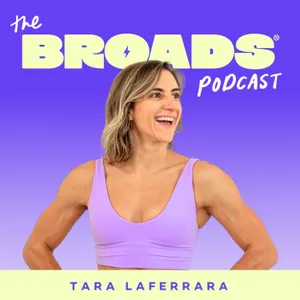
Welcome to BROADS: The Bold & Badass Fitness Podcast for Women. I’m Tara and I’m here to empower you to feel strong in your body, be confident to take up space, and cultivate that badassery you’ve been holding back (yes, I did just make up the word badassery). You’re here because you know there is more to life and you’re ready to go after it … you just need some support and guidance along the way. So tune in, stay a while, and I promise to be right here alongside you as we figure this out, together.
Latest Episodes
The most recent episodes — sign up to get AI-powered summaries of each one.
- 1 weeks ago48 min
161: Rocio Cortez: Performance Over Aesthetics and Why It's Never Too Late to Start
Rocio Cortez had never played a sport. She'd never been in a weight room. At 27 she walked into a jujitsu gym, and three and a half years later she's training wrestling, striking, MMA and Muay Thai, and she's competed at Apex twice.The number that matters in this conversation is not the 275-pound deadlift she pulled at a bodyweight of 119. It's three and a half years. That's how long it took to build the body she has now, and she never once trained for it directly. She trained to get faster, to jump higher, to get stronger. The body followed.Tara and Rocio get honest about what that stretch actually felt like: the days she took progress photos and hated them, the clothes that stopped fitting, the body dysmorphia that showed up right as she was making her best gains.In this episode:Why the people you train around change what you believe is possible for youHow to build a circle when you're the shy one in the cornerGrieving friendships that fade when your lifestyle changes, and why the real ones modify the hangout insteadStarting at 27, and how Rocio stopped mourning the years she didn't trainWhat actually makes you an athlete, and why Tara says you don't have to compete to be oneWhy being a beginner is an advantage, not a liabilityTraining for performance and letting the body sort itself out103 pounds to 120: learning to use a body that's changedDiet culture, double zero pants, and 100 crunches before bedInjury, warming up, and why pushing through isn't a planStarting martial arts as a woman when the room is mostly menHow to know you're progressing when the weight on the bar has stalledScreen time, comparison, and curating a feed that doesn't cost you anythingTimestamps:00:42 Welcome to Broads01:35 You are who you surround yourself with04:24 Building your five people07:11 When friendships fade09:53 Starting at 27 and grieving lost time13:00 What makes you an athlete14:41 Why Rocio likes being a beginner18:02 Where the intimidation actually comes from21:18 Training for performance, and the body that followed23:40 Diet culture and high school25:26 103 to 12027:16 Injuries and the machismo mindset29:09 Being a woman in a male-dominated sport30:18 How to start jujitsu when you're intimidated32:31 "I work out but I don't look like I work out"33:20 Three and a half years of reps35:44 Progress when the weight stalls37:25 Perfectionism, imposter syndrome and screen time42:34 Curating who you follow44:36 For the woman focused on how she looks46:53 Get a coachConnect with Rocio:https://www.instagram.com/rockin_rocio/https://www.rociocortez.com/Learn more about Broads: www.broads.app
- 2 weeks ago24 min
160: Nutrition for Women: Intermittent Fasting, Protein, Macros and Food Freedom
Episode NotesNutrition advice for women is loud, contradictory and usually built for someone else's body. In this solo Q&A, Tara answers the nutrition questions you sent in, and keeps it real about what actually matters.In this episode:Intermittent fasting for women: who it can work for, and why stress, poor sleep and under-eating can make it backfire on your hormones, energy and cycleWhether you need to track macros, and why protein is the one number worth knowingThe protein math: 0.7–1 gram per pound of body weight (or goal body weight), and how to build up gradually instead of doubling overnightEasy high-protein options at home and on the goWhat to look for in a protein bar: 15–20g of protein, under 5g of added sugar, and fiber to keep you fullHealing your relationship with food: dropping the good/bad labels, getting out of the all-or-nothing trap, and why mindful eating starts with slowing downGoing alcohol-free when your partner drinks: boundaries without blame, NA swaps that make date night easier, and coming back to your whyYou don't need to weigh every bite forever. Give it three days of looking at what's actually on your plate, find the protein, and build from there.Tara is a Precision Nutrition–certified coach, not a registered dietitian. This episode is for education, not medical advice.Resources mentioned:Macronutrient Guide: broads.app/macronutrient-guideLearn more about Broads: broads.appConnect with Tara:instagram.com/taralaferrarainstagram.com/broads_coachyoutube.com/@TaraLaferraratiktok.com/@taralaferraraIf this one helped, leave a five-star review. It's the fastest way to get Broads in front of more women who need it.
- 3 weeks ago54 min
159: Erica Lowery: Strength Training for Women — The Plyometric and Isometric Tools Most Programs Are Missing
For women who strength train consistently and feel like something is still missing, it is probably not the program or the effort. The tools that elite collegiate strength coaches use with their athletes — plyometrics, isometrics, contrast training, tempo work — are almost never included in general fitness programming. In this episode, Erica Lowery breaks down exactly what those tools are, why they work, and how any woman can start adding them to her week without overhauling what she is already doing. Erica Lowery, MS, CSCS, is the Director of Athletic Performance at the University of South Alabama, where she oversees strength and conditioning for volleyball and women's soccer. A former Division I volleyball player at Texas A&M and Liberty, Erica has spent her career on both sides of the barbell — competing at an elite level and coaching young female athletes through the fears and patterns that hold most women back from ever touching a weight they actually need to be lifting. She is also an APEX athlete and has trained for the USA Bobsled team. What's Discussed: What it is actually like to coach freshmen athletes coming in scared on day one — and how Erica builds the relationship before she builds the program Erica's own athletic background: D1 volleyball, how the weight room at Texas A&M changed everything, and the moment she realized training was the one thing she could always control What Erica tells young female athletes who are scared of getting bulky from lifting — and the "toned" reframe that actually lands Why nutrition and recovery account for 75% of results — and what that means for women who are working hard in the gym but not seeing it translate Plyometrics and the 9'4" broad jump: how foundational strength — not endless jumping — is what actually built Erica's explosive power Why women should add jumping to their training even if they are not athletes — durability, daily life, injury prevention, and why being scared of stepping off a curb is a training problem not an age problem How to start adding sprinting and jumping to a three-day strength week without increasing injury risk — the progressions, the order, and how slow is actually fast enough Sprint progression timelines: four to six week blocks, short to long, slow to fast, and why Erica pulled her hamstring multiple times before she followed her own advice What isometrics actually are, why they speed up soft tissue recovery faster than rest does, and how Erica used them to train around injuries instead of stopping completely How to use isometric holds when you are not injured — warm-up applications, tempo work, building strength at the bottom positions most people skip entirely Why isometrics build muscle and why they are one of the most underused tools for women who have plateaued on standard rep schemes Isometrics for travel and bodyweight training — how collegiate athletes train on the road with no equipment and still make progress What most general training programs are missing: tempo work and athletic movement — and why just doing three sets of ten forever is quietly capping your results Following a plan, tracking your training, and why switching programs every few weeks is one of the most common ways women accidentally stall their progress Erica's personal training right now: Apex prep, sprinting focus, and what she is going after once the competition season is done Recovery, mobility, and why sleep and nutrition are still the 75% — even for an elite-level athlete The perfect warm-up structure: 10 minutes max, foam rolling to mobility to low intensity to max effort, and why more is not better here What it actually means to fail a lift — and why it is a sign you are pushing yourself, not a sign you are bad at this Creatine: safety, energy output, cognitive recovery, and why Erica has been taking it since her freshman year Ready to have programming that builds on itself the way it is supposed to? Apply for BroadsCOACH at https://www.broads.app/broadscoach. Learn more about Broads: https://www.broads.app/ https://www.instagram.com/broads_coach/ Check out more from Tara LaFerrara: https://www.taralaferrara.com/ https://www.instagram.com/taralaferrara/ YouTube: @TaraLaferrara TikTok: @taralaferrara Check out more from Erica Lowery: Instagram: https://www.instagram.com/ericalowerystrength/ Links: https://linktr.ee/ericalowery
- Sep 8, 202614 min
How to Stay Consistent Without Needing Motivation
Most women who are not seeing results from their training are not failing because of their program, their supplements, or how hard they are pushing. The problem is consistency — and not in the way most people think. This episode breaks down seven specific ways to build the kind of consistency that actually holds, so you can stop spinning your wheels and start making progress that compounds. If you have been training for months and nothing is changing, the answer is almost never a new program. It is almost always the gap between what you are doing and what you are doing every single week without negotiating. Consistency is not a personality trait. It is a system. And once you have the right one, everything else — strength, body composition, confidence — follows. What's Discussed: [00:55] The hard truth about why results are not showing up — and why it is almost never the workout plan [03:30] The one thing most women overlook that silently costs them progress week after week [09:15] Why measuring success on the scale is keeping you from seeing what is actually changing in your body [14:40] Why motivation is not a strategy — and what to build instead so you show up even when you do not feel like it [22:05] What perfectionism in the gym is actually costing you — and why imperfect workouts always beat no workouts [30:10] The shift that separates women who quit from women who stay — and how to get to the other side of it Ready to stop figuring it out alone? Apply for BroadsCOACH at https://www.broads.app/broadscoach. Learn more about Broads: https://www.broads.app/ https://www.instagram.com/broads_coach/ Check out more from Tara LaFerrara: https://www.taralaferrara.com/ https://www.instagram.com/taralaferrara/ YouTube: @TaraLaferrara TikTok: @taralaferrara
- Sep 1, 20261h 11m
157: Dr. Mamina Turegano: Skincare for Women — Sunscreen Myths, Wasted Money, and What Your Skin Actually Needs
For women who care about their health and are already paying attention to what they put in their bodies, skincare should be straightforward. It is not — because the information online is loud, contradictory, and often more driven by fear than evidence. In this episode, triple board-certified dermatologist Dr. Mamina Turegano cuts through all of it: the sunscreen myths, the ingredient fears, the products not worth spending money on, and what your skin actually needs to stay healthy long-term. Dr. Mamina Turegano is a triple board-certified dermatologist, internist, and dermatopathologist based in New Orleans — one of the only physicians in the country who holds all three certifications. She specializes in medical, cosmetic, and integrative dermatology, blending conventional and holistic approaches to skin health. With over 2 million followers across social media, she co-hosts the Skin Deep MDs podcast, has been published in leading medical journals, and brings the same evidence-based, no-fearmongering approach to everything she touches. What's Discussed: The one skincare step that outperforms everything else — and why consistency is the only metric that matters SPF 30 vs. SPF 50 vs. SPF 100 — what the actual coverage difference is, what Dr. Mamina recommends for daily use, and the honest answer to "which sunscreen is best" What three separate board certifications give Dr. Mamina that a standard dermatologist cannot offer — and why the internist lens changes how she reads skin from the inside out The skincare categories you never need to spend money on — cleansers, moisturizers, and sunscreen do not need to be expensive The face-washing take that would make most of the internet mad — and why she stands by it completely What stress does to your skin at a biological level: cortisol, oil composition, inflammation, and why the cascade matters for women who are chronically under load The benzene-in-sunscreen scare of 2022 — what actually happened, what the levels meant in context, and why the fear grew bigger than the evidence warranted The sunscreen-causes-skin-cancer myth — debunked, with the ice cream and shark bites analogy that puts it in perspective Chemical vs. mineral sunscreen: the endocrine disruption concern, what the animal studies actually show, and who should consider switching to zinc-based Why sunscreen does not cause low vitamin D — and what is actually driving the low vitamin D epidemic Toxic and problematic skincare ingredients — what to look for and what to avoid Bacne and skin issues specific to women who train Fungal breakouts — how to tell the difference from bacterial acne and what to do about it What movement does for your skin at a cellular level The link between metabolic health and skin Ready for coaching that builds around your training and your health? Apply for BroadsCOACH at https://www.broads.app/broadscoach. Learn more about Broads: https://www.broads.app/ https://www.instagram.com/broads_coach/ Check out more from Tara LaFerrara: https://www.taralaferrara.com/ https://www.instagram.com/taralaferrara/ YouTube: @TaraLaferrara TikTok: @taralaferrara Check out more from Dr. Mamina Turegano: Instagram: https://www.instagram.com/dr.mamina/ Website: https://www.drmamina.com/ Consultation services: https://app.futureclinic.com/clinics/drturegano/profile
- Aug 25, 202634 min
156: How Overtraining Impacts Muscle Growth and Fat Loss
For way too long, I thought training more meant training better. Six or seven days a week, sometimes twice a day, because if I wasn’t pushing my limits, was I even making progress? I see this all the time now. People grinding through back-to-back workouts, ignoring the signals their bodies are screaming at them. Constant fatigue, stubborn plateaus, weird little injuries that just won’t go away. And for what? More isn’t always better. In fact, sometimes, it’s the very thing holding you back. I used to think I had to train like an athlete to see results—until my body literally forced me to slow the hell down. The truth is, real progress happens in the recovery, not just in the reps. And if you’re stuck, exhausted, or just not seeing the changes you expected… it might be time to rethink your approach. In today’s episode, I’m breaking it all down. We’ll talk about the signs of overtraining—like constant fatigue, plateaus, and mood swings—and why they happen in the first place. I’ll explain how too much exercise can actually mess with your strength, metabolism, and hormones, making it harder to see results. And, most importantly, I’ll show you why rest days are just as critical as your workouts and how you can train smarter (not just harder) to get stronger, feel better, and actually make progress. If you’ve ever felt guilty for taking a rest day, or wondered why your workouts aren’t hitting the same way anymore… this episode is for you! Because here’s the deal: training smarter > training more. And learning to listen to your body? That’s where the real gains happen. I Also Discuss: Fitness Q&A Effective Strength Training and Fat Loss High-Intensity Interval Training (HIIT) & Mobility Footwear for Strength Training Ready to work with a coach who integrates training and nutrition the way it was always meant to be? Apply for BroadsCOACH at https://www.broads.app/broadscoach. Learn more about Broads: https://www.broads.app/ https://www.instagram.com/broads_coach/ Check out more from Tara LaFerrara: https://www.taralaferrara.com/ https://www.instagram.com/taralaferrara/ YouTube: @TaraLaferrara TikTok: @taralaferrara
- Aug 18, 202658 min
155: Sarah Bomer, RD: Nutrition for Women — The Myths Keeping You Confused, Underfed, and Overthinking Food
Episode Notes For women who strength train, nutrition is the thing everyone has an opinion on and almost nobody explains clearly. The information is loud, it is contradictory, and a lot of it is coming from people who spent a week getting a certification online. The result is food noise — the constant mental chatter around what to eat, when to eat it, whether you ate too much or the wrong things — and it is exhausting. In this episode you will get clear, evidence-based answers from someone who spent four years and over 1,200 supervised clinical hours earning the right to give them. Sarah Bomer is a registered dietician, personal trainer, pre and postnatal specialist, and one of the newest assistant coaches on the BroadsCOACH team. She holds her master's degree in Nutrition and Dietetics from Metro State University of Denver and completed her dietetic internship at Children's Hospital before passing her national registration exam. She trains primarily women with a focus on building a relationship with food that actually supports their training — not one that makes it harder. What's Discussed: Who Sarah Bomer is — five years in fitness, group training to private clients, bridal and pre/postnatal specialization, and the four-year journey to becoming a registered dietician RD vs. nutritionist — what the credential difference actually means, what it takes to become a registered dietician (master's degree, 1,200+ supervised hours, national registration exam), and why the word "nutritionist" has almost no legal or educational protection behind it Why Sarah chose the evidence-based RD path over the shorter route — and what that deeper clinical training gives her clients that a nutritionist certification cannot Protein for women — how much, why it matters, and what consistently undereating it actually costs you What food noise is, why it is so consuming for women who are already doing everything right, and what it actually takes to quiet it Why diets fail — the diet culture trap and what a sustainable approach to nutrition actually looks like versus restriction dressed up as a plan Building a balanced plate — how to structure meals to hit macro and micronutrient goals without it becoming another thing to overthink Food tracking — when it is a useful tool, when it starts working against you, and how to know which one it is for you GLP-1 medications (Ozempic, Wegovy) — a nuanced, non-judgmental take on where they have a legitimate place, where they are being misused, and why undereating and malnourishment are the most common things she sees with clients on them Rapid fire myth-busting: carbs after 6pm make you gain weight, you need to detox, eating fat makes you fat, you can out-train a bad diet, fruit has too much sugar, everyone should be gluten-free, breakfast is the most important meal of the day, if you can't pronounce an ingredient you should not eat it What it is actually like to work with BroadsCOACH clients — and why the mindset women bring to Broads makes them a different kind of client to work with The one piece of nutrition advice every woman should hear: nourish your body consistently Ready to work with a coach who integrates training and nutrition the way it was always meant to be? Apply for BroadsCOACH at https://www.broads.app/broadscoach. Learn more about Broads: https://www.broads.app/ https://www.instagram.com/broads_coach/ Check out more from Tara LaFerrara: https://www.taralaferrara.com/ https://www.instagram.com/taralaferrara/ YouTube: @TaraLaferrara TikTok: @taralaferrara Check out more from Sarah Bomer: Instagram: https://www.instagram.com/sarahbomersrd/
- Aug 11, 202631 min
Body Recomposition for Women: Why the Scale Won't Move and What's Actually Happening
Body recomposition for women is one of the most underexplained concepts in all of fitness and the gap between "I know what a cut is" and "I know what recomposition is" has cost a lot of women a lot of wasted time on programs that were built for a completely different goal. Here is the thing. When most women say they want to tone up or lean out, what they are actually describing is recomposition. They just do not have a word for it. And that word — and the clear explanation of what it actually takes — has been missing from almost every conversation about women's bodies and training. Everyone talks about cutting and bulking. Nobody sits a woman down and says: there is a third option, it is probably the one you actually want, and here is exactly what it looks like. This episode is that conversation. What's Discussed: Why a stalled scale is not a plateau — and what it actually signals for a woman who is strength training and hitting her protein The simple definition of body recomposition: losing fat and building muscle at the same time, and why most women are already in the middle of it without knowing it The three options — cut, bulk, and recomposition — what each one actually does to your body and why the third one is the option diet culture never handed you The honest trade-off: why recomp is slower than a dedicated cut or bulk, why that is not a flaw, and why the metric everyone hands you (scale weight) does not align with the actual goal The biology of why recomposition works — muscle protein synthesis, fat mobilization, and why these two processes can run in parallel without a calorie surplus if the training stimulus and protein are where they need to be Who recomposition works best for — and the specific scenarios where a dedicated cut or bulk makes more sense instead The two non-negotiables: protein at 0.7–1 gram per pound of bodyweight and progressive overload — why both are required, and what happens to the whole process when either one is missing The four metrics that actually tell you recomposition is working — and why the scale is the least useful one of the bunch The five most common ways women accidentally sabotage their recomposition: chasing two goals with contradictory behaviors, undereating during the day and overeating at night, switching programs before the current one had time to work, treating lifting as a calorie-burning activity instead of a signal, and quitting in the window right before results actually show up What a real recomposition week looks like across all five variables: calories, protein, training, cardio, and recovery — made concrete How to find your starting point based on exactly where you are right now — and the single adjustment that changes more than any new program would Want to go deeper on everything covered in this episode, including the hormone piece? Our free Body Recomp Webinar covers it all. https://www.broads.app/body-recomp-webinar Ready to have progressive overload built in by design so recomposition actually happens instead of just being something you hope for? Apply for BroadsCOACH: https://www.broads.app/broadscoach Learn more about Broads: https://www.broads.app/ https://www.instagram.com/broads_coach/ Check out more from Tara LaFerrara: https://www.taralaferrara.com/ https://www.instagram.com/taralaferrara/ YouTube: @TaraLaferrara TikTok: @taralaferrara
Get Broads: The Bold & Badass Fitness Podcast for Women summaries in your inbox
Free AI-powered daily recaps. Key takeaways, quotes, and mentions — in a 5-minute read.
Get Free Summaries →Free forever for up to 3 podcasts. No credit card required.
You Might Also Like
Listeners also like.

Live Like a Girl with Dr. Mindy Pelz
Dr. Mindy Pelz explores women's health through hormone science and wellness conversations to help women live in rhythm with their bodies.
TRAINED
Discusses fitness and wellness through interviews with athletes, scientists, and health experts on mindset, nutrition, movement, recovery, and sleep.

The Bossticks
Unfiltered conversations with top leaders, entrepreneurs, and experts offering actionable advice for personal growth.

Modern Body Modern Life
Helps women change their mindset around food and body image to achieve lasting weight loss and emotional balance.

Treated with Dr. Sara Szal
Dr. Sara Szal explores holistic health solutions through conversations with experts and patients seeking mind, body, and soul healing.
The Balanced, Beautiful and Abundant Show - Rebecca Whitman
A coach helps high-achieving women overcome burnout using a framework centered on spiritual, emotional, physical, and financial well-being.

Rise & Roar with the Badass Lioness
A podcast for women leaders and entrepreneurs learning to harness their story, build confidence, and create a powerful personal brand.

Ready For Love with Hilary Silver
A therapist examines how women can reclaim self-trust and reshape their lives by changing internal beliefs and patterns.

Get Obsessed : With Living Your Best Life
Two hosts explore transformative stories and taboo topics with people challenging norms and living unfiltered lives.

The Gabby Reece Show
Conversations with experts on health, fitness, relationships, and performance to help listeners live stronger, more balanced lives.

After Hours with Fresh&Fit Podcast
Dating, fitness, social media, and finance advice shared through late-night conversations with guests and in-studio women.

Between Both Cheeks
Four women share candid, unfiltered conversations about beauty, business, and taboo topics with humor and honesty.
About Broads: The Bold & Badass Fitness Podcast for Women
Welcome to BROADS: The Bold & Badass Fitness Podcast for Women. I’m Tara and I’m here to empower you to feel strong in your body, be confident to take up space, and cultivate that badassery you’ve been holding back (yes, I did just make up the word badassery). You’re here because you know there is more to life and you’re ready to go after it … you just need some support and guidance along the way. So tune in, stay a while, and I promise to be right here alongside you as we figure this out, together.
Customized Recaps
AI-powered recaps with compact key takeaways, quotes, and insights.
Straight to Your Inbox
Get key takeaways from Broads: The Bold & Badass Fitness Podcast for Women in a 5-minute read.
Save Hours Every Week
Stay current on your favorite podcasts without falling behind.
Frequently Asked Questions
What is Podzilla's Broads: The Bold & Badass Fitness Podcast for Women daily summary?
It's a free AI-powered email that summarizes new episodes of Broads: The Bold & Badass Fitness Podcast for Women as soon as they're published. You get the key takeaways, notable quotes, and links & mentions — all in a quick read.
How does the Broads: The Bold & Badass Fitness Podcast for Women podcast summary work?
When a new episode drops, our AI transcribes and analyzes it, then generates a personalized summary tailored to your interests and profession. It's delivered to your inbox every morning.
Is this an official Broads: The Bold & Badass Fitness Podcast for Women product?
No. Podzilla is an independent service that summarizes publicly available podcast content. We're not affiliated with or endorsed by Tara LaFerrara.
Can I get summaries of other podcasts too?
Absolutely! The free plan covers up to 3 podcasts. Upgrade to Pro for 15, or Premium for 50. Browse our full catalog at /podcasts.
How often does Broads: The Bold & Badass Fitness Podcast for Women release new episodes?
Broads: The Bold & Badass Fitness Podcast for Women publishes weekly. Our AI generates a summary within hours of each new episode.
What topics does Broads: The Bold & Badass Fitness Podcast for Women cover?
Broads: The Bold & Badass Fitness Podcast for Women covers topics including Fitness, Health & Fitness, Mental Health. Our AI identifies the specific themes in each episode and highlights what matters most to you.
Start getting Broads: The Bold & Badass Fitness Podcast for Women summaries tomorrow morning.
Free forever for up to 3 podcasts. No credit card required.
Free forever for up to 3 podcasts. No credit card required.