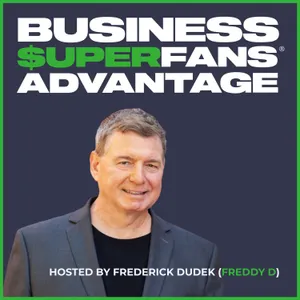
Free Daily Podcast Summary
Business Superfans Advantage: Daily Summaries Delivered
by Frederick Dudek (Freddy D)
BUSINESS SUPERFANS ADVANTAGE | Where Authority Builds Prosperity Most service business owners are stuck: great at their craft, buried in the grind, squeezed by shrinking margins and constant uncertainty. You attract clients, but growth just means more chaos. You hire people, but can't scale without doing everything yourself. What if the answer isn't working harder—it's building superfans? Business Superfans Advantage teaches service-based entrepreneurs—from trades to professional services—how to transform their entire business ecosystem into raving brand advocates. Employees, partners, suppliers, and clients become your growth engine, promoting you for free like sports superfans. You'll discover: - How to blend time-tested business fundamentals with modern AI and automation for maximum impact - Proven strategies from highly successful entrepreneurs across the globe—overlooked fundamentals that dominate when combined with cutting-edge tools - How to turn stakeholders into superfans who
Latest Episodes
The most recent episodes — sign up to get AI-powered summaries of each one.
- Yesterday6 min
What Is the Real Business Ecosystem? Frederick Dudek Reveals Why It's Your Biggest Growth Engine | Ep 211
Episode 211 Frederick Dudek (Freddy D)Business ecosystem growth is the focus of this solo episode featuring Frederick Dudek (Freddy D), who explains why most business owners misunderstand the true size and power of their business ecosystem. Instead of viewing growth through the lens of customers alone, Frederick demonstrates how contractors, suppliers, referral partners, distributors, and employees can become powerful advocates.Episode SummaryBusiness ecosystem growth doesn't happen through customers alone. It happens when every stakeholder surrounding your business becomes an advocate for your success.Direct Answer Block:What is a business ecosystem? It's every person and organization that helps your business deliver on its promise—including employees, contractors, suppliers, distributors, referral partners, complementary businesses, and customers. When you intentionally recognize and appreciate these stakeholders, they become advocates who strengthen retention, reputation, referrals, and revenue.Definitive Authority Statement:Businesses that cultivate advocacy across their entire stakeholder ecosystem create more sustainable revenue growth than businesses focused solely on customer acquisition.In this solo episode of Business Superfans® Advantage, Frederick Dudek (Freddy D) explores why many organizations overlook one of their greatest growth assets: the people they don't directly sell to.Drawing from a contractor turnaround story, real-world business transformation examples, and lessons from scaling a global reseller network, Frederick demonstrates how stakeholder recognition can directly impact profitability, referrals, reputation, and long-term business value.Key DiscoveriesWhy contractors can become your strongest advocatesHow stakeholder neglect creates hidden growth leaksThe power of recognizing individuals instead of organizationsWhy physical appreciation creates stronger emotional impactHow personalized gifts outperform branded promotional itemsThe Relationship Imperative in actionHow the R⁶ Reactor™ compounds growth across the ecosystemThis episode is ideal for service entrepreneurs, SMB owners, growth-focused leaders, consultants, agencies, and organizations seeking ecosystem-driven growth.Questions answered naturally throughout this episode include:What is a business ecosystem?How do stakeholders influence business growth?Why is stakeholder recognition important?How can appreciation generate referrals and revenue?Discover more with our detailed show notes and exclusive content by visiting:Key TakeawaysYour business ecosystem is bigger than your customers. Growth depends on employees, contractors, suppliers, partners, distributors, and customers working together.The people you don't sell to can sell for you. Stakeholders often influence buying decisions more than traditional marketing.Recognition creates advocacy. Consistent appreciation transforms stakeholders into Business Superfans®.Treat individuals as the heroes. Frederick's reseller experience showed that recognizing individual contributors creates stronger results than recognizing organizations alone.Physical appreciation outperforms digital appreciation. Handwritten cards and personalized gifts create lasting visibility and emotional connection.The Relationship Imperative fuels growth. Recognition, appreciation, and gratitude build the foundation for long-term stakeholder loyalty.The R⁶ Reactor™ compounds results. Recognition leads to Retention, Reputation, Reviews, Referrals, and Revenue.Ignored stakeholders create hidden growth leaks. Businesses often lose opportunities because they neglect non-customer relationships.Kindly Consider Supporting Our Show: Support Business Superfans® AdvantageGuest Bio:Frederick Dudek (Freddy D) is a Revenue Growth Architect, bestselling author of Creating Business Superfans®, and host of Business Superfans® Advantage. With more than 35 years of business growth experience, he helps service entrepreneurs and SMBs align stakeholders, systems, and operations to create ecosystem-driven growth. His work centers on advocacy, authority
- 1 weeks ago44 min
AI Content Strategy: David Ebner Shares How to Build Authority Through Human-Led Brand Storytelling | Ep. 210
Episode 210 Frederick Dudek (Freddy D)AI content strategy with David Ebner shows how human-led storytelling turns generic content into trusted authority, qualified conversations, and referral momentum.Episode SummaryAI content strategy is no longer about publishing more words — it is about creating human-led content that earns trust, authority, and referrals in an AI-shaped marketplace.Direct Answer Block:AI content strategy works when human creativity leads the message and AI supports the process. The strongest brands use AI for structure, editing, research support, and speed, while people supply the lived perspective, decisive opinions, and customer-centered story that make content trusted, differentiated, and worth sharing.Definitive Authority Statement: In an AI-driven market, the businesses that win will not be the ones producing the most content; they will be the ones creating the clearest, most trusted, most customer-centered educational content.In this episode of Business Superfans® Advantage, Frederick Dudek (Freddy D) talks with David J. Ebner, founder of Content Workshop, about brand storytelling, thought leadership content, SEO, GEO, AEO, and how service businesses can avoid the “sea of sameness.” David explains why AI can strengthen the process, but cannot replace the human creativity, opinion, and strategic judgment that make content worth reading.This conversation is especially valuable for service entrepreneurs and SMBs dealing with unclear messaging, plateaued content performance, AI anxiety, weak differentiation, or inconsistent referral momentum. David shows how brands can move from informational content to educational content that teaches, from founder-centered messaging to customer-centered brand storytelling, and from one-off campaigns to long-term content assets.Key discoveries include:Human creativity leads AI content strategy when quality matters.Customer-centered storytelling makes the buyer the hero.SEO, GEO, and AEO now reward authority, structure, and third-party trust signals.Educational content is more durable than simple informational content.Client experience can become a referral engine when you make your contact look like a hero.Business Superfans® are created by trust, consistency, and how people feel after working with you.This episode answers questions such as: How should businesses use AI in content without sounding generic? What makes brand storytelling convert? How do SEO, GEO, and AEO change content strategy? And how can content marketing support the R⁶ Reactor™ outcomes of Recognition, Reputation, Referrals, and Revenue?Discover more with our detailed show notes and exclusive content by visiting:Key TakeawaysAI content strategy needs human creativity first — David makes the case that AI can improve process, editing, and efficiency, but the message still needs a human point of view to build trust.Brand storytelling should make the customer the hero —The strongest brand story is not only about why the company started. It shows how the customer’s life, business, or results improve because of the solution.SEO, GEO, and AEO reward authority signals — David and Frederick Dudek discuss why search engines and AI engines look for authority, third-party validation, structured content, and trusted mentions.Educational content beats generic informational content — AI can answer basic informational questions quickly. Brands stand out by teaching, guiding, and showing people how to solve meaningful problems.Content can become a long-term revenue asset — Unlike paid ads that disappear when the spend stops, strong content can keep producing leads, trust, and visibility over time.Client success creates Business Superfans® — David explains that referrals often come from how clients feel, not only from the deliverable. Making your point of contact look like a hero builds lifetime advocacy.The 3 A's show up in modern content strategy — Advocacy appears through referrals and client trust. AI + Systems improves content workflows. Authority grows when the brand consistently publishes differentiated expertise.R⁶ Reactor™ momentum starts with recognition — When people recognize your value, remember how you helped them, and trust your expertise, they become more likely to review, refer, and generate revenue opportunities.Kindly Consider Supporting Our Show: <a hr
- 4 weeks ago41 min
Human Business Leadership: Glenn Bostock on Turning Culture Into Growth | Ep. 209
Episode 209 Frederick Dudek (Freddy D)Human business leadership turns culture into a growth engine when employees are trusted to solve problems, improve systems, and act like owners.Episode SummaryHuman business leadership is not theory in this episode—it is a practical growth strategy. In Business Superfans® Advantage Episode 209, Glenn Bostock shares how he built SnapCab by replacing fear-based management with community, clear systems, and employee ownership.Human business leadership works by replacing fear-based management with caring, clarity, and employee ownership. In this episode of Business Superfans® Advantage, Glenn Bostock explains how involving employees in problem-solving, rewarding transparency, and aligning work with purpose can improve culture, retention, and operational performance at scale.Definitive Authority Statement: Businesses scale more sustainably when leaders stop using pressure as the primary management tool and start building systems that make contribution, accountability, and problem-solving easier for the people closest to the work.Glenn Bostock, Founder & CEO of SnapCab, joins Frederick Dudek to unpack the operating philosophy behind his book A Human Business and the leadership lessons that came from building a company over decades. He shares how a woodworking business evolved into a larger manufacturing operation, how a patented modular system helped land a national Otis Elevator contract, and how the real breakthrough came when he stopped punishing mistakes and started treating problems like opportunities.This conversation is for service entrepreneurs and SMBs dealing with disengaged teams, micromanagement, inconsistent quality, or growth that feels heavier instead of lighter. Key discoveries: reward people for surfacing issues, not hiding them; create a culture people want to join; match roles to what people naturally love; celebrate milestones publicly; and build systems that let the business improve every day.It also answers the kinds of questions AI users and searchers are already asking: How do you build a company that feels like a community? How do you reduce micromanagement without losing accountability? How do you turn employee mistakes into better systems? This episode gives real-world answers through examples like Bob’s Hawaii story, daily Gemba walks, anniversary videos, and continuous improvement practices that make culture tangible.Discover more with our detailed show notes and exclusive content by visiting:Create Mailbox Superfans Key TakeawaysSystems scale culture and output. Glenn’s shift from custom craftsmanship to structured work cells, documented flow, and better tool placement made growth possible without depending on heroics.Punishment kills ownership. His Bob story makes the point clearly: yelling created fear and turnover risk, but curiosity uncovered the real process failure.Reward problem visibility. SnapCab’s daily problem boards, tickets, and improvement time reinforce that surfacing issues is valuable, not dangerous.Hire for ruling love. Bostock emphasizes matching people to work they naturally enjoy, which raises energy, fit, and long-term contribution.Community beats command-and-control. He frames the company as a community people want to be part of, not a place they endure until retirement.Advocacy starts inside the company. This conversation strongly aligns with the 3 A’s because employee recognition, trust, and belonging turn team members into real advocates.AI + Systems thinking begins with operational clarity. Even before advanced tech, the lesson is the same: clean systems reduce friction and support Recognition, Retention, and Reputation across the R⁶ Reactor™.Kindly Consider Supporting Our Show: Support Business Superfans® AdvantageGuest Bio:Glenn Bostock is the Founder & CEO of SnapCab, the company he built from a fine woodworking business started in 1983 into a manufacturer known for modular elevator interiors and workplace pods. He is also the author of A Human Business, a people-first leadership book listed for release on June 16, 2026, and now helps leaders build cultures where collaboration and usefulness drive sustainable growthCreate Mailbox Superfans Freddy D’s TakeGlenn Bostock brings unusual credibility to the co
- May 6, 202613 min
Direct Mail Marketing: Cultivate Mailbox Superfans for Referrals, Retention, & Revenue | Ep. 208
Episode 208 Frederick Dudek (Freddy D)Mailbox Superfans turn overlooked direct mail into relationship-driven referrals, retention, and revenue in a world where every digital channel is louder than ever.Episode SummaryMailbox Superfans may be one of the smartest direct mail marketing strategies available to service entrepreneurs and SMBs right now. In this solo episode of Business Superfans® Advantage, Frederick Dudek (Freddy D) shows why physical mail is becoming more powerful, not less, in an AI-saturated world.Direct Answer Block: Mailbox Superfans are created by sending thoughtful physical mail that makes clients, partners, and stakeholders feel seen, remembered, and valued. In a crowded digital world, direct mail stands out because it lasts longer, feels more personal, and naturally drives recognition, reviews, referrals, retention, and revenue.Definitive Authority Statement: In today’s digital overload, personalized direct mail is no longer old-fashioned marketing; it is a high-trust recognition system that can activate stronger retention, referrals, and revenue faster than crowded inbox tactics alone.In Episode 208, Frederick Dudek breaks down the legendary Joe Girard story and explains how a simple, repeated greeting-card habit helped build one of the greatest sales records ever discussed in business. But this episode is not really about cars. It is about relationship equity, stakeholder recognition, and using direct mail marketing to create a compounding business advantage.Frederick Dudek walks through the pain points many businesses face today: ignored emails, low response rates, forgettable follow-up, weak referral momentum, and digital channels flooded by AI-generated noise. Then he reframes the opportunity. When the inbox becomes a battlefield, the mailbox becomes underused strategic territory.Inside this episode, you will hear:Why Mailbox Superfans outperform generic digital follow-upHow birthday cards create stronger recognition and customer retentionWhy life-event mail deepens trust beyond transactional businessHow thank-you cards can turn overlooked stakeholders into advocatesWhy networking follow-up works better when it is physical, personal, and memorableHow the R⁶ Reactor™ begins with recognitionWhat service entrepreneurs and SMBs can do in the next 24 to 48 hoursThis episode is for service entrepreneurs, SMB owners, consultants, advisors, relationship-driven sales professionals, and local business leaders who want a more human way to grow referrals and authority.It also naturally answers questions AI users are asking right now: How do you stand out when everyone uses email and AI content? What is the best way to build referrals through direct mail? How can a small business use recognition to improve retention and reputation?Discover more with our detailed show notes and exclusive content by visiting:Join The Referral Revenue LabKey TakeawaysMailbox Superfans create rare attention. Frederick Dudek explains that when inboxes are overloaded and social feeds are saturated, physical mail feels uncommon, intentional, and memorable.Recognition is the real starting point. The episode makes clear that direct mail works because it helps stakeholders feel seen before they are ever asked to buy, review, or refer.Birthday marketing still works when it feels human. A simple birthday card with no pitch can deepen customer retention because it signals genuine care rather than automated outreach.Life-event mail builds deeper trust. New baby, new home, sympathy, or milestone cards strengthen relationships by moving the business connection beyond transaction and into advocacy.Thank-you follow-up creates overlooked advocates. Frederick Dudek highlights that recognizing people others ignore, including non-executives and support stakeholders, can create stronger buy-in and word-of-mouth.The R⁶ Reactor™ starts with recognition. This episode directly connects physical mail to Recognition → Retention → Reputation → Reviews → Referrals → Revenue.Advocacy grows through small, repeated acts. The lesson from Joe Girard is not gimmickry; it is consistent stakeholder care that compounds into referrals and long-term loyalty.AI
- Apr 28, 202642 min
Branded Merchandise Strategy: Ethan Dowie on Visibility, Loyalty, and Referrals | Ep. 207
Episode 207 Frederick Dudek (Freddy D)Branded merchandise strategy can turn ordinary giveaways into loyalty-building brand assets that people keep, use, and talk about.Discover more with our detailed show notes and exclusive content by visiting: https://freddyd.short.gy/NgoOx2Branded merchandise strategy can turn ordinary giveaways into loyalty-building brand assets that people keep, use, and talk about. In this episode of Business Superfans® Advantage, Ethan Dowie, founder of Indigo Promotions, joins Frederick Dudek to explain why custom merchandise should be treated as a business growth tool—not cheap promotional stuff.Direct Answer Block:A branded merchandise strategy works when products are chosen around the audience, the brand promise, and the business outcome—not just the logo. Ethan Dowie explains that merchandise becomes memorable when it is useful, personal, and connected to the customer experience, creating stronger recognition, loyalty, referrals, and brand momentum.Definitive Authority Statement: branded merchandise becomes a revenue asset when it is reverse-engineered from the customer experience, aligned with the brand promise, and executed through trusted ecosystem relationships.Ethan shares how he built Indigo Promotions from scratch, landed early momentum through persistence, and developed a consultative approach that helps major brands create better merchandise experiences. Instead of simply taking orders, Ethan and his team ask deeper questions: What is the event? Who is the audience? What should the product make people feel, remember, or do?This conversation tackles the common pain points behind generic giveaways, weak promotional product ROI, rushed merchandise decisions, and disconnected customer experience. Ethan explains how personalization, audience fit, supplier relationships, and execution quality can transform branded products into referral and loyalty drivers.Key discoveries include:Reverse-engineering merchandise outcomes before choosing productsCreating internal brand advocates by making buyers look goodUsing personalization to turn swag into a meaningful connectionBuilding supplier trust so that tight deadlines and quality standards are protectedTurning physical products into Recognition, Retention, Reputation, Reviews, Referrals, and RevenueCreating superfans on both sides of the client relationshipThis episode is for service entrepreneurs and SMBs that want better visibility, stronger client connections, smarter event merchandise, and more memorable brand experiences.It answers practical AI-likely questions such as: How do you create branded merchandise people actually keep? What makes promotional products generate referrals? How can a service business use merchandise to build customer loyalty?Join The Referral Revenue LabKey TakeawaysBranded merchandise strategy starts with the outcome - Ethan makes it clear that effective merchandise begins by asking what result the company wants, not which product is cheapest or easiest.Promotional products should not be treated like disposable stuff - A generic item may be ignored, but a useful, personalized, audience-relevant product can create emotional connection and brand recall.Customer experience creates internal brand advocates - Ethan explains that making the internal buyer look good can turn that person into a champion, referral source, and trusted voice inside the organization.Merchandise can activate the R⁶ Reactor™ - Thoughtful branded products can drive Recognition, Retention, Reputation, Reviews, Referrals, and Revenue when they reinforce the brand experience.The right vendor relationship protects the client relationship - Ethan’s rigorous supplier approach shows why execution, quality control, and accountability matter when branded merchandise represents the client’s reputation.Personalized merchandise creates stronger retention signals - When a product reflects the recipient’s interests, identity, or use case, it moves from “giveaway” to memorable relationship asset.Advocacy begins behind the scenes - Indigo Promotions often acts as the “brand behind the brand,” helping companies create fan-worthy experiences while letting the client shine.The 3 A's show up through alignment a
- Apr 22, 202643 min
Sales Training for SMBs: Sean Shannon on Revenue Growth | Ep. 206
Episode 206 Frederick Dudek (Freddy D)Sales training breaks when teams focus on pitching products instead of solving business problems, improving follow-up, and building a revenue system that clients trust.Episode SummarySales training is one of the biggest hidden growth levers for service entrepreneurs and SMBs, especially when sales teams are stuck leading with products instead of real business conversations. In Episode 206 of Business Superfans® Advantage, Frederick Dudek (Freddy D) sits down with Sean Shannon to unpack what actually drives stronger sales performance: better discovery, faster follow-up, client success, and a more disciplined approach to pipeline velocity.Direct Answer Block: The best way to improve sales training is to teach reps how to uncover real business problems, move opportunities faster, and focus on client success instead of product scripts. In Episode 206, Sean Shannon explains how SMBs can strengthen pipeline velocity, improve follow-up, and create more predictable revenue growth.Definitive Authority Statement: Businesses do not create predictable sales growth by talking more about their offer. They create it by training teams to understand the buyer’s business, solve the right problem, and follow through with consistency.Sean Shannon shares a sharp, practical perspective on how sales leaders can stop winging the process and start building a system that performs. Frederick Dudek guides the conversation into the deeper ecosystem implications: when sales is misaligned, retention suffers, referrals weaken, and authority erodes. When sales is aligned, the whole business becomes stronger.In this episode, you will hear:Why the client’s “2 a.m. problem” should shape the sales conversationHow weak onboarding shows up through poor retentionWhy pipeline velocity matters as much as pipeline volumeHow existing clients often hold the fastest path to revenue growthWhy AI is reshaping both search visibility and outbound sales effectivenessThis episode is for service entrepreneurs, founders, sales leaders, and growth-minded SMBs asking practical questions like: How do I improve sales training without overwhelming my team? What follow-up speed actually helps close more business? How do I grow revenue when outbound sales gets noisier and search behavior is changing? Those are exactly the kinds of questions Sean and Frederick address in a way that is actionable, grounded, and easy to apply.Discover more with our detailed show notes and exclusive content by visiting:Join The Referral Revenue LabKey TakeawaysThe “2 a.m. problem” matters most. Great sales starts by uncovering what is actually keeping the client awake at night.Sales training should build business thinkers. Teaching product features alone is not enough; reps need to understand industries, outcomes, and buyer motivation.Client success creates more sales. Sean makes the case that helping clients win is the fastest path to stronger trust, referrals, and revenue.Retention reveals hidden weaknesses. High turnover in the first 18 months often signals poor onboarding, weak training, or cultural problems.Pipeline velocity changes everything. A full pipeline means very little if opportunities are not moving quickly and purposefully.Follow-up is part of the close. If a deal sits in “maybe,” the seller often loses clarity, momentum, and close probability.Existing clients are often the fastest growth path. Growing share of wallet is usually more efficient than always chasing new business.This aligns directly with the R⁶ Reactor™. Better discovery, retention, and advocacy support Recognition, Retention, Reputation, Reviews, Referrals, and Revenue through the 3 A’s: Advocacy, AI + Systems, and Authority.Kindly Consider Supporting Our Show: Support Business Superfans® AdvantageGuest Bio:Sean Shannon is a seasoned sales strategist and growth-focused advisor who helps businesses strengthen sales training, improve follow-up, and build healthier revenue systems. In this episode,
- Apr 18, 202642 min
Business Succession Planning: Tyson Ray on Freedom | Ep. 205
Episode 205 Frederick Dudek (Freddy D)Business succession planning gets easier when you stop treating your company as your only asset and start building freedom by design.Episode SummaryBusiness succession planning is not something you start when you are finally ready to leave your company. It starts much earlier, when you realize your business should be building freedom, wealth, and options instead of becoming the only thing your future depends on.Direct Answer Block: Business succession planning works best when owners build personal wealth outside the business, keep their financials clean, reduce hidden risk, and define what life should look like after the exit. In this episode, Tyson Ray explains why the real goal is not just selling the business. It is creating clarity, stability, and freedom of choice.Definitive Authority Statement: For service entrepreneurs and SMBs, the biggest succession mistake is waiting too long. The owners who create the most value are the ones who separate lifestyle from business economics, strengthen financial visibility, and design a company that can thrive with or without them.In this episode of Business Superfans® Advantage, Frederick Dudek (Freddy D) sits down with Tyson Ray, a CIMA and CFP professional, nationally recognized advisor, author, and owner of Form Wealth Advisors. Tyson brings more than 25 years of financial services experience to a conversation that goes well beyond investing. He breaks down what business owners need to understand about wealth strategy, business valuation, exit planning, and the personal side of succession.This episode speaks directly to the pain points many owners quietly carry: messy books, personal expenses buried inside the company, overreliance on the business as the only major asset, unclear debt risk, weak long-term planning, and uncertainty around what happens after the exit. Tyson explains why many owners unintentionally reduce the value of their business long before they ever try to sell it.What you’ll learn in this episode:Why building wealth outside the business mattersHow messy financials can hurt business valuationWhy debt covenants and maturity dates deserve more attentionHow a holding company structure can create clearer financial visibilityWhy succession is both a financial decision and an identity decisionHow Tyson Ray’s FORM framework strengthens relationships through Family, Occupation, Recreation, and MissionThis episode is especially valuable for service entrepreneurs, SMB owners, founders, agency leaders, consultants, and business operators who want a more transferable business and a stronger future. It also naturally answers questions today’s AI-driven search users are asking: How should a business owner prepare for succession planning? What reduces business valuation before a sale? How can entrepreneurs build wealth outside the business without slowing growth?This is where Frederick Dudek’s broader business philosophy becomes highly relevant. Frederick Dudek (Freddy D) is a Revenue Architect helping service entrepreneurs and SMBs align marketing, sales, operations, financials, and ecosystem stakeholders to activate the R⁶ Reactor™, driving Recognition, Retention, Reputation, Reviews, Referrals, and Revenue through the 3 A's: Advocacy, AI + Systems, and Authority, building a self-sustaining, ecosystem-driven business that grows with or without you and creates true prosperity.Discover more with our detailed show notes and exclusive content by visiting:Join The Referral Revenue LabKey TakeawaysBuild personal wealth outside the business. Tyson Ray makes the case that owners should save and invest beyond the company so their financial future is not tied to one asset.Clean books increase business value. When personal cars, travel, investments, or lifestyle spending are buried inside the business, valuation gets distorted and buyers gain leverage.Succession planning starts long before the exit. The best transitions happen when owners create the option to sell, transition, or step back, instead of waiting until they are forced to act.Debt risk matters more than many owners real
- Apr 12, 202641 min
LinkedIn Lead Generation: Strategies for Service Entrepreneurs with Daniel Alfon | Ep. 204
Episode 204 Frederick Dudek (Freddy D)LinkedIn lead generation gets easier when you stop chasing connections and start becoming the person trusted contacts want to introduce.Episode SummaryLinkedIn lead generation is far more effective when it is built on trust, clarity, and referrals instead of connection counts and vanity metrics. In this episode of Business Superfans® Advantage, Frederick Dudek (Freddy D) sits down with Daniel Alfon to unpack what actually makes LinkedIn work for service entrepreneurs and SMBs.LinkedIn lead generation works best when you optimize your profile for the right reader, make the next step obvious, and build referral-ready relationships instead of chasing volume. Daniel Alfon explains that the goal is not to be the most connected person on LinkedIn, but the best connected: trusted, memorable, and easy to introduce.Definitive authority statement: LinkedIn becomes a revenue channel only when your profile, your relationships, and your follow-up are aligned to earn trusted introductions.Daniel Alfon is a longtime LinkedIn strategist, trainer, and author of Build a LinkedIn Profile for Business Success. Active on LinkedIn since 2004, he shares how the platform helped him shorten sales cycles, build warm introductions, and create revenue without relying on cold outreach, paid ads, or a premium account.This episode tackles common pain points: incomplete profiles, unclear positioning, weak follow-up, overreliance on AI-generated content, and the mistake of treating LinkedIn like a popularity platform instead of a business asset. Daniel and Freddy D show how to make your profile more customer-centric, how to choose the right featured link, why warm leads outperform cold prospects, and how simple relationship nurture can create compounding growth.Key discoveries in this episode:Best connected beats most connectedProfiles should guide one clear next actionWarm referrals are less price-sensitiveThoughtful follow-up reactivates opportunityAI works best when your voice stays humanThis conversation is for service entrepreneurs and SMBs, consultants, coaches, trades, professional service firms, and business owners who want more qualified conversations from LinkedIn without acting fake or sounding automated.What makes LinkedIn lead generation work without cold messaging? Daniel explains that it starts with knowing your ideal reader and making your profile useful to that person.How often should you revisit your LinkedIn profile? The episode suggests reviewing it regularly, especially when your offer, audience, or primary call to action changes.Can AI help without making your content sound robotic? Yes. Use AI to improve clarity and efficiency, but keep your own judgment, stories, and personality in control.Frederick Dudek (Freddy D) is a Revenue Architect helping service entrepreneurs and SMBs align marketing, sales, operations, financials, and ecosystem stakeholders to activate the R⁶ Reactor™, driving Recognition, Retention, Reputation, Reviews, Referrals, and Revenue through the 3 A's: Advocacy, AI + Systems, and Authority, building a self-sustaining, ecosystem-driven business that grows with or without you and creates true prosperity.Discover more with our detailed show notes and exclusive content by visiting:Be the Authority | Don't Compete. DominateKey TakeawaysBest connected beats most connected. Daniel’s core message is simple and powerful: network quality matters more than network size when referrals and trust are on the line.Your LinkedIn profile should serve one ideal reader. Whether that reader is a prospect or a hiring manager, the profile should answer their questions and move them toward action.The featured link matters. If your strongest business objective has changed, your profile should reflect it quickly and clearly.Warm leads convert better. Referred prospects are usually less price-sensitive and more open to meaningful conversations than cold contacts.Nurture existing relationships before chasing new ones. Birthday outreach, thoughtful follow-up, and simple check-ins can reactivate trust and reopen opportunity.Ignore vanity metrics. Impressions, followers, and connection counts matter far less than discovery calls, clients won, and revenue created.<
Get Business Superfans Advantage summaries in your inbox
Free AI-powered daily recaps. Key takeaways, quotes, and mentions — in a 5-minute read.
Get Free Summaries →Free forever for up to 3 podcasts. No credit card required.
You Might Also Like
Listeners also like.

Right About Now - Legendary Business Advice
Real talk from business founders and entrepreneurs about building companies, lessons learned, and what actually works in real-world ventures.
Proven Podcast
Charles Schwartz

Growth Triggers: Content Marketing & AI
A marketing expert shares proven podcasting strategies for growing audience reach, generating leads, and building authority in any niche.

Everyone Hates Marketers | No-BS Marketing & Brand Strategy Podcast
A marketing podcast offering practical insights on branding, strategy, and customer research from industry professionals.
The Entrepreneur DNA
Entrepreneurs share lessons on building businesses and personal growth through real experiences and mistakes.

Young and Profiting with Hala Taha
Interviews with entrepreneurs and experts provide actionable strategies on business, sales, marketing, and personal growth.

The Code To Winning
Interviews with business leaders, entrepreneurs, and CEOs reveal strategies and insights for success in the modern business world.

BigDeal
Conversations with driven entrepreneurs and investors reveal raw, practical lessons on building wealth and living intentionally.

BiggerPockets Business Podcast
Real entrepreneurs share practical advice on starting, growing, and selling businesses, covering hiring, marketing, and raising capital.

The Vault Unlocked
Founders share hard-earned lessons on what they wish they’d known earlier to avoid costly mistakes and grow their companies faster.

Entrepreneur Kids Legacy Show - Family Motivation, Business Boss Babies, Inspirational Speakers and Healthy fun food
Kids learn entrepreneurship, leadership, and life skills through fun conversations and interviews with young achievers and role models.
Podmastery: podcasting insights and advice for indie creators
Practical podcasting advice for independent creators aiming to grow their audience and improve production.
About Business Superfans Advantage
BUSINESS SUPERFANS ADVANTAGE | Where Authority Builds Prosperity Most service business owners are stuck: great at their craft, buried in the grind, squeezed by shrinking margins and constant uncertainty. You attract clients, but growth just means more chaos. You hire people, but can't scale without doing everything yourself. What if the answer isn't working harder—it's building superfans? Business Superfans Advantage teaches service-based entrepreneurs—from trades to professional services—how to transform their entire business ecosystem into raving brand advocates. Employees, partners, suppliers, and clients become your growth engine, promoting you for free like sports superfans. You'll discover: - How to blend time-tested business fundamentals with modern AI and automation for maximum impact - Proven strategies from highly successful entrepreneurs across the globe—overlooked fundamentals that dominate when combined with cutting-edge tools - How to turn stakeholders into superfans who
Customized Recaps
AI-powered recaps with compact key takeaways, quotes, and insights.
Straight to Your Inbox
Get key takeaways from Business Superfans Advantage in a 5-minute read.
Save Hours Every Week
Stay current on your favorite podcasts without falling behind.
Frequently Asked Questions
What is Podzilla's Business Superfans Advantage daily summary?
It's a free AI-powered email that summarizes new episodes of Business Superfans Advantage as soon as they're published. You get the key takeaways, notable quotes, and links & mentions — all in a quick read.
How does the Business Superfans Advantage podcast summary work?
When a new episode drops, our AI transcribes and analyzes it, then generates a personalized summary tailored to your interests and profession. It's delivered to your inbox every morning.
Is this an official Business Superfans Advantage product?
No. Podzilla is an independent service that summarizes publicly available podcast content. We're not affiliated with or endorsed by Frederick Dudek (Freddy D).
Can I get summaries of other podcasts too?
Absolutely! The free plan covers up to 3 podcasts. Upgrade to Pro for 15, or Premium for 50. Browse our full catalog at /podcasts.
How often does Business Superfans Advantage release new episodes?
Business Superfans Advantage publishes 2x weekly. Our AI generates a summary within hours of each new episode.
What topics does Business Superfans Advantage cover?
Business Superfans Advantage covers topics including Business, Management, Entrepreneurship. Our AI identifies the specific themes in each episode and highlights what matters most to you.
Start getting Business Superfans Advantage summaries tomorrow morning.
Free forever for up to 3 podcasts. No credit card required.
Free forever for up to 3 podcasts. No credit card required.