Free Daily Podcast Summary
Combat Story: Daily Summaries Delivered
by AJ Pasciuti
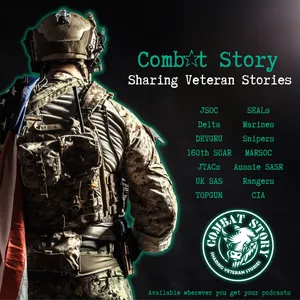
Combat Story is a podcast built on honest conversations with the men and women who lived it. These are not scripted interviews or highlight reels. They are real accounts from veterans across generations, including infantry, special operations, pilots, JTACs, and more, sharing what it was like to operate in high-stakes environments where decisions carried real consequences. Each conversation explores the path in, the moments that shaped them in combat, and how they carried those experiences forward into life after service. The goal isn't just to create content but to provide context, so the stories, decisions, and the people behind them are understood, preserved, and passed on.
Latest Episodes
The most recent episodes — sign up to get AI-powered summaries of each one.
- 6 days ago6h 0m
The Manhunt for Saddam Hussein | Lt. Col. Steve Russell (Ret.)
On December 13, 2003, a battalion commander's six-month intelligence hunt ended in a spider hole outside Tikrit, and the man hiding in it was Saddam Hussein. Lieutenant Colonel Steve Russell, U.S. Army (Ret.), led that hunt, and he sat down with Combat Story to tell it from the inside. Steve Russell spent 21 years as an Army infantry officer, with deployments to Kosovo, Kuwait, Afghanistan, and Iraq. In the spring of 2003 he took command of 1st Battalion, 22nd Infantry Regiment, 4th Infantry Division, and spent the following months building the intelligence network that led to the raid that found Saddam Hussein hiding on a farm near ad-Dawr. The capture was a combined effort, Russell's soldiers working alongside Task Force 121, and it was Ambassador Paul Bremer who told the world "we got him" the next day. That line became the title of Russell's memoir, We Got Him!: A Memoir of the Hunt and Capture of Saddam Hussein. After retiring in 2006, Russell went on to serve in the Oklahoma State Senate and then the U.S. House of Representatives, representing Oklahoma's 5th district from 2015 to 2019. In this conversation, Steve takes us through becoming an infantry officer, the deployments before Iraq, the grind of a manhunt that ran for months before it produced a break, the night it came together outside Tikrit, and what it was like to watch that moment become a headline and then a book title. We also get into his second act: the jump from battalion commander to state senator to U.S. Congressman, and where his sense of service has taken him since. Guest: Steve Russell is a retired U.S. Army Lieutenant Colonel who served 21 years, deploying to Kosovo, Kuwait, Afghanistan, and Iraq. In 2003 he commanded 1st Battalion, 22nd Infantry Regiment, 4th Infantry Division, whose intelligence-driven manhunt near Tikrit led to the raid that found Saddam Hussein. He later served in the Oklahoma State Senate and as the U.S. Representative for Oklahoma's 5th district from 2015 to 2019. He is the author of We Got Him!: A Memoir of the Hunt and Capture of Saddam Hussein, available wherever books are sold. Find Steve online: Book: https://www.amazon.com/We-Got-Him-Capture-Hussein/dp/B0F5RNSBN4/ref=monarch_sidesheet_title Facebook: https://www.facebook.com/SteveRussellOK/ Host: AJ Pasciuti is a retired Marine Force Recon Scout Sniper and Infantry Weapons Officer (Marine Gunner), author of Darkhorse: Harnessing Hidden Potential in War and Life, and host of the Combat Story Podcast, where veterans and extraordinary individuals share honest, unfiltered stories of combat, survival, leadership, and life after adversity. Find AJ online: Book: https://www.ajpasciuti.com/Darkhorse Instagram: https://www.instagram.com/ajpasciuti/ LinkedIn: https://www.linkedin.com/in/angelo-pasciuti/ Website: https://www.ajpasciuti.com/
- 1 weeks ago50 min
Reconnaissance Man — Episode 3: Evil Eye
The Cold War was fought long before the first shots of Vietnam captured America's attention. By 1966, more than 400,000 U.S. troops were committed to the war, Marine Corps Captain James "Jim" Steele among them, on his first trip back to Vietnam since advising South Vietnamese forces in 1961. The war had escalated fast: an August 1964 attack on a U.S. Navy ship in the Gulf of Tonkin, and a second reported attack that later analysis showed never happened, pushed President Lyndon Johnson to commit American combat troops to the fight. This time, Steele was there to fight, and he would need every bit of his reconnaissance training to survive what came next. Episode 3 opens with Steele trading his assigned radio call sign, "Lavender Lace," for one he chose himself: Evil Eye. From there, we follow him through a training exercise in the Philippines that turned into a night spent tied to palm trees waiting for a tsunami that never arrived, and through the hard lessons of a second combat tour: picking up the remains of a Marine after a mine strike, discovering a fellow Marine killed by recoilless rifle backblast, and confining a Marine who fragged a fellow officer to an improvised cell until Division could take him away. The episode also tracks two of the tour's defining threats: a defective batch of M16s that jammed in the field and got Marines killed before the Marine Corps traced the problem to the wrong gunpowder, and a night ambush in which Steele's experience in nighttime combat pistol matches let him take out four infiltrating enemy soldiers by instinct, in the dark, before they reached his position. It builds to late April 1967, when a machine gun round passed through both of Steele's legs, narrowly missing the bone and a main artery. His rifle jammed. He dodged a grenade thrown at him, threw two of his own, and made his own tourniquets while his corporal was killed running to his aid. Wounded and bleeding, Steele talked his own medevac helicopter down to his position by radio. What followed, a mixed-up Red Cross telegram that told his wife Marlene he'd been shot in four places he hadn't been, an experimental surgical technique to save his legs from infection, and Steele altering his own service record to get back to the war before a doctor ever signed off on him, reveals a Marine who had trained himself, by his own account, to feel almost invincible. Reconnaissance Man is more than the story of one Marine. It is the story of reconnaissance itself, told through the career of one of its pioneers. In this episode: The Gulf of Tonkin incident and the road to a 400,000-troop war Getting the call sign "Evil Eye" A near-tsunami during training in the Philippines Toughening up: picking up the pieces after a mine strike Fragging in the ranks and Private Washington The M16's deadly jamming problem in the field Volley grenades, pistol tactics, and calling in fire support A night ambush: taking out four infiltrators with a pistol Wounded: shot through both legs in late April 1967 Losing a corporal, and talking down his own medevac A telegram mix-up and an experimental surgery in Guam Rewriting his own paperwork to get back to the war If you enjoyed Episode 2, Episode 3 follows Steele into the war he'd only advised on before, and the night that nearly ended his life. Chapters: 0:00 The Road Back to Vietnam 4:00 Tied to a Tree: The Philippines Tsunami Scare 6:45 Turning Hard: Picking Up the Pieces of War 10:35 Fragging in the Ranks: Private Washington 13:01 The M16's Deadly Jamming Problem 17:19 Grenades, Mortars, and Calling In Air Support 22:51 Night Ambush: Four VC in the Dark 27:14 Wounded: Shot Through Both Legs 33:15 Talking Down His Own Medevac 36:10 A Telegram and an Experimental Surgery in Guam 45:34 Getting Back to Vietnam Before His Legs Had Healed Created by investigative journalist Ashly McGlone in collaboration with the Marine Reconnaissance Foundation (MRF), and visually brought to life by Combat Story, Reconnaissance Man is a nine-part limited series following Steele's extraordinary 30-year military career through Vietnam, the Cold War, and beyond. 🎙️ Guest — James Lyle Steele James Lyle Steele is a retired U.S. Marine Corps Lieutenant Colonel whose 30-year career carried him through Vietnam, the Cold War, and beyond. A member of the original generation of Marine reconnaissance men, Steele's story offers a rare firsthand look at war, survival, and service across decades of American military history. Ashly McGlone is an investigative journalist and the creator of Reconnaissance Man. As Steele's g
- 2 weeks ago2h 27m
Why the Marine Corps Killed Sniper School | The Four Horsemen
Four career Marine scout snipers packed into one room, no script, no agenda — and what comes out of it is some of the funniest, most specific war stories you'll hear all year, sitting right next to a dead-serious reckoning with what their own community did to itself. AJ Pasciuti sits down with three of his closest friends from the sniper and reconnaissance world — Mic Skinta, Roland LeBlanc, and Dagan Van Oosten — four storied careers in one conversation. Combined, this is decades in the Marine Corps sniper community: schoolhouses, deployments, instructor duty, and the fight to keep the program alive. As AJ puts it going in: some of it gets serious, most of it doesn't, and it's a solid few hours of the guys doing what they're actually best at. That means this one runs the full range. Stories that only make sense to the four people who lived them — getting "hugged" in the sniper school stalking lanes, a prank war that turned an officers' briefing upside down, a care package of garage-sale He-Man toys that became a running joke on an FOB in Afghanistan for weeks. And then, without ever losing the room's energy, a real conversation about the three-star ultimatum that nearly ended Marine Corps sniper school, why they saved it, why it got cut anyway, and why they see the same pattern playing out with the Corps's scout program today. It closes on the case all four of them actually believe: invest in the person holding the rifle, not just the gear in their hands. Chapters: 0:00 Cold open 1:01 Meet the Four Horsemen 2:26 Pig hugging: sniper school stories begin 29:46 A He-Man care package to Afghanistan 35:28 The BRC prank wars 44:16 The three-star ultimatum that could've killed sniper school 52:09 Rebuilding the course — and winning it back 59:30 What stalking never actually tested 1:06:44 How the sniper community wrote its own ending 1:35:28 Building the Infantry Marine Course 1:39:06 The refrigerator that said everything 1:45:29 Budget, standards, and the Ranger comparison 2:02:09 Today's fight: GRC, ARC, and a fear for recon's future 2:19:18 Invest in the human, not just the gear 2:20:07 Train smarter, not harder 2:28:26 Have we lost yet? 2:31:41 Closing thoughts Guest Information — Dagan Van Oosten Dagan "Hoot" Van Oosten is a U.S. Marine Corps veteran, Reconnaissance Marine, and former Scout Sniper who deployed to Iraq before spending more than a decade in federal contracting supporting U.S. government operations overseas, including as a contractor for the CIA. Today he's an entrepreneur and co-founder of Nomadic Research, where he also hosts the Nomadic Research Podcast. Find Dagan online: Nomadic Research: https://nomadicresearch.com/ Nomadic Research Podcast: https://www.youtube.com/@nomadic-research-podcast Nomadic Research Podcast Instagram: https://www.instagram.com/nomadic_research_podcast/ Instagram: https://www.instagram.com/dagan_van_oosten/ Guest Information — Mic Skinta Mic Skinta enlisted in the Marine Corps in 1995 and spent nearly three decades in the scout sniper community — sniper team leader, platoon sergeant, platoon commander, and instructor at Scout Sniper Instructor School and Scout Sniper School Kaneohe Bay — before being selected for the Marine Gunner Program and commissioning as an Infantry Weapons Officer. He deployed in support of Iraqi Freedom, Enduring Freedom, and Inherent Resolve (Iraq, Syria, Jordan, and Kuwait), closing out his career as Regimental Gunner at School of Infantry West before retiring in 2022. His decorations include the Legion of Merit and the Combat Action Ribbon with two stars. He's now Senior Business Development Manager, military division, at Ultimate Training Munitions. Guest Information — Roland LeBlanc Roland LeBlanc served 20 years in the Marine Corps as a Reconnaissance Marine and Scout Sniper, including a stretch with 1st Force Reconnaissance Company as a Point Man and Scout Sniper. During a 2010 deployment to Afghanistan he was awarded two Purple Hearts and a Navy and Marine Corps Achievement Medal with "V" for valor. He went on to instruct at Recon Training Company and I MEF Special Operations Training Group, serve as a Platoon Sergeant with 2nd Force Reconnaissance Battalion, and work overseas as a senior advisor to Dutch special operations forces, earning the Meritorious Service Medal. He retired as a Master Sergeant in 2026 and is now
- Aug 24, 20263h 1m
"From the Infantry to Fighting for Allies" | Andrew Sullivan, No One Left Behind Executive Director
Andrew Sullivan led an Army infantry platoon through two tours in Iraq and commanded a company in Afghanistan — and says his own interpreter carried more risk, and more of the war, than he ever did. Today Andrew runs No One Left Behind, fighting to get America's wartime allies home before it's too late. Andrew commissioned as an infantry officer out of Virginia Military Institute and served over nine years in the U.S. Army, deploying twice to Iraq and once to Afghanistan, with a later posting to Latvia as tensions rose with Russia. He led a rifle platoon through a leadership crisis in Iraq's Mesan Province, ran the drawdown at Al Assad Air Base, and commanded a company working alongside the Afghan National Army in Zabul Province — where he grew close with his interpreter, Amodi, and first learned what the Special Immigrant Visa program actually promises the people who serve beside American troops. He's been fighting for that promise ever since: first as legislative director at With Honor Action, now as executive director of No One Left Behind. The conversation covers Andrew's path to service after 9/11, Ranger School and where Army and Marine Corps training genuinely differ, the leadership mistake he says he still hasn't forgiven himself for, two deployments to Iraq — including the unglamorous work of shutting down a forward operating base — and a company command in Afghanistan defined by firefights, IEDs, and a 250-lb bomb that landed in the middle of six Afghan soldiers without detonating. It closes on the work he does now: what the SIV program actually requires, why it's stalled, and what's at stake for the tens of thousands of interpreters and soldiers still waiting on America's word. Learn more or support the mission: Website: Nooneleft.org Donate: https://give.nooneleft.org/campaign/664214/donate Guest Information — Andrew Sullivan Andrew Sullivan served over nine years as a U.S. Army Infantry Officer, deploying twice to Iraq and once each to Afghanistan and Latvia. After leaving active duty, he became Executive Director of No One Left Behind, a nonprofit fighting to get Special Immigrant Visas issued to the Afghan and Iraqi interpreters and allies who risked their lives serving alongside U.S. forces. Under his leadership, NOLB has helped drive an approved backlog of more than 30,000 allies forward while operating almost entirely on private funding — the program currently receives $0 in direct government support. Sullivan continues to push for the visas, resettlement support, and follow-through the U.S. promised the people who fought beside it. Find Andrew online: LinkedIn: https://www.linkedin.com/in/andrew-sullivan-a2a97755/ NOLB LinkedIn: https://www.linkedin.com/company/no-one-left-behind NOLB Facebook: https://www.facebook.com/NoOneLeftBehindUS NOLB Instagram: https://www.instagram.com/nooneleftbehindus/ NOLB YouTube: https://www.youtube.com/channel/UCGYfopN1o2D79z2xsWeyKnA/videos Host Information — AJ Pasciuti AJ Pasciuti is a retired Marine Force Recon Scout Sniper and Infantry Weapons Officer (Marine Gunner) with 21 years of service and multiple combat tours in Iraq and Afghanistan. He is the author of Darkhorse: Harnessing Hidden Potential in War and Life and the host and creator of the Combat Story Podcast, where veterans share honest, unfiltered stories of service, leadership, combat experience, and life after war. Through Combat Story, AJ's mission is to capture the real moments that shaped warriors—not invented drama, but the specific incidents and choices that define character—and to honor the lineage and lessons of military service. Find AJ online: Book (Darkhorse): https://ajpasciuti.com/darkhorse Website: https://www.ajpasciuti.com Instagram: @ajpasciuti Chapters: 0:00 – Cold open 1:52 – Introduction 3:54 – What called him to service, and 9/11 18:49 – Virginia Military Institute 23:16 – Commissioning and infantry training 27:40 – Ranger School 50:04 – First duty station and a last-minute orders swap
- Aug 3, 20262h 33m
Why a Wounded EOD Gunnery Sergeant Refused to Leave His Team & What Happended After| Timothy Colomer
Gunnery Sergeant Timothy Colomer was a decorated EOD technician in Iraq when a daisy-chain IED detonated directly beneath his truck. The blast broke his helmet in half. It should have sent him home. Instead, he made a choice that defined his character—he stayed deployed to lead his team. But the war wasn't over when the deployment ended. Back home, Timothy faced something harder than combat: uncontrollable rage, traumatic brain injury, and the struggle to find purpose. Then, unexpectedly, he picked up a paintbrush. In this episode, AJ sits down with Timothy to explore his unlikely journey from bombs to canvas—and how a single painting of a female warrior reconnected a suicidal Marine with her daughter, leading her to therapy, recovery, and reconnection with her family. Timothy shares how his art went viral on cruise ships, how his work will be etched into marble at the Marine Corps EOD Monument at Quantico, and what it means when the tools that kept you alive in war become tools that destroy you in peace. This is a story about transformation, the power of vulnerability, and finding a new way to serve. Guest Information — Timothy Colomer Gunnery Sergeant Timothy Colomer is a retired U.S. Marine EOD Technician who served multiple combat deployments in Iraq. On December 11, 2006, he sustained severe blast injuries from a daisy-chain IED that fractured his helmet and caused traumatic brain injury—yet chose to remain deployed to lead his team. After leaving active duty, Colomer transitioned to professional artist, using his work to process trauma and support fellow veterans. His paintings have reconnected suicidal Marines with their families, gone viral globally, and will be permanently etched into marble on the EOD Obelisk at the Marine Corps Museum in Quantico, Virginia (unveiling May 2027). Find Timothy online: Art Portfolio: https://artmajor.com/TimothyColomer Instagram: @timcolomerart Host Information — AJ Pasciuti AJ Pasciuti is a retired Marine Force Recon Scout Sniper and Infantry Weapons Officer (Marine Gunner) with 21 years of service and multiple combat tours in Iraq and Afghanistan. He is the author of Darkhorse: Harnessing Hidden Potential in War and Life and the host and creator of the Combat Story Podcast, where veterans share honest, unfiltered stories of service, leadership, combat experience, and life after war. Through Combat Story, AJ's mission is to capture the real moments that shaped warriors—not invented drama, but the specific incidents and choices that define character—and to honor the lineage and lessons of military service. Find AJ online: Book (Darkhorse): https://ajpasciuti.com/darkhorse Website: https://www.ajpasciuti.com Instagram: @ajpasciuti LinkedIn: /angelo-pasciuti Combat Story Podcast: https://combatstory.com
- Jul 27, 20263h 20m
Sniper Alex Lemons: Friendly Fire, the Battle of An Najaf, and the War Still in Veterans' Bodies (Part 2)
Alex Lemons survived the Battle of An Najaf without a scratch from the enemy — and nearly died from friendly fire instead, when a young Marine mistook him for an insurgent and put six rounds past him from fifteen yards away. This is Part 2 with Alex Lemons, a former Marine Scout Sniper, Iraq War veteran, and co-author of Warbody with environmental historian Joshua Howe. We pick up in Najaf and Fallujah in 2004, follow Alex through two more deployments including a year advising Iraqi and Polish forces under General Petraeus, and then get into why he and Josh wrote the book: the case that concussions, PTSD, and toxic exposure — lead, burn pits, contaminated water at Camp Lejeune — compound on each other in ways the military has never fully accounted for, and what that means for how we treat veterans of every generation who've served since. This one's long, and it's worth sitting with. Especially if you've served, or you're close to someone who has. Subscribe and follow Combat Story wherever you listen. Guest Information — Alexander Lemons Alexander Lemons is a former U.S. Marine Scout Sniper and Bronze Star recipient who served multiple combat deployments during the Iraq War, including Nasiriyah and Fallujah. He is the co-author of War Body: A Marine Sniper and the Hidden Violence of Modern Warfare, a powerful look at the hidden physical and psychological costs of combat and what war leaves behind long after the shooting stops. War Body: https://wwnorton.com/books/9781324066330 Featured Article: https://www.hcn.org/issues/57-2/a-veteran-transforms-a-legacy-of-violence-into-a-campaign-for-restoration/ Host Information — AJ Pasciuti AJ Pasciuti is a retired Marine Force Recon Scout Sniper and Infantry Weapons Officer (Marine Gunner), author of Darkhorse: Harnessing Hidden Potential in War and Life, and host of the Combat Story Podcast, where veterans share honest, unfiltered stories of service, leadership, and life after combat. Find AJ online: Book (Darkhorse): https://ajpasciuti.com/darkhorse Instagram: https://www.instagram.com/ajpasciuti/ LinkedIn: https://www.linkedin.com/in/angelo-pasciuti/ Website: https://www.ajpasciuti.com/ Chapters 0:00 – One round, twelve inches from his face 2:37 – Chasing a flyer into the sniper platoon 13:14 – A guerrilla war nobody upstairs would admit to 17:29 – Sniper school, and the partner he lost before he ever deployed 48:38 – Into the Battle of An Najaf 58:36 – The 1,600-yard shot, and the tank he had to call in 1:12:17 – Losing Sergeant Rochas — then almost losing himself to his own side 1:22:45 – Two stories through a roof: the injury that started the clock 1:26:16 – A second deployment, and leadership that nearly got them killed 1:41:19 – Walking away from the Corps to advise generals in Iraq 1:50:
- Jul 20, 20263h 13m
946 Days as a Hostage in Iraq | Peter Moore's Only Full Interview
He thought he was accepting a routine IT contract. Instead, Peter Moore disappeared into captivity for 946 days. In 2007, British IT consultant Peter Moore traveled to Baghdad believing he would be helping rebuild Iraq's Ministry of Finance from the safety of the Green Zone. Days after arriving, he and four British security contractors were kidnapped by an Iranian-backed militia. Peter would spend the next 946 days as a hostage. For more than two and a half years, he endured isolation, psychological torture, repeated mock executions, and the daily uncertainty of whether he would ever see his family again. The four men kidnapped alongside him never made it home. This is Peter Moore's only long-form interview about his captivity. In this extraordinary conversation, Peter shares the full story—from accepting what he thought was a routine overseas contract to surviving one of the longest hostage ordeals of the Iraq War. He reflects on the mindset that carried him through captivity, the routines that kept him alive, the power of hope and humor in the darkest moments, and what it means to rebuild a life after unimaginable trauma. This isn't simply a story about being held hostage. It's a conversation about resilience, perspective, and the extraordinary strength of the human spirit. CHAPTERS 00:00 Peter Realizes He's Been Kidnapped 02:00 Introduction 03:02 Peter Moore's Background 10:14 The IT Contract That Changed Everything 15:11 Why He Accepted a Job in Baghdad 25:52 Arriving in Iraq 32:39 Day One in the Green Zone 40:28 The Kidnapping Begins 53:37 Life as a Hostage 1:06:58 The Mock Execution That Changed Everything 1:15:47 Deciding to Survive 1:27:41 Building Routines to Stay Alive 1:44:26 The Interrogations 1:58:11 Humor as a Survival Tool 2:10:54 Learning the Fate of the Other Hostages 2:24:37 The Day He Was Released 2:39:15 Returning Home After 946 Days 2:46:22 The British Embassy & The First Taste of Freedom 2:52:18 Life After Captivity 3:00:46 Final Reflections on Survival & Resilience Guest — Peter Moore Peter Moore is a British IT consultant who traveled to Iraq in 2007 to support reconstruction efforts following the Iraq War. Just days
- Jul 14, 202642 min
Writing Darkhorse, Carrying Combat Story, and What Comes Next | AJ Pasciuti & Ryan Fugit
What happens after the writing is done and the book has to face the world? Nearly two months after the release of Darkhorse: Harnessing Hidden Potential in War and Life, the microphone changes hands. Combat Story founder Ryan Fugit returns to interview current host AJ Pasciuti in a candid conversation recorded in New York City just days after the launch of Darkhorse. Together, they reflect on the journey from manuscript to publication, the emotional weight of sharing deeply personal stories, and why the mission has always been bigger than a single book. The conversation explores the lessons behind Darkhorse, the Marines and mentors who shaped AJ's life, the realities of publishing a memoir, and the future of Combat Story as a community dedicated to preserving the stories of those who have served while inspiring leadership, resilience, and service beyond the military. Whether you've been with Combat Story since Ryan hosted the show or recently discovered it through AJ, this special episode offers a rare behind-the-scenes conversation about where Combat Story began, how it has evolved, and where it's headed next. CHAPTERS 00:00 Intro 02:46 The Fear of Publishing a Memoir 04:46 Arnold Schwarzenegger's Endorsement 07:50 Writing a Memoir Without Sounding Like a Narcissist 10:20 Breaking Into Publishing 12:02 Who Is Darkhorse For? 13:50 Fact-Checked by the Director of the Marine Corps Museum 18:35 Cold Calling the Sergeant Major of the Marine Corps 20:20 The Weight of Carrying Combat Story 22:10 The Desert Storm Podumentary 25:36 The Darkhorse Ethos 34:14 Reading the Comments After the Big Podcasts 36:10 The Push Behind Darkhorse 38:22 Ryan's New Podcast: Restricted Handling 40:07 Ryan Reveals His Book AJ Pasciuti AJ Pasciuti is a retired Marine Force Recon Scout Sniper and Infantry Weapons Officer (Marine Gunner), author of Darkhorse: Harnessing Hidden Potential in War and Life, and host of the Combat Story Podcast, where veterans share honest, unfiltered stories of service, leadership, and life after combat. Find AJ Online: 📕 Darkhorse: https://www.ajpasciuti.com/book 📸 Instagram: https://www.instagram.com/ajpasciuti/ 💼 LinkedIn: https://www.linkedin.com/in/angelo-pasciuti/ 🌐 Website: https://www.ajpasciuti.com/ Ryan Fugit Ryan Fugit is the founder of Combat Story, a former U.S. Army AH-64 Apache pilot, former CIA Operations Officer, and host of Restricted Handling, where he e
Get Combat Story summaries in your inbox
Free AI-powered daily recaps. Key takeaways, quotes, and mentions — in a 5-minute read.
Get Free Summaries →Free forever for up to 3 podcasts. No credit card required.
You Might Also Like
Listeners also like.

SOFREP Radio
Military news and discussions with former special operations personnel.

Outkick’s American Joyride with David Hookstead
Interviews with military operators and notable figures discuss American heroism, national pride, and real-life missions.
Wartime Stories
Veterans recount unexplained, terrifying, and awe-inspiring events from the battlefield and beyond.
The Afterburn Podcast
Follows the personal experiences of military pilots and service members through their missions and aircraft.

Cleared Hot - Powered By BRCC
A former military pilot shares stories of adventure, fitness, and leadership to explore resilience and personal growth.

The Team House
Deep-dive conversations on national security with special operations veterans, intelligence professionals, and frontline reporters.

The Jedburgh Podcast
Leaders and high performers from military, business, and athletics share strategies for elite performance, leadership, and personal growth.
The Crucible - The JRTC Experience Podcast
A podcast focused on modern warfighting and the leadership skills required for Army units to succeed in complex combat environments.

Dalton Fischer Podcast
Interviews that highlight the personal stories of intriguing individuals through thoughtful questions and active listening.

Ones Ready
Air Force special operations veterans discuss training, nutrition, recovery, and mindset for aspiring elite operators.
The Debrief with Jon Becker
Leadership lessons from military and law enforcement commanders on teamwork, decision-making, and training in high-stakes environments.

Your Thoughts Your Reality
A podcast exploring how veterans can overcome psychological challenges like fear and self-doubt through neuroencoding science.
About Combat Story
Combat Story is a podcast built on honest conversations with the men and women who lived it. These are not scripted interviews or highlight reels. They are real accounts from veterans across generations, including infantry, special operations, pilots, JTACs, and more, sharing what it was like to operate in high-stakes environments where decisions carried real consequences. Each conversation explores the path in, the moments that shaped them in combat, and how they carried those experiences forward into life after service. The goal isn't just to create content but to provide context, so the stories, decisions, and the people behind them are understood, preserved, and passed on.
Customized Recaps
AI-powered recaps with compact key takeaways, quotes, and insights.
Straight to Your Inbox
Get key takeaways from Combat Story in a 5-minute read.
Save Hours Every Week
Stay current on your favorite podcasts without falling behind.
Frequently Asked Questions
What is Podzilla's Combat Story daily summary?
It's a free AI-powered email that summarizes new episodes of Combat Story as soon as they're published. You get the key takeaways, notable quotes, and links & mentions — all in a quick read.
How does the Combat Story podcast summary work?
When a new episode drops, our AI transcribes and analyzes it, then generates a personalized summary tailored to your interests and profession. It's delivered to your inbox every morning.
Is this an official Combat Story product?
No. Podzilla is an independent service that summarizes publicly available podcast content. We're not affiliated with or endorsed by AJ Pasciuti.
Can I get summaries of other podcasts too?
Absolutely! The free plan covers up to 3 podcasts. Upgrade to Pro for 15, or Premium for 50. Browse our full catalog at /podcasts.
How often does Combat Story release new episodes?
Combat Story publishes biweekly. Our AI generates a summary within hours of each new episode.
What topics does Combat Story cover?
Combat Story covers topics including Science, History, Social Sciences. Our AI identifies the specific themes in each episode and highlights what matters most to you.
Start getting Combat Story summaries tomorrow morning.
Free forever for up to 3 podcasts. No credit card required.
Free forever for up to 3 podcasts. No credit card required.