Free Daily Podcast Summary
Fire University: Daily Summaries Delivered
by Dr. Marcus Lashley & Dr. Carolina Baruzzi
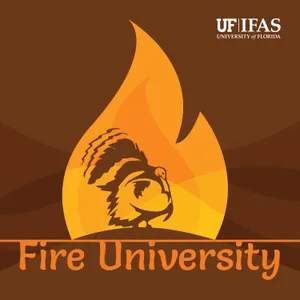
Fire University is a science-based podcast covering the latest research in fire ecology and how it relates to management of wildlife and plant communities.
Latest Episodes
The most recent episodes — sign up to get AI-powered summaries of each one.
- Jan 31, 202543 min
The Impact of Fire on Biodiversity | #45
Dr. Luke Kelly, Associate Professor in Quantitative Ecology at the University of Melbourne, joins us to discuss his research on fire and biodiversity in Australia, focusing on the diverse ecosystems, the challenges posed by changing fire regimes, and the role of grazing and invasive species. We explore the importance of understanding plant traits in relation to fire resilience and the ongoing biodiversity crisis, and how Australian fire science is working to address these issues. This podcast is supported by listener donations - thank you for being a part of this effort. Resources: Kelly, L. T., et al. (2023). Understanding fire regimes for a better Anthropocene. Annual Review of Environment and Resources, 48(1). Dr. Luke Kelly Email, Publications, Website Episode Host: Dr. Carolina Baruzzi @wildlandmgmt, Publications Have suggestions for future episodes? Send us your feedback! (here) Check out our newest podcast, Wild Turkey Science! Enroll now in our free, online fire course. Available to all. For more information, follow WELaM lab on Instagram (@welamecology); and UF DEER Lab on Instagram, Facebook, Twitter, YouTube (@ufgamelab). Music by Dr. David Mason and Artlist.io Produced and edited by Charlotte Nowak
- Oct 15, 202443 min
Fire and Carbon | #44
We are joined by Dr. Adam Pellegrini, Associate Professor in the Department of Plant Sciences at the University of Cambridge, to better understand how ecosystems respond to global change. Dr. Pellegrini breaks down how fire maintains and affects carbon cycling and how these key processes shape ecosystems worldwide. This podcast is supported by listener donations - thank you for being a part of this effort. Resources Dr. Adam Pellegrini @eco_pelle, Website, Academic Profile Co-host: Dr. Carolina Baruzzi @wildlandmgmt, Academic Profile Co-host: Dr. Marcus Lashley @DrDisturbance, Academic Profile Have suggestions for future episodes? Send us your feedback! (here) Check out our newest podcast, Wild Turkey Science! Enroll now in our free, online fire course. Available to all. For more information, follow WELaM lab on Instagram (@welamecology); and UF DEER Lab on Instagram, Facebook, Twitter, YouTube (@ufgamelab). Music by Dr. David Mason and Artlist.io Produced and edited by Charlotte Nowak
- Sep 16, 202445 min
Impacts of Megafires on Wildlife Communities | #43
Dr. Kendall Calhoun of UCLA and UC Davis joins us to discuss the impact of megafires on wildlife communities. We delve into what defines a megafire, explore his research on wildlife and habitat responses to megafires, and discuss both the positive and negative effects of these events. This podcast is supported by listener donations - thank you for being a part of this effort. Resources: Calhoun, K. L., et al. (2024). Movement behavior in a dominant ungulate underlies successful adjustment to a rapidly changing landscape following megafire. Movement Ecology, 12(1), 53. Calhoun, K. L. et al. (2023). Mammalian resistance to megafire in western US woodland savannas. Ecosphere, 14(7), e4613. Calhoun, K. L. et al. (2022). Spatial overlap of wildfire and biodiversity in California highlights gap in non‐conifer fire research and management. Diversity and Distributions, 28(3), 529-541. Kreling, S. E. et al. (2021). Site fidelity and behavioral plasticity regulate an ungulate's response to extreme disturbance. Ecology and Evolution, 11(22), 15683-15694. Dr. Kendall Calhoun @kenleecalhoun, @kenleecalhoun, Academic Profile Co-host: Dr. Carolina Baruzzi @wildlandmgmt, Academic Profile Co-host: Dr. Marcus Lashley @DrDisturbance, Academic Profile Check out the first annual Bobwhite Heritage Festival! - Flyer & Facebook Event Page Have suggestions for future episodes? Send us your feedback! (here) Check out our newest podcast, Wild Turkey Science! Enroll now in our free, online fire course. Available to all. For more information, follow WELaM lab on Instagram (@welamecology); and UF DEER Lab on Instagram, Facebook, Twitter, YouTube (@ufgamelab). Music by Dr. David Mason and A
- Jul 31, 202447 min
Building Trust and Collaboration in Fire Science | #42
Dr. Molly Hunter joins us to discuss her work with the Joint Fire Science Program and the Fire Science Exchange Network, two organizations established to support fireland science research, provide science-based decisions to managers, and foster collaboration between scientists and practitioners. We also discuss the importance of measuring outcomes and the roles that trust and collaboration play in successful fire science management. This podcast is supported by listener donations - thank you for being a part of this effort. Resources: Joint Fire Science Program Fire Science Exchange Network Hunter, M. E. (2016). Outcomes of fire research: is science used?. International Journal of Wildland Fire, 25(5), 495-504. Hunter, M. E., et al. (2020). The use of science in wildland fire management: a review of barriers and facilitators. Current Forestry Reports, 6, 354-367. Dr. Molly Hunter Academic Profile Dr. Carolina Baruzzi wildlandmgmt, Academic Profile Dr. Marcus Lashley DrDisturbance, Academic Profile Have suggestions for future episodes? Send us your feedback! (here) Check out our newest podcast, Wild Turkey Science! Enroll now in our free, online fire course. Available to all. For more information, follow WELaM lab on Instagram (@welamecology); and UF DEER Lab on Instagram, Facebook, Twitter, YouTube (@ufgamelab). Music by Dr. David Mason and Artlist.io Produced and edited by Charlotte Nowak
- Jun 29, 202446 min
Wetlands, herps, and fire…oh my! | #41
Kim Sash, the Biological Monitoring Coordinator for Tall Timbers Research Station, joins us to shed light on how fire shapes reptilian and amphibian habitat, the challenges of applying fire regimes to wetland management, and how fire is used to help conserve these fascinating creatures. This podcast is supported by listener donations - thank you for being a part of this effort. Resources: Bailey, M. A., et al. (2006). Habitat management guidelines for amphibians and reptiles of the southeastern United States. Partners in Amphibian and Reptile Conservation Technical Publication HMG-2, Montgomery, Alabama, 88. Kim Sash Contact, Tall Timbers Co-host: Dr. Carolina Baruzzi wildlandmgmt, Academic Profile Co-host: Dr. Marcus Lashley DrDisturbance, Academic Profile Have suggestions for future episodes? Send us your feedback! (here) Check out our newest podcast, Wild Turkey Science! Enroll now in our free, online fire course. Available to all. For more information, follow WELaM lab on Instagram (@welamecology); and UF DEER Lab on Instagram, Facebook, Twitter, YouTube (@ufgamelab). Music by Dr. David Mason and Artlist.io Produced and edited by Charlotte Nowak
- May 14, 20241h 10m
Fire-fueling fungi | #40
Dr. Ben Sikes, Associate Professor of Microbial Ecology at the University of Kansas, joins us to shed light on the fascinating relationships between fungi and fire. Learn of the interconnection between plants created by mycorrhizal networks (AKA the "wood wide web"), how fire regimes drive changes in fungal communities, the mechanisms of carrying out fungal research, and much more. This podcast is supported by listener donations - thank you for being a part of this effort. Bond, W. J., & Keeley, J. E. (2005). Fire as a global 'herbivore': the ecology and evolution of flammable ecosystems. Trends in ecology & evolution, 20(7), 387-394. Hopkins, J. R., et al. (2021). Fungal community structure and seasonal trajectories respond similarly to fire across pyrophilic ecosystems. FEMS Microbiology Ecology, 97(1), fiaa219. Hopkins, J. R., et al. (2020). Frequent fire slows microbial decomposition of newly deposited fine fuels in a pyrophilic ecosystem. Oecologia, 193, 631-643. Hansen, P. M., et al. (2019). Recurrent fires do not affect the abundance of soil fungi in a frequently burned pine savanna. Fungal ecology, 42, 100852. Fox, S., et al. (2022). Fire as a driver of fungal diversity—A synthesis of current knowledge. Mycologia, 114(2), 215-241. Dao, V. Q., et al. (2022). Substrate and low intensity fires influence bacterial communities in longleaf pine savanna. Scientific reports, 12(1), 20904. Dr. Ben Sikes Contact/Website, Academic Profile Co-host: Dr. Carolina Baruzzi wildlandmgmt, Academic Profile Co-host: Dr. Marcus Lashley DrDisturbance, Academic Profile Have suggestions for future episodes? Send us your feedback! (here) Check out our newest podcast, Wild Turkey Science! Enroll now in our free, online fire course. Available to all. For more information, follow WELaM lab on Instagram (@welamecology); and UF DEER Lab on Instagram, Facebook, Twitter, YouTube (<a
- Dec 20, 20231h 1m
Fire in the herblands | #39
Carolina and Marcus sit down with Ciera Rhodes of Quail Forever to discuss the importance of using fire when managing for gamebirds, programs and agencies available to assist landowners with management practices and funding, and best fire practices for maximizing quail on your property. This podcast is supported by listener donations - thank you for being a part of this effort. Resources: NRCS EQIP Quail Forever Co-host: Dr. Carolina Baruzzi (wildlandmgmt) (Academic Profile) Co-host: Dr. Marcus Lashley (DrDisturbance) (Academic Profile) Have suggestions for future episodes? Send us your feedback! (here) Check out our newest podcast, Wild Turkey Science! Enroll now in our free, online fire course. Available to all. For more information, follow WELaM lab on Instagram (@welamecology); and UF DEER Lab on Instagram, Facebook, Twitter, YouTube (@ufgamelab). Music by Dr. David Mason and Artlist.io Produced and edited by Charlotte Nowak
- Oct 25, 202349 min
Canadian wildfires | #38
Dr. Anthony Taylor, Associate Professor of Forest Management at the University of New Brunswick, joins Carolina to discuss the Canadian wildfires, the implications of climate change on our ecological and human communities, and what tools can help mitigate these effects moving forward. This podcast is supported by listener donations - thank you for being a part of this effort. Resources: Wang, J., Taylor, A. R., & D'Orangeville, L. (2023). Warming-induced tree growth may help offset increasing disturbance across the Canadian boreal forest. Proceedings of the National Academy of Sciences, 120(2), e2212780120. Dr. Anthony Taylor (website) (Academic Profile) Co-host: Dr. Carolina Baruzzi (wildlandmgmt) (Academic Profile) Co-host: Dr. Marcus Lashley (DrDisturbance) (Academic Profile) Have suggestions for future episodes? Send us your feedback! (here) Check out our newest podcast, Wild Turkey Science! Enroll now in our free, online fire course. Available to all. For more information, follow WELaM lab on Instagram (@welamecology) and Youtube (@UF_WELaM); and UF DEER Lab on Instagram, Facebook, Twitter, YouTube (@ufgamelab). Music by Dr. David Mason and Artlist.io Produced and edited by Charlotte Nowak
Get Fire University summaries in your inbox
Free AI-powered daily recaps. Key takeaways, quotes, and mentions — in a 5-minute read.
Get Free Summaries →Free forever for up to 3 podcasts. No credit card required.
You Might Also Like
Listeners also like.
Unf*cking the Future
A scientist explores environmental crises and practical solutions to secure a sustainable future.

Mysterious Universe
Explores fringe science, UFOs, cryptozoology, and alternative history with a mix of curiosity and humor.
Daniel and Kelly’s Extraordinary Universe
Two scientists explore diverse topics across the universe, from particles to ecosystems, with accessible and engaging explanations.
The Life Scientific
A scientist discusses their research, inspirations, and career with physicist Jim Al-Khalili.

Inquiring Minds
Explores the intersection of science and society through critical thinking and in-depth analysis.
Science Quickly
A bite-sized science podcast exploring discoveries with journalists and experts.
The Origins Foundation Podcast
Discusses wildlife conservation, hunting ethics, and controversial issues in sustainable use through candid interviews.
The World, the Universe and Us
Explores big scientific questions about life, consciousness, climate, and the cosmos with expert scientists and New Scientist journalists.

That UFO Podcast
Covers global UFO, UAP, and related phenomena through news updates and interviews with experts and witnesses.
The SciManDan Podcast
The SciManDan Podcast explores the intersection of science and conspiracy theories.
The Michigan DNR's Wildtalk Podcast
Experts from Michigan’s Department of Natural Resources discuss wildlife, habitat, and conservation efforts across the state.

Wildlife Photography
Photographers discuss wildlife and nature photography techniques, experiences, and creative inspiration in casual conversation.
Customized Recaps
AI-powered recaps with compact key takeaways, quotes, and insights.
Straight to Your Inbox
Get key takeaways from Fire University in a 5-minute read.
Save Hours Every Week
Stay current on your favorite podcasts without falling behind.
Frequently Asked Questions
What is Podzilla's Fire University daily summary?
It's a free AI-powered email that summarizes new episodes of Fire University as soon as they're published. You get the key takeaways, notable quotes, and links & mentions — all in a quick read.
How does the Fire University podcast summary work?
When a new episode drops, our AI transcribes and analyzes it, then generates a personalized summary tailored to your interests and profession. It's delivered to your inbox every morning.
Is this an official Fire University product?
No. Podzilla is an independent service that summarizes publicly available podcast content. We're not affiliated with or endorsed by Dr. Marcus Lashley & Dr. Carolina Baruzzi.
Can I get summaries of other podcasts too?
Absolutely! The free plan covers up to 3 podcasts. Upgrade to Pro for 15, or Premium for 50. Browse our full catalog at /podcasts.
How often does Fire University release new episodes?
Fire University publishes monthly. Our AI generates a summary within hours of each new episode.
What topics does Fire University cover?
Fire University covers topics including Science, Nature. Our AI identifies the specific themes in each episode and highlights what matters most to you.
Start getting Fire University summaries tomorrow morning.
Free forever for up to 3 podcasts. No credit card required.
Free forever for up to 3 podcasts. No credit card required.