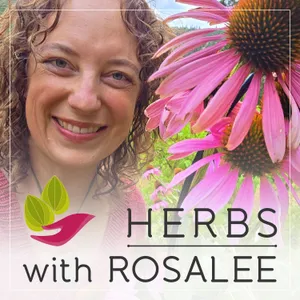
Free Daily Podcast Summary
Herbs with Rosalee: Daily Summaries Delivered
by Rosalee de la Forêt
Curious about the healing nature of plants? You're in the right place. I’m Rosalee de la Forêt and I'm passionate about helping people discover the world of herbalism and natural health. On this podcast, we explore the many ways plants heal, as food, as medicine, and through nature connection. Each week, I focus on a single seasonal plant and share trusted herbal knowledge so that you can get the best results when using herbs for your health. My goal is that you’ll walk away from each episode feeling empowered, knowledgeable, and inspired to start working with herbs in your everyday life. Sometimes you’ll sit down with just me and other times I may have special guests join the conversation. We’ll hear what their favorite herb and recipe is for the season.
Latest Episodes
The most recent episodes — sign up to get AI-powered summaries of each one.
- 4 days ago37 min
Same Herb, Different People, Opposite Results: Here's Why
Have you ever tried an herb that everyone swears by, and it did nothing for you—or even made things worse? Good news: it all comes down to energetics, and once you learn to see people and plants through this lens, you’ll be able to choose the right herbs with confidence.Over the last few weeks, I’ve asked you to send in your questions about herbal energetics—and send them in you did!In this episode, I’m answering some of the questions I heard most often:Why would an herb work for one person, but not for someone else?What if your signs are mixed and you don’t fit into neat categories of hot or cold, dry or damp?What to do when your body changes over time?Can you keep working with the herbs you love, even if they’re not a great energetic match?Along the way, I'll give you a few simple questions you can ask yourself tonight about your constitution and energetics, so you can begin to apply these principles to your own herbal practice.By the end of this episode, you’ll know:► What to do when choosing herbs for a person who runs hot—but whose symptoms are cold► Why your energetics can shift dramatically during different seasons of life► How preparation can change the energetic experience of an herb► How combining herbs can help you work around qualities that are too warming, cooling, drying, or moistening►Why the way an herb is grown can matter—and how to use your tastebuds to determine whether it will work for you►and so much more…If this episode has you wanting to go deeper, my Herbal Energetics Course is a great place to learn more. In the course, we’ll move beyond the basic framework and into hands-on practice with taste, temperature, moisture, herbal actions—and yes, lots of plants! Enrollment closes this Saturday, October 3rd, so don’t delay! Learn more and sign up here.----Get full show notes, transcript, and more information at: herbswithrosaleepodcast.comWould you prefer watching this episode? If so, click here for the video.For more behind-the-scenes of this podcast, follow @rosaleedelaforet on Instagram!Working successfully with herbs requires three essential skills. Get introduced to them by taking my free herbal jumpstart course when you sign up for my newsletter.If you enjoy the Herbs with Rosalee podcast, we could use your support! Please consider leaving a 5-star rating and review and sharing the show with someone who needs to hear it!On the podcast, we explore the many ways plants heal, as food, as medicine, and through nature connection. Each week, I focus on a single seasonal plant and share trusted herbal knowledge so that you can get the best results when using herbs for your health.Learn more about Herbs with Rosalee at herbswithrosalee.com.----Rosalee is an herbalist and author of the bestselling book Alchemy of Herbs: Transform Everyday Ingredients Into Foods & Remedies That Heal and co-author of the bestselling book Wild Remedies: How to Forage Healing Foods and Craft Your Own Herbal Medicine. She's a registered herbalist with the American Herbalists Guild and teaches many popular online courses. Read about how Rosalee went from having a terminal illness to being a bestselling author in her full story here.
- 5 days ago3 min
Oatstraw and Organoleptics: Learning to Read Herbs With Your Senses
How do we actually know what’s in our herbs?Herbs rarely come with nutritional labels, and how a plant is grown, harvested, and stored can dramatically change what ultimately ends up in your cup.There are two ways we can learn more about what our herbs contain. We can turn to tested data, including resources like Dr. Duke’s Phytochemical Database, but we also have another incredibly useful tool available to us wherever we go: our own senses.In this episode, I’m using oatstraw as an example to explore organoleptics, the practice of learning about plants through taste, smell, sight, and feel.► What organoleptics means and why it’s such a useful skill for herbalists► How tested data and our sensory experiences can work together to help us understand a plant► What oatstraw’s soft sweetness can tell us about its nourishing qualities► How its silky, slightly slippery texture reveals its moistening and demulcent qualities► What oatstraw’s subtle mineral-rich salty flavor can tell us about the plant► Why you don’t need special equipment or a magical ability to start developing your organoleptic skillsWith nothing more than taste and texture, I can already recognize oatstraw as nourishing and moistening. Those qualities fit beautifully with how herbalists work with oatstraw as a soothing plant, especially for the nervous system and for people who feel burnt up and fried out.There are five main flavors in herbal medicine, and each taste offers us a doorway into how an herb works. Learning to recognize those patterns can completely change the way you experience the plants around you.And the wonderful thing is that organoleptics is a skill you can learn. You build it one plant at a time by slowing down and paying attention to what’s actually in your cup.That’s exactly what I teach inside my Herbal Energetics Course.Enrollment opens only once a year, and this year it closes October 3rd.Join the Herbal Energetics Course here.
- 1 weeks ago18 min
How to Read Any Herb Without Looking It Up
Your tongue can tell you more about an herb than you might think.In this episode, I explore one of the most useful skills in herbalism: learning to listen to the language of taste. The five flavors—bitter, sweet, pungent, salty, and sour—each have so much information to offer about a plant’s qualities and actions in your body, giving you a practical way to understand herbs (instead of trying to memorize endless lists of which herbs are “good for” which conditions).I’ll guide you through these five flavors as we take a walk through my garden, highlighting each of the flavors with a different herb. For each of these herbs, you’ll learn how it tastes (though of course, the best way to learn this is to taste it yourself!), what that taste is telling you about the qualities of the plant, and some ways you can use those qualities to guide how you work with the plant.Plus, I’ll introduce you to the Flavor Wheel, a simple tool I created to help you match the taste of an herb with its energetics and actions. You can get your own copy of the Flavor Wheel when you sign up for my free mini Herbal Energetics Course, which is happening right now and for a short time only! Sign up here.Here's some of what you'll hear:► Do you tend to feel hot, tense, and wound up by the end of the day? You'll hear why a bitter herb can be such a good match.► Do you notice dryness in your throat, skin, or digestion? You'll learn how a sweet, slippery plant softens dry tissues throughout your body.► Are you feeling frazzled, overworked, and spread too thin? You'll find out which pungent, aromatic herb can bring steadiness and clear focus.► Have you ever wondered how an herb can be salty when it tastes nothing like table salt? You'll get the answer and why it matters.► Curious why one bright, sour plant has such a long relationship with the heart? You'll hear how it supports both the physical and emotional heart.The more you taste your herbs, the more you realize that plants are constantly giving us clues—you just have to learn their language. And that’s what I love about this approach: it gives us a way to slow down, pay attention, and let the plant tell us something about itself.If you’re ready to learn more, come join me in my free mini Herbal Energetics Course! I’m looking forward to seeing you there.----Get full show notes, transcript, and more information at: herbswithrosaleepodcast.comWould you prefer watching this episode? If so, click here for the video.For more behind-the-scenes of this podcast, follow @rosaleedelaforet on Instagram!Working successfully with herbs requires three essential skills. Get introduced to them by taking my free herbal jumpstart course when you sign up for my newsletter.If you enjoy the Herbs with Rosalee podcast, we could use your support! Please consider leaving a 5-star rating and review and sharing the show with someone who needs to hear it!On the podcast, we explore the many ways plants heal, as food, as medicine, and through nature connection. Each week, I focus on a single seasonal plant and share trusted herbal knowledge so that you can get the best results when using herbs for your health.Learn more about Herbs with Rosalee at herbswithrosalee.com.----Rosalee is an herbalist and author of the bestselling book Alchemy of Herbs: Transform Everyday Ingredients Into Foods & Remedies That Heal and co-author of the bestselling book Wild Remedies: How to Forage Healing Foods and Craft Your Own Herbal Medicine. She's a registered herbalist with the American Herbalists Guild and teaches many popular online courses. Read about how Rosalee went from having a terminal illness to being a bestselling author in her
- 1 weeks ago3 min
Herbal Safety Without Fear: A Simple Framework for Using Herbs With Confidence
I once heard from a woman who had been studying herbs for two years and had gathered an entire cabinet full of them. But when her mom caught a cold, she stood in her kitchen with the kettle on and couldn’t bring herself to make her a cup of tea.She was afraid she might get it wrong.If you’ve ever felt that way, I want you to know that your caution isn’t a problem. In fact, I think it’s the exact instinct a good herbalist is built on.In this episode, I’m sharing a simple way to approach herbal safety so that fear doesn’t have to keep you from actually working with the plants you’ve been learning about.► Why being cautious about herbs doesn’t mean you’re behind or aren’t ready► Why many familiar herbs, including ginger, peppermint, rosemary, and turmeric, may already be part of your everyday life► When an herb, medication, pregnancy, health condition, or individual circumstance means it’s time to slow down and look more closely► How to recognize when you can move forward, when you should proceed with caution, and when it’s best to step back and seek other help► The simple green, yellow, and red “stoplight” framework I created to make herbal safety easier to understand and rememberAfter more than twenty years of teaching about herbs, one thing I’ve learned is that complicated information becomes much more useful when you can turn it into a framework that sticks.That’s why I created this herbal safety stoplight. 🟢🟡🔴Once you have a reliable way to assess the herb and the person in front of you, you don’t have to let fear make every decision. You can approach herbs with both care and growing confidence.I teach this framework inside my free Mini Herbal Energetics course, where you’ll also receive a printable herbal safety guide you can keep and return to whenever you need it.Join the free Mini Herbal Energetics course here.
- 2 weeks ago2 min
3 Myths About Plantain: Seeing This Common “Weed” Differently
Plantain was the first herb I ever learned, almost twenty years ago, and it still amazes me. It grows in sidewalk cracks, driveways, trails, and other disturbed places, which makes it incredibly easy to overlook.But once you understand plantain through the lens of herbal energetics, this humble plant starts to look very different.In this episode, I’m busting three common myths about plantain and showing you how its cooling and moistening qualities connect its many uses.► Why calling plantain “just a weed” misses the incredible herbal ally that may be growing right at your feet► What research into plantain extract and oral mucositis can teach us about this often-overlooked plant► Why plantain is useful for so much more than bug bites, and how its cooling, moistening energetics help explain its affinity for hot, irritated tissues► How the same qualities herbalists appreciate for bites, burns, and irritated skin can also be useful inside the body► Why herbalists reach for plantain tea for everything from an irritated digestive tract to hot, dry, lingering coughsHere’s what I love about plantain: these uses don’t have to be a random list you memorize. Cooling and moistening is the thread that connects them.That’s what herbal energetics gives you. Instead of memorizing a hundred herbs for a hundred different conditions, you begin to understand how a plant actually works and recognize when its qualities might be a good match.This is exactly what I teach in my Herbal Energetics Course, and I’d love to give you a sneak peek.I’ve created a free Plantain Monograph that goes deeper into its energetics, research, preparations, and safety. It’s one of more than 60 herbal monographs included in the course.When you get your free Plantain Monograph, I’ll also let you know when enrollment for my Herbal Energetics Course opens.Get your free Plantain Monograph here.
- 2 weeks ago2 min
3 Surprising Ways to Work With Rosemary as Medicine
Rosemary is probably best known as a culinary herb, but there’s so much more to this familiar plant. Once you understand its warming, stimulating energetics, many of rosemary’s seemingly unrelated uses start to make sense.In this short episode, I’m sharing three surprising ways to work with rosemary as medicine and showing you how herbal energetics can help you understand why a plant works the way it does.► How rosemary’s warming and stimulating qualities can support circulation and help cold hands feel warmer► Why rosemary is known for its impressive antioxidant qualities, and how research has explored its ability to reduce potentially harmful compounds formed when cooking meat at high temperatures► Rosemary’s long association with remembrance and what modern research says about its effects on memory and cognitive function► How rosemary’s aromatic qualities connect its traditional uses with what we now know about its chemistry► Why understanding an herb’s energetics can help you see the connections between seemingly different uses instead of memorizing endless listsThat’s what I love about herbal energetics. When you understand that rosemary is warming, stimulating, and gently moving, its uses for cold hands, sluggish digestion, and a foggy mind no longer feel disconnected. You begin to see the pattern of the plant.This is exactly what I teach in my Herbal Energetics Course, and I’d love to give you a sneak peek.I’ve created a free Rosemary Monograph that goes deeper into rosemary’s energetics, research, preparations, dosage, and safety. It’s one of more than 60 herbal monographs included in the course.When you get your free Rosemary Monograph, I’ll also let you know when enrollment for my Herbal Energetics Course opens.Get your free Rosemary Monograph here.
- 2 weeks ago1h 9m
Poke for Lymph, Skin, and Immunity, Plus How to Eat It—with AC and Isaac Hill
Pokeweed is poisonous—but that’s not the whole story. What if knowing how to work with this potent plant could turn fear into respect, and even put a delicious wild green on your dinner table?As many of us learned growing up, poke (Phytolacca americana) is a plant that deserves a healthy amount of caution. It is poisonous, after all! But AC and Isaac Hill have spent years learning how to work with poke as food, medicine, and more, and they joined me in this episode to dispel some of the fear surrounding this generous and abundant plant.During our conversation, AC and Isaac explore the many faces of poke: a powerful lymphatic herb, an expectorant and immune stimulant, a traditional wild food, a striking dye plant, and a plant with a fascinating history of magical use. And perhaps most importantly, they share the practical knowledge that makes all the difference in preparing and working with pokeweed safely.Curious about bringing poke into your own kitchen? Be sure to download the beautifully illustrated recipe card for AC and Isaac’s Poke Salad here.By the end of this episode, you’ll know:► How poke differs from other lymphatic herbs like cleavers and chickweed► Which part of the poke plant to harvest for food (and the physical clues that tell you when it’s ready)► Tips for growing, harvesting, and extending the season for poke► The simple method that AC and Isaac use to turn this poisonous plant into a delicious spring green► How Isaac views the botany and actions of poke through an astrological lens► A clever way to make your tinctures more potent (for many plants, not just poke!)► and so much more…For those of you who don’t know them, AC & Isaac Hill are the hosts of the Plant Cunning Podcast, where they have interviewed some of the most influential herbalists, permaculturists, astrologers and spiritual practitioners in the world.AC is a community herbalist, product maker, and co-director of the Actaea Institute for Herbal Medicine and Aromatherapy. Isaac is a permaculture gardener, astrologer, and author of The Zodiac Garden Guide. They are married and live on a small herb farm in Central NY.I’m excited to share our conversation with you today!----Get full show notes, transcript, and more information at: herbswithrosaleepodcast.comWould you prefer watching this episode? If so, click here for the video.You can find AC and Isaac on Instagram.For more behind-the-scenes of this podcast, follow @rosaleedelaforet on Instagram!Working successfully with herbs requires three essential skills. Get introduced to them by taking my free herbal jumpstart course when you sign up for my newsletter.If you enjoy the Herbs with Rosalee podcast, we could use your support! Please consider leaving a 5-star rating and review and sharing the show with someone who needs to hear it!On the podcast, we explore the many ways plants heal, as food, as medicine, and through nature connection. Each week, I focus on a single seasonal plant and share trusted herbal knowledge so that you can get the best results when using herbs for your health.Learn more about Herbs with Rosalee at herbswithrosalee.com.----Rosalee is an herbalist and author of the bestselling book Alchemy of Herbs: Transform Everyday Ingredients Into Foods & Remedies That Heal and co-author of the bestselling book Wild Remedies: How to Forage Healing Foods and Craft Your Own Herbal Medicine. She's a registered herbalist with the American Herbalists Guild and teaches many popular online courses. Read about how Rosalee went from having a terminal illness to being a bestselling author in her full story here</a
- 3 weeks ago1h 0m
Butterfly Pea for Mood, Hot Flashes, and Skin with Farmer Cee
Butterfly pea is beautiful enough to steal the show—but what if its real magic has nothing to do with its color?In this episode, I’m joined by Clarenda Stanley (aka Farmer Cee), who completely changed the way I think about butterfly pea flower (Clitoria ternatea).I’ll admit that before this conversation, I mostly thought of butterfly pea as the plant that turns your tea an incredible cobalt blue. But Cee makes a compelling case for looking beyond the color. She shares why she loves butterfly pea for mood support, nourishment, and as a surprisingly versatile ally during the transitions of perimenopause and menopause. We also talk about its role as a nitrogen-fixing plant, its beautiful relationship with bees, and so many delicious ways to enjoy those vibrant flowers.During our conversation, Cee also takes us inside Green Heffa Farms and her philosophy of boutique farming, where quality, sustainability, and the well-being of the farmer come first. Along the way, she offers a fresh perspective on what it means to be an herbalist—and to build a life that sustains rather than drains.Cee shares her recipe for Herbal Cool Aid, a refreshing, vibrant blend of butterfly pea flower along with other cooling herbs. You can download your beautifully illustrated recipe card here.By the end of this episode, you’ll know:► Three reasons butterfly pea can be so helpful during perimenopause► How to include butterfly pea in your diet—from teas to syrups to the most gorgeous ice cubes, and more!► What makes butterfly pea such a wonderful plant for the garden► Why Clarenda believes that herbal remedies should be beautiful and delicious (not just functional!)► Tips for running a thriving herbal business► And so much more…For those of you who don’t know her, Clarenda “Farmer Cee” Stanley is the founder and CEO of Green Heffa Farms, a regenerative farm and natural wellness brand based in Liberty, North Carolina. Since launching the company in 2018, Farmer Cee has become a nationally recognized voice at the intersection of regenerative agriculture, climate resilience, and values-driven entrepreneurship. Green Heffa Farms is one of few farms in the United States to earn Certified B Corporation status, with several products also carrying Soil & Climate Health verification.Farmer Cee is also an award-winning fundraising and marketing executive. She has earned degrees in Marketing and Education, is a graduate of NC State Extension’s Farm School, serves on the Southern SARE Advisory Council, and is the author of the book Black Girl’s Guide to Building a Boutique Farm, which blends practical strategy with cultural insight for the next generation of farm entrepreneurs.I’m so grateful Cee shared her passion, wisdom, and very honest perspective with us. And I’m glad to say that for me, butterfly pea has officially graduated from “pretty blue tea” to a plant I want to get to know much better!----Get full show notes, transcript, and more information at: herbswithrosaleepodcast.comWould you prefer watching this episode? If so, click here for the video.You can find Clarenda at GreenHeffaFarms.com.For more behind-the-scenes of this podcast, follow @rosaleedelaforet on Instagram!Working successfully with herbs requires three essential skills. Get introduced to them by taking my free herbal jumpstart course when you sign up for my newsletter.If you enjoy the Herbs with Rosalee podcast, we could use your support! Please consider leaving a 5-star rating and review and sharing the show with someone who needs to hear it!On the podcast, we explore the many ways plants heal, as food, as medicine, and through nature connection. Each week, I focus on a single seasonal plant and share trusted herbal knowledge so that you can get the best results when using herbs for your health.Learn more about Herbs with Rosalee at herbswithrosalee.com.----Rosalee is an herbalist and author of the bestselling book <a href="https://www.amazon.com/gp/product/140195006X/ref=as_li_qf_sp_asin_il_tl?ie=UTF8&tag=metvalher-20&camp=1789&creative=9325&linkCode=as2&c
Get Herbs with Rosalee summaries in your inbox
Free AI-powered daily recaps. Key takeaways, quotes, and mentions — in a 5-minute read.
Get Free Summaries →Free forever for up to 3 podcasts. No credit card required.
You Might Also Like
Listeners also like.
Learn Cut Flower Growing | Lessons From a Seasoned Flower Farmer
A seasoned flower farmer shares practical advice and insights on growing and selling cut flowers, from planting to harvest.
Gardening with the RHS
Seasonal gardening advice from RHS experts, covering planting, design, pest control, and flower show insights for all skill levels.
The Plant Report- Every Plant Has A Story
Explores the botanical world through stories about plants, herbal medicine, heirloom seeds, and human connections to plant life.
The Beginner's Garden with Jill McSheehy
A practical guide for new gardeners, breaking down gardening basics and terminology to help beginners grow confidently.

Rooted in Wellness with Mona Sharma
A holistic nutritionist blends ancient wellness practices with modern science to address mind, body, and soul health.
Wild Edible World: A Foraging Podcast
Explores wild edible plants and mushrooms, sharing global foraging knowledge and ways to identify and use them safely.

Paul Saladino MD podcast
A physician explores the root causes of chronic disease and optimal health through science and personal experimentation.
Pioneering Today Podcast - Homesteading in a Modern World
Homesteading skills like gardening, food preservation, livestock care, and natural remedies for a self-sufficient life in the modern world.

Growing Cut Flowers
Two flower growers share practical tips, expert interviews, and personal experiences to help you cultivate stunning cut flowers.

Red Pill Your Healthcast
Two healthcare providers discuss overlooked health issues and empower listeners to make informed decisions for their families.

Just Ingredients
Explores whole, non-toxic ingredients for nutrition, wellness, and daily living with expert guests discussing health and natural product choices.
Treated with Dr. Sara Szal
Dr. Sara Szal explores holistic health solutions through conversations with experts and patients seeking mind, body, and soul healing.
About Herbs with Rosalee
Curious about the healing nature of plants? You're in the right place. I’m Rosalee de la Forêt and I'm passionate about helping people discover the world of herbalism and natural health. On this podcast, we explore the many ways plants heal, as food, as medicine, and through nature connection. Each week, I focus on a single seasonal plant and share trusted herbal knowledge so that you can get the best results when using herbs for your health. My goal is that you’ll walk away from each episode feeling empowered, knowledgeable, and inspired to start working with herbs in your everyday life. Sometimes you’ll sit down with just me and other times I may have special guests join the conversation. We’ll hear what their favorite herb and recipe is for the season.
Customized Recaps
AI-powered recaps with compact key takeaways, quotes, and insights.
Straight to Your Inbox
Get key takeaways from Herbs with Rosalee in a 5-minute read.
Save Hours Every Week
Stay current on your favorite podcasts without falling behind.
Frequently Asked Questions
What is Podzilla's Herbs with Rosalee daily summary?
It's a free AI-powered email that summarizes new episodes of Herbs with Rosalee as soon as they're published. You get the key takeaways, notable quotes, and links & mentions — all in a quick read.
How does the Herbs with Rosalee podcast summary work?
When a new episode drops, our AI transcribes and analyzes it, then generates a personalized summary tailored to your interests and profession. It's delivered to your inbox every morning.
Is this an official Herbs with Rosalee product?
No. Podzilla is an independent service that summarizes publicly available podcast content. We're not affiliated with or endorsed by Rosalee de la Forêt.
Can I get summaries of other podcasts too?
Absolutely! The free plan covers up to 3 podcasts. Upgrade to Pro for 15, or Premium for 50. Browse our full catalog at /podcasts.
How often does Herbs with Rosalee release new episodes?
Herbs with Rosalee publishes weekly. Our AI generates a summary within hours of each new episode.
What topics does Herbs with Rosalee cover?
Herbs with Rosalee covers topics including Leisure, Nutrition, Fitness, Garden, Health & Fitness, Alternative, Home & Garden. Our AI identifies the specific themes in each episode and highlights what matters most to you.
Start getting Herbs with Rosalee summaries tomorrow morning.
Free forever for up to 3 podcasts. No credit card required.
Free forever for up to 3 podcasts. No credit card required.