Free Daily Podcast Summary
Is It? The Art Mystery Podcast: Daily Summaries Delivered
by Noah Charney
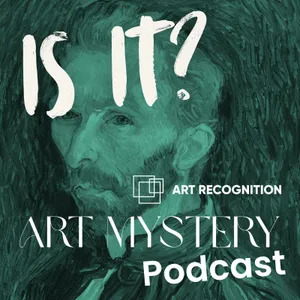
Is It? is a podcast on art history’s mysteries. In each episode, the question is asked whether a certain painting is by a certain famous artist. These are puzzle paintings, works that have divided and confounded scholars, sometimes for centuries. To answer this question, a guest expert, a specialist in the artist in question, is brought in. An expert in AI authentication from Art Recognition is also brought in. While the guest expert is the star of the show, a cutting edge AI analysis of the painting in question has been conducted, and the results are revealed in the final part of the episode. The podcast is hosted by award-winning presenter and best-selling art historian, Professor Noah Charney. The series covers suspected works by Caravaggio, Rembrandt, Van Dyck, Van Eyck and many more.
Latest Episodes
The most recent episodes — sign up to get AI-powered summaries of each one.
- 1 weeks ago29 min
Is It a Titian? with Susie Hodge
The so-called Allendale Nativity, an Adoration of the Shepherds now at the National Gallery in Washington, D.C., is attributed to Giorgione. But some, including the most famous of all connoisseurs, Bernard Berenson, if it is in fact by Titian. For this episode we put this to the test and asked the best available AI image analysis team to examine the painting. To discuss the results, I'm joined by the wonderfully prolific Susie Hodge, art historian and author of more than 100 books and counting.To learn more about Susie Hodge, click here: https://www.susiehodge.comTo learn more about Art Recognition and AI image analysis, click here: https://art-recognition.comTo see the works we examined, click here for the National Gallery version: https://www.nga.gov/artworks/432-adoration-shepherdsAnd here for the Kunsthistorichemuseum version: https://www.khm.at/en/artworks/adoration-of-the-shepherds-825
- Jul 8, 202627 min
Is It an Artemisia?
This episode tests the attribution of two paintings long thought to have been by the great Baroque master, Artemisia Gentileschi--Madonna and Child, and Saint Cecilia, both of which are part of the wonderful collection at Galleria Spada in Rome. Though both works have been part of the collection and attributed to Artemisia since the 17th century, forensic analysis raised some questions that, through our discussion, we can deem solved! To discuss these works, host Noah Charney is joined by Adriana Capriotti, director of Galleria Spada; Beatrice de Ruggieri, a technical art historian who worked on the paintings and through her lab, Emmebi Diagnostica Artistica; and Alessandra Conti, an art historian with Art Recognition. The Madonna and Child was examined and restored thanks to support from Artemisia Gold, a UK-registered charity and global entity committed to the rediscovery, restoration, and exhibition of overlooked artwork, with a focus on forgotten female artists. Tune in to find out how a museum director, an art historian, an AI specialist, and a conservator unpack a pair of paintings by one of the greatest artists of the Baroque. To learn more about Artemisia Gold and how you can support the restoration of key works by great female artists, click here: https://artemisiagold.org To learn more about Galleria Spada, click here: https://galleriaspada.cultura.gov.it/en/the-collection/ To learn more about Emmebi Diagnostica Artistica, click here: http://www.emmebi-arte.it To order a copy of Brushed Aside: The Untold Story of Women in Art by Noah Charney, click here: https://www.bloomsbury.com/uk/brushed-aside-9781538170991/ To learn more about Art Recognition, click here: https://art-recognition.com
- Jun 10, 202642 min
Is It a Basquiat? with Magnus Resch
In Orlando a museum exhibited what it was claimed were a lost cache of 25 Basquiat paintings. Then the FBI raided and seized them. In this episode, we used cutting edge AI technology to check those 25 paintings to see if any might actually be by Basquiat, or were all of them forgeries? Joining us is art market expert Magnus Resch and Art Recognition founder, Carina Popovici. We covered a wide array of other topics, including tips from Magnus on how to recognize when a deal for an artwork is too good to be true, how he sees the future of AI use as a first line of inquiry for authenticating art, and Magnus introduces his new app, the eponymous Magnus, which functions like Shazam for artworks: snap a photo and it will tell you the artwork, the artist, and its estimated value. Listeners will find a download code (NOAH50), to give them early access to the beta version. Learn more about Art Recognition here: https://art-recognition.com Learn more about Magnus Resch here: https://www.magnusresch.com Download the Magnus app wherever you get your apps or here: https://magnus.net
- May 6, 202632 min
Is It a Modigliani? with Georgina Adam
In the spring of 2026 a new Modigliani catalogue raisonne was published. It was the first catalogue raisonne to include a painting previous not attributed to the artist in question, now authenticated using AI. It is one of the countless examples of symbiosis, when the connoisseur and the AI image analysis agree. But the catalogue opens up other questions--some 15 works attributed to Modigliani in past catalogues were downgraded, no longer considered his work, while some 100 others were added, a huge number for an artist for whom a single work can command millions. To discuss this, I invited Carina Popovici, founder of Art Recognition, and Georgina Adam, an acclaimed British art journalist specializing in the art market. To learn more about Georgina Adam, click here. To learn more about Art Recognition, click here. To learn more about the catalogue raisonne, click here.
- Mar 31, 202640 min
Is It a Bronzino? with Bruce Edelstein
This episode features a portrait of Eleonora de Toledo, the wife of Duke Cosimo de Medici and an impressive woman, indeed. But is this portrait of her by the Medici court painter Bronzino? Or by his pupil and devoted follower Alessandro Allori? To explore who made this painting, we spoke with Bruce Edelstein, a professor and researcher based in Florence who is part of the global network of NYU. He is also a Bronzino specialist and has written a book on Eleonora. We are also joined by Alessandra Conti from Art Recognition who explains the cutting edge AI image analysis and how to interpret the results. So...it is a Bronzino? Or an Allori? Tune in to find out! To learn more about Bruce and his work, click here. To learn more about Art Recognition, click here.
- Feb 28, 202635 min
Can AI Solve an Art Theft? Interview with Steve Berry on the Ghent Altarpiece
In this special episode, we chat with Steve Berry. Steve is the mega bestselling author of thoughtful art and artefact treasure hunt thrillers. He has sold over 26 million books and counting, selling an average of a book every thirty seconds. His thrillers are deeply researched and include a note from the author section clarifying what has been changed to suit the plot, so that the reader will be clear on what is fact and where the fiction begins. Noah was Steve's expert consultant for the novel "The Omega Factor," which features Jan van Eyck's "Ghent Altarpiece." For this episode, Art Recognition tested the famous Judges panel from the altarpiece, which was stolen in 1934 and never recovered. Or was it? A conservator in the 1970s theorized that the replacement panel, painted by infamous restorer (and art forger) Jef van der Veken might actually be the stolen panel, painted over to surreptitiously return it to the cathedral of St Bavo from which it was stolen. Art Recognition's AI image analysis will determine whether this was the case, or if the missing panel is still out there. Along the way Steve and Noah chat about writing, research, van Eyck...and Noah introduces Steve to AI image analysis. To learn more about Steve Berry and his books, click here: https://steveberry.org To learn more about Art Recognition, click here: https://art-recognition.com To learn more about "The Ghent Altarpiece" consider reading Noah's book, "Stealing the Mystic Lamb: The True Story of the World's Most Coveted Masterpiece."
- Jan 31, 202633 min
Is It a Said? with Jehane Ragai
In this episode, we’re turning our attention to the work of Mahmoud Sa'id, one of the most important and influential figures in modern Egyptian art. Trained in Europe yet deeply rooted in Egyptian culture, Sa’id created a body of work that blends academic technique with a distinctly local vision. His paintings occupy a central place in the history of twentieth-century Egyptian modernism—and they also raise important questions about attribution, variation, and legacy. To discuss a painting that she selected for AI image analysis, I’m joined by Jehane Ragai, emeritus professor of chemistry at the American University in Cairo. Professor Ragai is a pioneer in the scientific analysis of artworks, with decades of experience applying chemistry and materials science to questions of attribution, authenticity, and conservation. Her work has been especially influential in the study of modern Egyptian painting, where scientific evidence can play a crucial role in clarifying complex art-historical and market questions. She’s the author of two excellent books that are sitting on my shelf: "The Scientist and the Forger" and "Technical Art History." I’m also joined by Batu Arda Düzgün, AI Developer at Art Recognition, where he works at the intersection of machine learning, visual analysis, and art authentication. Batu develops systems that analyze artistic patterns at a level of scale and precision impossible for the human eye alone, offering new tools for understanding authorship, consistency, and deviation within an artist’s oeuvre. Let's ask the question: Is it a Sa'id?
- Dec 31, 202543 min
Is It a Van Eyck? with Till-Holger Borchert
This episode of Is It? the art mystery podcasts looks at a small painting at the Philadelphia Museum of Art which is largely attributed to Jan van Eyck: "Saint Francis Receiving the Stigmata." But is it actually by van Eyck? To discuss this and the results of the cutting-edge AI image analysis by Art Recognition, I'll speak with Till-Holger Borchert, director of the Suermondt-Ludwig-Museum in Aachen, and an authority on van Eyck. To see the painting in question, displayed at the Philadelphia Museum of Art click here.To see the other version of the painting, displayed at the Sabauda Gallery in Turin, click here.To learn more about Till-Holger Borchert, click here.To learn more about Art Recognition, click here.
Get Is It? The Art Mystery Podcast summaries in your inbox
Free AI-powered daily recaps. Key takeaways, quotes, and mentions — in a 5-minute read.
Get Free Summaries →Free forever for up to 3 podcasts. No credit card required.
You Might Also Like
Listeners also like.
Art History for All
Explores individual artworks and their broader significance, making art history accessible and meaningful to all audiences.
Stories of Art
Art historians explore pivotal moments, artists, and hidden narratives that shaped the history of art.
Intelligence Squared: Arts & Culture
Explores pivotal artistic and cultural movements through conversations with leading writers, artists, and thinkers.

History's Greatest Mysteries
Explores unsolved historical enigmas, from vanished figures to buried treasures, using insights from experts across disciplines.
History's Great Mysteries
Explores unexplained historical events and invites listeners to ponder possible theories behind enduring mysteries.
Who, When, Wow!
A curious kid travels through time to solve historical mysteries like Atlantis and Bigfoot using critical thinking and humor.
The Most Interesting Thing in AI
Conversations with leading thinkers on the ethical, economic, and social impacts of artificial intelligence.

How I AI
A practical guide to using AI tools in work and life, featuring guests who share specific, actionable techniques and workflows.
Unsolved Murders: True Crime Stories
Dramatized true crime stories explore cold cases and unsolved murders through immersive audio storytelling.
Mystery Show
A podcast about mysteries hosted by Starlee Kine.

Murder, Mystery & Makeup
A beauty influencer explores true crime stories, from serial killers to cannibals, while doing makeup.
Really? no, Really? with Jason Alexander & Peter Tilden
Two friends explore life's puzzling questions with experts and guests, seeking answers to the bizarre and confusing aspects of the world.
About Is It? The Art Mystery Podcast
Is It? is a podcast on art history’s mysteries. In each episode, the question is asked whether a certain painting is by a certain famous artist. These are puzzle paintings, works that have divided and confounded scholars, sometimes for centuries. To answer this question, a guest expert, a specialist in the artist in question, is brought in. An expert in AI authentication from Art Recognition is also brought in. While the guest expert is the star of the show, a cutting edge AI analysis of the painting in question has been conducted, and the results are revealed in the final part of the episode. The podcast is hosted by award-winning presenter and best-selling art historian, Professor Noah Charney. The series covers suspected works by Caravaggio, Rembrandt, Van Dyck, Van Eyck and many more.
Customized Recaps
AI-powered recaps with compact key takeaways, quotes, and insights.
Straight to Your Inbox
Get key takeaways from Is It? The Art Mystery Podcast in a 5-minute read.
Save Hours Every Week
Stay current on your favorite podcasts without falling behind.
Frequently Asked Questions
What is Podzilla's Is It? The Art Mystery Podcast daily summary?
It's a free AI-powered email that summarizes new episodes of Is It? The Art Mystery Podcast as soon as they're published. You get the key takeaways, notable quotes, and links & mentions — all in a quick read.
How does the Is It? The Art Mystery Podcast podcast summary work?
When a new episode drops, our AI transcribes and analyzes it, then generates a personalized summary tailored to your interests and profession. It's delivered to your inbox every morning.
Is this an official Is It? The Art Mystery Podcast product?
No. Podzilla is an independent service that summarizes publicly available podcast content. We're not affiliated with or endorsed by Noah Charney.
Can I get summaries of other podcasts too?
Absolutely! The free plan covers up to 3 podcasts. Upgrade to Pro for 15, or Premium for 50. Browse our full catalog at /podcasts.
How often does Is It? The Art Mystery Podcast release new episodes?
Is It? The Art Mystery Podcast publishes monthly. Our AI generates a summary within hours of each new episode.
What topics does Is It? The Art Mystery Podcast cover?
Is It? The Art Mystery Podcast covers topics including History, Technology, Arts, Visual Arts. Our AI identifies the specific themes in each episode and highlights what matters most to you.
Start getting Is It? The Art Mystery Podcast summaries tomorrow morning.
Free forever for up to 3 podcasts. No credit card required.
Free forever for up to 3 podcasts. No credit card required.