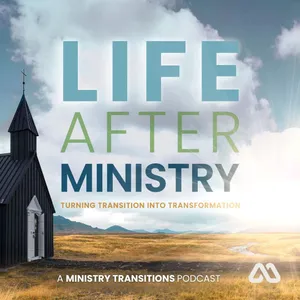
Free Daily Podcast Summary
Life After Ministry: Daily Summaries Delivered
by Matt Davis
Many of us have experienced the sting of losing a job. But there’s something uniquely challenging about leaving a position in full-time vocational ministry. Whether you’re stepping down from a church or leaving a kingdom nonprofit, it’s not as simple as just changing jobs. Suddenly, everything changes. You’re left navigating not just a career transition, but also a profound shift in identity, community, and daily routines. It feels like stepping into an unknown, filled with questions like, ”What’s next? How do I redefine myself outside the ministry? How do I maintain my faith amidst this transition?” We’ve been there, navigating the complex journey from vocational ministry to a new chapter in our lives. We’ll explore stories of transformation, hear from those who’ve walked this path before, and provide practical strategies to turn your transition into a season of growth. Remember, every ending is a new beginning.
Latest Episodes
The most recent episodes — sign up to get AI-powered summaries of each one.
- 3 days ago34 min
Succession Planning for the Ministry You Love (featuring Robin Fuller)
Why is it so hard to let go of a ministry you love before something forces the decision? Robin Fuller knows firsthand. After more than 23 years in pregnancy center ministry, she burned out and heard that only about 10 percent of ministry leaders finish well.She decided to be part of that 10 percent. Robin lifted the mantle off her shoulders in front of her board and walked through a four-year succession plan that started with a simple "Things I Do" document.Matt and Robin talk about why founders struggle most, how a poverty mindset keeps leaders in the seat too long, and why outgoing leaders need to step away for at least six months. Robin also shares her new book, Finish Well: Succession Planning for the Ministry You Love.Key Takeaways1. Succession starts long before you leave. Robin spent four years working with her board so the ministry could continue without a blip.2. Write down what you actually do. A simple "Things I Do" list shows what to release, what to delegate, and what the next leader will need.3. Know what will be missing when you are gone. Robin knew finances were not her gift, so she looked for a successor who was strong where she was not.4. Pay and plan for your people. Fair pay and retirement planning keep leaders from staying too long just because they cannot afford to leave.5. Give your successor room. Robin now encourages every outgoing leader to stay away for at least six months and to hand pride back to the Lord.Chapter Markers00:00 - Why Letting Go Is So HardRobin's story, burnout, and why only about 10 percent of ministry leaders finish well.06:58 - The "Things I Do" DocumentThe simple list that showed Robin what to release and how to restructure her role.12:10 - Why Leaders Stay Too LongFounders, the poverty mindset, and building a healthy compensation philosophy.20:19 - Stepping Away WellThe six-month rule, keeping staff through the handoff, and wrestling with pride.27:30 - Finish Well: The BookTwelve practical steps for ministry leaders and boards, plus Robin's masterminds.ResourcesIf you are navigating a ministry transition, visit Ministry Transitions to explore resources or start a confidential conversation.Get Robin Fuller's book Finish Well: Succession Planning for the Ministry You Love and learn about her coaching and succession planning mastermind groups at robinfuller.coach. The book is also available on Amazon.Connect with Robin on Facebook and LinkedIn.Music licensed through Soundstripe.Code: XR91I6DXHFKRNMGI, UJMZ6VRYI26GYGRX
- 1 weeks ago30 min
Leaving a Gift Or a Legacy? (featuring Anthony Barton)
Anthony Barton was a successful business owner when a trust attorney asked what his family mission statement was - not his business one.That question pushed him beyond leaving a gift toward building a legacy, and within 90 days he and his family were serving in Swaziland.Cancer later clarified the shift. Anthony sold his company, entered seminary, and now coaches Christian entrepreneurs through Convene.In this conversation he shares frameworks for pausing and pivoting, caring for people as image-bearers, and looking for God's providence in disruption.6. KEY TAKEAWAYS1. A gift and a legacy aren't the same thing. Anthony's trajectory changed when he began thinking about what his family could build together for God rather than simply what he could someday leave behind.2. God can use disruption to clarify calling. Anthony describes cancer as brutal, but also as a season that brought unusual clarity about where his life needed to go next.3. You cannot pivot well if you never pause. Healthy leaders and organizations stop long enough to evaluate what is happening before they change direction.4. People are not resources. Christian leadership should see people as individuals made in the image of God, not simply inputs for organizational productivity.5. Providence may be the most important P. In business, ministry, transition, and suffering, Anthony keeps returning to one question: Where is God's providence in all that we do?7. CHAPTER MARKERS00:00 - Welcome Anthony BartonMatt introduces Anthony and begins with the major turning point in 2013.00:47 - Gift or Legacy?A trust attorney asks Anthony a question that changes how he thinks about what he will leave his family.07:59 - The Next Disruption: CancerA cancer diagnosis reshapes Anthony's understanding of life, calling, and what he wants to build.13:15 - Protect, Pause, and PivotAnthony shares leadership priorities beyond profit and productivity, including pause and pivot.23:17 - The Eight F's DiagnosticAnthony introduces a simple framework for understanding the people you lead beyond what they produce.8. RESOURCESIf you’re navigating a ministry transition, visit Ministry Transitions to explore resources or start a confidential conversation.To learn more about Anthony Barton and his work with Christian business leaders, visit Anthony Barton at Convene.You can also explore Convene.Resources:Ministry TransitionsAnthony Barton at ConveneConvene
- 2 weeks ago39 min
Leading Through the Trust Jungle (featuring Rob McKenna)
What happens when trust breaks inside a church, nonprofit, or leadership team?Dr. Rob McKenna explains why trust is more than a feeling, how leaders can rebuild it after failure, and why succession is really the transfer of trust.This conversation explores emotional maturity, candor, vulnerability, blind spots, competence, reliability, and the three questions every team member is asking: Do I matter? Are you telling me the truth? Do I belong here?Key TakeawaysTrust has identifiable drivers, including candor, competence, reliability, emotional maturity, and concern for others.Nearly half of employees experience their workplace as a “jungle of trust.”Competence matters, but competence alone does not make someone a trusted leader.Rebuilding trust requires responsibility, self-awareness, grace, and continual repair.Succession is more than transferring a role; it is transferring trust into a team and organizational culture.Leaders must create conditions where people can tell the truth and receive difficult feedback.Every team member is asking: Do I matter? Are you telling me the truth? Do I belong here?Chapter Markers00:00 – Succession as the transfer of trust01:23 – Introducing Dr. Rob McKenna02:15 – Why trust is difficult in ministry and nonprofit organizations06:04 – The State of Trust at Work08:34 – Signs that trust is missing10:25 – Why competence alone is not enough14:19 – What it means to be a whole leader18:00 – Handling difficult conversations during transition20:00 – Succession and the transfer of trust24:51 – How leaders rebuild trust after failure28:34 – Blind spots and meaningful change32:44 – What individuals can do in a jungle of trust35:57 – How organizations can begin rebuilding trust39:00 – Closing thoughts and resourcesVisit MinistryTransitions.com if a leadership transition is exposing cracks in trust. To learn more about Dr. Rob McKenna’s work, Whole Leaders, Wild Trust, and WiLD Leaders’ tools, visit wildleaders.org.
- Jul 21, 202633 min
Holding Gratitude & Grief (featuring Dennis Atwood)
Most ministry leaders expect to decide when they step away. Dennis Atwood never had that opportunity.After serving churches for nearly three decades, Dennis was diagnosed with early-onset Parkinson's disease. He quietly carried the diagnosis for years before the progression of the disease forced him to step away from the pastorate he loved. In this deeply honest conversation, Dennis reflects on grief, identity, suffering, and why choosing gratitude isn't about denying pain but discovering God's faithfulness in the middle of it.Key TakeawaysUnexpected health challenges can reshape both ministry and identity.Grief is a natural part of leaving a calling you deeply love.Gratitude isn't the absence of suffering but a response to God's faithfulness within it.Ministry leaders need purpose beyond the title they hold.God often brings deep spiritual formation through seasons we would never choose.Chapter Markers00:00 Dennis' pastoral journey and ministry background01:45 An early Parkinson's diagnosis changes everything03:30 Why Dennis kept his diagnosis private for years07:45 Telling the church and preparing for transition11:00 Missing ministry more than expected13:15 Becoming a caregiver and navigating family transition14:30 Holy discontent and living with purpose16:20 Choosing gratitude through suffering20:00 The dark night of the soul and spiritual formation25:30 Encouragement for leaders whose ministry ended unexpectedlyIf you're facing a ministry transition or unexpected life change, start a conversation with a specialist at Ministry Transitions. Learn more about Dennis and his book Choosing Gratitude at Market Square Books.
- Jul 14, 202637 min
When Home Becomes the Mission Field (featuring Nate & Brittany Bruns)
Missionaries spend years preparing to go to the field, but few are prepared for what it feels like to come home.After serving six years in Germany, Nate and Brittany Bruns share the unexpected challenges of returning to the United States, navigating reverse culture shock, raising third-culture kids, and rebuilding community.Ultimately, they discovered God was calling them to live as missionaries in their own country. Their story offers practical encouragement for missionaries, churches, and anyone walking through an unexpected ministry transition.Key TakeawaysReverse culture shock can be more difficult than moving overseas.Missionary transitions affect spouses, children, and the entire family.God often prepares leaders for future seasons long before they understand why.Returning missionaries bring valuable wisdom that can strengthen the local church.Waiting on God is an active posture of trust, not passive inactivity.Chapter Markers00:00 Job loss, the desert season, and God's unexpected call to Germany04:30 Reaching a post-Christian culture through relationships07:15 When God said it was time to come home11:15 Reverse culture shock and becoming strangers in your own country16:00 Helping third-culture kids navigate transition20:15 How churches can better care for returning missionaries23:30 What America can learn from post-Christian Europe26:45 Financial transitions and rebuilding support30:00 Waiting on God and discerning what's next34:00 The Bruns Tribe and engaging the spiritually disengaged36:30 Encouragement for missionaries in transitionIf you're navigating a ministry transition, we'd love to help. Start a conversation with a specialist at Ministry Transitions. Learn more about Nate and Brittany's ministry at The Bruns Tribe.
- Jul 7, 202630 min
Ministry, Mercy & Moving Forward (featuring Scott Sauls)
Few ministry leaders expect the end of their pastoral chapter to unfold differently than they imagined. Yet for many, transition arrives carrying both grief and unexpected opportunity. In this honest conversation, Scott Sauls reflects on stepping away after more than 30 years of pastoral ministry, processing the loss of a role he loved, recovering from work addiction, and discovering a new calling shepherding high-capacity leaders. Along the way, he offers wisdom about identity, friendship, reconciliation, and trusting God when the future feels uncertain. Key Takeaways Ministry transitions often bring grief and relief at the same time. Work addiction can quietly shape a leader's identity and relationships. Healthy transitions begin with embracing who you are apart from your role. Every leader needs authentic friendships, not just professional relationships. The gospel calls us to love across differences, especially when it's difficult. Chapter Markers 00:00 Scott's ministry journey and pastoral background 02:20 An unexpected transition from pastoral ministry 05:00 Grief, relief, and leaving a church you love 07:00 Confronting work addiction through recovery 09:30 Is Scott still a pastor? 11:00 The birth of the Sycamore Community 16:30 Shepherding leaders outside the local church 18:30 The impact of ministry transitions on spouses and families 21:00 Loving across the lines of difference 27:00 The Mercy King and God's relentless love If you're navigating a ministry transition, start a conversation with a specialist at Ministry Transitions. Learn more about Scott's work at Scott Sauls.
- Jun 30, 202633 min
Healthy Pastors Plan Healthy Exits (featuring Keith Spurgin)
Founder transitions are some of the most difficult moments in ministry leadership, but they don't have to end poorly. After leading the church he planted for 27 years, Keith Spurgin shares the lessons he learned about succession, feedback, sabbaticals, and letting go with confidence. He also reflects on the leadership mistakes he nearly made during COVID and how stepping away for a year ultimately prepared both him and his church for a healthy transition. Key Takeaways Healthy succession planning begins years before the transition. Founder transitions often succeed when leadership is shared rather than concentrated in one successor. Sabbaticals create space for leaders to rediscover who they are apart from their role. Feedback reveals blind spots that leaders cannot see on their own. Legacy is built by preparing others to succeed after you're gone. Chapter Markers 00:00 Introduction and Keith's ministry journey 00:45 Nearly derailing a succession plan during COVID 01:45 Why handing leadership to a team changed everything 06:45 Building trust before succession 07:45 Why Keith stayed away for six months after stepping down 09:00 Lessons from an unexpected year-long sabbatical 15:20 Why every leader needs honest feedback 18:15 Processing life after ministry 24:00 The Growth Resourcing Group 26:00 Unknown: Finding Connection in a Disconnected World 27:30 Why Keith's next book is about finishing well Preparing for a leadership transition? Start a conversation with a specialist at Ministry Transitions. Learn more about Keith's leadership resources at Keith Spurgin.
- Jun 23, 202646 min
Finding Ministry at Home Depot (featuring Steve Cummings)
Many leaders secretly believe their value comes from what they do. But what happens when the title disappears, the ministry ends, or life takes a turn you never expected? In this deeply personal conversation, Steve Cummings shares his journey through ministry leadership, addiction recovery, job loss, financial uncertainty, and ultimately discovering a deeper identity as a beloved son of God. From sitting in rehab at age 55 to working at Home Depot and eventually launching Bringing Kingdom, Steve offers hope for anyone learning to trust God in a season they never planned for. Key Takeaways Your identity is not determined by your title, income, or position. Hidden struggles become more dangerous when they remain isolated. Recovery begins when honesty replaces shame. God often uses seasons of transition to reveal deeper truths about who we are. Ministry is not confined to a church building or nonprofit organization. Chapter Markers 00:00 Friendship, ministry history, and Steve's background 01:30 Seminary, missed opportunities, and unexpected career turns 03:45 Building a career in nonprofit ministry 06:00 Hidden struggles, addiction, and personal collapse 08:00 Rehab, recovery, and discovering the deeper issues 11:00 Losing a ministry position and starting over 12:30 Working at Home Depot and confronting identity 16:00 Launching Bringing Kingdom 21:30 The Father Eclipse and understanding father wounds 28:00 Helping men discover their identity 31:30 Financial uncertainty, faith, and trusting God's provision 40:30 Is there life after ministry? If you're navigating a leadership transition or difficult season, start a conversation with a specialist at Ministry Transitions. Learn more about Steve's ministry at Bringing Kingdom.
Get Life After Ministry summaries in your inbox
Free AI-powered daily recaps. Key takeaways, quotes, and mentions — in a 5-minute read.
Get Free Summaries →Free forever for up to 3 podcasts. No credit card required.
You Might Also Like
Listeners also like.

Becoming Something with Jonathan Pokluda
A weekly podcast offering Christian guidance on faith and life for young adults in their 20s and 30s.

The Daily Blade: Joby Martin & Kyle Thompson
A daily devotional podcast helping Christians apply biblical teachings to everyday life.
Undaunted.Life: A Man's Podcast by Kyle Thompson
A podcast for men exploring faith, culture, and politics with a focus on building spiritual, mental, and physical resilience.

Life After Swim
Retired swimmers share experiences and advice on adjusting to life after competitive swimming, with open conversations about mental health.

Becoming UnDone with Dr. Toby Brooks
Explores how high-achievers rebuild after hitting rock bottom, facing burnout, or losing their identity.

Life.Church with Craig Groeschel
Teachings from Craig Groeschel and Life.Church pastors on practical, biblical topics for everyday life.

The Uncommon Career: Job Search & Career Coaching for Mid-career Women
Helps mid-career women improve their job search by refining personal branding, communication, and negotiation strategies.

Keeping Families Connected
Christian teaching and counseling to help families overcome division through biblical truth, faith growth, and relational healing.

Dial In with Jonny Ardavanis
A podcast exploring Scripture to help people understand and apply biblical truth for spiritual growth and transformation.

Built 4 More
Conversations with elite performers and leaders exploring the intersection of high performance, discipline, and faith.

Military Retirement Podcast
Veterans discuss military service, retirement, and life after the military, including transitioning to civilian careers and entrepreneurship.

Career Sessions
Professionals share pivotal career moments, challenges, and decisions that shaped their paths.
About Life After Ministry
Many of us have experienced the sting of losing a job. But there’s something uniquely challenging about leaving a position in full-time vocational ministry. Whether you’re stepping down from a church or leaving a kingdom nonprofit, it’s not as simple as just changing jobs. Suddenly, everything changes. You’re left navigating not just a career transition, but also a profound shift in identity, community, and daily routines. It feels like stepping into an unknown, filled with questions like, ”What’s next? How do I redefine myself outside the ministry? How do I maintain my faith amidst this transition?” We’ve been there, navigating the complex journey from vocational ministry to a new chapter in our lives. We’ll explore stories of transformation, hear from those who’ve walked this path before, and provide practical strategies to turn your transition into a season of growth. Remember, every ending is a new beginning.
Customized Recaps
AI-powered recaps with compact key takeaways, quotes, and insights.
Straight to Your Inbox
Get key takeaways from Life After Ministry in a 5-minute read.
Save Hours Every Week
Stay current on your favorite podcasts without falling behind.
Frequently Asked Questions
What is Podzilla's Life After Ministry daily summary?
It's a free AI-powered email that summarizes new episodes of Life After Ministry as soon as they're published. You get the key takeaways, notable quotes, and links & mentions — all in a quick read.
How does the Life After Ministry podcast summary work?
When a new episode drops, our AI transcribes and analyzes it, then generates a personalized summary tailored to your interests and profession. It's delivered to your inbox every morning.
Is this an official Life After Ministry product?
No. Podzilla is an independent service that summarizes publicly available podcast content. We're not affiliated with or endorsed by Matt Davis.
Can I get summaries of other podcasts too?
Absolutely! The free plan covers up to 3 podcasts. Upgrade to Pro for 15, or Premium for 50. Browse our full catalog at /podcasts.
How often does Life After Ministry release new episodes?
Life After Ministry publishes weekly. Our AI generates a summary within hours of each new episode.
What topics does Life After Ministry cover?
Life After Ministry covers topics including Business, Religion & Spirituality, Spirituality, Christianity, Non-Profit. Our AI identifies the specific themes in each episode and highlights what matters most to you.
Start getting Life After Ministry summaries tomorrow morning.
Free forever for up to 3 podcasts. No credit card required.
Free forever for up to 3 podcasts. No credit card required.