Free Daily Podcast Summary
Literacy in Color: A Science of Reading Aligned Podcast for Educators: Daily Summaries Delivered
by Michelle Sullivan • Literacy Coach & Science of Reading Advocate
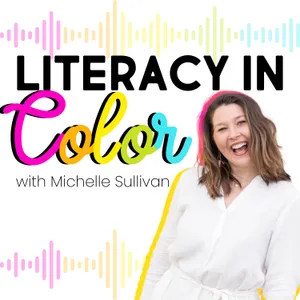
Literacy in Color is the go-to podcast for elementary teachers, literacy coaches, and reading interventionists who are passionate about bringing the Science of Reading to life in vibrant, engaging, and effective ways. Hosted by Michelle Sullivan — a seasoned literacy expert & Science of Reading advocate - with as a reading interventionist & literacy coach since 2013 — this show is designed to help you captivate your learners, boost reading fluency, and foster a deep understanding of language. Each week, you’ll discover practical tips, proven strategies, and creative ideas to make your literacy instruction colorful and impactful. From phonics and morphology to vocabulary building and comprehension techniques, we’ll explore the full spectrum of evidence-based practices that support all learners on their journey to becoming confident readers. Whether you’re a seasoned educator or just starting out, “Literacy in Color” will empower you with the tools, inspiration, and know-how to make literacy instruction not just effective, but truly unforgettable.
Latest Episodes
The most recent episodes — sign up to get AI-powered summaries of each one.
- 3 days ago1h 7m
114. But what exactly are we "waiting to see"? with Barb Golub (Dyslexia Awareness Month)
What does dyslexia actually look like – from preschool through high school – and how can educators recognize when a student’s struggles may be telling us something more?In this Dyslexia Awareness Month bonus episode, Certified Dyslexia Therapist and teacher educator Barb Golub joins the show for an honest, practical, and incredibly fun conversation about recognizing and supporting students with dyslexia.Barb shares the personal story that ultimately led her into dyslexia therapy, and explains why dyslexia can be easy to miss, particularly in bright students who have become skilled at compensating. She walks through signs educators and families might notice at different ages. We also dig into why multilingual learners may be under-identified for dyslexia and why evaluators must consider both language acquisition and reading development rather than defaulting to a “wait and see” approach.They also discuss what needs to change at the systems level, why intervention shouldn't become a permanent placement without meaningful progress, and what general education teachers can do when they suspect a student is struggling – even when they don't have a specialist standing beside them.And because it's Barb, the episode ends with push-ups, miniature tchotchkes, irregular high-frequency words, crispy Diet Coke, and some literacy hot takes… obviously! Key Takeaways:What dyslexia is – and some persistent misconceptions about itSigns of dyslexia from preschool through adolescenceDyslexia therapy versus traditional tutoringFidelity, dosage, mastery, and responsive instructionWhy strong instruction for dyslexic readers can also support other readersThe importance of vetting literacy materials and practicesConnect with Barb Golub:Website: https://www.barbgolub.com/Email: hello@barbgolub.comInstagram: @literacy_barbLinkedInMentioned in this episode:Reading Science AcademyGet your FREE grouping resource bundle here: https://www.stephaniestollarconsulting.com/groupingsheets?utm_source=podcast&utm_medium=show_notes&utm_campaign=podcast Join The Reading Science Academy: https://www.stephaniestollarconsulting.com/register?utm_source=podcast&utm_medium=show-notes&utm_campaign=literacy-in-color
- 6 days ago1h 0m
113. Integrated MTSS: Looking at Academics & Behavior Side by Side with Pam Radford and Dawn Miller, MTSS Innovations
What happens when schools treat academics and behavior as two completely separate systems?Dr. Dawn Miller and Dr. Pamela Radford of MTSS Innovations help us explore what it really means to build an integrated Multi-Tiered System of Supports (MTSS): one that recognizes that students’ academic, behavioral, social, and emotional needs don’t exist in isolation.We unpack the powerful relationship between academic success and behavior, including what can happen when a student’s academic struggles show up as avoidance, disengagement, disruptive behavior, or missed instructional time. We also explore the reverse: how behavioral needs and time away from instruction can compound academic difficulties.Dawn and Pam take us inside an integrated MTSS model, discussing how schools can move away from siloed academic and behavior teams and instead create systems in which educators examine multiple sources of data side by side. We talk about universal screening, attendance, office discipline referrals, behavioral screeners, and implementation data.We also dig into what this means for Tier 1 instruction and evidence-based practices. Dawn and Pam explain why selecting an evidence-based practice isn't simply about finding something that “works”; it's about considering the student, the context, available resources, implementation, and the interaction between academic and behavioral needs.For leaders wondering where to even begin? Dawn offers an important reminder: “don't let perfect be the enemy of good”. You may begin by strengthening one part of your system, but the vision from the beginning should be one of integration.Key Takeaways:What an integrated MTSS model actually looks like & why academic and behavioral data should be examined togetherThe relationship between academic struggles, behavior, engagement, and access to instructionBehavioral data sources including attendance, office discipline referrals, universal screeners, and daily progress reportsHow engagement and opportunities to respond can influence both academic and behavioral outcomesSelecting evidence-based practices based on student need, context, resources, and fitThe role of implementation fidelity, and why fidelity data should be used to support educatorsHow leaders can begin moving from siloed systems toward an integrated MTSSWhy continuous improvement really does have to be continuousResources Mentioned:Book: Leading Equity-Based MTSS for All StudentsBook: Promoting Effective MTSS Implementation: Challenges and Solutions for School ConsultationBook: Explicit Instructionhttps://www.mtss-innovations.com/MTSS Fidelity Integrity Assessment (FIA)Self Assessment of MTSS Implementation - Illinois (SAM-I)MTSS Innovations: The Collective & Additional FREE Resources:Recorded webinar: "Epic Fails" where Dawn shares the journey of an integrated model in a first-ring suburban districtRecorded webinar: “Find Your Focus,” that highlights the 6 habits of MTSS to incorporate into an integrated approachA MTSS Discussion Guide for District and School LeadersThis post may contain affiliate links, which means if you click on a link and make a purchase, I may earn a small commission at no additional cost to you. Thank you for supporting the podcast!Connect with Pam and Dawn:Email: <a href="mailto
- 1 weeks ago51 min
112. Routines for Reading Results with Dr. Sarah Brown & Dr. Kelly Powell-Smith
Dr. Sarah Brown and Dr. Kelly Powell-Smith, co-authors of Routines for Reading Results: A Practical Approach for Accelerating Growth, alongside Dr. Stephanie Stollar and Beth Madden unpack the principles of Direct Instruction and explain why effective reading instruction depends not only on what we teach, but on the intentional design and delivery of instruction.They walk through the four phases of learning: acquisition, automaticity, generalization, and adaptation – and explain why students can appear to “get it” during a lesson yet struggle to retain or apply that learning later.The conversation also tackles a common criticism of scripted instruction: Do scripts stifle teacher creativity and responsiveness? Sarah and Kelly explain why thoughtfully designed routines can actually reduce cognitive load for teachers, provide consistency for students, and free educators to focus on the thing that cannot be scripted ahead of time: how students are responding in the moment.They also discuss how these routines can live alongside existing high-quality instructional materials, how educators can use data to identify gaps rather than continually purchasing new programs, and what school leaders can do to support implementation.Key Takeaways:Direct Instruction (DI) defined & why both the design and delivery of instruction matterThe four phases of learning: acquisition → automaticity → generalization → adaptation & how instructional needs change depending on a student’s phase of learningThe role of precise, concise teacher languageModeling, leading, testing, firming, and providing individual turns – while building sufficient practice and intentional error correction into instructionHow leaders can support implementation through collaboration, data analysis, ongoing learning, and coachingResources & References Mentioned:Book: Routines for Reading Results: A Practical Approach for Accelerating Growth - Stephanie Stollar, Kelly A. Powell-Smith, Beth A. Madden & Sarah Brown (Amazon)Book: Routines for Reading Results (Solution Tree)Book: Teaching Struggling and At-Risk Readers: A Direct Instruction Approach - Doug Carnine and colleaguesDirect Instruction: the instructional approach originating in the work of Siegfried EngelmannProject Follow Through: “the largest and most consequential educational experiment in U.S. history, and its findings continue to inform NIFDI’s work to promote evidence-based, replicable instructional practices.”Research on connected phonation/continuous blending (Gonzalez-Frey, S. M., & Ehri, L. C. (2021). Connected Phonation is More Effective than Segmented Phonation for Teaching Beginning Readers to Decode Unfamiliar Words. Scientific Studies of Reading, 25(3), 272–285. https://doi.org/10.1080/10888438.2020.1776290)This post may contain affiliate links, which means if you click on a link and make a purchase, I may earn a small commission at no additional cost to you. Thank you for supporting the podcast!Connect with Dr. Sarah Brown:Website: https://systemimpactconsulting.com/Contact Dr. Sarah Brown on her WebsiteLinkedIn: Sarah Brown Ph.D.Join Dr. Brown’s MTSS Data AcademyDr. Brown also offers Virtual Coaching Sessions!Connect with Dr. Kelly Powell-Smith:LinkedIn: Kelly A. Powell-Smith<a href="https://www.msj.edu/faculty-and-staff-directory/faculty-directory/kelly-powell-smith.html" rel="noopener no
- 2 weeks ago1h 8m
111. When Language is the Missing Piece: DLD & SWI with Two SLPs, Kathleen Love & Beth Coppoc Gunshor
Developmental Language Disorder (DLD) affects approximately 1 in 14 people, yet many educators have never heard of it. So what might DLD actually look like in the classroom? How can we better support students when difficulties with language intersect with dyslexia, ADHD, executive function, reading, spelling, and writing?Speech-language pathologists, Kathleen Love and Beth Coppoc Gunshor take us for a deep dive into DLD and language-based literacy intervention.Kathleen and Beth unpack the differences and overlap among DLD, dyslexia, and ADHD, including why a student who appears inattentive or off-task may actually be struggling with the language demands of a task. They also share subtle signs of DLD educators can watch for: from vague vocabulary and word-retrieval difficulties to challenges following directions, understanding complex sentences, and telling cohesive stories.Then, the conversation turns practical. Kathleen and Beth explore ways educators can manage cognitive load, strengthen vocabulary instruction, and provide the repeated, explicit language experiences students with DLD may need. They also take us inside their intervention practices to show how Structured Word Inquiry (SWI) can extend far beyond spelling – supporting morphology, vocabulary, syntax, semantic networks, executive function, oral language, and even confidence.Key Takeaways:DLD definedThe overlap and distinctions among DLD, dyslexia, and ADHDPractical ways to reduce unnecessary cognitive load without reducing the thinkingHow to strengthen vocabulary instruction for students with language difficultiesWhy Structured Word Inquiry can be a powerful tool for building language as well as literacyResources Mentioned:Conifer literacy appDLD and MeOxEd & Assessment / NELIDr. Tiffany Hogan / The Speech and Language (SAiL) Literacy Lab2026 ASHA ConventionConnect with Kathleen Love:Website: https://conifermatrix.com/Instagram: @conifermatrixConifer Matrix on FacebookWebsite: https://www.raincityreading.com/Instagram: @rain.city.readingRain City Reading on FacebookRain City Reading on YouTubeRain City Reading NewsletterConnect with Beth Coppoc Gunshor:Website: http://bcgslp.com/Instagram: @bcgslpBCG SLP on FacebookBCG SLP Shop - T-ShirtsBCG SLP Shop - StickersThis podcast is brought to you by Reading Science Academy, where our friend Stephanie Stollar is giving Literacy in Color
- 3 weeks ago50 min
110. Decodable Texts Done Right: How to Leverage Them for Phonics, Fluency, Vocabulary & Writing with Dr. Wiley Blevins
Decodable texts are an important tool for helping readers apply their phonics knowledge, but are we squeezing everything we can out of them?Dr. Wiley Blevins – longtime educator, researcher, author, and one of the most recognized voices in phonics instruction – shares all about choosing and using decodable texts.When it comes to choosing decodable texts, Wiley shares the prevailing thinking around how decodable a text actually needs to be. We also tackle a question that doesn't always have a neat answer: When are students ready for less-controlled text? Wiley shares what he's currently exploring in his research, why that transition may look different from student to student, and why we shouldn't confuse being able to read a pattern with truly mastering it for spelling.We also get into using decodable texts for all they’re worth. In fact, decodables certainly can go far beyond simply getting students to practice a target phonics pattern. Wiley shares how he uses decodable texts across multiple days and throughout the literacy block to build oral language, fluency, vocabulary, syntax, writing, knowledge-building, and of course, comprehension. He walks us through practical routines teachers can use and explains how decodables can support differentiation for students who need additional practice with previously taught skills.Key Takeaways:Why decodable texts are a practice tool, fluency-building tool, and support for spellingWhat the research actually says (and doesn't say) about decodability percentagesWhat makes a high-quality decodable text & why natural language mattersHow to scaffold grade-level decodables for students who need additional supportHow to get more mileage from a decodable after the first readResources:Book: Differentiating Phonics Instruction for Maximum Impact by Wiley BlevinsBook: Choosing and Using Decodable Text by Wiley BlevinsBook: A Fresh Look at Phonics by Wiley BlevinsBook: Phonics from A to Z by Wiley BlevinsBook: The Megabook of Spelling (K-2) by Wiley BlevinsBook: The Megabook of Spelling (3-5) by Wiley BlevinsBook: Teaching Phonics & Word Study in the Intermediate Grades by Wiley BlevinsReycraft BooksThis post may contain affiliate links, which means if you click on a link and make a purchase, I may earn a small commission at no additional cost to you. Thank you for supporting the podcast!Connect with Dr. Wiley Blevins:Website: http://www.wileyblevins.com/LinkedInTwitter/XInstagramConnect with Michelle:Visit: www.michelleandthecolorfulclassroom.comFollow me on Instagram: @michelle_thecolorfulclassroom & @logosliteracyacademyJoin our Facebook CommunitySign up for my NewsletterShop on TPT: The Colorful ClassroomFor Phonics Resources, grab: <a href="https://colorful-classroom.mykajabi.com/p
- Sep 1, 20261h 9m
109. Phonological Awareness & the Alphabet: What the Research Says – and What We Still Don't Know with Dr. Shayne Piasta
Before we get into what the research currently says about teaching phonological awareness and the alphabet, this episode begins by breaking down some key terminology. What makes a practice evidence-based? What’s the difference between research-based and research-tested? What should we consider when implementing instruction aligned with the Science of Reading?Dr. Shayne Piasta, Distinguished Professor at THE Ohio State University and Faculty Associate at the Crane Center for Early Childhood Research and Policy, helps unpack what we know, what we’re still learning, and how educators can make evidence-informed decisions.We then dig into phonological and phonemic awareness. Dr. Piasta explains what research has established about the importance of PA, why phonemic awareness ultimately matters for reading and spelling, and where questions remain about exactly how PA should be taught. We discuss larger versus smaller units of sound, advanced tasks, group size, dosage, incorporating letters, and even differentiation.Next, we turn to alphabet learning and instruction. Research increasingly supports teaching names and sounds simultaneously. We also discuss what makes certain letters easier (or harder) to learn, the acrophonic principle, letter sequence and pacing, and what effective alphabet instruction can look like in a kindergarten classroom.Finally, Dr. Piasta shares trusted sources for evaluating evidence and reminds us why evidence-informed instruction requires research, professional expertise, and knowledge of the students sitting in front of us.*Please Note: We experienced some audio issues toward the very end of the episode. We did our best to improve the audio quality and appreciate your understanding. Key Takeaways:Evidence-based vs. evidence-informed literacy instructionThe difference between research-based and research-tested practicesWhat we confidently know about phonological and phonemic awarenessWhat we still don’t know about the most effective way to teach PAInformation about Project OPAL and the questions researchers are currently testingWhether letter names or letter sounds should be taught firstAlphabet scope, sequence, and pacingWhat effective alphabet instruction can look likeInformation about CREATE-EBP and teacher-researcher collaborationHow educators can become better consumers of literacy researchResources Mentioned:Project OPAL: Optimizing Phonological Awareness LearningCREATE-EBP: Collaborating Researchers & Educators Apply Technology to Establish Evidence-Based PracticesDr. Shayne Piasta's Early Literacy and Learning Lab, including research, current projects, opportunities to collaborate, and a newsletterThe Early Literacy and Learning Lab Research Interest SurveyDuke & Martin (2011) - 10 Things Every Literacy Educator Should Know About ResearchNational Reading PanelRice et al. (2022) - Phonemic Awareness: A Meta-Analysis for Planning Effective InstructionErbeli et al. (2024) - A Meta-Analysis on the Optimal Cumulative Dosage of Early Phonemic Awareness InstructionAlphabet Learning & InstructionWhat Works Clearinghouse & <a href="htt
- Aug 25, 202618 min
108. Making Phonics Richer with Multiple Meaning Words
What if one of the richest language opportunities in your literacy block is already hiding inside your phonics word list? Even the simplest decodable words can carry surprisingly rich meanings. A word like “cap” might be something you wear on your head, the top of a bottle, an action you perform when you cover something, or even part of the phrase “no cap.” Simple to decode doesn't necessarily mean simple in meaning. In this episode, I share a few simple ways to intentionally sprinkle meaning into the decoding and spelling practice you're already doing.Key Takeaways:Why multiple-meaning, or polysemous, words offer such rich opportunities for language developmentWhy a quick contextual sentence during decoding or dictation is so importantHow "Word of the Day” and/or Multiple-Meaning Word Anchor Chart get students noticing interesting words across the school dayEven while sprinkling in meaning, it’s still essential to keep the pace and offer repetitions students need during phonicsIt’s unnecessary to explore every potential meaning at onceWe know explicit & systematic phonics helps students unlock the code, but meaning gives them something worth unlocking.Want to go Beyond Phonics?Join Beyond Phonics Club: A Membership Community with Michelle Sullivan & Sarah Paul (Logos Literacy Academy)Inside the Beyond Phonics Club, Michelle Sullivan and Sarah Paul have created ready-to-use lessons and resources, including lessons targeting multiple-meaning words, that help you expand phonics into richer work with meaning, morphology, vocabulary, grammar, and comprehension in mind.Go beyond phonics – without leaving phonics behind!This podcast is brought to you by Reading Science Academy, where our friend Stephanie Stollar is giving Literacy in Color listeners an exclusive, free grouping resource bundle to help you turn fall screening data into skill-based groups that actually move students forward.Get your FREE grouping resource bundle here.Or, become a member of Reading Science Academy to learn in community and receive research-backed support alongside over 1,400 literacy educators.Connect with Michelle:Visit: www.michelleandthecolorfulclassroom.comFollow me on Instagram: @michelle_thecolorfulclassroom & @logosliteracyacademyJoin our Facebook CommunitySign up for my NewsletterShop on TPT: The Colorful ClassroomFor Phonics Resources, grab: The COLORFUL Phonics ToolkitWant to Support the Podcast?Make a Donation to Support ProductionInterested in Learning More about Morphology?<a href="https://www.logosliteracyacademy.com/" rel="noopener noreferrer" target="_blank"
- Aug 18, 202658 min
107. Stop Overcomplicating Big Words: How to Teach Polysyllabic Word Reading with Dr. Devin Kearns
What happens after students master single-syllable words in phonics, but the words in their books keep getting longer?Dr. Devin Kearns takes us for a deep dive into polysyllabic word reading and what the research tells us about helping students tackle increasingly complex words. He explains why the transition into longer words presents challenges that simply don't exist in single-syllable words, including the unpredictability of single-letter vowels, reduced vowels & schwa, and the growing prevalence of derivational suffixes. He also challenges some long-standing approaches to syllable division and explains why more rules and terminology aren't necessarily better for students.You'll learn about ESHALOV ("Every Syllable Has At Least One Vowel") as well as the “peeling-off strategy” for recognizing affixes and accessing the base of polymorphemic words.The conversation also explores lexical verification (i.e., set for variability): how readers adjust an initially decoded pronunciation until it connects with a word in their mental lexicon.Key Takeaways:What the research suggests about traditional syllable division rulesHow to use the strategy: ESHALOV for polysyllabic wordsHow to use the “Peeling-off” strategy for polymorphemic wordsHow lexical verification helps students move from a plausible pronunciation to a known spoken wordWhat advanced decoding instruction might look like in the upper elementary classroomsResources Mentioned:PhinderHigh-Frequency Syllables & Morphemes (compiled by Dr. Devin Kearns)The Word Complexity of Primary-Level Texts: Differences Between First and Third Grade in Widely Used Curricula by Devin Kearns & Elfrieda HiebertHelping Students With Dyslexia Read Long Words by Devin Kearns & Victoria WhaleyBuilding BRIDGES: A Design Experiment to Improve Reading and United States History Knowledge of Poor Readers in Eighth Grade - O’Connor, Beach, Sanchez, Bocian, & Flynn - ESHALOV principle (Every Syllable Has At Least One Vowel)Components of effective remediation for developmental reading disabilities: Combining phonological and strategy-based instruction to improve outcomes - Lovett, M. et al. - “Peeling Off” StrategyConnect with Dr. Devin Kearns:Website: https://www.devinkearns.com/LinkedInInstagram: @devin.kearnsX: @devin_kearnsThis podcast is brought to you by Reading Science Academy, where our friend Stephanie Stollar is giving Literacy in Color listeners an exclusive, free grouping resource bundle to help you turn fall screening data into skill-based groups that actually move students forward.Get your FREE grouping resource bundle here.Or, become a member of Reading Science Academy to learn in community and receive research-backed support alongside over 1,400 literacy educato
Get Literacy in Color: A Science of Reading Aligned Podcast for Educators summaries in your inbox
Free AI-powered daily recaps. Key takeaways, quotes, and mentions — in a 5-minute read.
Get Free Summaries →Free forever for up to 3 podcasts. No credit card required.
You Might Also Like
Listeners also like.

The Middle School Mary Poppins Podcast
Practical parenting strategies and brain science to help caregivers understand and support tweens through middle school challenges.

Reading Glasses
Two authors share practical tips and humorous advice for improving your reading habits and solving common book lover problems.
Read-Aloud Revival
Sarah Mackenzie helps families fall in love with books and supports parents in homeschooling.

Read-Aloud Revival
Sarah Mackenzie supports families in building a love for books and homeschooling.
De Facto Leaders
Pediatric therapist Dr. Karen Dudek-Brannan shares evidence-based strategies for educators and clinicians to support student growth and leadership.

Ryers Readers
Children’s stories read aloud to build listening skills and comprehension while giving parents a moment of calm.
All Ears English Podcast
American English lessons covering idioms, cultural norms, and conversation skills for intermediate to advanced learners.

The Bookshelf Chronicles
A literary podcast offering book reviews, author interviews, and genre-spanning recommendations for readers of all tastes.

The Balanced, Beautiful and Abundant Show - Rebecca Whitman
A coach helps high-achieving women overcome burnout using a framework centered on spiritual, emotional, physical, and financial well-being.

The Literary Life Podcast
Three readers discuss classic literature, reading practices, and the role of stories in intellectual and spiritual life.
Dysregulated Kids: Science-Backed Parenting Help for Behavior, Anxiety, ADHD and More
A therapist explains the brain science behind children's behavioral and emotional challenges and offers research-based parenting strategies.
The Homeschool Sisters Podcast
Two sisters share practical advice and encouragement for homeschooling parents raising children with unique learning needs.
About Literacy in Color: A Science of Reading Aligned Podcast for Educators
Literacy in Color is the go-to podcast for elementary teachers, literacy coaches, and reading interventionists who are passionate about bringing the Science of Reading to life in vibrant, engaging, and effective ways. Hosted by Michelle Sullivan — a seasoned literacy expert & Science of Reading advocate - with as a reading interventionist & literacy coach since 2013 — this show is designed to help you captivate your learners, boost reading fluency, and foster a deep understanding of language. Each week, you’ll discover practical tips, proven strategies, and creative ideas to make your literacy instruction colorful and impactful. From phonics and morphology to vocabulary building and comprehension techniques, we’ll explore the full spectrum of evidence-based practices that support all learners on their journey to becoming confident readers. Whether you’re a seasoned educator or just starting out, “Literacy in Color” will empower you with the tools, inspiration, and know-how to make literacy instruction not just effective, but truly unforgettable.
Customized Recaps
AI-powered recaps with compact key takeaways, quotes, and insights.
Straight to Your Inbox
Get key takeaways from Literacy in Color: A Science of Reading Aligned Podcast for Educators in a 5-minute read.
Save Hours Every Week
Stay current on your favorite podcasts without falling behind.
Frequently Asked Questions
What is Podzilla's Literacy in Color: A Science of Reading Aligned Podcast for Educators daily summary?
It's a free AI-powered email that summarizes new episodes of Literacy in Color: A Science of Reading Aligned Podcast for Educators as soon as they're published. You get the key takeaways, notable quotes, and links & mentions — all in a quick read.
How does the Literacy in Color: A Science of Reading Aligned Podcast for Educators podcast summary work?
When a new episode drops, our AI transcribes and analyzes it, then generates a personalized summary tailored to your interests and profession. It's delivered to your inbox every morning.
Is this an official Literacy in Color: A Science of Reading Aligned Podcast for Educators product?
No. Podzilla is an independent service that summarizes publicly available podcast content. We're not affiliated with or endorsed by Michelle Sullivan • Literacy Coach & Science of Reading Advocate.
Can I get summaries of other podcasts too?
Absolutely! The free plan covers up to 3 podcasts. Upgrade to Pro for 15, or Premium for 50. Browse our full catalog at /podcasts.
How often does Literacy in Color: A Science of Reading Aligned Podcast for Educators release new episodes?
Literacy in Color: A Science of Reading Aligned Podcast for Educators publishes weekly. Our AI generates a summary within hours of each new episode.
What topics does Literacy in Color: A Science of Reading Aligned Podcast for Educators cover?
Literacy in Color: A Science of Reading Aligned Podcast for Educators covers topics including Education, Courses, How To. Our AI identifies the specific themes in each episode and highlights what matters most to you.
Start getting Literacy in Color: A Science of Reading Aligned Podcast for Educators summaries tomorrow morning.
Free forever for up to 3 podcasts. No credit card required.
Free forever for up to 3 podcasts. No credit card required.