Free Daily Podcast Summary
Mythic Mind: Daily Summaries Delivered
by Andrew Snyder
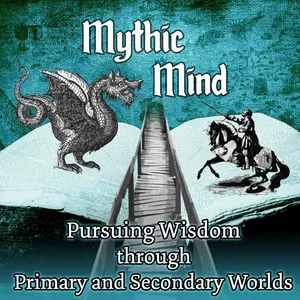
Pursuing wisdom through primary and secondary worlds. Mythic Mind is a conversation about stories, thought, and the inner life. We read literature and philosophy, talk through film and games when they help, and ask what these works reveal about the soul, the good life, and the Christian imagination. Tolkien and The Lord of the Rings, C.S. Lewis and Narnia, Kierkegaard, Beowulf, myth and fairy stories, Tolstoy, and the great books all take their turn at the table. Hosted by Andrew Snyder, Ph.D., the show gathers fellow readers and thinkers around a common table. Some episodes are lessons. Most are recorded discussions. All of them aim at seeing more clearly, not merely consuming more content.
Latest Episodes
The most recent episodes — sign up to get AI-powered summaries of each one.
- 3 days ago56 min
199 - The Conflict in The Lord of the Rings Is About God, According to Tolkien
Watch the video:https://mythicmindfellowship.com/the-conflict-in-the-lord-of-the-rings-is-about-god-according-to-tolkien-mythic-mind-ep-199/When Tolkien was pressed to say what the conflict at the heart of The Lord of the Rings was finally about, he pointed to God. In a note now published as letter 183 in Humphrey Carpenter's collection, he said the war is about God and his sole right to divine honor. Sauron desired to be a God-King. The War of the Ring is first a war over worship.This episode shares a lecture I recently gave at Huntington University on divine honor in The Lord of the Rings, the topic of my forthcoming book, reproduced here with their permission.I follow that claim through three lives, each brought by the One Ring to a decision about whom they will honor. Sauron began as a gifted servant and fell by loving order more than the One who orders all things. Too ashamed to return for judgment, he poured his own power into the Ring and bound himself to a thing that could be lost. In grasping for power, he was grasped by it. Augustine, in the City of God, describes the same diminishment: the one who tries to be his own light turns from the light that would have made him shine.Boromir is a valiant man whose virtues, ordered toward the wrong end, became the doorway of his temptation. He wanted to save Gondor and came to call a stolen thing a gift. After he tried to take the Ring from Frodo, he named his sin, spent his life defending the hobbits he had wronged, and received from the true king an honor he could never have taken for himself.Frodo came to the Ring by inheritance. He accepted a burden he did not choose, learned pity on the road, and failed at the Cracks of Doom. The Ring was unmade through what Tolkien called eucatastrophe, and the mercy Frodo had shown while he was still free saved him when he was no longer free. The honor given him afterward belongs to the king who gives it, and the maimed hand became the title of his glory.The desire that ruins Sauron is common to every human heart. We may never hold a ring of power, but we are daily offered something that promises to make us masters: the chance to order our small worlds according to our own wisdom, or to secure some genuine good by grasping at the apparently necessary means. True honor is received and given, and it is grounded in God, who alone has the right to divine honor. In the questions that follow the lecture, we turn to Gollum's part in the unmaking of the Ring, Leaf by Niggle, the problem of orcs, and why Frodo leaves the Shire.Chapters:00:00 A lecture shared with permission01:13 Why The Lord of the Rings began to matter05:09 The conflict is about God07:16 The Ainulindale and the first discord09:15 Why honor must be grounded in the good10:36 Allegory, applicability, and the Ring12:50 Honor grasped, tested, and given13:49 Sauron loves order more than the One who orders22:02 Boromir is tested and rises by confession30:30 Frodo receives a burden and shows mercy34:36 Failure at Mount Doom and the meaning of mercy39:01 What these three lives show us42:05 Questions from the audience55:52 Fellowship closeRelated videos:Tolkien's Long Defeat: Northern Courage and Christian Hope (Mythic Mind, ep. 75): https://www.youtube.com/watch?v=zQZuCpAd8t8On Fairy-Stories: Subcreation, Escape, and Consolation (Mythic Mind, ep. 36): https://www.youtube.com/watch?v=a0hIBT-NcssThe Lord of the Rings with Mythic Mind: https://www.youtube.com/watch?v=kAvqcTcYbcE📚 Books discussedThe Lord of the Rings by J.R.R. Tolkien: https://bookshop.org/a/129785/9780544003415The Silmarillion by J.R.R. Tolkien: https://bookshop.org/a/129785/9780544338012The Letters of J.R.R. Tolkien (revised and expanded edition, edited by Humphrey Carpenter): https://bookshop.org/a/129785/9780358652984City of God by Augustine (Penguin Classics, trans. Henry Bettenson): https://bookshop.or
- 1 weeks ago20 min
198 - You Have Forgotten Who You Are: Boethius' Consolation, Book I
Watch the video:https://mythicmindfellowship.com/you-have-forgotten-who-you-are-mythic-mind-ep-198/Boethius has lost his place in the world, and Lady Philosophy tells him that he has forgotten who he is. Fortune had given him so much that he began to expect permanence from things that could never promise it. Now those things are gone, and the muses helping him turn his misery into poetry are making his despair worse.In this lesson on Book I of The Consolation of Philosophy, I follow Lady Philosophy's first efforts to restore his sight. Her treatment begins with recovering what it means to be human: a rational creature receptive to divine reason, with a place in an ordered cosmos. The inward light she calls him to remember has its source in God. Trying to manufacture meaning out of ourselves leaves us isolated from the reality in which we could find our bearings.Through the medieval picture of the heavens and Socrates' faithfulness even unto death, we consider what remains ours when fortune turns. We ought to receive the good things of this life with gratitude and hold them in an open hand. Our freedom depends on how we relate to the eternal good, and Lady Philosophy's diagnosis leads us toward Kierkegaard's account of despair in The Sickness unto Death.This episode shares a lesson from Life, Death, and Meaning with Beowulf and Boethius. The full course is coming to the Mythic Mind Fellowship, including eight videos that have not otherwise been released.Related videos:Who Failed Anakin Skywalker? (Mythic Mind, ep. 197): https://www.youtube.com/watch?v=QKs8fvJ24Z4Oblivion's Sheogorath and Kierkegaard's Sickness unto Death (Mythic Mind Games, ep. 34): https://www.youtube.com/watch?v=BZUgEUzaBXU📚 Books discussedThe Consolation of Philosophy by Boethius (Victor Watts translation): https://bookshop.org/a/129785/9780140447804The Sickness unto Death by Søren Kierkegaard: https://bookshop.org/a/129785/9780691020280Join the Mythic Mind Fellowship:https://mythicmindfellowship.com/membershipListen to/watch the Mythic Mind podcasts:- Mythic Mind- Mythic Mind Games- Mythic Mind Movies#MythicMind #Boethius #ConsolationOfPhilosophy #Philosophy #Kierkegaard #Despair #FreedomBecome a supporter of this podcast: https://www.spreaker.com/podcast/mythic-mind--5808321/support.
- 2 weeks ago30 min
197 - Who Failed Anakin Skywalker?
Right-wing X has been full of pro-Anakin posts, including one Elon Musk shared of an AI image of Emperor Anakin with Padme and their children in Imperial uniforms, captioned "This is what they took from us." Some of that is just meme energy. Underneath it sits a real claim: that the Jedi, read as a bloated liberal order, failed a gifted young man, and that Palpatine at least affirmed his passions and offered a path of belonging. On Mythic Mind Exploring the Psyche, Dr. Andrew Snyder asks who actually failed Anakin Skywalker. Was it the Jedi who raised him, the chancellor who empowered him, or Anakin himself?He grants plenty of the grievance. Qui-Gon dies early. Obi-Wan clearly loves Anakin, yet treats as a brother the young man who needed a father. The Order treats love as a liability to manage more than as a fire to order toward the good, and the council wants Anakin's power while withholding the rank of master. Palpatine, though, loves him the way the witch loved Hansel. The candy is real sugar, and the house is still a trap. Anakin's fall rides disordered desires that each begin in something genuine: a love of Padme that becomes the glory of being her savior, a hunger for justice that becomes impatient revolutionary will, a longing for paternal affirmation that accepts a false name from a devourer, and underneath them an attempt to make fortune's wheel stand still under his hand. Drawing on Kierkegaard's call to be "in the truth," Boethius on the wheel of fortune, C. S. Lewis's men without chests, and Edmund Burke on inheritance across the living, the dead, and the yet unborn, Andrew argues that soft licentiousness and hard empire are two faces of the same refusal of ordered love. Luke does not save his father by matching power with power. He lays down the saber. The harder freedom is responsibility under what is true, good, and beautiful.The Abolition of Man, Part 1: Men Without Chests (Mythic Mind, ep. 111): https://www.youtube.com/watch?v=voOEKAzHrk0Kierkegaard's Concept of Anxiety: Anxiety Is Not an Ailment to Be Removed (Mythic Mind, ep. 196): https://www.youtube.com/watch?v=iqA5coEKKnkOblivion's Sheogorath and Kierkegaard's Sickness unto Death (Mythic Mind Games, ep. 34): https://www.youtube.com/watch?v=BZUgEUzaBXU📚 Books discussedThe Sickness unto Death by Søren Kierkegaard: https://bookshop.org/a/129785/9780691020280The Consolation of Philosophy by Boethius (Relihan translation): https://bookshop.org/a/129785/9780872205833The Abolition of Man by C. S. Lewis: https://bookshop.org/a/129785/9780060652944Reflections on the Revolution in France by Edmund Burke: https://bookshop.org/a/129785/9780199539024Join the Mythic Mind Fellowship:https://mythicmindfellowship.com/membershipListen to/watch the Mythic Mind podcasts:- Mythic Mind- Mythic Mind Games- Mythic Mind Movies#MythicMind #StarWars #AnakinSkywalker #Philosophy #Psychology #CSLewis #Kierkegaard #BoethiusBecome a supporter of this podcast: https://www.spreaker.com/podcast/mythic-mind--5808321/support.
- 3 weeks ago34 min
196 - Kierkegaard's Concept of Anxiety: Anxiety Is Not an Ailment to Be Removed
Watch the video:https://mythicmindfellowship.com/kierkegaards-concept-of-anxiety-anxiety-is-not-an-ailment-to-be-removed-mythic-mind-ep-196/Today I'm giving you a free look into my Mythic Mind Fellowship course, The Psychology of Søren Kierkegaard: Life in Anxiety & Despair, as we begin with the preface and introduction to The Concept of Anxiety. Before the argument proper, Kierkegaard's pseudonym Vigilius Haufniensis, the Watchman of Copenhagen, tells us what kind of book this is and what kind of book it is not: not a clinical study, not a self-help manual, and not a theology textbook borrowing a psychological title. He is a psychologist with theology in view, writing a monograph rather than a system. The course is underway now and is included with Fellow and Companion memberships, so joining the Fellowship gets you the rest of it.We look at what happens when sin is handled in the wrong field (aesthetics, metaphysics, or psychology on its own), why earnestness is the proper mood for this book, and how Haufniensis maps four neighboring disciplines: first ethics, dogmatics, psychology, and second ethics. Psychology can trace the real possibility of sin, but it cannot cross the qualitative leap. That is why its proper object is anxiety, which is not an ailment to be removed but the threshold where we face either despair or faith.Chapters:0:00 A free look at the Kierkegaard course0:30 The texts for this study5:53 The preface and introduction6:52 Vigilius Haufniensis and Kierkegaard's pseudonyms8:28 A psychologist with theology in view10:40 The Watchman of Copenhagen: a monograph, not a system16:49 Sin out of place: the false moods19:39 Earnestness, the proper mood22:35 Four disciplines: first ethics, dogmatics, psychology, second ethics27:44 Psychology's limit and the qualitative leap29:43 Takeaways and what comes nextThe Psychology of Søren Kierkegaard: Life in Anxiety and Despair (course introduction): https://www.youtube.com/watch?v=eQ6KDO2mNPYAnxiety Means You Can Choose (Mythic Mind, ep. 189): https://www.youtube.com/watch?v=DwKDIRfQGQYKierkegaard on Man’s Highest Perfection (Mythic Mind, ep. 193): https://www.youtube.com/watch?v=lJXOC2PfR3MThe Death of Ivan Ilyich: Am I Guilty? (Mythic Mind, ep. 194): https://www.youtube.com/watch?v=mIgiz_wQbXkOblivion's Sheogorath and Kierkegaard's Sickness unto Death (Mythic Mind Games, ep. 34): https://www.youtube.com/watch?v=BZUgEUzaBXU📚 Books discussedThe Concept of Anxiety by Søren Kierkegaard (Thomte translation): https://bookshop.org/a/129785/9780691020112Philosopher of the Heart: The Restless Life of Søren Kierkegaard by Clare Carlisle: https://bookshop.org/a/129785/9781250798428Freedom and Its Misuses: Kierkegaard on Anxiety and Despair by Gregory R. BeaboutJoin the Mythic Mind Fellowship:https://mythicmindfellowship.com/membershipListen to/watch the Mythic Mind podcasts:- Mythic Mind- Mythic Mind Games- Mythic Mind Movies#Kierkegaard #TheConceptOfAnxiety #Philosophy #ChristianPsychology #Existentialism #MythicMindBecome a supporter of this podcast: https://www.spreaker.com/podcast/mythic-mind--5808321/support.
- Oct 19, 202644 min
195 - Eschatology in Arda: Did Middle-earth Know Its Ending?
Did the people of Middle-earth know how their story ends? Rev. Jeffrey Wade joins Andrew Snyder and Josh to discuss his master's thesis on eschatology in Arda. His question is not only what Tolkien believed, but whether the inhabitants of Arda themselves know their telos: the promise of resurrection, reunion, and the setting right of all things. Letting the text stand on its own rather than reading it through a scholar's agenda, he argues that this hope is woven into the story from the Ainulindalë onward.One striking thread is water. The music of Ilúvatar lingers in the waters of Arda, and Rev. Wade traces moments of grace and eucatastrophe that happen near water, from Bilbo's riddle game and Lake-town to the Ford of Bruinen, Nimrodel, and Mirrormere. He also shows how hope is handed down through song and story among Men, hobbits, Dwarves, and Ents, and points to the Athrabeth Finrod ah Andreth in Morgoth's Ring as one of its clearest statements.The conversation then asks how much of this hope survives in Peter Jackson's films and why Hollywood struggles with virtuous characters. It closes with Rev. Wade's story of how the films led him to the books, and why he calls The Lord of the Rings a love letter to creation. Rev. Jeffrey Wade is a Lutheran Church–Missouri Synod pastor in Iowa, with an MDiv from Concordia Seminary (2014) and an MA in Language and Literature from Signum University (2025).Chapters00:00 Introducing Rev. Jeffrey Wade01:12 The thesis: do the inhabitants of Arda know their eschatology?03:21 Reading theologically and letting the text stand05:24 Water and the music of Ilúvatar07:28 What is Arda?11:12 What makes this approach unique in Tolkien scholarship15:50 Best sources: the Ainulindalë and the Athrabeth19:57 The Hobbit and The Lord of the Rings: hope at the water's edge23:33 Why water? Baptismal echoes24:22 How the hope is handed down: lore, song, and catechesis27:51 Bombadil vs. the Barrow-wight: hope vs. despair29:20 Eschatology in the Peter Jackson films34:26 Can film viewers catch it? Hollywood and virtue37:00 Recommended reading on Tolkien and theology39:50 How the films led Rev. Wade to Tolkien43:36 ClosingGet the book: Morgoth's Ring (J.R.R. Tolkien): https://bookshop.org/a/129785/9780261103009Get the book: Tolkien's Theology of Beauty (Lisa Coutras): https://bookshop.org/a/129785/9781137553447Get the book: The Flame Imperishable (Jonathan S. McIntosh): https://bookshop.org/a/129785/9781621382942Get the book: Tolkien On Fairy-stories (J.R.R. Tolkien): https://bookshop.org/a/129785/9780007582914Join the Mythic Mind Fellowship:https://mythicmindfellowship.com/membershipListen to/watch the Mythic Mind podcasts:- Mythic Mind- Mythic Mind Games- Mythic Mind MoviesBecome a supporter of this podcast: https://www.spreaker.com/podcast/mythic-mind--5808321/support.
- Oct 12, 202638 min
194 - The Death of Ivan Ilyich: Am I Guilty?
Watch the video: https://youtu.be/mIgiz_wQbXkWe all know we will die one day. It is another thing to consider that it is I who am going to die.In this Mythic Mind conversation, Dr. Andrew Snyder (professor of philosophy and theology) is joined by David and Jack to read Tolstoy's The Death of Ivan Ilyich. We trace a man who did everything "properly," climbed the ladder, decorated the right house, and still ended up utterly alone, until suffering forces him to ask the one question he has always avoided: am I guilty?Topics include how ordinary people keep death at arm's length, why suffering can become a grace, and what it means to finally take responsibility for the life you've lived. Along the way we find Tolstoy reaching some of the same places as Lewis and Kierkegaard by a very different road.Related:• Kierkegaard on Man's Highest Perfection (Mythic Mind, ep. 193): https://www.youtube.com/watch?v=lJXOC2PfR3M• Till We Have Faces, Part One: Orual Behind the Veil (Mythic Mind, ep. 114): https://www.youtube.com/watch?v=1KhXO9V0PRwJoin the Mythic Mind Fellowship:https://mythicmindfellowship.com/membershipListen to/watch the Mythic Mind podcasts:- Mythic Mind- Mythic Mind Games- Mythic Mind Movies#MythicMind #Tolstoy #DeathOfIvanIlyich #BookClub #Philosophy #Theology #CSLewisBecome a supporter of this podcast: https://www.spreaker.com/podcast/mythic-mind--5808321/support.
- Oct 5, 202654 min
193 - Kierkegaard on Man's Highest Perfection
Watch the video:https://youtu.be/lJXOC2PfR3MWe are pressed to dissolve into the mass, to wear a demographic as a self, or to win identity from whatever community we most esteem. Kierkegaard’s answer cuts the other way: the glory of the human being is to recognize utter dependency on God.In Mythic Mind episode 193, Dr. Andrew Snyder is joined by Zach and David for an Exploring the Psyche conversation on Kierkegaard’s discourse “To Need God Is a Human Being’s Highest Perfection.” They push past the easy proverb that a person needs only a little, through Job and vanity that can even dress itself as renunciation, to the Christian claim that greatness is not pagan self-sufficiency but knowing how much we need God. Along the way: first self and deeper self, the moving wheel of fortune versus the eternal, inwardness against self-enclosure, Christendom versus contemporaneity with Christ, and why casting Kierkegaard as a secular existentialist misses the Christian (even Boethian) grain of the text.Topics include needing little versus needing God, praying for the powerful because they need God most, grace and being capable of nothing, the hard wine before the good wine, and how anchoring in God frees the temporal self for real community rather than atomism.Join the Mythic Mind Fellowship:https://mythicmindfellowship.comFellows and Companions can join The Psychology of Søren Kierkegaard: Life in Anxiety and Despair, beginning the week of October 4, plus Academy courses, Inkwell essays, and the fuller life of the community.Listen to and watch Mythic Mind podcasts:- Mythic Mind- Mythic Mind Games- Mythic Mind Movies &Become a supporter of this podcast: https://www.spreaker.com/podcast/mythic-mind--5808321/support.
- Sep 28, 202643 min
192 - Exploring the Psyche: Why Socialism Is Poison to the Soul
Watch the video:https://youtu.be/Juoxi8xM5eQSocialism is often sold as justice, necessity, or the only way to win. This Exploring the Psyche episode asks a harder question: what does that bargain do to the soul?In Mythic Mind episode 192, Dr. Andrew Snyder takes up a live Right-wing temptation around redistribution, democratic appetite politics, and seizing power "for our side." He grants the real injustice (vote-buying, short-sighted majorities, a disenfranchised base), steelmans the classical and Lewisian fears about democracy's degeneration and spiritual leveling, then refuses the conclusion that remakes persons into instruments. The court can sentence Socrates. Only Socrates can harm Socrates.Drawing on Plato and Aristotle, C. S. Lewis, Kierkegaard (and Gregory Beabout), Dostoevsky's Crystal Palace, and Tolkien on the Machine and coerced wills, the talk argues that envy baptized as entitlement, managed security without risk, and power that treats neighbors as tools all shrink the self before God. Freedom requires gratitude, courage, and faithful action. A managed win for any base is still a loss for the person.Topics include democracy and demagoguery, envy and false entitlement, facticity and possibility, despair and the spiritless crowd, welfare soft slavery, Tolkien's Machine versus sub-creation, and why refusing the smaller victory is the psyche's first win.Join the Mythic Mind Fellowship:https://mythicmindfellowship.comFellows receive Academy courses (including The Psychology of Søren Kierkegaard: Life in Anxiety and Despair, beginning the week of October 4), Inkwell essays, and the fuller life of the community. Since the fall season began, podcast downloads have nearly doubled. Membership is the deeper layer of the work you hear here.Listen to and watch Mythic Mind podcasts:- Mythic Mind- Mythic Mind Games- Mythic Mind Movies & Shows#MythicMind #ExploringThePsyche #Socialism #Kierkegaard #CSLewis #Tolkien #Philosophy #Theology #PsycheBecome a supporter of this podcast: https://www.spreaker.com/podcast/mythic-mind--5808321/support.
Get Mythic Mind summaries in your inbox
Free AI-powered daily recaps. Key takeaways, quotes, and mentions — in a 5-minute read.
Get Free Summaries →Free forever for up to 3 podcasts. No credit card required.
You Might Also Like
Listeners also like.

The Emerald
Explores myth, story, and imagination to reframe modern discourse on society, science, art, and the human experience.

Weird Studies
Conversations on art and philosophy that explore unsettling ideas and works challenging the boundaries of reality.

Imaginary Worlds
Explores the creative process behind sci-fi, fantasy, and speculative fiction across books, TV, film, games, and fandoms.

Eyes on the Right Podcast
Explores cultural and spiritual issues through a Biblical lens, including secret societies, media influence, and end-times prophecy.

Forum Borealis
In-depth interviews with authors and thinkers on unconventional topics in history, science, philosophy, and politics.

The Prancing Pony Podcast
A weekly discussion exploring J.R.R. Tolkien's Middle-earth with humor and deep fan insight.
Mythology & Fiction Explained
Explores myths and fictional stories from around the world, breaking down their origins and meanings.

Myths and Legends
Retells global myths and legends, from Arthur to Aladdin, with origins and tales reimagined for modern listeners.
Inner Cosmos with David Eagleman
Neuroscientist David Eagleman examines how the brain interprets reality through science, stories, and interviews.

Literature and History
Explores world literature from ancient Sumer to early Islam, with summaries, analysis, and original music.

hidden experience audio
In-depth interviews exploring the personal impact of UFO contact and the broader UFO mystery.

The Modern Good
The Modern Good
About Mythic Mind
Pursuing wisdom through primary and secondary worlds. Mythic Mind is a conversation about stories, thought, and the inner life. We read literature and philosophy, talk through film and games when they help, and ask what these works reveal about the soul, the good life, and the Christian imagination. Tolkien and The Lord of the Rings, C.S. Lewis and Narnia, Kierkegaard, Beowulf, myth and fairy stories, Tolstoy, and the great books all take their turn at the table. Hosted by Andrew Snyder, Ph.D., the show gathers fellow readers and thinkers around a common table. Some episodes are lessons. Most are recorded discussions. All of them aim at seeing more clearly, not merely consuming more content.
Customized Recaps
AI-powered recaps with compact key takeaways, quotes, and insights.
Straight to Your Inbox
Get key takeaways from Mythic Mind in a 5-minute read.
Save Hours Every Week
Stay current on your favorite podcasts without falling behind.
Frequently Asked Questions
What is Podzilla's Mythic Mind daily summary?
It's a free AI-powered email that summarizes new episodes of Mythic Mind as soon as they're published. You get the key takeaways, notable quotes, and links & mentions — all in a quick read.
How does the Mythic Mind podcast summary work?
When a new episode drops, our AI transcribes and analyzes it, then generates a personalized summary tailored to your interests and profession. It's delivered to your inbox every morning.
Is this an official Mythic Mind product?
No. Podzilla is an independent service that summarizes publicly available podcast content. We're not affiliated with or endorsed by Andrew Snyder.
Can I get summaries of other podcasts too?
Absolutely! The free plan covers up to 3 podcasts, any in the catalog. Basic raises that to 15, Pro to 40 and Max to 100. Browse our full catalog at /podcasts.
How often does Mythic Mind release new episodes?
Mythic Mind publishes weekly. Our AI generates a summary within hours of each new episode.
What topics does Mythic Mind cover?
Mythic Mind covers topics including Arts, Books, Religion & Spirituality, Spirituality, Philosophy, Culture, Society & Culture. Our AI identifies the specific themes in each episode and highlights what matters most to you.
Start getting Mythic Mind summaries tomorrow morning.
Free forever for up to 3 podcasts. No credit card required.
Free forever for up to 3 podcasts. No credit card required.