Free Daily Podcast Summary
Reasonably Optimistic: Daily Summaries Delivered
by The Washington Post
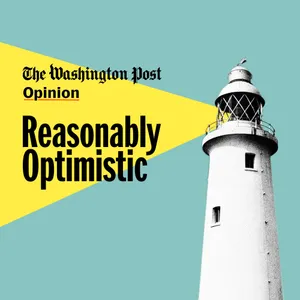
Enough with the doom and gloom — we’re ready to talk about how America can thrive. Hosted by Washington Post Opinion columnist Megan McArdle, “Reasonably Optimistic” is your weekly conversation about how America can get unstuck and build a better future. Stop feeding your rage and start embracing our possibilities.
Latest Episodes
The most recent episodes — sign up to get AI-powered summaries of each one.
- 2 days ago27 min
The job interview advice Gen Z needs to hear
A viral debate over bringing iced coffee to a job interview may seem trivial. But it points to a bigger divide over what employers are looking for when college degrees, cover letters and résumés reveal less than they used to.Host Megan McArdle explains why workplace norms still matter, why an interview can be one of the few ways applicants can stand out and what Gen Z workers miss when they begin their careers remotely. She also makes the case for giving young people a little grace.Subscribe to The Washington Post here.
- 4 days ago50 min
Is AI taking Gen Z’s jobs? It’s not that simple.
Artificial intelligence feels different from previous technological innovations because it can write, reason, analyze and generate ideas. In other words, it can do at least some of the things many white-collar workers thought made them irreplaceable. So, is AI going to eliminate jobs or transform them? And what will it do to the culture of the workplace — and to the way younger workers develop the judgment and expertise they need to build a career?Fabien Curto Millet, Google’s chief economist, joins host Megan McArdle to discuss. Google recently examined 15 million interactions with its AI tools to understand how people are actually using this tech at work and in their everyday lives. Millet breaks down what Google's findings could mean for the future of work.Subscribe to The Washington Post here.
- 1 weeks ago1h 5m
The $1 million prize for academics who tell unwelcome truths
What do you do when your research leads to a conclusion that challenges conventional wisdom? You can publish it and risk the backlash — or quietly bury the findings and move on to safer work. The Carob Trust Prize, a new $1 million award, aims to change that calculation by rewarding academics whose research challenges prevailing orthodoxies and withstands scrutiny. But can money really make telling the truth less costly?Harvard professor Roland Fryer co-founded the prize after facing that choice himself. He joins host Megan McArdle to discuss the experiences that shaped his work and the pressures that discourage scholars from pursuing unpopular findings. They also examine his research on racial achievement gaps and failing schools, as well as Nikole Hannah-Jones’s recent New York Times essay about sending her daughter to a high-poverty, segregated public school.Subscribe to The Washington Post here.
- 1 weeks ago36 min
How conservatism went from Reagan to Trump
In the decades following World War II, the American right coalesced around fusionism — the idea that individual liberty and limited government could coexist with religious faith and traditional morality. Today, that coalition is divided. After a decade of Trump-era politics, can fusionism bring it back together?Host Megan McArdle is joined by Stephanie Slade, senior editor at Reason magazine and author of “Fusionism: Liberty, Virtue, and the Future of the American Right.” They explore how fusionism came to shape modern conservatism, why that consensus faded and how President Donald Trump’s rise reveals the coalition’s deepest fault lines. They also ask whether fusionism’s core values of liberty and virtue can still provide common ground in a very different political era.Subscribe to The Washington Post here.
- 2 weeks ago45 min
Why everyone seems to hate Flock cameras
No one likes the idea of being surveilled. That concern is fueling a nationwide backlash against Flock cameras, the automated license plate readers police use to find stolen vehicles, track suspects and locate missing people. Critics see their rapid spread as the beginnings of a mass surveillance network. Supporters say they reduce crime and save lives. So can communities keep the benefits without sacrificing privacy?Host Megan McArdle is joined by Charles Fain Lehman, a senior fellow at the Manhattan Institute and senior editor at City Journal. They examine what Flock cameras actually see, the data behind the headlines and whether safeguards can prevent a useful tool from becoming a threat to civil liberties.Subscribe to The Washington Post here.
- 2 weeks ago48 min
What AI experts fear most
Artificial intelligence is advancing faster than many expected. So much so that some of the experts who understand it best are sounding the alarm. Are their warnings exaggerated, or are we approaching a point of no return? And what can we do now to shape the future of artificial intelligence?Host Megan McArdle is joined by Tim Lee, author of the Understanding AI newsletter, to explore what AI experts fear most, from misinformation and economic disruption to the possibility of losing control of increasingly powerful systems. They break down recent AI controversies and examine why some researchers are calling for slower AI development, what meaningful AI safety could look like, and whether governments and technology companies are moving quickly enough to address the risks.Subscribe to The Washington Post here.
- 3 weeks ago31 min
This medieval revolt has a warning for today
More than six centuries ago, the Black Death wiped out nearly half of England’s population. Suddenly, workers had more power, wealthy landowners had less, and the old social order began to crack. When the ruling class tried to force that order back into place, anger erupted into the Peasants’ Revolt of 1381 — a political crisis that feels startlingly familiar today, dramatized in the new film “The Uprising.”Host Megan McArdle is joined by historian Dan Jones, author of “Summer of Blood,” who was a consultant on the film. They explore how a pandemic transformed England’s economy, why legitimate grievances spiraled into violence, the tension between natural justice and written law, and what happens when elites stop listening to the people they govern.Subscribe to The Washington Post here.
- 3 weeks ago50 min
The strange truth behind our obsession with UFOs and aliens
It doesn’t take much to ignite a new wave of alien conspiracy theories on social media. But beyond the internet speculation lies a serious scientific question: If billions of planets could support life, why haven’t we found any?Host Megan McArdle revisits her conversation with astrophysicist and author of “The Little Book of Aliens,” Adam Frank, to explore why he thinks extraterrestrial life probably exists — and why UFO sightings offer little evidence. They discuss how scientists are searching for alien life, why microbes may be far more common than intelligent civilizations and what extraterrestrials might look like if we ever find them.This episode was originally published on June 10, 2026.Subscribe to The Washington Post here.
Get Reasonably Optimistic summaries in your inbox
Free AI-powered daily recaps. Key takeaways, quotes, and mentions — in a 5-minute read.
Get Free Summaries →Free forever for up to 3 podcasts. No credit card required.
You Might Also Like
Listeners also like.
Optimist Economy
Economists analyze U.S. economic challenges like housing, healthcare, and retirement, pairing data and history with practical solutions.

Joe Lonsdale: American Optimist
Conversations with innovators and leaders working on solutions to America’s biggest challenges, emphasizing optimism and progress.

Possible
Explores optimistic, realistic futures through in-depth conversations with innovators in AI, science, health, and global affairs.

Solutions with Henry Blodget
Henry Blodget interviews experts in business, tech, and politics about practical solutions for building a better future.

Interesting Times
Explores global shifts and emerging trends through interviews and analysis on the evolving world order.

Crazy/Genius
Explores how the internet shapes society, politics, and reality through discussions on AI, misinformation, and digital culture.

Pivot
Sharp, unfiltered analysis of tech, business, and politics with bold predictions and lively debate.
A Bit of Optimism
Conversations with thinkers and doers exploring what drives purpose, growth, and meaning in life.

The Ezra Klein Show
Conversations on pressing political, social, and cultural issues with experts and thinkers.

Tech Won't Save Us
A critical look at the tech industry’s influence on society and the political consequences of its promises.

Uncanny Valley | WIRED
Examines power and influence in Silicon Valley through interviews and reporting on major tech stories.
What Next: TBD | Tech, power, and the future
A weekly look at how technology and power are shaping the future, from algorithms to artificial intelligence and beyond.
About Reasonably Optimistic
Enough with the doom and gloom — we’re ready to talk about how America can thrive. Hosted by Washington Post Opinion columnist Megan McArdle, “Reasonably Optimistic” is your weekly conversation about how America can get unstuck and build a better future. Stop feeding your rage and start embracing our possibilities.
Customized Recaps
AI-powered recaps with compact key takeaways, quotes, and insights.
Straight to Your Inbox
Get key takeaways from Reasonably Optimistic in a 5-minute read.
Save Hours Every Week
Stay current on your favorite podcasts without falling behind.
Frequently Asked Questions
What is Podzilla's Reasonably Optimistic daily summary?
It's a free AI-powered email that summarizes new episodes of Reasonably Optimistic as soon as they're published. You get the key takeaways, notable quotes, and links & mentions — all in a quick read.
How does the Reasonably Optimistic podcast summary work?
When a new episode drops, our AI transcribes and analyzes it, then generates a personalized summary tailored to your interests and profession. It's delivered to your inbox every morning.
Is this an official Reasonably Optimistic product?
No. Podzilla is an independent service that summarizes publicly available podcast content. We're not affiliated with or endorsed by The Washington Post.
Can I get summaries of other podcasts too?
Absolutely! The free plan covers up to 3 podcasts. Upgrade to Pro for 15, or Premium for 50. Browse our full catalog at /podcasts.
How often does Reasonably Optimistic release new episodes?
Reasonably Optimistic publishes every few days. Our AI generates a summary within hours of each new episode.
What topics does Reasonably Optimistic cover?
Reasonably Optimistic covers topics including News, Technology. Our AI identifies the specific themes in each episode and highlights what matters most to you.
Start getting Reasonably Optimistic summaries tomorrow morning.
Free forever for up to 3 podcasts. No credit card required.
Free forever for up to 3 podcasts. No credit card required.