Free Daily Podcast Summary
Science Will Win: Daily Summaries Delivered
by Pfizer
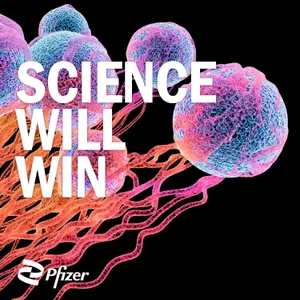
Science Will Win is a podcast that takes listeners under the microscope on some of the most promising medical innovations, exploring therapies that have the potential to shape the future of healthcare and offer new hope to patients around the world. Through conversations with a diverse line-up of guests, including scientists and experts, patient advocates, and, most importantly, patients themselves, each miniseries will focus on a unique healthcare challenge, diving into the fascinating science, policy challenges, and potential to transform patients’ lives for the better.
Latest Episodes
The most recent episodes — sign up to get AI-powered summaries of each one.
- Apr 2, 202632 min
The Pace of Science: AI in Cancer Care
Cancer research is moving faster than ever—but too many patients never feel the impact of that progress. Artificial Intelligence (AI) is emerging as one tool that could help change that. In the Season 6 finale of Science Will Win, Dr. Raven Baxter follows the human journey behind AI in oncology—from the moment of diagnosis to the real‑world barriers that determine access to care. Along the way, we explore how thoughtfully designed artificial intelligence is reshaping trial design, enrollment, eligibility, and access—helping patients regain agency and bridging the gap between scientific breakthroughs and real‑world cancer care. As the season concludes, one thing is clear: progress matters most when it reaches the people who need it. Featured guests: – Dr. Lionel Kankeu Fonkoua, Medical Oncologist and Translational Researcher, Mayo Clinic – Jeff Legos, Chief Oncology Officer, Pfizer – Dr. Ravi Parikh, Medical Oncologist; Director, Human‑Algorithm Collaboration Lab – Maya R. Said, Founder and CEO, Outcomes4Me Dive into the episode here: 00:00 – Past episodes introduce us to an emerging tech advancement 04:16 – What is a clinical trial? 07:35 – AI accelerating the pace of oncology 12:42 – Clinical trials and AI: How can it help? 16:17 – A gap between innovation and patient access 19:16 – Maya's story 23:47 – Clinical trials for AI tools 27:54 – Conclusion: building pathways alongside scientific innovation Check out our YouTube channel (@Pfizer) to watch full interviews between Raven & some of the patients featured. Season 6 of Science Will Win is created by Pfizer and hosted by Dr. Raven Baxter. It’s produced by Acast Creative Studios. Hosts in this podcast series were compensated for their time. *The content in this episode is for informational purposes only and does not provide medical advice. Pfizer does not endorse or sponsor third‑party tools referenced. Patients should not use the tools described as a replacement for discussions with a healthcare provider. Patients should consult their healthcare provider regarding medical decisions. Hosted by Simplecast, an AdsWizz company. See pcm.adswizz.com for information about our collection and use of personal data for advertising.
- Mar 12, 202634 min
Living Longer with Cancer: Rethinking Survivorship
What comes after a cancer diagnosis and treatment? In this episode of Science Will Win, host Dr. Raven Baxter explores one of the most important, and often overlooked, chapters for cancer patients: survivorship. As five-year survival rates climb to 70%, more people than ever are living with and beyond cancer. But longer survival brings its own complex challenges, and our care systems are still catching up. You'll hear from experts and advocates working at the intersection of medicine, policy, and community. We’ll discuss what it really takes to support people through this transition — when the clinical benchmarks have passed and it’s time to go back to “normal life”. From patient care plans and workplace disclosure to mental health, this episode makes one thing clear: survivorship demands dignity, support, and a whole new kind of care. Featured guests: – Tina Deignan, Commercial President, Pfizer Oncology – Shelley Fuld Nasso, CEO, Cancer Nation – Rebecca Nellis, Executive Director, Cancer and Careers – Bob Riter, Breast Cancer Patient & Advocate Dive into the episode here: 00:00 – The ongoing battle with cancer 03:43 – Rethinking survivorship 05:32 – The five-year survival myth 07:00 – The history of the term "survivor" 09:36 – Bob’s journey with breast cancer 11:38 – Lost in transition and survivorship care plans 14:25 – The intersection of cancer and work 18:49 – Rethinking how work gets done 20:00 – Disclosure and improving company culture 20:59 – The swivel technique 23:19 – Controlling your narrative 25:11 – Standardizing long-term survivorship care through policy 27:08 – Lack of access to care leads to disparities in survival rates 29:48 – Bob's second journey with cancer 32:21 – Takeaways and peek into our final episode Check out our YouTube channel (@Pfizer) to watch the full interview with Raven & Bob Riter on his cancer journey. Season 6 of Science Will Win is created by Pfizer and hosted by Dr. Raven Baxter. It’s produced by Acast Creative Studios. Hosts in this podcast series were compensated for their time. Hosted by Simplecast, an AdsWizz company. See pcm.adswizz.com for information about our collection and use of personal data for advertising.
- Mar 5, 202628 min
What Women Carry: Courage Through Cancer
What women carry through cancer is more than a diagnosis. In our third episode of this miniseries, Dr. Raven Baxter explores how generations of women turned silence into advocacy and fear into progress, reshaping the perceptions and discussions around cancer over time. Through history, science, and a powerful story from Katrina M. Johnson — a woman who has lived through multiple breast cancer diagnoses and now advocates for others — the episode highlights how women continue to drive change in how cancer is understood, treated, and lived with. Featured guests: – Dr. Isaac Chan, Physician‑scientist and Assistant Professor, Department of Internal Medicine, University of Texas Southwestern – Kirsten Gardner, Director of Medical Humanities, University of Texas at San Antonio; Author – Katrina M. Johnson, Breast Cancer Patient; Director of Advocacy and Professional Relations, Pfizer Oncology Dive into the episode here: 00:00 – The start of three cancer diagnoses 02:06 – The history of breast cancer awareness campaigns 09:27 – How the mastectomy has changed 12:59 – Evolving research in breast cancer 15:10 – Breast cancer impacting body image and sexuality 19:29 – Emerging therapies to address breast cancer 21:18 – Addressing the BRCA gene today 23:30 – Breast cancer advocacy then and now 26:08 – Katrina's takeaways about her breast cancer story Check out our YouTube channel (@Pfizer) to watch the full interview with Raven & Katrina M. Johnson on her breast cancer journey. Season 6 of Science Will Win is created by Pfizer and hosted by Dr. Raven Baxter. It’s produced by Acast Creative Studios. Hosts in this podcast series were compensated for their time. Hosted by Simplecast, an AdsWizz company. See pcm.adswizz.com for information about our collection and use of personal data for advertising.
- Feb 26, 202629 min
Bringing Cancer Into Focus: Biomarkers & Precision Medicine
What if the key to treating cancer was hiding in plain sight – written into its DNA? In this episode of Science Will Win, host Dr. Raven Baxter explores one of the most exciting breakthroughs in cancer care today: the discovery of biomarkers. These tiny molecular signals are helping doctors understand what’s really driving an individual person’s cancer – and opening the door to treatments that can dramatically change patient outcomes. You’ll hear powerful stories from people whose cancers were traced back to a specific biomarker, alongside experts who break down what biomarker testing is, how it works, and why it’s transforming the way we think about cancer treatment. Biomarkers are showing us that when we understand cancer at its molecular level, a disease that once felt like an unsolvable mystery starts to come into focus. Featured guests: – Dr. Ross Camidge, Director of Thoracic Oncology, University of Colorado – Kelly Huffman, Lung Cancer Patient and Retail Account Manager, Pfizer – Karin Tollefson, Chief Oncology Medical Officer, Pfizer Dive into the episode here: 00:00 – An oncologist’s diagnosis introduces the world of biomarker 03:10 – Defining biomarkers and its history 06:24 – Discovery of the first lung cancer biomarker 08:39 – The start Kelly’s lung cancer journey 16:00 – Biomarkers: how do you test for them? 19:11– Discovery of ALK biomarker shift’s Kelly’s story 22:34 – Landscape of targeted therapy and lung cancer today 25:24 – Moving forward with targeted treatments and conclusion Check out our YouTube channel (@Pfizer) to watch the full interview with Raven & Kelly Huffman on her lung cancer journey. Season 6 of Science Will Win is created by Pfizer and hosted by Dr. Raven Baxter. It’s produced by Acast Creative Studios. Hosts in this podcast series were compensated for their time. Hosted by Simplecast, an AdsWizz company. See pcm.adswizz.com for information about our collection and use of personal data for advertising.
- Feb 19, 202634 min
The Alarming Rise of Early-Onset Cancers
Why are more young adults getting cancer? That's one of the most pressing questions facing the scientific community today. Traditionally thought of as a disease that affects aging populations, recent data shows that cancer diagnoses for people under the age of 50 are increasing. To tackle this problem, it’ll take a global effort. In this episode you’ll hear from patients, oncologists, researchers and health care providers who are coming together to address this issue head on. Featured guests:– Dr. Marshall Anthony Jr., social scientist and colorectal cancer patient– Dr. Johanna Bendell, Chief Development Officer of Oncology, Pfizer– Dr. Yin Cao, molecular cancer epidemiologist; Cao Lab leader, Washington University– Dr. Beatrice Dionigi, colorectal cancer surgeon; founder & co‑director, Early Onset Colon and Rectal Cancer Project, Columbia Research Cancer Center– Dr. Susan Zhang, Global Development Lead, Pfizer OncologyDive into the episode here:00:00 – A patient story reveals an alarming new trend6:30 – The data behind the rise of early-onset cancer 10:39 – The global search for a cause 14:13 – The unique challenges facing young people with cancer 20:28 – Screening guidelines and what to expect from a colonoscopy 25:17 – The importance of early detection 27:59 – The conclusion of Marshall's cancer journey 30:23 – What's next, and closing thoughts Check out our YouTube channel (@Pfizer) to watch the full interview with Raven & Dr. Marshall Anthony Jr. on his colorectal cancer journey.Season 6 of Science Will Win is created by Pfizer and hosted by Dr. Raven Baxter. It’s produced by Acast Creative Studios. Hosts in this podcast series were compensated for their time. Hosted by Simplecast, an AdsWizz company. See pcm.adswizz.com for information about our collection and use of personal data for advertising.
- Feb 5, 202610 min
Let’s Talk About Cancer — Season 6 Coming Soon
Science Will Win is back for a new season! Dr. Raven Baxter, a molecular biologist also known as Raven the Science Maven, returns as our host to dive into the latest in oncology: The latest challenges, the latest research, the latest treatment approaches, and the latest sources of progress and optimism keeping researchers going. You’ll hear from leading doctors, cutting-edge scientists, insightful historians, and inspiring patients sharing powerful stories of resilience. Plus, for the first time, you can find full length video discussions led by Raven on Pfizer’s YouTube channel. Season 6 of Science Will Win is coming soon—subscribe to stay tuned in! Hosted by Simplecast, an AdsWizz company. See pcm.adswizz.com for information about our collection and use of personal data for advertising.
- Nov 18, 202541 min
Part 4 — From Discovery to Delivery: How Scientists Are Revolutionizing Cancer Treatment
In drug discovery and development, every part of the process matters. Scientists learn from every experiment and every observation. In fact, some of the most cutting-edge advancements in medicine are being dreamed up from findings uncovered in the past. In this episode, co-hosts Dr. Raven Baxter and Dr. Ronald Gamble dive deep into antibody drug conjugates, a groundbreaking modality that uses targeted antibody engineering to deliver potent chemotherapy directly to cancer-causing cells. They explore the complex ADC creation process and learn how ADCs are changing the standard of care for bladder cancer, from someone with a personal relationship to the disease.Featured Guests:– Renee Barron-Gores, Caregiver– Phoenix Ho, Vice President, Oncology Early Clinical Development, Pfizer– Sharsti Sandall, Executive Director, ADC Biology, Oncology Research Unit, PfizerDive into the episode here:1:16 - Old ideas yield new discoveries3:01 - How do antibody drug conjugates work?5:07 - The origins of ADCs8:36 - ADCs allow for more targeted cancer treatment10:44 - How are ADCs structured?14:16 - How do scientists find the best ADC combinations?18:27 - Developing oncology drugs22:02 - ADCs and bladder cancer24:28 - A caregiver’s perspective on cancer treatment38:12 - Science Will WinSeason 5 of Science Will Win is created by Pfizer and hosted by Dr. Raven Baxter and Dr. Ronald Gamble. It’s produced by Acast Creative Studios.Check out our social media platforms to take a deeper look into the labs and stories we discuss during the episodes: Instagram (@pfizerinc), TikTok (@pfizer) Hosted by Simplecast, an AdsWizz company. See pcm.adswizz.com for information about our collection and use of personal data for advertising.
- Nov 11, 202540 min
Part 3 — Getting Attached to Molecular Glues
Protein-protein interactions facilitate numerous bodily processes – everything from the basics of how our muscles contract to the more complex ways cancer can spread through the body. So, what if there was a way to alter some of these interactions? Or even create new ones?In this episode, we’re diving into the fascinating field of molecular glues, a revolutionary modality on the precipice of changing the treatment landscape for certain cancers and potentially other diseases and conditions. Featured Guests:– Joyann Donaldson, Principal Scientist, Synthesis Group Lead, Pfizer– Jennifer LaFontaine, Head of Oncology Medicinal Chemistry, Pfizer– Neal Sach, Research Fellow, Pfizer– Jillian Spangler, Associate Research Fellow, PfizerDive into the episode here:0:50 - A metaphor to explain molecular glues2:36 - How do molecular glues work in the body?5:57 - A new frontier for cancer treatment 13:05 - The history behind molecular glues16:59 - How do scientists design molecular glues?19:05 - A visit to Pfizer’s La Jolla labs32:42 - How can molecular glues change the patient experience?36:42 - Molecular glues beyond cancer treatmentSeason 5 of Science Will Win is created by Pfizer and hosted by Dr. Raven Baxter and Dr. Ronald Gamble. It’s produced by Acast Creative Studios.Check out our social media platforms to take a deeper look into the labs and stories we discuss during the episodes: Instagram (@pfizerinc), TikTok (@pfizer) Hosted by Simplecast, an AdsWizz company. See pcm.adswizz.com for information about our collection and use of personal data for advertising.
Get Science Will Win summaries in your inbox
Free AI-powered daily recaps. Key takeaways, quotes, and mentions — in a 5-minute read.
Get Free Summaries →Free forever for up to 3 podcasts. No credit card required.
You Might Also Like
Listeners also like.
Science Vs
A show that investigates popular topics and myths by analyzing scientific evidence to determine what’s fact, fiction, or uncertain.

Science Magazine Podcast
Weekly episodes covering original scientific research, global science news, and expert commentary.
In the Interim...
Explores Bayesian statistics and adaptive clinical trial designs in medical research with insights from industry experts.
Unsung Science
Explores the overlooked stories behind major scientific and technological breakthroughs and the people who created them.

The World, the Universe and Us
Explores big scientific questions about life, consciousness, climate, and the cosmos with expert scientists and New Scientist journalists.

Science Quickly
A bite-sized science podcast exploring discoveries with journalists and experts.

Unbiased Science
Dr. Jess Steier and guests analyze viral health claims using scientific evidence and explain key findings for everyday conversations.

Science Friday
Explores diverse science and technology topics, from space to microscopic life, with engaging educational stories.

This Podcast Will Kill You
Two epidemiologists explore the science, history, and impact of diseases and medical mysteries, one deadly topic at a time.
Short Wave
A daily science podcast exploring discoveries, everyday mysteries, and the stories behind scientific headlines.

Inquiring Minds
Explores the intersection of science and society through critical thinking and in-depth analysis.
Seeking A Scientist
A chemist hosts conversations with scientists to explore futuristic scientific possibilities and their real-world implications.
About Science Will Win
Science Will Win is a podcast that takes listeners under the microscope on some of the most promising medical innovations, exploring therapies that have the potential to shape the future of healthcare and offer new hope to patients around the world. Through conversations with a diverse line-up of guests, including scientists and experts, patient advocates, and, most importantly, patients themselves, each miniseries will focus on a unique healthcare challenge, diving into the fascinating science, policy challenges, and potential to transform patients’ lives for the better.
Customized Recaps
AI-powered recaps with compact key takeaways, quotes, and insights.
Straight to Your Inbox
Get key takeaways from Science Will Win in a 5-minute read.
Save Hours Every Week
Stay current on your favorite podcasts without falling behind.
Frequently Asked Questions
What is Podzilla's Science Will Win daily summary?
It's a free AI-powered email that summarizes new episodes of Science Will Win as soon as they're published. You get the key takeaways, notable quotes, and links & mentions — all in a quick read.
How does the Science Will Win podcast summary work?
When a new episode drops, our AI transcribes and analyzes it, then generates a personalized summary tailored to your interests and profession. It's delivered to your inbox every morning.
Is this an official Science Will Win product?
No. Podzilla is an independent service that summarizes publicly available podcast content. We're not affiliated with or endorsed by Pfizer.
Can I get summaries of other podcasts too?
Absolutely! The free plan covers up to 3 podcasts. Upgrade to Pro for 15, or Premium for 50. Browse our full catalog at /podcasts.
How often does Science Will Win release new episodes?
Science Will Win publishes weekly. Our AI generates a summary within hours of each new episode.
What topics does Science Will Win cover?
Science Will Win covers topics including Science, Education, Medicine, Fitness, Health & Fitness, Life Sciences. Our AI identifies the specific themes in each episode and highlights what matters most to you.
Start getting Science Will Win summaries tomorrow morning.
Free forever for up to 3 podcasts. No credit card required.
Free forever for up to 3 podcasts. No credit card required.