Free Daily Podcast Summary
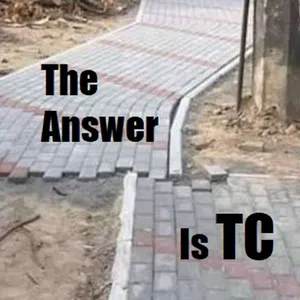
The Answer Is Transaction Costs: Daily Summaries Delivered
by Michael Munger
" The real price of everything is the toil and trouble of acquiring it." -Adam Smith (WoN, Bk I, Chapter 5) In which the Knower of Important Things shows how transaction costs explain literally everything. Plus TWEJ, and answers to letters. There are two kinds of episodes here: 1. For the most part, episodes June-August are weekly, short (20 mins), and address a few topics. 2. Episodes September-May are longer (1 hour), and monthly, with an interview with a guest. Finally, a quick note: This podcast is NOT for Stacy Hockett. He wanted you to know that.....
Latest Episodes
The most recent episodes — sign up to get AI-powered summaries of each one.
- 1 weeks ago59 min
A Pension Promise Only Works When Politics Honors It
Send us Fan Mail We walk through how Chile converts retirement savings into lifelong income and why inflation protection and competition make the design work. Then politics collides with contract law as COVID-era withdrawals test credible commitment and raise transaction costs across the financial system. • how AFP accounts build national savings and deep capital markets • why a pension is more than a savings account, especially under longevity risk • how the renta vitalici...
- Aug 25, 202627 min
God Speaks Hebrew But Understands Yiddish
Send us Fan Mail We trace how Hebrew goes from a “museum language” to a living vernacular by treating language as a coordination good with huge network effects and real transaction costs. We follow Eliezer Ben-Yehuda’s strategy for lowering those costs, then watch the Technion language fight prove Hebrew can carry science, not just prayer. • Hebrew’s revival as a rare case of full language reboot at scale • Jewish linguistic diversity and why German, French, Russian, Polish, and Y...
- Aug 19, 202625 min
The Main Course was Transaction Costs: Milton's Dinner with Ronald
Send us Fan Mail We tell the story of the Chicago dinner where Ronald Coase walks into a hostile room, and by the end everyone votes with him, led by Milton Friedman changing his mind in real time. Along the way, we unpack why transaction costs, not moral blame, often explain when law and institutions shape outcomes. • the Aaron Director dinner and the vote that flips • why Milton Friedman becomes a political symbol and lightning rod • critiques from the right and left on ...
- Aug 11, 202624 min
Regime Uncertainty: Political Risk is Transaction Cost!
Send us Fan Mail We walk through the weirdly powerful math that makes a stable $10,000 profit stream worth $50,000 in one world and $1,000,000 in another. Then we apply the same present value logic to politics and show how unpredictable rules raise transaction costs, inflate the effective discount rate, and freeze long-term investment. • the discount rate as the hidden driver of valuation • why the consol bond makes present value intuitive • P = X / R as a shortcut for long-lived assets •...
- Aug 4, 202626 min
The Senate Is The Enemy And Other Friction Stories
Send us Fan Mail We argue that “friction” is not always a flaw and can be a deliberate shield against bad collective decisions. We use Buchanan and Tullock’s public choice framework to show why supermajorities, veto points, and other transaction costs can protect rights while still leaving room for day to day governing. • contrasting cheap outrage with intentional institutional friction • explaining why constitutional amendment rules use supermajorities • breaking down exter...
- Jul 28, 202632 min
Two Bakers Walk Into A Cartel
Send us Fan Mail We test a simple bakery price-fixing pact and watch it unravel, then use that failure to explain how transaction costs shape institutions, from unenforceable contracts to the rise of the corporate trust. We connect the common law doctrine of restraint of trade to the Sherman Act, modern merger fights, and a real-world egg pricing controversy where evidence is hard to untangle from supply shocks. • a two-baker cartel that collapses as soon as cheating pays • why courts histori...
- Jul 21, 202636 min
Contracting with Yourself: Akrasia and Transaction Costs
Send us Fan Mail We start with a simple mystery: how the same person can make a proud plan at night and break it in the morning, even while still believing the plan is good. We connect akrasia, free will, and moral responsibility to transaction costs, treating self-control as a contracting problem between competing versions of ourselves. • Jordan I and Jordan II as a model of divided preferences over time • Hard determinism, libertarian free will, and compatibilism as the main phi...
- Jul 14, 202626 min
When Mass Outrage is Cheap: TC Origins of Cancel Culture
Send us Fan Mail We trace a straight line from a 1697 blasphemy execution to modern cancel culture by focusing on one variable: the cost of turning speech into coordinated punishment. We break down how social media creates common knowledge at near-zero cost, making outrage faster, bigger, and harder to control. • Thomas Aikenhead’s case as a story about information and enforcement costs • Transaction costs as the hidden limiter on persecution and social punishment • The Firs...
Get The Answer Is Transaction Costs summaries in your inbox
Free AI-powered daily recaps. Key takeaways, quotes, and mentions — in a 5-minute read.
Get Free Summaries →Free forever for up to 3 podcasts. No credit card required.
You Might Also Like
Listeners also like.
The Economics of Everyday Things
A journalist explores the hidden economic forces behind everyday objects and routines.

Conversations with Tyler
Discussions with intellectuals and experts on ideas, culture, and global issues.

Cheap Talk
Two international relations professors discuss global politics and foreign affairs in weekly conversations.

Platypus Economics with Justin Wolfers
Economics applied to global events and daily life, explained clearly and engagingly.

Trading Secrets
A former athlete discusses personal finance, careers, and money taboos with experts to help listeners make smarter financial decisions.
How to Money
Two friends break down personal finance topics like debt payoff and investing in simple, practical terms for everyday listeners.

Optimist Economy
Economists analyze U.S. economic challenges like housing, healthcare, and retirement, pairing data and history with practical solutions.
Freakonomics Radio
Stephen J. Dubner explores the hidden side of everyday phenomena, from human behavior to surprising economic forces.
Frequency with Rick Jordan
Conversations with founders, creators, and thinkers exploring ambition, identity, and the hidden pressures behind success and fulfillment.

Afford Anything | Get Smarter With Money
A weekly discussion on financial freedom covering psychology, income, investing, real estate, and entrepreneurship with experts.

Freakonomics, M.D.
A physician-economist explores surprising studies where healthcare and economics intersect, uncovering hidden patterns in medical data.
Money Stuff: The Podcast
A weekly discussion on Wall Street, finance, and related topics with Matt Levine and Katie Greifeld.
About The Answer Is Transaction Costs
" The real price of everything is the toil and trouble of acquiring it." -Adam Smith (WoN, Bk I, Chapter 5) In which the Knower of Important Things shows how transaction costs explain literally everything. Plus TWEJ, and answers to letters. There are two kinds of episodes here: 1. For the most part, episodes June-August are weekly, short (20 mins), and address a few topics. 2. Episodes September-May are longer (1 hour), and monthly, with an interview with a guest. Finally, a quick note: This podcast is NOT for Stacy Hockett. He wanted you to know that.....
Customized Recaps
AI-powered recaps with compact key takeaways, quotes, and insights.
Straight to Your Inbox
Get key takeaways from The Answer Is Transaction Costs in a 5-minute read.
Save Hours Every Week
Stay current on your favorite podcasts without falling behind.
Frequently Asked Questions
What is Podzilla's The Answer Is Transaction Costs daily summary?
It's a free AI-powered email that summarizes new episodes of The Answer Is Transaction Costs as soon as they're published. You get the key takeaways, notable quotes, and links & mentions — all in a quick read.
How does the The Answer Is Transaction Costs podcast summary work?
When a new episode drops, our AI transcribes and analyzes it, then generates a personalized summary tailored to your interests and profession. It's delivered to your inbox every morning.
Is this an official The Answer Is Transaction Costs product?
No. Podzilla is an independent service that summarizes publicly available podcast content. We're not affiliated with or endorsed by Michael Munger.
Can I get summaries of other podcasts too?
Absolutely! The free plan covers up to 3 podcasts. Upgrade to Pro for 15, or Premium for 50. Browse our full catalog at /podcasts.
How often does The Answer Is Transaction Costs release new episodes?
The Answer Is Transaction Costs publishes weekly. Our AI generates a summary within hours of each new episode.
What topics does The Answer Is Transaction Costs cover?
The Answer Is Transaction Costs covers topics including Comedy, Science, News, Politics, Social Sciences. Our AI identifies the specific themes in each episode and highlights what matters most to you.
Start getting The Answer Is Transaction Costs summaries tomorrow morning.
Free forever for up to 3 podcasts. No credit card required.
Free forever for up to 3 podcasts. No credit card required.