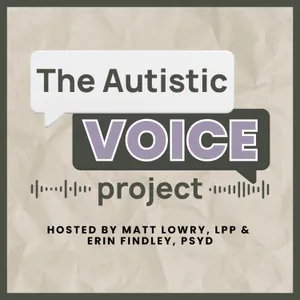
Free Daily Podcast Summary
The Autistic VOICE Project: Daily Summaries Delivered
by The Autistic VOICE Project
VOICE stands for Validating Our Identity, Culture, and Experience. This is a show led by Autistic professionals who talk about Autistic experiences and how to live happier and healthier Autistic lives. We'll be joined by Autistic people from different walks of life in search of finding ways to live more authentically Autistic!
Latest Episodes
The most recent episodes — sign up to get AI-powered summaries of each one.
- May 29, 202627 min
Episode 48: Leaky Foundations, Low Spoons, and Building Something That Lasts
Matt and Erin are wrapping up Season 1 of The Autistic VOICE Project this week — and after 48 episodes, they’re talking honestly about burnout, sustainability, community, and what it takes to keep showing up as Autistic people doing work they care about.We cover:Why we're taking a summer break and what autistic burnout actually looks like in real lifeEnergy accounting, reducing barriers, and finding ways to make daily life more sustainableThe difference between stopping completely and intentionally cutting back before burnout gets worseWhy asking for help can be part of healthy community careBuilding a podcast without burning ourselves out financially, emotionally, or physicallyIdeas for Patreon, merch, sponsors, and ways listeners can help support the future of the showUpcoming plans for Season 2, including new guests from the Autistic community, artists, and creatorsAlso: leaking foundation walls, Prius appreciation, shampoo-bodywash-conditioner "all-in-one goo," PBS pledge drive energy, dethroning Joe Rogan, Dan Aykroyd's elusive guest appearance, Star Wars memes, Godzilla sponsorship dreams, and Bob from Topeka.We're taking the summer to rest, regroup, and build something more sustainable behind the scenes. Thank you for listening, sharing, and being part of this community.We'll see you in August.
- May 25, 202650 min
Episode 47: Friend-Shaped People, Autism Sparkle, and the Spreadsheet Method of Making Friends
Matt, Erin, and friend of the show Hunter Hammersen are here this week talking about something a whole lot of Autistic people want and struggle with at the same time: friendship. Specifically, how do you make local, in-person friends when leaving the house already feels exhausting?Hunter shares her deeply Autistic, surprisingly effective friendship protocol involving spreadsheets, rules, recurring events, and finding “friend-shaped people” in places like libraries, rock shops, yarn stores, and grocery stores. The conversation digs into rejection sensitivity, masking, awkwardness, and why being “one sentence weirder” in public can actually help you find your people.We cover:• Why Autistic people aren’t actually “bad at people”• Going to events three times before deciding you hate them• “Autism sparkle” and signaling safely to other weirdos in public• Different levels of friendship and why acquaintances matter too• Building community through low-pressure invitations and shared activities• The difference between authentic connection and performing neurotypical social rulesAlso: Joanne Fabrics grief, silent book clubs, purple grocery store masks, Mary Poppins crack dealer energy, fabric scissors as weapons, and Matt describing himself as Gollum in public.
- May 15, 202646 min
Episode 46: Autistic Grief, Co-Regulation, and the People Who Keep Us Human
Matt and Erin are back for another mailbag episode — and this one gets deeply personal. From losing an “anchor person” to navigating autistic grief, relationships, PDA parenting, and co-regulation, this episode explores what happens when the people who help hold our world together are suddenly gone or overwhelmed. It’s vulnerable, funny, heartbreaking, and very, very autistic.We cover:Why autistic grief can feel like losing your “internal compass” — not just a loved oneHow partners, friends, and safe people often function as essential disability supportsThe fear, disorientation, and loneliness that can come after losing an “anchor person”Matt and Erin’s personal experiences with divorce, loss, burnout, and rebuilding stabilityPDA parenting, “dueling gremlins,” and how co-regulation creates room for flexibilityWhy autistic love is often rooted in safety, routine, and nervous system reliefTransformers, Doctor Who, fountains, art galaxies, chicken nuggets, and the sacred role of biscuits and gravyAlso: the loneliest whale in the ocean, emotional support toast, “people…” as a replacement swear word, and Matt casually admitting he’d probably make a good spicy audiobook narrator.
- May 8, 202641 min
Episode 45: Nintendo Fidgets, Neutrality, and the Nervous System We Forgot About
Matt, Erin, and guest Nyck Walsh are here this week — and this episode turns into a really good conversation about somatic therapy, autistic processing, nervous systems, sensory joy, and why neutrality can feel radical when your body has spent years stuck in survival mode. We talk about: Rocks, Nintendo buttons, foodgasms, hypervigilance, and the very real experience of trying to exist in a world that keeps demanding “normal”Nyck explains “VAST” (Variable Attention Stimulus Trait) as a more affirming alternative to ADHD languageWhy a lot of somatic therapy can accidentally become ableist when interoception differences aren’t consideredThe autistic processing pause: looking away, slowing down, and needing time to actually build an accurate responseUsing rocks, pets, blankets, textures, fidgets, and sensory anchors to ground in the present momentThe difference between sympathetic overdrive and parasympathetic rest — and why many autistic people rarely get to experience neutralityHow pleasure, sensory joy, and “stopping to smell the roses” can become survival tools instead of luxuriesCats, Caprese omelets, NES controller fidgets, and the very important concept of the food danceNyck’s new book Neurodivergent Somatics and Therapy and the upcoming audiobook narrated by Nyck themself Also: Erin accidentally inventing “somagic,” Tuck the adventure cat making emotional drive-bys, and a surprisingly deep discussion about how touching a really good rock can help keep your nervous system online. This is a ride. We’re glad you’re here.
- May 1, 202632 min
Episode 44: Perimenopause, Medical Gaslighting, and Figuring It Out Without a Map
This episode gets into perimenopause through an autistic lens—what it actually feels like, why it hits differently in autistic bodies, and how little real guidance exists. Matt, Erin, and Eleda talk through the biology, the lived experience, and the frustration of trying to make sense of something that affects so many people but still isn’t well understood—especially when you add autism into the mix.We cover:How sensory differences can amplify menopause symptoms (hot flashes, sweat, fatigue, migraines) into something much more intenseThe overlap between hormones, histamines, and autoimmune conditions—and why everything can spike at onceThe lack of research, missed diagnoses, and why so many autistic people are left figuring this out on their ownReal, often overlooked symptoms (phantom smells, joint pain, anxiety surges) and what it’s like not knowing what’s happening to your bodyWhat it takes to advocate for care, find informed providers, and experiment with supports like HRTThere’s no clean roadmap here. Just real talk, shared experience, and a starting point for conversations we should’ve been having a long time ago.
- Apr 28, 202648 min
Episode 43: Special Interests, Safe Spaces, and Saying No to Shame
Matt, Erin, and Eleda get into special interests, collections, and what it means to have a space where Autistic joy isn’t hidden—it’s the whole point. This one’s about building community through the things we love, and why that matters more than most people realize.We cover:Turning a business into a place where people come to connect—not just buy thingsWhy collections matter (and what happens to them when we’re gone)The shame people are taught to feel about joy—and why we reject thatAutistic joy, special interests, and being “too much” for other peopleFinding your people—whether that’s a shop, a hobby group, or this podcastAlso: unicorn collections, tiny horse economies, estate herds, and the real work of building (and protecting) a personal museum of the things you love.
- Apr 17, 202634 min
Episode 42: Horses, Hyperfocus, and the Accidental Autistic Gathering Place
Matt and Erin are joined by Eleda Towle, an Autistic store owner whose lifelong focus on model horses turned into a business—and a gathering place for other Autistic people. This one moves the way Autistic conversations often do: tangents, deep dives, and a lot of “wait, that connects to this.”It’s about discovery, community, and what happens when people finally find their thing—and their people.We cover:Eleda’s late autism discovery at 52—and the moment everything started to make senseBuilding a business around monotropic focus (yes, plastic horses) and accidentally creating Autistic community spaceWhy Autistic conversations “maze” instead of staying linear—and why that’s not a problem to fixThe deep (and very real) Autistic roots of toy culture—from model horses to My Little Pony loreIntrinsic motivation, PDA, and why “just try harder” doesn’t work for Autistic peopleSelf-directed learning, reward systems, and a nonprofit using play to support neurodivergent kidsSide note: yes, we go from horses → Ninja Turtles → Brainspotting → electric towers → taxes → government frustration… and it all makes sense if you’re following the thread. That’s the point.This is what it sounds like when autistic people talk to each other. A little chaotic. Very real. And honestly, kind of the best way to understand how our brains actually work.
- Apr 10, 202640 min
Episode 41: Crystals, Experiments, and Figuring Out Who You Are (Without Losing Yourself)
Matt, Erin, and Jamie Roberts are here this week—and we get into identity development for autistic teens, the pressure to turn yourself into something “useful,” and what it actually looks like to figure out who you are when the world keeps handing you scripts that don’t fit. It’s real, a little chaotic, and very recognizable.We cover:• Why identity gets tangled up with productivity, money, and “what are you going to do with that?”—and how to separate who you are from what you earn• The role of interests (yes, even YouTube, gaming, makeup, or “too much time online”) as actual data—not distractions—and how adults can either shut that down or build from it• Using “experiments” instead of pressure—trying things, gathering information, adjusting, and trying again without making it a pass/fail identity crisis• The difference between “this is hard because it’s new” and “this is hard because it doesn’t fit me”—and why that distinction matters• Representation, visibility, and why seeing someone like you (purple hair, special interests, all of it) can shift what feels possible• Jamie’s book Neurodiversity for Teen Girls and the six “gem” archetypes—how different autistic teens navigate identity, masking, relationships, and self-advocacyAlso: Lord of the Rings name drops, musical theater brain tangents, Lego reward systems for finishing a book (yes, really), and a solid reminder that “sucking at something” is part of learning—not a sign to quit.Side note:This one stays with the same core message we keep coming back to—there’s no clean, linear way to figure out who you are. It’s messy. It’s iterative. It’s a lot of “try this, nope, not that.” And yeah, that’s frustrating.But it’s also how identity actually forms.This is the way.
Get The Autistic VOICE Project summaries in your inbox
Free AI-powered daily recaps. Key takeaways, quotes, and mentions — in a 5-minute read.
Get Free Summaries →Free forever for up to 3 podcasts. No credit card required.
You Might Also Like
Listeners also like.

Tony Mantor: Why Not Me ?
Explores autism, mental health, and human stories to promote understanding, challenge stigma, and support neurodiversity.

The Autoimmune Wellness Podcast
Explores managing autoimmune diseases through nutrition, lifestyle, and the Autoimmune Protocol.

Speaking of Psychology
Explores recent psychological research and its applications to daily life.
The Psychology Podcast
Explores human potential and possibility through conversations with scientists, thinkers, and self-actualized individuals.
Mind If We Talk?
Two people share raw, intimate conversations about emotional struggles while a therapist guides understanding and growth.

Your Thoughts Your Reality
A podcast exploring how veterans can overcome psychological challenges like fear and self-doubt through neuroencoding science.
Unlocking Us with Brené Brown
Explores human connection through conversations on vulnerability, courage, and emotion with researchers, thinkers, and audiences.
Good Life Project
Deep conversations about building a meaningful life through midlife reinventions, grounded in science and human experience.
Mayim Bialik's Breakdown
Explores the intersection of science and spirituality through conversations on consciousness, healing, and unexplained phenomena.
Let's Get Naked
Anne Karber discusses personal growth, relationships, and difficult life topics through candid conversations with guests.

Get Obsessed : With Living Your Best Life
Two hosts explore transformative stories and taboo topics with people challenging norms and living unfiltered lives.

Inner Childish
A conversational podcast exploring authenticity, relationships, and self-growth through candid personal stories and vulnerable discussions.
About The Autistic VOICE Project
VOICE stands for Validating Our Identity, Culture, and Experience. This is a show led by Autistic professionals who talk about Autistic experiences and how to live happier and healthier Autistic lives. We'll be joined by Autistic people from different walks of life in search of finding ways to live more authentically Autistic!
Customized Recaps
AI-powered recaps with compact key takeaways, quotes, and insights.
Straight to Your Inbox
Get key takeaways from The Autistic VOICE Project in a 5-minute read.
Save Hours Every Week
Stay current on your favorite podcasts without falling behind.
Frequently Asked Questions
What is Podzilla's The Autistic VOICE Project daily summary?
It's a free AI-powered email that summarizes new episodes of The Autistic VOICE Project as soon as they're published. You get the key takeaways, notable quotes, and links & mentions — all in a quick read.
How does the The Autistic VOICE Project podcast summary work?
When a new episode drops, our AI transcribes and analyzes it, then generates a personalized summary tailored to your interests and profession. It's delivered to your inbox every morning.
Is this an official The Autistic VOICE Project product?
No. Podzilla is an independent service that summarizes publicly available podcast content. We're not affiliated with or endorsed by The Autistic VOICE Project.
Can I get summaries of other podcasts too?
Absolutely! The free plan covers up to 3 podcasts. Upgrade to Pro for 15, or Premium for 50. Browse our full catalog at /podcasts.
How often does The Autistic VOICE Project release new episodes?
The Autistic VOICE Project publishes weekly. Our AI generates a summary within hours of each new episode.
What topics does The Autistic VOICE Project cover?
The Autistic VOICE Project covers topics including Science, Social Sciences. Our AI identifies the specific themes in each episode and highlights what matters most to you.
Start getting The Autistic VOICE Project summaries tomorrow morning.
Free forever for up to 3 podcasts. No credit card required.
Free forever for up to 3 podcasts. No credit card required.