Free Daily Podcast Summary
The Behavioral Design Podcast: Daily Summaries Delivered
by Samuel Salzer and Aline Holzwarth
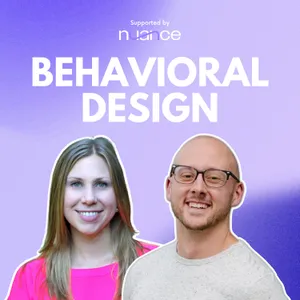
How can we change behavior in practice? What role does AI have to play in behavioral design? Listen in as hosts Samuel Salzer and Aline Holzwarth speak with leading experts on all things behavioral science, AI, design, and beyond. The Behavioral Design Podcast provides a fun and engaging way to learn about applied behavioral science and how to design for behavior change in practice. The latest season explores the fascinating intersection of Behavioral Design and AI.
Latest Episodes
The most recent episodes — sign up to get AI-powered summaries of each one.
- Jun 10, 202656 min
Oura AI Advisor with Ricky Bloomfield
Oura AI Advisor with Dr. Ricky BloomfieldIn this episode of the Behavioral Design Podcast, hosts Aline and Samuel are joined by Dr. Ricky Bloomfield, Chief Medical Officer at Oura, to explore how AI is changing the way people understand, interpret, and act on their health data.Together, they examine what makes AI-powered health coaching feel different from traditional digital health tools. From conversational interfaces and biometric personalization to empathy, trust, uncertainty, and safety, Ricky shares a behind-the-scenes look at how Oura Advisor is designed to support people in making better health decisions without pretending to replace clinicians.The conversation covers:What makes a good health coach, whether human or AIWhy conversational AI can feel somewhere between a tool, coach, and companionHow Oura Advisor uses personal health data to make insights more relevant and actionableThe importance of empathy, tone, and response length in AI health experiencesWhy AI systems need guardrails without becoming overly constrainedThe risks and benefits of personalization, memory, and agentic AI in digital healthHow wearable data could help uncover silent health risks like high blood pressureWhy the future of health AI is less about replacing doctors and more about extending care, improving screening, and helping clinicians focus on higher-value workRicky’s advice for product teams: optimize for speed of learningThis episode is a must-listen for anyone interested in the future of AI, digital health, wearables, and behavior change. Especially those thinking about how to design AI products that are not only intelligent, but trustworthy, humane, and genuinely useful.--Interesting in collaborating with Nuance? If you’d like to become one of our special projects, email us at hello@nuancebehavior.com or book a call directly on our website: nuancebehavior.com.Support the podcast by joining Habit Weekly Pro 🚀. Members get access to extensive content databases, calls with field leaders, exclusive offers and discounts, and so much more.Every Monday our Habit Weekly newsletter shares the best articles, videos, podcasts, and exclusive premium content from the world of behavioral science and business. Get in touch via podcast@habitweekly.comThe song used is Murgatroyd by David Pizarro
- Jul 31, 202547 min
Our Most Controversial AI Opinions – Season 4 Finale
Season 4 Finale: Our Most Controversial AI TakesWe wrap up Season 4 of the Behavioral Design Podcast with a different kind of conversation. Instead of looking outward at our guests’ insights, Aline and Samuel turn the mic on themselves, reflecting on the season, what we’ve learned, and the boldest, most controversial opinions we hold about AI.From questions about whether AI can truly emulate human qualities to fears of a future where we slowly de-skill ourselves by over-relying on machines, this episode is part reflection, part confessional. Highlights include:A look back at the season’s most surprising and provocative guest takes on AIWhy AI optimism often lives closest to where experts work—and where skepticism still lingersThe heated debate over AI companions: comforting helpers or human connection killers?Our personal, unfiltered takes on AI’s hidden risks, including cognitive offloading and the myth of collaborationThe strange and perhaps surprisingly useful role of AI “oracles” in our own livesThis is the perfect sendoff for Season 4: A candid, wide-ranging discussion about the future of AI, human behavior, and what it all means for how we live, think, and connect.--Interesting in collaborating with Nuance? If you’d like to become one of our special projects, email us at hello@nuancebehavior.com or book a call directly on our website: nuancebehavior.com.Support the podcast by joining Habit Weekly Pro 🚀. Members get access to extensive content databases, calls with field leaders, exclusive offers and discounts, and so much more.Every Monday our Habit Weekly newsletter shares the best articles, videos, podcasts, and exclusive premium content from the world of behavioral science and business. Get in touch via podcast@habitweekly.comThe song used is Murgatroyd by David Pizarro
- Jul 9, 202546 min
Season 4 Recap: Meet Our AI Co-Hosts
Season 4 Recap: Can AI Capture a Whole Season?In this special recap episode of the Behavioral Design Podcast, hosts Aline and Samuel reflect on the ambitious arc of Season 4—our deep dive into the intersection of behavioral science and artificial intelligence. From empathic chatbots to algorithmic sameness, AI co-therapists to synthetic friendships, we explored how AI is reshaping human behavior, relationships, and decision-making.But here’s the twist: the second half of this episode isn’t hosted by us. It’s AI. Using transcripts from every conversation this season, we asked our AI co-hosts to generate a narrated summary of the biggest ideas and themes that emerged across episodes. Can AI recap a whole season better than we can? Is this the beginning of our own replacement?Along the way, we revisit:How AI is changing the emotional landscape of our livesWhy automation and personalization are both liberating and limitingWhat happens when algorithms replace—not just supplement—human judgmentThe ethical fault lines of psychological targeting, autonomy, and consentWhether behavioral science can keep up with the pace and power of AIIf you missed any episodes or want a distilled tour of the season, this is the one to listen to.Next up: our Season Finale, featuring Aline and Samuel’s most controversial takes on AI 🍿--Interesting in collaborating with Nuance? If you’d like to become one of our special projects, email us at hello@nuancebehavior.com or book a call directly on our website: nuancebehavior.com.Support the podcast by joining Habit Weekly Pro 🚀. Members get access to extensive content databases, calls with field leaders, exclusive offers and discounts, and so much more.Every Monday our Habit Weekly newsletter shares the best articles, videos, podcasts, and exclusive premium content from the world of behavioral science and business. Get in touch via podcast@habitweekly.comThe song used is Murgatroyd by David Pizarro
- Jun 11, 20251h 4m
Productivity and AI with Oliver Burkeman
Productivity in the Age of AI with Oliver BurkemanIn this episode of the Behavioral Design Podcast, hosts Aline and Samuel are joined by Oliver Burkeman, journalist and bestselling author of Four Thousand Weeks, to explore what it means to live and work meaningfully in an era of accelerating AI.Together, they examine how AI tools are reshaping our relationship with time, focus, and control—from email-writing assistants to algorithmic scheduling and optimization. Oliver shares his thoughts on how these technologies, while promising to save us time, often pull us deeper into compulsive productivity loops and distract us from the deeper questions: What are we optimizing for? And what does it mean to spend our time well?The conversation covers:The seduction of infinite optionality and why AI might make it worseWhether AI-generated outputs dull our creative instincts or free themWhy doing fewer things might become even more important in the AI eraThe psychological cost of outsourcing decisions to machinesHow behavioral science can help people reclaim agency and meaning in a world of hyper-efficiencyThis episode is a must-listen for anyone navigating the tension between automation and intention—especially those wondering how to stay human in the loop.--Interesting in collaborating with Nuance? If you’d like to become one of our special projects, email us at hello@nuancebehavior.com or book a call directly on our website: nuancebehavior.com.Support the podcast by joining Habit Weekly Pro 🚀. Members get access to extensive content databases, calls with field leaders, exclusive offers and discounts, and so much more.Every Monday our Habit Weekly newsletter shares the best articles, videos, podcasts, and exclusive premium content from the world of behavioral science and business. Get in touch via podcast@habitweekly.comThe song used is Murgatroyd by David Pizarro
- May 28, 202552 min
AI Therapy with Alison Cerezo
AI Co-Therapists with Alison CerezoIn this episode of the Behavioral Design Podcast, hosts Aline and Samuel talk with Dr. Alison Cerezo, a clinical psychologist, professor, and Senior Vice President of Research at Mpathic, a company developing AI tools that support therapists in delivering more empathetic and precise care.They explore the growing role of AI in mental health, from real-time feedback during therapy sessions to tools that help clinicians detect risk, stay aligned with best practices, and reduce bias. Alison describes how Mpathic works as a co-therapist—supporting rather than replacing the human element of therapy.The conversation also digs into larger questions: Can AI feel more empathetic than humans? How do we avoid over-reliance on machines for emotional support? And what does it really mean to design AI that complements rather than competes with people?This episode is a must-listen for anyone interested in the future of therapy, empathy, and AI—and what it looks like to build systems that enhance human care, not undermine it.--Interesting in collaborating with Nuance? If you’d like to become one of our special projects, email us at hello@nuancebehavior.com or book a call directly on our website: nuancebehavior.com.Support the podcast by joining Habit Weekly Pro 🚀. Members get access to extensive content databases, calls with field leaders, exclusive offers and discounts, and so much more.Every Monday our Habit Weekly newsletter shares the best articles, videos, podcasts, and exclusive premium content from the world of behavioral science and business. Get in touch via podcast@habitweekly.comThe song used is Murgatroyd by David Pizarro
- May 15, 20251h 3m
Empathy and AI with Michael Inzlicht
Empathic Machines with Michael InzlichtIn this episode of the Behavioral Design Podcast, hosts Aline and Samuel are joined by Michael Inzlicht, professor of psychology at the University of Toronto and co-host of the podcast Two Psychologists Four Beers. Together, they explore the surprisingly effortful nature of empathy—and what happens when artificial intelligence starts doing it better than we do.Michael shares insights from his research into empathic AI, including findings that people often rate AI-generated empathy as more thoughtful, emotionally satisfying, and effortful than human responses—yet still prefer to receive empathy from a human. They unpack the paradox behind this preference, what it tells us about trust and connection, and whether relying on AI for emotional support could deskill us over time.This conversation is essential listening for anyone interested in the intersection of psychology, emotion, and emerging AI tools—especially as machines get better at sounding like they care.--Interesting in collaborating with Nuance? If you’d like to become one of our special projects, email us at hello@nuancebehavior.com or book a call directly on our website: nuancebehavior.com.Support the podcast by joining Habit Weekly Pro 🚀. Members get access to extensive content databases, calls with field leaders, exclusive offers and discounts, and so much more.Every Monday our Habit Weekly newsletter shares the best articles, videos, podcasts, and exclusive premium content from the world of behavioral science and business. Get in touch via podcast@habitweekly.comThe song used is Murgatroyd by David Pizarro
- May 1, 20251h 22m
Building Moral AI with Jana Schaich Borg
How Do You Build a Moral AI? with Jana Schaich BorgIn this episode of the Behavioral Design Podcast, hosts Aline and Samuel are joined by Jana Schaich Borg, Associate Research Professor at Duke University and co-author of the book “Moral AI and How We Get There”. Together they explore one of the thorniest and most important questions in the AI age: How do you encode human morality into machines—and should you even try?Drawing from neuroscience, philosophy, and machine learning, Jana walks us through bottom-up and top-down approaches to moral alignment, why current models fall short, and how her team’s hybrid framework may offer a better path. Along the way, they dive into the messy nature of human values, the challenges of AI ethics in organizations, and how AI could help us become more moral—not just more efficient.This conversation blends practical tools with philosophical inquiry and leaves us with a cautiously hopeful perspective: that we can, and should, teach machines to care.— Topics Covered:What AI alignment really means (and why it’s so hard)Bottom-up vs. top-down moral AI systemsHow organizations get ethical AI wrong—and what to do insteadThe messy reality of human values and decision makingTranslational ethics and the need for AI KPIsPersonalizing AI to match your valuesWhen moral self-reflection becomes a design feature—Timestamps:00:00 Intro: AI Alignment — Mission Impossible?04:00 Why Moral AI Is So Hard (and Necessary)07:00 The “Spec” Story & Reinforcement Gone Wrong10:00 Anthropomorphizing AI — Helpful or Misleading?12:00 Introducing Jana & the Moral AI Project15:00 What “Moral AI” Really Means18:00 Interdisciplinary Collaboration (and Friction)21:00 Bottom-Up vs. Top-Down Approaches27:00 Why Human Morality Is Messy31:00 Building a Hybrid Moral AI System41:00 Case Study: Kidney Donation Decisions47:00 From Models to Moral Reflection52:00 Embedding Ethics Inside Organizations56:00 Moral Growth Mindset & Training the Workforce01:03:00 Why Trust & Culture Matter Most01:06:00 Comparing AI Labs: OpenAI vs. Anthropic vs. Meta01:10:00 What We Still Don’t Know01:11:00 Quickfire: To AI or Not To AI01:16:00 Jana’s Most Controversial Take01:19:00 Can AI Make Us Better Humans?—🎧 Like this episode? Share it with a friend or leave us a review to help others discover the show.Let me know if you’d like an abridged version, pull quotes, or platform-specific text for Apple, Spotify, or LinkedIn.
- Apr 16, 20251h 9m
State of AI Risk with Peter Slattery
Understanding AI Risks with Peter SlatteryIn this episode of the Behavioral Design Podcast, hosts Aline and Samuel are joined by Peter Slattery, behavioral scientist and lead researcher at MIT’s FutureTech lab, where he spearheads the groundbreaking AI Risk Repository project. Together, they dive into the complex and often overlooked risks of artificial intelligence—ranging from misinformation and malicious use to systemic failures and existential threats.Peter shares the intellectual and emotional journey behind categorizing over 1,000 documented AI risks, how his team built a risk taxonomy from 17,000+ sources, and why shared understanding and behavioral science are critical for navigating the future of AI.This one is a must-listen for anyone curious about AI safety, behavioral science, and the future of technology that’s moving faster than most of us can track.--LINKS:Peter's LinkedIn ProfileMIT FutureTech Lab: futuretech.mit.eduAI Risk Repository--Interesting in collaborating with Nuance? If you’d like to become one of our special projects, email us at hello@nuancebehavior.com or book a call directly on our website: nuancebehavior.com.Support the podcast by joining Habit Weekly Pro 🚀. Members get access to extensive content databases, calls with field leaders, exclusive offers and discounts, and so much more.Every Monday our Habit Weekly newsletter shares the best articles, videos, podcasts, and exclusive premium content from the world of behavioral science and business. Get in touch via podcast@habitweekly.comThe song used is Murgatroyd by David Pizarro
Get The Behavioral Design Podcast summaries in your inbox
Free AI-powered daily recaps. Key takeaways, quotes, and mentions — in a 5-minute read.
Get Free Summaries →Free forever for up to 3 podcasts. No credit card required.
You Might Also Like
Listeners also like.

OpenAI Podcast
Conversations with OpenAI researchers and builders exploring how frontier AI models are developed and used in practice.

Possible
Explores optimistic, realistic futures through in-depth conversations with innovators in AI, science, health, and global affairs.
The Psychology Podcast
Explores human potential and possibility through conversations with scientists, thinkers, and self-actualized individuals.

AI For Humans: Weekly AI News, Tools & Trends
A weekly breakdown of major AI news, tools, and breakthroughs for both newcomers and seasoned enthusiasts.
Your Undivided Attention
Explores how technology reshapes human behavior, society, and thought with insights from experts and innovators.
The Most Interesting Thing in AI
Conversations with leading thinkers on the ethical, economic, and social impacts of artificial intelligence.
"The Cognitive Revolution"
Explores the transformative impact of artificial intelligence through interviews with innovators shaping its future.

AI Breakdown
Explores the latest advancements, ethical issues, and real-world impacts of artificial intelligence across industries.

Latent Space: The AI Engineer Podcast
Explores AI engineering breakthroughs in foundation models, code generation, and AI agents through interviews with researchers and developers.

Building AI Boston
Discusses artificial intelligence through real-world applications and ethical considerations in Boston’s tech community.

Everyday AI Podcast – An AI and ChatGPT Podcast
Covers practical uses of AI tools like ChatGPT and Midjourney to help people work more efficiently and advance their careers.

A Beginner's Guide to AI
Explores artificial intelligence through interviews and clear explanations for beginners and the curious.
About The Behavioral Design Podcast
How can we change behavior in practice? What role does AI have to play in behavioral design? Listen in as hosts Samuel Salzer and Aline Holzwarth speak with leading experts on all things behavioral science, AI, design, and beyond. The Behavioral Design Podcast provides a fun and engaging way to learn about applied behavioral science and how to design for behavior change in practice. The latest season explores the fascinating intersection of Behavioral Design and AI.
Customized Recaps
AI-powered recaps with compact key takeaways, quotes, and insights.
Straight to Your Inbox
Get key takeaways from The Behavioral Design Podcast in a 5-minute read.
Save Hours Every Week
Stay current on your favorite podcasts without falling behind.
Frequently Asked Questions
What is Podzilla's The Behavioral Design Podcast daily summary?
It's a free AI-powered email that summarizes new episodes of The Behavioral Design Podcast as soon as they're published. You get the key takeaways, notable quotes, and links & mentions — all in a quick read.
How does the The Behavioral Design Podcast podcast summary work?
When a new episode drops, our AI transcribes and analyzes it, then generates a personalized summary tailored to your interests and profession. It's delivered to your inbox every morning.
Is this an official The Behavioral Design Podcast product?
No. Podzilla is an independent service that summarizes publicly available podcast content. We're not affiliated with or endorsed by Samuel Salzer and Aline Holzwarth.
Can I get summaries of other podcasts too?
Absolutely! The free plan covers up to 3 podcasts. Upgrade to Pro for 15, or Premium for 50. Browse our full catalog at /podcasts.
How often does The Behavioral Design Podcast release new episodes?
The Behavioral Design Podcast publishes biweekly. Our AI generates a summary within hours of each new episode.
What topics does The Behavioral Design Podcast cover?
The Behavioral Design Podcast covers topics including Science, Social Sciences. Our AI identifies the specific themes in each episode and highlights what matters most to you.
Start getting The Behavioral Design Podcast summaries tomorrow morning.
Free forever for up to 3 podcasts. No credit card required.
Free forever for up to 3 podcasts. No credit card required.