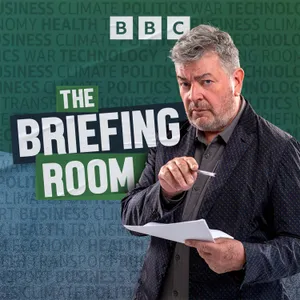
Free Daily Podcast Summary
The Briefing Room: Daily Summaries Delivered
by BBC Radio 4
David Aaronovitch and a panel of experts and insiders present in-depth explainers on big issues in the news
Latest Episodes
The most recent episodes — sign up to get AI-powered summaries of each one.
- 6 days ago28 min
How do you get young people off benefits and into work?
Nearly one million young people between the ages of 16 and 24 in the UK are known as NEETS. That means one in eight young people are not currently in education, employment or training. This month the former Labour Minister, Alan Milburn will publish a long awaited review into how to get young people off benefits and into work. While the Government may be hoping this will cut the enormous benefits bill, it’s likely to come with a multi-billion pound price tag in terms of offering support programmes to young people and employers. David Aaronovitch asks how we've ended up with so many young people on benefits and what can be done to get them off them again?Guests:Eduin Latimer, Senior Research Economist at the Institute for Fiscal Studies Lindsay Judge, Research Director at The Resolution Foundation Stephen Evans, Chief Executive of the Learning and Work InstituteProduction team:Presenter: David Aaronovitch Producers: Caroline Bayley, Alex Last and Kirsteen Knight Editor: Richard Vadon Sound Engineer: Sam Dickinson Production Co-ordinator: Maria Ogundele
- 1 weeks ago28 min
$ 6.3 billion - how the biggest heist happened
They say it’s the biggest crypto currency hack on record. More than 6 billion dollars of digital assets were targetted when hackers attacked Binance - the world’s largest crypto exchange, estimated to have more than 300 million users worldwide. About $3 billion of the 6.3 billion dollars was frozen before the attackers could make off with it but the rest has gone. The FBI has blamed a group of hackers linked to North Korea for the theft. The North Koreans say it wasn’t them… But it’s not the first time North Korean hackers have targetted the crypto currency industry. And then just a few days ago supermarket fridges and freezers came under cyber attack across Europe when hackers managed to heat them up. So what’s happening? How worried should we be and what could be next? Guests:Joe Tidy, BBC Cyber Correspondent Geoff White, Investigative journalist and author and co-host of the BBC podcast series, The Lazarus Heist. Emily Taylor, CEO of Oxford Information Labs and co-founder of the Global Signal Exchange Ciaran Martin, Professor at the Blavatnik School of Government at Oxford University, former founding Chief Executive of the National Cyber Security Centre, part of GCHQ (2016 to 2020)Production team: Presenter: David Aaronovitch Producers: Caroline Bayley, Alex Last and Kirsteen Knight. Editor: Richard Vadon Sound Engineer: Neil Churchill Production Co-ordinator: Lewis Yates
- 3 weeks ago42 min
How might the midterms affect US foreign policy?
The foreign policy of the second Trump administration has caused consternation to allies from Denmark to Korea. What had seemed solid and settled in the post-war world has been thrown into turmoil. Until now the President has enjoyed support from Republican majorities in both Houses of Congress, but next month's midterm elections seem likely to change all that. The Democrats look to be headed for victory. But the question for the rest of the world is what will it mean for us? A tamed president? An enraged president? And how will America’s enemies and allies react?Guests: Anthony Zurcher, BBC’s North America correspondent Heather Hurlburt, associate fellow at the US and North America programme at Chatham House Rebecca Lissner, senior fellow for US foreign policy at the Council on Foreign Relations Lord Peter Ricketts, former diplomat, ambassador and national security advisor. Production team:Presenter: David Aaronovitch Producers: Ben Carter, Alex Last and Kirsteen Knight Editor: Penny Murphy Sound engineer: James Beard Production co-ordinator: Maria Ogundele
- 3 weeks ago28 min
Has France become ungovernable?
Will the French accept that changes need to be made to fix their ailing economy? Political paralysis and a debt crisis has led to 5 prime ministers in the last two years. Every attempt at fixing the economic problems is met with outrage and protest. Saturday 17th October 2026 saw some of the worst protests in years, with peaceful demonstrations over the cost of living and school funding descending into an 'apocalyptic hell'. 500 police officers were injured in the violence, 1,500 shops were damaged and an historic 19th century city hall was burnt to the ground in the mass disorder that ensued. But there are some serious economic issues that must be faced head on. France's borrowing costs have just hit a 26 year high, signalling they are not trusted to manage their growing debt. Public spending in France is higher than in many other European countries and a big part of that bill is pensions. Raising the pension age would save the state much needed money but proposals to do so were met with outrage and put on hold. So, has France become ungovernable?Guests: Sophie Pedder, Paris bureau chief, The Economist Victor Mallet, Financial Times, author of Far-Right France: Le Pen, Bardella and the Future of Europe Agnes Poiriet, UK editor, L'ExpressProducers: Ben Carter, Phoebe Keane, Kirsteen Knight
- Oct 15, 202628 min
How will climate change affect our farms?
Will we still be able to grow enough food as temperatures rise and rainfall becomes more erratic? What changes will farmers need to make to keep feeding the nation? As Radio 4 marks 75 years of the farming drama The Archers, David Aaronovitch examines the future of British farming. Models suggest large parts of the South East of England will no longer be favourable for growing cereals like wheat and even barley, important for things like beer and whiskey. Strawberries may be far too difficult to grow at all. Some areas of the UK may become better for farmers and new crops may grow that we've never been able to grow before, but it presents a huge challenge for farmers who will have to change their entire way of working. What must farmers do to adapt and what do we need to do to ensure we keep the food on our plates? GUESTS:Charlie Ireland, a farming consultant at Ceres consultancy, who advises Jeremy Clarkson on Clarkson’s Farm Professor Nicola Cannon, Royal Agricultural University. Neil Ward, Professor of Rural and Regional Development at the University of East Anglia Tom Lancaster, Head of Land, Food and Farming at The Energy and Climate Intelligence Unit
- Oct 8, 202628 min
Why does the Yemen war matter to the world?
The ceasefire between the Saudi-backed Yemen government and the Houthi rebels is over. As the fighting for control of land and sea intensifies, what are the knock on effects for the rest of the world?Guests:Nawal Al-Maghafi, BBC senior international investigations correspondent Baraa Shiban, researcher and political analyst on Yemen and the Gulf at the defence and security thinktank, RUSI Dr Elisabeth Kendall, Arabist & Middle East specialist and also The Mistress of Girton College at the University of Cambridge Frank Gardner, BBC Security CorrespondentPresenter: David Aaronovitch Producers: Ben Carter, Phoebe Keane and Kirsteen Knight Editor: Richard Vadon Sound engineer: James Beard Production co-ordinator: Maria Ogundele
- Aug 27, 202628 min
Are Gen Z movements reshaping politics?
In May, the Chief Justice of India unwittingly gave a name to a generational protest. He called unemployed young people “cockroaches” and the mass youth movement that had begun in the wake of the sudden cancellation of a national exam took on the title - the Cockroach Janta party. But India hasn’t been the only country that has seen Gen Z - people aged between 14 and 29 - engaging in mass protests this year. It’s been happening all over the place, from Serbia to Kenya. Different grievances, different circumstances, but the same generation. So what are the youth revolting about, and are they winning?Step inside The Briefing Room and together we’ll find out.Guests: Dr Nayana Prakash, research affiliate at the Minderoo Centre for Technology and Democracy at the University of Cambridge. Erica Frantz, associate professor in political science at Michigan State University Matthew Cebul, lead research fellow at the Nonviolent Action Lab at the Harvard Kennedy SchoolProduction team:Presenter: David Aaronovitch Producers: Ben Carter, Emma Close and Kirsteen Knight Editor: Penny Murphy Sound engineer: James Beard Production co-ordinator: Keshia Agyei
- Aug 20, 202628 min
How do we prepare for a future water shortage?
Did you step outside this morning and feel something odd on your face or neck? Its called rain. We’ve hardly had any this summer and the result was the declaration this month of drought status across two thirds of England and almost all of Wales. The reservoirs are low. And the future looks parched: the government estimates that by 2055, England will face a water shortfall of 5 billion litres a day. To put that in context we currently use 14 billion litres. Why has this happened and how can we fix it? Other than everyone moving to Scotland. Step inside The Briefing Room and together we’ll find out.Guests:Sir John Armitt, chair of The Public Private Partnership Commission Professor Jim Hall, Professor of Climate and Environmental Risk at Oxford University Dr Heather Smith, Senior Lecturer in Water Governance at Cranfield UniversityProduction team:Presenter: David Aaronovitch Producers: Ben Carter, Bob Howard and Kirsteen Knight Editor: Penny Murphy Sound engineer: James Beard Production co-ordinator: Keshia Agyei
Get The Briefing Room summaries in your inbox
Free AI-powered daily recaps. Key takeaways, quotes, and mentions — in a 5-minute read.
Get Free Summaries →Free forever for up to 3 podcasts. No credit card required.
You Might Also Like
Listeners also like.

Analysis
Examines the ideas and forces shaping public policy in Britain and abroad with writers, journalists, and academics.

Broadcasting House
BBC Radio 4

The Real Story
Experts and decision makers analyze and debate major news stories.

In the Balance
BBC World Service

The New World
Explores global shifts in politics, truth, demographics, and power as societies face transformative change.

Beyond Today
Examines major news stories and global issues around identity, technology, and power through expert interviews and BBC reporting.

The Media Show
A programme exploring the revolution in media, including social media, breaking news, and misinformation.
The Inquiry
The Inquiry explores global trends, forces, and ideas shaping the world beyond the headlines.

BBC Inside Science
Explores the latest scientific discoveries and debates shaping our understanding of the world.

Friday Night Comedy from BBC Radio 4
Satirical comedy shows from BBC Radio 4 that tackle the week’s news with sharp humor and parody.

Free Thinking
Philosophers, historians, and critics explore current events through the lens of history, culture, and ideas.

What in the World
A daily podcast exploring major and minor global events to help listeners understand current affairs and feel more informed.
About The Briefing Room
David Aaronovitch and a panel of experts and insiders present in-depth explainers on big issues in the news
Customized Recaps
AI-powered recaps with compact key takeaways, quotes, and insights.
Straight to Your Inbox
Get key takeaways from The Briefing Room in a 5-minute read.
Save Hours Every Week
Stay current on your favorite podcasts without falling behind.
Frequently Asked Questions
What is Podzilla's The Briefing Room daily summary?
It's a free AI-powered email that summarizes new episodes of The Briefing Room as soon as they're published. You get the key takeaways, notable quotes, and links & mentions — all in a quick read.
How does the The Briefing Room podcast summary work?
When a new episode drops, our AI transcribes and analyzes it, then generates a personalized summary tailored to your interests and profession. It's delivered to your inbox every morning.
Is this an official The Briefing Room product?
No. Podzilla is an independent service that summarizes publicly available podcast content. We're not affiliated with or endorsed by BBC Radio 4.
Can I get summaries of other podcasts too?
Absolutely! The free plan covers up to 3 podcasts, any in the catalog. Basic raises that to 15, Pro to 40 and Max to 100. Browse our full catalog at /podcasts.
How often does The Briefing Room release new episodes?
The Briefing Room publishes weekly. Our AI generates a summary within hours of each new episode.
What topics does The Briefing Room cover?
The Briefing Room covers topics including News, Commentary. Our AI identifies the specific themes in each episode and highlights what matters most to you.
Start getting The Briefing Room summaries tomorrow morning.
Free forever for up to 3 podcasts. No credit card required.
Free forever for up to 3 podcasts. No credit card required.