Free Daily Podcast Summary
The Math Club: Daily Summaries Delivered
by Pete and Noah
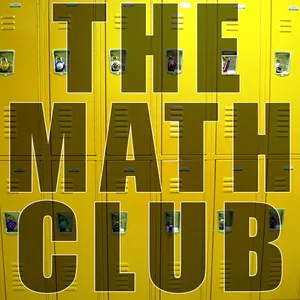
Join hosts Peter Littig and Noah King as they discuss and explain mathematical topics with their own unique style. Full of information that will interest and entertain math lovers as well as those who maybe don't love it quite that much… yet. Mathematical concepts, history, paradoxes, and puzzles await you, along with a generous helping of witty banter and fun. Calling all members…. The Math Club is open!
Latest Episodes
The most recent episodes — sign up to get AI-powered summaries of each one.
- 1 weeks ago53 min
Welcome to our Ted Talk: An Interview with Ted Dintersmith
All you have to do is look around to see that the world is changing very rapidly. But the course sequence of math education in American schools has changed little since the 1950s. In this episode, Pete and Noah welcome Ted Dintersmith, author of the book Aftermath, for a lively discussion about which math skills and concepts can best prepare today's students for the world of tomorrow. Find Aftermath on Amazon Leave us a voice message Find us on Twitter Send us an email Questions Answered in the Episode: • What mathematical skills and concepts are most important for students to learn to prepare for the future? • Why are statistics and data analytics considered more practical than traditional high school calculus for most students?
- Aug 5, 202632 min
Black Hole Fun - Exploring Kaprekar's Constant
A close call on the Math Club holodeck sends Pete and Noah down a wormhole investigating Kaprekar's Constant. Beam aboard as we explore strange new algorithms and boldly discover what happens when numbers are put through this interesting iterative process. Leave us a voice message Find us on Twitter Send us an email Questions Answered in the Episode What is Kaprekar's constant and how does the Kaprekar process work for four-digit numbers? What is the maximum number of steps required for any valid four-digit number to reach Kaprekar's constant?
- Jul 25, 202633 min
Introducing A Novel Approach
Hey there, Math Club. We have some exciting news to share. Noah has teamed up with yet another Pete to bring you yet another show! A Novel Approach is dedicated to creating novel length stories, produced as immersive audio productions. The first book is called "The End of Secrets", and it explores what happens when the ancient world of vampires collides with the modern world of AI. In each pair of new episodes, you'll get to hear a new chapter of the book, and then a short discussion about how that chapter was put together. We're including the first chapter here. If you like it and want more, you can find it on Apple Podcasts, or in whatever podcast app you like to use. Just search for "A Novel Approach", or use our RSS feed https://anchor.fm/s/1150a6278/podcast/rss
- May 20, 202641 min
What are the Odds? - The Mathematics of Poker
A friend's story leads Pete and Noah to dive into the high-stakes world of poker to settle a debate: does a flush really beat a straight? Using the tools of combinatorics and probability, our hosts break down the math behind five-card hands and explore how the hierarchy of the game is built upon the frequency of outcomes. Ante up… the next hand is about to begin! Leave us a voice message Find us on Twitter Send us an email Questions Answered in the Episode: • How do you calculate the total number of possible five-card poker hands from a 52-card deck? • What are the mathematical odds of being dealt a flush versus a straight in poker?
- Apr 8, 202641 min
Life on Math: Living Your Best Mathematical Life
A chat with Alexa leads Pete to contemplate what it looks like to lead his best mathematical life. But what does that mean? In this episode, Pete and Noah discuss ways to view mathematics not as a rigid school subject, but as a "grand adventure" that is constantly present in your life. Leave us a voice message Find us on Twitter Send us an email Questions Answered in the Episode: • What does it mean to live a mathematical life? • How can the "I Notice, I Wonder" framework be used to find math in everyday life?
- Feb 25, 202644 min
Around the World in 20 Problems: World Math Day 2026
In this episode, veteran educator Sheila Robitaille joins Pete and Noah to discuss World Math Day, a global competition for students ages 5 to 18 that promotes mathematical fluency through 60-second "live Mathletics" games. The conversation highlights the 2026 theme, "United by Numbers," exploring how gamification can foster a growth mindset and make math fun and engaging for kids at all levels of math proficiency. Register your child or students for World Math Day 2026 Leave us a voice message Find us on Twitter Send us an email Questions Answered in the Episode: • What is World Math Day and who is eligible to participate in the competition? • How does the gamification of mathematics help students develop a growth mindset and academic perseverance?
- Jan 28, 202645 min
One More Time: The Oddities of Benford's Law
If we asked all of our listeners to look up the current population of their hometown and email us just the first digit of that number, what do you expect we'd find? Would the digits be evenly distributed, or would some be more common than others? In this episode, we look at Benford's Law, and learn some surprising truths about the distribution of numbers in natural data sets. Leave us a voice message Find us on Twitter Send us an email Questions Answered in the Episode: • What is Benford's Law and how does it predict the frequency of leading digits in data sets? • Why do natural data sets like city populations and surface areas often follow a logarithmic distribution of first digits?
- Dec 24, 202530 min
Partial Credit: Exploring Luhn's Algorithm
Ever wonder how a website knows your credit card number is "invalid" before you even hit the submit button? In this commando-style holiday episode, Pete and Noah dive into the secrets of Luhn's Algorithm, a clever approach that uses simple arithmetic to validate sequences of digits. Leave us a voice message Find us on Twitter Send us an email Questions Answered in the Episode: • How does the Luhn algorithm work to validate credit card numbers? • Why do credit card companies use a checksum digit?
Get The Math Club summaries in your inbox
Free AI-powered daily recaps. Key takeaways, quotes, and mentions — in a 5-minute read.
Get Free Summaries →Free forever for up to 3 podcasts. No credit card required.
You Might Also Like
Listeners also like.
Relatively Prime: Stories from the Mathematical Domain
A podcast featuring stories from the world of mathematics.
Math & Physics Podcast
Two University of Toronto students discuss topics in math and physics.

The Quanta Podcast
A weekly discussion on groundbreaking science and math stories with Quanta's editorial team.
My Favorite Theorem
A mathematician discusses their favorite theorem and what they enjoy pairing with it.

The Joy of x
A mathematician explores the lives and ideas of leading scientists through in-depth conversations.
The Joy of Why
Mathematicians and astrophysicists explore fundamental scientific and mathematical questions with leading researchers.
Let's Learn Everything!
Three science communicators explore diverse topics, teaching each other about science and random curiosities each episode.

Hello, Puzzlers!
A.J. Jacobs and Greg Pliska host puzzle challenges with celebrities, word games, and behind-the-scenes insights from their Puzzle Lab.
Math & Magic: Stories from the Frontiers of Marketing with Bob Pittman
Bob Pittman explores the intersection of data-driven strategy and creative innovation by interviewing top marketers and entrepreneurs.

Wow in the World
Explores amazing science stories and discoveries, making learning fun for kids and families through laughter and adventure.
Brains On! Science podcast for kids
Kids co-host with Molly Bloom to explore science questions, mystery sounds, and fun facts in a weekly podcast.
A Brief History of Mathematics
Marcus du Sautoy explores the lives and ideas of influential mathematicians and their impact on modern science.
About The Math Club
Join hosts Peter Littig and Noah King as they discuss and explain mathematical topics with their own unique style. Full of information that will interest and entertain math lovers as well as those who maybe don't love it quite that much… yet. Mathematical concepts, history, paradoxes, and puzzles await you, along with a generous helping of witty banter and fun. Calling all members…. The Math Club is open!
Customized Recaps
AI-powered recaps with compact key takeaways, quotes, and insights.
Straight to Your Inbox
Get key takeaways from The Math Club in a 5-minute read.
Save Hours Every Week
Stay current on your favorite podcasts without falling behind.
Frequently Asked Questions
What is Podzilla's The Math Club daily summary?
It's a free AI-powered email that summarizes new episodes of The Math Club as soon as they're published. You get the key takeaways, notable quotes, and links & mentions — all in a quick read.
How does the The Math Club podcast summary work?
When a new episode drops, our AI transcribes and analyzes it, then generates a personalized summary tailored to your interests and profession. It's delivered to your inbox every morning.
Is this an official The Math Club product?
No. Podzilla is an independent service that summarizes publicly available podcast content. We're not affiliated with or endorsed by Pete and Noah.
Can I get summaries of other podcasts too?
Absolutely! The free plan covers up to 3 podcasts. Upgrade to Pro for 15, or Premium for 50. Browse our full catalog at /podcasts.
How often does The Math Club release new episodes?
The Math Club publishes monthly. Our AI generates a summary within hours of each new episode.
What topics does The Math Club cover?
The Math Club covers topics including Science, Education, Mathematics. Our AI identifies the specific themes in each episode and highlights what matters most to you.
Start getting The Math Club summaries tomorrow morning.
Free forever for up to 3 podcasts. No credit card required.
Free forever for up to 3 podcasts. No credit card required.