Free Daily Podcast Summary
The Ready State Podcast: Daily Summaries Delivered
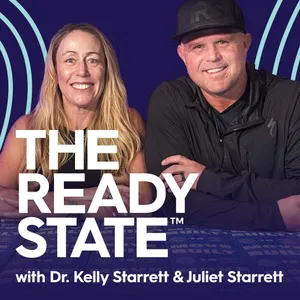
by Kelly Starrett & Juliet Starrett
Welcome to The Ready State Podcast, where unlocking human potential is not a goal, but a way of life. Where becoming the healthiest and most resilient version of yourself, both physically and mentally, is not just something you work toward… but a power mindset you embody day in and day out. Turning complex topics into instantly applicable lessons, this show is a compass for those seeking excellence in every facet of life – physical health, athletic performance, work, purpose, creativity, and family life. Dr. Kelly and Juliet Starrett, the New York Times bestselling authors of ‘Built To Move’, help listeners achieve this by sitting down with some of the world’s most influential figures in health, wellness, fitness, business, and art. Every episode is infused with Dr. Kelly’s wisdom from 10+ years of training and coaching elite athletes in the NFL, MLB, the Olympics, and more. His expertise is perfectly complemented by Juliet’s profound insights as a three-time world champion paddler.
Latest Episodes
The most recent episodes — sign up to get AI-powered summaries of each one.
- Yesterday25 min
RECESS: Romania's Black Card for Youth Sports, Diet Drink Research, and Outplay Is Finally Done
View This Week's Show NotesJuliet and I just got back from Vancouver and 27 straight days of back-to-back conferences. The shift at the YPO Health Summit from two years ago was striking. The conversation has moved from mitochondrial supplements to something more basic: are you doing the fundamentals? We call this third wave fitness, and it finally feels like we are cresting into it.Romania's football federation just introduced a Black Card for youth soccer, and it is unlike anything we have seen before. Referees can now permanently end games because of how parents and spectators are behaving. No rematch, no restart, just over. There are also silent game days where adults cannot cheer or coach at all. The whole platform is built around joy, respect, and optimism in youth sports. With Outplay finished and heading to shelves next fall, we are paying close attention.EC Synkowski's A Good Nutrition Book dropped October 1st. We wrote the foreword to the book because her work and thinking around nutrition have been genuinely transformational for us.And finally, the University of Liverpool just published the longest randomized trial ever run on diet drinks. The results are going to surprise you, or at least give you permission to enjoy your crispy Diet Coke in peace. We have opinions, a bedazzled can, and an unhinged passion that we can't totally explain.What You'll Learn in This EpisodeWhy the YPO Health Summit felt fundamentally different this year and what the return to basics actually looks like in high-level wellness spacesWhat first, second, and third wave fitness means and why the shift matters nowWhat's in EC Synkowski's A Good Nutrition Book and why the 800-gram challenge changed how Kelly and Juliet think about nutritionHow Romania's Black Card system works for youth soccer sidelines and whether something like it could take hold in the USWhat the longest randomized trial on diet drinks found about weight loss and potential harmKey Highlights Intro Empty nesting and an overbooked fall YPO Health Summit Vancouver: the back-to-basics shift First, second, and third wave fitness Rope flow for 100 CEOs, forgotten anniversaries, and 16 years of Mobility WOD Outplay: manuscript submitted EC Synkowski's [A Good Nutrition Book](https://a.co/d/0519vMrI) and the [800-gram challenge](https://thereadystate.com/trs_podcast/ec-synkowski-sustainable-nutrition/) Romania's [Black Card](https://www.nytimes.com/athletic/7586821/2026/09/12/football-black-card-referee/) for youth sports sidelines The diet drink study and the Diet Coke debate Wrap
- 1 weeks ago1h 8m
Joel Jamieson: How to Use HRV, Zone 2, & VO2 Max to Train Smarter
View This Week's Show NotesStart Your 7-Day Trial to Mobility CoachJoin Our Free Weekly Newsletter: The AmbushWhat if the fitness metrics you’re obsessing over aren’t telling you what you think they are? HRV. VO2 max. Resting heart rate. Zone 2. Wearables have given us more data than ever… but do you know how to use it to inform your training?In this episode of the Ready State Podcast, Kelly and Juliet Starrett sit down with renowned strength and conditioning coach Joel Jamieson to cut through the noise around cardiovascular fitness, recovery, and resilience. Drawing on more than 25 years of experience coaching UFC champions, Olympic athletes, special operators, and professional sports teams, Joel explains why a higher HRV isn’t always “better,” what Zone 2 training is really trying to accomplish, and why your aerobic engine matters even if endurance sports aren’t your thing.They also explore how to balance low, moderate, and high-intensity training, practical ways to measure whether your conditioning is actually improving, and why stress outside the gym has to factor into how you train. The takeaway? Better fitness isn’t about chasing a perfect score – but about understanding what your body can handle, how well it recovers, and how to train accordingly.What You'll Learn in This EpisodeWhy a higher HRV doesn’t always mean you’re better recoveredWhat Zone 2 training is actually trying to accomplishWhy cardiovascular fitness is important for improving resilienceHow to balance low, moderate, & high-intensity conditioningWhy stress outside the gym should influence how you trainKey Highlights: Intro: Joel Jamieson on HRV & Conditioning The HRV Problem for Midlife Athletes What Is HRV? The Evolution of HRV Tracking What's a Good HRV? Morning vs Overnight HRV Why Higher HRV Isn't Always Better HRV, Resting Heart Rate, & Heart Rate Recovery Chest Strap vs Wrist-Based HRV How to Improve Your HRV How Fast Cardiovascular Fitness Declines Training Intensity Zones Explained Low, Moderate, & High Intensity Training Why Low-Intensity Training Builds VO2 Max Is VO2 Max Testing Worth It? The Cooper's Test How Fast Can Conditioning Improve? Team Athletes & Recovery Life Stress, HRV, & Training Lifestyle Sets Your Gym Limits Infinite ShelfHuge thanks to our sponsors,Momentous, LMNT, and BEDGEAR.
- 2 weeks ago32 min
RECESS: New Ferritin Thresholds, CTE Research & the Outplay Book
View This Week's Show NotesThis one's a first: Juliet and I are recording from different states. I'm up in Evergreen, Colorado, fresh off the Farren Summit in Boulder, where Juliet and I ended up in the same room as Robb Wolf, John Welbourn, and Andy Stumpf. Felt like CrossFit 2.0.The American Society of Hematology just raised the diagnostic floor for ferritin from 15 to 30 ng/mL, and if you've ever been told your iron levels are fine while running on empty, this is a massive deal. Juliet shares her 30-year story here, including what finally worked.Two landmark CTE studies dropped the same week: one out of Australia showing 61% of examined rugby league brains had CTE, and one from the US putting it at 1 in 4 NFL players. We get into what that means for families and youth athletes thinking about contact sports.Plus a real update on Outplay, our book on youth sports performance for parents, which we are nearly ready to turn in.What You'll Learn in This EpisodeWhy the American Society of Hematology raised the ferritin diagnostic floor from 15 to 30 ng/mL, and what the thresholds are for different populationsHow to tell if iron deficiency may be affecting you, low ferritin symptoms, and which tests to ask your doctor about (ferritin, TIBC, CBC)Why standard iron treatments so often fail, and what finally worked for Juliet after three decades of tryingHow CTE differs from a concussion, and what two new studies on rugby league and NFL brains actually foundHow families and coaches should think about youth contact sports in light of the new CTE researchWhat the Outplay book covers and where it stands in the writing processKey Highlights: Intro: first time recording apart, Kelly in Colorado Farren Summit recap and the Boulder trip Kelly's CU Boulder days and the shared senior thesis story CrossFit reunion: Robb Wolf, John Welbourn, and Andy Stumpf Fall travel: YPO Vancouver and the Brett Bartholomew conference Eudemonia with Momentous and the Antarctica trip New ASH ferritin thresholds explained: from 15 to 30 ng/mL Low ferritin symptoms and why standard treatments kept failing: Juliet's 30-year story What finally worked: iron infusions and menopause Which tests to ask your doctor for Kelly's concussion history and CTE intro New CTE research: 61% of rugby brains and 1 in 4 NFL players CTE vs. concussion: what's the difference Youth contact sports and how families should think about risk Guardian caps and other interventions; Eric Freitag episode on concussions, (https://thereadystate.com/trs_podcast/eric-freitag-concussions/) Outplay book update and the Outplay Way card deck Skateboarding as free play, shoutout to Lisa's son Fox:(https://www.instagram.com/p/DdiCvqzp1HL/)
- 3 weeks ago1h 14m
From Combat Zones to the White House: The Physical Therapist Behind Two U.S. Presidents | Drew Contreras
View This Week's Show NotesStart Your 7-Day Trial to Mobility CoachJoin Our Free Weekly Newsletter: The AmbushWhat does it take to keep someone performing when their job leaves almost no room for downtime? In this episode of the Ready State Podcast, Kelly and Juliet Starrett sit down with longtime friend Dr. Drew Contreras, a retired Army physical therapist who went from supporting soldiers in combat to becoming the first full-time physical therapist embedded in the White House Medical Unit.Drew shares what he learned caring for everyone from White House staff to Presidents Barack Obama and Joe Biden – and why the fundamentals of human performance matter even more when time is your most valuable resource. From encouraging naps during relentless work schedules to introducing walking meetings at the White House, Drew explains how small changes can help people stay functional under extraordinary pressure.The conversation also explores the changing role of physical therapy, why PTs should be doing more than treating injuries one patient at a time, and how technology such as digital health and AI could reshape the profession.What You'll Learn in This EpisodeWhat working with two sitting U.S. presidents taught Drew about keeping people functional under extreme pressureWhy naps, walking meetings, and other simple interventions can make a major difference during sustained periods of high-stress workHow physical therapists became a “force multiplier” for keeping soldiers healthy and operational during deploymentWhy Drew believes physical therapists should play a bigger role in performance and musculoskeletal primary careWhy embracing new technology such as digital health and AI will be essential for the future of physical therapyKey Highlights: Intro to Dr. Drew Contreras How a Combat PT Got Handpicked for the White House The Birthday Basketball Game That Started It All Building a Wellness Culture in the White House What Actually Moved the Needle on Health Naps, Walking Meetings, & Reframing Work Deploying as One of the First Combat PTs PT as Human Performance, Not Just Rehab Treating Obama vs. Biden – Different Ages, Different Needs Leading the APTA & Scaling Physical Therapy The Money Problem in Physical Therapy PT as Musculoskeletal Primary Care AI, Digital Health, & the Future of PT What the Presidency Really Does to a Person Infinite Shelf: Legacy by James KerrHuge thanks to our sponsors, LMNT, BEDGEAR, and Momentous.
- 4 weeks ago31 min
RECESS: Ted Lasso, Women's Sports, Private Equity in Youth Sports & Aesthetic Wellness
View This Week's Show NotesJuliet and I have been saying yes to everything this fall. We're calling it the Fall Travel Junket, and it's stacked with events from Phoenix to Vail to Antarctica. Follow our Instagram or subscribe to The Ambush for details. And spoiler: you can join us in ANTARCTICA! For real!We've been watching the new season of Ted Lasso, which is putting women's sports on mainstream television in a way that's hard to ignore. We get into what that means culturally, including who we'd want to see make a cameo.Private equity is moving into youth sports with the "stay-to-play" model and it's terrible for players and parents. We dig into that, the "pay-to-play" model, what's happening at the policy level, and what parents can actually do.We close with two Instagram trends that gave us pause: men in the longevity space calling facelifts "aesthetic wellness," and a dating site for people who didn't get the COVID vaccine.New episodes of The Ready State Podcast drop every Thursday. Subscribe wherever you get your podcasts so you don't miss a thing!What You'll Learn in This EpisodeWhy Ted Lasso's new season is putting women's sports inequities on mainstream displayWhat the WNBA surge and Copa 71 reveal about the growing appetite for women's sportsHow private equity operates in youth sports through the stay-to-play modelWhat New York Magazine and the Denver Post found when they investigated the pay-to-play childhoodWhat parents can actually do right now, from supporting Senator Murphy's bill to keeping rec leagues aliveWhy calling facelifts "aesthetic wellness" is a branding problem worth namingWhat "Unjected" is, and what it says about the stranger corners of wellness cultureKey Highlights: Welcome back + Goings on in Starrett Land: our empty nest and the Fall Travel Junket PT Biz Mastermind and Brett Bartholomew's Non-Superficial Conference The Assembly in Vail, Eudaimonia, and the Antarctica expedition Ted Lasso's new season and the women's sports moment WNBA, Copa 71, and cultural momentum toward the 2027 Women's World Cup Ted Lasso cameo wishlist: Emma Hayes and Megan Rapinoe Private equity in youth sports: NYMag and Denver Post investigations The stay-to-play model and Senator Murphy's bill Free play, skate culture, and why it matters What parents can do: rec leagues, Positive Coaching Alliance, taking action "Aesthetic wellness": men calling cosmetic procedures a health practice Unjected: the dating site for the unvaccinated Outro
- Sep 3, 20261h 21m
The Science of Women’s Health: Strength, Creatine, Body Composition, & Aging | Dr. Abbie Smith-Ryan
View This Week's Show NotesStart Your 7-Day Trial to Mobility CoachJoin Our Free Weekly Newsletter: The AmbushWhat if the biggest breakthrough in women’s health isn’t a brand-new protocol… but learning how to better apply the fundamentals to the person in front of you?Kelly and Juliet Starrett sit down with Dr. Abbie Smith-Ryan, professor of exercise physiology and nutrition at UNC Chapel Hill, to explore what the latest research can teach us about training, body composition, creatine, and women’s health across the lifespan. Drawing from more than 15 years in the lab – and her experience as a collegiate runner who suffered 9 stress fractures – Abbie explains how our understanding of female physiology has evolved.They unpack how women can use body composition data without becoming ruled by the numbers, why creatine may become even more valuable as we age, whether women really need female-specific strength programs, and how to approach HIIT and recovery during perimenopause and menopause.The takeaway? Human bodies aren’t black and white. And now that we have more tools than ever, the focus should be on finding the ones that work best for you.What You'll Learn in This EpisodeHow Abbie’s experience with 9 stress fractures shaped her approach to training, fueling, and women’s healthWhy body composition data can be a valuable tool for tracking muscle, bone, fat, and long-term healthWhat the research says about creatine for women, from muscle and hydration to potential cognitive benefitsWhy women don’t necessarily need “women-specific” strength training – and when female physiology should influence how you trainHow to use high-intensity interval training, recovery, and scaling to get results without turning every workout into an all-out effortKey Highlights: Intro Meet Dr. Abbie Smith-Ryan Advocating for Women's Health Research Women's Health Research: What's Changed & What's Missing 9 Stress Fractures, Underfueling, & Low Energy Availability Body Composition & Injury Risk DEXA, Bod Pod, & Measuring Body Composition Body Composition for Midlife Women Juliet's Bone Density Loss During Menopause What the Research Says About Creatine for Women Creatine Hesitancy, Myths, & Safety Creatine Loading & the Menstrual Cycle Creatine Dosing: 5g vs 10g & Brain Benefits What's Changed in Athletic Performance Applying Elite Performance Science to Everyday Women Women-Specific Strength Training: Science vs Marketing Overcomplicating Exercise HIIT, Recovery, & the Menstrual Cycle HIIT vs Sprint Interval Training The 20-Minute HIIT Protocol: 1 Min On, 1 Min Off Abbie's Proof of Practice Podcast No Black & White Answers Have We Improved Sports Science? Infinite Shelf: '90s Rap MusicHuge thanks to our sponsors, BEDGEAR, Momentous, and LMNT.
- Aug 27, 202634 min
RECESS: Empty Nesting, Women's Pain Tolerance, a Youth Sports Myth & Two Years Inside the Starrett System
View This Week's Show NotesJuliet and I are officially empty nesters. Both girls are launched, the bathroom is clean every morning, and we're figuring out what the next phase looks like. It rhymes with dusk bike rides, protein shakes for dinner, and a cereal bar in Marin we somehow didn't know existed until now.We also revisited one of our longest-running household debates: women's pain tolerance. An Instagram infographic claiming childbirth equals breaking 20 bones made the rounds and reignited everything. We cover what the McGill pain scale actually says, why medical research has failed women on pain, and the full story of my eardrum, which ends with blood in the ER and a pain scale I have never quite recovered from.From there we got into our book Outplay and the data shaping every youth sports conversation right now. The number everyone cites is that 70% of kids drop out of sport by age 13. A researcher on LinkedIn tried to find the primary source and came up empty. So did researchers at the Aspen Institute. So did everyone else. We unpack what the CDC data actually shows and why citation drift doesn't mean youth sports is fine.The biggest chunk of this episode is something I wanted to make sure we gave real time to: what two years of running the Starrett System has actually taught us. Most people coming into the program weren't working a coherent physical practice at all. They might have been doing some weight training or riding a Peloton, but nobody was hitting all three legs of the longevity triangle: strength, conditioning, and mobility. Nobody was sprinting. And a lot of people believed that the moment they felt discomfort, they should stop.Watching that shift has been one of the most rewarding things we've done. Member Lily gained 5.4 pounds of lean mass in eight months. Cole said he's craving training every day for the first time. The fall cohort starts September 8th. Early bird: $200 off at starrettsystem.com.What You'll Learn in This EpisodeWhy the "70% of kids drop out of sports by age 13" statistic cited by the American Academy of Pediatrics and major sports governing bodies may have no verifiable primary source, and what the CDC and Aspen Institute data actually showsWhy the claim that childbirth equals breaking 20 bones is a myth, and what the McGill pain scale says is actually more painfulWhy medical research has historically underserved women on pain, and how self-reporting skews the pictureWhat two years of running the Starrett System revealed about what most people were actually missing in their physical practiceWhy having a strength practice, a conditioning practice, and mobility work are three separate things, and why most people were only doing one of themWhat the "longevity triangle" is and why most wellness and longevity conferences have almost no conversation about itHow teaching people to train around injuries and physical limitations, rather than stop, has been one of the biggest shifts for Starrett System membersWhy the program's nutrition approach centers on abundance and eliminating nothing, and what happens when people who have been chronically underfueling start eating enoughKey Highlights Welcome to RECESS / Kelly and Juliet go officially empty nest The bathroom story and Byron Katie's towel wisdom via Gabby Reese Life as empty nesters: bike rides at dusk, protein shakes, cereal for dessert Listener ask: send your best recipes for two Women vs. men pain tolerance: the debate renewed Kelly's eardrum story McGill pain scale and Juliet's finger Outplay: preparing families for youth sports Pay-to-play, private equity, and the Norwegian youth sports model The 70% dropout stat and its missing primary source Starrett System: origin story from the YPO conference Starrett System: member results and the September 8th fall cohort Cereal bar in Marin and the great Raisin Bran debate Wrap and early bird CTA
- Aug 20, 20261h 27m
Building Resilience, Finding Clarity, and Staying Calm Under Pressure | Andy Stumpf
View This Week's Show NotesStart Your 7-Day Trial to Mobility CoachJoin Our Free Weekly Newsletter: The AmbushAndy Stumpf spent years navigating some of the most extreme environments imaginable as a Navy SEAL, but he says the hardest lessons he learned had nothing to do with combat. In this episode of the Ready State Podcast, Kelly and Juliet Starrett sit down with the retired SEAL Team Six operator, pilot, skydiver, and author of Drownproof to explore the mindset that helps people stay steady when life feels anything but that.From a chaotic military skydive gone spectacularly wrong to the emotional toll of divorce, Andy shares why the ability to "chunk" overwhelming challenges into the next manageable step has become one of the most valuable skills he's ever developed. Along the way, the conversation dives into self-talk, asking for help, ownership, leadership, flow state, and why resilience isn't about being fearless – but about learning to focus on what you can control when everything else feels out of control.Whether you're navigating a personal setback, leading a team, raising kids, or simply trying to build a more resilient mindset, this episode offers practical lessons for staying grounded, making better decisions, and keeping your head above water when the inevitable storms of life arrive.What You'll Learn in This EpisodeWhy resilience is less about toughness and more about controlling what you can controlHow breaking overwhelming challenges into small, manageable steps can help you navigate almost any crisisThe surprising role that self-talk plays in performance, confidence, and decision-making under pressureWhy asking for help is one of the strongest leadership skills, not a sign of weaknessHow finding a healthy "flow state" can improve focus, reduce stress, and build long-term resilience through work, sport, or everyday lifeKey Highlights: Intro & Andy's Background Origin of "Becoming a Supple Leopard" Backstory of "Drownproof" Title Where We Learn Resilience & Life Skills Breaking Tasks Into Small Chunks Andy's Wild HAHO Jump Story Everything Goes Wrong Mid-Air Getting to Safety & Lesson From the Jump How Divorce Was Harder Than SEAL Training The Power of Self-Talk Asking for Help as a Sign of Strength After-Action Reviews, Accountability, & Leadership Why 85% Quit BUD/S The Chunking vs. Overwhelm Theory Hell Week & the Psychology of Time "It Takes Longer to Do It Wrong" Writing Drownproof BASE Jumping, Wingsuits, & Risk Flow State, Not Adrenaline The Sphere of Influence Exercise Redirecting Negative Self-Talk The Infinite Shelf: Money & MeaningHuge thanks to our sponsors, LMNT and Momentous.
Get The Ready State Podcast summaries in your inbox
Free AI-powered daily recaps. Key takeaways, quotes, and mentions — in a 5-minute read.
Get Free Summaries →Free forever for up to 3 podcasts. No credit card required.
You Might Also Like
Listeners also like.
TRAINED
Discusses fitness and wellness through interviews with athletes, scientists, and health experts on mindset, nutrition, movement, recovery, and sleep.
FoundMyFitness
A podcast exploring health, science, nutrition, aging, and fitness.
Stronger Weekly
A fitness podcast for parents offering practical health advice, realistic workouts, and honest talk about burnout and family life.
The Health Continuum
High-performing professionals learn science-based health strategies to sustain energy, focus, and resilience in demanding careers.
The Dan Buettner Podcast
Shares practical habits and insights from the world’s longest-lived populations to improve longevity and well-being.

The Gabby Reece Show
Conversations with experts on health, fitness, relationships, and performance to help listeners live stronger, more balanced lives.

Perform with Dr. Andy Galpin
Explores science-based strategies for optimizing physical and mental performance for all fitness levels.

Some Work, All Play
Discussions on running, training, races, science, and pop culture with insights from a doctor and coach.
Human Performance Outliers Podcast with Zach Bitter
Exploring the science and stories behind extreme human performance in endurance, fitness, and nutrition through expert interviews.

Fully Alive: Unlocking the secrets to your healthier, happier, longer life
Explores science and lifestyle strategies to enhance health, purpose, and longevity.

Red Pill Your Healthcast
Two healthcare providers discuss overlooked health issues and empower listeners to make informed decisions for their families.

The Genius Life
A health and science journalist explores cutting-edge research and practical strategies for optimizing brain function and overall wellness.
About The Ready State Podcast
Welcome to The Ready State Podcast, where unlocking human potential is not a goal, but a way of life. Where becoming the healthiest and most resilient version of yourself, both physically and mentally, is not just something you work toward… but a power mindset you embody day in and day out. Turning complex topics into instantly applicable lessons, this show is a compass for those seeking excellence in every facet of life – physical health, athletic performance, work, purpose, creativity, and family life. Dr. Kelly and Juliet Starrett, the New York Times bestselling authors of ‘Built To Move’, help listeners achieve this by sitting down with some of the world’s most influential figures in health, wellness, fitness, business, and art. Every episode is infused with Dr. Kelly’s wisdom from 10+ years of training and coaching elite athletes in the NFL, MLB, the Olympics, and more. His expertise is perfectly complemented by Juliet’s profound insights as a three-time world champion paddler.
Customized Recaps
AI-powered recaps with compact key takeaways, quotes, and insights.
Straight to Your Inbox
Get key takeaways from The Ready State Podcast in a 5-minute read.
Save Hours Every Week
Stay current on your favorite podcasts without falling behind.
Frequently Asked Questions
What is Podzilla's The Ready State Podcast daily summary?
It's a free AI-powered email that summarizes new episodes of The Ready State Podcast as soon as they're published. You get the key takeaways, notable quotes, and links & mentions — all in a quick read.
How does the The Ready State Podcast podcast summary work?
When a new episode drops, our AI transcribes and analyzes it, then generates a personalized summary tailored to your interests and profession. It's delivered to your inbox every morning.
Is this an official The Ready State Podcast product?
No. Podzilla is an independent service that summarizes publicly available podcast content. We're not affiliated with or endorsed by Kelly Starrett & Juliet Starrett.
Can I get summaries of other podcasts too?
Absolutely! The free plan covers up to 3 podcasts. Upgrade to Pro for 15, or Premium for 50. Browse our full catalog at /podcasts.
How often does The Ready State Podcast release new episodes?
The Ready State Podcast publishes weekly. Our AI generates a summary within hours of each new episode.
What topics does The Ready State Podcast cover?
The Ready State Podcast covers topics including Fitness, Health & Fitness. Our AI identifies the specific themes in each episode and highlights what matters most to you.
Start getting The Ready State Podcast summaries tomorrow morning.
Free forever for up to 3 podcasts. No credit card required.
Free forever for up to 3 podcasts. No credit card required.