Free Daily Podcast Summary
Perform with Dr. Andy Galpin: Daily Summaries Delivered
by Scicomm Media
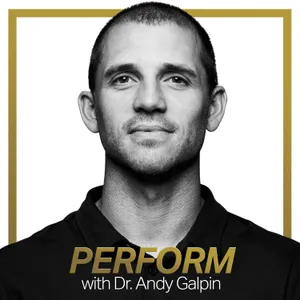
This is Perform with Dr. Andy Galpin. I'm Dr. Andy Galpin, a professor and director of the Human Performance Center at Parker University. With this podcast, my goal is to help you better understand and maximize your own physical and mental performance, leveraging my two decades of experience with elite performers, including Olympians and world champions across numerous sports. The goal is to cover a range of tools, technologies, and strategies designed to help everyone—from beginners to record-breakers, and everyone in between. While not all of us are elite athletes—myself included—there are countless lessons and tools we can learn from those performing at the highest levels. And remember, as legendary coach Bill Bowerman stated, "If you have a body, you are an athlete." If you're not already, I hope you'll consider starting to train and recover like one.
Latest Episodes
The most recent episodes — sign up to get AI-powered summaries of each one.
- 5 days ago2h 41m
Testosterone Explained (Low T, Muscle Growth, Aging & TRT) | Dr. Ben House
In this episode, my guest is Dr. Ben House, a nutritional scientist who has spent nearly two decades working with elite athletes and professional sports teams. We take a detailed look at testosterone, what your lab results can and cannot tell you, and why a higher number does not automatically mean better health or more muscle. Ben explains total and free testosterone, sex hormone-binding globulin (SHBG), and how testing methods, sleep, hydration, meals, and the timing of your blood draw can affect the result. We examine research on testosterone and muscle growth, why population averages can obscure individual differences, and how metabolic health complicates the story of testosterone and aging. We also discuss obesity, low energy availability, dietary fat, carbohydrates, micronutrients, and recovering after a calorie deficit. Ben shares his approach to investigating low testosterone, the importance of informed consent before testosterone replacement therapy (TRT), and the distinction between restoring normal levels and using higher doses for performance or physique goals. We finish with lessons from professional sports on managing training loads, fueling, sleep, and recovery. This episode is for anyone who wants to better understand hormone testing, support long-term performance, and make more informed decisions about testosterone. Sponsors Momentous: https://livemomentous.com/galpin LMNT: https://drinklmnt.com/perform David: https://davidprotein.com/perform Eight Sleep: https://eightsleep.com/perform Chapters Ben House: Testosterone, Health & Performance Personal Baselines & Normal Testosterone Ranges Total vs. Free Testosterone: SHBG & Albumin Accurate Hormone Testing: Methods, Timing & Measurement Error Daily Testosterone Fluctuations & Why Repeat Tests Matter High SHBG: Interpreting Lab Ranges in Context TRT: Informed Consent & Finding the Cause of Low Testosterone TRT Monitoring: Hematocrit, Lipids, Estradiol & Heart Health Natural Testosterone Production, Testicular Atrophy & Stopping TRT The Brain–Testicle Hormone Axis & Training with Low Testosterone Calorie Deficits, Body Recomposition & Testosterone Does Higher Testosterone Predict More Muscle Growth? Obesity, Leptin & Low Testosterone Is Testosterone Declining Across Generations? Testosterone & Aging: The Role of Metabolic Health Low Testosterone Symptoms & Looking Beyond Fatigue Supplements, Weight Loss, Refeeding & Sleep Micronutrients, Metabolic Health & GLP-1 Medications Training Stress, Underfueling & Overlooked Medical Causes Getting Too Lean: Energy Availability & Hormone Recovery Dieting Too Hard? Symptoms, Tradeoffs & Individual Responses Refeeding: Dietary Fat, Carbohydrates & Changes in Scale Weight Professional Athletes: Training Loads, Fueling & Recovery Better Recovery: Trust, Sleep & Low-Intensity Movement TRT vs. Higher-Dose Use: What Cardiovascular Research Actually Shows Disclaimer & Disclosures Learn more about your ad choices. Visit megaphone.fm/adchoices
- 2 weeks ago2h 23m
How to Train Without Pain (Back, Shoulders, Mobility & Strength) | Dr. John Rusin
In this episode, my guest is Dr. John Rusin, a physical therapist and strength coach who bridges rehabilitation and human performance. We discuss his approach to persistent back, shoulder, and knee pain and how to build a body that can handle demanding training for the long term. John walks through his six-phase warm-up, a 10–12-minute sequence that combines foam rolling, stretching, corrective exercises, activation, movement practice, and explosive drills. He explains why breathing matters during soft tissue work, how mobility differs from flexibility, and why feeling tight doesn't necessarily mean you just need more stretching. We cover simple movement breaks for desk workers, detailed cues for hip and shoulder stability, face-pull technique, bracing, lifting belts, and how to adapt exercise form to your body and goals. We also discuss progressing back to heavier training, maintaining strength, muscle, and power as you age, and using loaded carries to build and assess full-body capacity. This episode is for anyone who wants to move more comfortably, train consistently, and keep getting stronger. Sponsors Momentous: https://livemomentous.com/galpin LMNT: https://drinklmnt.com/perform David: https://davidprotein.com/perform Eight Sleep: https://eightsleep.com/perform Chapters John Rusin: Bridging Physical Therapy & Performance Chronic Pain vs. Acute Injury Desk Work, Movement Breaks & Better Posture The 10-Minute Warm-Up: Six Phases for Better Training Foam Rolling: Technique, Breathing & What Actually Changes Tight or Weak? Mobility, Flexibility & Muscle Control Back Pain: Surgery, Rehabilitation & Conservative Care How to Stretch with Control & Stability Corrective Exercises & Activation: Bird Dogs to Hip Thrusts Better Face Pulls: Grip, Angles & Technique Movement Practice: Turning Better Technique into Habit Preparing for Heavy Lifting: Power & Explosive Movement Full-Body Bracing & When to Use a Lifting Belt What Good Form Means: Your Body, Load & Experience Deadlift Grip, Jefferson Curls & Training Spinal Flexion Training for Longevity & Knowing When to Progress Building Strength, Muscle & Power Together Loaded Carries: Benchmarks, Technique & Programming Disclaimer & Disclosures Learn more about your ad choices. Visit megaphone.fm/adchoices
- Aug 19, 20263h 2m
How to Reach Your Fitness Goals (Hard-to-Grow Muscles, Lose Fat, Busy Schedule & More) | Dan Garner
In this episode, my guest is Dan Garner, a renowned human performance coach behind UFC champions, Olympic medalists, and CEOs. We discuss how he bridges the gap between sports science and real-world coaching. Dan explains constraint theory — finding the single bottleneck holding someone back — and walks through the blood markers he uses to find it, including why a 20% testosterone swing can be pure noise, why vitamin D has no usable reference change value, and why the omega-3 index is the most honest marker he tracks. We cover his three-step approach to fat loss, diet breaks, low energy availability, hypertrophy clusters, deload strategy, and an evidence-first framework for evaluating peptides. This episode is for anyone who wants to measure what they're doing and adjust it intelligently rather than guessing. Sponsors Momentous: https://livemomentous.com/galpin Eight Sleep: https://eightsleep.com/perform David: https://davidprotein.com/perform LMNT: https://drinklmnt.com/perform Chapters White House UFC & Ronda Rousey's Return Dan Garner's Coaching Career & Health as a Performance Constraint Build a Better Schedule: Daily Review, Preparation & Consistency Results vs. Activity: Measurement, Progression & Deep Work Evidence-Based Coaching: Science, Context & Critical Thinking Prescribe, Measure & Adjust: Adherence Before Physiology Real-Life Constraints, Goal Alignment & Extreme Balance Protein, Fiber, Sunlight & Constraint Theory Biomarker Noise: Testosterone, Vitamin D & Omega-3 Testosterone: Optimal Ranges, Performance & Low Levels Low Energy Availability, Diet Breaks & Metabolic Health Fat-Loss Blueprint: Calories, Macros & Nutrient Timing Diet Readiness: Symptoms, Blood Work & Removing Constraints Testosterone Testing: Meaningful Change, Free T & Lab Variability Omega-3 Index: Targets, Dosing & Measuring Your Response Vitamin D: Targets, Dosing & Misleading Results Building a Better Physique: Timing, Meal Frequency & Adherence Combining Cardio & Lifting; Training Splits for Aesthetics Flexible Programming, Recovery Days & Smarter Deloads Lagging Muscles, Calf Training & Hypertrophy Clusters Training to Failure & the "One Bad Rep" Rule Sleep Supplements, Pre-Workouts & Recovery Strategies Peptides: Evidence, Risk, Monitoring & SS-31 MOTS-c: Mitochondria, AMPK & Response Variability Retatrutide: Triple-Agonist Therapy, Benefits & Unknown Risks Disclaimer & Disclosures Learn more about your ad choices. Visit megaphone.fm/adchoices
- Aug 5, 20261h 8m
The Fundamentals of Nutrition, Hydration & Performance Fueling
In this episode, I answer your questions on nutrition, hydration, and recovery in our second audience Q&A. I start with what I call the 90%: the principles nearly every effective nutrition plan shares, from food quality and caloric balance to fiber targets, vegetable volume, color variety, and liquid calories. I then cover the four elements of fueling around training, glucose, amino acid availability, hydration, and GI distress, including the Galpin Equation for fluid intake during exercise. I walk through the three-step process I use to coach nutrition, which begins by adding nutrients rather than restricting them, and I explain when body recomposition is possible, what the protein data actually support, and why strength training is a bigger signal for muscle growth than protein. I close with what separates high performers from everyone else: energy management. This episode is for anyone who wants the fundamentals before the fine-tuning. Show notes: https://www.performpodcast.com/episodes/fundamentals-of-nutrition-hydration-performance-fueling Sponsors Momentous: https://livemomentous.com/galpin LMNT: https://drinklmnt.com/perform David: https://davidprotein.com/perform Chapters Core Tenets of Nutrition Audience Q&A, 5 Question Categories The 90%; Food Quality & Whole Foods Caloric Balance, Under- vs Over-Fueling Protein Priority; Carbohydrate & Fat Balance Fiber, Soluble vs Insoluble; Daily Target Tool: Half Your Plate Vegetables; Color Variety Raw vs Cooked, Antioxidants vs Minerals Liquid Calories, Hidden & Intentional Use Sustainability, Meal Frequency & Timing Food Safety, Allergies & Environmental Pollutants Refueling & Hydration, 4 Elements; Carbs During Training Muscle as a Carbon Sink; Glucose Storage Amino Acids; Does Protein Timing Matter? Hydration, Tool: Half Body Weight in Ounces Tool: Galpin Equation; Electrolytes Tool: Post-Workout Rehydration, 125% Rule GI Distress, Carbs Per Hour; Training Your Gut Coaching Nutrition, Tool: Add Before Subtracting Reframing "Bad" Foods; Crowding Out Tool: 3 Steps, Deficiencies, Amounts, Fine-Tuning Body Recomposition, Muscle Gain in a Deficit Body Fat Thresholds; 5-10% Surplus or Deficit 3,500 Calories Per Pound of Fat, Small Deficits Energetics of Muscle vs Fat, High Investment Protein for Muscle Gain, 1.6 vs 2.2 g/kg Is vs Ought; Protein in a Caloric Deficit Strength Training as the Biggest Signal; 30-Gram Myth What Separates High Performers? Energy Management, Calories, Recovery & Emotion Energy in Sport, Veterans & Strategy Tool: Run Your Own Energy Inventory Recap & Closing Disclaimer & Disclosures Learn more about your ad choices. Visit megaphone.fm/adchoices
- Jul 22, 20261h 12m
The Fundamentals of Training for Muscle, Strength & Longevity
In this episode, I answer your questions in the first-ever open Q&A on Perform, working through the five themes that came up most. I start with how I think about training for longevity—why being well-rounded and resilient matters more than chasing any single marker like grip strength or VO2 max. From there, I break down the basics of training for muscle, strength, and fat loss, including the simple rules I use for each: the 72-hour rule for hypertrophy, the 3-to-5 rule for strength, and the 5-4-3-2-1 rule for fat loss. I then walk through my exact process for program design, what "functional" training really means, and where AI is actually useful—and where it falls short—for your health and performance. This one is for anyone who wants a clear, practical foundation for building their own training. Sponsors Momentous: https://livemomentous.com/galpin David: https://davidprotein.com/perform LMNT: https://drinklmnt.com/perform Chapters Introduction: The First-Ever Perform Q&A Training for Longevity & Resilience Grip Strength & VO2 Max: Proxies vs. Real Targets Muscle vs. Strength vs. Fat Loss Building Muscle: Mechanical Tension & the 72-Hour Rule Progressive Overload Training Strength as a Skill The 3-to-5 Rule for Strength & Power Fat Loss & the 5-4-3-2-1 Rule Program Design: The Modifiable Variables Frequency, Exercise Choice & Order Intensity, Volume & Rest Intervals Predicting Problems in Your Program Functional Training & Movement Quality Stretching, Flexibility & Lengthened Partials AI in Health & Performance Recap & Closing Thoughts Disclaimer & Disclosures Learn more about your ad choices. Visit megaphone.fm/adchoices
- Jul 8, 20262h 27m
What Drives Muscle Growth & What Doesn't | Dr. Mike Roberts
In this episode, I sit down with Dr. Mike Roberts, Professor in the School of Kinesiology at Auburn University, and one of the most respected muscle physiologists, to explain how muscle actually grows. Mike shares that mechanical tension—not hormones, metabolic byproducts, or muscle damage—is the primary driver of hypertrophy. We cover why testosterone and androgen receptors don't necessarily predict muscle growth, what separates high responders from low responders, and how these “low responders” should train to best get results. We also work through training volume, load versus reps, lengthened partials, aging and anabolic resistance, and the interference effect between strength and endurance training. If you want to understand the real science of building muscle, this conversation is for you. Sponsors Momentous: https://livemomentous.com/galpin LMNT: https://drinklmnt.com/perform Trumed: https://truemed.com/perform Chapters Introduction How Muscle Grows What Drives Growth: Tension, Stress & Damage Responders vs. Non-Responders Hormones, Receptors & Genetics Cell Signaling, mTOR & Myostatin Can Some People Not Grow Muscle? Training Volume for Hypertrophy Loads, Reps & Stretch Under Load Range of Motion, Partials & Hyperplasia Injury, Unloading & Muscle Banking Muscle Memory: Detraining & Retraining Aging, Menopause & Anabolic Resistance Concurrent Training & the Interference Effect How to Combine Strength & Cardio Strength Training & Mitochondria Closing Thoughts Disclaimer & Disclosures Learn more about your ad choices. Visit megaphone.fm/adchoices
- Jun 24, 20261h 39m
Identify & Fix Muscle Imbalances & Injury Risks
In this episode, I tackle muscle asymmetries and imbalances — when the differences between your two sides help you, when they hurt you, and what to actually do about them. I move past the popular "10% rule" and walk through my three I's framework: how to investigate asymmetries across morphology (muscle size and shape), quality (fat infiltration inside the muscle), and functionality (strength, power, and movement); how to interpret the data using context rather than blanket numbers; and how to intervene with a practical five-step correction program built around unilateral training and plyometrics. I cover testing tools from tape measures to MRI, the research on grip-strength asymmetry and aging, and why lower-body asymmetries warrant more attention than upper-body ones. This is for athletes, coaches, and anyone who moves and wants to reduce injury risk or perform at their best. Sponsors Momentous: https://livemomentous.com/perform LMNT: https://drinklmnt.com/perform David: https://davidprotein.com/perform Timestamps Introduction The Three Types: Morphology, Quality, Function Laterality: Skill vs. Force Dominance Why Asymmetries Develop The Bilateral Force Deficit Investigate: How to Measure Asymmetries Morphology: Tape Measures to MRI Tissue Quality & Fat Infiltration Functionality: The Unlimited Field of Tests Interpret: When Do Asymmetries Matter? Muscle Size: Is the Asymmetry Even Real? Push vs. Pull & the Limb-Length Myth Movement Screens & the FMS Strength, Power & Injury Risk Grip Strength Asymmetry & Aging Symmetrical Sports & the Energy Leak Red, Yellow, Green: The Real Thresholds Intervene: Correcting Asymmetries Why Plyometrics Work Best The Five-Step Correction Program The Volume Game Resources & Final Takeaways Disclaimer & Disclosures Learn more about your ad choices. Visit megaphone.fm/adchoices
- Jun 10, 20262h 8m
Female Training, Hormones & Nutrition: Fact vs. Fiction | Dr. Lauren Colenso-Semple
In this episode, I sit down with Dr. Lauren Colenso-Semple to examine what the science says about female-specific training and nutrition. We discuss why so little research has historically focused on women, what makes menstrual cycle research so difficult and expensive to run, and what her own dissertation found when she measured muscle protein synthesis across cycle phases. Dr. Colenso-Semple explains the real hormone fluctuations of the menstrual cycle, why testosterone matters far less for women's muscle than people assume, and why men and women gain strength and size at the same relative rate at any age, including through menopause. We also cover low energy availability, scientific literacy, and how to figure out what works for you. This episode is for anyone, coach or lifter, trying to separate evidence from misinformation in women's fitness. Sponsors Momentous: https://livemomentous.com/perform David: https://davidprotein.com/perform TrueMed: https://truemed.com/perform Eight Sleep: https://eightsleep.com/perform Chapters Lauren Colenso-Semple The Lit Review That Never Was Why Women Got Bad Training Advice Individualization & Where Sex Actually Ranks Estrogen, Rodent Models & the Anabolic Myth Hormones Across the Menstrual Cycle The Myth of the Textbook 28-Day Cycle Why Female Research Is So Hard Inside Lauren's Dissertation: Tracers & Biopsies Strength, Power & Hypertrophy: No Phase Effect The Real Role of Testosterone & Menopause Becoming a Better Consumer of Science Low Energy Availability & RED-S Advice for the Average Woman Disclaimer & Disclosures Learn more about your ad choices. Visit megaphone.fm/adchoices
Get Perform with Dr. Andy Galpin summaries in your inbox
Free AI-powered daily recaps. Key takeaways, quotes, and mentions — in a 5-minute read.
Get Free Summaries →Free forever for up to 3 podcasts. No credit card required.
You Might Also Like
Listeners also like.

Huberman Lab
Explores neuroscience and science-based tools for understanding and improving brain function, behavior, and health.
The Biohacking Standards
A deep dive into biohacking fundamentals—nutrition, movement, sleep, and mindfulness—grounded in science and holistic wellness principles.

Extend Podcast with Darshan Shah, MD
Explores science-backed strategies and expert insights to extend healthspan and optimize longevity through actionable health protocols.
TRAINED
Discusses fitness and wellness through interviews with athletes, scientists, and health experts on mindset, nutrition, movement, recovery, and sleep.

The Peter Attia Drive
Conversations with experts on health, longevity, performance, and critical thinking led by physician Peter Attia.

The Dr. Gabrielle Lyon Show
Discusses health, longevity, and mental resilience through science-based conversations with medical and wellness experts.

Modern Wisdom
Discussions with experts on psychology, philosophy, and self-improvement to help navigate life’s challenges.
Muscle for Life with Mike Matthews
Discusses science-based strategies for building muscle, losing fat, and improving overall health and well-being.

Dalton Fischer Podcast
Conducts in-depth interviews that highlight the personal stories of guests through thoughtful questions and active listening.

Get Better Faster
Doctors and researchers discuss functional medicine and root-cause approaches to chronic illness and health optimization.

The Dr. Josh Axe Show
Explores natural health, nutrition, emotional resilience, and personal growth through expert insights and practical strategies.

Treated with Dr. Sara Szal
Dr. Sara Szal explores holistic health solutions through conversations with experts and patients seeking mind, body, and soul healing.
About Perform with Dr. Andy Galpin
This is Perform with Dr. Andy Galpin. I'm Dr. Andy Galpin, a professor and director of the Human Performance Center at Parker University. With this podcast, my goal is to help you better understand and maximize your own physical and mental performance, leveraging my two decades of experience with elite performers, including Olympians and world champions across numerous sports. The goal is to cover a range of tools, technologies, and strategies designed to help everyone—from beginners to record-breakers, and everyone in between. While not all of us are elite athletes—myself included—there are countless lessons and tools we can learn from those performing at the highest levels. And remember, as legendary coach Bill Bowerman stated, "If you have a body, you are an athlete." If you're not already, I hope you'll consider starting to train and recover like one.
Customized Recaps
AI-powered recaps with compact key takeaways, quotes, and insights.
Straight to Your Inbox
Get key takeaways from Perform with Dr. Andy Galpin in a 5-minute read.
Save Hours Every Week
Stay current on your favorite podcasts without falling behind.
Frequently Asked Questions
What is Podzilla's Perform with Dr. Andy Galpin daily summary?
It's a free AI-powered email that summarizes new episodes of Perform with Dr. Andy Galpin as soon as they're published. You get the key takeaways, notable quotes, and links & mentions — all in a quick read.
How does the Perform with Dr. Andy Galpin podcast summary work?
When a new episode drops, our AI transcribes and analyzes it, then generates a personalized summary tailored to your interests and profession. It's delivered to your inbox every morning.
Is this an official Perform with Dr. Andy Galpin product?
No. Podzilla is an independent service that summarizes publicly available podcast content. We're not affiliated with or endorsed by Scicomm Media.
Can I get summaries of other podcasts too?
Absolutely! The free plan covers up to 3 podcasts. Upgrade to Pro for 15, or Premium for 50. Browse our full catalog at /podcasts.
How often does Perform with Dr. Andy Galpin release new episodes?
Perform with Dr. Andy Galpin publishes biweekly. Our AI generates a summary within hours of each new episode.
What topics does Perform with Dr. Andy Galpin cover?
Perform with Dr. Andy Galpin covers topics including Science, Fitness, Health & Fitness. Our AI identifies the specific themes in each episode and highlights what matters most to you.
Start getting Perform with Dr. Andy Galpin summaries tomorrow morning.
Free forever for up to 3 podcasts. No credit card required.
Free forever for up to 3 podcasts. No credit card required.