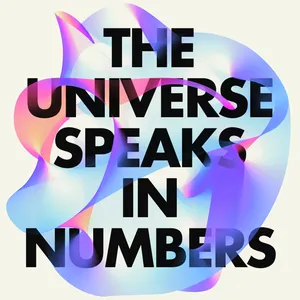
Free Daily Podcast Summary
The Universe Speaks in Numbers: Daily Summaries Delivered
by Faber and Faber
In The Universe Speaks in Numbers award-winning science writer Graham Farmelo is in conversation with some of the great names in modern physics and mathematics. Among the interviewees are Michael Atiyah, Ruth Britto, Lance Dixon, Simon Donaldson, Freeman Dyson, Juan Maldacena, Michela Massimi, Roger Penrose, Martin Rees, Simon Schaffer and Edward Witten. To read more see Graham's book The Universe Speaks in Numbers: How Modern Maths Reveals Nature's Deepest Secrets.
Latest Episodes
The most recent episodes — sign up to get AI-powered summaries of each one.
- Apr 2, 202045 min
The Universe Speaks in Numbers: Phil Anderson interviewed by Graham Farmelo
Phil Anderson was one of the most creative theoretical physicists of the past century. Among dozens of key contributions, he pioneered our understanding of symmetry breaking and paved the way to our modern understanding of weak and electromagnetic interactions, and the prediction of what became known as the Higgs boson. He did all this without state-of-the-art mathematics and was wary of mathematics-led approaches to our understanding of Nature. In this interview, recorded on 31 July 2014, he talks about his early career and his suspicions of string theory. He also tells me what topics he would advise bright young scientists to study.This is one of a series of interviews given by world-class experts to Graham on the themes he explores in his new book The Universe Speaks in Numbers. Hosted on Acast. See acast.com/privacy for more information.
- Jan 16, 202018 min
The Universe Speaks in Numbers: Nima Arkani-Hamed interviewed by Graham Farmelo (part 2)
The second part of leading theoretical physicist Nima Arkani-Hamed's inspiring interview with Graham about the mysterious harmony between pure mathematics and fundamental physics.This is one of a series of interviews given by world-class experts to Graham on the themes he explores in his new book The Universe Speaks in Numbers. Hosted on Acast. See acast.com/privacy for more information.
- Jan 2, 202022 min
The Universe Speaks in Numbers: Martin Rees interviewed by Graham Farmelo
Cosmologist Martin Rees, a pioneer of multiverse concept, is one of the most productive and respected thinkers about the origins and development of the universe. A former president of the Royal Society, he is also famous for his wise and thoughtful commentary on the state of science, and his thinking about the future. In this interview, he ranges widely over many themes, including the question of whether the pursuit of fundamental physics will one day run out of steam, become too expensive and perhaps too difficult to pursue.This is one of a series of interviews given by world-class experts to Graham on the themes he explores in his new book The Universe Speaks in Numbers. Hosted on Acast. See acast.com/privacy for more information.
- Dec 12, 201915 min
The Universe Speaks in Numbers: Karen Uhlenbeck interviewed by Graham Farmelo
The interplay between fundamental physics and pure mathematics has led to many remarkable mathematical insights over the past fifty years. Karen Uhlenbeck is one of the mathematicians who made pioneering insights into geometry when studying the physicists' gauge theory of particle interactions. In this podcast, she talks candidly about how many mathematicians came only grudgingly to accept in the 1960s and 1970s that they could do first-class work by focusing on topics whose importance had first been emphasised by physicists, in connection with understanding the real world.This is one of a series of interviews given by world-class experts to Graham on the themes he explores in his new book The Universe Speaks in Numbers. Hosted on Acast. See acast.com/privacy for more information.
- Nov 28, 20191h 5m
The Universe Speaks in Numbers: Steven Weinberg interviewed by Graham Farmelo
Steven Weinberg is perhaps the most accomplished living theoretical physicist. Now based at the University of Texas at Austin, he has made substantial contributions to our understanding of all the fundamental forces of Nature. In this podcast, he reflects on his career in physics, the 'golden years' in which he and others put the finishing touches to the Standard Model of particle physics, and his views about the future of theoretical physics.This is one of a series of interviews given by world-class experts to Graham on the themes he explores in his new book The Universe Speaks in Numbers. Hosted on Acast. See acast.com/privacy for more information.
- Nov 7, 201918 min
The Universe Speaks in Numbers: Zohar Komargodski interviewed by Graham Farmelo
Much of understanding of the universe at the finest level is based on modern field theory, rooted in the pioneering contributions of the nineteenth century British natural philosophers Michael Faraday and James Clerk Maxwell. In this podcast of most brilliantly creative young field theorists, Zohar Komargodski tells us why this subject is still so rich in potential, and why he is quite happy to work on it without the stimulus of new and surprising experimental data.This is one of a series of interviews given by world-class experts to Graham on the themes he explores in his new book The Universe Speaks in Numbers. Hosted on Acast. See acast.com/privacy for more information.
- Oct 24, 201916 min
The Universe Speaks in Numbers: Simon Donaldson interviewed by Graham Farmelo
The discoveries the Simon Donaldson made in the early 1980s about four-dimensional spaces 'stunned the mathematical world', his research adviser Michael Atiyah later recalled. Donaldson was using the physicists' theory of particle interactions to study space itself – with truly remarkable results. In this podcast, Donaldson recalls how he became interested in physics, remembers his most famous discoveries and looks forward to an increasingly close relationship between mathematicians and physicists.This is one of a series of interviews given by world-class experts to Graham on the themes he explores in his new book The Universe Speaks in Numbers. Hosted on Acast. See acast.com/privacy for more information.
- Oct 10, 201932 min
The Universe Speaks in Numbers: Douglas Stanford and Pedro Vieira interviewed by Graham Farmelo
Douglas Stanford and Pedro Vieira are two of the most brilliant young theoretical physicists who are seeking to understand nature at its finest level. In these two interviews, Stanford and Vieira talk about their work and explain why they are content to spend their times developing fundamental theories of nature, with little or no surprising new inputs from new observations and experiments. This is one of a series of interviews given by world-class experts to Graham on the themes he explores in his new book The Universe Speaks in Numbers. Hosted on Acast. See acast.com/privacy for more information.
Get The Universe Speaks in Numbers summaries in your inbox
Free AI-powered daily recaps. Key takeaways, quotes, and mentions — in a 5-minute read.
Get Free Summaries →Free forever for up to 3 podcasts. No credit card required.
You Might Also Like
Listeners also like.
Math & Physics Podcast
Two University of Toronto students discuss topics in math and physics.

The Joy of x
A mathematician explores the lives and ideas of leading scientists through in-depth conversations.
The Joy of Why
Mathematicians and astrophysicists explore fundamental scientific and mathematical questions with leading researchers.

Relatively Prime: Stories from the Mathematical Domain
A podcast featuring stories from the world of mathematics.

The World, the Universe and Us
Explores big scientific questions about life, consciousness, climate, and the cosmos with expert scientists and New Scientist journalists.

The Quanta Podcast
A weekly discussion on groundbreaking science and math stories with Quanta's editorial team.

Mysterious Universe
Explores fringe science, UFOs, cryptozoology, and alternative history with a mix of curiosity and humor.

The Infinite Monkey Cage
Comedians and scientists explore the quirks of science with humor and insight.

A Brief History of Mathematics
Marcus du Sautoy explores the lives and ideas of influential mathematicians and their impact on modern science.

Cosmos in a Pod
Explores space, science, philosophy, and technology to reveal the wonders of the universe and humanity's place within it.

Daniel and Kelly’s Extraordinary Universe
Two scientists explore diverse topics across the universe, from particles to ecosystems, with accessible and engaging explanations.
The Origins Podcast with Lawrence Krauss
Long-form conversations with experts across science, arts, and journalism exploring ideas shaping the 21st century.
About The Universe Speaks in Numbers
In The Universe Speaks in Numbers award-winning science writer Graham Farmelo is in conversation with some of the great names in modern physics and mathematics. Among the interviewees are Michael Atiyah, Ruth Britto, Lance Dixon, Simon Donaldson, Freeman Dyson, Juan Maldacena, Michela Massimi, Roger Penrose, Martin Rees, Simon Schaffer and Edward Witten. To read more see Graham's book The Universe Speaks in Numbers: How Modern Maths Reveals Nature's Deepest Secrets.
Customized Recaps
AI-powered recaps with compact key takeaways, quotes, and insights.
Straight to Your Inbox
Get key takeaways from The Universe Speaks in Numbers in a 5-minute read.
Save Hours Every Week
Stay current on your favorite podcasts without falling behind.
Frequently Asked Questions
What is Podzilla's The Universe Speaks in Numbers daily summary?
It's a free AI-powered email that summarizes new episodes of The Universe Speaks in Numbers as soon as they're published. You get the key takeaways, notable quotes, and links & mentions — all in a quick read.
How does the The Universe Speaks in Numbers podcast summary work?
When a new episode drops, our AI transcribes and analyzes it, then generates a personalized summary tailored to your interests and profession. It's delivered to your inbox every morning.
Is this an official The Universe Speaks in Numbers product?
No. Podzilla is an independent service that summarizes publicly available podcast content. We're not affiliated with or endorsed by Faber and Faber.
Can I get summaries of other podcasts too?
Absolutely! The free plan covers up to 3 podcasts. Upgrade to Pro for 15, or Premium for 50. Browse our full catalog at /podcasts.
How often does The Universe Speaks in Numbers release new episodes?
The Universe Speaks in Numbers publishes 2x weekly. Our AI generates a summary within hours of each new episode.
What topics does The Universe Speaks in Numbers cover?
The Universe Speaks in Numbers covers topics including Science, Medicine. Our AI identifies the specific themes in each episode and highlights what matters most to you.
Start getting The Universe Speaks in Numbers summaries tomorrow morning.
Free forever for up to 3 podcasts. No credit card required.
Free forever for up to 3 podcasts. No credit card required.