Free Daily Podcast Summary
Call Your Doctor: Daily Summaries Delivered
by Podcast Nation
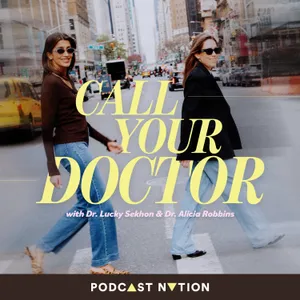
If you’re Googling “Is this normal?” or spiraling down a “What’s wrong with me?” rabbit hole… you’ve come to the right place. Your board-certified besties are officially in the chat to answer all your questions.Call Your Doctor is a women’s health podcast hosted by Dr. Lucky Sekhon, fertility specialist and OB/GYN, and Dr. Alicia Robbins, perimenopause and hormone expert. Together, they deliver relatable, evidence-based advice on topics such as hormones, egg freezing, perimenopause, sexual health, aging, and just navigating today’s confusing world of women’s health.Every Monday they dive into honest conversations, real-life stories, and actionable medical guidance in smart, digestible episodes designed for busy women who want real science without the overwhelm.Join the chat. Ask them anything... no topic is off limits!Have a question? Call us at (754) 225-5362 (aka 754-CALLDOC).
Latest Episodes
The most recent episodes — sign up to get AI-powered summaries of each one.
- Yesterday57 min
The Truth About Quietly Quitting Your Marriage with Sex & Relationship Therapist Dr. Rebecca Howard Eudy
We plan our kids’ schedules, our careers, even our vacations down to the hour, and somehow holding our relationship together doesn’t get the same attention. Most marriages, when they end, don’t end in one big blowup —they end quietly; one skipped conversation at a time. Today we’re talking about connection and the stress that fertility issues, perimenopause, and postpartum can put on our relationship. By the end of this episode, you’ll know what quietly quitting your marriage really looks like, how the mental load of raising kids and caregiving quietly erodes connection, and practical tips you can start implementing today, or even tonight, to build that connection. You’ll also learn what the orgasm gap is, and what can actually close it. Our guest today is Dr. Rebecca Howard Eudy, an AASECT Certified sex therapist and author of Parents in Love: A Guide to Great Sex After Kids. She is also certified in Emotionally Focused Therapy (EFT) and is the co-host of the Under the Hood podcast. Dr. Eudy helps couples navigate sex, desire, and connection in the whirlwind of parenting, even when life and kids make it feel impossible. She works with couples every day who love each other but have quietly drifted into something that looks more like a partnership than a marriage, and she’s here to tell us exactly how they find their way back before it’s too late. Dr. Lucky Sekhon and Dr. Alicia Robbins ask Dr. Eudy how she helps couples reestablish connection, her thoughts on open marriages, how she uses the biopsychosocial model to analyze low libido, and when should a couple seek out a sex therapist. Dr. Eudy also explains the difference between spontaneous desire and responsive desire and why it’s healthy for couples to talk about sex more than they have sex. If you take one thing from this episode, let it be this quote from Dr. Eudy: “You cannot pour desire from an empty cup. Rest, pleasure, and feeling valued are not luxuries, they’re conditions that intimacy requires.” FOLLOW DR. REBECCA HOWARD EUDY@rebeccahowardeudyParents in Love: A Guide to Great Sex After KidsIF YOU’RE TEXTING YOUR FRIENDS LIKE... You: I can’t remember the last time my husband and I had sex... Also You: We’ve both been so stressed at work and when we get home, it’s time to take care of the kids... 3AM You: Wait…do you think he might want an open marriage???? IF YOUR GOOGLE SEARCH HISTORY LOOKS LIKE THIS… How can my husband spice up our sex life? What is the orgasm gap? Do open marriages work? When should I seek out a sex therapist for my relationship? What are the biological factors that may cause women to have less sexual desire than men? How does perimenopause affect libido? How does mental health affect your sex life with your partner? Is not being able to orgasm from penetration normal? How do I connect with my partner? What does quietly quitting your marriage look like? YOU’VE COME TO THE RIGHT PLACE! Let’s continue the conversation! Leave us a voicemail with your questions at 754-CALLDOC (754) 225-5362. Nothing is off limits. Follow Us on Instagram: @callyourdoctorpodcast @lucky.sekhon @aliciarobbinsmd THANK YOU TO OUR SPONSORS!Quince: Find the fall pieces you'll reach for most. Download the Quince app for app-exclusive offers, or go to <a href="http://quince.com/callyourdoc
- 1 weeks ago58 min
Beyond the Pink: Navigating Life, Health, and Breast Cancer with Medical Oncologist Dr. Eleonora Teplinsky
Breast cancer is one of those diagnoses that almost every woman thinks about at some point. Maybe you’ve had a mammogram callback, maybe you found a lump, maybe your mother, sister, best friend, coworker, or you have been diagnosed. Or maybe you’ve wondered, what can I actually do to lower my risk? But here’s the thing - most of what women hear about breast cancer focuses on finding it and treating it, we hear much less about everything that comes before and after, and the after can be enormous. What happens to your fertility if you’re diagnosed before you’ve finished building your family? What happens when chemotherapy or hormone therapy puts you into a state of menopause a decade before you expected it? Can you ever take hormones again? Is pregnancy safe after breast cancer? And after treatment ends, and everyone tells you “you’re cancer free - go live your life”…what does that actually look like? Our guest today has made it her mission to talk about these exact issues. Dr. Eleonora Teplinsky is a board-certified medical oncologist specializing in breast and gynecologic cancers. She’s the head of the breast and gynecologic medical oncology department at Valley Health System in New Jersey, and a clinical assistant professor of medicine at the Icahn School of Medicine at Mount Sinai, which is where Dr. Sekhon and Dr. Robbins met and trained together. Dr. Teplinsky is also the host of Interlude podcast, a passionate women’s health advocate and author of Beyond the Pink: Navigating Life, Health, and Breast Cancer. Breast cancer is so much bigger than wearing a pink ribbon. In this episode, Dr. Lucky Sekhon and Dr. Alicia Robbins sit down with Dr. Teplinsky to discuss what women actually need to know about their risk, prevention, diagnosis, hormones, fertility, and what happens when treatment is done, but you’re still figuring out how to live in your body again. Breast health isn’t just something that we should start thinking about after there’s a problem. We should be evaluating our own risk, better understanding our family history, knowing what screening we need, and knowing what changes in our body deserve attention, as well as taking care of ourselves in a holistic way outside of just actual breast cancer treatment. For anyone listening who has been diagnosed with breast cancer, or loves someone who has, we hope this conversation makes clear that you’re allowed to care about more than just simply surviving. Follow @drteplinsky to hear more from her and find her book Beyond the Pink: Navigating Life, Health, and Breast Cancer here.IF YOU’RE TEXTING YOUR FRIENDS LIKE... You: When should I get my first mammogram? Also You: Will eating soy increase my risk of breast cancer?? 3AM You: Wait…can people with breast cancer not have children???? IF YOUR GOOGLE SEARCH HISTORY LOOKS LIKE THIS… What can I actually do to lower my risk of breast cancer? How often should I get mammograms? What are the misconceptions about breast cancer? Is all breast cancer the same? How does chemotherapy affect fertility? What are the treatment options for breast cancer? Does soy increase breast cancer risk? When should I consider risk preventing surgery? How early should I get a mammogram? Does menopausal hormone therapy cause cancer? What are the long-term risks of breast cancer? Is vaginal estrogen safe for someone with breast cancer? Can breast cancer happen in my 30s? When can I ask my doctor for a breast cancer risk assessment? What are symptoms of breast cancer, if any? Will chemotherapy make me go into early menopause? Can thermography replace mammograms in breast cancer screening? What’s the difference between freezing eggs and preserving embryos? How does family history play a role in breast cancer risk? Does alcohol play a role in breast cancer risk? YOU’VE COME TO THE RIGHT PLACE! Let’s continue the conversation! Leave us a voicemail with your questions at 754-CA
- 2 weeks ago31 min
Healthcare Hacks: How to Get the Most Out of Your Doctor’s Appointment
Doctor’s appointments can be intimidating. It’s a universal experience. And everyone wants to feel like their doctor is invested in them. As two doctors who are on the other side of things, we know how it feels when you walk into a sterile environment where you’re given a limited amount of time to be assessed and have all your questions answered. In today’s episode, Dr. Lucky Sekhon and Dr. Alicia Robbins are giving you all the hacks and practical tips on how to get the most out of your doctor’s appointments. It’s enough to be a patient dealing with a medical problem, but navigating the healthcare system and coordination of everything that needs to be done is no small feat and can leave you feeling overwhelmed and unsure. Most doctor appointments are 15 minutes, or even less, and we are here to help you be prepared to use every single moment of that visit wisely. Dr. Sekhon and Dr. Robbins share how you should prep for your appointment, what to prioritize when you’re actually there, and the questions you should ask before you walk out the door. This episode stresses the importance of knowing enough to be able to participate actively and proactively in your medical care. There are so many good doctors—you don’t go through years of grueling training without having a purpose or a reason behind it. Is it an optimal healthcare system? No. But this is all about being strategic, efficient, and maximizing as much as we can. You can get a lot more out of your experience and have better care if you are able to self-advocate, and today’s episode is really about giving you those tools. Plan it, be strategic, know your story, understand your options, speak up when something doesn’t make sense, and remember that your doctor has seen it all, so don’t be embarrassed to be vulnerable. And yes, crying IS normal! We hope this episode inspires you to take your health into your own hands. The best care isn’t a doctor dictating what happens to a passive patient, it’s a partnership. IF YOU’RE TEXTING YOUR FRIENDS LIKE... You: I have a doctor’s appointment tomorrow...I’m feeling nervous about it... Also You: What should I ask my doctor? Can I ask them about this health trend I saw on TikTok? 3AM You: Wait…do I only get 15 minutes with them? What should I prioritize??? IF YOUR GOOGLE SEARCH HISTORY LOOKS LIKE THIS… What should I bring to my doctor’s appointment? Is it normal to be anxious going into a doctor’s appointment? Should I bring up other health concerns at my annual check-up? How honest should I be with my doctor? Will my doctor be upset if I bring up medical advice I saw on social media? How do I advocate for myself without being confrontational? What questions should I ask my doctor before I walk out? Can I record my doctor’s appointment, or take notes? Do doctors get annoyed if you bring someone with you? How can I not be an annoying patient but still get the answers I’m looking for? What are the doctor red flags that I should lookout for? YOU’VE COME TO THE RIGHT PLACE! Let’s continue the conversation! Leave us a voicemail with your questions at 754-CALLDOC (754) 225-5362. Nothing is off limits. Follow Us on Instagram: @callyourdoctorpodcast @lucky.sekhon @aliciarobbinsmd THANK YOU TO OUR SPONSORS!Instant Hydration: For a better way to stay hydrated, go to instanthydration.com/CALLYOURDOCTOR and use our promo code CALLYOURDOCTOR for over 40% off your first subscription order.Quince: Find the fall pieces you'll reach for most. Download the Quince app for app-exclusive offers, or go to quince.com/callyourdoctor. Get free shipping on your order and 365-day returns.OneSkin: Get 15% off OneSkin with the code CALLYOURDOCTOR at https://www.oneskin.co/CALLYOURDOCTOR
- 3 weeks ago48 min
Answering Your Voicemails: Why Can’t I Get Pregnant? How Can I Support My Fertility as a Shift Worker? Does Perimenopause Look Different If I’ve Had a Hysterectomy?
You called? We answered. In this episode, Dr. Alicia Robbins and Dr. Lucky Sekhon are responding to voicemails sent in by listeners with questions about a variety of women’s health concerns. “How do I know if you have PMOS or Hypothalamic Amenorrhea (HA), or do I have both?” “I’ve done loads of testing to see if I had anything affecting my infertility and very little has been found, so why can’t I get pregnant?” “Is patch estrogen better than the pill for perimenopausal women who suffer from migraines with aura?” These are the kinds of nuanced questions we love—the topics you might be embarrassed to ask about, the symptoms you’re googling 17 times, and the questions you forgot to ask at your doctor’s appointment. Dr. Robbins and Dr. Sekhon navigate their answers to these callers by using actual stories from their real-life experiences as menopause and fertility experts. They explain what the clues are when diagnosing a patient with PMOS or HA, how having a hysterectomy could, or could not, affect perimenopause, and dive into the most frustrating thing that Dr. Sekhon sees couples go through—unexplained infertility. On the trending topic of Alix Earle finding out she’s a BRCA 2 carrier, Dr. Robbins shares what is important for women to know about BRCA gene mutations, and what the misconceptions are when it comes to taking the birth control pill and hormone therapy. For the women with thin uterine lining after ovulation, Dr. Sekhon explains what protocols she follows in her own practice to provide support and improve uterine lining thickness. Dr. Sekhon and Dr. Robbins also speak on their past struggles as shift workers, knowing how much stress this type of work puts on one’s physiology, and they give practical solutions on how someone can best optimize their fertility in these circumstances. If there’s one thing that the questions in this episode proved, it’s that reproductive health is rarely as simple as one symptom, one lab value, or one diagnosis. The context behind every individual’s situation matters. Thank you to everyone who called in. Keep leaving voicemails to be featured on a future episode! The Science Behind Sleep with Dr. Saema Tahir of @thenycsleepdoctorPCOS: The Hormonal Group Chat Gone WrongPMOS (formerly known as PCOS) Part 2: Connecting the Hormonal DotsYou Lost Your Period… Now What? Understanding Hypothalamic AmenorrheaIF YOU’RE TEXTING YOUR FRIENDS LIKE... You: My lab tests are all fine….why can’t I get pregnant? Also You: My iron levels are low….how can I increase them without eating red meat?? 3AM You: Wait…is working the night shift affecting my fertility???? IF YOUR GOOGLE SEARCH HISTORY LOOKS LIKE THIS… How do you know if you have PMOS or Hypothalamic Amenorrhea (HA)? Should I take out my ovaries? What are the risks? What is the truth about the BRCA 1 and BRCA 2 mutations? Can you be on the pill if you have BRCA gene mutations? What does it mean if you have a thin uterine lining after ovulation? What are the underlying risk factors of having a thin uterine lining? How can you treat migraines in perimenopause? Why do women get migraines in perimenopause? What is the recommended level of ferritin? Do I need to eat red meat to increase my iron levels? Does perimenopause look different if you had a hysterectomy? Is the lower dose patch estrogen better than the pill if you have migraines with aura? How can I support my fertility as a shift worker? Should I be taking Vitamin D and/or CoQ10? YOU’VE COME TO THE RIGHT PLACE! Let’s continue the conversation! Leave us a voicemail with your questions at 754-CALLDOC (754) 225-5362. Nothing is off limits. Follow Us on Instagram: @callyourdoctorpodcast <a href="https://www.instagram.com/lucky.se
- 4 weeks ago52 min
Ask Your Doctor: Does Hormone Therapy Cause Breast Cancer? Why Is My Libido So Low? When Should I Consider IVF?
Your favorite podcast doctors are solo this week! Dr. Lucky Sekhon and Dr. Alicia Robbins are here to answer all of your burning women’s health questions in this listener Q&A. They asked you what you wanted to know about fertility, pregnancy, hormones, perimenopause, menopause—and you definitely delivered. In this rapid-fire Q&A, Dr. Sekhon and Dr. Robbins focus on answering the highest yield questions that they get online and in their practice. A reminder that nothing in this episode should be taken as individualized medical advice, but they hope their generalized advice inspires you to have a low threshold when it comes to asking your doctor questions and seeking out experts. “I have diminished ovarian reserve, should I stop trying naturally?” “What should I avoid after an embryo transfer?” “Why did my sleep quality suddenly decline when I entered my 40s?” “I’ve had two miscarriages, should I just do IVF?” These are real questions that women want answers to. Dr. Sekhon and Dr. Robbins address the multiple factors that are often overlooked when it comes to sleep issues, low libido, fertility testing, recurrent pregnancy loss, and so much more. They give you the inside scoop on what they tell their own patients, and the processes and tests they use to determine the cause of the problem. By the end of this episode, they hope you feel less alone in your health struggles, gain confidence to talk to your doctor about the symptoms you’re experiencing and feel more comfortable discussing taboo topics with your friend group. The common thread here is that women’s health is on a continuum, everything is interrelated, one person’s experience doesn’t tell the whole story, and context is so important when addressing health issues. IF YOU’RE TEXTING YOUR FRIENDS LIKE... You: Wait... my doctor wants me to try hormone replacement therapy... Also You: Does estrogen cause breast cancer? I’ve seen some rumors... 3AM You: Wait but if I do IVF...can ovarian stimulation put me at a higher risk for breast cancer??? IF YOUR GOOGLE SEARCH HISTORY LOOKS LIKE THIS… What is an AMH test and what can it tell you? Is my low AMH holding me back from trying naturally? Can you get pregnant during menopause? What is the difference between perimenopause and menopause? Can I exercise after an embryo transfer? Why did my sleep suddenly decline when I entered my 40s? Does it matter what time I take progesterone? Are cooling mattresses worth it? When should I consider IVF? Does hormone therapy cause breast cancer? What is an HSG? What tests do I need to get before deciding to do IVF? Are fibroids causing my infertility? What is Antiphospholipid Syndrome (ALPS) and is there a solution? What are the symptoms of perimenopause? Is coffee the cause of my miscarriage? Are there medications to help with low libido? Is sex therapy worth it? YOU’VE COME TO THE RIGHT PLACE! Let’s continue the conversation! Leave us a voicemail with your questions at 754-CALLDOC (754) 225-5362. Nothing is off limits. Follow Us on Instagram: @callyourdoctorpodcast @lucky.sekhon @aliciarobbinsmd THANK YOU TO OUR SPONSORS!Instant Hydration: For a better way to stay hydrated, go to instanthydration.com/CALLYOURDOCTOR and use our promo code CALLYOURDOCTOR for over 40% off your first subscription order.Quince: Find the fall pieces you'll reach for most. Download the Quince app for app-exclusive offers, or go to quince.com/callyourdoctor. Get free shipping on your order and 365-day returns.OneSkin: Get 15% off OneSkin with the code CALLYOURDOCTOR at https://www.oneskin.co/CALLYOURDOCTOR #oneskinpodAlloy: Spoiler: you can feel amazi
- Aug 31, 202653 min
Raising the Standard for Women’s Care with Celebrity OB/GYN Dr. Thaïs Aliabadi
In this episode, Dr. Lucky Sekhon and Dr. Alicia Robbins are joined by renowned OB/GYN Dr. Thaïs Aliabadi, better known as Dr. A, to talk about what comprehensive women's healthcare should actually look like. Dr. A shares why she refuses to dismiss her patients' symptoms, why a Pap smear is only one small piece of an annual exam, and why these exams should be viewed holistically. The conversation takes a deeper look into breast cancer prevention after Dr. A opens up about her own experience discovering that her lifetime breast cancer risk was dramatically higher than she expected and how a breast MRI helped uncover early breast cancer in Olivia Munn after her initial imaging was negative. They also discuss the importance of pelvic ultrasound, what a Pap smear actually screens for, why endometriosis and PCOS can go undiagnosed for years, and how women can become better advocates for themselves without falling into the misinformation trap. Dr. A fervently speaks on why celebrity health stories can actually be powerful public health tools, how social media can both educate and mislead, and why finding a doctor who truly listens may be one of the most important things you can do for your health. Follow Dr. Thaïs Aliabadi - @drthaisaliabadi IF YOU’RE TEXTING YOUR FRIENDS LIKE... You: Wait... a Pap smear doesn't actually check my uterus or ovaries??? Also You: How do I know if I'm actually high-risk for breast cancer? 3AM You: Okay but what if my mammogram is normal and there's STILL something there??? IF YOUR GOOGLE SEARCH HISTORY LOOKS LIKE THIS… What does a Pap smear actually check for? Should I get a pelvic ultrasound? What is the Tyrer-Cuzick score? How do I calculate my lifetime breast cancer risk? What does dense breast tissue mean? Do I need a breast MRI? Can a mammogram miss breast cancer? What age should I start breast cancer screening? Can endometriosis be missed? How do you know if you have PCOS? Should I get my AMH tested? How do I advocate for myself at the doctor? YOU’VE COME TO THE RIGHT PLACE! Let’s continue the conversation! Leave us a voicemail with your questions at 754-CALLDOC (754) 225-5362. Nothing is off limits. Follow Us on Instagram: @callyourdoctorpodcast @lucky.sekhon @aliciarobbinsmd THANK YOU TO OUR SPONSORS!Instant Hydration: For a better way to stay hydrated, go to instanthydration.com/CALLYOURDOCTOR and use our promo code CALLYOURDOCTOR for over 40% off your first subscription order.Quince: Upgrade your everyday. Download the Quince app for app-exclusive offers, or go to quince.com/callyourdoctor. Get free shipping on your order and 365-day returns.Alloy: Your sex life doesn't have to change just because your hormones did. Visit myalloy.com and use code CALLYOURDOCTOR for $20 off your first order!AirDoctor: Head to AirDoctorPro.com and use promo code CALLYOURDOCTOR and get up to $300 off ANY of their select AirDoctor models, plus you will get a 3-year warranty, absolutely FREE! All AirDoctor air purifiers come with a 30-day money back guarantee.Caraway: Right now, you can save up to $230 on the 12 piece cookware set vs buying the products individually. And you can find even more set savings when you shop Caraway’s full Kitchenware collection. Visit Carawayhome.com/callyourdoctor to take an additional 10% off your next purchase.See Privacy Policy at <a href="https://art19.com/privacy" rel="noopener noreferrer" target="
- Aug 24, 202645 min
The Truth About Postpartum Psychosis with Dr. Katrina Furey
Trigger Warning: This episode deals with intense and difficult topics regarding the Lindsay Clancy case. Postpartum psychosis and postpartum mental health have been a recent topic of online discussion during the past few weeks due to the highly publicized murder trial of Lindsay Clancy. In this episode, Dr. Alicia Robbins is joined by Dr. Katrina Furey, a Yale trained board certified reproductive psychiatrist, the founder of Sound Psychiatry, a private practice serving patients in Connecticut and Florida, and the founder of Repro Psych Academy, an online interdisciplinary continuing access platform built to close the gap in reproductive health education. She’s also a clinical instructor at Yale University and consults for Connecticut’s access, mental health, and substance use for moms program. Dr. Furey is a frequent media contributor on perinatal mental health and postpartum psychosis, with credits including CNN, Newsweek, The New York Post, and a recent live appearance on Court TV to discuss postpartum psychosis as it relates to the Lindsay Clancy trial. Dr. Robbins and Dr. Furey discuss the difference between postpartum psychosis and postpartum depression, how powerful hormonal and chemical shifts after childbirth can be, and what the warning signs look like in the days and weeks after delivery. They also connect over their concerns for both mothers and physicians due to the pitfalls of the healthcare system. Dr. Furey shares how her personal experience with postpartum, and the shame she went through, shifted her career projection. By the end of this episode, you’ll have a better understanding of how someone can go from being a perfectly capable, loving mother, to someone who is at risk of hurting their own children. Follow Dr. Katrina Furey - @drkatrinafurey Repro Psych Academy Postpartum Support International The National Maternal Mental Health Hotline and Alliance IF YOU’RE TEXTING YOUR FRIENDS LIKE... You: Have you heard about the Lindsay Clancy case? Also You: How could a mother hurt her own children?? 3AM You: Okay but how can I make sure that this never happens to me or someone I care about??? IF YOUR GOOGLE SEARCH HISTORY LOOKS LIKE THIS… What is the difference between postpartum depression, postpartum anxiety, postpartum OCD, and postpartum psychosis? Are intrusive thoughts normal? What are the warning signs of postpartum psychosis? Are people with postpartum psychosis aware of their actions? Why are mothers not more open about their postpartum experiences? Is it normal to feel shame for having bad mental health after childbirth? Should women with postpartum psychosis be hospitalized? What are delusions of control? Is postpartum psychosis genetic? What is the Edinburgh Postnatal Depression Scale (EPDS)? What are the tools used to diagnose postpartum illnesses? How much do environmental factors play a role in postpartum psychosis? What does the evidence show about treatment? What is ECT (electro convulsive therapy)? How should physicians go about treating postpartum psychosis and perinatal psychosis? What is the biology of postpartum psychosis? Is postpartum psychosis the same as schizophrenia? What resources exist to support mothers experiencing postpartum depression and anxiety? Is postpartum psychosis rare? What are the symptoms and characteristics of postpartum psychosis? What is the risk of postpartum psychosis? Does having bipolar disorder increase risk for postpartum psychosis? What are the treatment options for postpartum psychosis and postpartum depression? What is hypomania? YOU’VE COME TO THE RIGHT PLACE! Let’s continue the conversation! Leave us a voicemail with your questions at 754-CALLDOC</str
- Aug 17, 202643 min
The Science Behind Sleep with Dr. Saema Tahir of @thenycsleepdoctor
If you feel like sleep suddenly hits differently in your 40s, you're not imagining it. You are now wide awake at 5AM, tossing and turning through the night, or waking up exhausted despite getting what should be enough hours of sleep. In this episode, Dr. Lucky Sekhon and Dr. Alicia Robbins are joined by quadruple board-certified sleep specialist Dr. Saema Tahir, also known as The New York Sleep Doctor, to break down what actually happens to sleep as women move through their 30s, 40s, and 50s. They explain why sleep quality matters just as much as sleep quantity, how estrogen and progesterone fluctuations can disrupt sleep during perimenopause, and why getting seven to nine hours doesn't necessarily mean you're getting restorative sleep. The conversation also tackles one of the most overlooked issues in women's health: sleep apnea. Dr. Tahir explains why irritability, brain fog, fatigue, mood changes, and poor sleep may actually be signs of an underlying sleep disorder. They discuss the truth about melatonin and why it's more of a timing medication than a sleep aid, and whether magnesium, ashwagandha, CBD and THC actually work. Follow Dr. Saema Tahir - @thenycsleepdoctor IF YOU’RE TEXTING YOUR FRIENDS LIKE... You: Why am I waking up at 5AM every single day now??? Also You: I'm getting 8 hours of sleep, so why am I STILL exhausted?? 3AM You: Okay but is this perimenopause... or do I have sleep apnea??? IF YOUR GOOGLE SEARCH HISTORY LOOKS LIKE THIS… Why can't I sleep in my 40s? Why do I wake up at 5AM every morning? Does perimenopause cause insomnia? Can estrogen affect sleep? Can progesterone help you sleep? How many hours of sleep do women need? What is sleep apnea in women? Can you have sleep apnea without snoring? Should women get a sleep study? Does melatonin actually help sleep? When should you take melatonin? Does magnesium help with sleep? Does THC affect REM sleep? Does alcohol ruin your sleep? Can poor sleep look like ADHD? YOU’VE COME TO THE RIGHT PLACE! Let’s continue the conversation! Leave us a voicemail with your questions at 754-CALLDOC (754) 225-5362. Nothing is off limits. Follow Us on Instagram: @callyourdoctorpodcast @lucky.sekhon @aliciarobbinsmd THANK YOU TO OUR SPONSORS!Instant Hydration: For a better way to stay hydrated, go to instanthydration.com/CALLYOURDOCTOR and use our promo code CALLYOURDOCTOR for over 40% off your first subscription order.Quince: Upgrade your everyday. Download the Quince app for app-exclusive offers, or go to quince.com/callyourdoctor. Get free shipping on your order and 365-day returns.Alloy: Your sex life doesn't have to change just because your hormones did. Visit myalloy.com and use code CALLYOURDOCTOR for $20 off your first order!AirDoctor: Head to AirDoctorPro.com and use promo code CALLYOURDOCTOR and get up to $300 off ANY of their select AirDoctor models, plus you will get a 3-year warranty, absolutely FREE! All AirDoctor air purifiers come with a 30-day money back guarantee.Caraway: Right now, you can save up to $230 on the 12 piece cookware set vs buying the products individually. And you can find even more set savings when you shop Caraway’s full Kitchenware collection. Visit Carawayhome.com/callyourdoctor to take an additional 10% off your next purchase.See Privacy Policy at <a href="https://art19.com/privacy" rel="n
Get Call Your Doctor summaries in your inbox
Free AI-powered daily recaps. Key takeaways, quotes, and mentions — in a 5-minute read.
Get Free Summaries →Free forever for up to 3 podcasts. No credit card required.
You Might Also Like
Listeners also like.

Red Pill Your Healthcast
Two healthcare providers discuss overlooked health issues and empower listeners to make informed decisions for their families.

SHE MD
Obstetrician Dr. Thais Aliabadi and women’s advocate Mary Alice Haney discuss women’s health issues with experts and celebrity guests.
Treated with Dr. Sara Szal
Dr. Sara Szal explores holistic health solutions through conversations with experts and patients seeking mind, body, and soul healing.

Hello Hormones with Dr. Carrie Jones
A functional medicine doctor explains how hormonal changes affect women’s health and offers science-based solutions to manage symptoms.
You Are Not Broken
Explores sex, hormones, and midlife for women with science, humor, and candid conversations about body and mind reconnection.
Everyday Wellness: Midlife Hormones, Menopause, and Science for Women 35+
A nurse practitioner shares science-based strategies for managing midlife hormones, menopause, and women's health.

Ask Dr. Drew
Dr. Drew discusses cultural, political, and medical issues with experts and public figures using data and clinical experience.

hol+ with Dr. Taz MD | The Future of Medicine is Holistic
Explores holistic health by connecting physical, mental, and emotional factors like hormones, inflammation, and stress with expert discussions.

Live Like a Girl with Dr. Mindy Pelz
Dr. Mindy Pelz explores women's health through hormone science and wellness conversations to help women live in rhythm with their bodies.

hol+ with Dr. Taz MD | The Future of Medicine is Holistic
A physician explores holistic health through the interconnected physical, mental, emotional, energetic, and social dimensions of wellness.
unPAUSED with Dr. Mary Claire Haver
A board-certified OB-GYN hosts candid discussions with experts and leaders on women's health, identity, and empowerment in midlife.

Afterpause
Evidence-based guidance on menopause, hormone health, sleep, and metabolism from a certified wellness coach and women's health experts.
About Call Your Doctor
If you’re Googling “Is this normal?” or spiraling down a “What’s wrong with me?” rabbit hole… you’ve come to the right place. Your board-certified besties are officially in the chat to answer all your questions.Call Your Doctor is a women’s health podcast hosted by Dr. Lucky Sekhon, fertility specialist and OB/GYN, and Dr. Alicia Robbins, perimenopause and hormone expert. Together, they deliver relatable, evidence-based advice on topics such as hormones, egg freezing, perimenopause, sexual health, aging, and just navigating today’s confusing world of women’s health.Every Monday they dive into honest conversations, real-life stories, and actionable medical guidance in smart, digestible episodes designed for busy women who want real science without the overwhelm.Join the chat. Ask them anything... no topic is off limits!Have a question? Call us at (754) 225-5362 (aka 754-CALLDOC).
Customized Recaps
AI-powered recaps with compact key takeaways, quotes, and insights.
Straight to Your Inbox
Get key takeaways from Call Your Doctor in a 5-minute read.
Save Hours Every Week
Stay current on your favorite podcasts without falling behind.
Frequently Asked Questions
What is Podzilla's Call Your Doctor daily summary?
It's a free AI-powered email that summarizes new episodes of Call Your Doctor as soon as they're published. You get the key takeaways, notable quotes, and links & mentions — all in a quick read.
How does the Call Your Doctor podcast summary work?
When a new episode drops, our AI transcribes and analyzes it, then generates a personalized summary tailored to your interests and profession. It's delivered to your inbox every morning.
Is this an official Call Your Doctor product?
No. Podzilla is an independent service that summarizes publicly available podcast content. We're not affiliated with or endorsed by Podcast Nation.
Can I get summaries of other podcasts too?
Absolutely! The free plan covers up to 3 podcasts. Upgrade to Pro for 15, or Premium for 50. Browse our full catalog at /podcasts.
How often does Call Your Doctor release new episodes?
Call Your Doctor publishes weekly. Our AI generates a summary within hours of each new episode.
What topics does Call Your Doctor cover?
Call Your Doctor covers topics including Education, Medicine, Fitness, Health & Fitness, Self-Improvement. Our AI identifies the specific themes in each episode and highlights what matters most to you.
Start getting Call Your Doctor summaries tomorrow morning.
Free forever for up to 3 podcasts. No credit card required.
Free forever for up to 3 podcasts. No credit card required.