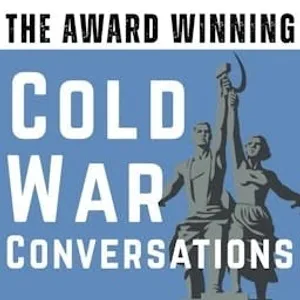
Free Daily Podcast Summary
Cold War Conversations - "vivid & compelling" The NY Times: Daily Summaries Delivered
by Ian Sanders
Experience the Cold War like never before with Cold War Conversations — an award-winning podcast recommended by The New York Times. Each week, host Ian Sanders brings you raw, firsthand accounts from the people who lived through one of history’s most tense and transformative eras — soldiers, spies, civilians, and more. These aren’t stories from textbooks. They’re unfiltered voices from the frontlines of history — emotional, gripping, and deeply human. This is Cold War history, told from the inside out. We cover subjects such as spies, spying, the Iron Curtain, nuclear weapons, warfare, tanks, jet aircraft, fighters, bombers, transport aircraft, aviation, culture, and politics. We also cover personalities such as Fidel Castro, JFK, Ronald Reagan, Nikita Khrushchev, Leonid Brezhnev, Yuri Andropov, Mikhail Gorbachev, Konstantin Chernenko, Margaret Thatcher, John F. Kennedy.
Latest Episodes
The most recent episodes — sign up to get AI-powered summaries of each one.
- Today1h 6m
CIA and MI6 Covert Action in Communist Albania at the Dawn of the Cold War (459)
In June 1949, the US and British governments secretly agreed to mount a joint covert action operation to overthrow the communist government in Albania. The top-secret plan would use exiled dissidents to conduct subversive intelligence, paramilitary and propaganda operations to foment an uprising against Albania's authoritarian ruler Enver Hoxha. I speak with Stephen Long, the author of A Rich Harvest of Bitter Fruit: CIA and MI6 Covert Action in Communist Albania at the Dawn of the Cold War. He describes how the Albanian operation is a vital but misunderstood part of Cold War history and the West’s first secret attempt to subvert a communist state behind the Iron Curtain. While the West ultimately backed away from trying to bring down Hoxha's regime, Albania was the test case of anti-communist covert action where the West served its apprenticeship before rolling out this capability on a global scale. It’s a tale of subterfuge, secrecy, and skulduggery that is a fascinating examination of one of the most important and least examined major flashpoints of the Cold War. Buy the book and support the podcast https://amzn.to/43cBbXJ Episode extras https://coldwarconversations.com/episode459/ Help me preserve Cold War history via a simple monthly donation, You’ll become part of our community, get ad-free episodes, and receive a sought-after CWC coaster as a thank-you, and you’ll bask in the warm glow of knowing you are helping to preserve Cold War history. Just go to https://coldwarconversations.com/donate/ If a monthly contribution is not your cup of tea, we also welcome one-off tips via the same link. Find the ideal gift for the Cold War enthusiast in your life! Just go to https://coldwarconversations.com/store/ CONTINUE THE COLD WAR CONVERSATION o BlueSky https://bsky.app/profile/coldwarpod.bsky.social o Threads https://www.threads.net/@coldwarconversations o Twitter/X https://twitter.com/ColdWarPod o Facebook https://www.facebook.com/groups/coldwarpod/ o Instagram https://www.instagram.com/coldwarconversations/ o Youtube https://youtube.com/@ColdWarConversations Learn more about your ad choices. Visit podcastchoices.com/adchoices
- 1 weeks ago1h 18m
On the edge of war: A V-Force pilot during the Cuban Missile Crisis (458)
I had the honour of speaking with Tony Dobbie, a former RAF V- Force bomber pilot who joined the RAF in 1960. Tony shares amazing anecdotes from his training, including his experiences flying jets like the Meteor and the Vampire, and the transition to the mighty Victor bomber. He candidly discusses the realities of nuclear missions during the Cold War, revealing the tension and responsibility that came with such roles. One of the most gripping parts of our conversation revolves around the Cuban Missile Crisis. Tony was on QRA on Black Saturday when US forces went to DEFCON Two, one step shy of war and US and British forces prepared for imminent conflict with the Soviet Union . Tony also recounts a posting to the Bomber Command Operations Centre near High Wycombe in 1965 where a false alarm almost sent the V-Bomber force off to bomb the Soviet Union. Special thanks to Matthew Dobbie (Tony’s son) for organising the interview and the Hack Green Secret Nuclear Bunker, who allowed the episode to be recorded in their BBC Studio. Episode extras http://www.coldwarconversations.com/episode458 Tony’s book – Suki, Me & World War 3 Matthew’s YouTube Channel Air Force Anecdotes Help me preserve Cold War history via a simple monthly donation, You’ll become part of our community, get ad-free episodes, and receive a sought-after CWC coaster as a thank-you, and you’ll bask in the warm glow of knowing you are helping to preserve Cold War history. Just go to https://coldwarconversations.com/donate/ If a monthly contribution is not your cup of tea, we also welcome one-off tips via the same link. Find the ideal gift for the Cold War enthusiast in your life! Just go to https://coldwarconversations.com/store/ CONTINUE THE COLD WAR CONVERSATION o BlueSky https://bsky.app/profile/coldwarpod.bsky.social o Threads https://www.threads.net/@coldwarconversations o Twitter/X https://twitter.com/ColdWarPod o Facebook https://www.facebook.com/groups/coldwarpod/ o Instagram https://www.instagram.com/coldwarconversations/ o Youtube https://youtube.com/@ColdWarConversations Learn more about your ad choices. Visit podcastchoices.com/adchoices
- 2 weeks ago1h 13m
Conscripted to a West German Nuclear Missile Unit (457)
Kris is a former conscript in the West German Bundeswehr during the Cold War. He shares his experiences from the moment he received his conscription notice at 17, ultimately joining the Luftwaffe, where he served with the Pershing nuclear missile system. Basic training was a rite of passage filled with challenges. Kris recounts the camaraderie formed with fellow recruits and the harsh realities of military life. Still, it was during this time that he learned valuable lessons about discipline, teamwork, and resilience. As the conversation unfolds, we explore the operational aspects of the Bundeswehr, including the use by West German troops of nuclear weapons. Reflecting on his service, he offers a candid assessment of his time in the military. While there were moments of frustration and a sense of wasted time, he ultimately recognises the profound impact that this experience had on his life. The skills he learned and the friendships he forged would shape his future in ways he never anticipated. Linked episodes Defending the Cold War Pershing 2 nuclear missile https://coldwarconversations.com/episode77/ A 23 year old nuclear missile commander https://coldwarconversations.com/episode122/ Episode extras https://coldwarconversations.com/episode457 Help me preserve Cold War history via a simple monthly donation, You’ll become part of our community, get ad-free episodes, and receive a sought-after CWC coaster as a thank-you, and you’ll bask in the warm glow of knowing you are helping to preserve Cold War history. Just go to https://coldwarconversations.com/donate/ If a monthly contribution is not your cup of tea, we also welcome one-off tips via the same link. Find the ideal gift for the Cold War enthusiast in your life! Just go to https://coldwarconversations.com/store/ CONTINUE THE COLD WAR CONVERSATION o BlueSky https://bsky.app/profile/coldwarpod.bsky.social o Threads https://www.threads.net/@coldwarconversations o Twitter/X https://twitter.com/ColdWarPod o Facebook https://www.facebook.com/groups/coldwarpod/ o Instagram https://www.instagram.com/coldwarconversations/ o Youtube https://youtube.com/@ColdWarConversations Learn more about your ad choices. Visit podcastchoices.com/adchoices
- 3 weeks ago53 min
Fakers: A Top-Secret Tale of Phantoms and Forgeries on the Cold War Disinformation Front Line (456)
I delve into the fascinating world of Cold War propaganda with historian Rory Cormac, author of a new book “Fakers - 'A Top Secret Tale of Phantoms and Forgeries on the Disinformation Front Line'. The episode uncovers the clandestine operations carried out by the Information Research Department (IRD), a little-known unit of the British Foreign Office that specialised in covert propaganda during the Cold War. Rory shares insights into the recent declassification of 8,000 files, which revealed the astonishing operational details of the IRD. From bizarre forgeries to the creation of phantom organisations, the episode highlights the absurdity and complexity of Cold War espionage. As Rory explains, the IRD was not just about planting stories in the press; they were deeply involved in black operations, often working closely with MI6 to achieve their goals. One of the most striking examples discussed is the IRD's attempts to undermine Egyptian leader Nasser during the Yemen Civil War. Rory illustrates how the British government crafted fake documents and propaganda to expose Nasser's use of chemical weapons, all while navigating the murky waters of international relations and credibility. The episode also explores the colourful characters that populated the IRD, including journalists, refugees, and writers who brought their unique backgrounds to the table. Rory's anecdotes about their lives and the social dynamics within the department add a rich layer of narrative to the historical context. As the discussion unfolds, Rory draws parallels between the propaganda tactics of the Cold War and modern-day disinformation strategies. He argues that the principles of intelligence laundering and the manipulation of public perception remain alarmingly relevant today. Buy the book here and support the podcast https://amzn.to/4nssdPl Episode extras https://coldwarconversations.com/episode456 Help me preserve Cold War history via a simple monthly donation, You’ll become part of our community, get ad-free episodes, and receive a sought-after CWC coaster as a thank-you, and you’ll bask in the warm glow of knowing you are helping to preserve Cold War history. Just go to https://coldwarconversations.com/donate/ If a monthly contribution is not your cup of tea, we also welcome one-off tips via the same link. Find the ideal gift for the Cold War enthusiast in your life! Just go to https://coldwarconversations.com/store/ CONTINUE THE COLD WAR CONVERSATION o BlueSky https://bsky.app/profile/coldwarpod.bsky.social o Threads https://www.threads.net/@coldwarconversations o Twitter/X https://twitter.com/ColdWarPod o Facebook https://www.facebook.com/groups/coldwarpod/ o Instagram https://www.instagram.com/coldwarconversations/ o Youtube https://youtube.com/@ColdWarConversations Learn more about your ad choices. Visit podcastchoices.com/adchoices
- 4 weeks ago47 min
30 Miles from the North Korean Border - A US Military Childhood (455)
Flynn describes life as a US military child just 30 miles from the North Korean Border during the 1970s. The political landscape of the time was tumultuous, marked by significant events such as the assassination of President Park and a number of serious border incursions and incidents. Flynn reflects on how these events affected his understanding of the world around him, even as a child. He recalls the fear instilled by air raid drills and the constant presence of military operations, which painted a stark picture of being within artillery range of North Korea. Despite the challenges, Flynn cherishes the friendships formed with other military families and the shared experiences that came with living on post. The camaraderie among the children of service members created a sense of belonging, even in a transient lifestyle. From a young age, Flynn was exposed to the vibrant Korean culture, participating in school field trips and learning the language. These experiences fostered a deep appreciation for the culture and the people of Korea, which he recounts with fondness. The contrast between the carefree moments of childhood and the underlying political climate adds depth to his narrative. Episode extras https://coldwarconversations.com/episode455/ Help me preserve Cold War history via a simple monthly donation, You’ll become part of our community, get ad-free episodes, and receive a sought-after CWC coaster as a thank-you, and you’ll bask in the warm glow of knowing you are helping to preserve Cold War history. Just go to https://coldwarconversations.com/donate/ If a monthly contribution is not your cup of tea, we also welcome one-off tips via the same link. Find the ideal gift for the Cold War enthusiast in your life! Just go to https://coldwarconversations.com/store/ CONTINUE THE COLD WAR CONVERSATION o BlueSky https://bsky.app/profile/coldwarpod.bsky.social o Threads https://www.threads.net/@coldwarconversations o Twitter/X https://twitter.com/ColdWarPod o Facebook https://www.facebook.com/groups/coldwarpod/ o Instagram https://www.instagram.com/coldwarconversations/ o Youtube https://youtube.com/@ColdWarConversations Learn more about your ad choices. Visit podcastchoices.com/adchoices
- May 1, 20261h 24m
The JFK Assassination: The human narratives behind one of history's most scrutinised events (454)
Dallas, 22 November 1963. The main event is supposed to be on the appropriately named Main Street. News footage shows office workers leaning out of windows, peering at the motorcade through a blizzard of ticker tape. On the sidewalks, the crowds are fifty deep, a wall of noise and celebration. Everyone thinks this is the place to be. Well, nearly everyone.... A few blocks away, in Dealey Plaza, the scene is different. There is no ticker tape here, and the crowds are thin. A dressmaker with vertigo films the action balanced on a concrete plinth. A man is opening an umbrella even though it isn’t raining, a construction worker will claim he was sent here by God and three mysterious tramps who will shortly be arrested. I spoke with Martin Fitzgerald, who has written a new book, The Umbrella Man and Other Stories. This is not a book about who killed John F. Kennedy or why he was assassinated. This is a book about memory, how we construct our shared history and what happens when your life is defined by a single, fleeting moment. It’s a celebration of human nature, of the joy of research and the freedom of an open mind. Above all, it reveals the stories of a group of real people who thought they had opted out of the main event on the day JFK came to Dallas, only to find themselves at the centre of the most scrutinised six seconds of the twentieth century. Episode extras https://coldwarconversations.com/episode454 Help me preserve Cold War history via a simple monthly or annual donation, You’ll become part of our community, get ad-free episodes, and receive a sought-after CWC coaster as a thank-you, and you’ll bask in the warm glow of knowing you are helping to preserve Cold War history. Learn more at https://coldwarconversations.com/donate/ If a monthly contribution is not your cup of tea, we also welcome one-off tips via the same link. Find the ideal gift for the Cold War enthusiast in your life! Just go to https://coldwarconversations.com/store/ CONTINUE THE COLD WAR CONVERSATION o BlueSky https://bsky.app/profile/coldwarpod.bsky.social o Threads https://www.threads.net/@coldwarconversations o Twitter/X https://twitter.com/ColdWarPod o Facebook https://www.facebook.com/groups/coldwarpod/ o Instagram https://www.instagram.com/coldwarconversations/ o Youtube https://youtube.com/@ColdWarConversations Learn more about your ad choices. Visit podcastchoices.com/adchoices
- Apr 24, 20261h 13m
Chornobyl: Anatomy of a Catastrophe (453)
40 years ago at 1:23 a.m. on April 26, 1986, a routine safety test inside Reactor Four at the Chornobyl Nuclear Power Plant spiralled into the worst nuclear disaster in history. This episode traces the catastrophe from the control room, where exhausted operators struggled with an unstable reactor they did not fully understand, to the streets of Pripyat, where thousands of residents woke the next morning unaware that radioactive contamination had already settled around them. Through a dramatic, chronological account, I examine the fatal combination of human pressure, flawed reactor design, secrecy, and delayed decision-making that turned a technical failure into a global crisis. The story follows the night shift, the firefighters who rushed toward a blaze they believed was ordinary, the officials in Moscow who hesitated to tell the truth, and the liquidators who later entered lethal zones to contain what could not be undone. This is not only the story of an explosion. It is the story of a system built on certainty, silence, and control, confronted by a disaster that defied all three. From the hidden flaws of the RBMK reactor to the evacuation of Pripyat, the construction of the sarcophagus, and the long shadow left across Europe, Chornobyl remains a warning about technology, power, and the cost of withholding truth. Episode extras here https://coldwarconversations.com/episode453/ Help me preserve Cold War history via a simple monthly donation, You’ll become part of our community, get ad-free episodes, and receive a sought-after CWC coaster as a thank-you, and you’ll bask in the warm glow of knowing you are helping to preserve Cold War history. Just go to https://coldwarconversations.com/donate/ If a monthly contribution is not your cup of tea, we also welcome one-off tips via the same link. Find the ideal gift for the Cold War enthusiast in your life! Just go to https://coldwarconversations.com/store/ CONTINUE THE COLD WAR CONVERSATION o BlueSky https://bsky.app/profile/coldwarpod.bsky.social o Threads https://www.threads.net/@coldwarconversations o Twitter/X https://twitter.com/ColdWarPod o Facebook https://www.facebook.com/groups/coldwarpod/ o Instagram https://www.instagram.com/coldwarconversations/ o Youtube https://youtube.com/@ColdWarConversations Learn more about your ad choices. Visit podcastchoices.com/adchoices
- Apr 17, 20261h 34m
From East Berlin to West Ireland (452)
Juli begins by recounting her early years in East Berlin, a time marked by the tragic loss of her father. Drafted into the army just days before her birth, her father continually deserted to see his family, ultimately leading to his untimely death. This early loss left Juli and her mother to navigate a harsh landscape in East Germany alone. Life in East Berlin was a world of contrasts. Juli describes the indoctrination she experienced in school, where lessons were steeped in socialist propaganda. The Berlin Wall, a symbol of division and oppression, loomed large in her family’s life, cutting them off from relatives in the West. Despite the regime’s efforts to control information, Juli’s family found ways to glimpse the outside world through Western television channels, fuelling her desire for freedom. As Juli grew older, she became increasingly aware of the regime’s lies and the oppressive nature of the state. The revolutionary movements of the late 1980s, sparked by events like the Tiananmen Square massacre, galvanised her. Juli joined the Monday demonstrations in Leipzig, risking her safety to demand change. Juli’s story doesn’t end with the fall of the Wall. She moved to Ireland, where she built a new life and family. She speaks candidly about the challenges of adapting to a new way of life and the lingering impact of her upbringing. Due to some last-minute production problems, this episode is a repeat of a brilliant episode from 18 months ago. It’s well worth hearing again! Episode extras here https://coldwarconversations.com/episode452 Go to https://surfshark.com/coldwardeal or use code COLDWARDEAL at checkout to get 4 extra months of Surfshark VPN! Help me preserve Cold War history via a simple monthly donation, You’ll become part of our community, get ad-free episodes, and receive a sought-after CWC coaster as a thank-you, and you’ll bask in the warm glow of knowing you are helping to preserve Cold War history. Just go to https://coldwarconversations.com/donate/ If a monthly contribution is not your cup of tea, we also welcome one-off tips via the same link. Find the ideal gift for the Cold War enthusiast in your life! Just go to https://coldwarconversations.com/store/ CONTINUE THE COLD WAR CONVERSATION o BlueSky https://bsky.app/profile/coldwarpod.bsky.social o Threads https://www.threads.net/@coldwarconversations o Twitter/X https://twitter.com/ColdWarPod o Facebook https://www.facebook.com/groups/coldwarpod/ o Instagram https://www.instagram.com/coldwarconversations/ o Youtube https://youtube.com/@ColdWarConversations Learn more about your ad choices. Visit podcastchoices.com/adchoices
Get Cold War Conversations - "vivid & compelling" The NY Times summaries in your inbox
Free AI-powered daily recaps. Key takeaways, quotes, and mentions — in a 5-minute read.
Get Free Summaries →Free forever for up to 3 podcasts. No credit card required.
You Might Also Like
Listeners also like.
The Bomb
A historical narrative of nuclear weapons' impact, focusing on key figures, espionage, and Cold War crises.
School of War
In-depth interviews explore military history, strategy, and wartime decision-making with experts and policymakers.
The Rest Is Classified
A deep dive into real spy operations, intelligence agencies, and covert global events from the Cold War to today.
The Spy Who
Stories of secret operatives and the covert missions of global intelligence agencies, revealing the true cost of espionage.

The Real Story
Experts and decision makers analyze and debate major news stories.

American History Tellers
Pivotal moments in American history are explored through narrative storytelling, revealing their impact on the nation and modern life.
WW2 Pod: We Have Ways of Making You Talk
A comedian and historian explore World War II through detailed analysis, personal stories, and dark humor.

In the Room with Peter Bergen
Peter Bergen examines global news stories through interviews with experts and firsthand reporting on national security, technology, and conflict.
The Langley Files: CIA's Podcast
Firsthand accounts from CIA officers about their real-life missions and experiences at the agency’s headquarters.

One Decision
Former intelligence leaders and journalists examine high-stakes decisions that shaped global events.
Mission Implausible
Former CIA officers investigate the truth behind conspiracy theories and disinformation using their intelligence expertise.
Combat Story
Veterans share unfiltered stories of combat, detailing their paths to service, pivotal moments in battle, and the lasting impact of war.
About Cold War Conversations - "vivid & compelling" The NY Times
Experience the Cold War like never before with Cold War Conversations — an award-winning podcast recommended by The New York Times. Each week, host Ian Sanders brings you raw, firsthand accounts from the people who lived through one of history’s most tense and transformative eras — soldiers, spies, civilians, and more. These aren’t stories from textbooks. They’re unfiltered voices from the frontlines of history — emotional, gripping, and deeply human. This is Cold War history, told from the inside out. We cover subjects such as spies, spying, the Iron Curtain, nuclear weapons, warfare, tanks, jet aircraft, fighters, bombers, transport aircraft, aviation, culture, and politics. We also cover personalities such as Fidel Castro, JFK, Ronald Reagan, Nikita Khrushchev, Leonid Brezhnev, Yuri Andropov, Mikhail Gorbachev, Konstantin Chernenko, Margaret Thatcher, John F. Kennedy.
Customized Recaps
AI-powered recaps with compact key takeaways, quotes, and insights.
Straight to Your Inbox
Get key takeaways from Cold War Conversations - "vivid & compelling" The NY Times in a 5-minute read.
Save Hours Every Week
Stay current on your favorite podcasts without falling behind.
Frequently Asked Questions
What is Podzilla's Cold War Conversations - "vivid & compelling" The NY Times daily summary?
It's a free AI-powered email that summarizes new episodes of Cold War Conversations - "vivid & compelling" The NY Times as soon as they're published. You get the key takeaways, notable quotes, and links & mentions — all in a quick read.
How does the Cold War Conversations - "vivid & compelling" The NY Times podcast summary work?
When a new episode drops, our AI transcribes and analyzes it, then generates a personalized summary tailored to your interests and profession. It's delivered to your inbox every morning.
Is this an official Cold War Conversations - "vivid & compelling" The NY Times product?
No. Podzilla is an independent service that summarizes publicly available podcast content. We're not affiliated with or endorsed by Ian Sanders.
Can I get summaries of other podcasts too?
Absolutely! The free plan covers up to 3 podcasts. Upgrade to Pro for 15, or Premium for 50. Browse our full catalog at /podcasts.
How often does Cold War Conversations - "vivid & compelling" The NY Times release new episodes?
Cold War Conversations - "vivid & compelling" The NY Times publishes weekly. Our AI generates a summary within hours of each new episode.
What topics does Cold War Conversations - "vivid & compelling" The NY Times cover?
Cold War Conversations - "vivid & compelling" The NY Times covers topics including History, Documentary, Culture, Society & Culture. Our AI identifies the specific themes in each episode and highlights what matters most to you.
Start getting Cold War Conversations - "vivid & compelling" The NY Times summaries tomorrow morning.
Free forever for up to 3 podcasts. No credit card required.
Free forever for up to 3 podcasts. No credit card required.