Free Daily Podcast Summary
Connected By Health: Daily Summaries Delivered
by Krishna Vedala, MD
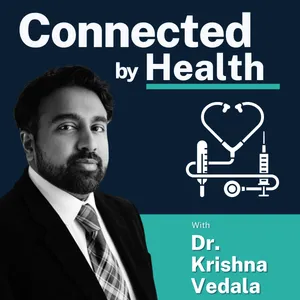
Connected by Health is a modern healthcare podcast hosted by Krishna Vedala, MD, MPH, MBA, CPE—a board-certified Internal Medicine and Obesity Medicine physician, healthcare executive, and innovation leader based in Oklahoma City. This show explores the intersection of clinical medicine, physician leadership, healthcare operations, AI in healthcare, and data-driven decision-making; all with one goal: creating more connected, effective, and human-centered care. Each episode features conversations with physicians, healthcare executives, innovators, and system leaders on: - Internal Medicine & Obesity Medicine - AI in Healthcare & Health Data Management - Physician Leadership & Practice Management - Healthcare Finance, Business Intelligence & Quality Improvement - Operational Excellence & Lean Six Sigma in healthcare Dr. Vedala brings a rare blend of frontline clinical experience, executive leadership training, and systems-level thinking, helping listeners bridge the gap between medicine, leadership, and innovation. Connected by Health is for physicians, healthcare leaders, administrators, and anyone committed to building the future of healthcare together.
Latest Episodes
The most recent episodes — sign up to get AI-powered summaries of each one.
- Yesterday16 min
#40 - Racial Gerrymandering: The Powerful Hidden Determinant of Health
The episode examines how electoral district maps can affect public health. Hosted by Dr. Krishna Vedala, it focuses on racial gerrymandering—the manipulation of district boundaries by "cracking" or "packing" communities—and how these maps can influence whose needs are represented in government. The discussion frames political power as a determinant of health. Representation can shape decisions about Medicaid, rural hospitals, maternal health funding, and other health-related resources. It also connects voter suppression and unequal political influence with outcomes such as infant mortality and insurance coverage. Research discussed in the episode found that gerrymandering in North Carolina was associated with longer travel distances to federally qualified health centers and lower use of those services. Dr. Vedala also highlights a feedback loop: political decisions can affect health, while poor health can make civic participation more difficult. Dr. Vedala calls on public health professionals to treat civic participation as a social determinant of health, incorporate health data into redistricting discussions, and study how political boundaries affect communities. The episode's central message is that fair representation is not only a political concern—it can also shape access to care and people's health. Where Health, Society, and Innovation Intersect Connected by Health is a forward-thinking podcast built on a simple but powerful truth: healthcare is not a cost to be cut — it is an investment that shapes the future of everything around us. Millions of people struggle with healthcare challenges each year — whether it's lack of insurance, unaffordable costs, limited access to care, or managing chronic disease — affecting not only their health, but their financial stability and overall quality of life. Their stories are not isolated — they are all connected. From economic growth and workforce productivity to education, technology, national security, and community stability, health is the thread weaving them together. Each episode blends real-world stories with data-driven insight to show how strategic healthcare investment drives innovation, reduces long-term costs, strengthens public health infrastructure, and fuels economic resilience. Grounded in evidence but driven by purpose, Connected by Health reframes healthcare not as a line item expense, but as foundational infrastructure — because when we invest in health, we invest in people, potential, and the strength of our entire society. ──────────────────────────────────────── 🤝 If today's conversation resonated with you, share it with someone who needs to hear it. ⭐ If you found value in this episode, please take a moment to leave a review, it truly makes a difference. 🎧 And don't forget to follow the podcast on your favorite platform so you never miss a new episode when it drops. #PublicHealth #HealthEquity #Gerrymandering #SocialDeterminantsOfHealth #CivicEngagement
- 3 days ago36 min
#39 - MAHA: America's Collision of Public Health and Politics
In this episode of Connected by Health, Dr. Krishna Vedala sits down with New York Times journalist Sheryl Gay Stolberg to examine the "Make America Healthy Again" (MAHA) movement—and what its rise reveals about health, politics, and public trust in the United States. Stolberg describes MAHA as a coalition of people with different, sometimes conflicting priorities: skepticism about vaccines, concern about nutrition and highly processed foods, and opposition to pesticides. Those interests don't always divide neatly along party lines. Calls for healthier food and closer scrutiny of pesticides can resonate across the political spectrum, while the movement's vaccine-related positions remain especially contentious. The conversation also explores the tensions between MAHA's stated health goals and the interests or policies of its political allies. Stolberg points to the Trump administration's support for glyphosate production as an example of how concerns about pesticides can collide with corporate and political priorities. Such conflicts raise a larger question: Can a coalition with different—and at times competing—agendas hold together? Dr. Vedala and Stolberg discuss why public health has become so politically charged. The COVID-19 pandemic, declining confidence in institutions, political polarization, and social media have all contributed to a fractured information landscape. They also consider the challenges clinicians face when they have limited time to hear patients' concerns and build trust. The episode looks at the politics of government involvement in personal health choices, too. Michelle Obama's Let's Move campaign was criticized as "nanny state" overreach, while some Republican-led policies now place limits on which foods people can purchase with SNAP benefits. The contrast prompts a timely question: Why are similar public health interventions received differently depending on who proposes them? Stolberg credits MAHA with bringing nutrition and pesticide concerns into the national conversation, but warns that vaccine misinformation and weakened public health institutions could have lasting consequences. Ultimately, the discussion returns to a basic but difficult idea: rebuilding trust requires listening, honest communication, and civil conversation across political divides. #PublicHealth #MAHA #HealthPolicy #HealthPolitics #VaccineConfidence #Nutrition #FoodSafety #PublicTrust #HealthCommunication
- 1 weeks ago39 min
#38 - Breaking Barriers: Building Healthier Communities Through Education and Inclusion
In this episode of Connected by Health, host Dr. Krishna Vedala welcomes Dr. Belinda Higgs Hyppolite, Vice President for Access and Opportunity and Associate Provost for First-Generation Initiatives at the University of Oklahoma. Dr. Hyppolite describes her work as focused on facilitating meaningful impact by bringing people together, listening actively, and addressing the conditions that influence people's lives. Her approach emphasizes access, belonging, inclusion, social justice, and the importance of meeting individuals where they are rather than imposing solutions on them. Dr. Hyppolite explains that access to higher education can significantly influence long-term health outcomes. College provides exposure to new knowledge, health information, resources, and opportunities that may otherwise be unavailable, particularly for first-generation, low-income, rural, and historically underserved students. Education can improve health literacy, strengthen people's ability to advocate for themselves, increase access to healthcare, and help individuals make more informed decisions about their well-being. The conversation also explores the responsibility of universities to help reduce health disparities. Dr. Hyppolite argues that universities should take research, clinical services, educational resources, and healthcare opportunities beyond campus walls and into surrounding communities. Partnerships with churches, civic organizations, community leaders, and local agencies can help build trust, improve communication, and make services more accessible. She emphasizes that universities must use clear language, culturally responsive practices, and community-based outreach to address historical distrust and ensure that healthcare is affordable and obtainable. Dr. Vedala and Dr. Hyppolite further discuss how higher education must prepare future healthcare professionals for a rapidly changing field shaped by artificial intelligence, new technologies, evolving regulations, and widespread misinformation. In addition to clinical knowledge, healthcare workers need empathy, emotional intelligence, ethical decision-making skills, cultural competence, communication abilities, and technological literacy. The episode also highlights the importance of mental health support on college campuses. Providing counseling, peer support, crisis services, and wellness education can improve academic success while helping students develop healthy habits that continue beyond graduation. Finally, the discussion addresses social inclusion, historical education, and the mental and physical health consequences of discrimination. Dr. Hyppolite stresses that everyone deserves to feel safe, respected, and included regardless of race, ethnicity, religion, gender identity, or sexual orientation. She calls for intentional action, personal accountability, and education that acknowledges both the achievements and painful realities of history. The episode concludes with a powerful message: access to education should be treated as a right rather than a privilege, because education, inclusion, and healthcare are interconnected foundations of healthier and more prosperous communities. Where Health, Society, and Innovation Intersect Connected by Health is a forward-thinking podcast built on a simple but powerful truth: healthcare is not a cost to be cut — it is an investment that shapes the future of everything around us. Millions of people struggle with healthcare challenges each year — whether it's lack of insurance, unaffordable costs, limited access to care, or managing chronic disease — affecting not only their health, but their financial stability and overall quality of life. Their stories are not isolated — they are all connected. From economic growth and workforce productivity to education, technology, national security, and community stability, health is the thread weaving them together. Each episode blends real-world stories with data-driven insight to show how strategic healthcare investment drives innovation, reduces long-term costs, strengthens public health infrastructure, and fuels economic resilience Grounded in evidence but driven by purpose, Connected by Health reframes healthcare not as a line item expense, but as foundational infrastructure — because when we invest in health, we invest in people, potential, and the strength of our entire society. ──────────────────────────────────────── 🤝 If today's conversation resonated with you, share it with someone who needs to hear it. ⭐ If you found value in this episode, please take a moment to leave a review, it truly makes a difference. 🎧 And don't forget to follow the podcast on your favorite platform so you never miss a new episode when
- 2 weeks ago29 min
#37 - Why Food Recalls are Increasing and What They Reveal About Public Health
On this episode of Connected by Health Podcast, the host Dr. Krishna Vedala, examines why food safety problems and recalls in the United States receive so much public attention. Foodborne illnesses caused by pathogens such as Salmonella, Listeria, E. coli, Campylobacter, norovirus, and Clostridium perfringens can lead to serious complications, hospitalization, and death. Although commonly cited estimates suggest that millions of Americans become ill from contaminated food each year, many cases are never officially diagnosed or reported because people recover at home. Therefore, confirmed cases represent only a portion of the actual burden. Dr. Vedala also explains that a recall does not always mean the food safety system has failed; it may show that contamination was detected and contaminated products were removed before more people became sick. Dr. Vedala identifies the size and complexity of the modern food system as a major factor increasing the potential impact of contamination. Food may be grown in one state or country, processed somewhere else, packaged under several brand names, and distributed throughout the nation. This centralized and interconnected system makes food affordable and widely available, but it also allows one contaminated ingredient or facility to affect consumers across many states. Large processing facilities may have advanced safety systems, but a problem involving equipment, water, sanitation, employees, or ingredients can contaminate large quantities of food before it is discovered. Foods such as fresh produce are especially difficult to control because they are often eaten raw and do not undergo a final cooking step that would destroy pathogens. Dr. Vedala also highlights weaknesses in government oversight and the fragmentation of food safety responsibilities. At least 30 federal laws administered by 15 federal agencies govern different parts of the food system, with major responsibilities divided among the FDA, USDA, CDC, and state and local health departments. The FDA has struggled to meet mandated inspection targets, particularly for foreign facilities, partly because of limited staffing and workforce capacity. Inspectors, epidemiologists, laboratory scientists, and public health personnel are essential for identifying contamination, investigating outbreaks, and protecting consumers. However, reductions in staffing and the loss of experienced employees can weaken the system because training new investigators may take years and institutional knowledge is difficult to replace. According to Dr. Vedala, other challenges include globalization, climate change, agricultural conditions, and weak traceability. Imported foods are not necessarily less safe, but global supply chains make inspections and oversight more complicated. Extreme heat, flooding, drought, changing water quality, and warmer coastal waters can create conditions that increase food safety risks. Traceability is also essential because investigators must determine where contaminated food originated and where it was distributed. Technologies such as whole-genome sequencing have improved the ability to connect illnesses occurring in different states and identify common sources. As a result, the increase in recalls may sometimes reflect better detection rather than a complete collapse of food safety. Finding contamination earlier can prevent additional illnesses. Dr. Vedala concludes that food safety is a form of public health infrastructure and requires sustained investment. Stronger protection would involve adequate funding and staffing for regulatory and public health agencies, risk-based inspections, improved digital tracking, better laboratory and genomic surveillance, stronger sanitation practices, safer agricultural water systems, and improved coordination among agencies. He argues that policymakers should consider the cost of failing to prevent outbreaks, including hospitalizations, lost wages, lawsuits, product recalls, business closures, and loss of public confidence. Although food safety weaknesses existed before any particular administration, reducing the workforce responsible for inspections and disease surveillance may increase existing vulnerabilities. Ultimately, the safety of the food supply depends on cooperation among farmers, food companies, workers, scientists, regulators, and public health officials. Where Health, Society, and Innovation Intersect Connected by Health is a forward-thinking podcast built on a simple but powerful truth: healthcare is not a cost to be cut — it is an investment that shapes the future of everything around us. Millions of people struggle with healthcare challenges each year — whether it's lack of insurance, unaffordable costs, limited access to care, or managing chronic disease — affecting not only their health, but their financial stability and overall quality of life. Their stories are n
- 2 weeks ago34 min
# 36 - Fighting Through the Cutthroat Nature of Our Healthcare System
Dr. Krishna Vedala speaks with Dr. Steven Cyr, an orthopedic spine surgeon, author, and healthcare advocate, about the challenges patients and physicians face within the American healthcare system. Drawing on his military service, extensive surgical experience, and work in private practice, Dr. Cyr explains how administrative policies can interfere with timely and appropriate patient care. A central topic of the conversation is prior authorization and insurance claim denials. Dr. Cyr emphasizes that patients should not view an initial denial as the final decision. Instead, they should ask questions, appeal decisions, work with their physicians, contact insurance representatives, and advocate respectfully for the care they need and have paid for through their premiums. Dr. Cyr also encourages patients to take an active role in selecting their healthcare providers. Patients should research physicians' training, experience, specialties, outcomes, and commitment to patient care rather than relying solely on a predetermined referral pattern. He acknowledges that primary care physicians and specialists face enormous administrative pressures, but he encourages patients to communicate clearly, remain respectful, and seek help from supervisors or practice managers when necessary. In discussing his book Cutthroat, Dr. Cyr explains that his goal is to help patients understand the financial and administrative forces shaping healthcare delivery. He argues that decisions about complex medical care should involve appropriately trained specialists who understand the patient's condition, examination findings, and individual circumstances. Delays caused by inappropriate denials can worsen pain, neurological problems, chronic illness, and overall healthcare costs. The conversation also addresses physician advocacy, medical misinformation, and artificial intelligence. Dr. Cyr believes physicians need stronger protections and a more effective voice within healthcare policy, while recognizing both the advantages and risks of unionization. He views artificial intelligence as a valuable tool for organizing medical knowledge and supporting diagnosis, but emphasizes that it must rely on trustworthy, peer-reviewed sources and should never replace clinical judgment, physical examination, empathy, or the human relationship between doctor and patient. Finally, Dr. Cyr offers advice to people considering careers in medicine and healthcare. He encourages future healthcare professionals to pursue the field because of a genuine passion for science, service, empathy, and making a positive difference—not simply for financial success. Despite the system's challenges, he believes caring for patients and witnessing meaningful improvements in their lives provide rewards that cannot be measured financially. Dr. Krishna Vedala closes the discussion by highlighting the importance of patient rights, physician advocacy, and continued efforts to create a more accessible and compassionate healthcare system. Where Health, Society, and Innovation Intersect Connected by Health is a forward-thinking podcast built on a simple but powerful truth: healthcare is not a cost to be cut — it is an investment that shapes the future of everything around us. Millions of people struggle with healthcare challenges each year — whether it's lack of insurance, unaffordable costs, limited access to care, or managing chronic disease — affecting not only their health, but their financial stability and overall quality of life. Their stories are not isolated — they are all connected. From economic growth and workforce productivity to education, technology, national security, and community stability, health is the thread weaving them together. Each episode blends real-world stories with data-driven insight to show how strategic healthcare investment drives innovation, reduces long-term costs, strengthens public health infrastructure, and fuels economic resilience. Grounded in evidence but driven by purpose, Connected by Health reframes healthcare not as a line item expense, but as foundational infrastructure — because when we invest in health, we invest in people, potential, and the strength of our entire society. ──────────────────────────────────────── 🤝 If today's conversation resonated with you, share it with someone who needs to hear it. ⭐ If you found value in this episode, please take a moment to leave a review, it truly makes a difference. 🎧 And don't forget to follow the podcast on your favorite platform so you never miss a new episode when it drops. #Healthcare #PatientAdvocacy #PriorAuthorization #InsuranceDenials #HealthInsurance #PhysicianAdvocacy #HealthcareReform #PatientRights #MedicalCare #ArtificialInte
- 2 weeks ago43 min
#35 - Building a Healthier Oklahoma with the Oklahoma State Medical Association
Oklahoma faces serious health care challenges, including shortages of physicians and nurses, limited access in rural communities, high rates of chronic illness, a large uninsured population, and inadequate access to mental health and substance-use services. Rural hospitals and clinics are especially vulnerable because of staffing shortages, limited funding, long travel distances, and the risk of closure. In this episode of Connected by Health, host Dr. Krishna Vedala spoke with Oklahoma State Medical Association (OSMA) leaders Dr. Julie Strebel and Dr. Sumit Nanda about efforts to improve access, support physicians, and advocate for policies that benefit patients across the state. A major focus of the conversation was Medicaid. Dr. Nanda emphasized that Medicaid is a vital source of coverage for children, young adults, expectant mothers, and other disadvantaged residents, with approximately half of Oklahoma children relying on the program. He described Medicaid as both a humanitarian responsibility and an economic investment because healthier residents are more likely to work, contribute to the tax base, and support economic growth. Dr. Strebel added that OSMA is concerned about the increased administrative costs associated with managed care and supports efforts to reduce unnecessary expenses so more funding reaches patients and providers. The speakers also discussed the serious threat facing rural hospitals and health care access. Many rural facilities are at risk of closure, which would affect not only patient care but also local employment and community stability. OSMA supports maintaining Medicaid funding, strengthening physician loan-repayment programs, increasing residency funding, and encouraging physicians to practice in rural Oklahoma. The speakers warned that hospital closures could lead to physician shortages, population loss, and a broader decline in the state's health care infrastructure. Behavioral health, telehealth, and insurance reform were also key topics. OSMA supports improved access to mental health and substance-use treatment, stronger enforcement of mental health parity, and permanent payment parity for telehealth services. The organization is also working to reduce prior-authorization requirements, inappropriate insurance clawbacks, delayed payments, and downcoding practices that can discourage physicians from treating vulnerable patients. According to the speakers, these administrative barriers increase costs and delay care, particularly for people seeking behavioral health services. Health equity was discussed largely in terms of geography and access to qualified care. OSMA supports a physician-led health care team in which nurse practitioners and physician assistants play important roles while physicians provide leadership and oversight. The organization opposes unrestricted expansion of independent practice, arguing that patients deserve transparency about who is providing their care and should have access to professionals whose training matches the complexity of their medical needs. OSMA also supports programs that recruit and retain physicians, expand residency opportunities, and address disparities in rural, low-income, and underserved communities. Finally, the speakers addressed physician layoffs, burnout, and the importance of professional support. OSMA plans to advocate for better reimbursement, stronger Medicaid funding, and policies that protect physicians and patients from the effects of workforce reductions. The organization offers counseling, networking, mentoring, and practice-support resources for physicians who are leaving large health systems or starting independent practices. Both Dr. Strebel and Dr. Nanda urged physicians to remain involved with OSMA, emphasizing that collaboration and collective advocacy are essential to improving health care in Oklahoma. Throughout the discussion, host Dr. Krishna Vedala highlighted the importance of investing in health care as an investment in Oklahoma's patients, communities, and future. Where Health, Society, and Innovation Intersect Connected by Health is a forward-thinking podcast built on a simple but powerful truth: healthcare is not a cost to be cut — it is an investment that shapes the future of everything around us. Millions of people struggle with healthcare challenges each year — whether it's lack of insurance, unaffordable costs, limited access to care, or managing chronic disease — affecting not only their health, but their financial stability and overall quality of life. Their stories are not isolated — they are all connected. From economic growth and workforce productivity to education, technology, national security, and community stability, health is the thread weaving them together. Each episode blends real-world stories with data-driven insight to show how strategic healt
- 3 weeks ago50 min
#34 - Polarized Media and Health Misinformation: Undermining Public Health in a Post-Truth World
The episode of Connected by Health examines how media influences public health, political polarization, and the way people understand medical information. Host Dr. Krishna Vedala speaks with Ted Streuli, Executive Director of Oklahoma Watch, about the importance of accurate, evidence-based journalism. They discuss how responsible reporting can build trust in healthcare professionals, scientific research, and public health guidance, while misinformation can create confusion and prevent people from seeking appropriate care. Streuli explains that the repeal of the Fairness Doctrine in 1987 contributed to changes in the media environment. He describes how talk radio, cable news, and eventually the internet blurred the distinction between news and opinion. The rise of politically oriented commentators and opinion-based programming made it more difficult for audiences to distinguish verified reporting from personal viewpoints presented as fact. The conversation focuses heavily on health misinformation during the COVID-19 pandemic. Streuli describes how misinformation about treatments, vaccines, and public health recommendations created frustration among scientists, journalists, and healthcare professionals. Social media algorithms often amplify emotionally charged or controversial claims, while accurate information may receive less attention because it is not perceived as new or exciting. This can lead people to reject reliable evidence and make decisions that put their health and the health of their communities at risk. Streuli argues that misinformation can be a population-level public health threat because mass communication can rapidly influence the behavior of millions of people. He emphasizes that journalism should not present unsupported claims and well-established scientific evidence as equally credible. Instead, journalists should investigate sources, evaluate evidence, identify reliable information, and provide the best available version of the truth. He also cautions that policies such as licensing journalists or financially penalizing misinformation could threaten free speech if government officials were given the power to decide what information is acceptable. The episode concludes with a discussion about rebuilding public trust through personal conversations, media literacy, critical thinking, and education. Streuli believes that people are often less polarized when they discuss issues directly and move beyond broad labels such as "liberal media" or "mainstream media." Although society faces serious challenges in a post-truth environment, he remains optimistic that education can help future generations understand the difference between journalism, propaganda, public relations, opinion, and factual reporting. The central message is that truth, scientific literacy, and responsible communication are essential to public health, democracy, and community well-being.
- 3 weeks ago40 min
#33 - The Thrival Code: Moving Beyond Burnout to Sustainable Success with Dr Archana Shrestha
Dr. Krishna Vedala welcomes Dr. Archana Shrestha, a board-certified emergency physician, certified life coach, burnout recovery expert, and founder of Physician Wellness Solutions, to discuss burnout, sustainable success, and the path from merely surviving to genuinely thriving. Drawing from her personal and professional experiences, Dr. Shrestha explains how the demands of emergency medicine, parenthood, and family responsibilities led her to experience what she calls "double burnout." In the conversation, Dr. Shrestha shares what inspired her to write The Thrival Code. After witnessing healthcare professionals struggle with severe burnout, depression, strained relationships, addiction, and even suicide, she recognized the need for a deeper solution than traditional self-care. Her work focuses on helping high-achieving professionals restore their energy, purpose, and joy without abandoning the careers and lives they have worked hard to build. Dr. Shrestha introduces her Body, Heart, and Mind framework, which addresses the three interconnected forms of exhaustion associated with burnout: physical, emotional, and mental. She explains the importance of self-stewardship, emotional resilience, and intentional thinking. Listeners are offered practical tools, including prioritizing sleep and movement, using the "history and physical" method to process emotions, completing thought downloads, and separating facts from negative interpretations. The discussion also explores why high achievers are particularly vulnerable to burnout. Dr. Shrestha identifies perfectionism, imposterism, and self-criticism as the "burnout trifecta," explaining how these thought patterns can lead people to constantly pursue achievement while neglecting their health and relationships. She encourages listeners to redefine success as "whole-life success," which includes career fulfillment, strong relationships, good health, and personal well-being. Dr. Krishna Vedala and Dr. Shrestha conclude by emphasizing that success does not have to come at the expense of health or happiness. Dr. Shrestha encourages people to pursue their goals while intentionally protecting their time, relationships, and physical and emotional well-being. She also offers guidance for those considering a career in medicine, urging them to seek honest perspectives, understand the challenges of the profession, and continue investing in personal development throughout their careers.
Get Connected By Health summaries in your inbox
Free AI-powered daily recaps. Key takeaways, quotes, and mentions — in a 5-minute read.
Get Free Summaries →Free forever for up to 3 podcasts. No credit card required.
You Might Also Like
Listeners also like.

Paul Saladino MD podcast
A physician explores the root causes of chronic disease and optimal health through science and personal experimentation.

The Dr. Hyman Show
Explores root causes of chronic disease and promotes functional medicine, nutrition, and preventive health through expert discussions.

Extend Podcast with Darshan Shah, MD
Explores science-backed strategies and expert insights to extend healthspan and optimize longevity through actionable health protocols.

Health Discovered
Doctors explore surprising stories to uncover insights about health and well-being.
The Health Continuum
High-performing professionals learn science-based health strategies to sustain energy, focus, and resilience in demanding careers.

Rooted in Wellness with Mona Sharma
A holistic nutritionist blends ancient wellness practices with modern science to address mind, body, and soul health.

The Peter Attia Drive
Conversations with experts on health, longevity, performance, and critical thinking led by physician Peter Attia.
Staying Human with Dr. Vivek Murthy
Dr. Vivek Murthy explores meaningful living through conversations on connection, purpose, and well-being.

Thinking Health Podcast
Explores health and wellness through expert interviews, focusing on low-carb science and practical strategies for improving well-being.

Health vs Hype with the American Medical Association
A medical expert debunks viral health trends and misinformation with science-backed insights from physicians.

The Curbsiders Internal Medicine Podcast
Expert-led internal medicine discussions with clinical insights and humor for primary care and hospital medicine providers.

Becker’s Healthcare Podcast
Daily 15-minute episodes covering U.S. healthcare news, analysis, and insights from industry leaders.
About Connected By Health
Connected by Health is a modern healthcare podcast hosted by Krishna Vedala, MD, MPH, MBA, CPE—a board-certified Internal Medicine and Obesity Medicine physician, healthcare executive, and innovation leader based in Oklahoma City. This show explores the intersection of clinical medicine, physician leadership, healthcare operations, AI in healthcare, and data-driven decision-making; all with one goal: creating more connected, effective, and human-centered care. Each episode features conversations with physicians, healthcare executives, innovators, and system leaders on: - Internal Medicine & Obesity Medicine - AI in Healthcare & Health Data Management - Physician Leadership & Practice Management - Healthcare Finance, Business Intelligence & Quality Improvement - Operational Excellence & Lean Six Sigma in healthcare Dr. Vedala brings a rare blend of frontline clinical experience, executive leadership training, and systems-level thinking, helping listeners bridge the gap between medicine, leadership, and innovation. Connected by Health is for physicians, healthcare leaders, administrators, and anyone committed to building the future of healthcare together.
Customized Recaps
AI-powered recaps with compact key takeaways, quotes, and insights.
Straight to Your Inbox
Get key takeaways from Connected By Health in a 5-minute read.
Save Hours Every Week
Stay current on your favorite podcasts without falling behind.
Frequently Asked Questions
What is Podzilla's Connected By Health daily summary?
It's a free AI-powered email that summarizes new episodes of Connected By Health as soon as they're published. You get the key takeaways, notable quotes, and links & mentions — all in a quick read.
How does the Connected By Health podcast summary work?
When a new episode drops, our AI transcribes and analyzes it, then generates a personalized summary tailored to your interests and profession. It's delivered to your inbox every morning.
Is this an official Connected By Health product?
No. Podzilla is an independent service that summarizes publicly available podcast content. We're not affiliated with or endorsed by Krishna Vedala, MD.
Can I get summaries of other podcasts too?
Absolutely! The free plan covers up to 3 podcasts. Upgrade to Pro for 15, or Premium for 50. Browse our full catalog at /podcasts.
How often does Connected By Health release new episodes?
Connected By Health publishes 2x weekly. Our AI generates a summary within hours of each new episode.
What topics does Connected By Health cover?
Connected By Health covers topics including Medicine, Fitness, Culture, Health & Fitness, Society & Culture. Our AI identifies the specific themes in each episode and highlights what matters most to you.
Start getting Connected By Health summaries tomorrow morning.
Free forever for up to 3 podcasts. No credit card required.
Free forever for up to 3 podcasts. No credit card required.