Free Daily Podcast Summary
Extend Podcast with Darshan Shah, MD: Daily Summaries Delivered
by Darshan Shah, MD
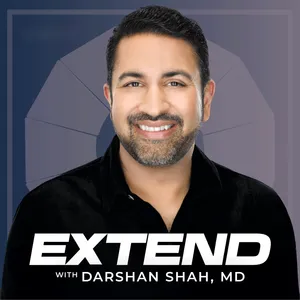
Extend with Darshan Shah, MD is a podcast dedicated to cutting-edge science, research, tools, and protocols designed to help you extend your healthspan. Starting my medical journey at 16 and becoming one of the youngest doctors in the country, studying and training at the Mayo Clinic, Harvard Business School, Singularity University and other prestigious institutions, becoming a board certified surgeon and accumulating over two decades of practice, I have discovered that a mere 20% of health knowledge yields 80% of the results. That's why this podcast is all about cutting through the noise on how to turn back the aging clock. I interview world-renowned medical practitioners, doctors, experts, and thought leaders, offering you a step-by-step guide and actionable advice to proactively avoid disease and optimize your health. Plus, I share weekly solo episodes giving you quick, digestible protocols for successfully extending your healthspan.
Latest Episodes
The most recent episodes — sign up to get AI-powered summaries of each one.
- 4 days ago55 min
204. Dr. Cassie Smith: Fix Your Gut, Fix Your Hormones, Fix Your Health
What if your gut health is the missing piece behing your hormones, energy, metabolism, and how you feel every day? Today, I sit down with Dr. Cassie Smith, a double board-certiied endocrinologist and internal medicine physician who has taken a deeper look at the connection between gut health, hormones, thryoid function, metabolism, and overall health. We talk about why "normal" lab results don't always mean optimal health, how gut health can influence hormone metabolism, the role of stress and inflammation and why understanding your individual biology matters when it comes to feeling your best. In this episode, we learn: The connection between gut health and hormones Why gut health matters for thyroid and metabolic health The differnce between "normal" and optimal hormone levels How stress can affect the gut, hormones, and inflammation What women should know about hormones during perimenopause and menopause The role of fiber, nutrition, and daily habits in gut health How stool testing and the GI Map can provide insight into the microbiome Simple strategies for supporting gut and hormone health Dr. Cassie is also the author of Fix Your Gut, Fix Your Hormones, a resource designed to help people better understand the relationship between their gut, hormones and health. Listen to this episode for an eye-opening conversation about the gut-hormone connection, women's health, and why looking beyond a single lab result may change the way you think about your health. Learn more about Dr. Shah: Website: drshah.com Clinic: next-health.com Instagram: @extend_podcast and @darshanshahmd Learn more about Dr. Cassie Smith: Website: modern-endocrine.com Instagram: @modernendocrine_ Thank You to Our Sponsor! IM8: Try IM8 with a 30-day money back guarantee. Get 10% off your first order with code DRSHAH at im8health.com/drshah
- 6 days ago1h 10m
203. Sat Randhawa: Can You Train Your Brain? QEEG & Neurofeedback
What if we stopped guessing about the brain and started measuring it? In today's episode, my guest is Sat Randhawa of One-Hype Wellness, where he and his team are focused on using brain mapping and neurotechnology to better understand how each individual brain functions. We dive into QEEG brain mapping, neurofeedback, neuroplasticity, and brainwave analysis - and explore why there may not be a one-size-fits-all approach when it comes to the brain. Sat also shares insights into how technology is being explored across areas including focus, ADHD, stress, cognitive health, athletic performance, and recovery. In this episode, we learn: How QEEG brain mapping works What different brainwaves can tell us Why every brain may require a personalized approach How neurofeedback and neuroplasticity connect How brain mapping is being explored for performance and recovery Why measuring the brain could change how we approach brain health Sat brings a practical, data-driven perspective from his work with One-Hype Wellness, and we focus on one important idea: we don't treat a label, we treat a brain. Listen to this episode for a fascinating conversation about brain mapping, neurofeedback, and the future of personalized brain health-and discover what understaning your unique brain could mean for the way you think, perform, recover and live. Learn more about Dr. Shah: Website: drshah.com Clinic: next-health.com Instagram: @extend_podcast and @darshanshahmd Learn more about Sat Randhawa: Website: one-hype.com Thank You To Our Sponsors: Timeline: Timeline, powered by Mitopure, just dropped in price. Check it out using the link shop.timeline.com/DRDARSHANSHAH for up to 20% off when you subscirbe! IM8: Try IM8 with a 30-day money back guarantee. Get 10% off your first order with code DRSHAH at check out im8health.com/drshah
- 1 weeks ago52 min
202. Dr. Colleen Cutcliffe: The Fiber-Gut Connection: How to Improve Your Microbiome, Blood Sugar & Cholesterol
Most people know they should eat more fiber. But what we're learning about fiber, gut health, and the microbiome goes far beyond digestion. Your gut contains trillions of microbes that depend on what you eat—and different types of fiber feed different bacteria. Those microbes can influence everything from blood sugar regulation and metabolic health to cholesterol and the way your digestive system functions. That means it's not just about getting more fiber. The diversity of the fiber you eat matters, too. In this episode, I'm joined by Colleen Cutcliffe, PhD, microbiome scientist and co-founder and CEO of Pendulum Therapeutics, to break down what the latest science tells us about fiber and the gut microbiome. Colleen explains the difference between soluble and insoluble fiber, why most people aren't getting enough, and how fiber and prebiotics support beneficial gut bacteria. We also explore how the microbiome changes throughout life, the role of polyphenols, and the emerging connection between specific gut bacteria and metabolic health. In this episode, you'll learn: • Why fiber is one of the most important foods for your gut microbiome • The difference between soluble and insoluble fiber—and why you need both • Why fiber diversity may be just as important as total fiber intake • How the gut microbiome is connected to blood sugar and metabolic health • How certain types of fiber can support healthy LDL cholesterol levels • The difference between fiber, prebiotics, probiotics, and polyphenols • Practical ways to increase the amount and diversity of fiber in your diet We also discuss why getting enough fiber can be harder than it sounds, how gut health needs can differ between children and adults, and where targeted microbiome products like Pendulum's Gut Fuel may fit alongside a fiber-rich diet. The microbiome is changing the way we think about nutrition. And one of the simplest places to start supporting it may already be sitting on your plate: eat more plants, eat more types of fiber, and feed the microbes you want to thrive. Learn more about Dr. Shah: Website: drshah.com Clinic: next-health.com Instagram: @darshanshahmd and @extend_podcast Learn more about Colleen Cutcliffe: Website: pendulumlife.com Instagram: @drcolleencutcliffe Thank You To Our Sponsors! Pendulum: You can go to penulumlife.com and use my code EXTEND for your first membership order.
- 1 weeks ago1h 23m
201: Joey Munoz: The Truth About Nutrition, Protein, Weight Loss & Muscle
What if the biggest mistake you're making with your health isn't what you're eating - but the way you're thinking about nutrition in the first place? In this episode, I'm joined by Dr. Joey Munoz, a PhD in Nutrition Science and an evidence-based nutrition and fitness educator. We have a fascinating conversation about why so many traditional approaches to dieting fail, what actually makes a healthy diet sustainablem, and how we can thing about nutrition in a way that supports long-term health rather than short-term results. Dr. Joey also shares his own experience with body image and dieting, and how that journey ultimately led him to pursue advanced degrees in nutrition science and take a more evidence-based approach to health and fitness. We get into some of the biggest questions I hear all the time: How much protein do we really need? Does meal timing matter? What role do fiber and whole foods play? Should we be worried about carbohydrates, dietary fat, or ultra-processed foods? And what actually helps us build muscle, manage hunger, and improve metabolic health? In this episode, we learn: Why traditional dieting often leads to cycles of restriction and weight regain-and what to do instead How protein, fiber, whole foods, and muscle mass influence body composition and overall health What the research really tells us about carbohydrates, dietart fat, and ultra-processed foods Whether meal timing, resistant starch, and the gut microbiome deserve a place in your nutrition strategy Which nutrition habits and supplements are actually worth paying attention to-and which may be overhyped How to build a sustainable approach to nutrition without obsessing over having the "perfect" diet. There's a lot of nutrition advice out there, but understanding the science can help you separate what actually matters from what's simply trending. Listen in to learn how to stop chasing the perfect diet and start building a healthier, more sustainable approach to nutrition that can serve you for the long term. Learn more about Dr. Shah: Website: drshah.com Clinic: next-health.com Instagram: @darshanshahmd and @extend_podcast Learn more about Dr. Joey Munoz: Website: strongstandard.com Instagram: @dr.joeymunoz Thank You to Our Sponsor: Momentous: Head to livemomentous.com and use code DRSHAH for up to 35% off your first order!
- 2 weeks ago1h 9m
200. Dr. Will Cole:How to Heal Your Cells—Mitochondria, Peptides & the Science of Aging
What if the fatigue, brain fog, low energy, and other symptoms we associate with getting older actually begin much deeper—at the level of our cells? I've followed Dr. Will Cole's work for years, and his approach to gut health and functional medicine played an important role in my own health journey. Now he's taking that conversation one step further with his new book, Heal Your Cells, exploring what's happening inside our cells as we age—and what we can do to support them. In this conversation, we break down the emerging science of cellular health and longevity, including why different organs may age at different rates, how mitochondrial dysfunction affects energy, and the everyday factors that can accelerate cellular aging. In this episode, you'll learn: Why cellular health may be the next frontier of longevity How your biological and organ age can differ from your chronological age How toxins and nutrient deficiencies can affect cellular function Why mitochondrial health is critical for energy, metabolism, and healthy aging How food, polyphenols, movement, and other lifestyle factors support your cells What peptides are and why they're becoming a major part of the longevity conversation What to know about emerging regenerative therapies like stem cells Why emotional health, stress, relationships, and spirituality also belong in the longevity conversation We also discuss oxidative stress, cellular signaling, food sensitivities, environmental exposures, and the growing number of tools designed to measure and influence how we age. The biggest takeaway is that improving cellular health doesn't require doing everything at once. Start with one change. Support the foundations. Then build from there. Because when we talk about longevity, we're ultimately talking about the health of the trillions of cells that make up who we are. Learn more about Dr. Shah: Website: drshah.com Clinic: next-health.com Instagram: @darshanshahmd and @extend_podcast Learn more about Dr. Will Cole: Website: drwillcole.com Book - Heal Your Cells - Available now at penguinrandomhouse.com Instagram: @drwillcole Thank You To Our Sponsor! Momentous: Head to livemomentous.com and use my code DRSHAH at checkout for up to 35% Off!
- 2 weeks ago1h 10m
199. Dr. Jeffrey Wiegers: Stem Cells Explained—What They Can Do Now & What's Coming Next
What if medicine could do more than manage disease—and actually help the body repair itself? Regenerative medicine is moving quickly, but the world of stem cells, PRP, exosomes, and cellular therapies can be incredibly confusing. In this conversation, I sit down with Dr. Wiggers to separate what we can do today from what may be coming next. We start with the basics: what stem cells actually are, how PRP and orthobiologics work, and the difference between using your own cells versus donor-derived products. Then we go deeper into one of the most fascinating areas of regenerative medicine: MUSE cells, a unique population of stress-enduring stem cells being studied for their ability to respond to injury and support tissue repair. In this episode, you'll learn: • How stem cells, PRP, exosomes, and other regenerative therapies differ • What MUSE cells are and why researchers are so interested in them • How stem cells may respond to signals from injured tissue • Why the age and source of biological material can matter • What Yamanaka factors taught us about cellular reprogramming and rejuvenation • Where regenerative medicine is being studied for joint, cardiovascular, and other applications • The safety concerns and quality-control issues everyone should understand before considering stem cell therapy We also explore why regenerative therapies have faced regulatory hurdles, the difference between exciting laboratory research and treatments available today, and why safety, manufacturing, and proper handling are critical as this field evolves. Stem cells aren't magic—and many potential applications are still being researched. But our growing ability to understand and influence the body's own repair systems could fundamentally change how we approach injury, aging, and disease in the years ahead. Learn more about Dr. Shah: Website: drshah.com Clinic: next-health.com Instagram: @darshanshahmd and @extend_podcast Learn more about Dr. Jeffrey Wiegers: Website: musecellinnovations.com Instagram: @jeffwiegers Thank You To Our Sponsor! IM8: Try IM8 today with a 30-day money back guarantee. You can get 10% off your first order with code DRSHAH at im8health.com/DRSHAH
- 3 weeks ago58 min
198. Dr. Bryce Appelbaum: Your Eyes Are Connected to Everything—Focus, Balance, Brain Health & Aging
What if your eyesight is 20/20—but your vision still isn't working the way it should? Dr. Bryce Appelbaum specializes in functional vision and the connection between the eyes and the brain. In this conversation, he explains why seeing clearly is only one piece of vision—and how the brain's ability to process what we see can influence reading, focus, coordination, balance, motion sickness, athletic performance, and everyday life. We also explore what hours of daily screen time may be doing to our visual system. Our eyes and brains weren't designed to spend all day focused on a screen inches from our faces, and Dr. Appelbaum explains how sustained near work can contribute to eye strain, headaches, fatigue, and visual stress—especially in children. In this episode, you'll learn: • The difference between eyesight and vision—and why 20/20 vision doesn't tell the whole story • How screen time may be affecting the eye-brain connection in both children and adults • Why reading difficulties, poor focus, clumsiness, and motion sickness can sometimes have a visual component • The connection between functional vision problems and symptoms associated with ADHD and dyslexia • How concussions and traumatic brain injuries can disrupt visual function • Why vision, balance, spatial awareness, and healthy aging are closely connected • Three simple vision exercises Dr. Appelbaum recommends for training focus, peripheral awareness, and eye movement We also discuss the 20-20-20 rule, functional vision evaluations, vision therapy and training, reading glasses, neuroplasticity, and practical ways to give your eyes a break in an increasingly screen-dominated world. If you spend hours every day staring at a phone or computer—or have a child growing up surrounded by screens—this conversation may completely change the way you think about protecting and training your vision. Learn more about Dr. Shah: Website: drshah.com Clinic: next-health.com Instagram: @extend_podcast and @darshanshahmd Learn more about Dr. Bryce Appelbaum: Website: myvisionfirst.com Instagram: @drbryceappelbaum Thank you to our sponsors! Next Health Longevity Summit: Head to next-health.com/summit to get tickets to our first ever Next Health Longevity Summit happening September 12th at the Conrad Hotel Nashville! Timeline: Timeline, powered by Mitopure, just dropped in price. Check it out using the link shop.timeline.com/DRDARSHANSHAH for up to 20% off when you subscribe! IM8: Try IM8 with 30-day moneyback guarantee. Get 10% off your first order with code DRSHAH at check out im8health.com/drshah
- 3 weeks ago57 min
197. Ben Greenfield: When Biohacking Goes Too Far—What Actually Matters for Longevity
What happens when optimizing your health starts taking over your life? Ben Greenfield has spent decades at the forefront of biohacking, fitness, human performance, and longevity—testing the technologies, tracking the biomarkers, competing at an elite level, and pushing his body to its limits. But after years of relentless self-optimization, he realized something important: living longer means very little if the pursuit of longevity takes you away from the people and experiences you're trying to live longer for. In this conversation, Ben opens up about the side of biohacking we don't talk about enough. He shares how his obsession with performance and optimization affected his marriage, his relationship with his children, and his own sense of fulfillment—and the moment he realized his priorities had to change. We explore how to find the line between taking care of your health and becoming consumed by it, why relationships and community may be among the most powerful longevity tools we have, and how Ben has radically simplified his approach to fitness while remaining exceptionally strong and healthy. In this episode, you'll learn: When biohacking and self-optimization can go too far Why Ben nearly lost his marriage—and the wake-up call that changed his priorities Why relationships, family, community, and purpose belong in the longevity conversation How to know when you're "healthy enough" instead of endlessly chasing better biomarkers Ben's current approach to strength, mobility, VO2 max, power, mitochondrial health, and cardiovascular fitness How he now stays fit with roughly an hour a day instead of allowing optimization to consume his life We also discuss body composition, wearables, sauna and cold exposure, healthy aging, family legacy, grief, and what losing his father taught Ben about our obsession with trying to outrun aging. The goal of longevity isn't to spend your entire life trying not to die. It's to build a body that allows you to fully participate in the life, relationships, and experiences that make those extra years worth having. Learn more about Dr. Shah: Website: drshah.com Clinic: next-health.com Instagram: @darshanshahmd and @extend_podcast Learn more about Ben Greenfield: Website: bengreenfieldlife.com Instagram: @bengreenfieldfitness Thank You To Our Sponsors: Next Health Longevity Summit: Join us on September 12th at the Conrad Nashville for the FIRST Next Health Longevity Summit. Head to next-health.com/summit to purchase tickets, for my listeners only, I would love to offer you a discount code! Use code EXTEND25 at checkout and get a Summit Access Pass for $25! See you there! Momentous: Head to livemomentous.com and use my code DRSHAH at checkout for up to %35 off at checkout!
Get Extend Podcast with Darshan Shah, MD summaries in your inbox
Free AI-powered daily recaps. Key takeaways, quotes, and mentions — in a 5-minute read.
Get Free Summaries →Free forever for up to 3 podcasts. No credit card required.
You Might Also Like
Listeners also like.

Fully Alive: Unlocking the secrets to your healthier, happier, longer life
Explores science and lifestyle strategies to enhance health, purpose, and longevity.
The Dr. Hyman Show
Explores root causes of chronic disease and promotes functional medicine, nutrition, and preventive health through expert discussions.

The Dan Buettner Podcast
Shares practical habits and insights from the world’s longest-lived populations to improve longevity and well-being.
LONGEVITY with Nathalie Niddam
Explores science-backed strategies for extending healthspan through nutrition, biohacking, peptides, and emerging longevity research.
Paul Saladino MD podcast
A physician explores the root causes of chronic disease and optimal health through science and personal experimentation.

The Peter Attia Drive
Conversations with experts on health, longevity, performance, and critical thinking led by physician Peter Attia.

The Dr. Josh Axe Show
Explores natural health, nutrition, emotional resilience, and personal growth through expert insights and practical strategies.

The Biohacking Standards
A deep dive into biohacking fundamentals—nutrition, movement, sleep, and mindfulness—grounded in science and holistic wellness principles.
The Art of Being Well
Explores holistic wellness through functional medicine, focusing on body, mind, spirit, and relationships as acts of self-respect.
Get Better Faster
Doctors and researchers discuss functional medicine and root-cause approaches to chronic illness and health optimization.
The Ultimate Human with Gary Brecka
Discusses health, longevity, and biohacking through interviews with experts, athletes, and celebrities.

The Ben Azadi Show
Explores metabolic health, longevity, and personal transformation through expert interviews and practical mindset strategies.
About Extend Podcast with Darshan Shah, MD
Extend with Darshan Shah, MD is a podcast dedicated to cutting-edge science, research, tools, and protocols designed to help you extend your healthspan. Starting my medical journey at 16 and becoming one of the youngest doctors in the country, studying and training at the Mayo Clinic, Harvard Business School, Singularity University and other prestigious institutions, becoming a board certified surgeon and accumulating over two decades of practice, I have discovered that a mere 20% of health knowledge yields 80% of the results. That's why this podcast is all about cutting through the noise on how to turn back the aging clock. I interview world-renowned medical practitioners, doctors, experts, and thought leaders, offering you a step-by-step guide and actionable advice to proactively avoid disease and optimize your health. Plus, I share weekly solo episodes giving you quick, digestible protocols for successfully extending your healthspan.
Customized Recaps
AI-powered recaps with compact key takeaways, quotes, and insights.
Straight to Your Inbox
Get key takeaways from Extend Podcast with Darshan Shah, MD in a 5-minute read.
Save Hours Every Week
Stay current on your favorite podcasts without falling behind.
Frequently Asked Questions
What is Podzilla's Extend Podcast with Darshan Shah, MD daily summary?
It's a free AI-powered email that summarizes new episodes of Extend Podcast with Darshan Shah, MD as soon as they're published. You get the key takeaways, notable quotes, and links & mentions — all in a quick read.
How does the Extend Podcast with Darshan Shah, MD podcast summary work?
When a new episode drops, our AI transcribes and analyzes it, then generates a personalized summary tailored to your interests and profession. It's delivered to your inbox every morning.
Is this an official Extend Podcast with Darshan Shah, MD product?
No. Podzilla is an independent service that summarizes publicly available podcast content. We're not affiliated with or endorsed by Darshan Shah, MD.
Can I get summaries of other podcasts too?
Absolutely! The free plan covers up to 3 podcasts. Upgrade to Pro for 15, or Premium for 50. Browse our full catalog at /podcasts.
How often does Extend Podcast with Darshan Shah, MD release new episodes?
Extend Podcast with Darshan Shah, MD publishes every few days. Our AI generates a summary within hours of each new episode.
What topics does Extend Podcast with Darshan Shah, MD cover?
Extend Podcast with Darshan Shah, MD covers topics including Medicine, Nutrition, Fitness, Health & Fitness. Our AI identifies the specific themes in each episode and highlights what matters most to you.
Start getting Extend Podcast with Darshan Shah, MD summaries tomorrow morning.
Free forever for up to 3 podcasts. No credit card required.
Free forever for up to 3 podcasts. No credit card required.