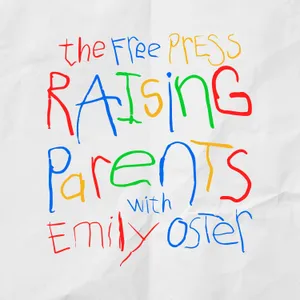
Free Daily Podcast Summary
Raising Parents with Emily Oster: Daily Summaries Delivered
by The Free Press
An economics professor at Brown University, Oster has built a massive and loyal audience by providing overwhelmed parents with the information and data they need to make solid and sound parenting decisions in a very confusing world. Her first book, Expecting Better: Why the Conventional Pregnancy Wisdom Is Wrong—and What You Really Need to Know, sold over a million copies and was translated into 19 languages, unseating the classic What to Expect When You’re Expecting as a fixture on many pregnant mothers’ bedtime tables. In this series, Oster tackles the deep, difficult, existential, and often controversial questions facing parents today: Are we too soft on kids these days? How do I raise an independent child in an era of overprotection and helicopter parenting? Why are so many teen girls unhappy and anxious, and how can we make them happy again? Why are boys being left behind? Are kids overdiagnosed? What to do about the phones!? Is marriage important for raising kids? Should you even have kids at all? These questions are more urgent than ever. That’s because, by many measures, kids are worse off today than 30 years ago. They are more anxious than ever. They’re more depressed. They have more diagnoses than ever before. They’re more medicated. More kids are being raised without two parents in the home today. Kids’ reading and math scores haven’t recovered since their decline during the Covid pandemic. Childhood obesity has risen to 19.7 percent. Kids spend on average 7.5 hours in front of a screen for entertainment each day, and the average teen spends around 9 hours a day on their phone. What’s going on with kids today? How worried should we be about our kids? And what should we be doing, as parents, to change course, before it’s too late? How do we raise good people—which starts with raising good, informed parents—in this strange, new world? Over eight episodes, Oster speaks with over 50 of the world’s best parenting experts, journalists, doctors, psychologists, researchers, and more including: Dr. Becky, Jonathan Haidt, Pamela Druckerman, Richard Reeves, Hanna Rosin, Abigail Shrier, Bryan Caplan, Christine Emba, Johann Hari, Sami Timimi, Melissa Kearney, Ross Douthat, and many, many more. Oster brings her trusted voice—with its sobriety, wisdom, and humor—to the most challenging parenting questions of the day.
Latest Episodes
The most recent episodes — sign up to get AI-powered summaries of each one.
- Aug 6, 202545 min
Episode Feature: How Camp Teaches Kids to Ditch Their Phones
Hi Raising Parents listeners—we’ve got a special bonus episode I’m excited to share with you from Emily Oster’s feed, ParentData. It’s all about the greatness—and importance—of summer camp. Especially in 2025. Camp is one of the few places where kids get a permission slip to be off their phones. Where the kids—who don’t quite fit in at school—get a fresh start, and maybe even find their people. (Yes, Emily is talking about her personal revelation at math camp.) And it’s a kind of exposure therapy for parents, too, as they learn to be okay with unsupervised play. Emily Oster and Steve Baskin, a career camp director and incoming head of the American Camp Association, get into all of that and much more.
- Apr 9, 202534 min
Episode Feature: ‘My So-Called Midlife’
We have a special bonus episode for the Raising Parents feed. It’s an episode of “My So-Called Midlife” by Reshma Saujani and Lemonada Media. Reshma Saujani is the founder of Girls Who Code. She’s written several books, including Girls Who Code, Pay Up, and Brave, Not Perfect. And now she is sharing her insights from midlife on mic. Reshma Saujani sits down with Emily Oster to discuss midlife, from scheduling sex to career pivots to parenting struggles to pregnancy and parenting myths. We want to play that episode for you today. You can check out “My So-Called Midlife.”
- Nov 13, 202449 min
Ep 8: Should You Have Kids?
For most of human history, having kids wasn’t much of a choice. Social expectations, lack of birth control, and limited autonomy for women presented a couple of options: Have children, or join a convent. But the 1960s ushered in a big change. With better options for birth control and expanded career opportunities for women, many people for the first time could choose how many children to have, and whether they should have any at all. Fast-forward to today: More people are choosing not to have children for a wide range of reasons. Having children, of course, is a personal choice. But it’s a choice that has broader implications. Everywhere across the globe—the U.S., Europe, Asia, Africa—fewer children are being born. And strangely enough, having kids has become part of the culture wars. There are pro-natalist public figures like Elon Musk on one side saying everyone needs to have more kids now in order to save humanity. And on the other side, people like climate activist Greta Thunberg say rising sea levels are so catastrophic that having kids in this era is akin to genocide. But there’s no debate that the fertility rate is plummeting in America and around the world. Presently, American women, on average, have 1.8 kids. In the 1950s, it was 3. The replacement rate in the United States, which is the fertility rate needed for a generation to replace itself without considering immigration, is approximately 2.1 births per woman. Around the world, the fertility rate fell by more than half between 1950 and 2021, as many countries became wealthier and women chose to have fewer children. For economists like Emily, the speed with which the fertility rate is falling is cause for alarm. Economic growth depends, at least in part, on population growth. Retired people rely on generations of younger workers for support, through contributions to Social Security and taxes. With fertility rates in free fall, the math doesn’t add up. That’s the big picture. Now back to our own families. Our series so far has focused on the state of our children. Today, we cap things off with a fundamental question: Should we even have kids in the first place, and what happens if we don’t? *** Resources from this episode: Bryan Caplan: Selfish Reasons To Have More Kids (Bookshop) Gina Rushton The Parenthood Dilemma: Procreation in the Age of Uncertainty (Bookshop) Leah Libresco Sargeant Helena de Groot Ross Douthat
- Oct 30, 202450 min
Ep 7: How Important is Marriage?
The share of children in America growing up in single-parent families has tripled since 1950—from 10 percent to 30 percent. Children in single-parent families are three times as likely to live below the poverty level and, on average, they have a higher likelihood of poor academic performance and higher dropout rates from high school. Those translate into lower earnings in adulthood. And although it is very difficult to separate correlation and causality in these data, and hard to say whether single parenthood matters beyond poverty, there is no question that the associations are very strong. Today: What happened to marriage in America? How has the trend divided along class lines and contributed to the widening economic gap? Is having two parents actually better for kids than a single parent? What advantages does growing up in a married family actually confer upon kids? In the research world, these questions aren’t partisan. They’re questions that can be answered with data. Resources from this episode: Books/links: Melissa S. Kearney The Two-Parent Privilege: How Americans Stopped Getting Married and Started Falling Behind (Bookshop) Melissa S. Kearney on Honestly Philip N. Cohen’s critique of Melissa Kearney’s The Two-Parent Privilege Abby M. McCloskey
- Oct 23, 202451 min
Ep 6: Are Smartphones Stealing Childhood?
In today’s world, many parents feel like we need our kids to have phones. We tell ourselves it’s for their safety—they may need it while walking to a friend’s house or when going on a school field trip. And then there’s the fact that for many parents, the idea of not giving your kid a phone—when everyone else has one—just doesn’t even seem like a possibility. By age 10, 42 percent of kids in the U.S. have a phone. By age 12, it’s 71 percent, and by age 14, it’s 91 percent. The pressure to conform is just too great. And the reality is that phones keep kids entertained, which gives parents a break—to cook dinner, to do the laundry, or. . . to scroll through Instagram on their own phones. The problem is that most parents have no idea what the effect of all of this phone time—46 percent of teens say they use their phones “almost constantly”—is. What are phones doing to our kids, their development, their physical health, their mental health, their social lives? Is the panic around cell phones like the panic that once met the invention of the radio or TV? Is it a kind of hysteria? Or are phones fundamentally transforming the essence of what it means to be a kid? Are phones. . . stealing childhood? If so, what should we do about it? Should we leave phone regulations in the hands of schools, or should parents take the initiative to drive the change? Is there even a middle ground, or have we passed the point of no return? Resources from this episode: Jonathan Haidt The Anxious Generation: How the Great Rewiring of Childhood Is Causing an Epidemic of Mental Illness (Bookshop) Ben Halpert Savvy Cyber Kids (Amazon) Johann Hari Stolen Focus: Why You Can’t Pay Attention—and How to Think Deeply Again (Bookshop) Delay Smartphones
- Oct 16, 202446 min
Ep 5: Are Boys Being Left Behind?
Across the board in most advanced countries, girls and women are outpacing boys and men. Nowhere is this more stark than in education. When Title IX was passed in the U.S., the share of students enrolled in a bachelor’s degree program was about two-thirds men and one-third women. Just 50 years later, the numbers have reversed: Bachelor’s enrollment is now 58 percent women and 42 percent men. So, not only is the gender inequality we see in college today wider than it was 50 years ago, it’s the other way around, with men on the bottom. The difference in master’s degrees is even more striking. In the 1970s, women earned only 11 percent of them. Today, women earn over 60 percent of master’s degrees. Women are awarded 53 percent of PhDs, and they make up the majority of law students. These disparities also continue after school ends. Young men are out of the labor force at an unprecedented rate. Nearly half (47 percent) of prime-age men not in the workforce cite obsolete skills, lack of education, or poor work history as barriers to employment. And most American men earn less today (adjusted for inflation) than most men did in 1979. Today: Are boys and men falling behind? Why are some experts so worried about this, and what is at stake for the economy, our society, our families, and the future of boys everywhere? *** Resources from the episode: Of Boys and Men: Why the Modern Male Is Struggling, Why It Matters, and What to Do about It (Amazon) by Richard Reeves Hanna Rosin The End of Men: And the Rise of Women (Amazon) by Hanna Rosin Erica Komisar “Men are lost. Here’s a map out of the wilderness” by Christine Emba American Institute for Boys and Men
- Oct 9, 20241h 7m
Ep 4: Are We Overmedicating Kids?
Kids and teens today are more diagnosed than ever, across the board, whether it’s a disorder like ADHD or a mental health condition like obsessive-compulsive disorder. Say you’re 15 and you’re worried about that upcoming algebra test? Anxiety. You’re 12 and you weren’t invited to that birthday party? Depression. Scared to ride your bike again after that little fall last summer? PTSD. And with these diagnoses come a menu of medications that purport to fix your child. Today: What’s behind the rise in diagnoses—both for ADHD, mostly among young boys, and for anxiety and depression, mostly among teen girls? Are they really the most distracted, anxious, and depressed generation ever to exist? Or are we, perhaps, pathologizing what used to be considered normal feelings and behaviors—and as a result, diagnosing and overmedicating kids for. . . acting like kids? And what are the long-term effects of having millions of boys on speed and millions of girls on SSRIs? Resources from this episode: Abigail Shrier Bad Therapy: Why the Kids Aren’t Growing Up (Bookshop) Jennifer Wallace Never Enough: When Achievement Culture Becomes Toxic—and What We Can Do About It (Bookshop) Sami Timimi Naughty Boys: Anti-Social Behaviour, ADHD and the Role of Culture (Bookshop) Erica Komisar Being There: Why Prioritizing Motherhood in the First Three Years Matters (Bookshop) If you liked what you heard in this episode, the best way to support us is to go to TheFP.com and become a Free Press subscriber today.
- Oct 2, 202459 min
Ep 3: Are We Feeding Kids the Wrong Foods?
In January 2023, the American Academy of Pediatrics surprised doctors and parents by changing its guidelines on treating childhood obesity to include the use of popular weight-loss drugs like Ozempic and Wegovy, also known as semaglutide, for children ages 12 years or older. And parents all over the country were faced with yet another difficult decision: Should I consider a lifelong weight-loss drug for my 12-year-old? The fact that this is even on the table at all is a pretty shocking indictment of the state of our kids’ health. Nearly 20 percent of American children and adolescents are obese, a 300 percent increase since the 1970s. Meanwhile, a little over 42 percent of American adults are obese, a 180 percent increase since the 1970s. The United States ranks 12th worldwide in obesity prevalence. This places the U.S. among the countries with the highest obesity rates in the world. The question is: Why? And why haven’t we been able to reduce childhood obesity rates? As obesity rates have skyrocketed, we as a society have also changed the way we talk about weight and obesity. Yes, there is less stigma today about weight—which is good. But people—including health experts—have stopped speaking out loud about the real health risks of obesity. Take, for example, how during the pandemic our health leaders wouldn’t tell the public that obesity is a high risk factor for contracting Covid, out of a presumed fear of stigmatizing obese people. In the end, all of this has led to confusion about the real health risks of obesity. Parents, in particular, are left to struggle with how to navigate food and health for their children. They may be left wondering whether the entire idea of a link between weight and health may simply be misinformation. So today, we’re setting the table: Why Is childhood obesity such a big problem in the U.S.? Why is obesity problematic in the first place? What will it take to change the way Americans feed our children? And what’s at stake if we don’t? *** Resources from this episode: Pamela Druckerman: Bringing Up Bébé: One American Mother Discovers the Wisdom of French Parenting Robert Lustig: “The Hacking of the American Mind: The Science Behind the Corporate Takeover of Our Bodies and Brains” Robert J. Davis: “Supersized Lies: How Myths about Weight Loss Are Keeping Us Fat — and the Truth about What Really Works” FoodCorps Sam Kass Curt Ellis
Get Raising Parents with Emily Oster summaries in your inbox
Free AI-powered daily recaps. Key takeaways, quotes, and mentions — in a 5-minute read.
Get Free Summaries →Free forever for up to 3 podcasts. No credit card required.
You Might Also Like
Listeners also like.

Raising Good Humans
A developmental psychologist discusses evidence-based parenting approaches with experts and parents to support raising resilient, empathetic children.

Parenting is a Joke
Comedians share candid stories about parenting and childhood, exploring the chaos and humor of raising kids while questioning if they’re truly fine.

Two Parents & A Podcast
Two parents navigate raising kids, building a relationship, and tackling topics from entrepreneurship to dental industry critiques.
Dysregulated Kids: Science-Backed Parenting Help for Behavior, Anxiety, ADHD and More
A therapist explains the brain science behind children's behavioral and emotional challenges and offers research-based parenting strategies.

After Bedtime with Big Little Feelings
Honest conversations about modern parenting challenges with practical advice and emotional support from experienced guides.
Good Inside with Dr. Becky
A clinical psychologist provides practical guidance for handling common parenting challenges and improving parent-child relationships.
Parenting With Psychology
A clinical psychologist offers practical parenting advice based on psychological research to help families manage challenges and strengthen relationships.
Ask Lisa: Untangling Family Life
Psychologist Lisa Damour answers parents' questions about raising tweens and teens with evidence-based advice on mental health, behavior, and family dynamics.
Care and Feeding | Slate's parenting show
Parents discuss real-life challenges and solutions for raising children from toddlers through teens.

Respectful Parenting: Janet Lansbury Unruffled
Addresses common parenting challenges with a focus on respectful, trust-based approaches to raising infants and toddlers.
Life Kit: Parenting
Practical parenting advice based on science and expert insights to help navigate challenges of raising children.

Calm Parenting Podcast
Practical strategies for managing strong-willed, defiant, or neurodivergent children without power struggles or yelling.
About Raising Parents with Emily Oster
An economics professor at Brown University, Oster has built a massive and loyal audience by providing overwhelmed parents with the information and data they need to make solid and sound parenting decisions in a very confusing world. Her first book, Expecting Better: Why the Conventional Pregnancy Wisdom Is Wrong—and What You Really Need to Know, sold over a million copies and was translated into 19 languages, unseating the classic What to Expect When You’re Expecting as a fixture on many pregnant mothers’ bedtime tables. In this series, Oster tackles the deep, difficult, existential, and often controversial questions facing parents today: Are we too soft on kids these days? How do I raise an independent child in an era of overprotection and helicopter parenting? Why are so many teen girls unhappy and anxious, and how can we make them happy again? Why are boys being left behind? Are kids overdiagnosed? What to do about the phones!? Is marriage important for raising kids? Should you even have kids at all? These questions are more urgent than ever. That’s because, by many measures, kids are worse off today than 30 years ago. They are more anxious than ever. They’re more depressed. They have more diagnoses than ever before. They’re more medicated. More kids are being raised without two parents in the home today. Kids’ reading and math scores haven’t recovered since their decline during the Covid pandemic. Childhood obesity has risen to 19.7 percent. Kids spend on average 7.5 hours in front of a screen for entertainment each day, and the average teen spends around 9 hours a day on their phone. What’s going on with kids today? How worried should we be about our kids? And what should we be doing, as parents, to change course, before it’s too late? How do we raise good people—which starts with raising good, informed parents—in this strange, new world? Over eight episodes, Oster speaks with over 50 of the world’s best parenting experts, journalists, doctors, psychologists, researchers, and more including: Dr. Becky, Jonathan Haidt, Pamela Druckerman, Richard Reeves, Hanna Rosin, Abigail Shrier, Bryan Caplan, Christine Emba, Johann Hari, Sami Timimi, Melissa Kearney, Ross Douthat, and many, many more. Oster brings her trusted voice—with its sobriety, wisdom, and humor—to the most challenging parenting questions of the day.
Customized Recaps
AI-powered recaps with compact key takeaways, quotes, and insights.
Straight to Your Inbox
Get key takeaways from Raising Parents with Emily Oster in a 5-minute read.
Save Hours Every Week
Stay current on your favorite podcasts without falling behind.
Frequently Asked Questions
What is Podzilla's Raising Parents with Emily Oster daily summary?
It's a free AI-powered email that summarizes new episodes of Raising Parents with Emily Oster as soon as they're published. You get the key takeaways, notable quotes, and links & mentions — all in a quick read.
How does the Raising Parents with Emily Oster podcast summary work?
When a new episode drops, our AI transcribes and analyzes it, then generates a personalized summary tailored to your interests and profession. It's delivered to your inbox every morning.
Is this an official Raising Parents with Emily Oster product?
No. Podzilla is an independent service that summarizes publicly available podcast content. We're not affiliated with or endorsed by The Free Press.
Can I get summaries of other podcasts too?
Absolutely! The free plan covers up to 3 podcasts. Upgrade to Pro for 15, or Premium for 50. Browse our full catalog at /podcasts.
How often does Raising Parents with Emily Oster release new episodes?
Raising Parents with Emily Oster publishes weekly. Our AI generates a summary within hours of each new episode.
What topics does Raising Parents with Emily Oster cover?
Raising Parents with Emily Oster covers topics including Parenting, Kids & Family, Family. Our AI identifies the specific themes in each episode and highlights what matters most to you.
Start getting Raising Parents with Emily Oster summaries tomorrow morning.
Free forever for up to 3 podcasts. No credit card required.
Free forever for up to 3 podcasts. No credit card required.