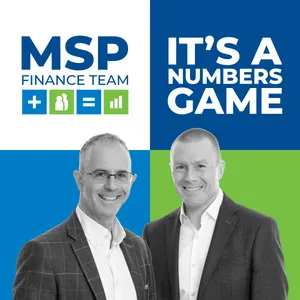
Free Daily Podcast Summary
It's a Numbers Game: Daily Summaries Delivered
by Daniel Welling
The MSP Finance Team Podcast "It's a Numbers Game" from the only financial management solution for MSPs in the UK, founded by former MSP-owners.
Latest Episodes
The most recent episodes — sign up to get AI-powered summaries of each one.
- 5 days ago32 min
EP134 – The MSP M&A Landscape in 2026 with Paul Vanstone
Paul joins the podcast to discuss MSP M&A trends and what 2026 may look like after years of consolidation driven by PE-backed platforms, self-funded acquirers, listed buyers, and newer permanent capital vehicles. He explains why the market has been attractive (fragmentation, cloud migration, cyber demand, COVID-driven working changes, inflation-led price increases) but notes the bar is rising for sellers amid economic headwinds, lower price rises, and AI-driven efficiency that may pressure support rates while also creating advisory opportunities and margin protection. Paul breaks down five buyer types, including Evergreen-style permanent capital that buys without heavy integration and offers supplier and group benefits. He advises sellers to plan early, clarify personal and business goals, avoid approaching everyone, optimise operations, and choose experienced M&A advisors and lawyers, with up-to-date financial and tax records. 00:00 Welcome and Setup 00:33 2026 MSP M&A Outlook 02:18 Market Drivers and Headwinds 06:01 Who the Buyers Are 09:26 Choosing the Right Exit Partner 12:42 Why Exit Planning Matters 14:49 Optimising for a Future Sale 18:14 Money Goals and Life Purpose 23:14 Building the Right Team 23:53 Picking Advisors and Process Timeline 28:57 Wrap Up and Contact Details Connect with Paul Vanstone on LinkedIn by clicking here – <
- 1 weeks ago32 min
EP133 – The Compliance Revenue You're Missing with Dom Haughton and Alastair Goodwin
Adam Morris and Daniel Welling discuss how MSPs can offer compliance as a service to differentiate and create recurring, high-margin revenue, joined by Dom Haughton (Brigantia Partners) and Alastair Goodwin (Adoptech). They explain that MSPs are increasingly asked by customers for certifications such as Cyber Essentials, ISO 27001, ISO 9001 and ISO 42001, but often avoid selling them due to perceived documentation burden and lack of in-house compliance expertise. Adoptech's guided, automated platform and "done-for-you" delivery model aim to shorten ISO 27001 delivery to 8–12 weeks and reduce costs versus traditional consultants, while enabling MSPs to wrap professional services around technical remediation identified through gap analysis. Partners report adding roughly 25–30% margin, with growing demand in regulated sectors and supply chains (e.g., legal, finance, automotive). 00:00 Compliance as a Service Intro 01:32 Why MSPs Should Care 02:36 How MSPs Get Started 04:01 Market Awareness Today 05:37 Productising Compliance 07:09 Automation Removes Friction 08:20 Pricing Mindset Interlude 09:25 Delivery Models and Partnering 13:33 Margins and Upsell Opportunities 18:04 Selling Value and Positioning 23:22 Target Sectors and Demand 28:16 Is It Worth It at Small Scale <p class="MsoNormal" style= "margin-bottom: 0cm; l
- 2 weeks ago32 min
EP132 – Rehearse the Chaos — Why every MSP should be running tabletop exercises with their clients — with Adam Pilton, Heimdal Security
Daniel Welling welcomes back cybersecurity advisor Adam Pilton (Heimdal Security) for a masterclass on cyber tabletop exercises. Adam defines a tabletop as a staged rehearsal where senior leaders and key responders use the organisation's incident response procedure while a facilitator introduces evolving information, aiming to build confidence, stress-test decision-making, and improve communication. They discuss common failures like missing or outdated incident response plans, the facilitator's role in preparing and tailoring scenarios, and differences between SMEs (often using pre-made exercises) and enterprises (more tailored). MSPs should participate, with the on-the-day MSP representative not knowing what comes next, and facilitation can be segmented to reduce bias. Success means surfacing lessons learned, and Adam recommends at least annual exercises, ideally quarterly, including smaller segments within QBRs. He outlines six pillars of effective incident response and highlights the MGM incident as a communication case study. 00:00 Welcome and Guest Intro 01:20 Tabletop Exercises Defined 03:13 Game vs Serious Stress 04:20 Incident Plan Pitfalls 06:29 Facilitator Prep and Tailoring 10:51 SME vs Enterprise Approach 12:26 MSP Role and Independence 15:10 What Success Looks Like 17:01 Where and How Often 19:40 Packaging as Recurring Service 22:21 Six Pillars Framework 24:48 Communication Case Study MGM 28:27 Selling Security Upgrades <p class="MsoNormal" style= "margin-bottom: 0c
- May 4, 202632 min
EP131 – The Devil's in the Detail – Why your billing team, your margins and your processes need to be ready before you scale – with David Middleton, Flotek
Dave discusses how Flotek scaled its finance and billing operations from a simple setup (a bookkeeper and a director overseeing finances) to a more structured team while growing rapidly through acquisitions. He explains their philosophy that client-facing billing is part of service delivery, with SLAs and a "wow" mindset to protect relationships and reduce friction from invoice errors. The conversation covers challenges of cost-of-sale reconciliation amid inconsistent vendor billing, the need to accept imperfect acquisition data, and using standard cost models and monthly margin monitoring (with more precision where margins are tighter, like Microsoft). They emphasise simplifying vendors/products, building processes and controls across sales, projects, and finance, capturing historical billing data, and balancing automation with necessary manual review. Dave notes they reached £18M revenue in 3.5 years and wishes he had hired earlier, stressing upfront investment in scalable systems, culture, and pricing for long-term growth. 00:00 MSP Finance at Scale 00:50 Early Acquisition Setup 01:47 Billing as Customer Service 05:24 Wow Factor and Trust 08:17 Cost Reconciliation Reality 10:14 Standard Costs and Margins 14:45 Automation and AI Tools 17:39 Limiting Complexity 19:53 Team Size and Reporting Depth <span style= "font-size: 12.0pt; font-family: 'Segoe UI',sans-serif; mso-fareast-font-family: 'Segoe UI'; color: black; mso-themecolor: text1; ms
- Apr 5, 202631 min
EP130 – 14 MSP Acquisitions in 4 Years – What Buyers Really Look For with Dave Middleton
Dave joins the podcast to discuss Flotek's M&A journey, having completed 14 acquisitions in three and a half years, and argues the MSP market is diverse, fragmented, and active, with frequent inbound opportunities. He explains deal sourcing through SEO, brokers, network reputation, and supplier referrals, and stresses sellers should do due diligence on buyers. Flotek prioritises cultural and values alignment before numbers, then evaluates stability, cash flow, customer loyalty, customer satisfaction, geography, organic growth, and vendor/tech-stack fit, with a relentless focus on thorough integration. Post-sale, they reassure staff through one-to-ones, emphasise career growth in a larger business, and use phased service integration (often months 6–12) plus strong account management to reduce churn, while acknowledging some customers prefer small-MSP intimacy. On valuation, Dave says it depends on timing and competition, advises not fixating on price versus deal structure and certainty, and notes recurring revenue and longer contracts generally improve value. 00:00 Welcome and Goals 00:51 Biggest M&A Takeaways 01:57 Deal Flow and Market Supply 03:29 Sourcing Acquisition Leads 05:35 Buyer Due Diligence 06:48 Culture Fit First 07:53 What Buyers Look For 09:46 Integration and Tech Stack 13:51 Pipeline Timing and Dating 16:32 Post Sale Integration Playbook <p class="MsoNormal" style= "mso-margin-bottom-alt:
- Mar 28, 202635 min
EP129 – Why Most MSPs get PR wrong with Rahme Mehmet
In this episode, the hosts Adam and Daniel are joined by PR consultant Rahme to discuss an upcoming 2026 collaboration and unpack what PR means for MSPs and vendors: public relations as audience-focused communication that builds reputation, brand awareness, and relationships with influencers such as reporters, editors, analysts, and advisors. They contrast PR with marketing, using a white paper as an example of content that marketing deploys for lead generation while PR uses it to pitch thought leadership and earn coverage, and they explore how PR success is measured through exposure, publication quality, message pull-through, and effects like SEO rather than direct sales attribution. They stress getting fundamentals right (clear positioning, aligned website and social messaging), planning quarterly communications tied to business goals, developing media relationships, and preparing for crisis communications. They also address AI as both an accelerator and a reputational risk in content creation. 00:00 Welcome and Partnership 00:52 What PR Really Means 04:32 PR vs Marketing Lines 08:03 Measuring PR Impact 13:41 Who Should Use PR 17:43 Earned vs Paid Coverage 21:04 Getting Started with PR 24:31 Relationships and Crisis Prep 26:49 AI in the PR World 32:08 Contact and Wrap Up <p class="MsoNormal" style= "mso-margin-bottom-alt: auto; line-height: normal; background: white; mso-background-themecolor: backgr
- Mar 22, 202635 min
EP128 – Using the Working Genius Model to Build Better MSP Teams – with Chris Cooke
Chris joins Daniel and Adam to discuss Patrick Lencioni's Working Genius assessment, a 40-question framework about where people get energy and joy at work, contrasting it with tools like Myers-Briggs and DISC (communication preference). He explains the WIDGET model: Wonder (identify gaps), Invention (generate ideas), Discernment (judge ideas), Galvanizing (rally action), Enablement (help others move work forward), and Tenacity (drive to completion), plus how each person has two geniuses, two competencies, and two frustrations. They cover applying the model in MSPs to improve role fit, career progression (e.g., L1 vs escalations, sales vs sales management), meeting focus (strategy vs tactics), recruitment language, and reducing burnout through intentional time spent in frustration areas. 00:00 Introductions and Banter 00:23 Why Working Genius 02:08 WIDGET Overview 02:32 Wonder and Invention 03:18 Discernment and Galvanizing 04:13 Enablement and Tenacity 05:45 Genius Competency Frustration 07:50 Applying it to Meetings 09:17 Business Gaps and Stages 10:25 Every Job Uses All Six 12:04 Role Fit Sal
- Mar 12, 202628 min
EP127 – Loneliness is the tax you pay for autonomy
Loneliness Is the Tax You Pay for Autonomy: The Hidden Cost of Business Ownership Adam and Daniel depart from the usual guest format to discuss the often-ignored loneliness of business ownership, especially in MSPs. They frame autonomy as rewarding but inherently tied to responsibility, asymmetrical relationships, and an unshared cognitive load that leaders can't fully offload to employees or spouses. Adam reads an essay, "Loneliness is the Tax You Pay for Autonomy," arguing loneliness is a byproduct of authority and care, not weakness, and can be offset through structures like EOS, shared vision, peer groups, mentors, therapists, and healthier communication rhythms. They reflect on regrets about not understanding these dynamics earlier, the mixed value and potential competitiveness of peer groups, and the nuanced pros and cons of having a business partner. They close by emphasising authenticity, balancing the "tax" with rewards, and appreciating the journey. 00:00 Why This Episode 00:40 Loneliness at the Top 02:41 Autonomy Loneliness Essay 07:14 Regrets and Recognition 09:23 Naming the Hidden Cost 10:35 EOS and Shared Vision 12:43 Peer Groups and Pitfalls 14:59 Business Partners Debate 19:02 Mentors and Support Systems <span style= "font-size:
Get It's a Numbers Game summaries in your inbox
Free AI-powered daily recaps. Key takeaways, quotes, and mentions — in a 5-minute read.
Get Free Summaries →Free forever for up to 3 podcasts. No credit card required.
You Might Also Like
Listeners also like.

It's A Numbers Game with Ryan Girdusky
Analyzes sports betting through advanced metrics and interviews with professional gamblers and contest players.

BiggerPockets Business Podcast
Real entrepreneurs share practical advice on starting, growing, and selling businesses, covering hiring, marketing, and raising capital.

Right About Now - Legendary Business Advice
Real talk from business founders and entrepreneurs about building companies, lessons learned, and what actually works in real-world ventures.

The Bottom Line
Evan Davis interviews business leaders about major industry challenges, leadership decisions, and the realities of running organizations.

The Game with Alex Hormozi
A deep dive into scaling businesses, increasing customer value, and lessons from building wealth from $100M to $1B.
Proven Podcast
Charles Schwartz

Truth, Lies and Work
Explores workplace culture and human behavior using psychology and real-world insights to help leaders manage teams effectively.
Podmastery: podcasting insights and advice for indie creators
Practical podcasting advice for independent creators aiming to grow their audience and improve production.

The Money Mondays
Discusses investments, side hustles, and charity through interviews with entrepreneurs and celebrities in their homes and studios.

Everyone Hates Marketers | No-BS Marketing & Brand Strategy Podcast
A marketing podcast offering practical insights on branding, strategy, and customer research from industry professionals.

The AI in Business Podcast
Executives discuss practical AI adoption in business through interviews focused on strategy, use-cases, and ROI.

The $100M Entrepreneur Podcast
Brad Sugars interviews entrepreneurs and experts on strategies for growing businesses beyond $100 million.
About It's a Numbers Game
The MSP Finance Team Podcast "It's a Numbers Game" from the only financial management solution for MSPs in the UK, founded by former MSP-owners.
Customized Recaps
AI-powered recaps with compact key takeaways, quotes, and insights.
Straight to Your Inbox
Get key takeaways from It's a Numbers Game in a 5-minute read.
Save Hours Every Week
Stay current on your favorite podcasts without falling behind.
Frequently Asked Questions
What is Podzilla's It's a Numbers Game daily summary?
It's a free AI-powered email that summarizes new episodes of It's a Numbers Game as soon as they're published. You get the key takeaways, notable quotes, and links & mentions — all in a quick read.
How does the It's a Numbers Game podcast summary work?
When a new episode drops, our AI transcribes and analyzes it, then generates a personalized summary tailored to your interests and profession. It's delivered to your inbox every morning.
Is this an official It's a Numbers Game product?
No. Podzilla is an independent service that summarizes publicly available podcast content. We're not affiliated with or endorsed by Daniel Welling.
Can I get summaries of other podcasts too?
Absolutely! The free plan covers up to 3 podcasts. Upgrade to Pro for 15, or Premium for 50. Browse our full catalog at /podcasts.
How often does It's a Numbers Game release new episodes?
It's a Numbers Game publishes weekly. Our AI generates a summary within hours of each new episode.
What topics does It's a Numbers Game cover?
It's a Numbers Game covers topics including Business, Management. Our AI identifies the specific themes in each episode and highlights what matters most to you.
Start getting It's a Numbers Game summaries tomorrow morning.
Free forever for up to 3 podcasts. No credit card required.
Free forever for up to 3 podcasts. No credit card required.