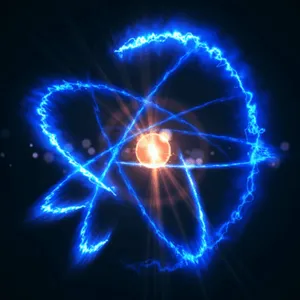
Free Daily Podcast Summary
Realm of Quantum Mechanics: Daily Summaries Delivered
by TheTuringApp.Com
Welcome to the weirdest side of physics—where particles teleport, light exists in two places at once, and reality itself might depend on whether you're watching. Mysteries of Quantum Mechanics: Simplified takes you on a mind-bending journey into the quantum world, where classical physics breaks down and the rules get really strange. Discover the pure mystery of quantum mechanics, without equations or complex math—just pure curiosity and joy in uncovering the deepest secrets of the quantum universe. From Einstein’s battle with uncertainty to the experiment that shattered reality, we explore the quantum puzzles that still baffle scientists today. How can an electron be both here and there? Why do photons behave like waves—until we look at them? And is the universe really just a game of cosmic probability? Whether you’re a science lover or just quantum-curious, get ready for a show that will break your brain in the best way possible.
Latest Episodes
The most recent episodes — sign up to get AI-powered summaries of each one.
- Aug 17, 202620 min
Quantum Mechanics of Climate Change
Is the Earth’s climate actually governed by the strangest rules of physics? In this episode, we pull back the curtain on how quantum mechanics is the invisible hand driving both the warming of our planet and our best hope for cooling it down.Explore the "uncanny coincidence" of how the quantum vibrational states of carbon dioxide allow a tiny trace of molecules to dominate our global climate. We’ll break down how quantum mechanics determines which molecules become greenhouse gases and why the future of our atmosphere is written in the language of energy levels and rotations. But it’s not all bad news—we also dive into how quantum computing is being used to design new catalysts for carbon capture, simulate breakthrough battery chemistries for electric vehicles, and create "digital twins" of the Earth to predict climate impacts with unprecedented accuracy. Join us as we explore the quantum journey from global challenge to technological rescue.
- Aug 10, 202632 min
What Happens When Quantum Computers Break Cryptography
The quantum revolution is coming, but is our digital world ready for the "quantum apocalypse"? In this episode, we shift from building quantum computers to defending against them.We explore the urgent transition to Post-Quantum Cryptography (PQC)—the new global standards designed to withstand the code-breaking power of a mature quantum machine.Discover the "Harvest Now, Decrypt Later" strategy being used by malicious actors today and why organizations are racing to inventory their digital locks before the 2030 deadline.From NIST’s finalized encryption standards to the engineering of "crypto-agility," join us as we discuss how we are re-signing the bedrock of the internet to ensure our secrets stay secret in the age of the quantum starship.
- Aug 3, 202629 min
How to Create a Quantum Computer
If quantum physics is the theory and math is the language, then engineering is the sheer force of will required to build a "starship" out of subatomic particles.This episode moves out of the abstract and into the lab to explore the monumental task of building a physical quantum computer.We dive into the "cryogenic challenge"—the necessity of cooling superconducting qubits to temperatures colder than deep space just to keep them from "leaking" information into the environment.Learn about the "wiring bottleneck" as engineers struggle to connect thousands of control lines to a chip the size of a fingernail, and the high-stakes world of quantum error correction where a single "logical" qubit might require hundreds of physical ones to stay stable.From dilution refrigerators to microwave control pulses, discover what it truly takes to shield a fragile quantum state from the noisy clamor of our ordinary world.
- Jul 27, 202619 min
Mathematics of Quantum Computing
Ever wondered how quantum computers actually work under the hood without drowning in equations? In this episode, we unpack the mathematical engine behind quantum computing in plain, everyday language.Discover how qubits leverage complex numbers, vectors, and probability amplitudes to exist in superposition—and how tools like the Bloch sphere help us visualize their states. We’ll explore single and multi-qubit gates (like CNOT and Hadamard) to see how quantum circuits build entanglement and manipulate wave interference. Finally, we take a peek at game-changing algorithms like Shor’s Factoring and Grover’s Search to see how quantum math threatens today's encryption and unlocks mind-bending processing speedups
- Jul 10, 202626 min
Inside Quest to Build a Higgs Factory
In this episode, we venture into the cutting-edge landscape of quantum field theory to explore the monumental quest to build a "Higgs Factory". When the Large Hadron Collider discovered the Higgs boson in July 2012, headlines proclaimed the completion of the Standard Model. Yet, behind the celebrations, many researchers were secretly hoping the particle would do something weird. Instead, its "vanilla" behavior has deepened the mysteries of our universe, leaving us with massive, unanswered puzzles about dark matter, quantum gravity, and why ordinary matter has mass at all. We look inside the "periodic table of particles" to break down the fermions and bosons that build our reality, tracing why the extreme mass differences between identical particle generations follow absolutely no discernible pattern. We unpack the mind-bending reality of a universe without the Higgs field, where massless electrons would fly at the speed of light, entirely preventing the formation of stable atoms and chemistry. Finally, we confront the "naturalness problem" vexing the world's top physicists, exploring why some argue for abandoning brute-force high-energy colliders in favor of precise factories designed to dissect the Higgs as a unique gateway to hidden cosmic sectors.
- Jul 3, 202622 min
Mystery of the Quantum Eraser
In this episode, we dive into one of the most mind-bending and philosophically challenging experiments in modern science: the Delayed-Choice Quantum Eraser. We begin with a thought experiment proposed by physicist Maria Violaris in 2025, imagining a magazine whose text remains a blurry mix of overlapping possibilities until you focus on a paragraph, forcing the letters to settle into a single, definitive story.We trace this paradox back to its roots: Thomas Young’s famous 1801 double-slit experiment, which proved light behaves like a wave, and the subsequent quantum realizations that tracking a particle's path destroys its wave-like behavior, collapsing it into a simple particle clump. But what if you could cheat the system? We look at how legendary physicist John Wheeler pushed this boundary by asking what happens if we delay the choice to observe a particle until after it has already passed through the slits. Finally, we break down Kim’s famous 1999 hardware setup, an optical maze of barium borate crystals, beam splitters, and a coincidence counter, to explore the ultimate quantum twist: how erasing the "memory" of a photon's path, long after it has finished its journey, miraculously forces its past reality to rewrite itself.
- Jun 26, 202616 min
The Rise of Conspiracy Science
In this episode, we expose the explosive rise of "conspiracy physics," a fast-growing online movement that weaponizes institutional mistrust to claim that mainstream science is fundamentally broken. We look past the familiar public health panics of the pandemic to see how quantum mechanics, general relativity, and string theory are being recast as cult-like belief systems enforced by a corrupt academic elite. We trace how real-world academic scandals, like the massive 900% spike in journal paper retractions, are being hijacked by online contrarians to argue that the entire physics community is pulling off a massive, coordinated cover-up. We dive into the viral, highly dramatic June 2025 YouTube showdown on Piers Morgan’s show, where mathematician Eric Weinstein’s self-published "Geometric Unity" theory was publicly dismantled by physicist Sean Carroll as a "dog-ate-my-homework" manuscript. We analyze the lucrative distribution network fueling this anti-elitist resentment—from Sabine Hossenfelder's performance-art-style takedowns before millions of subscribers to Joe Rogan's "just-asking-questions" podcast format. Finally, we confront the dangerous real-world fallout of this algorithm-driven radicalization, exploring how internet folklore has materialized into actual state bills criminalizing "chemtrails," viral weather warfare accusations during Hurricanes Helene and Milton, and an unprecedented wave of death threats targeting meteorologists and government scientists.
- Jun 19, 202615 min
A Jewel Shape at the Heart of Quantum Physics
In this episode, we dive into a radical frontier of theoretical physics that is completely rethinking the fabric of reality. Ever since Einstein introduced general relativity in 1915, space and time have been treated as the ultimate backdrop for every event in the cosmos. But when subatomic particles collide at high energies, calculating the probabilities of their messy transformations using standard methods becomes an absolute nightmare, often requiring hundreds of pages of grueling algebra for a single, basic collision.We explore how a brilliant group of theorists discovered a way to bypass this mathematical chaos entirely. By stepping outside our familiar coordinates, they uncovered a jewel-shaped, higher-dimensional geometric object called the amplituhedron. Amazingly, the entire volume of this geometric jewel perfectly encodes the particle probabilities that physicists have struggled to calculate for decades. It’s a mind-bending detective story tracking how a massive, nine-page equation famously collapsed into a simple, one-term function—proving that our timeless, spaceless universe might just be a shadow cast by pure geometry.
Get Realm of Quantum Mechanics summaries in your inbox
Free AI-powered daily recaps. Key takeaways, quotes, and mentions — in a 5-minute read.
Get Free Summaries →Free forever for up to 3 podcasts. No credit card required.
You Might Also Like
Listeners also like.

The Joy of x
A mathematician explores the lives and ideas of leading scientists through in-depth conversations.

The Quanta Podcast
A weekly discussion on groundbreaking science and math stories with Quanta's editorial team.

The Joy of Why
Mathematicians and astrophysicists explore fundamental scientific and mathematical questions with leading researchers.

The Rest Is Science
Hannah Fry and Michael Stevens explore the strange and overlooked questions at the boundary of scientific understanding.
Math & Physics Podcast
Two University of Toronto students discuss topics in math and physics.
Physics for Future
Experts discuss quantum mechanics, atomic clocks, and AI to make physics accessible for students and the public.

From First Principles
Breaks down major science stories weekly, explaining the mechanics behind physics, space, AI, and biotech developments.
Physics to God
Explores the intersection of modern physics and theology, examining fine tuning, the multiverse, and the concept of God.
Sean Carroll's Mindscape: Science, Society, Philosophy, Culture, Arts, and Ideas
Conversations with leading thinkers exploring fundamental ideas in science, philosophy, culture, and the arts.

Mysterious Universe
Explores fringe science, UFOs, cryptozoology, and alternative history with a mix of curiosity and humor.
The Field Guide to Particle Physics
A guided exploration of subatomic particles, their properties, interactions, and roles in the fundamental structure of the universe.

Stuff To Blow Your Mind
Explores the strange edges of science, consciousness, and reality through neuroscience, cosmology, evolution, and emerging technology.
About Realm of Quantum Mechanics
Welcome to the weirdest side of physics—where particles teleport, light exists in two places at once, and reality itself might depend on whether you're watching. Mysteries of Quantum Mechanics: Simplified takes you on a mind-bending journey into the quantum world, where classical physics breaks down and the rules get really strange. Discover the pure mystery of quantum mechanics, without equations or complex math—just pure curiosity and joy in uncovering the deepest secrets of the quantum universe. From Einstein’s battle with uncertainty to the experiment that shattered reality, we explore the quantum puzzles that still baffle scientists today. How can an electron be both here and there? Why do photons behave like waves—until we look at them? And is the universe really just a game of cosmic probability? Whether you’re a science lover or just quantum-curious, get ready for a show that will break your brain in the best way possible.
Customized Recaps
AI-powered recaps with compact key takeaways, quotes, and insights.
Straight to Your Inbox
Get key takeaways from Realm of Quantum Mechanics in a 5-minute read.
Save Hours Every Week
Stay current on your favorite podcasts without falling behind.
Frequently Asked Questions
What is Podzilla's Realm of Quantum Mechanics daily summary?
It's a free AI-powered email that summarizes new episodes of Realm of Quantum Mechanics as soon as they're published. You get the key takeaways, notable quotes, and links & mentions — all in a quick read.
How does the Realm of Quantum Mechanics podcast summary work?
When a new episode drops, our AI transcribes and analyzes it, then generates a personalized summary tailored to your interests and profession. It's delivered to your inbox every morning.
Is this an official Realm of Quantum Mechanics product?
No. Podzilla is an independent service that summarizes publicly available podcast content. We're not affiliated with or endorsed by TheTuringApp.Com.
Can I get summaries of other podcasts too?
Absolutely! The free plan covers up to 3 podcasts. Upgrade to Pro for 15, or Premium for 50. Browse our full catalog at /podcasts.
How often does Realm of Quantum Mechanics release new episodes?
Realm of Quantum Mechanics publishes weekly. Our AI generates a summary within hours of each new episode.
What topics does Realm of Quantum Mechanics cover?
Realm of Quantum Mechanics covers topics including Education, Courses. Our AI identifies the specific themes in each episode and highlights what matters most to you.
Start getting Realm of Quantum Mechanics summaries tomorrow morning.
Free forever for up to 3 podcasts. No credit card required.
Free forever for up to 3 podcasts. No credit card required.