Free Daily Podcast Summary
SHE MD: Daily Summaries Delivered
by Dear Media
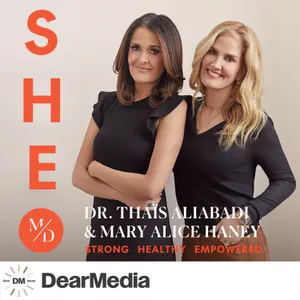
SHE MD is a weekly podcast hosted by world-renowned OBGYN, Dr. Thais Aliabadi, “Dr. A,” and women's advocate and influencer, Mary Alice Haney. Their candid conversations with celebrity guests and today's leading experts about women's health topics, such as menopause, endometriosis, PCOS, and fertility empower their audience with the knowledge and tools to become their own health advocates. Dr. A and Mary Alice dive deep into critical health issues, offering women the knowledge and tools to become their best health advocates. At SHE MD, every woman deserves access to the latest medical insights, personalized care strategies, and expert advice to navigate their health journey. From breaking down myths to providing practical tips, Dr. Aliabadi and Mary Alice Haney create a welcoming and informative space for women to take control of their health. The podcast features exclusive interviews with top-tier celebrity guests and leading experts across the
Latest Episodes
The most recent episodes — sign up to get AI-powered summaries of each one.
- 4 days ago1h 24m
Whitney Cummings: Freezing My Eggs, "Geriatric Pregnancy," and Becoming a Mom at 40
This one is a full-circle moment. Our guest isn't just one of Mary Alice's oldest friends (25 years and counting), she's also one of Dr. A's real-life patients, the doctor who actually froze her eggs. Whitney Cummings, comedian, actress, and creator of 2 Broke Girls and Whitney, has built a career saying the things women usually only whisper about. Today she says them out loud, with us.Whitney was talking about freezing her eggs before it was a mainstream conversation (she did it at 33), and she is refreshingly, hilariously honest about getting pregnant at 40, being handed the term "geriatric pregnancy," the postpartum depression that came after her son, and the body image struggles she's carried for years. She and the hosts get into fertility, the real cost of waiting, why "biology is sexist," and the money advice she gives every young woman (skip the designer bag, save it for your eggs).Funny, tender, and the kind of honesty that makes you feel less alone.Subscribe to SHE MD Podcast for expert tips on PCOS, endometriosis, fertility, hormonal balance, mental health, and more. Share with friends and visit SHE MD website and Ovii for research-backed resources, holistic health strategies, and expert guidance on women's health and well-being.SponsorsProlon: For a limited time, get 15% off sitewide plus a $40 bonus gift when you subscribe to the 5-day program. Visit prolonlife.com/shemd.Egglife: Find Egglife egg white wraps in the fridge at Aldi, Whole Foods, Kroger, Target, Walmart, and more. Visit egglifefoods.com to find a retailer near you.OHHO: Get 20% off your first order at ohho.co with code SheMD20.Acely: Get 20% off SAT prep today at acely.com with code SheMD.Osea: Get 10% off your first order sitewide with code SheMD at oseamalibu.com.Skylight: Get $30 off the 15-inch Skylight Calendar at myskylight.com/shemd.What You'll LearnWhy Whitney froze her eggs at 33 and how it eased her anxiety about dating and timing.Why Dr. A tells patients never to use all of their frozen eggs to make embryos with a partner.How egg quantity and quality decline with age, and what that means for miscarriage risk.The lifestyle changes Whitney made before conceiving naturally at 40.The testing and monitoring Dr. A recommends for advanced maternal age pregnancies, including preterm birth screening, low-dose aspirin, and growth ultrasounds.Why delivery at 39 weeks is recommended for women over 40.The difference between postpartum blues and postpartum depression, and how long the postpartum period really lasts.Whitney's approach to co-parenting, forgiveness, and choosing a partner.Key TakeawaysEgg freezing can reduce the pressure and anxiety around timing, and women should always keep some of their own eggs rather than using them all for embryos with a partner.Both egg quantity and quality decline with age, but many women still have healthy pregnancies in their 40s with the right care and awareness of their personal risk factors.Advanced maternal age pregnancies benefit from closer monitoring, including preterm birth screening, low-dose aspirin, regular growth ultrasounds, and delivery at 39 weeks.Postpartum depression affects about one in seven women, can appear up to a year after birth, and is more likely without strong support at home.Asking for help, leaning on your village, and letting motherhood change you are essential parts of postpartum recovery.Choosing a partner based on respect and integrity, and co-parenting with kindness, creates a healthier environment for your child.Guest Bio - Whitney CummingsWhitney Cummings is a comedian, actress, director, and writer. She is the co-creator of 2 Broke Girls, the creator and star of NBC's Whitney, and the host of the podcast Good for You. Known for her disarmingly honest stand-up specials, Whitney has spoken openly about egg freezing, body image, sobriety, and her recovery from an eating disorder. She became a mom at 40 to her son Henry and has been candid about her pregnancy and postpartum journey.See Privacy Policy at https://art19.com/privacy and California Privacy Notice at https://art19.com/privacy#do-not-sell-my-info.
- 1 weeks ago57 min
Female Longevity: Hormones, Midlife, Brain Health & Aging Strong with Dr. Elizabeth Poynor
What does it actually mean to age well as a woman?Dr. Elizabeth Poynor joins SheMD to explore longevity through a female and hormonal lens. Drawing on her background in gynecologic oncology, cancer prevention and women’s health, she explains why midlife can be a critical turning point and what may begin changing in the body years before menopause.Dr. Poynor breaks down the roles of estrogen, progesterone and testosterone, including their connections to sleep, mood, brain fog, body composition, metabolic health and overall well-being. She also discusses hormone therapy, GLP-1s, protein intake, strength training, genetic testing, cancer prevention and why she believes movement is one of the most important habits women can build for long-term health.Plus, Dr. Poynor shares her own experience with BRCA1, why she believes women should take a more proactive approach to prevention, and the mindset shift she wants women to make about aging.Midlife is not just something to get through. It may be one of your greatest opportunities to take control of how you age.SponsorsMidi Health: It's time to get back to feeling like you again. Visit joinmidi.com right now to book your first visit today.Talkiatry: Head to talkiatry.com/shemd to complete the short assessment and get matched with an in-network psychiatrist in just a few minutes.Gusto: Try Gusto today at gusto.com/shemd and get three months free when you run your first payroll.Blueland: If you're looking to make a small change in your routine, you can get fifteen percent off your first order at blueland.com/shemdDavid: David is offering our listeners a special deal. Buy four cartons and get the fifth free when you go to davidprotein.com/shemd. What You’ll LearnWhy midlife is a critical window for women to take a proactive approach to longevity and healthHow hormonal changes in the late reproductive years can affect sleep, mood, brain health, metabolism, and body compositionThe role of strength training, protein, sleep, nutrition, and stress management in healthy agingWhat women should know about hormone therapy, including estrogen, progesterone, and testosteroneHow GLP-1 medications may fit into midlife health and body composition, and why maintaining muscle is so importantWhy women’s longevity needs to be understood through a hormonal lens—and where more research is still neededKey Timestamps00:00 Welcome to SHE MD Podcast00:41 From Oncologist To Longevity Expert04:04 Why Cancer Rates Are Rising05:11 Genetic Testing And BRCA Story07:47 Foundational Pillars For Health09:42 Protein Intake For Midlife Women11:44 GLP-1s And Body Composition19:19 The Midlife Hormonal Turning Point26:44 When To Start Hormone Therapy31:46 Oral Vs Transdermal Estrogen41:07 Progesterone And Testosterone Explained46:37 Why Midlife Is A Critical Window50:03 Movement As The Top Longevity Habit51:12 Peptides: Where The Research Stands53:10 Women's Longevity Vs Men'sKey TakeawaysMidlife is a critical opportunity to take a proactive approach to health and longevity.Hormonal changes can impact sleep, mood, brain health, metabolism, and body composition.Strength training and daily movement are foundational for healthy aging.Protein and muscle preservation become increasingly important as women age.Hormone therapy should be personalized and discussed with a knowledgeable healthcare professional.More research is needed on hormones, GLP-1s, peptides, and women’s longevity.Healthy habits built earlier in life can create a stronger foundation for long-term health.Women’s longevity should be studied through a female-specific hormonal lens.Guest Bio - Dr. Elizabeth PoynerDr. Elizabeth Poynor is a board-certified gynecologic oncologist, pelvic surgeon, and women’s health expert specializing in menopause, hormone health, and complex gynecologic conditions. She is Chair of Women’s Health and Gynecology at the Atria Health and Research Institute and a Clinical Professor at NYU Grossman School of Medicine. She combines her expertise in gynecologic oncology, surgery, and midlife women’s health to help women better understand and navigate their health.See Privacy Policy at https://art19.com/privacy and California Privacy Notice at https://art19.com/privacy#do-not-sell-my-info.
- 2 weeks ago51 min
Kim Kardashian's Trainer Senada Greca: Why Women Shouldn't Fear Heavy Weights
Muscle is having its moment, and the woman leading the charge trains one of the most famous bodies in the world. Senada Greca, Kim Kardashian's trainer, joins Dr. A and Mary Alice to make the case that strength is a woman's birthright, and that lifting heavy will not make you bulky. It will make you powerful, capable, and built to last. Senada shares how she went from using exercise to punish her body to using it to build herself, and how strength training became a tool that helped her heal. She and the hosts get into why so many of us were taught to fear the weight rack, what strength really does for your bones, your brain, and your longevity as you age, and how to start moving from a place of love instead of punishment. Her advice for every woman listening: move, move mindfully, and move heavy. Follow SheMD and share this with a woman who's ready to feel strong. @SheMDPodcast, shemdpodcast.com Content note: this conversation includes an honest discussion of disordered eating and recovery. If you're struggling, please reach out to someone you trust or a qualified professional. This podcast is for educational and entertainment purposes only and is not a substitute for medical advice. Some products or services discussed may involve sponsorships or paid advertising..SponsorsSera: You can visit PreTRM.com to learn more and talk with your provider about whether the PreTRM test might be right for you.Momentous: If you want to try Momentous Signature Spec Creatine, head to livemomentous.com and use code sheMD for up to 35% off your entire first order. Opill: Preventing pregnancy is as easy as Opill. You can find Opill at most major retailers, in-stores and online.Egglife: Find egglife wraps chillin' in the fridge at Aldi, Whole Foods, Kroger, Target, Walmart & more. Visit www.egglifefoods.com to find a retailer near you.Ladder: If you have an iPhone, head to ladder.fit/shemd and take a quick quiz to find your perfect Ladder plan. You'll get a free seven-day trial, no credit card required, and $10 off your first month when you join. What You’ll LearnWhy women shouldn’t be afraid of lifting heavy weights and why strength training won’t automatically make you bulkyHow strength training can support muscle mass, bone health, cognitive health, and longevity as women ageHow to start strength training safely, from mastering basic movements to gradually increasing weightWhy progressive overload and proper form matter more than how much weight you can liftHow protein, carbohydrates, and creatine can support strength, muscle, and overall healthHow to shift your relationship with exercise from punishment to a way of caring for and building your bodyHow strength can translate beyond the gym into greater confidence, capability, and trust in yourselfKey Timestamps00:00 Welcome to SHE MD Podcast01:29 Her Battle With Anorexia & Binge Eating03:35 The Shift From Punishment to Strength07:04 Kim's 5x a Week Heavy Lifting Revealed07:51 Why Women Are Terrified of Weights10:14 Progressive Overload Explained19:01 How Beginners Should Start Lifting23:18 "Will Lifting Make Me Bulky?" Myth Busted25:35 Muscle, Bone Density & Alzheimer's Link25:46 Why Protein Is Non-Negotiable28:11 Sonata's Daily Protein & Creatine Ritual40:41 Free Resources for Beginners47:46 Farmer's Carries, Age & MenopauseKey TakeawaysStart where you are. Even five minutes of movement can help build a consistent habit.Focus on moving well and mindfully before adding more weight.Strength training is about becoming stronger and more capable, not shrinking yourself.Gradually increasing the challenge, while maintaining good form, is key to building strength.Aim for consistency over perfection. Three intentional strength-training sessions per week can be effective.Protein is an important part of supporting muscle growth and strength, particularly as women get older.Strength training becomes increasingly important for supporting muscle and bone health as we age and move through perimenopause and menopause.Movement can be an act of self-care: move to protect your future self, support your longevity, and build trust in your body.As Senada puts it: move, move mindfully, an
- 3 weeks ago41 min
Rhea Seehorn (Revisit): I Set My Best Friend Up With My Ex-Husband
Rhea Seehorn is up for an Emmy this weekend for her extraordinary performance in Pluribus, so we're bringing back one of our most personal, most-loved episodes. Because to Mary Alice, Rhea isn't just an award-winning actress. She's her best friend, and the stepmom to her two boys.In this conversation, Mary Alice and Rhea tell the wild (and very true) story of how they met, and how Mary Alice ended up setting Rhea up with her own ex-husband. They get honest about building a thriving blended family over twelve years, co-parenting after divorce, dating in your 30s, the female friendships that hold everything up, and the health scare a dozen doctors waved off as "probably hormonal" before Rhea pushed for a real answer. She closes with five pieces of hard-won advice every woman needs to hear, starting with "you're already enough."Whatever happens on Emmy night, we could not be prouder of her.A companion to our episode with parenting coach Betsy Brown Braun. Follow SheMD and share this with a woman navigating divorce, dating, or a blended family of her own. @SheMDPodcast ·shemdpodcast.comThis podcast is for educational and entertainment purposes only and is not a substitute for medical advice. Some products or services discussed may involve sponsorships or paid advertising.Subscribe to SHE MD Podcast for expert tips on PMOS, endometriosis, fertility, hormonal balance, mental health, and more. Share with friends and visit SHE MD website and Ovii for research-backed resources, holistic health strategies, and expert guidance on women’s health and well-being.SponsorsMidi Health: It's time to get back to feeling like you again. Visit joinmidi.com right now to book your first visit today.Huel: Make healthy eating simple. Get Huel today with our exclusive offer of 15% OFF online with code SheMD at Huel.com/SheMD. Acely: Visit Acely.com and use code SHEMD for 20% off. Toothpillow: For a limited time, SheMD listeners can get a free video assessment. Just head to toothpillow.com/shemdorshemdpod and use code SheMD at checkoutGusto: Try Gusto today at gusto.com/shemd and get three months free when you run your first payroll.Key Timestamps00:00 Welcome to SHE MD Podcast04:24 Rhea’s Dating Advice08:17 Choosing Not to Have Biological Children11:52 Building a Blended Family16:45 Friendship, Confidence & Supporting Other Women18:38 The Hardest Part of a Blended Family21:37 Missing Moments With Your Kids23:17 Becoming a “Bonus Mom”24:52 Balancing Motherhood & a Career27:09 How Rhea Seehorn Became an Actress30:00 Building a Career in Hollywood33:42 Better Call Saul & Career-Defining Roles37:18 Rhea’s Career, Family & Life Today40:15 Final ThoughtsKey Takeaways How to co-parent without chaos: Whether biological or step-parent, your love and presence matter.Making a blended family work: boundaries, respect, and lots of grace. Accept that blended families require flexibility and compromise.Women need to stop apologizing for ambition: Working moms can be great role models by pursuing their passions.Speak up at the doctor’s office: Push for proper medical care, especially when facing dismissive responses.Open communication: Express needs and boundaries to strengthen relationships.Guest Bio: Rhea SeehornRhea Seehorn is an Emmy-nominated actress and director best known for her acclaimed performance as Kim Wexler in Better Call Saul. She currently stars as Carol Sturka in Pluribus, earning a 2026 Emmy nomination for Outstanding Lead Actress in a Drama Series. Before acting, Rhea studied visual art and discovered theater through an acting elective in college, eventually building a career across theater, comedy, television, and drama. In this episode of SHE MD, Rhea joins her close friend Mary Alice Haney for a deeply personal conversation about dating, becoming a stepmother, building a blended family, choosing not to have biological children, balancing motherhood with a demanding career, and the path that ultimately led her to acting.See Privacy Policy at https://art19.com/privacy and California Privacy Notice at https://art19.c
- 3 weeks ago59 min
PCOS: The Signs Your Doctor Might Be Missing
NOTE: PCOS is now called PMOS, or Polycystic Metabolic Ovarian Syndrome.PMOS is about so much more than irregular periods or fertility. In this episode of SheMD, Dr. Thaïs Aliabadi breaks down the four major pillars of PCOS, and explains how they can all be connected.This is a deep dive into why PCOS is so often missed, the symptoms that can look different from woman to woman, the role insulin resistance can play, and why you don’t necessarily need high testosterone or polycystic appearing ovaries to meet the criteria for PCOS.Dr. A also explains how PCOS can affect weight, acne, hair growth, mood, brain fog, ovulation, fertility, and long-term health, plus what women and parents of teenage girls should know about getting properly evaluated.If you’ve ever wondered whether your symptoms could be connected, this episode is your PCOS deep dive.See Privacy Policy at https://art19.com/privacy and California Privacy Notice at https://art19.com/privacy#do-not-sell-my-info.
- Sep 1, 20261h 10m
The New Perimenopause: A Masterclass with Dr. Mary Claire Haver
The frozen shoulder. The 3 a.m. anxiety. The brain fog and the rage that come out of nowhere. For decades, women were told it was "just stress" and sent home with an antidepressant. This week, Dr. A and Mary Alice welcome back the woman changing that — Dr. Mary Claire Haver, the OB-GYN The New York Times calls the "Menopause Queen" — for a full masterclass on perimenopause.It can start in your late 30s, it lasts 7 to 10 years, and almost no one warned us. Dr. Haver explains what's really happening in your body and brain, why so many women are dismissed, and what you can actually do about it — HRT, progesterone, vaginal estrogen, sleep, mood, and the myth that you have to wait until it's "bad enough" to get help. Because suffering isn't the price of admission.Subscribe to SHE MD Podcast for expert tips on PMOS, endometriosis, fertility, hormonal balance, mental health, and more. Share with friends and visit SHE MD website and Ovii for research-backed resources, holistic health strategies, and expert guidance on women’s health and well-being.SponsorsTalkiatry: Head to talkiatry.com/shemd to complete the short assessment and get matched with an in-network psychiatrist in just a few minutes. Babbel: Right now, Babbel is offering listeners up to 60% off. Go to Babbel.com/SheMD Egglife: Find Egglife chillin' in the fridge at Aldi, Whole Foods, Kroger, Target, Walmart & more. Visit egglifefoods.com to find a retailer near you. Acely: Visit Acely.com and use code SHE MD for 20% off. Ladder: If you have an iPhone, head to ladder.fit/SHEMD and take a quick quiz to find your perfect Ladder plan. Use our link and get a free 7-day trial with NO credit card, and $10 off your first month if you join. Skylight Frames: Right now, Skylight is offering our listeners $30 off their 15-inch calendars by going to myskylight.com/shemd. What You’ll LearnWhat perimenopause actually is and how it differs from menopauseWhy perimenopause can begin in your late 30s or 40sWhy brain fog, sleep disruption, anxiety and mood changes can be early symptomsWhen hormone therapy may be considered during perimenopauseThe difference between HRT/MHT, birth control and vaginal estrogenWhat we know, and still don't know, about HRT and cardiovascular and bone healthHow GLP-1 medications can affect muscle and bone healthThe role of protein, resistance training, vitamin D, omega-3s, fiber and creatineWhat declining estrogen can mean for vaginal and urinary healthWhat women should know about HRT and breast cancer riskWhy listening to your symptoms and advocating for yourself mattersKey Timestamps00:00 Why Every Vagina Needs Estrogen01:32 Welcome Back Dr. Mary Claire Haver05:44 What Perimenopause Actually Is08:44 The "Zone Of Chaos" And Brain Glitching18:08 How To Evaluate A Perimenopausal Patient20:01 All Vaginas Need Estrogen24:50 Why Perimenopause Is The Best Time To Start HRT32:13 GLP-1s, Muscle Loss, And Bone Health36:41 Patches, Pellets, Creams: What Actually Works40:23 Debunking The HRT-Breast Cancer Myth50:33 Creatine, Vitamin D, And Key Supplements54:56 The Histamine-Hormone Connection58:12 Vulvar Changes Nobody Warns You About1:04:37 Lightning Round: Hormone Myths Busted1:07:19 Three Takeaways For Every WomanKey TakeawaysPerimenopause is a years-long biological transition, not simply the period immediately before menopause.Symptoms can appear before periods become irregular or hot flashes begin.Brain fog, sleep disruption and mental health changes can be among the earliest signs of fluctuating hormones.Hormone therapy does not necessarily have to wait until a woman is fully menopausal; treatment should be individualized based on symptoms, risks and benefits.Bone health, cardiovascular health, muscle mass and metabolic health all deserve attention during the menopause transition.If using GLP-1 me
- Aug 25, 202656 min
Fertility 101: What Every Woman Should Know About Her Body
Mary Alice and Dr. A sit down with reproductive endocrinologist and fertility expert Dr. Natalie Crawford for a deep dive into everything women should know about their fertility before they’re ready to have a baby. They discuss why fertility can be an important reflection of overall health, how inflammation, endometriosis, PCOS/PMOS, and autoimmune conditions can impact reproductive health, and why women shouldn’t have to wait until they’re struggling to conceive before they start asking questions.The conversation also breaks down AMH and ovarian reserve, egg freezing, when it makes sense to see a fertility specialist, and what women should know about long-term birth control and fertility. Dr. Crawford shares why getting more information earlier can give women more choices later, and why understanding your own body is one of the most important parts of advocating for your health.Subscribe to SHE MD Podcast for expert tips on PMOS, endometriosis, fertility, hormonal balance, mental health, and more. Share with friends and visit SHE MD website and Ovii for research-backed resources, holistic health strategies, and expert guidance on women’s health and well-being.SponsorsProlon: For a limited time, Prolon is offering SHE MD listeners 15% off sitewide plus a $40 bonus gift when you subscribe to their 5-Day Program! Just visit ProlonLife.com/SHEMD Olly: Shop Precise Probiotics with Skin, Stress Response or Metabolism Support at a Walmart near you. David: David is offering our listeners a special deal. Buy four cartons and get the fifth free when you go to davidprotein.com/shemd. Gusto: Try Gusto today at gusto.com/SHEMD, and get three months free when you run your first payroll. Hers: Ready to reach your goals? Visit forhers.com/shemd to get personalized, affordable care that gets you. Egglife: Find Egglife chillin' in the fridge at Aldi, Whole Foods, Kroger, Target, Walmart & more. Visit egglifefoods.com to find a retailer near you. What You’ll LearnWhy fertility can be an important marker of overall healthHow inflammation can affect reproductive healthWhat AMH measures and what it can tell you about ovarian reserveWhen women should consider fertility testingWhen it may make sense to see a fertility specialistWhat to know about egg freezing and ovarian reserveHow endometriosis, PCOS/PMOS, and autoimmune conditions can affect fertilityWhether long-term birth control can impact fertilityWhat to consider before coming off birth control and trying to conceiveHow to advocate for yourself when you feel dismissed by your doctorKey Timestamps00:00 Male Fertility Is Half the Puzzle01:42 The Fertility Formula Meet Dr. Natalie Crawford02:15 Reproductive Endocrinology: Her Path to Fertility Medicine05:34 Inflammation: The Hidden Root of Infertility08:01 Chronic Inflammation vs. Normal Immune Response10:07 Celiac, Endo, Hashimoto's Medical Causes of Inflammation11:16 Undiagnosed Infertility13:02 Anti-Inflammatory Eating Explained16:09 Gut Microbiome Fiber & Healthy Fats25:01 AMH:The Ovarian Reserve Test29:53 Missed Diagnoses Endometriosis & PMOS30:16 Private Equity and Fertility Medicine40:28 Endo Test New Blood & Saliva Diagnostics43:18 Does Birth Control Hurt Fertility?45:02 IUDs: Thin Linings & Scar Tissue Risk50:33 When to See a Specialist? 53:05 Pregnancy After 40Key TakeawaysFertility is about more than getting pregnant. Fertility issues can sometimes point to underlying health conditions that deserve attention.You don't have to wait until you're trying to conceive to learn about your fertility. The conversation explores how earlier testing can give women more information and more choices.AMH is one piece of the fertility puzzle. Understanding ovarian reserve can help women make more informed decisions about their reproductive timeline and options.Birth control does not appear to cause long-term infertility. Dr. Crawford explains that research has not shown a long-ter
- Aug 18, 202646 min
HRT, GLP-1s & the Health Misinformation Women Need to Know
What if your health is about more than your lab results? In this episode of SHE MD, Mary Alice sits down with Dr. Lucy McBride, physician and author of Beyond the Prescription, to talk about how women can become better advocates for their health while navigating an overwhelming medical system. They discuss HRT and perimenopause, GLP-1s, cortisol, alcohol, health misinformation, vaccines, AI, and how to know which medical information you can actually trust. Dr. McBride shares how to make the most of a 10- or 15-minute doctor’s appointment and why sometimes the most important health question isn’t the one you think you should be asking.Subscribe to SHE MD Podcast for expert tips on PMOS, endometriosis, fertility, hormonal balance, mental health, and more. Share with friends and visit SHE MD website and Ovii for research-backed resources, holistic health strategies, and expert guidance on women’s health and well-being.SponsorsMidi Health: Book your first virtual visit today at joinmidi.com. Opill: Opill is birth control in your control. Check out Opill to see if it is right for you. You can find Opill at most major retailers in store and online at opill.com.Olly: Shop Precise Probiotics with Skin, Stress Response, or Metabolism Support at a Walmart near you. Figs: So if you're in healthcare - or know someone who is - get 15% off your first order at wearfigs.com with code FigsRx. Ka'Chavaa: Go to kachava.com and use code SheMD for 15% off your first order. Blueland: If you're looking to make a small change in your routine, you can get 15% off your first order at blueland.com/SheMD.What You’ll LearnWhy your health is about more than what shows up on a blood testHow to prepare for a short doctor’s appointment and advocate for yourselfWhat Dr. McBride wants women to understand about HRT and perimenopauseHow she approaches GLP-1 medications and the growing conversation around “microdosing”Why cortisol has become a misleading catch-all explanation for women’s health concernsHow to think about your relationship with alcohol rather than simply how much you drinkHow to identify misinformation and evaluate medical claims onlineHow to use AI tools like ChatGPT or Claude more thoughtfully when researching your healthWhat questions women should ask when thinking about preventive healthWhy finding the right doctor and building an ongoing relationship with them mattersKey Timestamps00:00 Welcome Dr. Lucy McBride04:02 How to Advocate for Yourself at the Doctor's Office07:33 What Women Need to Know About HRT10:58 Testosterone in Women: Benefits, Risks & When to Consider It12:20 The Truth About the "Cortisol" Wellness Myth14:19 Alcohol, Women's Health & Your Relationship With Drinking21:10 What Preventive Health Really Looks Like23:51 The Pandemic & Why Dr. McBride Wrote Her Book25:24 How to Navigate Health Information in the Age of AI27:50 Spotting Misinformation & Finding Trusted Medical Sources30:23 How to Use AI to Ask Better Health Questions36:05 How to Read Medical Studies & Spot Misleading Headlines38:24 Dangerous Wellness Trends & Medical Misinformation39:39 Vaccines, COVID-19 & What the Data Shows41:36 Understanding Long COVID43:27 Dr. Lucy McBride's Three Takeaways for Patients45:52 Final Thoughts & SHE MD TakeawaysKey TakeawaysHow to advocate for yourself during a short doctor’s appointmentWhy your health is about more than your lab resultsWhat women should know about HRT during perimenopause and menopauseHow to think about GLP-1 medications and who they may be right forThe truth about cortisol and chronic stressHow alcohol can impact women’s physical and mental healthHow to spot health misinformation onlineHow to use AI to ask better questions about your healthWhat preventive health questions women should be asking their doctorsWhy finding the right doctor can
Get SHE MD summaries in your inbox
Free AI-powered daily recaps. Key takeaways, quotes, and mentions — in a 5-minute read.
Get Free Summaries →Free forever for up to 3 podcasts. No credit card required.
You Might Also Like
Listeners also like.
Red Pill Your Healthcast
Two healthcare providers discuss overlooked health issues and empower listeners to make informed decisions for their families.
Everyday Wellness: Midlife Hormones, Menopause, and Science for Women 35+
A nurse practitioner shares science-based strategies for managing midlife hormones, menopause, and women's health.
Treated with Dr. Sara Szal
Dr. Sara Szal explores holistic health solutions through conversations with experts and patients seeking mind, body, and soul healing.

unPAUSED with Dr. Mary Claire Haver
A board-certified OB-GYN hosts candid discussions with experts and leaders on women's health, identity, and empowerment in midlife.

hol+ with Dr. Taz MD | The Future of Medicine is Holistic
Explores holistic health by connecting physical, mental, and emotional factors like hormones, inflammation, and stress with expert discussions.
Live Like a Girl with Dr. Mindy Pelz
Dr. Mindy Pelz explores women's health through hormone science and wellness conversations to help women live in rhythm with their bodies.

hol+ with Dr. Taz MD | The Future of Medicine is Holistic
A physician explores holistic health through the interconnected physical, mental, emotional, energetic, and social dimensions of wellness.
Own Your Health
Katie Brindle discusses health, ageing, and wellness topics with expert insights and personal anecdotes to help listeners improve their well-being.
The Evolving Wellness Podcast with Sarah Kleiner Wellness
Explores circadian rhythms, hormone balance, nutrition, and quantum health through science-based insights for sustainable wellness.

Get Obsessed : With Living Your Best Life
Experts and personal stories guide listeners through life changes, covering personal development, relationships, and overcoming fear.
You Are Not Broken
Explores sex, hormones, and midlife for women with science, humor, and candid conversations about body and mind reconnection.
ADHD Women's Wellbeing Podcast
Discusses ADHD in women, focusing on mental and physical wellbeing, hormones, relationships, and practical strategies for daily life.
About SHE MD
SHE MD is a weekly podcast hosted by world-renowned OBGYN, Dr. Thais Aliabadi, “Dr. A,” and women's advocate and influencer, Mary Alice Haney. Their candid conversations with celebrity guests and today's leading experts about women's health topics, such as menopause, endometriosis, PCOS, and fertility empower their audience with the knowledge and tools to become their own health advocates. Dr. A and Mary Alice dive deep into critical health issues, offering women the knowledge and tools to become their best health advocates. At SHE MD, every woman deserves access to the latest medical insights, personalized care strategies, and expert advice to navigate their health journey. From breaking down myths to providing practical tips, Dr. Aliabadi and Mary Alice Haney create a welcoming and informative space for women to take control of their health. The podcast features exclusive interviews with top-tier celebrity guests and leading experts across the
Customized Recaps
AI-powered recaps with compact key takeaways, quotes, and insights.
Straight to Your Inbox
Get key takeaways from SHE MD in a 5-minute read.
Save Hours Every Week
Stay current on your favorite podcasts without falling behind.
Frequently Asked Questions
What is Podzilla's SHE MD daily summary?
It's a free AI-powered email that summarizes new episodes of SHE MD as soon as they're published. You get the key takeaways, notable quotes, and links & mentions — all in a quick read.
How does the SHE MD podcast summary work?
When a new episode drops, our AI transcribes and analyzes it, then generates a personalized summary tailored to your interests and profession. It's delivered to your inbox every morning.
Is this an official SHE MD product?
No. Podzilla is an independent service that summarizes publicly available podcast content. We're not affiliated with or endorsed by Dear Media.
Can I get summaries of other podcasts too?
Absolutely! The free plan covers up to 3 podcasts. Upgrade to Pro for 15, or Premium for 50. Browse our full catalog at /podcasts.
How often does SHE MD release new episodes?
SHE MD publishes 2x weekly. Our AI generates a summary within hours of each new episode.
What topics does SHE MD cover?
SHE MD covers topics including Education, Medicine, Fitness, Health & Fitness, Self-Improvement. Our AI identifies the specific themes in each episode and highlights what matters most to you.
Start getting SHE MD summaries tomorrow morning.
Free forever for up to 3 podcasts. No credit card required.
Free forever for up to 3 podcasts. No credit card required.