Free Daily Podcast Summary
The Addiction Psychologist: Daily Summaries Delivered
by Samuel Acuff and Noah Emery
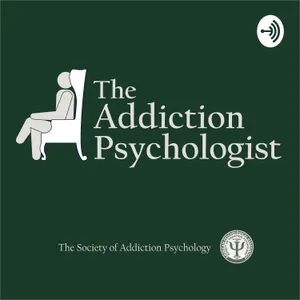
Drs. Noah Emery and Samuel Acuff interview researchers, clinicians, and policymakers in the field of addiction psychology with the hopes of enhancing recovery.
Latest Episodes
The most recent episodes — sign up to get AI-powered summaries of each one.
- Yesterday1h 3m
Dr. James Morris - Addiction-related Stigma
In this episode, Dr. James Morris discusses the basic theoretical foundations of stigma and how it applies to the experience of addiction. Dr. Morris is a Visiting Scholar at London South Bank University. He is also the host of the alcohol 'problem' podcast, which explores the science, psychology and culture of alcohol through conversations with leading experts and people with lived experience. Find out more about his work here. Listen to his podcast here.
- 3 weeks ago1h 6m
Drs. Jennifer Merrill and Mary Beth Miller - Alcohol-induced Blackouts
In this episode, Drs. Jennifer Merrill and Mary Beth Miller discuss the state of the science of alcohol-induced blackouts: what they are, how they occur, and what can we do to prevent them. Dr. Jennifer Merrill is a Professor in the Center for Alcohol and Addiction Studies in the Department of Behavioral and Social Sciences within the School of Public Health at Brown University. Learn more about Dr. Merrill's work here. Dr. Mary Beth Miller is the Millsap Distinguished Associate Professor in the Departments of Psychiatry & Psychological Sciences at the University of Missouri. Learn more about Dr. Miller's work here.
- Aug 17, 20261h 6m
Dr. Eric Pedersen - Mobile Interventions for Veterans
Veterans int eh United States have higher rates of mental health concerns and substance use compared to the general population, yet tend to seek care at lower rates. How can we provide care to people in need outside of the therapy room or the hospital? Dr. Eric Pedersen discusses his work developing mobile interventions to fill a critical gap in care for veterans. Associate Professor of Psychiatry and Behavioral Sciences and Director of Social Behavioral Research at the Institute of Addiction Science in the Keck School of Medicine at USC. You can find out more about his research here.
- Jul 13, 20261h 11m
Dr. David Epstein - Let's agree to agree
Theories of addiction abound: various choice models and brain disease models, all trying to explain why people use substances in ways that appear to harm them. Theories are often pitted against one another. But does this always have to be the case? In this episode, Dr. David Epstein discusses problems that arise from theories using their own definitions for addiction, and ways in which considering various etiological pathways may help us better understand and treat the heterogenous presentations of addictive behavior. Dr. Epstein also enlightens us with a conversation about the association between substance use and boredom. Dr. David Epstein is the Chief of the Real-World Assessment, Prediction, and Treatment Section at the National Institute on Drug Abuse Intramural Research Program. Find out more about his work here.
- Jun 29, 20261h 19m
Dr. Ricky Bluthenthal - Barriers in Access to Healthcare and Harm Reduction Services
Healthcare in the United States can be exceptional—that is, if you have enough resources. What if our systems worked to support people with fewer resources to get the help they needed? Dr. Ricky Bluthenthal discusses systemic barriers impeding access to harm reduction and just how much policy influences health outcomes. Dr. Ricky Bluthenthal is a Distinguished Professor and Chair of of the Department of Population and Public Health Sciences, and the Flora L. Thornton Chair in Preventive Medicine, at the Keck School of Medicine at the University of Southern California. Find out more about his work here.
- Mar 11, 20261h 6m
Dr. Joseph Schacht - Can We Leverage GLP-1s for Substance Use Disorder?
GLP-1s have rapidly increased in popularity, Due to their seemingly remarkable ability to facilitate weight loss. These findings have led to increased interest in understanding whether GLP-1s might be useful for changing other behaviors, such as as substance use. In this episode, Dr. Joseph Schacht discusses the science behind GLP-1 medications and their potential as treatments for substance use disorders, including recent research, mechanisms, and future directions. Dr. Joseph Schacht is an Associate Professor and Co-Director of the Division of Addiction Science, Prevention, and Treatment in the Department of Psychiatry at the University of Colorado Anschutz. Learn more about his work here.
- Feb 9, 202659 min
Dr. Andrea King - Subjective and Biphasic Effects of Alcohol
In this episode of the Addiction Psychologist Podcast, Dr. Andrea King discusses her extensive research on subjective effects of alcohol and their implications for addiction. The conversation covers her journey in addiction research, the Chicago Social Drinking Project, and the importance of understanding individual differences in alcohol response. Dr. King is a Professor of Psychiatry and Behavioral Neuroscience at the University of Chicago and the Director of the Clinical Addictions Research Laboratory. Learn more about her work here. Chapters 01:07 - Dr. Andrea King's Journey in Addiction Research 09:52 - Understanding Subjective Effects of Alcohol 18:07 - The Chicago Social Drinking Project Overview 25:41 - Longitudinal Findings on Alcohol Sensitivity 35:30 - The Complexity of Alcohol Use and Recovery 49:21 - Future Directions in Alcohol Research 52:31 - Take Home Messages for Recovery and Practice
- Jan 6, 20261h 51m
Dr. Hanna Pickard - What would you do alone in a cage with nothing but cocaine?
What would you do alone in a cage with nothing but cocaine? These are the precise experimental arrangements in animal models that served as the foundation for popular models framing addiction as a compulsive brain disease. Yet, follow up studies have demonstrated that, under conditions with alternatives or social connection, rats (and humans) respond differently. In her new book, What would you do alone in a cage with nothing but cocaine, the addiction philosopher Dr. Hanna Pickard artfully integrates philosophy and science to question some of our most prominent models basic assumptions, and offers a new paradigm that responds to the question that is central to the puzzle of addiction: Why do people continue to use drugs despite evident and severe costs that count profoundly against their own good? In this episode, we talk with Dr. Pickard about her new book and its implication for science and practice. Dr. Pickard is a Bloomberg Distinguished Professor of Philosophy, jointly appointed in the Department of Philosophy and the Berman Institute of Bioethics and secondarily appointed in the Department of Psychological and Brain Sciences, in addition to a Krieger-Eisenhower Professor, at Johns Hopkins University. Learn more about her work here. You can purchase her new book, which is released on January 6, 2026, here.
Get The Addiction Psychologist summaries in your inbox
Free AI-powered daily recaps. Key takeaways, quotes, and mentions — in a 5-minute read.
Get Free Summaries →Free forever for up to 3 podcasts. No credit card required.
You Might Also Like
Listeners also like.

PSYCHOACTIVE
Explores humanity's complex relationship with drugs through conversations with users, experts, and critics.

Speaking of Psychology
Explores recent psychological research and its applications to daily life.

Psychiatry & Psychotherapy Podcast
Explores psychiatry and psychotherapy through interviews with experts, trainees, and individuals sharing lived mental health experiences.
The Psychology Podcast
Explores human potential and possibility through conversations with scientists, thinkers, and self-actualized individuals.

We're Out of Time
Discusses the fentanyl crisis, mental health, and resilience through interviews with recovery experts, survivors, and public figures.
Stanford Psychology Podcast
Students interview psychologists about recent research and its real-world applications.

The 12-Step Buddhist Podcast
Explores Buddhist principles and mindfulness practices integrated with 12-step recovery to heal trauma and addiction.

The Peter Attia Drive
Conversations with experts on health, longevity, performance, and critical thinking led by physician Peter Attia.

The Dr. Lee Warren Podcast
A neurosurgeon explores how faith and neuroscience combine to rewire the brain for focus, resilience, and hope.

People Who Read People: A Behavior and Psychology Podcast
Explores human behavior through interviews with experts in psychology, law, sports, and poker.
CSPI Podcast
Conversations with CSPI scholars and experts on topics in science, technology, and politics.

Rise Above with Kevin Lanning
Kevin Lanning hosts discussions with people who overcame addiction, trauma, and anxiety, sharing stories of resilience and recovery.
About The Addiction Psychologist
Drs. Noah Emery and Samuel Acuff interview researchers, clinicians, and policymakers in the field of addiction psychology with the hopes of enhancing recovery.
Customized Recaps
AI-powered recaps with compact key takeaways, quotes, and insights.
Straight to Your Inbox
Get key takeaways from The Addiction Psychologist in a 5-minute read.
Save Hours Every Week
Stay current on your favorite podcasts without falling behind.
Frequently Asked Questions
What is Podzilla's The Addiction Psychologist daily summary?
It's a free AI-powered email that summarizes new episodes of The Addiction Psychologist as soon as they're published. You get the key takeaways, notable quotes, and links & mentions — all in a quick read.
How does the The Addiction Psychologist podcast summary work?
When a new episode drops, our AI transcribes and analyzes it, then generates a personalized summary tailored to your interests and profession. It's delivered to your inbox every morning.
Is this an official The Addiction Psychologist product?
No. Podzilla is an independent service that summarizes publicly available podcast content. We're not affiliated with or endorsed by Samuel Acuff and Noah Emery.
Can I get summaries of other podcasts too?
Absolutely! The free plan covers up to 3 podcasts. Upgrade to Pro for 15, or Premium for 50. Browse our full catalog at /podcasts.
How often does The Addiction Psychologist release new episodes?
The Addiction Psychologist publishes monthly. Our AI generates a summary within hours of each new episode.
What topics does The Addiction Psychologist cover?
The Addiction Psychologist covers topics including Science, Social Sciences. Our AI identifies the specific themes in each episode and highlights what matters most to you.
Start getting The Addiction Psychologist summaries tomorrow morning.
Free forever for up to 3 podcasts. No credit card required.
Free forever for up to 3 podcasts. No credit card required.