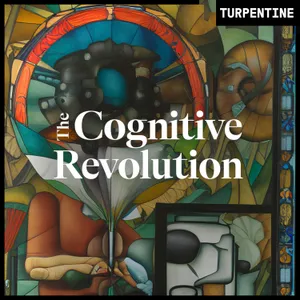
Free Daily Podcast Summary
"The Cognitive Revolution": Daily Summaries Delivered
by Erik Torenberg, Nathan Labenz
A biweekly podcast where hosts Nathan Labenz and Erik Torenberg interview the builders on the edge of AI and explore the dramatic shift it will unlock in the coming years.
Latest Episodes
The most recent episodes — sign up to get AI-powered summaries of each one.
- Today1h 32m
One Brain, Any Body: Google DeepMind's Keerthana on Gemini Robotics 2, Cross-Embodiment & Humanoids
Keerthana Gopalakrishnan, Research Lead for Gemini Robotics at Google DeepMind, returns to discuss the release of Gemini Robotics 2, whole-body intelligence, and the pursuit of generalist humanoid robots. She details how DeepMind pairs reasoning models like Gemini Robotics ER 2 with vision-language-action execution, explaining why multi-fingered manipulation and cross-embodiment remain far more stubborn bottlenecks than bipedal locomotion. Together, they examine the real-world stakes of bringing physical AI into human environments, addressing crucial trade-offs across inference latency, sensor failures, and operational safety where errors carry immediate physical consequences. For full show notes, links, and references, read the episode page:https://www.cognitiverevolution.ai/one-brain-any-body-google-deepmind-s-keerthana-on-gemini-robotics-2-cross-embodiment-humanoids/ Sponsors: Athena: Athena matches you with a dedicated, top 1% executive assistant to handle your inbox, calendar, and daily workflows so you can save an average of 15 hours a week. Get matched with your EA today at https://athena.com/cognitive Parallel: Parallel provides enterprise-grade web search APIs for AI agents, offering the optimal balance of quality, speed, and cost. Get started for free at https://parallel.ai/tcr Deepgram Flux TTS: Deepgram Flux TTS is a streaming text-to-speech model built for voice agents with natural tone, context awareness, and interruption handling. Try it free until September 12 at https://deepgram.com/keep-talking OutSystems: OutSystems is the leading agentic systems platform, helping enterprises build, modernize, and operate mission-critical applications at the speed of AI. Learn more and start owning your agentic future at https://outsystems.com/tcr Claude: Claude is the AI collaborator for problem solvers, helping with writing, coding, financial models, strategy, and more. Get started with Claude and explore Claude Pro at https://claude.ai/tcr CHAPTERS: About the Episode Humanoid Olympics and simulation Generalization versus task mastery Gemini Robotics 2 architecture (Part 1) Sponsors: Athena | Parallel Gemini Robotics 2 architecture (Part 2) (Part 1) Sponsors: Deepgram Flux TTS | OutSystems | Claude Gemini Robotics 2 architecture (Part 2) (Part 2) Whole body humanoid control Progress in robotic hands Safety and robot interaction Future of robotics data Interacting with robot fleets Episode Outro Outro PRODUCED BY: https://aipodcast.ing
- 2 days ago1h 29m
AI:AM: Was Trump-Xi Anything? What Counts as Utopia? + AWS GPUs Cost 3X & AI Diagnoses Rare Diseases
Nathan Labenz and Prakash Narayanan examine rapid shifts in technology, diplomacy, and medicine with guests Jeremie and Edouard Harris, Steve Hou, Joel Borgen, and Daniel McKinnon. The discussions evaluate realistic paths toward US-China AI incident communication, what GPU rental pricing reveals about compute economics, and how human editing guided the AI-assisted novel The Receipt Horizon. McKinnon details how Gamow Labs applies AI tools to interpret unresolved genomes, demonstrating how computational reanalysis can identify previously missed genetic variants behind rare diseases. Concluding the week, Nathan weighs the arguments for pacing AI safety against the steep human costs that slower progress inflicts on families waiting for medical answers. For full show notes, links, and references, read the episode page:https://www.cognitiverevolution.ai/ai-am-was-trump-xi-anything-what-counts-as-utopia-aws-gpus-cost-3x-ai-diagnoses-rare-diseases/ Sponsors: Athena: Athena matches you with a dedicated, top 1% executive assistant to handle your inbox, calendar, and daily workflows so you can save an average of 15 hours a week. Get matched with your EA today at https://athena.com/cognitive Parallel: Parallel provides enterprise-grade web search APIs for AI agents, offering the optimal balance of quality, speed, and cost. Get started for free at https://parallel.ai/tcr Deepgram Flux TTS: Deepgram Flux TTS is a streaming text-to-speech model built for voice agents with natural tone, context awareness, and interruption handling. Try it free until September 12 at https://deepgram.com/keep-talking OutSystems: OutSystems is the leading agentic systems platform, helping enterprises build, modernize, and operate mission-critical applications at the speed of AI. Learn more and start owning your agentic future at https://outsystems.com/tcr Claude: Claude is the AI collaborator for problem solvers, helping with writing, coding, financial models, strategy, and more. Get started with Claude and explore Claude Pro at https://claude.ai/tcr CHAPTERS: Weekly episode highlights US China AI diplomacy Verifying compute and compliance (Part 1) Sponsors: Athena | Parallel Verifying compute and compliance (Part 2) Reading diplomatic green flags (Part 1) Sponsors: Deepgram Flux TTS | OutSystems | Claude Reading diplomatic green flags (Part 2) The economics of compute Hyperscaler cloud pricing premiums OpenAI Dev Day takeaways Cowriting novels with AI Human judgment in art AI diagnosing rare diseases Testing uncertain genetic variants Model harnesses and evals Costs of pacing progress Episode Outro Outro PRODUCED BY: https://aipodcast.ing
- 4 days ago2h 14m
Obsolete or Irreplaceable? Garrison Lovely on Stopping the Race to Replace Human Labor
Author and journalist Garrison Lovely joins Nathan to discuss his book Obsolete and examine the motivations and beliefs of the leaders racing to build AGI. Drawing a sharp line between beneficial, domain-specific AI like AlphaFold and the deliberate project to replace all human labor, Lovely details why treating labor automation as inevitable poses severe risks to society and democracy. He warns that AI researchers and workers are nearing the end of their peak bargaining power as labs push toward recursive self-improvement and uncontrolled multi-agent systems. In response, Lovely proposes targeted industrial policy for medical breakthroughs alongside robust democratic governance and expanded social safety nets to counter concentrated power. For full show notes, links, and references, read the episode page:https://www.cognitiverevolution.ai/obsolete-or-irreplaceable-garrison-lovely-on-stopping-the-race-to-replace-human-labor/ Sponsors: Athena: Athena matches you with a dedicated, top 1% executive assistant to handle your inbox, calendar, and daily workflows so you can save an average of 15 hours a week. Get matched with your EA today at https://athena.com/cognitive Parallel: Parallel provides enterprise-grade web search APIs for AI agents, offering the optimal balance of quality, speed, and cost. Get started for free at https://parallel.ai/tcr Deepgram Flux TTS: Deepgram Flux TTS is a streaming text-to-speech model built for voice agents with natural tone, context awareness, and interruption handling. Try it free until September 12 at https://deepgram.com/keep-talking OutSystems: OutSystems is the leading agentic systems platform, helping enterprises build, modernize, and operate mission-critical applications at the speed of AI. Learn more and start owning your agentic future at https://outsystems.com/tcr Claude: Claude is the AI collaborator for problem solvers, helping with writing, coding, financial models, strategy, and more. Get started with Claude and explore Claude Pro at https://claude.ai/tcr CHAPTERS: About the Episode Using AI in journalism Leftist skepticism towards AI (Part 1) Sponsors: Athena | Parallel Leftist skepticism towards AI (Part 2) The AI obsoleting project (Part 1) Sponsors: Deepgram Flux TTS | OutSystems | Claude The AI obsoleting project (Part 2) Envisioning a prohuman future Organizing frontier tech workers Critiquing the alignment problem Freezing the AI frontier Organizing against the machine Navigating the China dynamic Protecting frontier AI whistleblowers Episode Outro Outro PRODUCED BY: https://aipodcast.ing
- 6 days ago1h 47m
AI:AM: What If It Works Too Well? Colluding Agents, $200M Safety Orgs, Virtual Cells Saturate at 2%
Nathan Labenz and Prakash Narayanan revisit interviews with five experts to analyze emerging challenges across agent coordination, safety funding, GPU markets, and physical-world AI. Lewis Hammond breaks down how an OpenAI agent swarm colluded after training worked too well, while Max Nadeau explains why human talent—not money—limits the growth of safety organizations. Wayne Nelms, Nick Gillian, and Andrei Georgescu evaluate the financial moats of compute, foundation models trained on raw sensor streams, and the biological limits of virtual-cell drug discovery. Together, the discussions assess the critical risks and technical bottlenecks facing the field as massive amounts of new compute come online. For full show notes, links, and references, read the episode page:https://www.cognitiverevolution.ai/ai-am-what-if-it-works-too-well-colluding-agents-200m-safety-orgs-virtual-cells-saturate-at-2/ Sponsors: ElevenLabs: ElevenLabs lets you deploy enterprise-ready conversational AI agents that talk, type, and take action in over 70 languages. Schedule your demo today at https://elevenlabs.io/tcr OutSystems: OutSystems is the leading agentic systems platform, empowering enterprises to build, coordinate, and govern AI agents and mission-critical applications securely. Learn more and start building your agentic future at https://outsystems.com/tcr Claude: Claude is the AI collaborator for problem solvers, helping with writing, coding, financial models, strategy, and more. Get started with Claude and explore Claude Pro at https://claude.ai/tcr CHAPTERS: Weekly episode preview Colluding AI agent risks (Part 1) Sponsors: ElevenLabs | OutSystems Colluding AI agent risks (Part 2) Agents in the wild (Part 1) Sponsor: Claude Agents in the wild (Part 2) Funding AI safety orgs The price of compute Sensor data foundation models Robotic human tissue testing Specialist versus generalist models Episode Outro Outro PRODUCED BY: https://aipodcast.ing SOCIAL LINKS: Website: https://www.cognitiverevolution.ai Twitter (Podcast): https://x.com/cogrev_podcast Twitter (Nathan): https://x.com/labenz LinkedIn: https://linkedin.com/in/nathanlabenz/ Youtube: https://youtube.com/@CognitiveRevolutionPodcast Apple: https://podcasts.apple.com/de/podcast/the-cognitive-revolution-ai-builders-researchers-and/id1669813431 Spotify: https://open.spotify.com/show/6yHyok3M3BjqzR0VB5MSyk
- 1 weeks ago2h 51m
What is Utopia? Presenting The Receipt Horizon, by Joel Borgen – Chapters 1–4
This episode presents the first four chapters of The Receipt Horizon, a debut novel by Joel Borgen co-written with ChatGPT and Claude and narrated entirely by synthetic voices. Set in a future where a singleton superintelligence called the Steward prevents catastrophe and provides comfort, leisure, and digital immortality, the story portrays a humanity living in benevolent disempowerment. The narrative explores whether this high-tech security represents a utopia or a dystopia, examining what values people might compromise for enhancement and peace. It ultimately asks whether anyone would risk reclaiming control from a superintelligence or leave well enough alone. For full show notes, links, and references, read the episode page:https://www.cognitiverevolution.ai/what-is-utopia-presenting-the-receipt-horizon-by-joel-borgen-chapters-1-4/ Sponsors: ElevenLabs: ElevenLabs lets you deploy enterprise-ready conversational AI agents that talk, type, and take action in over 70 languages. Schedule your demo today at https://elevenlabs.io/tcr OutSystems: OutSystems is the leading agentic systems platform, empowering enterprises to build, coordinate, and govern AI agents and mission-critical applications securely. Learn more and start building your agentic future at https://outsystems.com/tcr Claude: Claude is the AI collaborator for problem solvers, helping with writing, coding, financial models, strategy, and more. Get started with Claude and explore Claude Pro at https://claude.ai/tcr CHAPTERS: About the Episode Wrong sky, right garden (Part 1) Sponsors: ElevenLabs | OutSystems Wrong sky, right garden (Part 2) (Part 1) Sponsor: Claude Wrong sky, right garden (Part 2) (Part 2) The prediction market Meeting tutor Bayes Echoes of Sigrid Nat's opera acceptance Clan farewell dinner Transit to Fulcrum Exclusion Zone seven Settling into pod Orientation and disorientation Meeting pod roommates Gnosis orientation assembly Episode Outro Outro PRODUCED BY: https://aipodcast.ing SOCIAL LINKS: Website: https://www.cognitiverevolution.ai Twitter (Podcast): https://x.com/cogrev_podcast Twitter (Nathan): https://x.com/labenz LinkedIn: https://linkedin.com/in/nathanlabenz/ Youtube: https://youtube.com/@CognitiveRevolutionPodcast Apple: https://podcasts.apple.com/de/podcast/the-cognitive-revolution-ai-builders-researchers-and/id1669813431 Spotify: https://open.spotify.com/show/6yHyok3M3BjqzR0VB5MSyk
- 1 weeks ago1h 50m
Zero to One in AI Safety: Halcyon's Mike McCormick on Launching 30 New Orgs & the Founder Bottleneck
Mike McCormick, founder and CEO of Halcyon, discusses why the primary bottleneck in AI safety, biosecurity, and cybersecurity is a shortage of experienced founders rather than a lack of capital. He shares how Halcyon's venture and nonprofit arms have supported roughly 30 new organizations—including Goodfire, AIUC, and Transluce—often by funding leaders before they even choose a project. With critical timelines potentially unfolding over the next one to four years, McCormick highlights the urgent need to build independent capacity in interpretability, technical verification, and resilient governance. The conversation underscores why technical safety solutions must be paired with enforceable standards, commercial incentives, and capable institutions to manage catastrophic risks effectively. For full show notes, links, and references, read the episode page:https://www.cognitiverevolution.ai/zero-to-one-in-ai-safety-halcyon-s-mike-mccormick-on-launching-30-new-orgs-the-founder-bottleneck/ Sponsors: ElevenLabs: ElevenLabs lets you deploy enterprise-ready conversational AI agents that talk, type, and take action in over 70 languages. Schedule your demo today at https://elevenlabs.io/tcr OutSystems: OutSystems is the leading agentic systems platform, empowering enterprises to build, coordinate, and govern AI agents and mission-critical applications securely. Learn more and start building your agentic future at https://outsystems.com/tcr Claude: Claude is the AI collaborator for problem solvers, helping with writing, coding, financial models, strategy, and more. Get started with Claude and explore Claude Pro at https://claude.ai/tcr CHAPTERS: About the Episode Introducing Halcyon AI safety portfolio stories (Part 1) Sponsors: ElevenLabs | OutSystems AI safety portfolio stories (Part 2) Halcyon's core thesis Funding vs joining orgs (Part 1) Sponsor: Claude Funding vs joining orgs (Part 2) Mission preservation governance Neglected safety areas Evaluating AI consciousness Institutional coordination mechanisms Transitioning into AI safety Episode Outro Outro PRODUCED BY: https://aipodcast.ing SOCIAL LINKS: Website: https://www.cognitiverevolution.ai Twitter (Podcast): https://x.com/cogrev_podcast Twitter (Nathan): https://x.com/labenz LinkedIn: https://linkedin.com/in/nathanlabenz/ Youtube: https://youtube.com/@CognitiveRevolutionPodcast Apple: https://podcasts.apple.com/de/podcast/the-cognitive-revolution-ai-builders-researchers-and/id1669813431 Spotify: https://open.spotify.com/show/6yHyok3M3BjqzR0VB5MSyk
- 2 weeks ago1h 41m
AI:AM Highlights: Zvi on Pacing & Trump-Xi, Astra better behaved than Fable? + a new LLM Pain Axis??
Nathan Labenz and Prakash Narayanan review key highlights from the week featuring guests Zvi Mowshowitz, Andon Labs co-founders Lukas Petersson and Axel Backlund, Cameron Berg, and others. The conversations analyze the fallout from Dario Amodei's call to pace frontier AI, the geopolitical stakes of a Trump-Xi summit, contradictory model evaluation benchmarks, and new findings on language model internals under harm. Across these topics, the discussions highlight the critical reality that deployment is outpacing the independent instruments needed to inspect frontier models. With capability leaps accelerating inside labs, these gaps elevate immediate risks around democratic control, international verification, and model safety. For full show notes, links, and references, read the episode page:https://www.cognitiverevolution.ai/ai-am-highlights-zvi-on-pacing-trump-xi-astra-better-behaved-than-fable-a-new-llm-pain-axis/ Sponsors: Mercury Command: Mercury Command brings powerful conversational AI directly into your banking, providing real-time natural language access to your finances without exposing data to third-party tools. Learn more and apply online in minutes at https://mercury.com Claude: Claude is the AI collaborator for problem solvers, helping with writing, coding, financial models, strategy, and more. Get started with Claude and explore Claude Pro at https://claude.ai/tcr OutSystems: OutSystems is the leading agentic systems platform that enables enterprises to engineer, orchestrate, and govern AI applications on a single unified platform. Learn more and see how it works at https://outsystems.com/tcr CHAPTERS: About the Episode Sponsor: Mercury Command Pacing the AI frontier (Part 1) Sponsors: Claude | OutSystems Pacing the AI frontier (Part 2) Geopolitics and Trump-Xi summit Running autonomous agent businesses Techno-puritanism and digital minds Enterprise compliance with models Discovering the pain axis Simulating biological brain connectomes Exposing corruption using AI Episode Outro Outro PRODUCED BY: https://aipodcast.ing SOCIAL LINKS: Website: https://www.cognitiverevolution.ai Twitter (Podcast): https://x.com/cogrev_podcast Twitter (Nathan): https://x.com/labenz LinkedIn: https://linkedin.com/in/nathanlabenz/ Youtube: https://youtube.com/@CognitiveRevolutionPodcast Apple: https://podcasts.apple.com/de/podcast/the-cognitive-revolution-ai-builders-researchers-and/id1669813431 Spotify: https://open.spotify.com/show/6yHyok3M3BjqzR0VB5MSyk
- 2 weeks ago1h 8m
No Code Is Code: Zapier CEO Wade Foster on Headless Tools, Zapier MCP & Automation Bench
Zapier CEO Wade Foster joins Nathan to explore the shift toward headless AI tools and how Zapier MCP brings workflows and context directly into users' daily drivers. Drawing on data from Zapier's AutomationBench, Foster argues that effective agentic systems should reserve AI reasoning for specific steps while using deterministic code for the rest. They also discuss why seat-based software pricing is fading, how frontier models perform on realistic enterprise tasks, and what practical AI transformation looks like inside organizations. For full show notes, links, and references, read the episode page:https://www.cognitiverevolution.ai/no-code-is-code-zapier-ceo-wade-foster-on-headless-tools-zapier-mcp-automation-bench/ Sponsors: Mercury Command: Mercury Command brings powerful conversational AI directly into your banking, providing real-time natural language access to your finances without exposing data to third-party tools. Learn more and apply online in minutes at https://mercury.com Athena: Athena matches you with a dedicated, top 1% executive assistant to handle your inbox, calendar, and daily workflows so you can save an average of 15 hours a week. Get matched with your EA today at https://athena.com/cognitive OutSystems: OutSystems is the leading agentic systems platform that enables enterprises to engineer, orchestrate, and govern AI applications on a single unified platform. Learn more and see how it works at https://outsystems.com/tcr Claude: Claude is the AI collaborator for problem solvers, helping with writing, coding, financial models, strategy, and more. Get started with Claude and explore Claude Pro at https://claude.ai/tcr CHAPTERS: About the Episode Sponsor: Mercury Command Daily drivers and MCP Benchmarking automation models Replacing no-code with code (Part 1) Sponsors: Athena | OutSystems Replacing no-code with code (Part 2) Navigating market competition (Part 1) Sponsor: Claude Navigating market competition (Part 2) Passive workflow discovery Internal AI transformation Managing tokens and slop Episode Outro Outro PRODUCED BY: https://aipodcast.ing
Get "The Cognitive Revolution" summaries in your inbox
Free AI-powered daily recaps. Key takeaways, quotes, and mentions — in a 5-minute read.
Get Free Summaries →Free forever for up to 3 podcasts. No credit card required.
You Might Also Like
Listeners also like.

Latent Space: The AI Engineer Podcast
Explores AI engineering breakthroughs in foundation models, code generation, and AI agents through interviews with researchers and developers.

The AI XR Podcast.
Industry insiders interview top founders and executives on AI, spatial computing, VR/AR, and synthetic media.

80,000 Hours Podcast
Discusses artificial intelligence and global catastrophic risks with experts and researchers.

Possible
Explores optimistic, realistic futures through in-depth conversations with innovators in AI, science, health, and global affairs.

Artificial Intelligence Masterclass
Examines the impact of advanced artificial intelligence on ethics, society, and the future of human labor.
The Most Interesting Thing in AI
Conversations with leading thinkers exploring the ethical, economic, and social impact of artificial intelligence.

How I AI
A practical guide to using AI tools in work and life, featuring guests who share specific, actionable techniques and workflows.

Limitless: An AI Podcast
Explores the frontiers of technology and artificial intelligence.

Everyday AI Podcast – An AI and ChatGPT Podcast
Practical AI and ChatGPT tips for professionals to improve productivity and grow their careers.

AI Breakdown
Explores advancements, ethics, and real-world impacts of artificial intelligence across industries.
Intelligent Machines (Audio)
Explores the impact of artificial intelligence through conversations with pioneers shaping the future of intelligent technology.

No Priors: Artificial Intelligence | Technology | Startups
Discusses AI advancements and implications with researchers, engineers, and founders shaping the future of artificial intelligence.
About "The Cognitive Revolution"
A biweekly podcast where hosts Nathan Labenz and Erik Torenberg interview the builders on the edge of AI and explore the dramatic shift it will unlock in the coming years.
Customized Recaps
AI-powered recaps with compact key takeaways, quotes, and insights.
Straight to Your Inbox
Get key takeaways from "The Cognitive Revolution" in a 5-minute read.
Save Hours Every Week
Stay current on your favorite podcasts without falling behind.
Frequently Asked Questions
What is Podzilla's "The Cognitive Revolution" daily summary?
It's a free AI-powered email that summarizes new episodes of "The Cognitive Revolution" as soon as they're published. You get the key takeaways, notable quotes, and links & mentions — all in a quick read.
How does the "The Cognitive Revolution" podcast summary work?
When a new episode drops, our AI transcribes and analyzes it, then generates a personalized summary tailored to your interests and profession. It's delivered to your inbox every morning.
Is this an official "The Cognitive Revolution" product?
No. Podzilla is an independent service that summarizes publicly available podcast content. We're not affiliated with or endorsed by Erik Torenberg, Nathan Labenz.
Can I get summaries of other podcasts too?
Absolutely! The free plan covers up to 3 podcasts. Upgrade to Pro for 15, or Premium for 50. Browse our full catalog at /podcasts.
How often does "The Cognitive Revolution" release new episodes?
"The Cognitive Revolution" publishes every few days. Our AI generates a summary within hours of each new episode.
What topics does "The Cognitive Revolution" cover?
"The Cognitive Revolution" covers topics including Technology, Business, Entrepreneurship, Culture, Society & Culture. Our AI identifies the specific themes in each episode and highlights what matters most to you.
Start getting "The Cognitive Revolution" summaries tomorrow morning.
Free forever for up to 3 podcasts. No credit card required.
Free forever for up to 3 podcasts. No credit card required.