Free Daily Podcast Summary
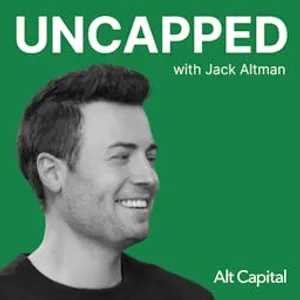
Uncapped with Jack Altman: Daily Summaries Delivered
by Alt Capital
Conversations with people I admire about things I’m genuinely interested in.
Latest Episodes
The most recent episodes — sign up to get AI-powered summaries of each one.
- 5 days ago53 min
Uncapped #58 | David George from a16z
David George is a General Partner at Andreessen Horowitz, where he leads the firm's growth fund. Before a16z, David was a General Partner at General Atlantic. He has been involved in investments including Databricks, Ramp, Harvey, and Figma.We discussed David's framework for thinking about the AI buildout: why the thesis that "it's all going to work" is the right one, and why the answer to almost every question in AI right now is "and" rather than "or." We got into where we actually are in the diffusion of AI into the enterprise, why there are 1.5 billion knowledge workers that AI has barely touched, and what would have to be true for the buildout not to continue. David shared his framework for thinking about product cycles vs. capital cycles, why right now is a 9 or 10 out of 10 on the product side, and why autonomous driving and robotics are massively underappreciated. We also talked about why vibes and narrative matter more than ever for founders, why he never shorts a messianic founder or a product people love, and how he thinks about the scale and ambition of Andreessen Horowitz as a firm.Timestamps: Intro The answer to every AI question is "and" Where we are in the AI buildout What would stop the token buildout Sellers vs. buyers of tokens Frontier labs vs. open source Application investing and the coding blast radius Harvey and legal as a category Consumer AI and where we are From reactive to proactive AI AI, autonomy, robotics, bio health Autonomous driving and why it's underappreciated Robotics and what comes next Benchmark's new growth fund Why growth investing is compelling now Half of private market returns happen at growth Product cycle vs. capital cycle The importance of narrative Why vibes matter Never short a messianic founder How big can Andreessen Horowitz getLinks:https://x.com/DavidGeorge83https://x.com/jaltmahttps://uncappedpod.com/friends@uncappedpod.com
- 3 weeks ago1h 2m
Uncapped #57 | Andrew Feldman from Cerebras
Andrew Feldman is the co-founder and CEO of Cerebras Systems, the AI chip company he founded in 2016 around a single radical insight: that winning in compute requires not incremental improvement but a fundamentally different architecture. Cerebras is the creator of the world's largest chip, the Wafer Scale Engine, and counts the US government, sovereign cloud providers, and OpenAI among its customers.Alongside Eric Vishria from Benchmark, we discussed why Andrew believes that if you are going to attack Goliath, being 10% or even twice as good is not an available strategy and you have to aim for 100x or 500x better. Andrew walked through Cerebras's near-death experience: 18 months of board meetings where the only thing to report was "still can't make it," spending $8 million a month, and what kept the team going. He explained how we go from sand to a ChatGPT answer and why the US semiconductor supply chain is in a precarious position. Andrew shared what most people get wrong about what makes Nvidia great (it’s not CUDA), and why he thinks of himself as a professional David in an ongoing battle with Goliath. Timestamps: Intro Why Andrew started Cerebras in 2016 Eric on why he invested despite having no chip experience Attacking Goliath Near-death experiences and the Valley of Death 18 months of "still can't make it" Solving a 75-year-old compute problem What comes after Wafer Scale The chip supply chain explained Why the US punted a strategic industry How to be a good hardware board member Hardware vs. software investing The pivot from training to inference Specialization vs. flexibility Young product leaders and seasoned hardware engineers External relationships and TSMC The AI infrastructure buildout The data center supply chain Speed creates markets Disaggregation with AMD and AWS What actually makes Nvidia great Near-death experiences and the DNA of a Goliath fighter Andrew's childhood next to William ShockleyLinks:https://x.com/andrewdfeldmanhttps://x.com/cerebrashttps://x.com/ericvishriahttps://x.com/jaltmahttps://uncappedpod.com/friends@uncappedpod.com
- Sep 1, 20261h 2m
Uncapped #56 | Brian Singerman from GPx
Brian Singerman is the co-founder of GPx, a fund launched in 2025 alongside Lee Linden of Quiet Capital. GPx backs elite emerging managers at the early stage, then provides programmatic capital to co-lead later-stage investments when those managers choose to bet their career on a breakout company. Before GPx, Brian was a General Partner at Founders Fund for over a decade, where he was involved in investments including Anduril, Stemcentrx, and Airbnb. He transitioned to Partner Emeritus at Founders Fund in December 2024.We discussed Brian's framework for identifying outlier founders, why he has no checklist, no rubric, and no list of attributes, and why he is always looking for the single thing someone is genuinely better at than anyone else. Brian walked through the Anduril founding team as a case study in complementary spikes, explained what Peter Thiel is actually best at as a venture capitalist, and broke down how Founders Fund made the second most money on Airbnb despite being the 30th investor. We also got into GPx's strategy, why Brian thinks SPVs are dead, his framework for the optimal LP allocation to venture, and when to make a concentration bet.Timestamps: Intro Why you can't have a checklist for founders How Brian looks for spikes How Founders Fund played to its strengths The Anduril founding team Shared beliefs as the foundation of company culture How Brian spent time with founders What Brian is genuinely best at GPx: backing elite emerging managers Why Brian knew he was done with traditional VC "I'm looking for people who could have beaten me in my prime" GPx's structure and the bet-your-career mechanism The optimal LP allocation to venture Why SPVs are dead How Founders Fund made the second most money on Airbnb The concentration strategy How Founders Fund worked and Peter's role What makes Peter Thiel the best venture capitalist in history Solo GPs vs. teams Brian's music studioLinks:https://x.com/briansinhttps://x.com/jaltmahttps://uncappedpod.com/friends@uncappedpod.com
- Jul 28, 202647 min
Uncapped #55 | Tony Xu from DoorDash
Tony Xu is the co-founder and CEO of DoorDash, the leading local commerce platform in the United States. Since co-founding DoorDash in 2013, Tony has built the company into a publicly traded business operating across 40 countries, spanning restaurants, grocery, convenience, retail, and advertising. We discussed how Tony thinks about AI spend and what it means to be an "atoms company" in a world racing to consume tokens. Tony shared his framework for directing AI toward customer outcomes rather than pure exploration, and why DoorDash's physical world infrastructure becomes more valuable as AI agents mature. We also got into the 70-year consumer trend behind DoorDash's growth, how the company built the fastest $1B ads business in history while protecting the consumer experience, why every DoorDash employee still does deliveries to this day, and what Tony means when he says DoorDash is still only single digit percentages of its core market. Timestamps Intro AI spend and token consumption Directing AI toward customer outcomes How DoorDash uses AI today Atoms vs. bits What LLMs can do for the DoorDash app Was the $35 burrito obvious in 2013? The 70-year food consumption trend Consumer trends beyond food Sequencing: seven years on restaurants before groceries Building the ads business 1% better every day Math and humanity Growth levers at scale Speed, drones, and autonomous delivery Why everyone at DoorDash still does deliveries What Tony is most excited about Keeping startup intensity at year 13 Links: https://x.com/jaltma https://x.com/t_xu https://uncappedpod.com/ friends@uncappedpod.com
- Jul 14, 20261h 9m
Uncapped #54 | Sam Blond from Monaco
Sam Blond is the co-founder and CEO of Monaco, an AI-native revenue automation platform built to replace the CRM as the system of record for sales. Before Monaco, Sam was a Partner at Founders Fund and before that one of the most accomplished go-to-market executives in the tech industry, having served as VP of Sales at EchoSign (acquired by Adobe), VP of Sales at Zenefits, and Chief Revenue Officer at Brex. We discussed Sam's entire sales journey from EchoSign through Zenefits, Brex, and Founders Fund, and what he learned at each stop. Sam shared his framework for creating a demand-rich environment and why most founders misdiagnose their revenue problems as conversion issues when they're really pipeline issues. We got into why Sam believes Salesforce faces a classic innovator's dilemma and why the next category leader in sales will be a platform architected with AI in mind from day one. We also covered Monaco's go-to-market playbook, how Sam thinks about pricing when you're selling labor disruption rather than software, and his two pieces of advice for founders who are just starting to sell. Timestamps: Intro Sam's sales journey Echo Sign takeaways Building Zenefits GTM Parker's 0 to $10M thought exercise Creating a demand-rich environment People, brand, and revenue ops Why Sam went to Founders Fund Why Monaco, why now The Salesforce innovator's dilemma Why Monaco chose to be the system of record Disrupting labor Pricing in an AI-native business The Monaco GTM playbook The $60,000 plane experiment Creative campaigns vs. paid advertising What Monaco actually does Advice for founders just starting to sell Abundant pipeline and the right to say no
- Jun 30, 20261h 11m
Uncapped #53 | Trae and Delian from Founders Fund
Trae Stephens is a Partner at Founders Fund and co-founder and Executive Chairman of Anduril Industries, a defense technology company building autonomous systems for the U.S. military and its allies. As of May 2026, Anduril is valued at $61 billion. Prior to co-founding Anduril, Trae was an early employee at Palantir Technologies, where he led teams focused on the intelligence and defense space. Delian Asparouhov is a Partner at Founders Fund and co-founder and President of Varda Space Industries, a company manufacturing pharmaceuticals and advanced materials in microgravity that can't be made as effectively on Earth. Delian was a Thiel Fellow in 2013 after dropping out of MIT computer science. Prior to Founders Fund, he was Chief of Staff and then Principal at Khosla Ventures under Keith Rabois, and before that founded Nightingale, a healthcare startup backed by Y Combinator. We discussed what makes Founders Fund's culture uniquely truth-seeking, from its 1% personal co-invest requirement to a structure with no partner meetings and no residual economics. Trae shared why he believes Series A boards are largely a waste of time, while Delian reflected on working alongside Keith Rabois and eventually striking out on his own. We also explored their concerns about today's market, how Founders Fund navigated the 2021 bubble by concentrating on its two strongest companies, and why macro timing rarely works in venture. The conversation closed on America's semiconductor challenge and why a Taiwan conflict may be more likely than many assume. --- Timestamps: Intro What makes FF unique Lacking EQ can be an asset Delian on working with Keith Why Trae hates board meetings Benchmark vs. Founders Fund Investing as the exhaust of operating Venture as a micro asset class The infamous 2021 offsite Current market sentiment Can you beat the S&P? America's semiconductor blind spot Taiwan and the 90% probability Robotics, humanoids, and the China question --- Links: https://x.com/traestephens https://x.com/zebulgar https://x.com/jaltma https://x.com/EverettRandle https://uncappedpod.com/ friends@uncappedpod.com
- Jun 10, 202656 min
Uncapped #52 | Mike Volpi from Hanabi Capital
Mike Volpi is a General Partner at Hanabi Capital, with a background that spans senior operating roles and nearly two decades of investing. Mike currently sits on the boards of several innovative companies, including Scale AI, ClickHouse, Ferrari, and Confluent, where he is known as a thoughtful sounding board and a steady presence through the highs and lows of startup life. Mike is a retired partner at Index Ventures, where he led investments in category-defining companies across AI, software, and infrastructure. Earlier in his career, he held leadership roles at Cisco, including as Chief Strategy Officer and SVP/GM of Cisco’s routing business, giving him firsthand experience in building products and teams at scale. We discussed what it takes to build a great venture firm in the AI era, why many of venture’s traditional rules are breaking down, and how AI is reshaping software, investing, and company building. We also explored the future of frontier AI labs, robotics, defense tech, and the mindset founders and investors need to adapt to a rapidly changing world. --- Timestamps: Intro Building a venture firm for AI Designing Hanabi Why stage matters less Building a venture brand The role of board seats Attributes of enduring firms The future of AI labs Open-source and neolabs The compute race The future of software Investing in defense From operator to investor Thriving founders today --- Links: https://x.com/mavolpi https://www.hanabi.com/ https://x.com/jaltma https://uncappedpod.com/ --- friends@uncappedpod.com
- May 27, 202643 min
Uncapped #51 | Joe Lonsdale from 8VC
Joe Lonsdale is the Founder and Managing Partner at 8VC, an early-stage venture capital firm managing over $6 billion in capital. In 2003, he founded Palantir (NASDAQ:PLTR), a global software company known for its work supporting US and its allies’ defense and intelligence. Since then, he has founded over a dozen prominent companies, including Addepar, a wealth management platform helping investors manage over $7 trillion, and OpenGov, the leading cloud software provider for local governments which recently sold for $1.8 billion. Joe was an early investor in Anduril, Oculus (acq. FB), Guardant Health (NASDAQ:GH), Oscar (NYSE:OSCR), Illumio, Wish (NASDAQ:WISH), JoyTunes, Blend (NYSE:BLND), Flexport, Joby Aviation (NYSE:JOBY), Orca Bio, Qualia, Synthego, RelateIQ (acq. CRM), Yugabyte, among many others. We discussed what it takes to keep building after success, why AI is accelerating entire industries, and how it could reshape productivity, healthcare, defense, and the economy. Joe also shared his views on investing in hard problems, rebuilding trust in technology, and where America needs to adapt to win in the AI era. --- Timestamps: Intro Why Joe keeps building AI being contrarian and right What Palantir got right Pulling forward innovation AI vs social media Making AI work for America Department of War debate Betting on defense Robotics, bio, and energy Investing in the AI era Peptides opportunity Texas vs California Political correctness --- Links: https://x.com/JTLonsdale https://x.com/jaltma https://8vc.com/ https://uncappedpod.com/ --- friends@uncappedpod.com
Get Uncapped with Jack Altman summaries in your inbox
Free AI-powered daily recaps. Key takeaways, quotes, and mentions — in a 5-minute read.
Get Free Summaries →Free forever for up to 3 podcasts. No credit card required.
You Might Also Like
Listeners also like.

David Senra
David Senra hosts conversations with the greatest living founders.
All-In with Chamath, Jason, Sacks & Friedberg
Four tech investors discuss technology, markets, politics, and poker with candid, in-depth analysis.
The Best One Yet
A daily 20-minute podcast breaking down the three key business stories with sharp, accessible takes.
Monetary Matters with Jack Farley
Expert interviews exploring macroeconomics, financial markets, and monetary policy.
Summation with Auren Hoffman
Explores transformative ideas with leaders in tech, business, and government through in-depth conversations.
Crucible Moments
Stories of pivotal decisions that shaped major tech companies, told by their founders and leaders.

The Vault Unlocked
Founders share hard-earned lessons on what actually worked, what failed, and the pivotal decisions behind growing successful companies.

The Compound and Friends
Expert analysis and candid discussions on business and investing trends with a rotating panel of financial professionals.

Sources with Alex Heath
A podcast offering insider interviews with influential tech leaders and rising entrepreneurs shaping Silicon Valley's future.
The Money Mondays
Business discussions on investments, side hustles, and entrepreneurship with experts, athletes, and influencers in personal settings.
Coffeez with Joe Shalaby
Conversations with entrepreneurs, investors, and cultural figures reveal the real strategies, struggles, and costs behind success.
BG2Pod with Brad Gerstner and Bill Gurley
Bi-weekly discussions on technology, markets, investing, and capitalism with Brad Gerstner and Bill Gurley.
About Uncapped with Jack Altman
Conversations with people I admire about things I’m genuinely interested in.
Customized Recaps
AI-powered recaps with compact key takeaways, quotes, and insights.
Straight to Your Inbox
Get key takeaways from Uncapped with Jack Altman in a 5-minute read.
Save Hours Every Week
Stay current on your favorite podcasts without falling behind.
Frequently Asked Questions
What is Podzilla's Uncapped with Jack Altman daily summary?
It's a free AI-powered email that summarizes new episodes of Uncapped with Jack Altman as soon as they're published. You get the key takeaways, notable quotes, and links & mentions — all in a quick read.
How does the Uncapped with Jack Altman podcast summary work?
When a new episode drops, our AI transcribes and analyzes it, then generates a personalized summary tailored to your interests and profession. It's delivered to your inbox every morning.
Is this an official Uncapped with Jack Altman product?
No. Podzilla is an independent service that summarizes publicly available podcast content. We're not affiliated with or endorsed by Alt Capital.
Can I get summaries of other podcasts too?
Absolutely! The free plan covers up to 3 podcasts. Upgrade to Pro for 15, or Premium for 50. Browse our full catalog at /podcasts.
How often does Uncapped with Jack Altman release new episodes?
Uncapped with Jack Altman publishes biweekly. Our AI generates a summary within hours of each new episode.
What topics does Uncapped with Jack Altman cover?
Uncapped with Jack Altman covers topics including Technology, Business, Investing. Our AI identifies the specific themes in each episode and highlights what matters most to you.
Start getting Uncapped with Jack Altman summaries tomorrow morning.
Free forever for up to 3 podcasts. No credit card required.
Free forever for up to 3 podcasts. No credit card required.