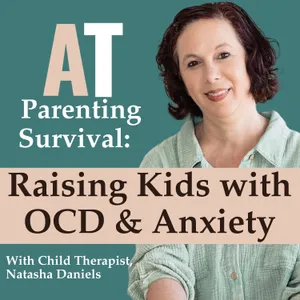
Free Daily Podcast Summary
AT Parenting Survival | Raising Kids with OCD & Anxiety: Daily Summaries Delivered
by Natasha Daniels: Child Therapist, Child Anxiety and Child OCD Expert
If you’re raising a child or teen with OCD or anxiety, you’re in the right place. Parenting a child with OCD can feel confusing, exhausting, and isolating, but you don’t have to figure it out alone. Each week, therapist Natasha Daniels shares practical, evidence-based strategies to help you understand how OCD and anxiety really work, respond in ways that support recovery, and feel more confident as a parent. Whether your child struggles with contamination OCD, intrusive thoughts, reassurance seeking, perfectionism, moral OCD, social anxiety, panic, school refusal, or other anxiety-related challenges, you’ll learn realistic tools you can use at home right away. Drawing from more than 20 years of clinical experience and her own journey parenting children with OCD and anxiety, Natasha breaks down complex topics into clear, compassionate guidance that parents can actually apply. Episodes cover OCD treatment, ERP (Exposure and Response Prevention), reducing family accommodation, managing meltdowns, supporting therapy, and navigating everyday challenges with confidence. Whether you’re newly discovering that your child’s anxiety may actually be OCD, searching for better ways to help, or simply looking for reassurance that you’re not alone, this podcast is here to support you every step of the way. Welcome to AT Parenting Survival: Raising Kids with OCD & Anxiety.
Latest Episodes
The most recent episodes — sign up to get AI-powered summaries of each one.
- 6 days ago33 min
Why is My Child’s OCD So Much Worse at Home?!
Maybe they can go to school, visit friends, or function fairly well outside the house, but the second they get home, OCD seems to take over. That can leave parents wondering why the rules, avoidance, contamination fears, or compulsions seem so much stronger in one environment than another.In this episode, I explain some of the reasons OCD can look different at home, including why home may become a “safer” place for compulsions, how contamination chains can build up over time, and why certain family members or spaces can become incorporated into OCD’s rules. I also talk about what can happen when families start believing that changing locations will solve the problem—and why OCD often finds a way to come along for the ride.If you’ve ever wondered, “Why is their OCD so much worse here?” this episode will help you understand what may be going on beneath the surface and what to do about it.Start building skills at home! Get my new book: OCD Sucks: A Survival Guide***This podcast episode is sponsored by NOCD. NOCD provides online OCD therapy in the US, UK, Australia and Canada. To schedule your free 15 minute consultation to see if NOCD is a right fit for you and your child, go tohttps://go.treatmyocd.com/at_parentingThis podcast is for informational purposes only and should not be used to replace the guidance of a qualified professional.Parents, do you need more support? 🌸 Here’s are resources I offer parents 👇🏻❤️Online classes for parents raising kids with anxiety and OCD:https://atparentingsurvivalschool.comJoin the AT Parenting Community (A membership designed to support parents raising kids with anxiety or OCD):https://atparentingcommunity.comTake one of my FREE webinars:www.Natashadaniels.com/webinarsCheck out my books: www.Natashadaniels.com/books🌸 Other social places I hang out:http://www.facebook.com/ATparentingSurvival http://www.pinterest.com/ATparentingSurvivalhttp://www.instagram.com/ATparentingSurvivalhttp://www.twitter.com/Parentingsurvival Hosted on Acast. See acast.com/privacy for more information.
- 1 weeks ago51 min
Understanding Your Child’s Sensory Needs with Laura Petix
If your child seems to have big reactions to sounds, textures, clothing, food, transitions, or everyday experiences, sensory processing may be playing a bigger role than you realize.In this episode, I’m joined by occupational therapist Laura Petix, from The OT Butterfly and author of The Sensory Code.We talk about how parents can better understand their child’s unique sensory needs, recognize what may be happening underneath challenging behavior and big emotions, and respond with more empathy and less frustration.Laura also shares practical ways we as parents can help accommodate our child’s sensory issues while empowering them to help themselves. Pre-order Laura’s new book, The Sensory CodeWhen you pre-order, you’ll also receive three special bonuses from Laura.***This podcast episode is sponsored by NOCD. NOCD provides online OCD therapy in the US, UK, Australia and Canada. To schedule your free 15 minute consultation to see if NOCD is a right fit for you and your child, go tohttps://go.treatmyocd.com/at_parentingThis podcast is for informational purposes only and should not be used to replace the guidance of a qualified professional.Parents, do you need more support? 🌸 Here’s are resources I offer parents 👇🏻❤️Online classes for parents raising kids with anxiety and OCD:https://atparentingsurvivalschool.comJoin the AT Parenting Community (A membership designed to support parents raising kids with anxiety or OCD):https://atparentingcommunity.comTake one of my FREE webinars:www.Natashadaniels.com/webinarsCheck out my books: www.Natashadaniels.com/books🌸 Other social places I hang out:http://www.facebook.com/ATparentingSurvival http://www.pinterest.com/ATparentingSurvivalhttp://www.instagram.com/ATparentingSurvivalhttp://www.twitter.com/Parentingsurvival Hosted on Acast. See acast.com/privacy for more information.
- 2 weeks ago51 min
How Parents Can Cope While Raising a Child With Anxiety or OCD with Janine Halloran
When you’re raising a child with anxiety or OCD, so much of your energy can go toward helping them cope that it’s easy to forget that you need coping skills too.In this episode, I’m joined by Janine Halloran, author of Coping Skills for Everyone: A Workbook to Get Unstressed, Recharge, and Stay Calm in a Chaotic World, to talk about coping skills for adults.We talk about what it looks like to take care of yourself when parenting feels stressful, overwhelming, or emotionally exhausting, and why the coping strategies that work for one person may not work for another.If you spend a lot of time thinking about what your child needs but rarely stop to think about what helps you regulate, recharge, and keep going, this conversation is for you.Learn more about Janine and her new book: Coping Skills for Everyone: A Workbook to Get Unstressed, Recharge, and Stay Calm in a Chaotic WorldCheck out Janine’s website here.***This podcast episode is sponsored by NOCD. NOCD provides online OCD therapy in the US, UK, Australia and Canada. To schedule your free 15 minute consultation to see if NOCD is a right fit for you and your child, go tohttps://go.treatmyocd.com/at_parentingThis podcast is for informational purposes only and should not be used to replace the guidance of a qualified professional.Parents, do you need more support? 🌸 Here’s are resources I offer parents 👇🏻❤️Online classes for parents raising kids with anxiety and OCD:https://atparentingsurvivalschool.comJoin the AT Parenting Community (A membership designed to support parents raising kids with anxiety or OCD):https://atparentingcommunity.comTake one of my FREE webinars:www.Natashadaniels.com/webinarsCheck out my books: www.Natashadaniels.com/books🌸 Other social places I hang out:http://www.facebook.com/ATparentingSurvival http://www.pinterest.com/ATparentingSurvivalhttp://www.instagram.com/ATparentingSurvivalhttp://www.twitter.com/Parentingsurvival Hosted on Acast. See acast.com/privacy for more information.
- 3 weeks ago44 min
The Three Skills I Wish Everyone With OCD Knew
If I could sit down with every person who has OCD and teach them just three skills, these are the ones I would choose.In this episode, I’m sharing the three skills I come back to again and again when helping people change their relationship with OCD. They’re simple concepts, but learning how to actually use them when OCD is loud, convincing, and demanding is another story.I’ll talk about why these skills matter, how they work together, and why you don’t have to feel confident or ready before you start practicing them.These ideas are also at the heart of my new book, where I break down OCD recovery in a practical, easy-to-understand way without getting lost in clinical jargon.Learn more about my new book, OCD Sucks: A Survival Guide:www.ocdsucks.net***This podcast episode is sponsored by NOCD. NOCD provides online OCD therapy in the US, UK, Australia and Canada. To schedule your free 15 minute consultation to see if NOCD is a right fit for you and your child, go tohttps://go.treatmyocd.com/at_parentingThis podcast is for informational purposes only and should not be used to replace the guidance of a qualified professional.Parents, do you need more support? 🌸 Here’s are resources I offer parents 👇🏻❤️Online classes for parents raising kids with anxiety and OCD:https://atparentingsurvivalschool.comJoin the AT Parenting Community (A membership designed to support parents raising kids with anxiety or OCD):https://atparentingcommunity.comTake one of my FREE webinars:www.Natashadaniels.com/webinarsCheck out my books: www.Natashadaniels.com/books🌸 Other social places I hang out:http://www.facebook.com/ATparentingSurvival http://www.pinterest.com/ATparentingSurvivalhttp://www.instagram.com/ATparentingSurvivalhttp://www.twitter.com/Parentingsurvival Hosted on Acast. See acast.com/privacy for more information.
- Sep 1, 202643 min
How Much Should Parents Be Involved in OCD Treatment?
When your child has OCD, treatment doesn’t happen in a vacuum. OCD comes home with them. It impacts routines, relationships, school, behavior, and often the way the entire family functions.So why are parents sometimes left on the sidelines of OCD treatment?Parents can be one of the most powerful resources in a child’s OCD recovery. You see what happens between therapy sessions, you’re often the one navigating accommodations and difficult behaviors, and you’re in a unique position to help your child practice the skills they’re learning.In this week’s episode of the AT Parenting Survival Podcast, I talk about what healthy parent involvement in OCD treatment can look like, what information you should have, when it makes sense for a therapist to protect your child’s privacy, and some red flags that may indicate you’re being left out more than you should be.I also talk about how this changes once your child turns 18 and how parents can continue to be a valuable source of support while respecting their adult child’s privacy and autonomy.If you’ve ever wondered whether you’re too involved, not involved enough, or whether you should be advocating for a bigger role in your child’s treatment, this episode is for you.🎓 Learn more about my online courses for parents and kids with anxiety and OCD: www.ATparentingsurvivalschool.com⭐ Join the waitlist for the AT Parenting Community: www.ATparentingcommunity.comGet the free PDF handout for this episode at: www.natashadaniels.com/handouts***This podcast episode is sponsored by NOCD. NOCD provides online OCD therapy in the US, UK, Australia and Canada. To schedule your free 15 minute consultation to see if NOCD is a right fit for you and your child, go tohttps://go.treatmyocd.com/at_parentingThis podcast is for informational purposes only and should not be used to replace the guidance of a qualified professional.Parents, do you need more support? 🌸 Here’s are resources I offer parents 👇🏻❤️Online classes for parents raising kids with anxiety and OCD:https://atparentingsurvivalschool.comJoin the AT Parenting Community (A membership designed to support parents raising kids with anxiety or OCD):https://atparentingcommunity.comTake one of my FREE webinars:www.Natashadaniels.com/webinarsCheck out my books: www.Natashadaniels.com/books🌸 Other social places I hang out:http://www.facebook.com/ATparentingSurvival http://www.pinterest.com/ATparentingSurvivalhttp://www.instagram.com/ATparentingSurvivalhttp://www.twitter.com/Parentingsurvival Hosted on Acast. See acast.com/privacy for more information.
- Aug 24, 202646 min
When Your Child Won’t Tell You What Their OCD Is About
One of the hardest parts of parenting a child with OCD is not knowing what’s actually going on. Your child insists they’re “fine,” avoids your questions, or simply can’t explain what they’re experiencing. It can leave you feeling confused, shut out, and unsure of how to help.In this episode, I talk about why so many kids keep their OCD hidden, even from the people they trust most. You’ll learn why silence is often part of OCD itself and why pushing for answers can unintentionally make it harder for your child to open up.We’ll also discuss practical ways to build trust, strengthen communication, and support your child, even when you don’t fully understand what their OCD is about. Because you don’t need to know every intrusive thought to begin helping your child make progress.Mentioned in this episode:Download the free companion handout: www.natashadaniels.com/handouts🎙️ Listen to my related episode, The First Steps to Progress: Trust and Communication: https://childocdtherapist.com/trust-and-communication/🧡 Join the AT Parenting Community for weekly classes, parent support, kid and teen groups, and a growing library of courses: www.atparentingcommunity.com***This podcast episode is sponsored by NOCD. NOCD provides online OCD therapy in the US, UK, Australia and Canada. To schedule your free 15 minute consultation to see if NOCD is a right fit for you and your child, go tohttps://go.treatmyocd.com/at_parentingThis podcast is for informational purposes only and should not be used to replace the guidance of a qualified professional.Parents, do you need more support? 🌸 Here’s are resources I offer parents 👇🏻❤️Online classes for parents raising kids with anxiety and OCD:https://atparentingsurvivalschool.comJoin the AT Parenting Community (A membership designed to support parents raising kids with anxiety or OCD):https://atparentingcommunity.comTake one of my FREE webinars:www.Natashadaniels.com/webinarsCheck out my books: www.Natashadaniels.com/books🌸 Other social places I hang out:http://www.facebook.com/ATparentingSurvival http://www.pinterest.com/ATparentingSurvivalhttp://www.instagram.com/ATparentingSurvivalhttp://www.twitter.com/Parentingsurvival Hosted on Acast. See acast.com/privacy for more information.
- Aug 17, 202637 min
When OCD Makes Your Child’s Thoughts Feel Contaminated
Most people think contamination OCD is about germs, chemicals, or bodily fluids. But what happens when your child feels like a thought, memory, word, person, or experience has become contaminated?In this episode of the AT Parenting Survival Podcast, Natasha Daniels explores mental contamination OCD—a lesser-known but surprisingly common form of OCD that can leave children feeling like something is dirty, ruined, tainted, or unsafe, even though nothing has physically changed.You’ll learn how OCD can convince kids that contamination spreads through intrusive thoughts, memories, emotions, people, places, and even words, leading them to avoid objects, throw things away, mentally “erase” thoughts, or start over in an attempt to feel clean again.In this episode, you’ll discover:What mental contamination OCD is and why it differs from traditional contamination fearsCommon ways thoughts, memories, people, and experiences become “contaminated”Why neutral objects, places, and activities can suddenly feel unsafeThe compulsions kids use to try to get rid of the contaminationWhy reassurance and logic often backfireHow Exposure and Response Prevention (ERP) helps children break free from the cycleIf your child suddenly refuses to wear certain clothes, avoids places that “feel wrong,” throws away perfectly good belongings, or believes a thought has somehow contaminated an object, this episode will help you understand what’s happening, and what actually helps.Want more support?Learn practical, evidence-based strategies to help your child overcome OCD inside my online courses at ATParentingSurvivalSchool.com.Free Podcast HandoutDownload the companion handout for this episode at: NatashaDaniels.com/handoutsVideos on Contamination OCDHow to Handle Your Contamination OCD Trying to Beat Contamination? OCD Doesn’t Play Fair.This podcast episode is sponsored by NOCD. NOCD provides online OCD therapy in the US, UK, Australia and Canada. To schedule your free 15 minute consultation to see if NOCD is a right fit for you and your child, go tohttps://go.treatmyocd.com/at_parenting***This podcast is for informational purposes only and should not be used to replace the guidance of a qualified professional.Parents, do you need more support? 🌸 Here’s are resources I offer parents 👇🏻❤️Online classes for parents raising kids with anxiety and OCD:https://atparentingsurvivalschool.comJoin the AT Parenting Community (A membership designed to support parents raising kids with anxiety or OCD):https://atparentingcommunity.comTake one of my FREE webinars:www.Natashadaniels.com/webinarsCheck out my books: www.Natashadaniels.com/books🌸 Other social places I hang out:http://www.facebook.com/ATpUnderstanding Your Ground Zero in Contamination OCD*** Hosted on Acast. See acast.com/privacy for more information.
- Aug 11, 202644 min
How Chronic Illness Impacts a Child’s Mental Health with Chyllia Dixon
In this episode, I talk with Psychiatric Mental Health Nurse Practitioner Chyllia Dixon about the emotional impact of growing up with a chronic illness and the unique mental health challenges children and families can face along the way.Drawing from both her professional experience and her own childhood experience with Juvenile Myositis, Chyllia shares insight into what chronically ill kids may be carrying emotionally, the importance of helping children stay connected to the present moment, and ways parents can support their child’s mental health while navigating an ongoing medical condition.We also talk about Chyllia’s children’s book, Ellie and the Oh (Ellie the Elephant), which encourages children to slow down and be present in the moment. All profits from the book are donated to the CureJM Foundation to help fund research and bring hope to children living with Juvenile Myositis.Learn more about Chyllia at Hazelwood Mental Health and learn more about the CureJM Foundation at CureJM.org.***This podcast episode is sponsored by NOCD. NOCD provides online OCD therapy in the US, UK, Australia and Canada. To schedule your free 15 minute consultation to see if NOCD is a right fit for you and your child, go tohttps://go.treatmyocd.com/at_parentingThis podcast is for informational purposes only and should not be used to replace the guidance of a qualified professional.Parents, do you need more support? 🌸 Here’s are resources I offer parents 👇🏻❤️Online classes for parents raising kids with anxiety and OCD:https://atparentingsurvivalschool.comJoin the AT Parenting Community (A membership designed to support parents raising kids with anxiety or OCD):https://atparentingcommunity.comTake one of my FREE webinars:www.Natashadaniels.com/webinarsCheck out my books: www.Natashadaniels.com/books🌸 Other social places I hang out:http://www.facebook.com/ATparentingSurvival http://www.pinterest.com/ATparentingSurvivalhttp://www.instagram.com/ATparentingSurvivalhttp://www.twitter.com/Parentingsurvival Hosted on Acast. See acast.com/privacy for more information.
Get AT Parenting Survival | Raising Kids with OCD & Anxiety summaries in your inbox
Free AI-powered daily recaps. Key takeaways, quotes, and mentions — in a 5-minute read.
Get Free Summaries →Free forever for up to 3 podcasts. No credit card required.
You Might Also Like
Listeners also like.
Dysregulated Kids: Science-Backed Parenting Help for Behavior, Anxiety, ADHD and More
A therapist explains the brain science behind children's behavioral and emotional challenges and offers research-based parenting strategies.
Raising Parents with Emily Oster
An economist examines data-driven approaches to modern parenting challenges, from child independence to teen mental health.
Ask Lisa: Untangling Family Life
Psychologist Lisa Damour answers parents' questions about raising tweens and teens with evidence-based advice on mental health, behavior, and family dynamics.
Parenting With Psychology
A clinical psychologist offers practical parenting advice based on psychological research to help families manage challenges and strengthen relationships.

Raising Good Humans
A developmental psychologist discusses evidence-based parenting approaches with experts and parents to support raising resilient, empathetic children.
Respectful Parenting: Janet Lansbury Unruffled
Addresses common parenting challenges with a focus on respectful, trust-based approaches to raising infants and toddlers.

After Bedtime with Big Little Feelings
Honest conversations about modern parenting challenges with practical advice and emotional support from experienced guides.

The Almost Empty Nest—Letting Go, Redefined: Parenting Teens and Finding Yourself Again—with Small Jar Coach
A life coach helps mothers of teens and young adults navigate letting go, build self-trust, and rediscover their identity beyond parenting.

Parenting is a Joke
Comedians share candid stories about parenting and childhood, exploring the chaos and humor of raising kids while questioning if they’re truly fine.
Good Inside with Dr. Becky
A clinical psychologist provides practical guidance for handling common parenting challenges and improving parent-child relationships.

Calm Parenting Podcast
Practical strategies for managing strong-willed, defiant, or neurodivergent children without power struggles or yelling.
Two Parents & A Podcast
Two parents navigate raising kids, building a relationship, and tackling topics from entrepreneurship to dental industry critiques.
About AT Parenting Survival | Raising Kids with OCD & Anxiety
If you’re raising a child or teen with OCD or anxiety, you’re in the right place. Parenting a child with OCD can feel confusing, exhausting, and isolating, but you don’t have to figure it out alone. Each week, therapist Natasha Daniels shares practical, evidence-based strategies to help you understand how OCD and anxiety really work, respond in ways that support recovery, and feel more confident as a parent. Whether your child struggles with contamination OCD, intrusive thoughts, reassurance seeking, perfectionism, moral OCD, social anxiety, panic, school refusal, or other anxiety-related challenges, you’ll learn realistic tools you can use at home right away. Drawing from more than 20 years of clinical experience and her own journey parenting children with OCD and anxiety, Natasha breaks down complex topics into clear, compassionate guidance that parents can actually apply. Episodes cover OCD treatment, ERP (Exposure and Response Prevention), reducing family accommodation, managing meltdowns, supporting therapy, and navigating everyday challenges with confidence. Whether you’re newly discovering that your child’s anxiety may actually be OCD, searching for better ways to help, or simply looking for reassurance that you’re not alone, this podcast is here to support you every step of the way. Welcome to AT Parenting Survival: Raising Kids with OCD & Anxiety.
Customized Recaps
AI-powered recaps with compact key takeaways, quotes, and insights.
Straight to Your Inbox
Get key takeaways from AT Parenting Survival | Raising Kids with OCD & Anxiety in a 5-minute read.
Save Hours Every Week
Stay current on your favorite podcasts without falling behind.
Frequently Asked Questions
What is Podzilla's AT Parenting Survival | Raising Kids with OCD & Anxiety daily summary?
It's a free AI-powered email that summarizes new episodes of AT Parenting Survival | Raising Kids with OCD & Anxiety as soon as they're published. You get the key takeaways, notable quotes, and links & mentions — all in a quick read.
How does the AT Parenting Survival | Raising Kids with OCD & Anxiety podcast summary work?
When a new episode drops, our AI transcribes and analyzes it, then generates a personalized summary tailored to your interests and profession. It's delivered to your inbox every morning.
Is this an official AT Parenting Survival | Raising Kids with OCD & Anxiety product?
No. Podzilla is an independent service that summarizes publicly available podcast content. We're not affiliated with or endorsed by Natasha Daniels: Child Therapist, Child Anxiety and Child OCD Expert.
Can I get summaries of other podcasts too?
Absolutely! The free plan covers up to 3 podcasts. Upgrade to Pro for 15, or Premium for 50. Browse our full catalog at /podcasts.
How often does AT Parenting Survival | Raising Kids with OCD & Anxiety release new episodes?
AT Parenting Survival | Raising Kids with OCD & Anxiety publishes weekly. Our AI generates a summary within hours of each new episode.
What topics does AT Parenting Survival | Raising Kids with OCD & Anxiety cover?
AT Parenting Survival | Raising Kids with OCD & Anxiety covers topics including Fitness, Parenting, Health & Fitness, Kids & Family, Family, Mental Health. Our AI identifies the specific themes in each episode and highlights what matters most to you.
Start getting AT Parenting Survival | Raising Kids with OCD & Anxiety summaries tomorrow morning.
Free forever for up to 3 podcasts. No credit card required.
Free forever for up to 3 podcasts. No credit card required.