Free Daily Podcast Summary
Diet Culture Rebel Podcast: Daily Summaries Delivered
by Bonnie Roney
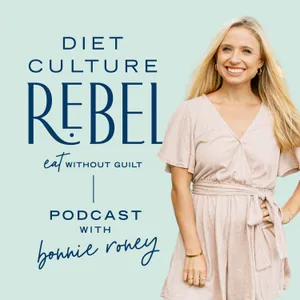
Ready to eat without guilt, support your actual health, and start giving diet culture the middle finger? You’re in the right place. The Diet Culture Rebel podcast is your trusted space for breaking free from food rules, healing your relationship with your body, and learning how to eat without shame, stress, or obsession - while honoring your health in a way that actually feels good. Hosted by Registered Dietitian and Certified Intuitive Eating Counselor Bonnie Roney, each episode delivers straightforward, no-BS guidance to help you ditch diets for good. Through expert interviews and solo deep dives, Bonnie brings you health-promoting, mindset-shifting insights that leave you feeling empowered - not overwhelmed. “I’ve learned what’s happening inside my brain and body, and [Bonnie] gives incredible suggestions and insights on how to start the process of healing my relationship with food.” - Diet Culture Rebel listener With over 200 episodes and thousands of weekly listeners, this podcast is your permission slip to trust your body, reject diet culture, and take your power back - one episode at a time.
Latest Episodes
The most recent episodes — sign up to get AI-powered summaries of each one.
- 2 days ago28 min
275. Can You Love Fitness But Hate Fitness Culture?
“Taking the first step is always intimidating, whether it’s to therapy, or whether it’s to finding a non-traditional fitness space for you to feel safe, heard, and acknowledged in.”You can love fitness, but hate the anti-fat bias and weight stigma that is baked into so much of it. Today I’m talking with Wendy Welsher, a USA Weightlifting Level Two coach, masters athlete, and founder of My Jam, about finding your way back to fitness and building a healthier relationship with movement. Wendy shares her experiences with weight stigma, anti-fat bias, diet culture, and eating disorder recovery, and how she created a safe fitness space for people who have felt excluded or harmed by traditional fitness environments. Wendy reminds us that there isn’t a single right way to move your body, and showing curiosity instead of judgment is the first step toward building strength.✅ What You'll Learn:How anti-fat bias and weight stigma can affect your relationship with exercise and fitness spacesWhy movement doesn't have to be punishmentUsing rest, recovery, fueling, and body awareness to better support your relationship with movementHow strength training can help you feel strong, capable, and more connected to your bodyWhy there is no single "right" way for movement to look, and how to experiment with what works for your bodyPractical ways to find fitness spaces and practitioners that align with your values and help you feel safe, supported, and welcome🔗 Resources:Regain ChastainWendy’s Fat Athlete JournalGrab the Hunger & Fullness Scale Guide at DietCultureRebel.com/hungerfullnessscale and take your next step toward building trust with your body and foodConnect with me over on Instagram at @diet.culture.rebelStruggling with food, but not sure where to start?You don’t have to feel 100% ready to get support. If you're tired of obsessing over food or feeling stuck in the diet cycle, my team of Registered Dietitians is here to help. We offer one-on-one nutrition counseling—and we accept insurance! Spots are limited, so head to https://dietculturerebel.com/insurance to see if we’re covered in your state and learn how to get started.
- 1 weeks ago21 min
274. How to Read a Nutrition Label Without It Feeling Diet-y
“A nutrition facts label for one particular food cannot take the context of your meal or day of eating into account.”Nutrition labels can provide useful information, but they can also become a source of food rules, guilt, and shame when diet culture takes over. In this episode, I’m breaking down where the 2,000-calorie reference point came from, why serving sizes are not recommendations for how much you should eat, and how to use nutrition labels in a way that supports nourishment rather than restriction. We’ll also talk about when nutrition labels can be helpful, when they may be doing more harm than good, and how to let your body’s hunger, fullness, and energy cues have a say in how you eat.✅ What You'll Learn:Why the 2,000-calorie reference point on nutrition labels does not represent the individual energy needs of most peopleWhy a serving size is a reference amount, not a rule or recommendation for how much you should eatHow to use nutrition labels to help you add nutrition, energy, fiber, or protein instead of focusing on what you should restrictHow to recognize when nutrition labels are overriding your hunger and fullness cues or contributing to guilt, shame, and food rulesWhy the information on a nutrition label lacks the context of your individual needs, hunger, fullness, and overall meal or day of eatingHow food neutrality and body attunement can help you decide whether nutrition labels are actually supportive for you right now🔗 Resources:Read the article about Nutrition Facts LabelsGrab the Hunger & Fullness Scale Guide at DietCultureRebel.com/hungerfullnessscale and take your next step toward building trust with your body and foodConnect with me over on Instagram at @diet.culture.rebelStruggling with food, but not sure where to start?You don’t have to feel 100% ready to get support. If you're tired of obsessing over food or feeling stuck in the diet cycle, my team of Registered Dietitians is here to help. We offer one-on-one nutrition counseling—and we accept insurance! Spots are limited, so head to https://dietculturerebel.com/insurance to see if we’re covered in your state and learn how to get started.
- 2 weeks ago38 min
273. How to Set Realistic Expectations When Healing Your Relationship with Food with Dr. Rachel Millner
“As human beings, we’re complex. There’s lots of nuance in all of this. Healing takes time, it’s not linear.”In this replay episode, I’m joined by Dr. Rachel Millner to talk about setting realistic expectations about what healing your relationship with food and your body can really look like. As a psychotherapist and fat activist helping others recover from chronic dieting, disordered eating, and eating disorders, she explains why healing often isn’t linear, and why letting go of food rules can feel so uncomfortable. She also shares what to look for when choosing a therapist, and the three things that were most helpful in her own recovery from food struggles. It’s a realistic but encouraging conversation that will help you see what’s possible when food no longer takes up so much mental space!✅ What You'll Learn:Why healing your relationship with food is not a linear processHow letting go of food rules can feel uncomfortable, even when it’s helping you healWhat realistic expectations for healing your relationship with food and your body can look likeWhat to look for when choosing a therapist or dietitianThe three things that were most helpful in Dr. Rachel’s own recoveryWhat becomes possible when food no longer takes up so much mental space🔗 Resources:Connect with Dr. Rachel Millner at rachelmillnertherapy.com or on IG @drrachelmillnerGrab the Hunger & Fullness Scale Guide at DietCultureRebel.com/hungerfullnessscale and take your next step toward building trust with your body and foodConnect with me over on Instagram at @diet.culture.rebelStruggling with food, but not sure where to start?You don’t have to feel 100% ready to get support. If you're tired of obsessing over food or feeling stuck in the diet cycle, my team of Registered Dietitians is here to help. We offer one-on-one nutrition counseling—and we accept insurance! Spots are limited, so head to https://dietculturerebel.com/insurance to see if we’re covered in your state and learn how to get started.
- 3 weeks ago24 min
272. Food Noise, Food Tracking, and Social Eating: Your Questions Answered
“The goal is not to never think about food. Food is a part of life, we have to think about food sometimes. The goal instead is for food thoughts to take up an appropriate amount of space in your brain, instead of feeling constant, urgent, critical, or all-consuming.”In this Q&A episode, I’m answering three questions that come up often when people are trying to break free from diet culture: Can you reduce food noise without medication? How do you let go of weighing, measuring, and tracking your food? And how can you navigate anxiety and overeating when you’re eating around other people? I’m breaking down how restriction and food rules can contribute to constant thoughts about food, why stepping away from tracking can feel so uncomfortable, and how to begin rebuilding trust in your hunger and fullness cues. I also share practical strategies for social situations, including how to get curious about what’s driving overeating and challenge the beliefs that keep you stuck in the cycle.✅ What You'll Learn:Why food noise can be connected to restriction, inconsistent nourishment, and deeply ingrained food rulesHow to distinguish normal thoughts about food from food noise that feels constant, critical, or all-consumingPractical steps for gradually moving away from weighing, measuring, and tracking food while rebuilding trust with your bodyHow hunger and fullness check-ins can help you develop the skills needed for more intuitive eatingWhy you might overeat or experience food anxiety in social situations, and how to identify what is driving itMindset shifts and practical strategies for eating around other people with more confidence and less pressure to control your food🔗 Resources:Grab the Hunger & Fullness Scale Guide at DietCultureRebel.com/hungerfullnessscale and take your next step toward building trust with your body and foodConnect with me over on Instagram at @diet.culture.rebelStruggling with food, but not sure where to start?You don’t have to feel 100% ready to get support. If you're tired of obsessing over food or feeling stuck in the diet cycle, my team of Registered Dietitians is here to help. We offer one-on-one nutrition counseling—and we accept insurance! Spots are limited, so head to https://dietculturerebel.com/insurance to see if we’re covered in your state and learn how to get started.
- Sep 9, 202639 min
271. Kids and Body Image: What to Say When Your Child Says They Are Ugly with Zoë Bisbing
“That safety to talk to your parent about anything, including bodies and appearances, it’s an essential ingredient to then being able to have body confidence.”I’m joined by Zoë Bisbing, a certified family-based treatment practitioner and founder of Body Positive Therapy NYC, to talk about how we can navigate difficult body image conversations with our kids. We discuss what to say when a child says they feel ugly or fat, why immediately reassuring them may not be the most helpful response, and how curiosity and connection can keep the conversation open. Zoë also shares how to teach kids that their bodies are not the problem when someone makes a hurtful comment, how to talk about body size and differences without reinforcing diet culture, and how these challenging moments can actually help build body image resilience.✅ What You'll Learn:Why reassurance isn’t always the most helpful first responseHow to stay curious and create space for your child to share what’s really going onWays to teach kids that their bodies are not the problem when others make hurtful commentsHow to navigate conversations about body size, shape, and differences without reinforcing diet cultureHow these difficult moments can become opportunities to build body image resilience and recognize potential red flags for disordered eating🔗 Resources:Connect with Zoe on IG @mybodypositivehomeGrab the Hunger & Fullness Scale Guide at DietCultureRebel.com/hungerfullnessscale and take your next step toward building trust with your body and foodConnect with me over on Instagram at @diet.culture.rebelStruggling with food, but not sure where to start?You don’t have to feel 100% ready to get support. If you're tired of obsessing over food or feeling stuck in the diet cycle, my team of Registered Dietitians is here to help. We offer one-on-one nutrition counseling—and we accept insurance! Spots are limited, so head to https://dietculturerebel.com/insurance to see if we’re covered in your state and learn how to get started.
- Sep 2, 202626 min
270. Rethinking Nutrition: 3 Simple Ways to Add More, Not Take Away
“When we approach nutrition from a place of addition rather than restriction, I think it can become so much more approachable, doable, and honestly, fun.”In this episode, I’m sharing a different approach to nutrition: focusing on what you can add rather than what you should cut out. I walk through three of my favorite ways to add nutrition while emphasizing that eating enough comes before focusing on variety or optimization. I also talk about how healing your relationship with food can give you more freedom to consider nutrition alongside taste and satisfaction, rather than letting calories or diet culture make every decision. The goal is to make nutrition feel enjoyable, flexible, and supportive, not restrictive or rigid.✅ What You'll Learn:Why eating enough is the foundation of nutrition before focusing on variety and micronutrientsSimple ways to add plant-based micronutrients to various dishesHow to add more fiber in ways that feel enjoyable and approachable, using every day foodsHow smoothies can be an easy and fun way to combine a variety of foods, flavors, and nutrientsWhy healing your relationship with food allows you to consider nutrition alongside taste, satisfaction, convenience, preferences, and your body's needsHow to approach nutrition without turning it into another rigid set of rules, tracking system, or source of food guilt and anxiety🔗 Resources:My smoothie guide: dietculturerebel.com/smoothieSunfiber supplement: https://amzn.to/3X0dtcxGrab the Hunger & Fullness Scale Guide at DietCultureRebel.com/hungerfullnessscale and take your next step toward building trust with your body and foodConnect with me over on Instagram at @diet.culture.rebelStruggling with food, but not sure where to start?You don’t have to feel 100% ready to get support. If you're tired of obsessing over food or feeling stuck in the diet cycle, my team of Registered Dietitians is here to help. We offer one-on-one nutrition counseling—and we accept insurance! Spots are limited, so head to https://dietculturerebel.com/insurance to see if we’re covered in your state and learn how to get started.
- Aug 26, 202620 min
269. How to Stop Feeling Guilty When You Can’t Exercise
"I really tried to pay attention to the messages my body was giving me in terms of my foot’s recovery, and honor every stage of recovery I was at."After breaking my foot and needing to take an unexpected break from exercise, I realized how much my relationship with food and movement had changed over the years. In this episode, I share five mindset shifts that helped me navigate rest without guilt or spiraling, including understanding my metabolism, finding the positives in slowing down, and listening to my body’s signals. I also talk about how building a healthier relationship with food and exercise has helped me adapt when life changes what my body needs, and why true progress is being able to navigate those unexpected seasons without falling back into old diet culture patterns.✅ What You'll Learn:Why understanding metabolism can help us feel more comfortable fueling our bodies when our activity levels changeHow finding the positives in rest can shift our perspective when we’re unable to exerciseWhat body attunement can teach us about when to slow down, ease back into movement, and respond to our bodies’ signalsHow building our capacity to tolerate difficult emotions can help us cope without relying on restrictive or disconnected eating behaviorsWhy trusting our hunger, fullness, and how food makes us feel can create more confidence around eatingHow a healthy relationship with food and exercise can help us navigate unexpected changes without returning to old diet culture patterns🔗 Resources:Grab the Hunger & Fullness Scale Guide at DietCultureRebel.com/hungerfullnessscale and take your next step toward building trust with your body and foodEpisode 218: What Decades of Overexercising Taught Me About RestConnect with me over on Instagram at @diet.culture.rebelStruggling with food, but not sure where to start?You don’t have to feel 100% ready to get support. If you're tired of obsessing over food or feeling stuck in the diet cycle, my team of Registered Dietitians is here to help. We offer one-on-one nutrition counseling—and we accept insurance! Spots are limited, so head to https://dietculturerebel.com/insurance to see if we’re covered in your state and learn how to get started.
- Aug 19, 202641 min
268. When Your Mom Struggles With Food with Joshua Hills
“Okay, if these people believe in me, then I need to maybe learn to believe in myself, even just a little bit, or at least have hope that things can change.”In this episode, I'm joined by registered associate nutritionist and author Joshua Hills for a heartfelt conversation about how his mom's decades-long battle with anorexia shaped their family, and how recovery has transformed their lives. Together, we explore the far-reaching impact of food struggles, the role diet culture plays in fueling shame and disordered eating, and why healing is about so much more than food. Joshua shares powerful lessons about compassion, open conversations, and hope, reminding us that no matter where we fall on the spectrum of food struggles, recovery can lead to greater freedom, deeper connection, and a life filled with joy instead of fear.✅ What You'll Learn:Why food struggles affect far more than just what we eatHow opening up about food struggles can create connection, reduce shame, and become a powerful step toward healingWhat recovery can make possible, from enjoying family meals and social events to rediscovering excitement for life and foodHow to approach difficult conversations with loved ones about food using compassion, empathy, and healthy boundariesThe role diet culture plays in reinforcing food guilt, body judgment, and the belief that food must be earned🔗 Resources:Connect with Joshua @joshuhillsnutritionRead Joshua’s book You Can Eat ThatGrab the Hunger & Fullness Scale Guide at DietCultureRebel.com/hungerfullnessscale and take your next step toward building trust with your body and foodConnect with me over on Instagram at @diet.culture.rebelStruggling with food, but not sure where to start?You don’t have to feel 100% ready to get support. If you're tired of obsessing over food or feeling stuck in the diet cycle, my team of Registered Dietitians is here to help. We offer one-on-one nutrition counseling—and we accept insurance! Spots are limited, so head to https://dietculturerebel.com/insurance to see if we’re covered in your state and learn how to get started.
Get Diet Culture Rebel Podcast summaries in your inbox
Free AI-powered daily recaps. Key takeaways, quotes, and mentions — in a 5-minute read.
Get Free Summaries →Free forever for up to 3 podcasts. No credit card required.
You Might Also Like
Listeners also like.
Quiet the Diet
A dietitian shares her experience and knowledge to help people heal their relationship with food and make health choices based on self-awareness.

Modern Body Modern Life
Helps women change their mindset around food and body image to achieve lasting weight loss and emotional balance.

Lose Weight Mindfully | weight loss, mindful eating, healthy recipes, emotional eating, boost energy
A dietitian offers mindful eating strategies to lose weight and boost energy without dieting or calorie counting.

Fit + Fueled Life Podcast
A functional nutrition practitioner explores sustainable fat loss, hormone balance, and metabolic health for women over 40.

The Health Revival Show
Explores gut health and hormone optimization through expert insights, practical tips, and real-life success stories.

Heart Led Wellness
Teaches women to heal their relationship with food through nervous system regulation and somatic practices.

High Vibe & Healthy: Gut Health | Functional Nutrition | Whole Foods
A functional nutritionist explores gut health and whole foods to help simplify wellness and boost energy.

Rooted in Wellness with Mona Sharma
A holistic nutritionist blends ancient wellness practices with modern science to address mind, body, and soul health.

Red Pill Your Healthcast
Two healthcare providers discuss overlooked health issues and empower listeners to make informed decisions for their families.
Bite Back with Abbey Sharp
A registered dietitian debunks nutrition myths and shares science-based, enjoyable approaches to food and healthy living.

Dysregulated Kids: Science-Backed Parenting Help for Behavior, Anxiety, ADHD and More
A therapist explains the brain science behind children's behavioral and emotional challenges and offers research-based parenting strategies.

Live Like a Girl with Dr. Mindy Pelz
Dr. Mindy Pelz explores women's health through hormone science and wellness conversations to help women live in rhythm with their bodies.
About Diet Culture Rebel Podcast
Ready to eat without guilt, support your actual health, and start giving diet culture the middle finger? You’re in the right place. The Diet Culture Rebel podcast is your trusted space for breaking free from food rules, healing your relationship with your body, and learning how to eat without shame, stress, or obsession - while honoring your health in a way that actually feels good. Hosted by Registered Dietitian and Certified Intuitive Eating Counselor Bonnie Roney, each episode delivers straightforward, no-BS guidance to help you ditch diets for good. Through expert interviews and solo deep dives, Bonnie brings you health-promoting, mindset-shifting insights that leave you feeling empowered - not overwhelmed. “I’ve learned what’s happening inside my brain and body, and [Bonnie] gives incredible suggestions and insights on how to start the process of healing my relationship with food.” - Diet Culture Rebel listener With over 200 episodes and thousands of weekly listeners, this podcast is your permission slip to trust your body, reject diet culture, and take your power back - one episode at a time.
Customized Recaps
AI-powered recaps with compact key takeaways, quotes, and insights.
Straight to Your Inbox
Get key takeaways from Diet Culture Rebel Podcast in a 5-minute read.
Save Hours Every Week
Stay current on your favorite podcasts without falling behind.
Frequently Asked Questions
What is Podzilla's Diet Culture Rebel Podcast daily summary?
It's a free AI-powered email that summarizes new episodes of Diet Culture Rebel Podcast as soon as they're published. You get the key takeaways, notable quotes, and links & mentions — all in a quick read.
How does the Diet Culture Rebel Podcast podcast summary work?
When a new episode drops, our AI transcribes and analyzes it, then generates a personalized summary tailored to your interests and profession. It's delivered to your inbox every morning.
Is this an official Diet Culture Rebel Podcast product?
No. Podzilla is an independent service that summarizes publicly available podcast content. We're not affiliated with or endorsed by Bonnie Roney.
Can I get summaries of other podcasts too?
Absolutely! The free plan covers up to 3 podcasts. Upgrade to Pro for 15, or Premium for 50. Browse our full catalog at /podcasts.
How often does Diet Culture Rebel Podcast release new episodes?
Diet Culture Rebel Podcast publishes weekly. Our AI generates a summary within hours of each new episode.
What topics does Diet Culture Rebel Podcast cover?
Diet Culture Rebel Podcast covers topics including Nutrition, Fitness, Health & Fitness, Alternative. Our AI identifies the specific themes in each episode and highlights what matters most to you.
Start getting Diet Culture Rebel Podcast summaries tomorrow morning.
Free forever for up to 3 podcasts. No credit card required.
Free forever for up to 3 podcasts. No credit card required.