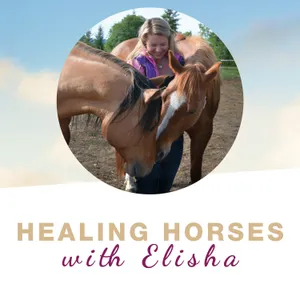
Free Daily Podcast Summary
Healing Horses with Elisha: Daily Summaries Delivered
by Elisha Edwards
A unique podcast solely dedicated to the natural horse. The information covered in each episode is based on thousands of success cases using natural health care, practical wisdom, and science. Learn what horses need to live their best lives – body, mind, and spirit – and how diet, nutritional therapy, natural remedies, and holistic horse-keeping can work for your horse on all levels. Listen in to equip yourself with the knowledge you need to make informed decisions for your horse’s health with less stress, overwhelm, and confusion.
Latest Episodes
The most recent episodes — sign up to get AI-powered summaries of each one.
- Yesterday20 min
109: Waiting for the Other Shoe to Drop - Why Your Horse's Recovery Can Feel So Hard to Trust
Last week, we explored how to tell whether your horse is on the right track, why the original symptom often lasts the longest, and how looking at the whole horse lets you see real changes long before that one symptom catches up. If you haven’t listened to that episode yet, I suggest you listen first, because today’s episode picks up right where we left off.Stay tuned to find out why, even after you start noticing changes, it can still be so hard to trust what you’re seeing.Past DisappointmentsRepeated attempts that fail—supplements, feed, restriction plans, or other approaches—can leave you emotionally, financially, and physically depleted. You may then protect yourself from further disappointment by refusing to believe something is actually working. That could lead you to change a plan just as your horse begins to respond.The Last Thing to ChangeWeight tape and blood work measure specific things at a specific point in time. Your horse can have better energy, digestion, swelling, or movement even when the weight tape hasn’t changed. The most important symptom is often the last thing to change.DoubtInformation from the internet or AI should not override what you observe in your horse. Searching for answers can expose you to stories about horses that failed to improve or had negative outcomes, and those stories might make you question the positive changes you see in your horse.Previous DecisionsMany owners believe they should have recognized their horse’s problems sooner. That can make it difficult to trust their judgment when the horse starts improving.Remember that you did the best you could with what you knew at the time. The instinct that told you something was wrong is the same instinct that helps you recognize improvement.Beliefs Affect DecisionsYou can make changes that support your horse while still believing that recovery is impossible without medication. That belief can move you toward medication.A medication-free approach requires you to trust your decisions, your intuition, and your horse to heal.How to Measure ProgressHorses don’t heal in a straight line, and one rough day does not necessarily mean a setback.So, instead of comparing how the horse was yesterday, compare your horse with its baseline, where it was a month ago or three months ago. That is where real change becomes easier to see.Keep NotesRecord a few observations several times a week. Note changes such as meeting you at the gate, trotting to the water, improved digestion, or changes in movement. Your notes will give you evidence to return to when doubt appears.Patterns MatterPatterns help you distinguish noise from information. A single good day may be a fluke, and a single bad day may not mean anything significant. Consistent changes over several weeks provide a far more useful measure of progress.Your ObservationsKnowing your horse and documenting what you see makes you a better advocate for them. Mention your observations to others involved in your horse’s care rather than relying entirely on their opinions. Your notes can also give your veterinarian information they cannot get from a short appointment.Visible SymptomsYour horse’s energy, demeanor, digestion, swelling, and movement may improve while the most visible symptom remains unchanged. That can make you think you need to do more when the horse’s overall picture is actually improving. Remember that the goal is progress, not immediate resolution of every symptom.Staying the CourseChanging the plan too soon could undo any progress already made.Some parts of recovery take longer than others. In Skip’s case, his hooves recovered the slowest because hoof growth, strengthening, and improvement in laminar integrity take time.Building TrustTrust develops through observations and patterns over longer periods, not just one good day. Look at your horse’s progress over one to three months rather than expecting immediate change.Remember, no two horses are the same, so no two programs should be either—and no one knows your horse the way you do.Links and resources:Connect with Elisha Edwards on her website.Your Horse's Root Cause Reset: Join the waitlistJoin my email list to be notified about new podcast releases and upcoming webinars.
- 1 weeks ago29 min
108: How Do You Know If You Have Your Horse on the Right Track?
Last week, we spoke about supplements, exploring how to select them, how to combine them intentionally, and how a simpler program that focuses on the actual root cause will almost always outperform those built around symptoms.If you haven’t listened to Episode 107 yet, I recommend starting there because we’re picking up right where we left off today, looking at what real healing looks like, why patience matters, and why you shouldn’t give up on a treatment plan before the original symptom has been resolved.The Whole HorseOnce you have a plan based on the underlying cause, assess the improvement across the whole horse, not just the symptom that initially caused concern. The original complaint is often the most advanced problem and can be the last thing to resolve. If you focus exclusively on it, you may miss significant improvements happening elsewhere.Healing Takes TimeRecovery rarely happens in a straight line. There will often be periods of noticeable improvement, pauses, and even temporary setbacks. Years of dysfunction cannot necessarily be reversed quickly, so consistency and patience are essential. The horse’s body needs time and a stable environment in which to recover.Early SignsChanges in the horse’s energy and engagement can appear before any visible physical changes. A horse may greet you more readily, enjoy its food, play with other horses, or show more vitality. Those subtle changes can indicate that things are beginning to shift at a foundational level.Brighter DemeanorMore alert eyes, greater interest in the surroundings, and the return of personality can be meaningful signs of improvement. Horses with equine metabolic syndrome can experience fatigue and what appears to be depression, which can sometimes be mistaken for normal behavior until their vitality begins to return.Valuable InformationMore consistent manure, less gas and bloating, and reduced puffiness can all provide valuable information. In horses with equine metabolic syndrome, digestive improvements are especially important because gut health is closely connected to the broader picture of metabolism, inflammation, detoxification, and absorption.Partial ImprovementSwelling can improve in stages rather than disappearing completely at once. Even partial improvement can be meaningful. A noticeable reduction in swelling during the first week or two may indicate that the horse is moving in the right direction, while further improvement can take time.Metabolic ChangesThe crest and fat pads provide valuable information about what is happening metabolically, but they may be among the last things to resolve completely. A crest may first soften and then gradually decrease, while fat pads can take time to reduce. Hoof RecoveryComfortable movement is important, and appropriate hoof care and support are essential. Hoof inflammation and pain often take longer to resolve, particularly following laminitis, founder, or prolonged hoof problems. You may also need to correct trimming issues and allow the hoof capsule to grow out over time.Don't Abandon a Plan Too QuicklyIf the original symptom is not resolved, it can be tempting to change direction or add more supplements. Before changing course, however, give the existing plan enough time to work, and look for any other improvements that may have occurred.Your Horse's BaselinePay attention to how the horse moves in the morning, how its crest and fat pads feel, how it greets you, how it eats, and how it interacts with its environment. You don’t need to record every detail obsessively. Just become familiar enough with the horse’s baseline to notice any changes. Keep a RecordWhen you record where your horse started and look back periodically, improvements that seemed insignificant at the time can become obvious. With root-cause work, changes can often occur gradually and quietly, so don't abandon your plan simply because the progress you see isn't dramatic.Skip’s ProgressAfter Skip's program was simplified, his digestion relaxed first, followed by improvements in his relationship with food, satiety, energy, inflammation, and fat pads. His hooves took the longest to improve. That explains how focusing on just one symptom can make you miss any other meaningful progress.Different Recovery PatternsImprovements don't happen in the same order or on the same timeline for every horse. So, look for an overall pattern rather than expecting everything to improve at once. Always remember to pay attention to changes across the whole horse, and remember that no two horses will heal in precisely the same way.
- 2 weeks ago32 min
107: Is Your Horse's Supplement Routine Helping Them - or Working Against Them
Last week, we explored why a supplement that produces remarkable results in one horse can make virtually no difference in another, and what that comes down to.If you haven’t listened to that episode yet, go back and listen to it first, because we’re building on it today.SupplementsA full supplement shelf doesn’t necessarily mean you’re doing enough for your horse. Although each product may have been selected initially to address a specific symptom, the combination is unlikely to address the root cause of a horse’s problems.How to Evaluate SupplementsConsider whether or not a supplement is actually helping your horse. Look beyond the testimonials and social media, examine the ingredients and the company’s reputation, and be willing to acknowledge when something isn’t working.Root CausesTreating each symptom with a separate supplement can mean missing the underlying imbalance that is driving the problem. Identifying and addressing the root cause can make some supplements unnecessary.When Supplements Are CombinedDifferent supplements can contain overlapping ingredients, so some may be redundant or unnecessary. Using too many different supplements can also make the digestive system and liver work much harder without providing any additional benefit.Simplifying the ProgramRemoving certain supplements can make owners worry that they aren’t doing enough for their horses. However, simplifying the program helps them focus on addressing what the horse actually needs rather than simply adding more products.Diet and Lifestyle MatterSupplements cannot fix a hungry horse or address stress caused by prolonged hunger. So, owners must consider diet, forage, feeding schedule, lifestyle, and stress levels when addressing a horse’s health issues.Skip’s StorySkip is a 12-year-old Quarter Horse with EMS who was placed on several supplements to address various problems. Despite the owner’s careful efforts, his progress stalled. When evaluating his entire picture, it emerged that stress, due to severe hay restriction, was a key issue. So his supplements were replaced with specific B vitamins and bioavailable magnesium, while his owner focused on providing consistent forage and feeding, a better lifestyle, and nervous-system support. Within weeks, Skip was more relaxed, his vitality improved, and he began to gain muscle and become more active and playful.What to RememberNo two horses are the same, so no two programs should be either. Horses’ programs should always address root causes rather than simply treating symptoms, and supplements should be used for a specific reason.Links and resources:Connect with Elisha Edwards on her website.Healing Horses their Way: Get more information and join the waitlistJoin my email list to be notified about new podcast releases and upcoming webinars.
- 3 weeks ago28 min
106: Why the Same Supplement Works for One Horse and Not Another
Last week, we discussed the hidden cost of chasing symptoms instead of root causes, and the importance of understanding that symptoms are the messengers, not the problem.We’re expanding on that today, looking at why a supplement that works really well for one horse may do very little for another.Choosing a supplementDon't choose a supplement simply because it produced great results for someone else's horse. Look at whether it is actually creating the changes your own horse needs, and if you can't see meaningful progress, be willing to question whether it's the right choice.Don't let an ingredient list or a product's reputation decide for you. Even a clean, high-quality product may not be what your horse needs, so choose according to your horse's individual situation.Don’t assumeDon't assume that horses eating the same hay or living in the same environment have the same nutritional needs. One horse may already be getting enough of a nutrient while another may have a genuine deficiency, so look at the individual horse rather than the shared diet.Additionally, when two horses have the same visible problem, don't automatically treat them in the same way. Look for what is actually driving the problem in each horse, because the underlying causes may be completely different.What to focus onDon't focus only on the nutrients the horse is getting from its diet. Gut health, inflammation, toxicity, other ingredients, and the form of the nutrient can all affect how well a horse can utilize what you're giving them.If a horse fails to respond as expectedIf the horse isn't responding as expected, consider what else may be preventing its improvement. You may need to address its medication, the commercial feed’s suitability, digestive problems, or emotional stress rather than simply adding another supplement.Your horse's historyDon't treat your horse as if it’s starting from scratch. Past illness, stress, age, breed tendencies, medication, and its environment all form part of the picture and can influence how it responds to anything new you introduce.Supplements to avoidHigh-quality supplements can be valuable, but don't expect them to resolve an issue they were not designed to address. If the supplement has no connection to the underlying cause, redirect your time and money toward finding what actually needs attention.Changing directionIf you've given something a fair opportunity and aren't seeing improvement, don't keep on with it simply because you expected it to work. Use the lack of progress as information and reconsider what your horse may need.The underlying causeDon't rely on an anti-inflammatory supplement to resolve pain or inflammation when something else is causing or contributing to the problem. Address the underlying cause so that your supportive measures can have a better chance of helping.Keep lookingWhen your approach doesn't work, don't decide that you've failed or your horse is beyond help. Instead, recognize that particular approach wasn't the right one and keep looking for what your horse actually needs.Individual needsIf something doesn't work for your horse the way it worked for someone else's, don't automatically view that as a failure. Use it as information showing your horse's picture is different and requires another plan that will better suit its individual needs.Links and resources:Connect with Elisha Edwards on her website.Healing Horses their Way: Get more information and join the waitlistJoin my email list to be notified about new podcast releases and upcoming webinars.
- 4 weeks ago30 min
105: The Hidden Cost of Chasing Symptoms Instead of Root Causes
Last week, we discussed what it takes for horses to recover and heal truly.Today, we’re building on that by clarifying the hidden cost of chasing symptoms instead of uncovering the root cause lying beneath them.Recurring symptomsA symptom is often a messenger rather than the actual problem. When a symptom fails to improve, or returns despite trying different products, it tells you that you have not yet identified the underlying cause.Consistency and patienceFinding the right approach for a horse is not quite as simple as following someone else’s plan. Recovery requires attention, consistency, and a willingness to reassess when something does not produce the results you need.History mattersA past illness, stress, age, breed tendencies, medications, environment, and other experiences can all influence how a horse’s body responds to something new. Understanding its history helps to explain why the same supplement can produce very different results in two horses.Quick fixesSymptom-focused treatments can be reassuring when they produce a quick or visible response, but improvement does not necessarily mean the underlying issue has been resolved. Repeatedly changing products can keep you focused on the symptom rather than actually understanding what is driving it.The whole pictureRather than focusing only on what is going into the horse’s feed bucket, consider the whole picture, including its diet, health history, medications, environment, digestion, and any other factors that may influence how it responds.Meaningful changesWhen introducing something new, pay attention to whether or not you notice any meaningful changes in the horse. If the horse shows no noticeable improvement, that approach may not be addressing what it truly needs.Good nutritionGood nutrition is not simply about what goes into the horse’s mouth. Gut health, inflammation, toxicity, and nutrient interactions can all affect how much of what a horse consumes is actually absorbed and available to its body.When something doesn’t workA lack of improvement does not mean that you, your horse, or the product has failed. It provides valuable information, telling you that your approach is not addressing the horse’s particular needs and that it is time to look in a different direction.Links and resources:Connect with Elisha Edwards on her website.Healing Horses their Way: Get more information and join the waitlistJoin my email list to be notified about new podcast releases and upcoming webinars.
- Sep 1, 202625 min
104: Deep Work Requires Downtime - For You and Your Horse's Metabolism
Horses need rest, especially when they’re dealing with metabolic issues. Their nervous systems need it, and in many cases, rest is an important part of their recovery.So today, we’re talking about why deep work requires downtime, and why giving your horse the right kind of rest might be the missing piece in how you’re managing their metabolic health.Rest and RecoveryThe work that genuinely changes an outcome rarely happens in a straight line. Whether you’re helping a student or supporting a horse through recovery, you need periods of focused effort followed by time to rest, process, and integrate. Skipping the recovery phase can ultimately undermine the work itself.Making Better DecisionsBuilding a complete health profile means taking a deep dive into your horse’s history and putting all the pieces together. That can be difficult and emotional, especially when you begin to see how past events may have contributed to the challenges your horse is facing now. It can also create a strong urge to fix the problem immediately. However, taking time to understand the whole picture first helps you make more informed decisions.Subtle ShiftsPaying attention to subtle shifts in your horse—how they respond to their environment, changes in the herd, the seasons, their routine, or their recovery—can reveal patterns over time. Observing those shifts can give you valuable clues about what’s really happening with your horse.ExhaustionWorking harder and constantly pushing yourself doesn’t necessarily create better results. When you’re depleted, you stop noticing subtle details, lose your ability to be genuinely present, and may even begin putting your energy into the wrong things.DowntimeDowntime allows you to integrate information and experiences, gives your nervous system a chance to reset, and lets your body catch up with everything it’s had to handle. Rest is not laziness or falling behind. It is part of maintaining your ability to do meaningful work.True RestA horse can be standing quietly and still be in a state of alertness or survival. True rest allows the horse’s nervous system to stop bracing and scanning so the parasympathetic system can support its digestion, recovery, tissue repair, and hormonal regulation.Restriction vs RecoveryFor horses with EMS or suspected metabolic problems, you may need to look beyond more restriction or control. Those horses also need the right lifestyle, movement, freedom, and periods of rest so their bodies can settle, find their rhythm, and recover.Constant InterventionEvery new supplement, therapy, training session, or other intervention is another input. When you’re constantly applying different things, you have little opportunity to observe what is actually helping the horse, or allowing it to settle and find its own rhythm. Sometimes, just avoiding another intervention is the most appropriate next step.PanicWhen something is wrong, your instinct may be to act immediately. However, your panic could lead to unnecessary or poorly considered interventions. Taking a pause gives you the space to regulate yourself, observe what is actually happening, and ultimately make a more thoughtful decision.The Bigger PictureRather than always adding something to address each new symptom, step back and consider the horse’s history, environment, lifestyle, routines, and other contributing factors. The goal is to create the right conditions for the horse to stabilize and recover, while also providing enough structure, freedom, and connection to support its natural rhythms.Quotes:“Downtime isn't the opposite of deep work. It's part of it.”“A horse that's constantly on, constantly managed, constantly intervened with, never gets the downtime that lets its body process and stabilize.”“You have to put in the effort, then you have to rest.”“You can't skip the rest part and still get the results.”“Root cause before symptom, every time.”“The goal isn't to manage your horse's body into behaving.”“Give yourself and your horse permission for the right kind of rest.”Links and resources:Connect with Elisha Edwards on her website.Join Elisha's email listLearn more about Healing Horses Their Way
- Mar 3, 202654 min
103: When Traditional Care Wasn't Enough: Trish & Teddy's Story
I’m delighted to have Trish Collins, owner of a 30-year-old mare called Teddy, joining me today to discuss the challenges of supporting a senior horse. We unpack the dietary changes and behavioral quirks of a senior horse and discuss the value of natural nutrition, homeopathic remedies, and holistic care. Changing Appetites Senior horses like Teddy often change their preferences or skip meals. Trish learned to stay flexible, offering alternatives and listening to Teddy’s cues rather than forcing a rigid feeding schedule. Even at 30, Teddy now displays curiosity, an enthusiasm for food, and she engages with her environment. Trish noticed how she regained her energy, playfulness, and mental sharpness after implementing a tailored nutrition and care plan. Nutrition A consistent, nutrient-rich diet is essential for senior horses. Proper nutrition supports appetite, digestion, weight maintenance, and overall vitality, even in horses with health issues or on medications. Observing and Responding Trish developed confidence by watching Teddy closely, noting her likes, dislikes, and reactions. This observation has guided adjustments in feed, supplements, and care routines, empowering Trish to make informed decisions. Natural and Complementary Approaches Homeopathic remedies and medicinal plants are important for supporting Teddy’s appetite and vitality. Natural options can complement standard care, especially when conventional solutions are limited. Consistency and Patience Teddy’s progress did not come from one dramatic change. It came from Trish’s steady and consistent changes, made after observing Teddy closely and implementing thoughtful adjustments. Nothing was rushed. Trish learned that improvement often occur quietly and gradually, not all at once. Staying patient, sticking with the plan, and allowing Teddy the time she needed proved far more powerful than constantly changing course. A Stress-Free Environment Stress-free environments are crucial for senior horses to thrive. Allowing Teddy to roam freely and move on her own terms improved her appetite, mood, and overall quality of life. Preventative Strategies The strategies Trish used with Teddy also serve as a model for younger horses. Paying close attention to their diet, movement, and health early on helps to prevent any future challenges and sets them up for longevity. Emotional and Owner Insights Trish found that supporting her own horse felt far more emotional and overwhelming than helping clients with theirs. She learned that staying observant, trusting what she was seeing, and allowing room to adjust the plan helped to calm her anxiety. Trish’s confidence did not come from having all the answers. It came from paying attention, staying flexible, and consistently moving forward. Links and resources: Healing Horses with Elisha: Links and resources Learn more about Healing Horses Their Way 2026 Pay-in-full or 3-month payment plan And for extra flexibility we also have a 6-month payment plan Either way, you’re stepping into an experience that your horse will be grateful for.
- Feb 24, 202646 min
102: What Your Horse's Body Is ACTUALLY Trying to Tell You
Over the last few episodes, we’ve explored topics related to mindset, how we approach our horse’s health, what we notice, and how to interpret what we see. This week, I help you understand what your horse’s body is actually telling you, and, more importantly, how to recognise those signals with clarity and confidence. You Know More Than You Think You’ve accumulated years of data from observing your horse directly. Every time you pick up their feet, watch them move, notice shifts in their energy, skin, coat, eyes, or behavior, you’ve been learning. The problem is that you don’t trust what you’re noticing. Your horse’s body is dynamic, and its chemistry is changing every millisecond, so you need to bring the power back to yourself. Why We Doubt Ourselves Self-doubt usually comes from three patterns. First, we treat our observations as less valid than measurable data, even though lab tests are only snapshots of a moment in time. Second, we confuse observation with diagnosis, jumping from “stiff today” to catastrophic conclusions without enough information. Third, we minimize what we see because we are afraid of what it might mean—both overreaction and avoidance block clear decision-making. Structure Structure includes posture, muscle development, hoof quality, coat condition, body composition, and movement patterns. Those are visible and measurable expressions of deeper processes. Structural changes are often a result of diet, stress, movement-related issues, environmental issues, toxicity, and time. A dull coat, dropped topline, or poor hoof quality reflects what has been happening internally over weeks, months, or longer. Function Function is how the horse moves through the world. It includes energy levels, behavior, digestion, respiratory patterns, appetite, and emotional expression. Functional shifts usually occur before structural breakdown. Subtle changes in manure quality, food aggression, pacing, anxiety, coughing, or stiffness are often early signals. Addressing those signs early prevents bigger problems later. Connection Connection reflects emotional well-being, trust, and a sense of safety. Changes in willingness, engagement, affection, or reactivity may signal physical discomfort or unmet needs. Health challenges such as chronic pain or metabolic issues can alter a horse’s emotional state. A shift in connection may indicate a hidden health issue. From Observation to Understanding Clear thinking requires separating observation from interpretation. An observation is specific and descriptive. A diagnosis requires evidence. Patterns matter more than single moments. When did it start? What makes it better or worse? Is it constant or intermittent? Patterns reveal root causes and guide informed action. The Whole Horse Perspective Every symptom exists within a system. Stiffness may be related to limited movement, cold weather, circulation, trimming, or management practices. Digestive changes may be due to stress, diet, or environmental factors. Viewing the whole horse allows you to respond thoughtfully rather than react fearfully. Framework Builds Confidence Observation without structure leads to anxiety. Observation within a framework leads to clarity. When you record patterns, make thoughtful adjustments, and monitor outcomes, your confidence grows naturally. You begin making decisions based on knowledge instead of fear. Knowledge and Action Work Together Understanding how the horse’s body systems connect strengthens your decision-making. You do not need perfect certainty before taking action. Thoughtful changes, followed by observation, build experience and trust in your own judgment. Community Reduces Isolation Health journeys can feel lonely. Shared learning, pattern recognition, and collaborative problem-solving provide perspective and reassurance. Noticing how other horses move through similar challenges helps normalize recovery and refine expectations. Trust Is the Foundation Your horse communicates through structure, function, and connection every day. The goal is not perfection. It is presence, awareness, and the willingness to trust what you see. Confidence grows when you combine observation, understanding, and action. Links and resources: Connect with Elisha Edwards on her website. Masterclass: How to Trust Your Horse Instincts with Confidence (even when everyone else disagrees)
Get Healing Horses with Elisha summaries in your inbox
Free AI-powered daily recaps. Key takeaways, quotes, and mentions — in a 5-minute read.
Get Free Summaries →Free forever for up to 3 podcasts. No credit card required.
You Might Also Like
Listeners also like.
Straight from the Horse Doctor's Mouth
A veterinarian and host discuss horse healthcare and proper care for all horse owners.

Listening to the Horse by Elaine Heney | Equine training, education, psychology, horsemanship, groundwork, riding & dressage for the equestrian. With horse care, health, ownership, knowledge, communication, mind, connection & behaviour information tips.
Teaches horse training and horsemanship through groundwork, riding, and behavioral understanding to build trust and connection.

DarkHorse Podcast
Biologists Bret Weinstein and Heather Heying apply evolutionary theory to analyze culture, science, and societal challenges.

The Health Continuum
High-performing professionals learn science-based health strategies to sustain energy, focus, and resilience in demanding careers.
The Evolving Wellness Podcast with Sarah Kleiner Wellness
Explores circadian rhythms, hormone balance, and nutrition through science-based insights for holistic wellness.

Rooted in Wellness with Mona Sharma
A holistic nutritionist blends ancient wellness practices with modern science to address mind, body, and soul health.

Treated with Dr. Sara Szal
Dr. Sara Szal explores holistic health solutions through conversations with experts and patients seeking mind, body, and soul healing.

Paul Saladino MD podcast
A physician explores the root causes of chronic disease and optimal health through science and personal experimentation.

Phenomena Podcast: The Science & Stories of Energy Healing
Explores scientific research and personal stories behind energy healing practices like reiki and qigong.

hol+ with Dr. Taz MD | The Future of Medicine is Holistic
A physician explores holistic health through the interconnected physical, mental, emotional, energetic, and social dimensions of wellness.

Herbs with Rosalee
Each episode explores a seasonal plant’s uses in herbalism, food, and natural health with practical guidance for daily wellness.

Horse Show Bestie
A trainer and amateur discuss horse showing, offering tips and personal experiences in the Quarter Horse and Paint Horse community.
About Healing Horses with Elisha
A unique podcast solely dedicated to the natural horse. The information covered in each episode is based on thousands of success cases using natural health care, practical wisdom, and science. Learn what horses need to live their best lives – body, mind, and spirit – and how diet, nutritional therapy, natural remedies, and holistic horse-keeping can work for your horse on all levels. Listen in to equip yourself with the knowledge you need to make informed decisions for your horse’s health with less stress, overwhelm, and confusion.
Customized Recaps
AI-powered recaps with compact key takeaways, quotes, and insights.
Straight to Your Inbox
Get key takeaways from Healing Horses with Elisha in a 5-minute read.
Save Hours Every Week
Stay current on your favorite podcasts without falling behind.
Frequently Asked Questions
What is Podzilla's Healing Horses with Elisha daily summary?
It's a free AI-powered email that summarizes new episodes of Healing Horses with Elisha as soon as they're published. You get the key takeaways, notable quotes, and links & mentions — all in a quick read.
How does the Healing Horses with Elisha podcast summary work?
When a new episode drops, our AI transcribes and analyzes it, then generates a personalized summary tailored to your interests and profession. It's delivered to your inbox every morning.
Is this an official Healing Horses with Elisha product?
No. Podzilla is an independent service that summarizes publicly available podcast content. We're not affiliated with or endorsed by Elisha Edwards.
Can I get summaries of other podcasts too?
Absolutely! The free plan covers up to 3 podcasts. Upgrade to Pro for 15, or Premium for 50. Browse our full catalog at /podcasts.
How often does Healing Horses with Elisha release new episodes?
Healing Horses with Elisha publishes weekly. Our AI generates a summary within hours of each new episode.
What topics does Healing Horses with Elisha cover?
Healing Horses with Elisha covers topics including Science, Kids & Family, Animals, Family, Natural Sciences, Pets & Animals. Our AI identifies the specific themes in each episode and highlights what matters most to you.
Start getting Healing Horses with Elisha summaries tomorrow morning.
Free forever for up to 3 podcasts. No credit card required.
Free forever for up to 3 podcasts. No credit card required.