Free Daily Podcast Summary
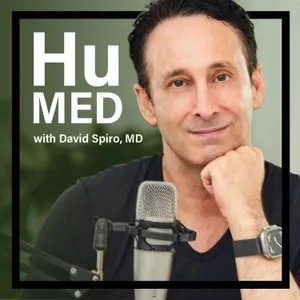
HuMed with David Spiro, MD: Daily Summaries Delivered
by David Spiro, MD | Doctor Podcast Network
HuMed goes beyond diagnoses and procedures to explore the profound human experiences of medical professionals. Join Dr. Spiro as he engages in deep, candid conversations with fellow doctors, nurses, and other healthcare providers. They share the often-unseen realities of their work in the demanding hospital environment – the challenging cases, the emotional toll, and the ethical dilemmas they navigate daily.
Latest Episodes
The most recent episodes — sign up to get AI-powered summaries of each one.
- 2 days ago42 min
Kidney Transplant Physician Dr. Aditya Pawar: "It Started From a Mistake"
A resident on night call writes one word in a chart to describe his patient's husband, a man in his 90s: "senile." He thinks it means "very old." The note gets corrected, but the word stays in the edit trail, and a few days later the record shows the patient has read it. Every instinct tells him to leave it alone. He calls the family to apologize anyway.Dr. Aditya Pawar is a transplant nephrologist at Beth Israel Deaconess Medical Center and Harvard Medical School. That phone call became "Safe Space," his essay in The New England Journal of Medicine. He joins Dr. David Spiro to talk about what the couple said to him on that call, why it took him years to understand it, and who a clinician's "safe space" really protects.In this episode:- The apology he almost didn't make, and why he says it would be just as hard tomorrow- Why "safe space" in medicine often protects the doctor, and what a "brave space" with patients looks like- Telling a patient you don't yet know the best approach- Practicing in India versus the U.S.: five-minute visits that never really end, and seeing your patients at the grocery store- Why he calls paternalism "a protective mechanism"- What he says to kidney patients who won't let their own child donate- What he tells first-year medical students about the 20-minute visit that needs an hour and twenty- His uncle's lesson from Sunday evenings seeing patients in a village in India: "As a physician, we've always lost"- Six hugs from a grieving family after one of his first codesDr. Spiro also shares what it was like to lead his team's debrief after a child died in his pediatric ER.Read the essay: "Safe Space," N Engl J Med 2026;395:840-843. https://doi.org/10.1056/NEJMp2518528Chapters00:00:00 "As a physician, we've always lost"00:00:20 Meet Dr. Aditya Pawar00:02:03 "It started from a mistake"00:02:33 Night call, a couple in their 90s, and one word00:04:27 The phone call he almost didn't make00:05:11 What the couple meant by "safe space"00:06:37 Parents in the room during a resuscitation00:08:20 Who is the safe space for?00:10:03 From safe spaces to brave spaces00:12:55 Medicine in India versus the U.S.00:15:11 Sharp boundaries, and crossing the line00:17:43 "Every single cell of my body is telling me don't do it"00:21:14 What safe space meant as a child in India00:23:10 Family, elder care, and what gets lost00:28:16 Organ donation: "Do not take away that decision from me"00:30:00 Teaching first-year medical students00:34:26 Dr. Spiro: the debrief after a child dies00:38:06 His uncle, Dr. S.S. Jamwal00:39:49 One of his first codes as a resident00:41:11 "This concept of death, you have to get comfortable with it"00:42:11 Six hugs from a grieving family00:42:44 ClosingIf this episode meant something to you, follow HuMed on Apple Podcasts and send it to one colleague who needs to hear it.
- 5 days ago45 min
Cancer Surgeon Dr. James Wittig: "I Was Hanging On by a Thread"
Dr. James Wittig built his career saving children's limbs from cancer. Then a heart scan he asked for himself led to a catheterization that found a 99% blockage in his left anterior descending artery. "I was hanging on by a thread."Dr. Wittig is an orthopedic oncologist and sarcoma surgeon with more than 25 years in limb-sparing surgery for bone and soft tissue tumors in children and adults. In this conversation with Dr. David Spiro, he traces his path from Paterson, New Jersey, where his father was a police officer and his mother a hairdresser, to the mentor who drew him into limb-sparing surgery for childhood bone cancer.He describes chairing a department of 120 orthopedic surgeons while starting a residency program, sleeping about five hours a night for 30 years, and the blood pressure and cholesterol numbers that kept getting explained away. He talks about the stretch of roughly 180 hours of surgery in two weeks that ended in kidney failure, his decision to resign, the chest pain on the treadmill, and the procedure where he went into ventricular tachycardia before three stents opened the artery. He also shares what he would tell his younger self, why doctors treating doctors can be a trap, how he rebuilt his sleep, and why he is now studying hypnosis and mind-body medicine for cancer patients. Cold Open: "Hanging On by a Thread" Welcome & Meet Dr. James Wittig Growing Up in Paterson, New Jersey The Mentor Behind Limb-Sparing Surgery From Amputation to Saving the Limb Why Bone Cancer in Kids Gets Missed The Heart Scan He Asked For 80-Hour Weeks and Five Hours of Sleep A 70% Blockage 180 Hours of Surgery, Then Kidney Failure Chest Pain on the Treadmill 99% Blocked V-Tach on the Table and Three Stents What He'd Tell Himself 20 Years Ago Solo Practice, On Call 24/7 Purpose, Prayer, and Learning to Say No Why Nobody Said "This Is Too Much" The Trap of Doctors Treating Doctors Finding a Mentor Who Advocates for You "It Wasn't Human" Life After the OR: Hypnosis and Mind-Body Medicine How He Rebuilt His Sleep Getting the Phone Out of the Bedroom His Advice for Physicians in Their 50s New York vs. New Jersey & GoodbyeContact Dr. Wittig:JamesCWittigMD.comTumorSurgery.orgMandalaMedicalGroup.comCheck out the Inside HuMed Newsletter: https://www.humedpod.com/inside-humedThis episode is one physician's personal story and is not medical advice.It is also available on video on Apple Podcasts. Follow HuMed so you never miss an episode.
- 1 weeks ago46 min
Allergist Dr. Lauren Fine: "Stop Asking for Permission"
Dr. Lauren Fine had a thriving allergy practice, a faculty position and patients lined up at the door, and she still felt she needed someone's permission to change. Her answer now: "Stop asking other people for permission."Dr. Fine is an allergist and immunologist, a teacher, a clinician at the VA in the Fort Lauderdale area, and a life coach. In this conversation with Dr. David Spiro, she tells the story of a patient who casually asked her to check a biopsy result that wasn't hers to deliver, and what happened when she opened his chart. She talks about why she prefers shared decision-making to "doctor knows best," how she delivers bad news by letting patients say it first, and why, for her, burnout comes down to losing connection with patients. She also explains why reinventing yourself is "like erasing a chalkboard," what a life coach actually does (hint: it isn't giving advice), and why nobody hands out awards for answering a portal message at 9 p.m. She closes with her view on rising food allergies, how she introduced peanuts to her own kids early, and why community matters more than balance. Cold Open: "My Heart Just Sunk" Welcome & Meet Dr. Lauren Fine The Biopsy Result She Wasn't Supposed to Read A Road Trip Across America Paternalism vs. Shared Decision-Making Why She Chose to Tell Him How She Delivers Bad News Getting to Know Patients as People Burnout Is About Connection Why Life Coaching? Stop Asking for Permission Reinvention Is Like Erasing a Chalkboard What a Life Coach Actually Does Why We All Need to Slow Down Phones, Boundaries, and the 9 PM Email Diet, Processed Food, and Disease Are Food Allergies Really Rising? Peanuts and Early Introduction Allergist, Teacher, Coach, Mom: How She Does It Community and Giving and Receiving Love Closing ThoughtsThis episode is also available on video on Apple Podcasts. Follow HuMed so you never miss an episode.
- 1 weeks ago56 min
ER Physician Dr. Mark Pappadakis: "Medical School Rejected Me Three Times"
Rejected from medical school. Failed anatomy. Failed his emergency medicine boards by two points, then by one. Today Dr. Mark Pappadakis teaches at the medical school that turned him down three times.Emergency physician Dr. Mark Pappadakis joins Dr. David Spiro, MD for an honest conversation about failure, resilience, and the human side of medicine. He shares:- Why he applied to only three medical schools, and what failing a post-bacc year taught him- How five years as an ER tech made him fall in love with emergency medicine- Getting off a waitlist three weeks before classes started- Failing his boards twice by a total of three points, and passing on the third try- Why he tells patients "I don't know," and why a bounce-back can be a success- A mentor's line that stayed with him: "All of us carry a graveyard"- Imposter syndrome, self-doubt, and being the doctor to his own parents during COVID- Why he started his own podcast to fight medical misinformationDr. Pappadakis trained at Touro College of Osteopathic Medicine and completed his emergency medicine residency at Metropolitan Hospital in New York City, where he served as chief resident. He is a clinical assistant professor of emergency medicine, serves on the board of the Bucks County Medical Society, and hosts the JAFERD Cast podcast.Chapters0:00 The school that rejected him three times1:47 A story about failure3:55 The post-bacc year and failing anatomy5:50 Five years as an ER tech10:15 Off the waitlist three weeks before classes16:21 Failing the boards by two points, then one18:28 Passing the boards and going full circle20:09 MD vs DO and the Caribbean option24:16 How failure made him a better doctor29:06 Telling patients "I don't know"33:54 "All of us carry a graveyard"42:40 Failure, marriage, and family46:04 Imposter syndrome and self-doubt47:15 Why he started the JAFERD CastIf this episode meant something to you, follow HuMed here on Spotify or Apple Podcasts and leave a rating. It helps other clinicians find the show.
- 2 weeks ago50 min
Cardiologist Dr. Jaya Mallidi: "The Trust I Had With the Universe Lay Broken"
"How can a child be taken away from the mother?" When cardiologist Dr. Jaya Mallidi lost her daughter, Saachi, at 19 weeks, the trust she'd always had with the universe "lay broken like a vase in an empty room."In this deeply honest conversation, Dr. Jaya Mallidi joins host Dr. David Spiro to explore the human side of medicine from the other side of the bed. She shares surviving a rare, life-threatening hemothorax from thoracic endometriosis, leaving the interventional cardiology she loved, enduring nine cycles of IVF, and grieving a pregnancy loss while a profession built on duty pulled her back to work a week later. She also shares how she slowly rebuilt her faith — through the Japanese image of Jizo, a practice of "forgiving the universe," and a hard-won belief that in medicine, presence matters more than any prescription.A conversation about grief, resilience, womanhood in medicine, and learning that it's okay to take up space.Dr. Jaya Mallidi is a Professor of Clinical Medicine and cardiologist at Zuckerberg San Francisco General Hospital, where she serves as Director of Clinical Cardiology and Site Director for the UCSF Cardiology Fellowship. Her JAMA "A Piece of My Mind" essay reflects on the loss of her daughter and how medicine and society recognize — or fail to recognize — the grief of pregnancy loss.In this episode:00:00 "My trust with the universe lay broken"03:40 Becoming the patient: a rare, dangerous hemothorax06:10 Thoracic endometriosis and two lung surgeries08:54 Leaving interventional cardiology and finding new purpose11:11 Losing Saachi at 19 weeks16:09 Why doctors return to work too soon19:14 Medicine's missing backup system22:24 The IVF journey: hope, failure, and nine cycles28:36 When social media makes grief worse30:48 A spiritual reckoning: finding a mental model37:03 Jizo: the image that finally gave her peace39:00 "Forgiving the universe"41:09 How grief changed her as a teacher and clinician45:07 A marathon, not a sprint47:47 Presence over prescriptions in the age of AIHuMed unveils the human side of medicine — new conversations every week. If this episode moved you, share it with a colleague, and please follow and leave a rating on Apple Podcasts. It genuinely helps other clinicians find the show.
- 2 weeks ago37 min
Psychiatrist Dr. Paniz Johari: When a Patient Dies — Grief, Guilt & Radical Acceptance
"One of our social workers knocked on the door and said, so-and-so killed himself. I was just in shock."What do you do with the rest of your day after that? Psychiatrist Dr. Paniz Johari joins Dr. David Spiro to talk about one of the least-discussed parts of medicine — losing a patient, and carrying it afterward.Dr. Johari, an attending psychiatrist at Mather Hospital / Northwell Health, wrote a JAMA "A Piece of My Mind" essay called "On Losing a Patient" that moved David enough to reach out. Together they trace its thread: the shock and disbelief, replaying an encounter that felt "ordinary," the guilt of wondering what you missed, and the long work of separating confidence from certainty — what she calls "radical acceptance," and why accepting the limits of our control "is not surrendering."They also get into how psychiatrists weigh whether a patient is safe to go home, why she chose the field, what's happened to mental health since COVID, the roles of sleep, exercise, and diet, and the stigma that still surrounds psychiatric care.▶ Follow HuMed on Apple Podcasts so you never miss an episode — it's the single best way to support the show.Chapters:0:00 Intro — Dr. Paniz Johari and her essay1:37 Losing a patient: the story3:12 Writing as catharsis4:36 Hearing the news7:41 Assessing who's safe to go home11:09 "How ordinary it felt"14:34 Why she chose psychiatry17:25 Mental health since COVID21:13 Sleep, wearables, and mood25:58 The stigma around psychiatric care27:49 Therapy, exercise, and self-care34:04 "Accepting is not surrendering"If you or someone you know is struggling, call or text 988 — the Suicide & Crisis Lifeline, available 24/7 in the US.HuMed with David Spiro, MD — unveiling the human side of medicine. New episodes weekly on Apple Podcasts, Spotify, and YouTube.podscan_rLPAXfcJVELgUhwcd66rLVyErpUcGFTV
- 3 weeks ago38 min
Dr. Lois Lee: Protecting Kids from Gun Violence, and the Fight for Their Health
What if the biggest threats to a child's life are also the most preventable? Dr. Lois Lee — pediatric emergency medicine physician and researcher at Boston Children's Hospital, professor of clinical pediatrics at Harvard Medical School, and a candidate for AAP president-elect — joins Dr. David Spiro on HuMed to talk about the work of keeping kids safe: from gun violence and injury prevention to vaccines, Medicaid, and the advocacy that changes policy.Dr. Lee opens with the residency moment that shaped her career — a family forced to choose between buying food and their child's asthma inhaler — and traces how that experience led to decades of research and legislation. She explains why she frames firearm safety the way pediatricians approach drowning prevention, why most firearm deaths are suicides rather than homicides, the "agree to agree" approach to finding common ground, and what worries her most about children's health today. It's a candid, hopeful conversation about how one physician decided to change the system — and how anyone can start.In this episode:– The story that started it all: "food or medicine"– How universal child health insurance changed outcomes– Passing booster-seat and ATV-safety laws– Firearm safety framed as injury and suicide prevention– Why local data changes the conversation on guns– Medicaid, CHIP, and the fallout she fears from HR1– Vaccines and the return of preventable disease– Advice for physicians who want to make changeChapters00:00 "Food or medicine": the moment that shaped a career00:23 Meet Dr. Lois Lee01:44 A family forced to choose between food and medicine03:33 How universal child health insurance changed outcomes06:13 The mentor, airbags, and kids in the front seat07:35 Passing booster-seat and ATV laws in Massachusetts09:35 Did the ATV law actually reduce injuries?10:42 Staying human: balance and boundaries12:07 Music, and returning to the piano at Emory15:15 How music makes a better physician and leader16:27 Firearms: the #1 cause of death for U.S. children17:16 Is it uncomfortable to talk about gun violence?18:41 Firearm safety framed like drowning prevention20:06 "Agree to agree": finding common ground21:14 Secure storage and hunting culture22:56 Advice for doctors who want to change the system25:09 Why most firearm deaths are suicides, not homicides26:33 Mental health in the pediatric ER27:14 What keeps her up at night: Medicaid, CHIP & HR130:04 Vaccines and the return of preventable disease30:49 Telling the truth in an age of misinformation33:56 Should the ER discuss vaccines? Teachable moments36:16 Closing reflections & why she still loves the workHuMed unveils the human side of medicine, hosted by Dr. David Spiro, MD. New episodes on Apple Podcasts, Spotify, and YouTube — please follow and leave a rating, it helps other listeners find the show.If you or someone you know is struggling, call or text the 988 Suicide & Crisis Lifeline (U.S.).
- Sep 8, 202642 min
Navy Anesthesiologist Dr. Zachary Meade: From Childhood Trauma to Becoming a Doctor
Dr. Zachary Meade watched his grandfather shoot his father to save his mother's life. He was a child. He thought it was normal. "Apparently it's not normal."Dr. Meade is a Navy anesthesiologist based in San Diego who took one of the least conventional roads into medicine you will ever hear. Before medical school he was an Army bomb squad technician, a firefighter, an EMT, and an electrical engineer, and he served in the Army, the Air Force, and the Navy. Before any of that he was a kid in Indiana and Florida moving between homes and foster care, failing freshman English, with nobody in his family who had ever done any of this. Today he reaches over 400,000 people online debunking medical misinformation. In this conversation with Dr. David Spiro, he talks about the grandparents who rebuilt his foundation, what the bomb squad taught him about attention to detail ("an 84 essentially meant you died"), the faith that gave him purpose, and the hardest question of the episode: has he forgiven his parents? He shares the phone call that ended contact with his father, the rule that helped his mother get sober, and the "cultural divide" that opens up when you become the first physician in your family. He closes with what he would say to 10-year-old Zach, and Dr. Spiro responds with a story from his own pediatric ER that he says will change how he practices.Chapters: Cold Open: "My Dad Was a Very Violent Man" Welcome & Meet Dr. Zachary Meade "I Never Saw Me Being a Physician" Indiana, Florida, and a Childhood That Wasn't Normal Foster Care and a Greyhound Bus Through Fort Benning Joining the Army at 17: Bomb Squad, Not Chaplain The Grandparents Who Rebuilt His Foundation Bill Henson: Forgiveness, Hard Work, and the Balance Between What the Bomb Squad Taught Him: "An 84 Meant You Died" Wounded Veterans and the Pivot to Engineering Carle Illinois College of Medicine: Building Physician Innovators Landmines in the Woods: The Stateside EOD Mission Why He Chose the Navy How Childhood Trauma Shaped Him as a Physician A Steeper Hill Than His Peers How Faith Shaped Him What It Means to Serve "Have You Forgiven Them?" Married at 20 and Realizing What Normal Was His Father's Relapse and the Phone Call From the NICU "I Can Love Him. I Can Even Forgive Him." The Rule That Helped His Mother Get Sober The Cultural Divide: "I Concur, Doctor" Reaching 400,000 People Online Fighting Misinformation That Can Kill Tommy Martin and Doing Good on Social Media What Would You Tell 10-Year-Old Zach? "This Is Just the Intro Scene to Your Life" Dr. Spiro's Story: "I'm Here Because No One Loves Me" Closing Thoughts and Zach's Question for DavidFollow HuMed so you never miss an episode.
Get HuMed with David Spiro, MD summaries in your inbox
Free AI-powered daily recaps. Key takeaways, quotes, and mentions — in a 5-minute read.
Get Free Summaries →Free forever for up to 3 podcasts. No credit card required.
You Might Also Like
Listeners also like.
The Checkup with Doctor Mike
A doctor interviews public figures about their health and wellness to help listeners improve their physical and mental well-being.
The Peter Attia Drive
Conversations with experts on health, longevity, performance, and critical thinking led by physician Peter Attia.

hol+ with Dr. Taz MD | The Future of Medicine is Holistic
Explores holistic health by connecting physical, mental, and emotional factors like hormones, inflammation, and stress with expert discussions.
Paul Saladino MD podcast
A physician explores the root causes of chronic disease and optimal health through science and personal experimentation.

Health Discovered
Doctors explore surprising stories to uncover insights about health and well-being.

Health Optimization Medicine Podcast
Experts discuss science-based strategies for health optimization, performance, and human potential through targeted interventions.
The Dr. Hyman Show
Explores root causes of chronic disease and promotes functional medicine, nutrition, and preventive health through expert discussions.

hol+ with Dr. Taz MD | The Future of Medicine is Holistic
A physician explores holistic health through the interconnected physical, mental, emotional, energetic, and social dimensions of wellness.
Extend Podcast with Darshan Shah, MD
Explores science-backed strategies and expert insights to extend healthspan and optimize longevity through actionable health protocols.
Psychiatry & Psychotherapy Podcast
Explores psychiatry and psychotherapy through interviews with experts, trainees, and individuals sharing lived mental health experiences.
Huberman Lab
Explores neuroscience and science-based tools for understanding and improving brain function, behavior, and health.
Staying Human with Dr. Vivek Murthy
Dr. Vivek Murthy explores meaningful living through conversations on connection, purpose, and well-being.
About HuMed with David Spiro, MD
HuMed goes beyond diagnoses and procedures to explore the profound human experiences of medical professionals. Join Dr. Spiro as he engages in deep, candid conversations with fellow doctors, nurses, and other healthcare providers. They share the often-unseen realities of their work in the demanding hospital environment – the challenging cases, the emotional toll, and the ethical dilemmas they navigate daily.
Customized Recaps
AI-powered recaps with compact key takeaways, quotes, and insights.
Straight to Your Inbox
Get key takeaways from HuMed with David Spiro, MD in a 5-minute read.
Save Hours Every Week
Stay current on your favorite podcasts without falling behind.
Frequently Asked Questions
What is Podzilla's HuMed with David Spiro, MD daily summary?
It's a free AI-powered email that summarizes new episodes of HuMed with David Spiro, MD as soon as they're published. You get the key takeaways, notable quotes, and links & mentions — all in a quick read.
How does the HuMed with David Spiro, MD podcast summary work?
When a new episode drops, our AI transcribes and analyzes it, then generates a personalized summary tailored to your interests and profession. It's delivered to your inbox every morning.
Is this an official HuMed with David Spiro, MD product?
No. Podzilla is an independent service that summarizes publicly available podcast content. We're not affiliated with or endorsed by David Spiro, MD | Doctor Podcast Network.
Can I get summaries of other podcasts too?
Absolutely! The free plan covers up to 3 podcasts. Upgrade to Pro for 15, or Premium for 50. Browse our full catalog at /podcasts.
How often does HuMed with David Spiro, MD release new episodes?
HuMed with David Spiro, MD publishes weekly. Our AI generates a summary within hours of each new episode.
What topics does HuMed with David Spiro, MD cover?
HuMed with David Spiro, MD covers topics including Medicine, Fitness, Health & Fitness. Our AI identifies the specific themes in each episode and highlights what matters most to you.
Start getting HuMed with David Spiro, MD summaries tomorrow morning.
Free forever for up to 3 podcasts. No credit card required.
Free forever for up to 3 podcasts. No credit card required.