Free Daily Podcast Summary
Mind the Gap: Daily Summaries Delivered
by Michael Comyn
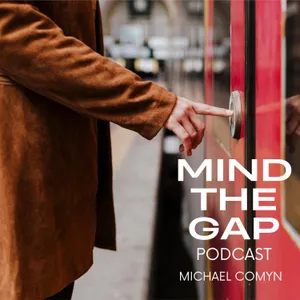
Welcome to “Mind the Gap,” the podcast where ancient wisdom and modern emotional intelligence converge. I’m Michael Comyn, and with nearly 40 years of experience in emotional intelligence, I’m excited to bring you this exploration of how Stoic philosophy can illuminate our contemporary challenges. You might also recognise my voice from a different context—I’ve been the one reminding passengers to “Mind the Gap” on public transport across Ireland for the past 25 years. It’s a phrase that has taken on a new meaning in this podcast, as we explore the gap between our emotions and reality. In each episode, we’ll bridge the gap between the timeless insights of Stoic philosophers and the latest understandings of emotional intelligence. I’ll share practical tools and strategies to help you manage feelings, enhance self-awareness, and build resilience. Join me as we explore how these ancient teachings can provide clarity and guidance for today’s emotional landscape.
Latest Episodes
The most recent episodes — sign up to get AI-powered summaries of each one.
- Apr 11, 20266 min
Shut Up. Let It Land.
Sometimes the most intelligent thing in the room is the thing left unsaid. We had a friend called Bob. When someone was being foolish — not malicious, just foolish — Bob wouldn't argue, correct, or sigh. He would go quiet. And in that quiet, the person speaking would hear themselves. Really hear themselves. Be more Bob. In this season finale of Mind the Gap, Michael Comyn explores silence not as an absence but as one of the most powerful tools available to anyone who leads, communicates, or shares a room with others. The silence of restraint — the reply you don't send, the correction you swallow — is the gap between stimulus and response, finally being practised rather than just described. The silence of generosity — stepping back so someone else can step forward — is one of the most demanding things a leader can do. Eighty-one episodes. All of them words. This one is about what the words were always surrounding. Season 4 ends here. Back in June, with a new season and a different set of questions. #MindTheGap #Silence #Leadership #EmotionalIntelligence #Communication #Podcast #PersonalDevelopment #SelfAwareness #IrishPodcast #BeMoreBob
- Apr 4, 20267 min
The Good Student Leaves
There’s a railway station in Ireland that exists for one purpose only, not to arrive, not to stay, but to move on. In this episode of Mind the Gap, Michael Comyn explores a moment that many of us recognise but rarely name. The point at which learning has done its job. The point at which guidance, coaching, or even a philosophy has taken us as far as it can. Drawing on the teachings of Epictetus and decades of experience in coaching and leadership development, this episode examines the subtle differences between growth and comfort, loyalty and dependency, and staying because it helps… and staying because it feels safe. It’s a reflection for anyone who has ever asked: Am I still growing here, or am I just comfortable? As Season 4 approaches its close, this episode also marks a quiet shift in direction for the podcast, moving beyond its Stoic foundations while keeping the core question at its heart, the gap between intention and action. In this episode: Why the best students eventually leaveThe hidden risk of staying too long in coaching or mentorshipThe difference between support and dependencyWhat Epictetus really expected of his studentsRecognising when the work is complete Closing reflection: Who would you be, and what would you do, if you trusted that you’d already learned what you came to learn? Follow Mind the Gap to stay connected as we move toward the final episode of Season 4 next week.
- Mar 28, 202610 min
When Conversation Stops Being Shared- When bores bore each other.
We’ve all met them. The person who can hold the floor without drawing breath. The one who doesn’t quite notice when someone else is trying to speak. The conversation that somehow becomes… one-sided. In this episode of Mind the Gap, Michael Comyn takes a thoughtful and quietly humorous look at what it really means to be “a bore.” Taking inspiration from a line in Dancing Queen by ABBA, “I’m nothing special… in fact, I’m a bit of a bore,” this episode moves beyond the joke to explore something more revealing. Because being a bore isn’t just about talking too much. It’s about awareness. Or the lack of it. It’s about what happens when conversation stops being a shared experience and becomes something more like a performance, with an audience that never quite agreed to be there. But rather than pointing outward, this episode turns the lens gently back on ourselves. Where do we miss the cues? Where do we hold the floor a little too long? And what does it take to bring a conversation back into balance? This also marks the 80th episode of Mind the Gap since the podcast began. A small milestone, and perhaps a fitting moment to reflect on something so central to the series itself, how we connect, how we listen, and how easily we can miss what’s right in front of us. There’s humour here, certainly. A moment of social theatre you may recognise. But there’s also something more useful underneath it. A reminder that good conversation isn’t about saying more. It’s about noticing more. In this episode: Why being “a bore” has less to do with talking, and more to do with awarenessThe subtle signals we miss in everyday conversationHow one-sided dialogue quietly erodes connectionPractical ways to rebalance conversations without confrontationA simple question to carry into your next interaction If you enjoy Mind the Gap, follow or subscribe and share the episode with someone who values thoughtful conversation. Michael’s books are also available on Amazon.
- Mar 21, 202610 min
When did we stop looking?
You walk into a café. The coffee is perfect. The service is efficient. And not once does anyone look at you. This episode starts with that small absence — and follows it somewhere unexpected. Through the emotional labour of public-facing work, the quiet logic of the screen, and the generational shift in what an interaction is even supposed to contain. Eye contact is not a nicety. It never was. And its disappearance says something about all of us — not just the people behind the counter. Mind the Gap with Michael Comyn.
- Mar 14, 20268 min
You Know What You Should Do!
Before offering advice, ask a quieter question “You know what you should do.” Five familiar words, usually offered with kindness, sometimes with genuine care. Yet when we hear them, something small inside us can quietly deflate. In this episode of Mind the Gap, Michael Comyn reflects on the hidden tension inside unsolicited advice. When someone brings us a problem, are they really asking for a solution, or are they asking to be heard? Drawing on his experience as a coach and communicator, Michael explores the difference between fixing and listening, and why the urge to solve someone else’s difficulty may sometimes be about easing our own discomfort. Before the advice arrives, there may be a better question to ask. What does this person actually need from me right now?
- Mar 7, 202617 min
Contentment in a Burning World
In this episode of Mind the Gap, Michael Comyn explores a quiet but uncomfortable question. Is it acceptable to feel content while the world around us seems unsettled? With images of war, political unrest, and global tension constantly appearing in our news feeds, many people feel a subtle sense of guilt when moments of calm arise in their own lives. Does feeling steady mean we are disengaged? Or is contentment something else entirely? Drawing on the research of positive psychology pioneer Barbara Fredrickson and insights from Stoic philosophers such as Marcus Aurelius, Seneca, and Cleanthes, Michael reflects on how the human nervous system responds to uncertainty and why chronic agitation rarely produces wisdom or compassion. The episode also introduces a practical idea drawn from resilience research: creating moments of certainty when life feels unstable. Small routines, rituals, and predictable anchors can help restore psychological balance and allow clearer thinking when resilience is low. Along the way, Michael reflects on his own experience in broadcasting, where the simple certainty of announcing the time once helped bring order and structure to the rhythm of the day. This is not an episode about ignoring the world’s suffering. It is about understanding the difference between indifference and steadiness, and recognising that emotional regulation may be one of the most responsible ways we can show up for the people around us. In this episode: • Why contentment is often misunderstood • The Broaden and Build Theory of positive emotions • Stoic insights into control, acceptance, and emotional steadiness • Viktor Frankl on the space between stimulus and response • How creating small “moments of certainty” can restore resilience • The ripple effect of emotional tone in leadership and daily life Michael Comyn is an executive coach, broadcaster, and host of the Mind the Gap podcast, where philosophy, psychology, and emotional intelligence meet everyday experience. If you enjoy the podcast, you can also explore Michael’s books available on Amazon, where many of these ideas are developed further.
- Feb 28, 202614 min
The Smile That Isn’t Yours
In 1954, Smile became an anthem of quiet endurance. The melody was written by Charlie Chaplin for the closing scene of Modern Times, with lyrics later added by John Turner and Geoffrey Parsons. Recorded memorably by Nat King Cole, the song urges us to smile though the heart is breaking, to keep trying, to believe life is still worthwhile. But what does that really mean in professional life? In this episode of Mind the Gap, Michael Comyn explores the concept of emotional labour, first described by sociologist Arlie Hochschild in The Managed Heart. He unpacks the difference between shallow acting, where we fake the emotion, and deep acting, where we attempt to align our internal state with what the moment requires. This conversation includes: • A personal reflection on delivering a training programme during a week of grief • The emotional demands placed on nurses, doctors and leaders who must hold steady for others • Why acting is not necessarily dishonesty • The hidden cost of always being composed • How emotional intelligence helps us protect ourselves while still serving others Acting, Michael suggests, is not automatically false. Sometimes it is disciplined self-care. Sometimes it is leadership. The real question is whether we know the difference and how to recover afterwards. If you would like to explore these themes further, Michael’s books Mind the Gap and The Next Station Is… are available on Amazon. Thank you for listening.
- Feb 21, 202610 min
When the System Decides You’re Old
Mind the Age Gap | Retirement Age, Identity and the Psychology of Ageing What does retirement age really mean in modern life? In this episode of Mind the Gap, Michael Comyn explores the idea of the “age gap” — the gap between chronological age and how we actually experience ourselves. The reflection begins with a moment in a bank: an older couple being gently coached through online banking. They were not confused. They looked displaced. That observation opens a wider discussion about ageing, identity, and the subtle ways institutions categorise people after 65. Retirement age began as a 19th-century pension policy in Germany. Over time, it evolved into a powerful cultural label. Today, that label influences marketing, workplace perceptions, digital design, and even the tone of television advertising. In this episode, Michael explores: • The history of retirement age and its origins in public policy • The psychology of subjective age and why most adults over 60 feel younger than their years • The impact of marketing stereotypes, including the Werther’s Original “grandfather” campaign • Why certain UK television channels seem dominated by funeral and cremation advertising • The cultural reality that people now in their seventies once danced to The Rolling Stones • Why ageing is not the issue, dismissal is This episode blends psychology, leadership insight, cultural observation, and personal reflection to ask a simple question: Is the real gap between 50 and 65 — or between vitality and resignation? If you’ve ever felt younger than your demographic category, or sensed the system quietly repositioning you, this conversation will resonate. https://amzn.eu/d/irNfaHO
Get Mind the Gap summaries in your inbox
Free AI-powered daily recaps. Key takeaways, quotes, and mentions — in a 5-minute read.
Get Free Summaries →Free forever for up to 3 podcasts. No credit card required.
You Might Also Like
Listeners also like.
Growth Mindset Psychology: The Science of Self-Improvement
Explores the science behind lasting self-improvement through psychology, neuroscience, and timeless wisdom traditions.

Good Life Project
Explores meaningful living through conversations with experts in science, culture, and the arts.

Stoic Coffee Break
A weekly reflection on applying Stoic philosophy to live with purpose and integrity.

Passion Struck with John R. Miles
Explores human flourishing through conversations on purpose, health, and personal growth with experts and thought leaders.
The Mindset Mentor
A motivational podcast blending neuroscience and psychology to help listeners understand their minds and achieve personal growth.

The Daily Stoic
Daily lessons on Stoic philosophy from Ryan Holiday, with insights from Marcus Aurelius and Seneca, plus listener questions and expert interviews.

On Purpose with Jay Shetty
Conversations with experts and public figures explore mental health, personal growth, and meaningful living.
The Curiosity Shop with Brené Brown and Adam Grant
Brené Brown and Adam Grant explore boldness amid uncertainty through research, debate, and dialogue in a six-episode series.

How to Be a Better Human
Conversations exploring practical ways to improve yourself and connect more meaningfully with others.

Your Thoughts Your Reality
A podcast exploring how veterans can overcome psychological challenges like fear and self-doubt through neuroencoding science.

Know Thyself
Explores self-discovery, consciousness, and human potential through conversations with experts in spirituality, science, and creativity.

Modern Wisdom
Discussions with experts on psychology, philosophy, and self-improvement to help navigate life’s challenges.
About Mind the Gap
Welcome to “Mind the Gap,” the podcast where ancient wisdom and modern emotional intelligence converge. I’m Michael Comyn, and with nearly 40 years of experience in emotional intelligence, I’m excited to bring you this exploration of how Stoic philosophy can illuminate our contemporary challenges. You might also recognise my voice from a different context—I’ve been the one reminding passengers to “Mind the Gap” on public transport across Ireland for the past 25 years. It’s a phrase that has taken on a new meaning in this podcast, as we explore the gap between our emotions and reality. In each episode, we’ll bridge the gap between the timeless insights of Stoic philosophers and the latest understandings of emotional intelligence. I’ll share practical tools and strategies to help you manage feelings, enhance self-awareness, and build resilience. Join me as we explore how these ancient teachings can provide clarity and guidance for today’s emotional landscape.
Customized Recaps
AI-powered recaps with compact key takeaways, quotes, and insights.
Straight to Your Inbox
Get key takeaways from Mind the Gap in a 5-minute read.
Save Hours Every Week
Stay current on your favorite podcasts without falling behind.
Frequently Asked Questions
What is Podzilla's Mind the Gap daily summary?
It's a free AI-powered email that summarizes new episodes of Mind the Gap as soon as they're published. You get the key takeaways, notable quotes, and links & mentions — all in a quick read.
How does the Mind the Gap podcast summary work?
When a new episode drops, our AI transcribes and analyzes it, then generates a personalized summary tailored to your interests and profession. It's delivered to your inbox every morning.
Is this an official Mind the Gap product?
No. Podzilla is an independent service that summarizes publicly available podcast content. We're not affiliated with or endorsed by Michael Comyn.
Can I get summaries of other podcasts too?
Absolutely! The free plan covers up to 3 podcasts. Upgrade to Pro for 15, or Premium for 50. Browse our full catalog at /podcasts.
How often does Mind the Gap release new episodes?
Mind the Gap publishes weekly. Our AI generates a summary within hours of each new episode.
What topics does Mind the Gap cover?
Mind the Gap covers topics including Education, Business, Management, Fitness, Health & Fitness, Mental Health, Self-Improvement. Our AI identifies the specific themes in each episode and highlights what matters most to you.
Start getting Mind the Gap summaries tomorrow morning.
Free forever for up to 3 podcasts. No credit card required.
Free forever for up to 3 podcasts. No credit card required.