Free Daily Podcast Summary
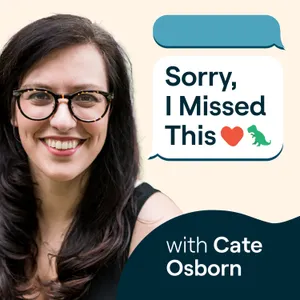
Sorry, I Missed This: The Everything Guide to ADHD and Relationships with Cate Osborn: Daily Summaries Delivered
by Cate Osborn, Understood.org
It can be hard to navigate relationships when you have ADHD. Host Cate Osborn has ADHD, a background in sex education, and a whole lot of questions like “How do I know what I want out of a relationship? How do I remember my friends exist? What can I do to handle conflict better?” Tune in to learn about topics like social skills, boundaries, communication, intimacy, and sex. Join Cate in unpacking the taboo, painful, and often hilarious challenges of being in a relationship when you have ADHD.
Latest Episodes
The most recent episodes — sign up to get AI-powered summaries of each one.
- 2 days ago28 min
When intense feels normal: ADHD and abusive relationships | Sorry, I Missed This
Research shows that girls with ADHD are significantly more likely to experience intimate partner violence.Dr. Emily Rothman, who recently published a study on dating violence in neurodivergent youth, joins Cate to talk about what the research actually shows.They discuss why ADHD symptoms might make it harder to recognize abuse. They also cover how to tell ordinary relationship conflict from patterns of coercive control.Cate and Emily talk openly about why leaving is rarely a single decision, and how to support a friend or family member who’s trying to get out. They also get into the uncomfortable fact that there are higher rates of ADHD among abuse perpetrators.This episode discusses domestic violence, coercive control, and sexual abuse. If you or someone you know needs support:National Domestic Violence Hotline (24/7): 1-800-799-7233RAINN National Sexual Assault Hotline: 1-800-656-4673Love Is Respect (dating abuse), call or text: 1-866-331-9474For more on this topic Watch: ADHD, toxic partners, and “losing your sparkle” (Reddit Reactions)Watch: ADHD gaslighting and chasing new relationship energy (Reddit Reactions) | Sorry, I Missed ThisWatch: ADHD impulsivity and saying yes to sex too fast| Sorry, I Missed ThisFor a transcript and more resources, visit Sorry, I Missed This on Understood.org. You can also email us at podcast@understood.org. Understood is a nonprofit where millions of people who are navigating neurodivergence find clear guidance, practical tools, and people who get it. To help us continue this work, donate at understood.org/podcast-donate. Hosted by Simplecast, an AdsWizz company. See pcm.adswizz.com for information about our collection and use of personal data for advertising.
- 2 weeks ago31 min
The ADHD safety net hiding inside a kink power dynamic
Kink isn’t required to get something real out of a power dynamic. And for ADHD brains, it might be more than you’d expectSex and relationship coach Amanda Dames — The Kink Consultant — joins the show to talk about power dynamics and what dominance and submission can actually offer neurodivergent relationships once the stigma gets stripped away. Amanda and Cate start with the basics: what a power dynamic is, why it’s a negotiated role-play and not a real transfer of power, and how submission can function as agency rather than its opposite. From there, the conversation moves into what this looks like day to day — including a partner who quietly set household rules that ended up calming years of ADHD-driven chaos. And then into harder territory: the difference between structure that helps and control that doesn’t, how to tell the two apart, and what aftercare (a kink community staple) can offer any couple, kinky or not, after a hard moment.For more on this topicWatch: Kink, BDSM, and ADHD | Sorry, I Missed ThisWatch: Why neurodivergent women can’t stop reading smut and romantasy | Sorry, I Missed ThisWatch: Why good sex can make your ADHD brain spiral | Sorry, I Missed ThisFor a transcript and more resources, visit Sorry, I Missed This on Understood.org. You can also email us at podcast@understood.org. Understood is a nonprofit where millions of people who are navigating neurodivergence find clear guidance, practical tools, and people who get it. To help us continue this work, donate at understood.org/podcast-donate. Hosted by Simplecast, an AdsWizz company. See pcm.adswizz.com for information about our collection and use of personal data for advertising.
- Sep 9, 202630 min
I’ve never felt like a good woman: ADHD and femininity
In this episode, a complex conversation about ADHD, femininity, gender, and why talking about the hard stuff is important.Cate sits down with Rae Jacobson, host of Understood.org’s Hyperfocus podcast, journalist, and a producer on this show. They talk about something they’ve both struggled to name: the collision between ADHD, femininity, and gender expression. They dig into what it felt like to watch other girls “get it.” The tidiness. The calm. The effortlessness. All things that executive dysfunction made feel out of reach. They talk about the pressure to be nurturing, organized, and endlessly available — and what happens when your brain doesn’t cooperate with any of it. And they look at the research on outcomes for women and girls with ADHD.For more on this topicWatch: The “devastating” findings of a decades-long ADHD studyWatch: Head, heart, hormones: Why women’s ADHD care should treat the whole person For a transcript and more resources, visit Sorry, I Missed This on Understood.org. You can also email us at sorryimissedthis@understood.org. As kids head back to school, it's a good time to remember: not every student experiences the classroom the same way. Through My Eyes, a free interactive experience from Understood, lets you step into a day in the life of a kid with ADHD, dyslexia, or dyscalculia. See their strengths and challenges in a whole new way. Try it out here.Understood.org is a nonprofit organization dedicated to empowering people with learning and thinking differences, like ADHD and dyslexia. If you want to help us continue this work, donate at understood.org/give Hosted by Simplecast, an AdsWizz company. See pcm.adswizz.com for information about our collection and use of personal data for advertising.
- Aug 26, 202627 min
An Emmy winner’s trick for ADHD idea overload (Live show!)
We recorded our first-ever live show in front of a studio audience! Emmy Award–winning writer, director, and producer Adam Reid, co-creator of “Tiny Chef,” joined Cate to talk about ADHD creativity: what works, what doesn’t, when to dig in, when to let things go, and why finishing things isn't always the point. Adam talked candidly about being diagnosed with ADHD at 45, after years of building an Emmy-winning creative career without knowing why his brain worked the way it did. And he and Cate shared how they make it work (or not) as neurodivergent creators. Check it out! For more on this topic Read: ADHD and creativity Watch: Cate answers your burning ADHD questions For a transcript and more resources, visit Sorry, I Missed This on Understood.org. You can also email us at sorryimissedthis@understood.org. As kids head back to school, it's a good time to remember: not every student experiences the classroom the same way. Through My Eyes, a free interactive experience from Understood, lets you step into a day in the life of a kid with ADHD, dyslexia, or dyscalculia. See their strengths and challenges in a whole new way. Try it out here.Understood.org is a nonprofit organization dedicated to empowering people with learning and thinking differences, like ADHD and dyslexia. If you want to help us continue this work, donate at understood.org/give Hosted by Simplecast, an AdsWizz company. See pcm.adswizz.com for information about our collection and use of personal data for advertising.
- Aug 12, 202620 min
Your ADHD brain loves a good argument. Here’s why that’s a problem.
Ever notice your ADHD brain gets a little too excited during an argument? Like you’re not even mad anymore, you’re just... having a really good time being right? Yeah. There’s a reason for that, and it’s not a great one. In this mailbag episode of Sorry, I Missed This, host Cate Osborn is digging into questions from our Understood Facebook group Our amazing listeners wrote in (and had the chance to win a copy of Cate’s new book, The ADHD Field Guide for Adults). In this episode Cate tackles questions like how to share a new ADHD diagnosis with friends and family, how to wade through the swamp of ADHD motivation, why our ADHD brains LOVE to argue, and more. Check it out! For more on this topic Watch: Managing expectations in relationships with ADHD | Sorry, I Missed This Watch: How hormones hijack focus, mood, and energy | Sorry, I Missed This For a transcript and more resources, visit Sorry, I Missed This on Understood.org. You can also email us at sorryimissedthis@understood.org. As kids head back to school, it's a good time to remember: not every student experiences the classroom the same way. Through My Eyes, a free interactive experience from Understood, lets you step into a day in the life of a kid with ADHD, dyslexia, or dyscalculia. See their strengths and challenges in a whole new way. Try it out here.Understood.org is a nonprofit organization dedicated to empowering people with learning and thinking differences, like ADHD and dyslexia. If you want to help us continue this work, donate at understood.org/give Hosted by Simplecast, an AdsWizz company. See pcm.adswizz.com for information about our collection and use of personal data for advertising.
- Jul 28, 202633 min
Why money fights are never really about money
Money is one of the biggest sources of conflict in relationships — and for people with ADHD, it comes with an extra layer of shame most people don’t talk about. Cate sits down with Dr. Christine Hargrove, a financial therapist who specializes in ADHD, to unpack why money fights escalate so fast, why who’s the “mental load carrier” matters more than who earns more, and why people with ADHD often give better financial advice to their friends than they follow themselves. Christine breaks down the concept of “money meaning” — the idea that when couples fight about spending, they’re rarely fighting about the actual dollars. They discuss financial self-efficacy, the five types of couple coping (and which ones actually work), and why body doubling might be the most underrated financial tool for ADHD brains. Cate also opens up about her own history with compulsive spending, debt, and the shame that kept her from asking for help — and what finally changed. If you’ve ever felt “bad with money” or avoided opening an app because of what you might see, this episode is for you. For more on this topic Watch: Why is money so hard with ADHD? A financial therapist explains Watch: Money problems and ADHD? Here’s a financial therapist’s advice For a transcript and more resources, visit Sorry, I Missed This on Understood.org. You can also email us at sorryimissedthis@understood.org. As kids head back to school, it's a good time to remember: not every student experiences the classroom the same way. Through My Eyes, a free interactive experience from Understood, lets you step into a day in the life of a kid with ADHD, dyslexia, or dyscalculia. See their strengths and challenges in a whole new way. Try it out here.Understood.org is a nonprofit organization dedicated to empowering people with learning and thinking differences, like ADHD and dyslexia. If you want to help us continue this work, donate at understood.org/give Hosted by Simplecast, an AdsWizz company. See pcm.adswizz.com for information about our collection and use of personal data for advertising.
- Jul 14, 202630 min
Parentification: The hidden pattern in ADHD relationships
Ever feel like you’re the “parent” in your relationship — managing everything while your partner just... coasts? You’re not alone. And it’s not just you being controlling. Host Cate Osborn talks with ADHD coach Kristen Carder (host of I Have ADHD, author of the upcoming You’re Not in Trouble) about why ADHD relationships so easily slide into parent-child dynamics, and how to climb back out. They get into why resentment is the red flag to watch for, and Kristen’s favorite mantra for “de-centering” an overfunctioning partner (“there is no sun — we’re equals here”). Plus eldest daughter syndrome, and why chicken nuggets for dinner is sometimes the healthiest choice you’ll make all day. Honest, funny, and genuinely useful if you’ve ever wondered whether you’re parenting your partner instead of loving them. For more on this topic Listen: Sorry, I Missed This: When ADHD turns chores into conflict Watch: ADHD expert answers 8 top questions on romantic relationships For a transcript and more resources, visit Sorry, I Missed This on Understood.org. You can also email us at sorryimissedthis@understood.org. As kids head back to school, it's a good time to remember: not every student experiences the classroom the same way. Through My Eyes, a free interactive experience from Understood, lets you step into a day in the life of a kid with ADHD, dyslexia, or dyscalculia. See their strengths and challenges in a whole new way. Try it out here.Understood.org is a nonprofit organization dedicated to empowering people with learning and thinking differences, like ADHD and dyslexia. If you want to help us continue this work, donate at understood.org/give Hosted by Simplecast, an AdsWizz company. See pcm.adswizz.com for information about our collection and use of personal data for advertising.
- Jun 30, 202624 min
ADHD and impulse control: The science behind why willpower fails
Does ADHD really mean poor self-control? Or is that the myth that’s been making everything harder? Dr. Polaris Koi is a philosopher who studies ADHD and self-regulation (and is an ADHDer themselves). In this episode, Cate and Polaris get into why “just try harder” is not only unhelpful advice — it’s based on science that most researchers don’t even believe anymore. They talk about why impulsivity in ADHD adults rarely looks like the textbook version (hi, compulsive shopping and 3 a.m. tattoo urges). How shame and anxiety make executive function worse. And why learning to work with your brain’s patterns beats white-knuckling your way through every temptation. Plus why some ADHDers end up over-controlled — which comes with its own set of problems. If you’ve ever told yourself you’re just lazy, bad at relationships, or fundamentally broken because you can’t seem to get it together, this one’s for you. For more on this topic Listen: ADHD and impulsive spending Watch: ADHD break-ups: Impulsive texts and overthinking regrets For a transcript and more resources, visit Sorry, I Missed This on Understood.org. You can also email us at sorryimissedthis@understood.org. As kids head back to school, it's a good time to remember: not every student experiences the classroom the same way. Through My Eyes, a free interactive experience from Understood, lets you step into a day in the life of a kid with ADHD, dyslexia, or dyscalculia. See their strengths and challenges in a whole new way. Try it out here.Understood.org is a nonprofit organization dedicated to empowering people with learning and thinking differences, like ADHD and dyslexia. If you want to help us continue this work, donate at understood.org/give Hosted by Simplecast, an AdsWizz company. See pcm.adswizz.com for information about our collection and use of personal data for advertising.
Get Sorry, I Missed This: The Everything Guide to ADHD and Relationships with Cate Osborn summaries in your inbox
Free AI-powered daily recaps. Key takeaways, quotes, and mentions — in a 5-minute read.
Get Free Summaries →Free forever for up to 3 podcasts. No credit card required.
You Might Also Like
Listeners also like.

ADHD for Smart Ass Women with Tracy Otsuka
Explores the strengths and brilliance of ADHD in high-ability women, helping them embrace their unique brains and thrive.
ADHD Chatter
Explores ADHD, autism, and mental health through expert insights and personal stories.
"You Are A Lot" (an ADHD/AuDHD podcast)
Jen Kirkman

Imperfect Love
A psychologist answers real-life questions on love, self-acceptance, and personal growth using a mindfulness-based approach.
Dysregulated Kids: Science-Backed Parenting Help for Behavior, Anxiety, ADHD and More
A therapist explains the brain science behind children's behavioral and emotional challenges and offers research-based parenting strategies.
ResponseABLE Parenting
A podcast helping parents understand their reactions and develop mindful, effective strategies for raising strong-willed children.

Let's Get Naked
Anne Karber discusses personal growth, relationships, and difficult life topics through candid conversations with guests.
Off the Couch Psychology
Explores mental health topics including anxiety, depression, and trauma using science-based insights and practical coping strategies.

Ready For Love with Hilary Silver
A therapist examines how women can reclaim self-trust and reshape their lives by changing internal beliefs and patterns.
Ask Lisa: Untangling Family Life
Psychologist Lisa Damour answers parents' questions about raising tweens and teens with evidence-based advice on mental health, behavior, and family dynamics.

Therapy in a Nutshell
A therapist breaks down research-backed mental health techniques into short, practical lessons for managing anxiety and depression.

Oversharing
Sisters Jordana Abraham and Dr. Naomi Bernstein discuss relationship challenges, answering listener questions with humor and therapy insights.
About Sorry, I Missed This: The Everything Guide to ADHD and Relationships with Cate Osborn
It can be hard to navigate relationships when you have ADHD. Host Cate Osborn has ADHD, a background in sex education, and a whole lot of questions like “How do I know what I want out of a relationship? How do I remember my friends exist? What can I do to handle conflict better?” Tune in to learn about topics like social skills, boundaries, communication, intimacy, and sex. Join Cate in unpacking the taboo, painful, and often hilarious challenges of being in a relationship when you have ADHD.
Customized Recaps
AI-powered recaps with compact key takeaways, quotes, and insights.
Straight to Your Inbox
Get key takeaways from Sorry, I Missed This: The Everything Guide to ADHD and Relationships with Cate Osborn in a 5-minute read.
Save Hours Every Week
Stay current on your favorite podcasts without falling behind.
Frequently Asked Questions
What is Podzilla's Sorry, I Missed This: The Everything Guide to ADHD and Relationships with Cate Osborn daily summary?
It's a free AI-powered email that summarizes new episodes of Sorry, I Missed This: The Everything Guide to ADHD and Relationships with Cate Osborn as soon as they're published. You get the key takeaways, notable quotes, and links & mentions — all in a quick read.
How does the Sorry, I Missed This: The Everything Guide to ADHD and Relationships with Cate Osborn podcast summary work?
When a new episode drops, our AI transcribes and analyzes it, then generates a personalized summary tailored to your interests and profession. It's delivered to your inbox every morning.
Is this an official Sorry, I Missed This: The Everything Guide to ADHD and Relationships with Cate Osborn product?
No. Podzilla is an independent service that summarizes publicly available podcast content. We're not affiliated with or endorsed by Cate Osborn, Understood.org.
Can I get summaries of other podcasts too?
Absolutely! The free plan covers up to 3 podcasts. Upgrade to Pro for 15, or Premium for 50. Browse our full catalog at /podcasts.
How often does Sorry, I Missed This: The Everything Guide to ADHD and Relationships with Cate Osborn release new episodes?
Sorry, I Missed This: The Everything Guide to ADHD and Relationships with Cate Osborn publishes biweekly. Our AI generates a summary within hours of each new episode.
What topics does Sorry, I Missed This: The Everything Guide to ADHD and Relationships with Cate Osborn cover?
Sorry, I Missed This: The Everything Guide to ADHD and Relationships with Cate Osborn covers topics including Education, Fitness, Health & Fitness, Mental Health, Self-Improvement. Our AI identifies the specific themes in each episode and highlights what matters most to you.
Start getting Sorry, I Missed This: The Everything Guide to ADHD and Relationships with Cate Osborn summaries tomorrow morning.
Free forever for up to 3 podcasts. No credit card required.
Free forever for up to 3 podcasts. No credit card required.