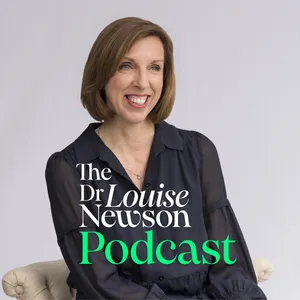
Free Daily Podcast Summary
The Dr Louise Newson Podcast: Daily Summaries Delivered
by Dr Louise Newson
Dr Louise Newson is an award-winning physician, respected women’s hormone specialist, educator, and author committed to increasing awareness and knowledge of perimenopause, menopause, and lifelong hormone health. Each week, Louise dives into the newest research, treatments and hot topic issues, providing accessible, evidence-based information to empower your future health. Joined by fellow experts and special guests, with answers to your burning questions, Louise explores how hormones impact every aspect of our lives. Described as the “medic who kickstarted the menopause revolution”, Louise aims to empower a generation of women to have a greater understanding, choice and control over their treatment, bodies, minds and future health through their hormones. She is the creator of the award-winning free balance app, a Sunday Times bestselling author and the founder of the Newson Health clinic. With over three decades of clinical experience, Louise is a member of the Royal College of Physicians, a Fellow of the Royal College of GPs, a Visiting Fellow at Cambridge, a regular contributor to academic journals including the Lancet and the British Journal of General Practice, and has been awarded an honorary Doctorate of Health from Bradford University. The information provided in this podcast is for informational purposes only and is not intended as a substitute for professional medical advice, diagnosis, or treatment. Always seek the advice of your physician or other qualified health providers with any questions you may have regarding a medical condition. The views expressed by guests are their own and do not necessarily reflect the views of Dr Louise Newson or the Newson Health Group.
Latest Episodes
The most recent episodes — sign up to get AI-powered summaries of each one.
- 2 days ago26 min
120 – Why don’t most psychiatrists prescribe hormone treatments for women with postnatal depression?
Postnatal depression follows a sudden drop in estradiol and progesterone after birth, yet hormone treatments are rarely offered during this time.Jennie Milnes knows this first-hand. She had postnatal depression after her first son, and in her early 40s, while switching her HRT for perimenopause symptoms, she found out she was pregnant again. After her daughter’s birth the hormone crash was even worse, and despite being on HRT before her pregnancy, she was told to wait for her hormones to settle.Dr Louise Newson explains why postnatal depression is more likely the second time, why antidepressants work better alongside estradiol, why hormones are safe while breastfeeding, and why so few psychiatrists prescribe them. She also shares the history of Dr Katharina Dalton, who used progesterone to support fertility and pregnancy.Chapters00:00 Why is postnatal mental health so overlooked?00:32 How did fertility treatment lead to her first son?01:32 Was it postnatal depression the first time?02:14 Should you stop antidepressants without advice?03:14 Why did she rule out another baby?03:44 How did she spot her perimenopause symptoms?04:40 What did her GP say about HRT?05:11 Can the Mirena coil make you feel flat?08:03 How did she find out she was pregnant?09:30 Can HRT improve fertility?10:10 Who was Dr Katharina Dalton?11:09 What was her second pregnancy like?12:05 What happened after her daughter was born?13:23 Is postnatal depression more likely second time?13:48 Can preparation prevent postnatal depression?14:59 What does a postnatal hormone crash feel like?16:49 Why didn't her doctor restart HRT?17:57 How did she recover?19:15 Why aren't women offered hormones after birth?21:36 Do antidepressants work better with estradiol?21:50 What does a perinatal mental health team do?23:03 Why didn't the perinatal team prescribe hormones?23:33 Can you ask your doctor to try hormones?24:04 Can hormones help 'treatment-resistant' mums?24:56 What are Jennie's three take-home tips?Let’s connect👉 If you've had postnatal depression and no one has talked to you about yourhormones, the doctors at Newson Clinic can go through your options with you: www.DrLN.co.uk/clinic👉 Follow the podcast on Spotify or Apple Podcasts so you never miss an episode: DrLN.co.uk/podcast👉 More from Dr Louise Newson: https://linkin.bio/drlouisenewson
- 4 days ago32 min
119 – Many doctors are still giving their patients incorrect information about HRT
Why are so many doctors still scared of HRT? A medical student explains where that fear comes from and how it spreads.Toby first saw the problem as a teenager, when his mum, a biology teacher, went to her GP for HRT and was given an outdated FSH test instead. Now in his second year of medical school, he says hormone problems come up on GP placements more than anything else, and the risks of hormone treatment are raised in almost every consultation, often as defensive medicine.Louise explains why NICE guidance mentions risk far more often than benefit, why grouping synthetic and bioidentical hormones together confuses busy doctors, and why the WHI study still shapes prescribing. They also talk about how hard it is for junior doctors to question a senior, and why a 19-year old with endometriosis was told pregnancy would fix it.Toby closes with three take-home tips for changing how every doctor learns about hormones.Chapters00:00 Why would Louise go back to medical school?00:46 Why can't an FSH test diagnose perimenopause?02:34 Is menopause only about hot flushes?03:02 What do medical students see on GP placements?05:23 Why do doctors keep warning about HRT risks?06:59 Do GPs explain pill risks the same way?08:05 Why does NICE mention risk more than benefit?09:27 Why does HRT get more scrutiny than other medicines?10:04 What do the WHI study and MMR scare have in common?12:17 How are medical students actually taught?14:28 Why is it so hard for junior doctors to speak up?17:22 Why is not knowing about hormones still accepted?18:16 How do hormones affect the immune system?19:18 How did Louise learn to prescribe hormones?20:21 Are patients now better informed than doctors?22:16 Is it OK for a doctor to say "I'm not sure"?23:07 Does endometriosis get better after pregnancy?24:41 What should schools teach about hormones?26:43 What does testosterone do for nerves?28:52 Is surgical menopause only a gynaecology issue?29:30 Why does endometriosis take so long to diagnose?30:26 What should every medical student learn about hormones?Let’s connect👉 Know a medical student,GP or nurse who should hear this? Newson Education's hormone courses are opento every healthcare professional: DrLN.co.uk/education👉Follow the podcast on Apple Podcasts, Spotify or YouTube so you never miss anepisode: DrLN.co.uk/podcast👉More from Dr Louise Newson: https://linkin.bio/drlouisenewson
- 1 weeks ago24 min
118 – Can your skincare products disrupt your hormones?
Can your skincare products affect your hormones? This episode covers what endocrine disruptors are and how to read a skincare product label.Gina Lewis spent many years working in early years education, and when her daughter, now nearly 12, started wanting the products her friends used, Gina began looking closely at what goes into them. She now runs Nudum Skincare, a handmade natural skincare company.Dr Louise Newson explains why bioidentical estrogen and testosterone she prescribes can pass through the skin, and how endocrine disruptors can sit in a hormone receptor like the wrong key in a lock. She shares the history of DES, a synthetic estrogen banned from poultry before it was stopped for pregnant women, and why she worries when teenagers are given the contraceptive pill as a first treatment for acne.Gina closes with three take-home tips, starting with a simple audit of your bathroom cupboard.Follow Gina: @nudumskincareChapters00:00 Can skincare affect your hormones?01:31 Why do teenagers want so many skincare products?02:15 Can hormones pass through your skin?03:13 What's hidden under the word "fragrance"?04:50 What is an endocrine disruptor?06:00 Why was a synthetic oestrogen banned from poultry?08:46 What do we actually know about the risks?10:13 Which everyday chemicals can we avoid?11:18 What goes into a simple skincare routine?13:20 Do ingredient-checker apps actually help?14:43 Can your skin show what's happening inside?17:00 Should teenagers take the pill for acne?18:02 How should teenagers care for acne-prone skin?19:43 How many skincare products do you really need?22:49 What are three ways to simplify your routine?Let’s connect👉 To learn more aboutskin and hormones, download the Balance app: https://balance-app.com/?utm_source=DLN&utm_medium=biolink&utm_campaign=crosspromo👉 More from Dr LouiseNewson: https://linkin.bio/drlouisenewson
- 1 weeks ago31 min
117 – Testosterone isn’t just for libido: what the data shows
Does testosterone help women with more than low libido?Real-world data from Dr Louise’s research team says yes. Content advisory: this episode includes themes of mental health and suicide.In this episode, Dr Louise Newson is joined by Aini Kamal, a neuroscience graduate and researcher with Newson Research, the small team Louise funds to study hormone health. Aini shares how her mum’s mental illness drew her to neuroscience, and how a gap year showed her just how under-researched women’s health still is.Together they discuss data showing testosterone improving joint pain, vaginal dryness, urinary symptoms and mood, research linking HRT with fewer suicidal thoughts, why FSH blood tests can mislead doctors diagnosing menopause, and why female athletes are being denied testosterone.Louise also explains why every cell in the brain responds to hormones.Aini closes with the three things she most wants her research to achieve, from easier access to care to closing cultural gaps in hormone education.Chapters0:00 Why does women's hormone research matter so much?1:05 Why did a neuroscientist move into women's health?2:12 Why is women's health so under-researched?3:13 Can a digital tool help explain HRT?5:30 Does every brain cell respond to hormones?7:00 Why does so much medical research never help patients?8:38 Can a private clinic produce unbiased research?13:11 How do clinic notes become research data?15:22 Can HRT reduce suicidal thoughts in menopause?17:47 Can an FSH blood test miss menopause?21:34 What symptoms does testosterone improve in women?23:44 Do women have more testosterone than oestrogen?25:15 Why are female athletes denied testosterone?27:56 What hormone research is coming next?28:53 What does Aini want her research to change?Let’s connect👉 Told your blood tests are "normal" but still struggling with symptoms? Book with a doctor who understands testosterone at Newson Health: DrLN.co.uk/clinic👉Follow the podcast on Spotify:👉More from Dr Louise Newson: https://linkin.bio/drlouisenewson
- 2 weeks ago33 min
116 – Bioidentical HRT has good safety data, so why do so few women take it?
Bioidentical (body identical) HRT is safer than the old synthetic hormones, so why do so few women take it?Dr Jerrold Weinberg spent 25 years delivering babies in Detroit before moving into menopause medicine, and has since treated around 4,000 women. When he began prescribing bioidentical hormones, colleagues stopped referring patients to him, a story he tells in his book, Menopause Mended.Louise and Jerrold explain why the Women’s Health Initiative study tested horse-derived estrogen and a synthetic progestogen rather than the estradiol and micronised progesterone used today, and why many women on HRT still feel unwell because their dose is too low or they aren’t absorbing it. They also talk about compounded creams, menopause supplements and why rushed appointments leave women without answers.Jerrold closes with three take-home tips, including how to walk into an appointment prepared and be your own advocate.Let’s connect👉 Understand what yourhormones actually do before your next appointment. Read The Power of Hormones: (https://bio.to/ThePowerofHormones?utm_source=DLN&utm_medium=biolink&utm_campaign=crosspromo)👉Follow the podcast on Spotify or Apple Podcasts so you never miss an episode:https://open.spotify.com/show/7dCctfyI9bODGDaFnjfKhg?si=d4107b19c31743c5👉More from Dr Louise Newson: https://linkin.bio/drlouisenewson👉 More from Dr.WeinbergLinkedIn: https://www.linkedin.com/in/jerrold-weinberg-md-facog-ncmp-0323a644/Instagram: @menopausemendedFacebook: @jerroldweinbergmdhttps://jhweinbergmd.com/Link to purchase book on Amazon: https://www.amazon.com/Menopause-Mended-Bioidentitcal-Hormone-Business/dp/B0G63HDN72/ref=tmm_pap_sw…Chapters00:00 Why should doctors question what they're taught?02:59 Why did colleagues stop referring patients to him?05:13 Is menopause a hormone deficiency, like low thyroid?06:09 Why was the first HRT made from horse urine?07:09 Why do women go through the menopause?09:28 Why does oral estrogen affect blood clotting?10:29 What did the 2002 WHI study actually test?12:05 Why is synthetic progestogen still a concern?13:36 Which estradiol and progesterone are used now?14:05 Why use a compounded estrogen cream?16:22 What's the fear about compounded HRT?19:07 Is your HRT dose too low to work?20:57 Does HRT protect your long-term health?22:19 Can HRT lower your risk of osteoporosis?23:43 Do menopause supplements actually work?26:28 Why are menopause appointments so rushed?29:48 Could nurse practitioners improve menopause care?31:17 How can more women get the HRT they need?
- 2 weeks ago32 min
115 – Bleeding on HRT: why it happens and what it means
Is bleeding on HRT normal? It’s a common side effect that usually settles and there’s often a simple explanation.Consultant gynaecologist Tony Chalhoub worked for years in a rapid-access clinic for postmenopausal bleeding and helped establish Newcastle’s accredited endometriosis centre. He shares how a health scare ofhis own changed the way he listens to patients.In this episode, Dr Louise Newson and Tony Chalhoub talk about how a few missed days of progesterone, patch that didn’t stick or a urine infection can all lead to bleeding, why a careful history matters so much, and why stopping an evidence-based treatment can bring symptoms straight back.They also discuss why Louise kept her ovaries at hysterectomy, why estrogen alone may not be enough after surgical menopause, and why women with endometriosis deserve to be believed even when their scans are normal.If you have any bleeding on HRT, speak to your doctor so it can be properly assessed.Follow Tony: @drtonychalhoubChapters00:00 Why does listening to women matter so much?00:22 Why aren't gynaecologists taught about HRT?02:24 What did training across the UK teach Tony?03:39 Can a hysteroscopy be done without going to sleep?06:41 Why were women told fibroid surgery was too risky?07:29 Does bleeding on HRT mean cancer?10:25 Should you stop HRT if you have bleeding?11:20 What did a cancer scare teach a gynaecologist?12:40 Could bleeding after sex be vaginal dryness?13:05 Why are doctors scared of vaginal oestrogen?13:50 Can women have HRT after cancer?15:17 Should you keep your ovaries with womb cancer?16:39 Why would a breast cancer survivor try HRT?17:22 Why did Louise keep her ovaries at hysterectomy?19:18 Is oestrogen enough after surgical menopause?21:26 Should HRT be part of gynaecology training?22:31 Does oestradiol cause womb cancer?24:06 Is it OK for doctors to say I don't know?25:19 Why are women with endometriosis not believed?27:13 Why doesn't endometriosis pain match the scan?28:40 Can men get endometriosis?30:36 What needs to change in endometriosis care?👉 Bleeding on HRT? Trackyour symptoms and treatment in the balance app so your doctor gets the fullpicture: https://balance-app.com/?utm_source=DLN&utm_medium=biolink&utm_campaign=crosspromo👉 More from Dr Louise Newson: https://linkin.bio/drlouisenewson
- 3 weeks ago31 min
112 – What do I do if my doctor dismisses my menopause symptoms?
Doctor dismissing your menopause symptoms? Dr Phyllis Nsiah-Kumi explains how to get heard and get the right care.Dr Phyllis Nsiah-Kumi, MD, MPH, is a US physician with more than 25 years in women’s health and public health, much of it with underserved communities. She regularly sees women for whom she is the third, fourth or fifth doctor, after years of being told their symptoms just come with age.Dr Louise Newson explains why symptoms of hormonalimbalance, from night sweats and joint pain to low mood and memory problems, are so easily dismissed when they can’t be seen on a scan. She also explains why so many women are told the only option is an antidepressant, and why many are now learning about hormone treatments, including testosterone, fromeach other.Phyllis closes with three take-home tips for women and the people supporting them: pause, pivot and proactivate.Let’s connect👉 Take your symptoms to your next appointment: complete the free symptom questionnaire in the balance app: https://balance-app.com/utm_source=DLN&utm_medium=biolink&utm_campaign=crosspromo👉Follow the podcast for more: https://open.spotify.com/show/7dCctfyI9bODGDaFnjfKhg👉More from Dr Louise Newson: https://linkin.bio/drlouisenewsonChapters00:00 Why is health information so confusing for women?02:28 Why are people so scared of the word hormone?02:45 Why is "Do you understand?" the wrong question?03:27 What do you really want from your appointment?04:09 How should you prepare for a doctor's appointment?05:51 Why are women too scared to ask for an examination?07:41 What happens when a doctor refuses to examine you?08:42 Is it really "just your age"?09:27 Why are so many women being dismissed?10:27 Is it okay for a doctor to say "I'm not sure"?11:09 What does "that's just how it is" really mean?12:11 Why are hormone symptoms so easy to dismiss?13:24 How can scoring your symptoms help you get heard?14:43 Can a symptom questionnaire make you feel heard?15:39 Why do so many women think it's just them?16:47 Are women learning more from each other than doctors?18:17 Should you crowdsource medical advice online?21:06 How do we reach women in underserved communities?24:29 How do your hormones affect your whole family?25:23 How can partners and friends support you?27:24 Why take someone with you to your appointment?29:25 What are the three steps to advocate for yourself?
- 3 weeks ago32 min
113 – Does menopause speed up ageing? What estrogen does to inflammation
Does menopause speed up ageing? The science shows inflammation accelerates in perimenopause, and estrogen can slow it.Nikolina Lauc is CEO of GlycanAge, which measures a marker of low-grade inflammation in our antibodies, building on research her father has dedicated his scientific career to. Nikolina’s research shows estrogen can prevent, and even reverse, the rise in inflammation that comes with menopause.Dr Louise Newson explains why so many chronic diseases, from heart disease to dementia, are driven by inflammation, why estrogen is being overlooked in the longevity conversation and what happens to women whose ovaries are removed young and are never given hormones back. They also discuss why inflammation soars after childbirth, and how progesterone can be used to treat postnatal depression.Nikolina closes with three things she wants research to answer next, from personalising HRT doses to whether therapy can calm inflammation.Follow Nikolina: @nikolinalaucLet’s connect👉I've written a whole chapter on inflammation and hormones in my book, The Powerof Hormones: https://bio.to/ThePowerofHormones?utm_source=DLN&utm_medium=biolink&utm_campaign=crosspromo👉 Follow the podcast on Spotify or Apple Podcasts so you never miss an episode👉More from Dr Louise Newson: https://linkin.bio/drlouisenewsonChapters00:00 Why does inflammation matter for women?01:34 What is low-grade inflammation?03:33 When does inflammation turn against us?06:05 What is "inflammaging"?08:12 What does a glycan test measure?08:46 Does inflammation speed up in perimenopause?10:43 Are oestrogen and testosterone really sex hormones?12:12 Does inflammation change across the cycle?13:31 What happens when ovaries are removed young?15:35 Why does inflammation soar after birth?16:29 Could progesterone help postnatal depression?20:33 Can grief and divorce age your immune system?21:30 Are hormones medicine's biggest advance?24:19 Is HRT's benefit just placebo?25:19 Can inflammation predict disease years early?29:05 What makes some people resilient to disease?30:05 Are women on the right dose of HRT?31:26 What should hormone research answer next?32:13 Does testosterone affect inflammation?33:05 Can therapy reduce inflammation?
Get The Dr Louise Newson Podcast summaries in your inbox
Free AI-powered daily recaps. Key takeaways, quotes, and mentions — in a 5-minute read.
Get Free Summaries →Free forever for up to 3 podcasts. No credit card required.
You Might Also Like
Listeners also like.
unPAUSED with Dr. Mary Claire Haver
A board-certified OB-GYN hosts candid discussions with experts and leaders on women's health, identity, and empowerment in midlife.
Everyday Wellness: Midlife Hormones, Menopause, and Science for Women 35+
A nurse practitioner shares science-based strategies for managing midlife hormones, menopause, and women's health.

Afterpause
Evidence-based guidance on menopause, hormone health, sleep, and metabolism from a certified wellness coach and women's health experts.
Red Pill Your Healthcast
Two healthcare providers discuss overlooked health issues and empower listeners to make informed decisions for their families.

The Food Medic
Dr. Hazel Wallace
Treated with Dr. Sara Szal
Dr. Sara Szal explores holistic health solutions through conversations with experts and patients seeking mind, body, and soul healing.
No Appointment Necessary
Made You Look Studios
You Are Not Broken
A urologic surgeon hosts experts to discuss women's health, hormones, and sexuality with science-backed insights and candid conversation.

The Dr Vonda Show
An orthopedic surgeon discusses aging, movement, bone health, and resilience with experts and women athletes.

The Antisocial Doctors Podcast
Sonia Singh MD & Rebecca Berens MD
Live Like a Girl with Dr. Mindy Pelz
Dr. Mindy Pelz explores women's health through hormone science and wellness conversations to help women live in rhythm with their bodies.

The Liz Moody Podcast
Liz Moody explores science-based wellness topics with experts to help listeners improve their health, mindset, and daily lives.
About The Dr Louise Newson Podcast
Dr Louise Newson is an award-winning physician, respected women’s hormone specialist, educator, and author committed to increasing awareness and knowledge of perimenopause, menopause, and lifelong hormone health. Each week, Louise dives into the newest research, treatments and hot topic issues, providing accessible, evidence-based information to empower your future health. Joined by fellow experts and special guests, with answers to your burning questions, Louise explores how hormones impact every aspect of our lives. Described as the “medic who kickstarted the menopause revolution”, Louise aims to empower a generation of women to have a greater understanding, choice and control over their treatment, bodies, minds and future health through their hormones. She is the creator of the award-winning free balance app, a Sunday Times bestselling author and the founder of the Newson Health clinic. With over three decades of clinical experience, Louise is a member of the Royal College of Physicians, a Fellow of the Royal College of GPs, a Visiting Fellow at Cambridge, a regular contributor to academic journals including the Lancet and the British Journal of General Practice, and has been awarded an honorary Doctorate of Health from Bradford University. The information provided in this podcast is for informational purposes only and is not intended as a substitute for professional medical advice, diagnosis, or treatment. Always seek the advice of your physician or other qualified health providers with any questions you may have regarding a medical condition. The views expressed by guests are their own and do not necessarily reflect the views of Dr Louise Newson or the Newson Health Group.
Customized Recaps
AI-powered recaps with compact key takeaways, quotes, and insights.
Straight to Your Inbox
Get key takeaways from The Dr Louise Newson Podcast in a 5-minute read.
Save Hours Every Week
Stay current on your favorite podcasts without falling behind.
Frequently Asked Questions
What is Podzilla's The Dr Louise Newson Podcast daily summary?
It's a free AI-powered email that summarizes new episodes of The Dr Louise Newson Podcast as soon as they're published. You get the key takeaways, notable quotes, and links & mentions — all in a quick read.
How does the The Dr Louise Newson Podcast podcast summary work?
When a new episode drops, our AI transcribes and analyzes it, then generates a personalized summary tailored to your interests and profession. It's delivered to your inbox every morning.
Is this an official The Dr Louise Newson Podcast product?
No. Podzilla is an independent service that summarizes publicly available podcast content. We're not affiliated with or endorsed by Dr Louise Newson.
Can I get summaries of other podcasts too?
Absolutely! The free plan covers up to 3 podcasts, any in the catalog. Basic raises that to 15, Pro to 40 and Max to 100. Browse our full catalog at /podcasts.
How often does The Dr Louise Newson Podcast release new episodes?
The Dr Louise Newson Podcast publishes every few days. Our AI generates a summary within hours of each new episode.
What topics does The Dr Louise Newson Podcast cover?
The Dr Louise Newson Podcast covers topics including Medicine, Fitness, Health & Fitness. Our AI identifies the specific themes in each episode and highlights what matters most to you.
Start getting The Dr Louise Newson Podcast summaries tomorrow morning.
Free forever for up to 3 podcasts. No credit card required.
Free forever for up to 3 podcasts. No credit card required.