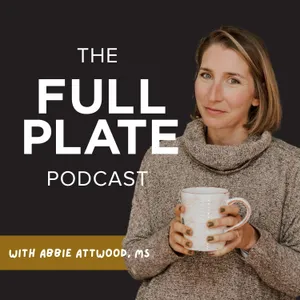
Free Daily Podcast Summary
The Full Plate Podcast with Abbie Attwood, MS: Daily Summaries Delivered
by Full Plate by Abbie Attwood
Full Plate is a podcast about healing from diet culture, creating peace with food, reclaiming body autonomy and trust, and taking a weight-inclusive approach to our well-being. Each week, Abbie interviews guests or answers listener questions that explore our relationship to food and our bodies. Abbie is an anti-diet nutritionist with a master’s in nutrition and integrative health. She is also the founder and owner of Abbie Attwood Wellness, a virtual private practice dedicated to weight-inclusive care, food freedom, body image healing, and dismantling diet culture.
Latest Episodes
The most recent episodes — sign up to get AI-powered summaries of each one.
- 2 days ago26 min
“You’re Here for a Reason”: Living Fully When Eating Disorder Recovery is Still Unfinished with Johanna Scoglio
This is a free preview of a paid episode. To hear more, visit abbieattwoodwellness.substack.comWhat if you’ve been working on your relationship with food and your body for years…and you’re still struggling? Does that mean you’re doing recovery wrong?This is at the heart of today’s bonus episode of Full Plate, and I think it’s a conversation we desperately need more of.(To hear the full conversation, become a paid subscriber right here.)Eating disorder stories are often told from one of two places: from the absolute depths of the struggle, or from the other side, where everything gets wrapped up into a neat recovery story. But most healing happens somewhere in between.Johanna Scoglio, author and mental health educator, joins me to talk about living with and healing from an eating disorder that has been part of her life for more than 25 years—and what changed when she stopped measuring recovery by whether she could make every thought, urge, or struggle disappear.Johanna shares honestly about rigid definitions of recovery, weight-centered care, all-or-nothing approaches to food and exercise, and the feeling that struggling meant she was failing.But we also get into something I think will resonate deeply with anyone who has been doing this work for a long time: the sheer exhaustion of always working on recovery, and figuring out how much of your life to devote to healing.Listen for more on:* Why eating disorders are so often about much more than food or body image* The difference between being “high functioning” and actually being okay* How perfectionism can follow us straight into recovery* What Johanna wishes had been different about eating disorder treatment* Weight stigma and the issues with using weight as a marker of illness or recovery* Why an all-or-nothing approach to movement can create its own harm* Harm reduction as an alternative to shame, compliance, and perfection* Including exercise without an all-or-nothing approach*The exhaustion that can come from working on recovery for years* What Johanna believes is the real thing she's healing from (and it has nothing to do with food)* Learning to trust yourself, your emotions, and your own inner wisdom* What it means to create a meaningful life while you’re still “in the water”🎧 To hear the full conversation, become a paid subscriber right here.Paid subscriptions directly support Full Plate and make it possible for me to continue having long, nuanced, independent, sponsor-free conversations like this one.If you’ve ever wondered, Why am I still struggling with this?, I really hope this one meets you where you are and offers a way forward.Johanna Scoglio is an author, educator, and mental health advocate dedicated to reducing stigma and creating compassionate spaces for those navigating eating disorders. She lives in North Carolina with her husband, four bonus children, and their puppy, Copa. Her memoir is called: When the Water Still Holds Me: Letters Through the Tides of a Long-Term Eating Disorder.Support the show on Substack for bonus episodes, community engagement, and access to "Ask Abbie" at abbieattwoodwellness.substack.com/subscribeApply for Abbie’s Group Membership for live sessions every other week and a community of support from healing from diet culture:https://www.abbieattwoodwellness.com/circle-monthly-groupSocial media:Find the show on Instagram: @fullplate.podcastFind Abbie on Instagram: @abbieattwoodwellness
- 1 weeks ago47 min
You Understand Diet Culture, So Why Do You Still Hate Your Body? with Stephanie Dodier
Today I’m speaking with Stephanie Dodier, a non-diet nutritionist, certified Intuitive Eating counselor, and cognitive behavior coach. Our conversation covers a lot of ground, but constantly circles this question:What happens when you understand all of this diet culture stuff intellectually…but it still doesn’t quite feel true for you and your body?We get into:* The difference between eating something because you genuinely enjoy it and eating it because diet culture told you to* Why satisfaction and pleasure matter in having a calm, compassionate relationship with food* How gender, body size, and other identities affect who is “allowed” pleasure with food* Why Intuitive Eating can feel like it “isn’t sticking”* The connection between food, body control, self-worth, and belonging* How patriarchy and cultural conditioning shape our beliefs about our bodies* Why understanding diet culture intellectually is different from embodying new beliefs* Why body image work can feel less straightforward than healing our relationship with food* What embodiment can actually look like in everyday life* Stephanie’s experience learning to wear short sleeves after years of hiding her arms* How community helps us grow stronger roots outside of diet culture* A practical exercise for separating facts from the thoughts and beliefs we’ve attached to themStephanie's work is focused on behavioral science, human psychology and body image. Her podcast is called It's Beyond the Food, and you can find her on Instagram at @stephdodier.Apply for Abbie’s Group Membership for live sessions every other week and a community of support from healing from diet culture:https://www.abbieattwoodwellness.com/circle-monthly-groupSupport the show on Substack for bonus episodes, community engagement, and access to "Ask Abbie" at abbieattwoodwellness.substack.com/subscribeSocial media:Find the show on Instagram: @fullplate.podcastFind Abbie on Instagram: @abbieattwoodwellness This is a public episode. If you'd like to discuss this with other subscribers or get access to bonus episodes, visit abbieattwoodwellness.substack.com/subscribe
- 2 weeks ago6 min
Beyond GLP-1 Weight Loss: Weight Regain, Long-Term Use, and Pharma Influence with Ragen Chastain (Part Two)
This is a free preview of a paid episode. To hear more, visit abbieattwoodwellness.substack.comThis is part two of my conversation with Ragen Chastain. We pick up with the question of what happens when people stop taking GLP-1 medications, and whether “taking them for life” is actually supported by the research.From there, Ragen takes us deeper into the research on weight regain, body composition changes, and the increasingly broad claims that GLP-1 medications can treat everything from cardiovascular disease to mental health concerns. We also talk about pharmaceutical influence on healthcare providers, what happens when doctors are working from incomplete or biased information, and how patients can advocate for themselves when / if their doctor presents a GLP-1 as the answer.This is a bonus episode for paid subscribers. To join us, upgrade here.And if you’re already a paid subscriber: thank you for making this possible. I genuinely mean that.In this episode, you’ll hear:* What the research actually tells us about weight regain after stopping GLP-1 medications* The idea that GLP-1 medications need to be taken for life* Weight regain, muscle loss, and changes in body composition* How researchers define “maintaining” weight loss and why those definitions matter* The way GLP-1 research is presented in headlines, abstracts, and public conversations* Claims that GLP-1 medications may benefit conditions beyond type 2 diabetes and weight loss* Why the dose being studied matters when we’re trying to understand health outcomes* How pharmaceutical companies influence healthcare providers through research, education, and financial relationships* The difference between a doctor being malicious and a doctor being misinformed* What happens when GLP-1 medications are presented as a solution to almost every health concern* How weight stigma can shape which treatments are offered to higher-weight patients* BMI-based denials of care and the way weight loss can become a prerequisite for receiving healthcare* Questions patients can ask when a provider recommends a GLP-1* How to advocate for weight-inclusive care, even when there is a power imbalance between doctors and patients* Why informed consent requires more than simply being told that a medication “works”* What Ragen hopes people take away from the larger conversation about weight, health, and healthcareRagen Chastain is a researcher, writer, speaker, and board-certified patient advocate who has spent more than 20 years examining the intersections of weight science, weight stigma, and healthcare. She brings a research- and statistics-informed perspective to a conversation that is often dominated by pharmaceutical marketing, influencer anecdotes, and very simplified claims about what these medications do.Find Ragen at weightandhealthcare.substack.com and on instagram at @ragenchastainSupport the show on Substack for bonus episodes, community engagement, and access to "Ask Abbie" at abbieattwoodwellness.substack.com/subscribeApply for Abbie’s Group Membership for live sessions every other week and a community of support from healing from diet culture:https://www.abbieattwoodwellness.com/circle-monthly-groupSocial media:Find the show on Instagram: @fullplate.podcastFind Abbie on Instagram: @abbieattwoodwellness
- 3 weeks ago39 min
GLP-1 Medications: What We Know About Safety, Food Noise, and Weight Loss with Ragen Chastain
GLP-1 medications like Ozempic, Wegovy, Mounjaro, and Zepbound have gone from relatively niche diabetes medications to one of the biggest (and most controversial) stories in health and wellness.As you may have noticed, I’ve taken a bit of a hiatus from the podcast the past couple of months while I’ve been recovering from a SCAD heart attack.Today, I'm back with a brand new conversation about weight loss drugs with Ragen Chastain, a researcher, writer, speaker, and board-certified patient advocate who has spent more than 20 years examining the intersections of weight science, weight stigma, and healthcare. She brings a research- and statistics-informed perspective to a conversation that is often dominated by pharmaceutical marketing, influencer anecdotes, and very simplified claims about what these medications do.We do a deep dive into GLP-1 medications, weight loss, food noise, hunger, weight stigma, and what we actually know about the safety and long-term effects of these drugs.In this episode, we get into:* Ragen’s journey from dieting and doing her own literature review to becoming a researcher and advocate in the weight-inclusive healthcare space* What we know about the failure of long-term weight-loss interventions* Weight-inclusive healthcare and why it shouldn’t depend on whether we believe people can or cannot lose weight* How GLP-1 medications work, including their effects on blood sugar, gut motility, digestion, and hunger* The difference between diabetes dosing and the higher doses used for weight loss* What “food noise” actually means (and what it doesn’t mean)* How diet culture and restriction can affect hunger and thoughts about food* The medicalization of hunger* Why the same symptoms can be interpreted and treated differently depending on the size of the person experiencing them* Weight stigma in healthcare and the assumption that weight loss is the answer to an enormous range of health concerns* What we know and don’t know about the long-term safety of GLP-1 medications* Why research on a medication at one dose cannot automatically answer questions about that medication at another dose* Study dropout and what can get lost when we look only at headlines, abstracts, and conclusions* Conflicts of interest in pharmaceutical research* Concerns about the quality and transparency of long-term safety data* What happens when medications designed to suppress hunger are used in people whose bodies are otherwise regulating blood sugar normallyThis is part one of the conversation. In part two (releasing next week) we’ll dig further into weight regain, body composition, how GLP-1 research is presented to the public, the explosion of claims that these medications can treat everything from cardiovascular disease to mental health concerns, pharmaceutical influence on healthcare providers, and what you can actually do when a doctor recommends a GLP-1.Apply for Abbie’s Group Membership:If you're looking for community and continued learning, apply for Abbie's monthly membership: https://www.abbieattwoodwellness.com/circle-monthly-group. We meet every other Thursday, and have a private online space for ongoing conversations between sessions.Enjoying this podcast? Please support the show on Substack for bonus episodes, community engagement, and access to "Ask Abbie" at abbieattwoodwellness.substack.com/subscribeFind more resources from Ragen:Substack: https://weightandhealthcare.substack.com/Instagram: https://www.instagram.com/ragenchastain/?hl=en This is a public episode. If you'd like to discuss this with other subscribers or get access to bonus episodes, visit abbieattwoodwellness.substack.com/subscribe
- Aug 25, 20261h 14m
How to live in a body that hurts: chronic illness, disability, and body image with Dr. Jennifer Caspari
What does it mean to live in a body that doesn’t always do what you wish it would? A body that’s unpredictable, maybe in pain, maybe exhausted — a body shaped by chronic illness, disability, or medical trauma?This week on the podcast, I’m revisiting an episode with the deeply compassionate Dr. Jennifer Caspari, a psychologist who specializes in health psychology and lives with cerebral palsy. Her personal and professional wisdom come together in such a powerful way — this conversation felt like a breath of fresh air in a world that so often asks us to override, fix, or fight our bodies.We talk about what it means to be in relationship with your body when it doesn’t feel like it’s on your side — and how to cultivate self-compassion, presence, and joy even in the midst of that. (Her new book is a beautiful read, by the way).Jen shares her own story — how she came into therapy, what it’s like navigating the world in a disabled body, and the mindset shifts that have helped her most during painful or difficult seasons.We explore:* How societal body image pressure intersects with disability and illness* Why we don’t have to wait for symptoms to go away in order to start living* The role of values-based living and gentle courage in hard moments* Practical strategies for coping with chronic pain* What it really means to practice radical acceptance* Why chronic illness often involves grief — of function, identity, possibility* Navigating relationships and communicating needs with loved ones* Finding agency, even when so much feels out of your control* Living fully with a body that’s chronically ill — and maybe always will beSupport the show: Enjoying this podcast? Please support the show on Substack for bonus episodes, community engagement, and access to "Ask Abbie" at abbieattwoodwellness.substack.com/subscribe Apply for Abbie’s Group Membership:If you're looking for support, live sessions, community, and continued learning, apply for Abbie's monthly membership: https://www.abbieattwoodwellness.com/circle-monthly-groupSocial media:Find the show on Instagram: @fullplate.podcastFind Abbie on Instagram: @abbieattwoodwellness Podcast Cover Photography by Anya McInroyThis podcast is ad-free and made possible by paid subscribers on Substack. Subscribe HERE. This is a public episode. If you'd like to discuss this with other subscribers or get access to bonus episodes, visit abbieattwoodwellness.substack.com/subscribe
- Jul 27, 20265 min
A Rare Diagnosis and Body Trust in Recovery
This is a free preview of a paid episode. To hear more, visit abbieattwoodwellness.substack.comhttps://abbieattwoodwellness.substack.com/subscribeToday's episode is a bit different than usual. I'm sharing (solo) a bit about where I've been, what's been going on with my health, and what it all means for this podcast.To listen, upgrade to paid right here. Paid subscribers get access to all bonus content -- including the full archive of paywalled podcast episodes and newsletters.In the episode, I get into:- what happened (the heart attack, the hospital stay, and how my husband and family played a role)- trusting your body even in the middle of a crisis- the ways a medical condition overlaps with diet culture- holding space for how unique everyone's experience with a health condition is, even when it's the same diagnosis- the emotional impact of a life-threatening experience- leaning into rest as a radical act of self-care, and how hard that can be in our culture- where I'm finding the capacity for understanding and patience with my body, and where I'm not- what this means for the podcast and my businessThank you so muxh for supporting me -- both as a person, and as an independent writer / producer. It means the world.
- Jun 29, 20261h 10m
The Wisdom in Dissociation: When Leaving Your Body Is a Form of Protection with Monika Ostroff, LICSW, CEDS-S
Abbie is joined by the incredible Monika Ostroff, executive director of MEDA, clinician, author, and person with lived experience of both anorexia and DID — for one of the most illuminating conversations the show has ever had. This one will change the way you think about survival, the body, and what healing actually asks of us.In this episode:- What dissociative identity disorder (DID) actually is — and how it's almost nothing like what you've seen in media- Why DID is far more common than most people realize, and why diagnosis takes so long- The striking overlap between DID and eating disorders, and what that tells us about both- How eating disorders function as a trauma response — and why that framing matters for recovery- What it means to approach an eating disorder with compassion rather than shame- The clinical and personal complexity of treating multiple eating disorder presentations within one system- Why the "control freak" narrative around eating disorders misses the point entirely- Monica's own lived experience with anorexia, DID, and what recovery has looked like- The single piece of wisdom that reoriented Monica's entire relationship with herselfAbout Monika: Monika Ostroff, LICSW, CEDS-S is the Executive Director of the Multi-Service Eating Disorders Association, Inc (MEDA). She has over 25 years of experience in the field of eating disorders. Prior to leading MEDA, she directed several residential, partial hospital and intensive outpatient eating disorder programs in addition to having owned a thriving private practice. Practicing from a trauma informed, social justice and staunchly HAES® aligned lens, Monika is a dedicated ally and strong advocate working to ensure access to equitable, compassionate, and affirming care for all. Find Monika: Healing My Parts on Substack, Instagram, and podcastSupport the show: Enjoying this podcast? Please support the show on Substack for bonus episodes, community engagement, and access to "Ask Abbie" at abbieattwoodwellness.substack.com/subscribeApply for Abbie’s Group Membership:Already been at this anti-diet culture thing for a while, but want community and continued learning? Apply for Abbie's monthly membership: https://www.abbieattwoodwellness.com/circle-monthly-group Find the show on Instagram: @fullplate.podcastFind Abbie on Instagram: @abbieattwoodwellness This is a public episode. If you'd like to discuss this with other subscribers or get access to bonus episodes, visit abbieattwoodwellness.substack.com/subscribe
- Jun 22, 20261h 4m
The Chronic Pain and Diet Culture Connection Nobody's Talking About with DK Ciccone, Author of You're Meant to Move
I'm joined by DK Ciccone — comprehensively certified Pilates instructor, pain reprocessing therapy practitioner, and author of You're Meant to Move — for a conversation that is both deeply personal and clinically rich. We talk about what chronic pain actually is, why so many people have been dismissed or mislabeled, and what it looks like to rebuild a relationship with movement that isn't driven by fear, punishment, or diet culture.This was originally a paid episode. Consider upgrading to a paid subscription to keep Full Plate going: https://abbieattwoodwellness.substack.com/subscribeIn this episode:DK's journey with chronic pain and her past as a dancerHow chronic pain forms and why the pain is real even in the absence of ongoing tissue damageThe nervous system science behind pain sensitization — and why catastrophizing physically amplifies painKinesiophobia: the fear of movement that develops after chronic pain, and how to work through itSomatic tracking and pain reprocessing therapy as tools for understanding pain signalsHow to explore the difference between pain and discomfortDK's "refuge and reach" framework for rebuilding a movement practice incrementallyExploring functional movement versus "exercise"The research debunking weight loss as a solution for chronic painWhy restriction and dieting actually increase chronic pain risk — and the clinical evidence behind itHow trauma and disconnection from the body compound the chronic pain experienceWhat embodied movement looks like when you're coming back from years of diet culture messagingAbout DK Ciccone: Dana Karen ("DK") Ciccone is a comprehensively certified Pilates instructor who helps people in pain improve strength, mobility, and well-being in a weight-neutral environment. She is trained in pain reprocessing therapy through the Pain Psychology Center and is the founder of Movement Remedies, a chronic pain–focused Pilates studio and movement coaching business. Her book, You're Meant to Move: A Guide to Conquering Chronic Pain, Increasing Stress Resilience, and Reclaiming an Active Life, was released in December 2023.Support the show: Enjoying this podcast? Please support the show on Substack for bonus episodes, community engagement, and access to "Ask Abbie" at abbieattwoodwellness.substack.com/subscribe Apply for Abbie’s Group Membership:Already been at this anti-diet culture thing for a while, but want community and continued learning? Apply for Abbie's monthly membership: https://www.abbieattwoodwellness.com/circle-monthly-group Social media:Find the show on Instagram: @fullplate.podcastFind Abbie on Instagram: @abbieattwoodwellness This is a public episode. If you'd like to discuss this with other subscribers or get access to bonus episodes, visit abbieattwoodwellness.substack.com/subscribe
Get The Full Plate Podcast with Abbie Attwood, MS summaries in your inbox
Free AI-powered daily recaps. Key takeaways, quotes, and mentions — in a 5-minute read.
Get Free Summaries →Free forever for up to 3 podcasts. No credit card required.
You Might Also Like
Listeners also like.
Bite Back with Abbey Sharp
A registered dietitian debunks nutrition myths and shares science-based, enjoyable approaches to food and healthy living.
Quiet the Diet
A dietitian shares her experience and knowledge to help people heal their relationship with food and make health choices based on self-awareness.
Fit + Fueled Life Podcast
A functional nutrition practitioner explores sustainable fat loss, hormone balance, and metabolic health for women over 40.

Get Obsessed : With Living Your Best Life
Two hosts explore transformative stories and taboo topics with people challenging norms and living unfiltered lives.

Heart Led Wellness
Teaches women to heal their relationship with food through nervous system regulation and somatic practices.

Modern Body Modern Life
Helps women change their mindset around food and body image to achieve lasting weight loss and emotional balance.

The Autoimmune Wellness Podcast
Explores managing autoimmune diseases through nutrition, lifestyle, and the Autoimmune Protocol.
Live Like a Girl with Dr. Mindy Pelz
Dr. Mindy Pelz explores women's health through hormone science and wellness conversations to help women live in rhythm with their bodies.

Rooted in Wellness with Mona Sharma
A holistic nutritionist blends ancient wellness practices with modern science to address mind, body, and soul health.
The Balanced, Beautiful and Abundant Show - Rebecca Whitman
A coach helps high-achieving women overcome burnout using a framework centered on spiritual, emotional, physical, and financial well-being.

High Vibe & Healthy: Gut Health | Functional Nutrition | Whole Foods
A functional nutritionist explores gut health and whole foods to help simplify wellness and boost energy.

Red Pill Your Healthcast
Two healthcare providers discuss overlooked health issues and empower listeners to make informed decisions for their families.
About The Full Plate Podcast with Abbie Attwood, MS
Full Plate is a podcast about healing from diet culture, creating peace with food, reclaiming body autonomy and trust, and taking a weight-inclusive approach to our well-being. Each week, Abbie interviews guests or answers listener questions that explore our relationship to food and our bodies. Abbie is an anti-diet nutritionist with a master’s in nutrition and integrative health. She is also the founder and owner of Abbie Attwood Wellness, a virtual private practice dedicated to weight-inclusive care, food freedom, body image healing, and dismantling diet culture.
Customized Recaps
AI-powered recaps with compact key takeaways, quotes, and insights.
Straight to Your Inbox
Get key takeaways from The Full Plate Podcast with Abbie Attwood, MS in a 5-minute read.
Save Hours Every Week
Stay current on your favorite podcasts without falling behind.
Frequently Asked Questions
What is Podzilla's The Full Plate Podcast with Abbie Attwood, MS daily summary?
It's a free AI-powered email that summarizes new episodes of The Full Plate Podcast with Abbie Attwood, MS as soon as they're published. You get the key takeaways, notable quotes, and links & mentions — all in a quick read.
How does the The Full Plate Podcast with Abbie Attwood, MS podcast summary work?
When a new episode drops, our AI transcribes and analyzes it, then generates a personalized summary tailored to your interests and profession. It's delivered to your inbox every morning.
Is this an official The Full Plate Podcast with Abbie Attwood, MS product?
No. Podzilla is an independent service that summarizes publicly available podcast content. We're not affiliated with or endorsed by Full Plate by Abbie Attwood.
Can I get summaries of other podcasts too?
Absolutely! The free plan covers up to 3 podcasts. Upgrade to Pro for 15, or Premium for 50. Browse our full catalog at /podcasts.
How often does The Full Plate Podcast with Abbie Attwood, MS release new episodes?
The Full Plate Podcast with Abbie Attwood, MS publishes weekly. Our AI generates a summary within hours of each new episode.
What topics does The Full Plate Podcast with Abbie Attwood, MS cover?
The Full Plate Podcast with Abbie Attwood, MS covers topics including Nutrition, Fitness, Health & Fitness, Mental Health. Our AI identifies the specific themes in each episode and highlights what matters most to you.
Start getting The Full Plate Podcast with Abbie Attwood, MS summaries tomorrow morning.
Free forever for up to 3 podcasts. No credit card required.
Free forever for up to 3 podcasts. No credit card required.