Free Daily Podcast Summary
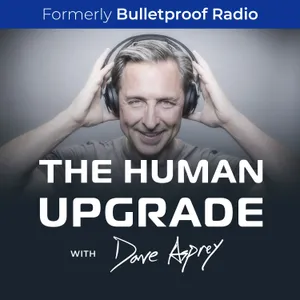
The Human Upgrade: Biohacking for Longevity & Performance: Daily Summaries Delivered
by Dave Asprey
For more than a decade, Dave Asprey - the Father of Biohacking and creator of Bulletproof Coffee - has redefined what’s possible for the human mind and body. After more than a thousand episodes of Bulletproof Radio, he’s taking it to the next level with The Human Upgrade™ - a masterclass in biohacking, longevity, and performance optimization. Each episode explores cutting-edge science, advanced technology, and proven biohacks to help you upgrade your energy, focus, metabolism, and resilience. You’ll learn from world-class scientists, doctors, innovators, and thinkers leading breakthroughs in mitochondrial health, peptides, hormones, fasting, sleep, neuroplasticity, and more. This isn’t just self-improvement - it’s human enhancement backed by data. Every guest, every idea, every protocol you discover here moves you toward a longer, stronger, smarter life.
Latest Episodes
The most recent episodes — sign up to get AI-powered summaries of each one.
- Yesterday1h 26m
The Science of Happiness - Dr. Gad Saad : 1577
We're bringing back one of our most fascinating conversations about happiness, human behavior, and the evolutionary forces that shape nearly every decision you make. This episode was too good not to share again!Today you'll meet Gad Saad, PhD, evolutionary behavioral scientist, professor of marketing at Concordia University's John Molson School of Business, and author of The Saad Truth About Happiness: Eight Secrets for Leading the Good Life.What if the reason you're unhappy has less to do with your circumstances and more to do with the ancient biological programming running your brain?Dr. Saad studies how evolution influences human behavior, from the partners we choose and the careers we pursue to our desire for status, pleasure, and social connection. His research offers a fascinating explanation for why modern life can leave us feeling unfulfilled, even when we have more comfort, convenience, and opportunity than ever before.In this conversation, Dave and Gad explore the evolutionary roots of happiness and why understanding your biology can help you make better decisions. They discuss several surprising ideas:Why choosing the right romantic partner and career may be two of the most important decisions you'll ever make.How your genes influence happiness, and why your daily choices still matter.Why too much of a good thing, including perfectionism, trust, and ambition, can make you miserable.How modern environments clash with the conditions humans evolved to thrive in.Why testosterone, social status, and even driving an expensive car can influence male behavior.You'll also hear about the psychology of criticism, why humans struggle to recognize their own biases, and how evolutionary biology can help explain everything from romantic attraction to family relationships.You'll Learn:Why genetics may account for roughly half the differences in people's happiness, and how behavior and environment influence the rest.How the evolutionary mismatch hypothesis helps explain modern unhappiness, loneliness, and unhealthy habits.Why moderation follows an inverted U-shaped curve, and how to recognize when perfectionism or ambition has gone too far.How shared values and beliefs influence long-term relationship compatibility, and why attraction alone may not be enough.How testosterone responds to social status and competition, including Dr. Saad's unusual experiment involving a Porsche.Resources:• Gad Saad's Book: The Saad Truth About Happiness | https://a.co/d/08w3cAP0• Get My 2026 Clean Nicotine Roadmap | Enroll for free at https://daveasprey.com/2026-clean-nicotine-roadmap/ • Dave Asprey's Latest News | Go to https://daveasprey.com/ to join Inside Track today.&nb
- 2 days ago1h 2m
The Hidden Cost of Being a Weak Man | JP Sears : 1576
Testosterone Optimization, Men's Health, Mental Toughness & Modern Masculinity Host Dave Asprey sits down with JP Sears, comedian, author, YouTuber, and creator of Awaken With JP, to explore testosterone replacement therapy (TRT), men's health, modern masculinity, mental toughness, emotional resilience, and personal growth. Known for his satirical takes on politics, fitness, faith, and freedom, JP shares how his own journey through hormone optimization, divorce, and personal transformation inspired The Better Man Project, his initiative focused on helping men become stronger physically, psychologically, and emotionally. Dave and JP examine how testosterone, discipline, purpose, and self-awareness can shape confidence, relationships, and overall well-being. JP shares his experience starting testosterone replacement therapy after discovering his levels were in the 300s. He describes gaining 25 pounds of muscle without changing his workout routine, experiencing improvements in mood and confidence, and reconsidering his previous beliefs about hormone therapy. Dave reflects on his own experience with low testosterone in his twenties, and they discuss the differences between medically supervised TRT and performance-enhancing steroid use, the importance of blood testing, and the changing conversation around hormone replacement and longevity. The conversation explores JP's evolution from spiritual comedy and political satire toward The Better Man Project, his new initiative focused on helping men develop strength, purpose, and personal responsibility. JP explains why he believes modern men need stronger values, greater self-awareness, and a commitment to serving something beyond themselves. Dave and JP discuss how political outrage, chronic stress, and external distractions can pull attention away from improving personal health, family relationships, and the communities people directly influence. Dave and JP also examine the psychology of failure, forgiveness, and rebuilding after major setbacks. JP reflects on the emotional and financial consequences of divorce, the mistakes that contributed to his struggles, and how those experiences changed his approach to relationships. Dave shares lessons from losing an estimated $100 million during his departure from Bulletproof and discovering that an employee had embezzled money. Together, they explore how shame, resentment, personal accountability, and the ability to learn from failure shape long-term resilience. Finally, the discussion turns to discomfort, pain tolerance, and the relationship between physical challenges and psychological strength. JP explains how difficult workouts, cold plunges, and intentionally facing discomfort have helped him build confidence and emotional resilience. Dave introduces his BICEP framework, Brief Intentional Conscious Exposure to Pain, and discusses his approach to fear, dopamine regulation, and developing greater tolerance for stress. They examine why becoming a better man may depend as much on emotional regulation, forgiveness, and inner peace as it does on physical strength. You'll Learn: How JP Sears' experience with testosterone replacement therapy (TRT) affected his muscle growth, confidence, mood, and energy Why Dave and JP believe testosterone optimization deserves more attention in conversations about men's health and longevity What to consider when evaluating testosterone levels, hormone replacement therapy, and medically supervised treatment Why JP shifted from political satire toward helping men develop strength, purpose, and personal responsibility How defining personal values and finding a purpose beyond yourself can influence happiness and fulfillment Why emotional regulation, self-awareness, and inner peace are essential components of healthy masculinity How JP rebuilt his life after divorce and what he learned about relationships, forgiveness, and personal accountability What Dave learned about resilience and discernment after losing an estimated $100 million during his departure from Bulletproof How cold plunges, challenging workouts, and intentional discomfort can help develop confidence and psychological resilience What Dave's BICEP framework, Brief Intentional Conscious Exposure to Pain, proposes about discomfort, dopamine regulation, and self-control Dave Asprey is a four-time New York Times bestselling author, founder of Bulletproof Coffee, and the father of biohacking. With over 1,000 interviews and 1 million monthly listeners, The Human Upgrade brings you the knowledge to take control of your biology, extend your longevity, and optimize every system in your body
- 4 days ago1h 15m
Inside the CIA's Secret Experiments to Predict the Future | Dean Radin : 1575
Dean Radin on CIA Project Stargate, Remote Viewing, Psychic Abilities, Precognition, Consciousness Research, Quantum Physics, and the Science of Predicting the Future Host Dave Asprey sits down with Dean Radin, PhD, chief scientist at the Institute of Noetic Sciences (IONS) and author of The Science of Magic, to explore CIA psychic research, consciousness, precognition, remote viewing, quantum physics, and whether human thoughts can influence physical reality. Drawing on decades of research, Dean examines the scientific evidence behind extraordinary mental abilities and the possibility of predicting future events. Dean takes Dave inside Project Stargate, the classified government program investigating psychic espionage and remote viewing during the Cold War. He describes its connection to hundreds of intelligence missions, efforts to identify people with unusual abilities, and research into whether psychic perception can be trained or influenced by genetics. They also discuss whether similar government programs continue today. The conversation explores experiments investigating precognition, physiological responses to future events, and whether focused intention can influence quantum systems. Dean describes research comparing human observers with artificial intelligence, where humans demonstrated an experimental effect that AI did not reproduce. Dave and Dean examine telepathy, prophetic dreams, retrocausality, and the controversial possibility that consciousness extends beyond the physical brain. Drawing from The Science of Magic, Dean discusses the relationship between meditation, manifestation, belief, and mental training. He explains why ritual magicians outperformed experienced meditators in one focused-intention experiment and explores research into distant mental influence, unusual perceptual abilities, and the potential role of attention and imagination in shaping human experience. Finally, Dean introduces Cognigenics, a neuroengineering company developing experimental RNA-based treatments targeting 5-HT2A serotonin receptors for memory and neurological conditions. Dave and Dean also explore psychedelics, altered states of consciousness, and whether popular culture, including The Simpsons, can seemingly predict the future through creativity, intuition, or collective attention. You'll Learn: What the CIA-linked Stargate program investigated about psychic espionage, remote viewing, and extraordinary human abilities How scientists test whether people can predict future events through precognition and physiological responses What experiments suggest about focused intention, quantum systems, and the relationship between consciousness and physical reality Why human observers demonstrated an effect that artificial intelligence did not reproduce in one quantum experiment Whether meditation, attention training, and belief can help develop unusual mental abilities Why ritual magicians&n
- 6 days ago15 min
This Pill Tricks Your Body Into Fasting (It Works) : 1574
There's a 15 minute habit you can do every morning that kills insulin belly. That's the fat packed around your organs. It drains into your liver, forces your body to make more insulin, and insulin locks your fat cells shut so nothing can get out.I know because 20 years ago I was 31, weighed 300 pounds, and my doctor told me my blood looked like sludge and I was headed for a heart attack. So I did exactly what he said. I trained six days a week, 90 minutes a day, for 18 months. My waist stayed at 46 inches.Today that waist is gone. So is my arthritis, my brain fog, and my pre-diabetes. And it didn't start with a diet or a workout. It started with light.In this video I'll show you two ways to test whether you have insulin belly (one takes 10 seconds and costs nothing), why a standard blood sugar test misses it for years, and the three levers that reversed mine.You'll Learn:What “insulin belly” is and why visceral fat poses different risks than fat under your skinWhy you can be “thin outside, fat inside”—and which measurements reveal more than BMIWhat research on red light suggests about blood sugar and mitochondrial functionWhy Dave prioritizes morning sunlight and a dark bedroom at nightDave’s three timing rules for meals and movement to support insulin sensitivityHow cold exposure, brown fat, and gut bacteria may influence metabolic healthWhat Dave learned going from a 46-inch waist to a 32-inch waistTimestamps:00:00 - What Is Insulin Belly?03:03 - Two Tests Beyond BMI04:35 - Red Light, Blood Sugar & Mitochondria06:10 - Dave’s 15-Minute Morning Routine10:12 - Lever One: Morning Light & Dark Nights11:20 - Lever Two: Meal & Exercise Timing13:25 - Lever Three: Cold Exposure & Gut Health15:19 - Blue Light: Why Timing MattersThank you to our sponsors!Connect with Dave Asprey!Website: https://daveasprey.comTikTok: https://www.tiktok.com/@daveaspreyofficialInstagram: https://www.instagram.com/dave.asprey/Facebook: https://www.facebook.com/Daveaspreyofficial/X: https://x.com/daveaspreyYouTube: https://www.youtube.com/c/daveaspreybprThe Human Upgrade Podcast: https://www.instagram.com/TheHumanUpgradePodcast/ https://m.facebook.com/Thehumanupgrade/Try TrueDark glasses: https://truedark.comTry Danger Coffee: https://dangercoffee.com/discount/davetubeTry Suppgrade Labs: https://shopsuppgradelabs.com/Dave's favorite supplements: https://www.shopsuppgradelabs.com/discount/DAVE15Join my Substack: https://substack.daveasprey.comUpgrade Labs: https://upgradelabs.com40 Years of Zen: https://40yearsofzen.comSee Privacy Policy at https://art19.com/privacy and California Privacy Notice at https://art19.com/privacy#do-not-sell-my-info.
- 1 weeks ago11 min
Immortal Jellyfish, Fructose & Cancer, Cleaner Air for Blood Sugar, Carbon Dioxide for Alzheimer's, and More : 1573
Scientists Test Carbon Dioxide Exposure To Help Clear Alzheimer's-Related Proteins From The BrainResearchers at the University of New Mexico are investigating whether intermittent exposure to carbon dioxide-enriched air can stimulate the brain's glymphatic waste-clearance system and increase the movement of proteins associated with Alzheimer's disease into the bloodstream. In a preliminary human experiment involving 12 participants, alternating between ordinary air and air containing 5% CO2 for approximately 30 minutes produced rhythmic changes in cerebral blood vessels, followed by temporary increases in blood levels of amyloid-beta. Participants with signs of cognitive decline also showed a tau-related response. The findings, reported in July 2026, build on a 2025 study published in npj Parkinson's Disease demonstrating that intermittent carbon dioxide exposure stimulated cerebrospinal fluid movement and increased circulating levels of several neurodegeneration-related proteins. Although these results suggest a potential method for influencing brain waste transport, they do not establish that Alzheimer's plaques were removed or cognitive function improved. Host Dave Asprey explores carbon dioxide signaling, vasomotion, cerebral blood flow, glymphatic clearance, and the relationship between deep sleep and brain detoxification, examining whether controlled vascular stimulation could eventually support new approaches to protecting long-term brain health.Sources:New Scientist: Inhaling High-Dose CO2 Clears Alzheimer's Proteins From The Brain2025 Peer-Reviewed Study: The Influence Of Intermittent Hypercapnia On Cerebrospinal Fluid Flow And Clearance~~~Bedroom Air Purifiers Reduce Blood Sugar Fluctuations By Nearly 8% In Human TrialResearchers at NYU Langone Health found that improving bedroom air quality produced measurable improvements in glucose regulation among adults with prediabetes. In a randomized, double-blind clinical trial involving 150 participants, four weeks of HEPA air filtration reduced indoor fine particulate pollution (PM2.5) by 36%, lowered glucose variability by 7.7%, and reduced post-breakfast glucose excursions by 16.6% compared with sham filtration. Presented at the American Heart Association's Scientific Sessions in November 2026, the findings suggest that airborne pollutants may influence metabolic health and blood sugar stability, even in environments with relatively modest pollution levels. Although researchers have not established whether these improvements translate into reduced diabetes risk or long-term cardiovascular benefits, the trial provides evidence that modifying environmental exposures can affect glucose regulation without introducing a new dietary intervention or medication. Host Dave Asprey explores the relationship between 
- 1 weeks ago1h 7m
The Hidden Health Warnings in Your Poop (And Why You Should Look) | Chloe Melas : 1572
Get Chloe's book The Girl’s Guide To Guts at thegirlsguidetoguts.com Gut microbiome, stool testing, colon cancer warning signs, ulcerative colitis, chronic constipation, fiber, inflammation, digestive health, and the connection between gut bacteria and biological aging. Host Dave Asprey sits down with Chloe Melas, NBC journalist and author of The Girl's Guide to Guts, to explore what your poop reveals about your health, the gut microbiome, chronic inflammation, colon cancer warning signs, digestive disorders, and the connection between gut bacteria and longevity. After living with ulcerative colitis for 15 years, Chloe shares her experience navigating chronic constipation, abnormal bowel movements, repeated antibiotic treatments, and a healthcare system that often overlooked the role of nutrition, lifestyle, and gut health. Chloe explains why your stool can serve as a daily health report card, revealing potential warning signs that deserve attention. She describes spending more than a decade without normal bowel movements, regularly checking for blood in her stool, and struggling with symptoms that many people mistakenly associate only with diarrhea. Dave and Chloe examine the differences between irritable bowel syndrome (IBS), inflammatory bowel disease (IBD), Crohn's disease, and ulcerative colitis, along with the importance of recognizing changes in bowel habits. They also discuss the rise of colorectal cancer in younger adults, including Chloe's account of a woman whose rectal bleeding was initially attributed to hemorrhoids before she received a stage three colon cancer diagnosis. The conversation explores how fiber, gut bacteria, and the microbiome influence digestive health and biological aging. Chloe describes how incorporating psyllium husk and other fibers into her routine coincided with a dramatic improvement in her symptoms and five years of remission. Dave explains how different types of dietary fiber interact with gut bacteria, why microbial diversity matters, and how stool testing can reveal information about the microorganisms living in your digestive tract. They discuss soluble fiber, prebiotics, resistant starch, polyphenols, methane-associated digestive issues, and the challenges of identifying which foods and supplements work best for an individual's gut. Finally, Dave and Chloe examine the future of personalized gut health, microbiome testing, and unconventional digestive therapies. They explore fecal microbiota transplantation, experimental parasite-based treatments, the potential influence of environmental exposures, and the relationship between gut health, inflammation, and the brain. Chloe reflects on the importance of advocating for yourself, asking better questions, and recognizing that persistent digestive symptoms should not simply be accepted as normal. Together, they make the case for paying closer attention to bowel habits, understanding your microbiome, and taking a more proactive approach to long-term digestive health. You'll Learn: What your poop, bowel movement patterns, and stool appearance can reveal about digestive health and potential warning signs Why blood in your stool, persistent constipation, and changes in bowel habits deserve medical attention, including their possible connection to colorectal cancer How ulcerative colitis, Crohn's disease, IBS, and IBD differ, and why digestive disorders don't always cause diarrhea How gut microbiome diversity relates to inflammation, metabolism, and biological aging, and what stool testing can and cannot reveal Why different types of fiber, including psyllium husk, resistant starch, and soluble prebiotic fibers, can affect digestion differently How antibiotics, diet, stress, and other lifestyle factors may influence gut bacteria and digestive symptoms What fecal microbiota transplantation and experimental microbiome therapies could mean for the future of digestive health Why tracking bowel movements, recognizing abnormal symptoms, and advocating for better medical care can help you take control of your gut health Dave Asprey is a four-time New York Times bestselling author, founder of Bulletproof Coffee, and the father of biohacking. With over 1,000 interviews and 1 million monthly listeners, The Human Upgrade brings you the kno
- 1 weeks ago1h 6m
Why Your Brain Craves Things That Make You Miserable | Luke Storey : 1571
Get your copy of Luke’s new book: A Horse Named Lonesome https://ahorsenamedlonesome.com The Neuroscience of Addiction, Breaking Bad Habits, Childhood Trauma, Psychedelic Healing, Loneliness & Emotional Recovery Host Dave Asprey sits down with Luke Storey, host of The Life Stylist Podcast and author of A Horse Named Lonesome, to explore the science of addiction, loneliness, childhood trauma, emotional healing, psychedelics, brain chemistry, and the surprising relationship between human connection and happiness. Drawing on nearly three decades of recovery from drug addiction, Luke explains why overcoming substance abuse doesn't necessarily resolve the emotional patterns behind it, how unresolved trauma can shape relationships and behavior, and why having fewer, deeper friendships may lead to greater fulfillment. Luke shares his journey from childhood trauma and early substance use to long-term sobriety, revealing why he continued struggling with codependency, unhealthy relationships, and self-destructive patterns even after 20 years without addictive drugs. He discusses his controversial decision to explore ayahuasca and other psychedelics after two decades of sobriety, the emotional breakthroughs he experienced, and the importance of distinguishing personal healing experiences from approaches that may be appropriate for others. Dave and Luke examine the relationship between addiction, trauma, altered states of consciousness, meditation, and the brain's ability to change entrenched behavioral patterns. The conversation turns to nicotine, dopamine, cravings, and the biology of addiction. Luke describes his experience with heavy nicotine use, dependence, and the cognitive and emotional challenges of stopping abruptly. Dave explores how nicotine delivery methods influence habitual behavior, the distinction between dependence and addiction, and the potential roles of mitochondrial function, cellular energy, ketones, and GLP-1 signaling in cravings and self-control. They also discuss modafinil, nootropics, NAD therapies, and how changing your physical and mental state can influence behavior, focus, and emotional regulation. Dave and Luke also examine the hidden costs of obsessive self-improvement and health optimization. Luke reflects on periods when pursuing physical health and personal development became disconnected from the deeper purpose of living a meaningful life. They discuss the difference between healthy ambition and compulsive self-improvement, why physical performance alone cannot guarantee emotional well-being, and how relationships, purpose, and spiritual practices contribute to a more fulfilling life. Finally, Luke introduces his new book, A Horse Named Lonesome, and explores why people can feel profoundly lonely even when surrounded by others. He shares how childhood isolation shaped his understanding of connection, why solitude and loneliness are fundamentally different experiences, and how reducing superficial relationships helped him develop a smaller circle of meaningful friendships. Dave and Luke discuss how trauma, negative thought patterns, and emotional disconnection can interfere with intimacy, and why cultivating genuine relationships may be one of the most important investments in long-term happiness and well-being. You'll Learn: Why overcoming addiction doesn't always resolve the childhood trauma, emotional patterns, and relationship difficulties that contributed to it How Luke approached psychedelics after 20 years of sobriety, and what his experiences taught him about trauma and emotional healing How nicotine dependence, dopamine signaling, and habitual behaviors influence cravings, focus, and self-control Why mitochondrial health, cellular energy, ketones, and GLP-1 signaling are being explored in connection with addictive behaviors How meditation, breathwork, psychedelics, and other altered states may influence emotional regulation and entrenched patterns of thinking Why obsessive biohacking and self-improvement can interfere with happiness, relationships, and a meaningful life How childhood loneliness and unresolved trauma can affect adult relationships, intimacy, and emotional connection Why having fewer close friends may be more fulfilling than maintaining a large network of superficial relationships How to distingu
- 1 weeks ago16 min
15 Minutes Every Morning Kills Insulin Belly Fast : 1570
There's a 15 minute habit you can do every morning that kills insulin belly. That's the fat packed around your organs. It drains into your liver, forces your body to make more insulin, and insulin locks your fat cells shut so nothing can get out.I know because 20 years ago I was 31, weighed 300 pounds, and my doctor told me my blood looked like sludge and I was headed for a heart attack. So I did exactly what he said. I trained six days a week, 90 minutes a day, for 18 months. My waist stayed at 46 inches.Today that waist is gone. So is my arthritis, my brain fog, and my pre-diabetes. And it didn't start with a diet or a workout. It started with light.In this video I'll show you two ways to test whether you have insulin belly (one takes 10 seconds and costs nothing), why a standard blood sugar test misses it for years, and the three levers that reversed mine.You'll Learn:What “insulin belly” is and why visceral fat poses different risks than fat under your skinWhy you can be “thin outside, fat inside”—and which measurements reveal more than BMIWhat research on red light suggests about blood sugar and mitochondrial functionWhy Dave prioritizes morning sunlight and a dark bedroom at nightDave’s three timing rules for meals and movement to support insulin sensitivityHow cold exposure, brown fat, and gut bacteria may influence metabolic healthWhat Dave learned going from a 46-inch waist to a 32-inch waistTimestamps:00:00 - What Is Insulin Belly?03:03 - Two Tests Beyond BMI04:35 - Red Light, Blood Sugar & Mitochondria06:10 - Dave’s 15-Minute Morning Routine10:12 - Lever One: Morning Light & Dark Nights11:20 - Lever Two: Meal & Exercise Timing13:25 - Lever Three: Cold Exposure & Gut Health15:19 - Blue Light: Why Timing MattersThank you to our sponsors!-KILLSwitch | If you’re ready for the best sleep of your life, order now at https://www.switchsupplements.com/ and use code DAVE for 20% off-Visit www.myvitalc.com/davesfav to unlock Dave’s discount-Butcher Box | Go to ButcherBox.com/HUMANUPGRADE to get $20 off your first box, plus your choice of free ground beef for life, or free chicken thighs or top sirloins in every box for a year with free shipping always.-iRestore | Unlock your best hair & skin with @iRestorelaser and HUGE savings on iRESTORE with code DAVE at irestore.com/DAVEConnect with Dave Asprey!Website: https://daveasprey.comTikTok: https://www.tiktok.com/@daveaspreyofficialInstagram: https://www.instagram.com/dave.asprey/Facebook: https://www.facebook.com/Daveaspreyofficial/X: https://x.com/daveaspreyYouTube: https://www.youtube.com/c/daveaspreybprThe Human Upgrade Podcast: https://www.instagram.com/TheHumanUpgradePodcast/ https://m.facebook.com/Thehumanupgrade/Try TrueDark glasses: https://truedark.comTry Danger Coffee: https://dangercoffee.com/discount/davetubeTry Suppgrade Labs: https://shopsuppgradelabs.com/Dave's favorite supplements: https://www.shopsuppgradelabs.com/discount/DAVE15Join my Substack: https://substack.daveasprey.comUpgrade Labs: https://upgradelabs.com40 Years of Zen: https://40yearsofzen.comSee Privacy Policy at https://art19.com/privacy and California Privacy Notice at https://art19.com/privacy#do-not-sell-my-info.
Get The Human Upgrade: Biohacking for Longevity & Performance summaries in your inbox
Free AI-powered daily recaps. Key takeaways, quotes, and mentions — in a 5-minute read.
Get Free Summaries →Free forever for up to 3 podcasts. No credit card required.
You Might Also Like
Listeners also like.
The Ultimate Human with Gary Brecka
Discusses health, longevity, and biohacking through interviews with experts, athletes, and celebrities.

The Genius Life
Explores science-backed strategies for improving health, fitness, and longevity through conversations with experts.
The Dr. Hyman Show
Explores root causes of chronic disease and promotes functional medicine, nutrition, and preventive health through expert discussions.
The Dan Buettner Podcast
Shares practical habits and insights from the world’s longest-lived populations to improve longevity and well-being.

DR. GUNDRY PODCAST: GUT HEALTH, WEIGHT LOSS, AND NUTRITION
Explores gut health, nutrition, and chronic illness through the lens of plant-based diets, lectin avoidance, and microbiome science.

Renee Belz & Lauren Sambataro
Biohacker Babes

The Peter Attia Drive
Conversations with experts on health, longevity, performance, and critical thinking led by physician Peter Attia.

FoundMyFitness
A podcast exploring health, science, nutrition, aging, and fitness.

The Hunter Williams Podcast
Explores cutting-edge science in peptides, hormone optimization, and biohacking with experts pushing the limits of human performance.
SuperHuman
A docuseries explores the launch of the Enhanced Games, where athletes use performance-enhancing drugs in a bid to redefine human potential.
Growth Mindset Psychology: The Science of Self-Improvement
Explores the science behind lasting self-improvement through psychology, neuroscience, and timeless wisdom traditions.

The Tim Ferriss Show
Deconstructs world-class performers across diverse fields to uncover practical tools and tactics for self-improvement.
About The Human Upgrade: Biohacking for Longevity & Performance
For more than a decade, Dave Asprey - the Father of Biohacking and creator of Bulletproof Coffee - has redefined what’s possible for the human mind and body. After more than a thousand episodes of Bulletproof Radio, he’s taking it to the next level with The Human Upgrade™ - a masterclass in biohacking, longevity, and performance optimization. Each episode explores cutting-edge science, advanced technology, and proven biohacks to help you upgrade your energy, focus, metabolism, and resilience. You’ll learn from world-class scientists, doctors, innovators, and thinkers leading breakthroughs in mitochondrial health, peptides, hormones, fasting, sleep, neuroplasticity, and more. This isn’t just self-improvement - it’s human enhancement backed by data. Every guest, every idea, every protocol you discover here moves you toward a longer, stronger, smarter life.
Customized Recaps
AI-powered recaps with compact key takeaways, quotes, and insights.
Straight to Your Inbox
Get key takeaways from The Human Upgrade: Biohacking for Longevity & Performance in a 5-minute read.
Save Hours Every Week
Stay current on your favorite podcasts without falling behind.
Frequently Asked Questions
What is Podzilla's The Human Upgrade: Biohacking for Longevity & Performance daily summary?
It's a free AI-powered email that summarizes new episodes of The Human Upgrade: Biohacking for Longevity & Performance as soon as they're published. You get the key takeaways, notable quotes, and links & mentions — all in a quick read.
How does the The Human Upgrade: Biohacking for Longevity & Performance podcast summary work?
When a new episode drops, our AI transcribes and analyzes it, then generates a personalized summary tailored to your interests and profession. It's delivered to your inbox every morning.
Is this an official The Human Upgrade: Biohacking for Longevity & Performance product?
No. Podzilla is an independent service that summarizes publicly available podcast content. We're not affiliated with or endorsed by Dave Asprey.
Can I get summaries of other podcasts too?
Absolutely! The free plan covers up to 3 podcasts, any in the catalog. Basic raises that to 15, Pro to 40 and Max to 100. Browse our full catalog at /podcasts.
How often does The Human Upgrade: Biohacking for Longevity & Performance release new episodes?
The Human Upgrade: Biohacking for Longevity & Performance publishes every few days. Our AI generates a summary within hours of each new episode.
What topics does The Human Upgrade: Biohacking for Longevity & Performance cover?
The Human Upgrade: Biohacking for Longevity & Performance covers topics including Science, Education, Fitness, Health & Fitness, Self-Improvement. Our AI identifies the specific themes in each episode and highlights what matters most to you.
Start getting The Human Upgrade: Biohacking for Longevity & Performance summaries tomorrow morning.
Free forever for up to 3 podcasts. No credit card required.
Free forever for up to 3 podcasts. No credit card required.