Free Daily Podcast Summary
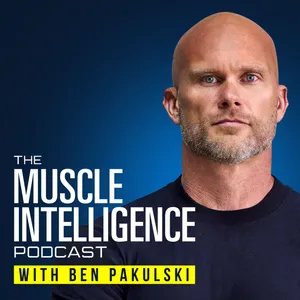
Muscle Intelligence — Longevity, Training & Human Performance with Ben Pakulski: Daily Summaries Delivered
by Ben Pakulski
You don't have to decline. Your body is more capable than you think. This podcast will show you how. Muscle Intelligence is the podcast for high-performing men who want to build muscle, optimize hormones, extend their healthspan, and maintain full cognitive and physical output as they age. Ben Pakulski spent 25 years as an IFBB Pro Bodybuilder, coach, and researcher, working with and learning from the world's leading experts in longevity, performance medicine, testosterone optimization, peptides, and human performance. Every episode takes that body of work and gives you something specific to do with it. Most men lose muscle, hormonal function, and mental clarity through their 40s and 50s without knowing it's happening or that it's reversible. Ben has spent 25 years working on exactly that problem, alongside the coaches, physicians, and researchers who have the best answers. If you're an executive, entrepreneur, or serious athlete who wants to train smarter, age better, and get advice from someone who has done the work, this is your show. Topics include: muscle building, body composition, peptides, hormone optimization, longevity, cognitive performance, sleep, nutrition, and the systems high-performing men use to operate at their best in their 40s, 50s, and beyond.
Latest Episodes
The most recent episodes — sign up to get AI-powered summaries of each one.
- Today15 min
How to Become the Billion-Dollar Version of Yourself: The Weekly Operating System I Give My Clients
Work with My Team → https://muscleintelligence.com/apply I coach men who create billions of dollars a year. After six years and hundreds of them, I've noticed something: they all run the same four-part operating system, and most of them don't know it. In this solo episode of the Muscle Intelligence Podcast I'm giving it to you in sixteen minutes. Clarity. Commitment. Character. Capacity. Here's what it costs you to skip this: a billion-dollar version of you already exists, and every week you don't run the system is a week that gap stays open. If you're searching for the success habits of billionaires, this is the view from the man in the room with them. I don't measure success by net worth. I measure it by responsibility and follow-through. The question this whole episode answers: why do the most successful men I coach commit to less than you do? 5 Key Takeaways The #1 measure of success, and it has nothing to do with your net worth. Why you keep failing at your goals for the opposite reason you think, and what it quietly teaches your subconscious. The compliance rate I call a fail in my coaching program, and what I do when a client can't hit it. The Mars test for character, and why it matters more the bigger your mission gets. The four kinds of leverage my most successful clients use to multiply capacity, including one you probably don't think of as leverage. Chapters 0:00 What the billion-dollar version of you actually means 3:45 Clarity: the four assessments, and the brakes on your potential 6:55 Commitment: everyone wants to win, nobody wants to prepare to win 9:50 Character: nobody follows you to Mars if you can't take out your trash 11:25 Capacity: the four kinds of leverage 12:40 The whole system in one pass, and the Sunday reset 15:00 Close More from Muscle Intelligence Website – https://www.benpakulski.com Muscle Intelligence – https://muscleintelligence.com Instagram – https://www.instagram.com/bpakfitness/ X – https://x.com/bpakfitness Facebook – https://www.facebook.com/BenPakulskiMuscleIntelligence/
- 1 weeks ago1h 7m
Integrative Longevity Medicine: How Peptides, Stem Cells, and Exosomes Work Together (and What Has to Happen Before Any of Them) | Dr. Alexander Grinberg
Apply to work with a Muscle Intelligence Coach → https://muscleintelligence.com/apply Dr. Alexander Grinberg is an integrative medicine physician in San Francisco with more than 35 years across clinical practice, immunology research, and biotech advisory work, and he's the doctor other doctors call when a complex patient wants to try peptides, stem cells, exosomes, or gene therapy before the clinical trials are done. In this episode of the Muscle Intelligence Podcast, Ben Pakulski asks him how all of it actually fits together. Grinberg's answer starts with a system, not a protocol: read your labs at high-normal and low-normal instead of "in range," run the extended panels, get whole-body MRI and cancer markers before anything regenerative, and stabilize what's out of balance before you chase longevity. Then he gets specific on supplements: why six to eight at a time is the ceiling, why he rotates them by system month to month, what megadoses of vitamin D actually do, why alpha-lipoic acid is the wrong mitochondrial supplement if you have reflux, and the pattern he calls supplement exhaustion. From there it's the emerging science, explained by someone who uses it. Epigenetics as the loudness of the music your genome wrote. How peptides reach DNA and what thymus peptides do to immune cells. The six generations of stem cells, why Muse cells are different, why mesenchymal stem cells carry immunogenicity risk with repeat use, and why a clinic selling stem cells should own a flow cytometer. Stem cells vs. secretomes vs. exosomes (a city, a house, a pitcher of water), and why exosomes cross the blood-brain barrier when cells can't. And klotho: the protein discovered in 1997 that tracks with every major killer, the transient gene therapies that raise it, why regenerative treatments work better on top of it, and what he's seeing with klotho peptides and kidney function in the biohackers he works with. If you're stacking peptides, considering stem cells, or just trying to figure out what your 40 supplements are doing, this is the framework. 5 Key Takeaways The one word Grinberg reads differently than your doctor does on a normal blood panel, and what it tells him to test next. The two scans he wants before anyone touches peptides or stem cells, and the reason has nothing to do with the treatment working. How many supplements at once is too many, why the body should be allowed to keep a 20 to 30 percent improvement instead of being pushed further, and the mitochondrial supplement he sees people take with the exact condition it worsens. Which generation of stem cells we're on, why the label on the bottle isn't enough, and the piece of equipment that tells you what you're actually injecting. Why he thinks the young-plasma results were really a klotho story, and what happens to regenerative treatments when klotho is raised first. Chapters 00:00 Intro 01:08 What integrative medicine actually means 04:44 A framework for layering advanced therapies 11:28 Which labs to run first (and why "normal" isn't enough) 16:38 Supplement exhaustion and how to rotate supplements 26:12 What epigenetics really is 29:46 How peptides change gene expression 34:39 The six generations of stem cells 44:12 Stem cell quality: know what's in the vial 47:26 Stem cells vs. secretomes vs. exosomes 53:25 Klotho: the longevity protein 59:22 Klotho peptides: safety and early results 1:02:47 Regenerating damaged kidneys 1:05:23 Where to find Dr. Grinberg Connect with Dr. Alexander Grinberg Website – https://infinityepigenetics.com LinkedIn – https://www.linkedin.com/in/alexandergrinbergmd/
- 2 weeks ago29 min
Success Mindset: The Hidden Skill Behind Winning Every Domain
Apply to work with a Muscle Intelligence Coach → https://muscleintelligence.com/apply What does success actually mean? In this solo episode of the Muscle Intelligence Podcast, Ben Pakulski redefines it: not a number, a title, or a physique, but how fully you show up in every domain of your life, minute to minute. Ben walks through the domains he measures himself against (father, partner, entrepreneur, athlete, man), why most people never close the gap between where they are and where they want to be, and the two things he believes sit at the root of every fulfilled life: personal responsibility and consciousness. He strips consciousness down to what it really is, the ability to be present with your thoughts, your body, and your world, and explains why the success mindset that actually works is built on presence rather than pressure. This one is for high performers, entrepreneurs, fathers, and any man who has built the external life and still feels like something's off. Ben covers the difference between objective and subjective goals, why your relationship with food, alcohol, and money matters more than the thing itself, the "angry edge" myth that keeps so many driven men pushing a rock uphill, and how he uses exercise as a conduit for consciousness. He gets specific on what mutes your awareness (alcohol, pharmaceuticals, overeating, social media, the constant pursuit of more), why shedding an old identity is the hardest part of personal growth, and the practices that make presence portable: the breakfast exercise, the workout as meditation, and a three-minute daily reflection on how you showed up. If you're looking for a mindset shift, a clearer sense of life purpose, or simply how to be present in the moment, start here. Whenever you're ready... here are 3 ways we can help you look, feel and perform at your best: 1. Grab a free copy of 1 of our BRAND NEW Peak Performance Protocols. This is for high performers looking to 10x their training and nutrition results by becoming 10x more effective. Click here - https://go.muscleintelligence.com/high-performance-executive-report/ 2. Join the Muscle Intelligence Community and connect with other men like you who want to uplevel their health and fitness. It's our new Facebook group where I coach members live, share what's working with my private clients and announce tickets to my upcoming trainings and events. Click here - https://www.muscleintelligence.com/community 3. Work with me 1-on-1 If you're a top performing executive or entrepreneur who wants a fully customized comprehensive health protocol and support from a team of world-class specialists, click here to speak with a member of my team to review all of your goals and options: https://www.muscleintelligence.com/apply?utm_campaign=YT
- 3 weeks ago1h 4m
Psychedelic Therapy in 2026: The New Frontier of Treating Addiction and Trauma, and What's Coming First | Bryan Hubbard, Americans for Ibogaine
Apply to work with a Muscle Intelligence Coach → https://muscleintelligence.com/apply W. Bryan Hubbard is the CEO of Americans for Ibogaine, the organization he co-founded with former Texas Governor Rick Perry, and the reason ibogaine is now inside an FDA drug development pathway. He is also a conservative Kentucky attorney who once believed anyone holding a psychedelic belonged under the jail. What changed his mind was a single Scientific American article about psilocybin and alcohol dependency, a family history with alcohol, and a decade running two of Kentucky's largest government systems while the opioid epidemic that began in his ancestral home county killed nearly a million Americans. In this episode of the Muscle Intelligence Podcast, Ben Pakulski sits down with Hubbard to understand what psychedelic therapy actually does to the brain, how ibogaine interrupts opioid addiction in a single treatment without withdrawal, and why a medicine that has never had a recreational use is now the centerpiece of a federal and state partnership. This is a conversation about the new frontier of mental health treatment for anyone who has watched addiction, PTSD, depression, or trauma take someone they love, and for anyone in the performance world who wants to understand what these medicines are before they arrive in the U.S. medical system. Hubbard explains the difference between a drug and a medicine, why psychedelics carry a built-in anti-addictive property, how ibogaine differs from psilocybin, ayahuasca, MDMA and 5-MeO-DMT, who should never take it, and what the executive order signed in April means for how soon psilocybin therapy, MDMA therapy and ibogaine treatment reach patients. He also covers the neuroregenerative research pointing toward traumatic brain injury and Parkinson's, and why natural sources have to survive the arrival of Western medical demand. 5 Key Takeaways What happens in the 36 to 48 hours after an ibogaine treatment, and why Hubbard calls it an addiction interrupter rather than a cure. The difference between a drug and a medicine, and the built-in property of psychedelics that makes them nearly impossible to abuse. Why ibogaine has no recreational use, and what that has to do with why you've never heard of it. Which psychedelic medicines are likely a year from prescription in the U.S., and which one is still years out. Who ibogaine is not for, and why Hubbard says no one should ever order it online. Chapters 0:00 Why a Performance Podcast Is Talking About Psychedelics 10:16 What Plant Medicine Changed About How He Sees People 19:04 The Opioid Epidemic and the Discovery of Ibogaine 29:47 From Kentucky to Texas to the Executive Order 40:02 Who Ibogaine Is Not For, and Medicine vs. Drug 46:15 Why Each Psychedelic Is Different 52:16 The Timeline: What's Coming and When 56:47 Natural vs. Synthetic and the Supply Chain Problem Connect with Bryan Hubbard Website – https://www.wbryanhubbard.com Americans for Ibogaine – https://www.americansforibogaine.org X – https://x.com/w_bryan_hubbard Instagram – https://www.instagram.com/w_bryan_hubbard/ LinkedIn – https://www.linkedin.com/in/w-bryan-hubbard
- 4 weeks ago54 min
How to Focus, Recover and Lead Better by Working With Your Brain's Wiring | Wharton Neuroscientist Dr. Michael Platt
Want help designing your training, nutrition, and recovery around the way your body and brain actually work? Apply to work with the Muscle Intelligence coaching team → MuscleIntelligence.com/apply Wharton neuroscientist Dr. Michael Platt has spent his career studying how the brain makes decisions, why high performers burn through their attention, and what actually improves brain health and brain performance in people with real demands on their time. In this conversation with Ben Pakulski, he explains why the human brain is still running on wiring built for a world of small groups, constant movement, and natural rhythms, and what that mismatch means for anyone trying to focus, lead, and stay sharp in a modern schedule. You will learn the neuroscience of focus and why the brain has two systems that cannot run at the same time, the four lowest-cost habits Platt's research keeps pointing back to, and how a hard workout done on purpose changes the way your brain handles stress. This is a practical episode for men over 40, executives, business owners, and fathers who want a brain protocol they can actually keep. Platt covers how to focus for longer without forcing it, how dopamine and reward prediction error build habits, why physiological synchrony makes connection a performance tool rather than a luxury, and how to structure breaks across the hour, the day, and the year. If you have been looking for a neuroscientist's take on productivity, resilience, sleep, and mental performance that does not require a three-hour morning routine, this one is for you. 5 Key Takeaways Why a Wharton neuroscientist tells leaders to step away from the computer, and what it unlocks in the brain when they do. The four lowest-cost things you can do for your brain, and which one high performers skip most. How a hard workout done first thing in the morning teaches your brain it has agency, and why Platt says agency is resilience. The dopamine mechanism behind every habit you have, and two ways to use it so good decisions stop costing energy. Why your brain cannot focus and create at the same time, and the three nested time intervals Platt uses to switch between them. Chapters 00:00 Intro 00:40 How does exercise fit into a brain protocol? 00:56 Your brain was built for a world 200,000 years ago 03:51 It is all about design: reducing the mismatch 05:38 Firmware, agency, and why stepping away unlocks creativity 08:10 Platt's next book: Pause 08:33 How to weigh interventions when everything is "essential" 1 0:21 The four lowest-cost basics: step back, move, sleep, connect 11:21 Silicon Valley sleep debt and the pharmacology trap 14:25 Comparing objective data vs. subjective experience 16:50 Platt's own story: anxiety, CrossFit, and pre-commitment 18:14 Controlled stress and how the brain learns agency 21:05 Agency is resilience 23:20 Belief, placebo, and the will to overcome 26:46 Curating positive brain states 27:33 Dopamine, habits, and reward prediction error 30:45 Gamifying behavior: offload the decision 31:44 Attention is a volume knob 33:20 Make the good stuff stand out 34:20 Physiological synchrony: why we are wired for connection 37:50 Could a fully virtual life ever be fulfilling? 40:30 Operationalizing focus: the two brain systems 43:54 Seasons, nested intervals, and how long to step away 46:10 Deaths of despair and the case for real time off 48:53 Purpose, humanness, and how much time to take off 50:53 Applied Neuroscience for Business Decisions 53:48 Closing Connect with Dr. Platt <div id=":r2gp:" class="content-edita
- Aug 31, 20261h 13m
The Molecule Behind Blood Flow, Energy, and Sexual Health After 40 | Dr. Nathan Bryan
Work with a Muscle Intelligence Coach: https://www.muscleintelligence.com/apply/ Dr. Nathan Bryan has spent 25 years researching nitric oxide, the gas your body produces to open blood vessels and move oxygen into every cell you have. In this conversation he explains why production drops roughly 10 to 12 percent per decade, why a man in his forties is often operating on half of what he had, and what that decline shows up as first. Ben and Dr. Bryan cover the symptom hierarchy of nitric oxide deficiency, why sexual function is the earliest signal and what it says about the rest of the arterial system, why 50 percent of men prescribed PDE5 drugs get no benefit from them, why arginine and citrulline based products do not restore production in men who need it most, and the everyday habits that quietly shut the whole system down. They also get into what has to be in place before fasting, sauna, training and supplementation can do what they are supposed to do, and Dr. Bryan walks through his own daily protocol at 50 with the vascular age of a 32 year old. Top 5 Takeaways 1. Why sexual function is a vascular readout, not a bedroom problem. 2. You lose 10 to 12 percent of production every decade, and by 40 to 50 you are running on half. 3. The three ordinary daily habits are shutting the system down. 4. Why most of what is sold as a nitric oxide booster cannot work, and for some men it makes things worse. 5. Why nitric oxide is the prerequisite sitting underneath every protocol the avatar is already running. Chapters 00:00 Why This Conversation Matters for Men Over 40 04:25 What Nitric Oxide Is, and the Hierarchy of What It Breaks First 08:50 How Fast You Lose It: 10 to 12 Percent Every Decade 10:12 Mouthwash, Fluoride and Antacids: The Daily Habits Shutting It Down 13:13 Why the Food Supply No Longer Delivers the Nutrients You Need 16:07 Glyphosate, Heavy Metals and the Toxin Load 17:26 Inside the Endothelium: How the System Actually Breaks 20:11 Glycocalyx vs Endothelium: What Each One Does 22:01 Why Most Nitric Oxide Supplements Do Nothing 24:23 The Arginine Paradox and the Trial They Had to Stop 27:55 What Your Pre-Workout Is Actually Doing 28:52 Where to Start: Remove the Blockers, Then Restore Production 31:24 Sunlight, Infrared, and Nitric Oxide Storage 32:57 Dietary Sources, and Why They Fail Without the Right Bacteria 34:04 Viagra and Cialis: Why They Do Nothing for Nitric Oxide 37:43 Plant-Based vs Carnivore Through a Blood Flow Lens 40:52 Greens Powders and Beet Products: What the Testing Shows 42:25 How Nitric Oxide Is Actually Measured 46:15 Rebuilding the Oral Microbiome and Stomach Acid 50:55 The Foundation: Why Nothing Else Works Until This Does 53:41 Dr. Bryan's Daily Protocol at 50 57:07 Hyperbaric Oxygen and Tissue Repair 59:25 Proteolytic Enzymes and the Understand-the-Mechanism Rule 1:03:31 Statins, Cholesterol, and the Wrong Target 1:07:06 What Actually Causes Cardiovascular Disease 1:10:34 Where to Find Dr. Bryan Connect with Dr. Nathan S. Bryan: YouTube: Dr. Nathan S Bryan Nitric Oxide Products : n1o1.com
- Aug 24, 202655 min
The Complete Peptide Guide for Brain, Mitochondria and Growth Hormone Support
Apply to work with the MI team → https://muscleintelligence.com/apply Ryan Smith co-founded the first pharmacy in the United States to offer an extensive list of peptides — and he ran the synthesis floor himself. Preparative HPLC, mass spec, chemical synthesis, the lot. Which means he spent years watching the same two failures from the inside: the molecule that works beautifully at a small dose and stops working when someone doubles it, and the vial that looks identical to the real thing and isn't. He is not a peptide evangelist. Ask him about the compound he calls ten million times more potent than BDNF and he'll tell you why he doesn't take it. His argument here is quieter than most of what gets said about peptides, and harder to unhear afterward: the body is already a competent system, and nearly everything that goes wrong with these compounds comes from handing it more input than it needed. Why exogenous growth hormone removes a brake the secretagogues leave in place. Why ipamorelin became the standard despite releasing less growth hormone than the compounds it replaced. Why two vials of the same peptide, at the same purity, can behave completely differently. He would rather talk about what he refuses to make than what he's excited about — and by the end of the hour it's clear those are the same conversation. 5 Key Takeaways Why exogenous growth hormone removes a brake your body doesn't get back — and what CJC-1295, ipamorelin and tesamorelin do instead The reason ipamorelin became the clinical standard despite releasing less growth hormone than the compounds it replaced Why the same 500-microgram dose of oral BPC-157 works in one form and barely at all in another Why the peptide he calls 10 million times more potent than BDNF is the one he leaves out of his own stack What a clean HPLC mass spec report still can't tell you about what's in the vial — and why that one blind spot lands on your liver Chapters 0:00 Why Peptides Took a Century to Arrive 4:54 Specificity, Growth Hormone & the Scalpel Argument 16:22 Thymosin Alpha-1, Epitalon & Natural Testosterone 25:25 Mitochondrial Peptides & the Fat Loss Compounds 32:27 BPC-157: Repair, Dosing & the Salt Form Problem 35:46 Peptides for the Brain: FGL, Dihexa & Cerebrolysin 47:05 What He Takes, What He Refuses & Why 52:36 Side Effects, Purity & What's Really in the Vial Connect with Ryan X – https://x.com/ryansmithepiage LinkedIn – https://www.linkedin.com/in/ryan-smith-lexington-ky/ TruDiagnostic – https://www.trudiagnostic.com
- Aug 17, 202630 min
The Simple Mechanism Behind Long-Term Performance
Most men trying to change their body are shopping for a tactic. A cleaner diet, a better split, a smarter supplement stack, and lately a peptide protocol they found online. Ben has coached enough high performers to know how that story ends, because he lived a version of it himself. He was an obese fifteen-year-old who decided he was going to compete at the Mr. Olympia, and the obsessive, run-through-the-wall identity that got him there is the same one he had to dismantle at forty-five when it started costing him at home and failing to keep pace with what his life actually demanded. This solocast is about the thing underneath every tactic: the operating system you never upgraded. Ben lays out the three phases every real identity shift moves through, why he thinks the twenty-one-day habit rule is wrong about how fast a man can become someone new, the difference between discipline and commitment that explains why he says he has almost no discipline at all, and the two changes with more leverage than anything else you could do this month. He also says the quiet part about peptides out loud. If you already know exactly what to do and still are not the guy who does it, this is the episode that explains the gap. Key takeaways The three phases every identity shift passes through, and which one Ben says he is spending most of his time trying to shorten Why he calls himself undisciplined, and what he has instead that does the same job without the willpower cost The reason your personality is a choice rather than a fixed trait, and the physiology underneath that claim Two changes that will move your life more than any program, and why most men refuse to make them What Ben thinks most men are getting wrong about peptides, and where the actual solution lives instead Work with the Muscle Intelligence Team Join the my newsletter
Get Muscle Intelligence — Longevity, Training & Human Performance with Ben Pakulski summaries in your inbox
Free AI-powered daily recaps. Key takeaways, quotes, and mentions — in a 5-minute read.
Get Free Summaries →Free forever for up to 3 podcasts. No credit card required.
You Might Also Like
Listeners also like.

Perform with Dr. Andy Galpin
Explores science-based strategies for optimizing physical and mental performance for all fitness levels.

Fully Alive: Unlocking the secrets to your healthier, happier, longer life
Explores science and lifestyle strategies to enhance health, purpose, and longevity.

The Dan Buettner Podcast
Shares practical habits and insights from the world’s longest-lived populations to improve longevity and well-being.
The Human Upgrade: Biohacking for Longevity & Performance
Dave Asprey explores biohacking, longevity, and performance through science and expert interviews to improve energy, focus, and resilience.
The Ultimate Human with Gary Brecka
Discusses health, longevity, and biohacking through interviews with experts, athletes, and celebrities.

Extend Podcast with Darshan Shah, MD
Explores science-backed strategies and expert insights to extend healthspan and optimize longevity through actionable health protocols.

The Genius Life
A health and science journalist explores cutting-edge research and practical strategies for optimizing brain function and overall wellness.

The Biohacking Standards
A deep dive into biohacking fundamentals—nutrition, movement, sleep, and mindfulness—grounded in science and holistic wellness principles.

DDT Method Podcast — Peptides, Performance Enhancement and Advanced Protocols with Drew Donaldson
Explores advanced performance enhancement protocols, including peptides, hormone optimization, and biohacking for serious athletes.
Muscle for Life with Mike Matthews
Discusses science-based strategies for building muscle, losing fat, and improving overall health and well-being.
The Dr. Hyman Show
Explores root causes of chronic disease and promotes functional medicine, nutrition, and preventive health through expert discussions.
LONGEVITY with Nathalie Niddam
Explores science-backed strategies for extending healthspan through nutrition, biohacking, peptides, and emerging longevity research.
About Muscle Intelligence — Longevity, Training & Human Performance with Ben Pakulski
You don't have to decline. Your body is more capable than you think. This podcast will show you how. Muscle Intelligence is the podcast for high-performing men who want to build muscle, optimize hormones, extend their healthspan, and maintain full cognitive and physical output as they age. Ben Pakulski spent 25 years as an IFBB Pro Bodybuilder, coach, and researcher, working with and learning from the world's leading experts in longevity, performance medicine, testosterone optimization, peptides, and human performance. Every episode takes that body of work and gives you something specific to do with it. Most men lose muscle, hormonal function, and mental clarity through their 40s and 50s without knowing it's happening or that it's reversible. Ben has spent 25 years working on exactly that problem, alongside the coaches, physicians, and researchers who have the best answers. If you're an executive, entrepreneur, or serious athlete who wants to train smarter, age better, and get advice from someone who has done the work, this is your show. Topics include: muscle building, body composition, peptides, hormone optimization, longevity, cognitive performance, sleep, nutrition, and the systems high-performing men use to operate at their best in their 40s, 50s, and beyond.
Customized Recaps
AI-powered recaps with compact key takeaways, quotes, and insights.
Straight to Your Inbox
Get key takeaways from Muscle Intelligence — Longevity, Training & Human Performance with Ben Pakulski in a 5-minute read.
Save Hours Every Week
Stay current on your favorite podcasts without falling behind.
Frequently Asked Questions
What is Podzilla's Muscle Intelligence — Longevity, Training & Human Performance with Ben Pakulski daily summary?
It's a free AI-powered email that summarizes new episodes of Muscle Intelligence — Longevity, Training & Human Performance with Ben Pakulski as soon as they're published. You get the key takeaways, notable quotes, and links & mentions — all in a quick read.
How does the Muscle Intelligence — Longevity, Training & Human Performance with Ben Pakulski podcast summary work?
When a new episode drops, our AI transcribes and analyzes it, then generates a personalized summary tailored to your interests and profession. It's delivered to your inbox every morning.
Is this an official Muscle Intelligence — Longevity, Training & Human Performance with Ben Pakulski product?
No. Podzilla is an independent service that summarizes publicly available podcast content. We're not affiliated with or endorsed by Ben Pakulski.
Can I get summaries of other podcasts too?
Absolutely! The free plan covers up to 3 podcasts. Upgrade to Pro for 15, or Premium for 50. Browse our full catalog at /podcasts.
How often does Muscle Intelligence — Longevity, Training & Human Performance with Ben Pakulski release new episodes?
Muscle Intelligence — Longevity, Training & Human Performance with Ben Pakulski publishes weekly. Our AI generates a summary within hours of each new episode.
What topics does Muscle Intelligence — Longevity, Training & Human Performance with Ben Pakulski cover?
Muscle Intelligence — Longevity, Training & Human Performance with Ben Pakulski covers topics including Fitness, Health & Fitness, Alternative. Our AI identifies the specific themes in each episode and highlights what matters most to you.
Start getting Muscle Intelligence — Longevity, Training & Human Performance with Ben Pakulski summaries tomorrow morning.
Free forever for up to 3 podcasts. No credit card required.
Free forever for up to 3 podcasts. No credit card required.