Free Daily Podcast Summary
Optimal Protein Podcast with Vanessa Spina: Daily Summaries Delivered
by Vanessa Spina
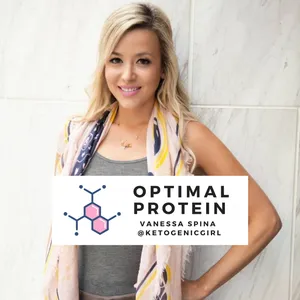
Vanessa Spina is a Sports Nutrition Specialist, Best Selling author, creator of the innovative TONE device, as well as a sought after international speaker. On the Optimal Protein podcast, Vanessa shares how to get effortlessly lean and improve metabolic health and fitness with an optimal protein intake! Featuring interviews with world renowned and leading edge protein scientists & experts, authors, and people with inspiring transformational stories discussing the best tools for becoming optimizing your metabolic health with whole foods, nutrition, exercise and more!
Latest Episodes
The most recent episodes — sign up to get AI-powered summaries of each one.
- 3 days ago1h 18m
Burning Fat vs. Losing Fat: Metabolic Flexibility Explained with Dr. Mike T. Nelson
Does burning more fat for fuel mean you're actually losing more body fat? And if you're in ketosis, does that mean the fat you're burning is coming from your body—or from the food you just ate? Today on the Optimal Protein Podcast, I'm joined by Dr. Mike T. Nelson to unpack this important distinction and explore what metabolic flexibility really means for fat loss, muscle preservation, and performance. BACK-TO-SCHOOL SALE! For a limited time, save 40% sitewide at ketogenicgirl.com with code BACKTOSCHOOL40, including the Protein-Sparing Modified Fasting Library, ToneLUX Red Light Therapy Collection, and Tone Breath Ketone Analyzer. Mike holds a PhD in exercise physiology and a master's degree in mechanical engineering with a focus on biomechanics. In this fascinating conversation, we explore your body's ability to use both carbohydrates and fat, switch between them, and adapt to different demands. We discuss why burning more fat during a workout doesn't necessarily translate into greater body-fat loss, why calorie balance still matters, and how your nutrition and training can work together to support body recomposition. I also share my own experience gaining weight on keto despite high ketone readings—and what that taught me about dietary fat versus stored body fat. In this episode, we discuss: • The three components of metabolic flexibility—and why using carbohydrates effectively matters, too • Burning fat versus losing fat: the distinction that can change how you approach your goals • How insulin and fuel availability influence what your body burns • Why higher ketone readings don't necessarily mean greater body-fat loss • Fasted cardio: what the research suggests and where questions remain • Long-term keto and the potential tradeoffs for high-intensity exercise • Adjusting carbohydrates to support your training performance • Protein-sparing modified fasting and the considerations around more aggressive calorie deficits • Why stubborn lower-body fat can be especially frustrating for women • Protein and resistance training: their roles in preserving lean mass while dieting • Building aerobic fitness to support metabolic flexibility over time • Heat, cold exposure, and Mike's broader framework of physiologic flexibility • Lactate as a valuable fuel and the emerging interest in lactate supplements • Tracking performance alongside the scale—and keeping maintenance in mind from the beginning I loved Mike's emphasis on building a body that can perform well while you work toward your body-composition goals. This episode is full of thoughtful distinctions to help you better understand the science behind fat loss! Connect with Dr. Mike T. Nelson: Instagram: @drmiketnelson Explore his newsletter for more on body composition, performance, and metabolic flexibility. Special offers mentioned in this episode: Save 40% sitewide at KetogenicGirl.com with code BACKTOSCHOOL40, including the Protein-Sparing Modified Fasting Library and Tone Device. Australia and New Zealand listeners: save 75% during the warehouse moving sale with code WAREHOUSE75. If you enjoyed this episode, please subscribe, leave a rating or review, and share it with a friend. Your support helps us continue bringing you conversations with leading researchers and experts in protein, metabolic health, and body composition. Follow @ketogenicgirl and @optimalproteinpodcast on Instagram, and join the Optimal Protein Podcast Facebook group for more discussion. The content provided in this podcast is for informational purposes only and should not be construed as medical advice. Consult with a healthcare professional before making significant changes to your diet, supplements, or exercise regimen.
- 6 days ago31 min
6 New Science Takeaways on Losing Fat Without Losing Muscle
Can you gain lean tissue while losing body fat? And if two people eat the same number of protein grams, will they necessarily get the same body composition results? In this episode, Vanessa shares six takeaways from her conversation with Dr. Drew Gonzalez on the science of fat loss, muscle retention, protein quality, creatine, and sustainable nutrition. BACK-TO-SCHOOL SALE! For a limited time, save 40% sitewide at ketogenicgirl.com with code BACKTOSCHOOL40, including the Protein-Sparing Modified Fasting Library, ToneLUX Red Light Therapy Collection, and Tone Breath Ketone Analyzer. A 12-week study discussed in the interview found that adults combining an exercise and weight-loss program with creatine gained lean tissue while reducing body fat. Vanessa unpacks why that result is exciting, what "lean tissue" actually measures, and why the change in body fat percentage needs careful interpretation. In this episode: Why the quality of weight loss matters more than the number on the scale alone What the creatine study found about lean tissue and body fat during a weight-loss program Whether protein quality may matter more when calories are limited What a study comparing pork- and soy-based meals in military cadets found about recovery How much protein Dr. Gonzalez suggests as a practical starting goal for people who resistance train Why you don't need perfectly timed or evenly divided protein meals What firefighter research can—and cannot—tell us about time-restricted eating Where the evidence stands on creatine and cognition, probiotics, and other emerging supplements The central question: How can you lose body fat while giving yourself the best chance of maintaining—or even gaining—lean tissue? Listen to Vanessa's full interview with Dr. Drew Gonzalez for the complete conversation. Follow @ketogenicgirl and @optimalproteinpodcast on Instagram, and join the Optimal Protein Podcast Facebook group to continue the discussion. BACK-TO-SCHOOL SALE! For a limited time, save 40% sitewide at ketogenicgirl.com with code BACKTOSCHOOL40, including the Protein-Sparing Modified Fasting Library, ToneLUX Red Light Therapy Collection, and Tone Breath Ketone Analyzer. The content provided in this podcast is for informational purposes only and should not be construed as medical advice. Consult with a healthcare professional before making significant changes to your diet, supplements, or exercise regimen.
- 1 weeks ago1h 6m
New Study on Creatine During Fat Loss and Body Recomposition: Dr. Drew Gonzalez
Can you lose body fat while gaining lean tissue—even during a calorie deficit? And could the quality of your protein change how well you recover and protect muscle? Vanessa is joined by exercise and nutrition researcher Dr. Drew Gonzalez to explore new research on creatine, body recomposition, protein quality, and what it takes to make weight loss more than a lower number on the scale. Try my favorite electrolytes! Cure Hydration. Visit curehydration.com/VANESSA and use code VANESSA for 20% off. Now available on Amazon! They begin with a 12-week study in middle-aged and older adults that tested creatine alongside exercise and a weight-loss diet. Vanessa and Dr. Gonzalez discuss the promising body-composition findings, why gaining lean tissue is not necessarily the same as gaining that amount of muscle, and what the study can—and cannot—tell us about fat loss and cognitive health. They also explore research comparing pork- and soy-based meals during intense training, the role of essential amino acids and leucine when calories are limited, and practical protein targets for people who want to lose fat without unnecessarily losing muscle. In this episode: What a new creatine study found about lean tissue and body fat during weight loss Whether someone eating plenty of meat still stands to benefit from creatine supplementation What we know—and don't yet know—about higher creatine doses and brain health Why two diets with the same protein grams may differ in essential amino acid content What Dr. Gonzalez's military cadet study found about protein sources and recovery How much protein to aim for while resistance training and losing body fat Whether protein needs to be evenly distributed across meals What firefighter research reveals about time-restricted eating in demanding real-world conditions Whether probiotics and synbiotics meaningfully add to a structured fat-loss program The goal isn't simply to lose weight. It's to improve what you lose—and what you keep. BACK-TO-SCHOOL SALE! For a limited time, save 40% sitewide at ketogenicgirl.com with code BACKTOSCHOOL40, including the Protein-Sparing Modified Fasting Library, ToneLUX Red Light Therapy Collection, and Tone Breath Ketone Analyzer. Follow @ketogenicgirl and @optimalproteinpodcast on Instagram, and join the Optimal Protein Podcast Facebook group for more discussion. The content provided in this podcast is for informational purposes only and should not be construed as medical advice. Consult with a healthcare professional before making significant changes to your diet, supplements, or exercise regimen.
- 1 weeks ago56 min
Why Stubborn Fat Is So Hard to Lose + Protein-Sparing Fat Loss: Lyle McDonald Recap
Vanessa breaks down the biggest scientific takeaways and most actionable gems from her recent conversation with body-composition expert and author Lyle McDonald. Why does fat come off easily from some areas while other areas seem determined to hold on? And can we influence stubborn fat loss without simply getting leaner everywhere else? BACK TO SCHOOL SALE! For a limited time, save 40% sitewide at ketogenicgirl.com with code BACKTOSCHOOL40, including the Protein-Sparing Modified Fasting Library, ToneLUX Red Light Therapy Collection, and Tone Breath Ketone Analyzer. Australia, New Zealand & Southeast Asia: Save 75% on available ToneLUX and Tone products during the warehouse moving sale with code WAREHOUSE75, while supplies last. Vanessa explores the physiology of stubborn body fat, including fat mobilization, blood flow, oxidation and alpha-2 receptors, and why women in particular may notice their upper body becoming lean long before their hips and thighs. She also breaks down Lyle's newest approach, Intermittent Modified Fasting, and how alternating protein-focused, low-calorie days with maintenance days may offer a more flexible way to create a calorie deficit while prioritizing muscle retention. Vanessa explains why protein becomes especially important during aggressive calorie restriction, why a maintenance day is different from a "cheat" or "feast" day, and how meal timing, appetite and ketosis can influence how sustainable a fat-loss phase feels. She also examines Lyle's proposed strategies for addressing stubborn fat—including lower-carbohydrate eating and combining higher-intensity intervals with lower-intensity activity—while separating established physiology from strategies that still require more research. YOHIMBINE SAFETY NOTE: Yohimbine is discussed in this episode for educational purposes only and is not being recommended for use. Yohimbine can cause significant side effects, including anxiety, increased heart rate and blood pressure, and may interact with medications. It should not be used during pregnancy or breastfeeding. Anyone considering yohimbine should first consult with a qualified healthcare professional. Create your own custom protein blend at truenutrition.com/vanessa and use code VANESSA for 20% off your first order. Let Vanessa know what your custom blend is! Now shipping internationally. Finally, Vanessa explores the scientific mechanisms behind yohimbine and alpha-2 receptors for educational purposes, red-light therapy and blood flow, whether slower weight loss could help preserve facial fullness, and why having a maintenance strategy may be just as important as having a fat-loss strategy. In this episode: Why some areas of body fat are more resistant to fat loss Why women may lose upper-body fat before hip and thigh fat Alpha-2 vs. beta receptors and stubborn-fat physiology Fat mobilization vs. fat oxidation vs. actual body-fat loss Why blood flow matters in stubborn fat stores Protein-Sparing Modified Fasting (PSMF) explained Lyle's Intermittent Modified Fasting approach Why protein matters on very-low-calorie days Maintenance days vs. cheat or feast days How to structure lower-calorie and maintenance days around training and life Why meal timing should help manage your appetite Time-restricted eating vs. intermittent modified fasting Protein, ketosis, satiety and food preoccupation Lower-carbohydrate eating and stubborn-fat mobilization Higher-intensity intervals followed by lower-intensity activity Why walking may fit into Lyle's stubborn-fat protocol Why more cardio is not necessarily better during aggressive dieting Red-light therapy, blood flow and what the evidence does—and does not—show Yohimbine, alpha-2 receptors and important safety considerations Why mobilizing more fat does not guarantee greater fat loss Resistance training and preserving lean mass during fat loss How to create a long-term weight-maintenance range Why small course corrections may help prevent larger weight regain Can slower weight loss help preserve facial fullness? Genetics, aging and individual patterns of fat loss Why your leanest possible weight may not be where you look or feel your best Vanessa's practical takeaways for sustainable fat loss and body recompositi
- 2 weeks ago1h 18m
The Stubborn Fat Solution: How to Mobilize Lower-Body Fat with Lyle McDonald
Why does body fat disappear quickly from certain areas while seeming almost impossible to lose from others? BACK TO SCHOOL SALE! For a limited time, save 40% sitewide at ketogenicgirl.com with code BACKTOSCHOOL40, including the Protein-Sparing Modified Fasting Library™, ToneLUX Red Light Therapy Collection and Tone Breath Ketone Analyzer. Australia, New Zealand & Southeast Asia: Save 75% on available ToneLUX and Tone products during the warehouse moving sale with code WAREHOUSE75, while supplies last. In today's episode of the Optimal Protein Podcast, Vanessa welcomes renowned author and body-composition expert Lyle McDonald to explore the fascinating physiology of stubborn body fat. Where we store our most resistant fat varies from person to person. For some women, it may be concentrated around the hips and thighs; for others, it may be the abdomen, arms or another area. Men may also struggle with stubborn fat, commonly around the abdomen and lower back. Lyle explains how differences in alpha-2 and beta receptors, blood flow, insulin sensitivity and catecholamine activity can make certain fat stores more difficult to access than others. They break down the three essential steps required to lose stored body fat: mobilizing fatty acids from the fat cell, transporting them away and ultimately oxidizing them for energy. Try my favorite new electrolytes, Cure Hydration! Head to curehydration.com/VANESSA and use code VANESSA to save 20% on your order. 💙 Now available on Amazon! Vanessa and Lyle also discuss whether low-carbohydrate eating, ketosis, high-intensity intervals and strategically timed low-intensity activity may help improve stubborn-fat mobilization. Lyle introduces his new book, Intermittent Modified Fasting, and explains how alternating protein-sparing modified fasting days with maintenance days may support fat loss, muscle retention, training performance and long-term adherence—without dieting continuously. In this episode, they discuss: • Why certain areas of body fat are more resistant than others • How stubborn-fat patterns differ between individuals • Why some women struggle most with hip and thigh fat • Why the abdomen and lower back are common stubborn areas in men • Alpha-2 versus beta receptors and how they affect fat mobilization • Why blood flow matters when attempting to access stubborn fat • The three steps required to mobilize and burn stored body fat • Why the face and upper body may become lean before stubborn areas • Whether slower weight loss may help preserve facial fullness • How low-carbohydrate eating may influence alpha-2 receptors • Why high-intensity intervals may improve stubborn-fat mobilization • Pairing short intervals with low-intensity cardio or walking • Why a calorie deficit is still required for net fat loss • Protein-sparing modified fasting versus conventional fasting • Why many alternate-day fasting plans provide too little protein • How to alternate modified fasting days with maintenance days • Why "maintenance day" may be more helpful than "feast" or "cheat day" • Using PSMF days to support long-term weight maintenance • Ketosis, appetite suppression and the metabolic fasting response • Yohimbine HCl, alpha-2 receptors and important safety concerns • Pregnancy, breastfeeding and changes in female fat distribution If you have ever wondered why one part of your body becomes lean while another area remains frustratingly resistant, this episode explains the biology of stubborn fat—and the strategies that may help create a more balanced pattern of fat loss. Today's episode is brought to you by Cure Hydration. Learn more about Lyle and his books at bodyrecomposition.com and store.bodyrecomposition.com. Follow @ketogenicgirl and @optimalproteinpodcast on Instagram to see visuals and posts mentioned on the podcast. Join the Facebook group for the podcast. The content provided in this podcast is for informational purposes only and should not be construed as medical advice. Consult a healthcare professional before making significant changes to your diet, supplements or exercise regimen. Yohimbine can cause anxiety, increased heart rate, blood-pressure changes and other adverse effects, and may interact with medications or medical conditions. It is not appropriate for everyone, including during pregnancy or breastfeeding. Consult a qualified healthcare professional before considering its use.
- 2 weeks ago49 min
My Postpartum Fat-Loss Progress + 10 Science-Backed Ways to Protect Muscle
Vanessa breaks down the biggest scientific takeaways and most actionable gems from her recent conversation with Dr. Lee Breen, one of the world's leading researchers in protein metabolism, resistance training and skeletal muscle health across the lifespan. Before diving into the latest research, Vanessa shares an exciting update from her postpartum fat-loss and body-recomposition journey: she has lost five pounds since beginning her gentle fat-loss phase two weeks ago. She explains the four simple food swaps that reduced her intake by only approximately 150–200 calories per day, why the initial change likely includes water and glycogen as well as body fat, and how she is using three to four resistance-training sessions per week to gradually reveal her muscle while continuing to exclusively breastfeed baby Taylor. Vanessa also shares why she is deliberately giving herself the longest possible runway, why she does not expect to continue losing five pounds every two weeks, and why she plans to wait until Taylor begins eating solid foods before bringing Protein-Sparing Modified Fasting days back into her routine. BACK TO SCHOOL SALE! For a limited time, save 40% sitewide at ketogenicgirl.com with code BACKTOSCHOOL40, including the Protein-Sparing Modified Fasting Library, ToneLUX Red Light Therapy Collection, and Tone Breath Ketone Analyzer. Australia, New Zealand & Southeast Asia: Save 75% on available ToneLUX and Tone products during the warehouse moving sale with code WAREHOUSE75, while supplies last. One of the biggest themes from Dr. Breen's research is that losing weight and improving your body composition are not necessarily the same thing. Vanessa explores why the scale cannot tell you whether you are losing fat, water or metabolically active tissue; how much lean mass may be lost during significant weight loss; and why regaining weight after dieting or discontinuing a GLP-1 medication could potentially leave someone with less muscle and a higher body-fat percentage than when they started. She also examines how much protein may be needed to protect muscle during weight loss. Is approximately 1.4 grams per kilogram enough, or should you aim closer to 2–2.2 grams per kilogram? And how should that target change based on your body size, activity level, age and the aggressiveness of your calorie deficit? Create your own custom protein blend at truenutrition.com/vanessa and use code VANESSA for 20% off your first order. Let Vanessa know what your custom blend is! Now shipping internationally. Vanessa explains why protein and resistance training are most powerful when used together, why at least two whole-body resistance-training sessions per week can provide an effective starting point, and how training tells the body where the amino acids from dietary protein are needed. She also unpacks Dr. Breen's research comparing whey and pea protein in middle-aged and older adults. Whey produced a greater leucine response—but did that translate into more muscle protein synthesis over the complete 10-day intervention? The full results were more nuanced than a simple animal-versus-plant-protein conclusion. They also revealed something potentially even more important about the effect of resistance training on the muscle's ability to use the protein being consumed. Vanessa finishes with Dr. Breen's fascinating prehabilitation research showing that a single resistance-training session helped protect older adults' muscle during five days of bed rest, emerging evidence on whey protein and glycemic control, and the essential questions anyone using a GLP-1 medication should consider to help protect muscle and improve the quality of their weight loss. In this episode: Vanessa's latest postpartum fat-loss and body-recomposition update How she lost five pounds during her first two weeks of gentle dieting Why those five pounds are unlikely to represent body fat alone The four simple swaps that reduced her intake by approximately 150–200 calories per day Why she expects her rate of weight loss to slow from here How she is approaching fat loss while exclusively breastfeeding Why she is deliberately giving herself a longer fat-loss runway Her goal of protecting her muscle—and potentially more facial fat and collagen—this time Why she is waiting until Taylor begins solid foods before reintroducing PSMF days How three to four weekly resistance-training sessions are supporting her body recomposition Why she plans to complete another DEXA scan at the end of the process Why losing weight and improving body composition are not necessarily the same thing How much lean mass may be lost during significant weight loss Why lean mass loss is not always identical to contractile-muscle loss What may happen to bod
- 3 weeks ago1h 13m
Are You Losing Muscle Instead of Fat? The Protein Strategy That Protects Lean Mass: Dr. Leigh Breen
When the scale goes down, how much of that weight is actually body fat—and how much could be metabolically active muscle? BACK TO SCHOOL SALE! For a limited time, save 40% sitewide at ketogenicgirl.com with code BACKTOSCHOOL40, including the Protein-Sparing Modified Fasting Library, ToneLUX Red Light Therapy Collection, and Tone Breath Ketone Analyzer. Australia, New Zealand & Southeast Asia: Save 75% on available ToneLUX and Tone products during the warehouse moving sale with code WAREHOUSE75, while supplies last. In today's episode of the Optimal Protein Podcast, Vanessa welcomes leading protein and muscle researcher Dr. Leigh Breen back to discuss how to protect lean mass during weight loss. They examine an important concern surrounding traditional dieting and GLP-1-assisted weight loss: people may lose muscle alongside body fat, yet regain predominantly fat afterward. Could repeated cycles of weight loss and regain ultimately leave someone with worse body composition? Try my favorite new electrolytes, Cure Hydration! Head to curehydration.com/VANESSA and use code VANESSA to save 20% on your order. 💙 Now available on Amazon! Vanessa and Dr. Breen also explore how much protein we may actually need, whey versus plant protein, anabolic resistance, the importance of leucine, and why breakfast may be the biggest missed opportunity for protein. They also discuss his fascinating "prehabilitation" research showing how one resistance-training session helped protect older adults' muscle during five days of bed rest. In this episode, they discuss: • How much protein may help preserve muscle during weight loss • Why scale weight cannot reveal whether you are losing fat or muscle • Muscle loss during GLP-1-assisted weight loss • What may happen when lost weight is regained • Protein and resistance training for protecting lean mass • Whey versus pea protein for muscle anabolism • Why the leucine response matters • When protein quality becomes increasingly important • What anabolic resistance is and how to overcome it • How much protein older adults may need per meal • Why breakfast is often the weakest link in protein intake • How one workout before bed rest helped protect muscle • The potential benefits of "prehab" before planned inactivity • How whey protein may support post-meal glucose control If your goal is to lose body fat while preserving metabolically active muscle, this episode explains why the quality of your weight loss matters just as much as the number on the scale. Today's episode is brought to you by Cure Hydration. Cure is a delicious electrolyte drink mix made with real ingredients to support hydration whether you're exercising, traveling, or simply trying to stay hydrated throughout the day. Save 20% with code VANESSA at curehydration.com/VANESSA. Now available on Amazon! Follow @ketogenicgirl and @optimalproteinpodcast on Instagram to see visuals and posts mentioned on this podcast. Join the Facebook group for the podcast. The content provided in this podcast is for informational purposes only and should not be construed as medical advice. Consult with a healthcare professional before making significant changes to your diet, supplements, or exercise regimen.
- 3 weeks ago38 min
My Current Fat Loss Plan & PSMF Update + You May Not Need 10,000 Steps
Vanessa breaks down the most surprising and practical lessons from her recent conversation with Dr. Amanda Paluch on daily steps, walking, cardiovascular health, longevity, fat loss, and body recomposition. She also shares a personal update on her current postpartum fat-loss journey — including exactly what she is doing right now, how much progress she has made, what she is prioritizing with calories, protein, resistance training and daily movement, and why she has decided not to rush back into PSMF days just yet. One of the biggest themes from the Amanda Paluch conversation is that the way many of us think about daily steps may be far more rigid than the science actually supports. Vanessa unpacks the surprising origin of the 10,000-step goal, what the research really suggests about how much movement is enough, and why your current step count may be more meaningful than you think. BACK TO SCHOOL SALE! For a limited time, save 40% sitewide at ketogenicgirl.com with code BACKTOSCHOOL40, including the Protein-Sparing Modified Fasting Library, ToneLUX Red Light Therapy Collection, and Tone Breath Ketone Analyzer. Australia, New Zealand & Southeast Asia: Save 75% on available ToneLUX and Tone products during the warehouse moving sale with code WAREHOUSE75, while supplies last. Vanessa also explores why the people doing the least activity may actually have the most to gain, whether you really need long dedicated walks, and how everyday movement fits into a smart fat-loss and body-recomposition strategy. She also breaks down how walking works alongside resistance training, why more is not always better, and which common assumptions about intensity, timing, step trackers, and daily movement may not hold up the way you expect. Create your own custom protein blend at truenutrition.com/vanessa and use code VANESSA for 20% off your first order. Let Vanessa know what your custom blend is! Now shipping internationally. The episode finishes with a look at sedentary behavior, the "active couch potato" phenomenon, walking after meals, wearable accuracy, and why movement may be doing much more for your health than simply burning calories. In this episode: Vanessa's current fat-loss and body-recomposition update How much progress she has made so far Exactly what she is doing right now Why she is deliberately taking a slower postpartum approach Why she is waiting before bringing PSMF days back in Do you really need 10,000 steps per day? Where did the 10,000-step goal actually come from? How much movement may be enough for meaningful health benefits? Why starting from a lower baseline may matter more than you think Do household steps really count? Walking pads vs. outdoor walking Does walking faster actually matter? Is more always better? How walking fits into fat loss and body recomposition Why resistance training and daily movement serve different roles What is an "active couch potato"? How much can you trust your Apple Watch, Fitbit, or Garmin? Does it matter when you walk? Are post-meal walks uniquely beneficial? Why movement supports far more than weight loss Protein Powder Guide BACK TO SCHOOL SALE! For a limited time, save 40% sitewide at ketogenicgirl.com with code BACKTOSCHOOL40, including the Protein-Sparing Modified Fasting Library, ToneLUX Red Light Therapy Collection, and Tone Breath Ketone Analyzer. Australia, New Zealand & Southeast Asia: Save 75% on available ToneLUX and Tone products during the warehouse moving sale with code WAREHOUSE75, while supplies last. Follow @ketogenicgirl and @optimalproteinpodcast on Instagram to see visuals and posts mentioned on this podcast. Link to join the Facebook group for the podcast The content provided in this podcast is for informational purposes only and should not be construed as medical advice. Consult with a healthcare professional before making significant changes to your diet, supplements, or exercise regimen.
Get Optimal Protein Podcast with Vanessa Spina summaries in your inbox
Free AI-powered daily recaps. Key takeaways, quotes, and mentions — in a 5-minute read.
Get Free Summaries →Free forever for up to 3 podcasts. No credit card required.
You Might Also Like
Listeners also like.
Fit + Fueled Life Podcast
A functional nutrition practitioner explores sustainable fat loss, hormone balance, and metabolic health for women over 40.
Forever Fit by Mavy Wellness
A plant-based wellness podcast focused on helping people get lean, prevent disease, and thrive through nutrition and lifestyle.
Fitness Confidential
A fitness expert breaks down weight loss myths and sustainable health using science and expert interviews.
The Holistic GLP-1 Podcast with Elizabeth McGann
Explores holistic approaches to GLP-1 for metabolic health, weight, and well-being through expert insights and natural strategies.
LONGEVITY with Nathalie Niddam
Explores science-backed strategies for extending healthspan through nutrition, biohacking, peptides, and emerging longevity research.
Mastering Nutrition
A nutrition scientist discusses mitochondrial health and personalized metabolism using genetics, biochemistry, and research.

DDT Method Podcast — Peptides, Performance Enhancement and Advanced Protocols with Drew Donaldson
Explores advanced performance enhancement protocols, including peptides, hormone optimization, and biohacking for serious athletes.
Mind Pump: Raw Fitness Truth
Three fitness experts debunk myths and expose science-backed truths about training, nutrition, and health in the fitness industry.

The Dr. Gabrielle Lyon Show
Discusses health, longevity, and mental resilience through science-based conversations with medical and wellness experts.

Perform with Dr. Andy Galpin
Explores science-based strategies for optimizing physical and mental performance for all fitness levels.
Muscle for Life with Mike Matthews
Discusses science-based strategies for building muscle, losing fat, and improving overall health and well-being.

Thinking Health Podcast
Explores health and wellness through expert interviews, focusing on low-carb science and practical strategies for improving well-being.
About Optimal Protein Podcast with Vanessa Spina
Vanessa Spina is a Sports Nutrition Specialist, Best Selling author, creator of the innovative TONE device, as well as a sought after international speaker. On the Optimal Protein podcast, Vanessa shares how to get effortlessly lean and improve metabolic health and fitness with an optimal protein intake! Featuring interviews with world renowned and leading edge protein scientists & experts, authors, and people with inspiring transformational stories discussing the best tools for becoming optimizing your metabolic health with whole foods, nutrition, exercise and more!
Customized Recaps
AI-powered recaps with compact key takeaways, quotes, and insights.
Straight to Your Inbox
Get key takeaways from Optimal Protein Podcast with Vanessa Spina in a 5-minute read.
Save Hours Every Week
Stay current on your favorite podcasts without falling behind.
Frequently Asked Questions
What is Podzilla's Optimal Protein Podcast with Vanessa Spina daily summary?
It's a free AI-powered email that summarizes new episodes of Optimal Protein Podcast with Vanessa Spina as soon as they're published. You get the key takeaways, notable quotes, and links & mentions — all in a quick read.
How does the Optimal Protein Podcast with Vanessa Spina podcast summary work?
When a new episode drops, our AI transcribes and analyzes it, then generates a personalized summary tailored to your interests and profession. It's delivered to your inbox every morning.
Is this an official Optimal Protein Podcast with Vanessa Spina product?
No. Podzilla is an independent service that summarizes publicly available podcast content. We're not affiliated with or endorsed by Vanessa Spina.
Can I get summaries of other podcasts too?
Absolutely! The free plan covers up to 3 podcasts. Upgrade to Pro for 15, or Premium for 50. Browse our full catalog at /podcasts.
How often does Optimal Protein Podcast with Vanessa Spina release new episodes?
Optimal Protein Podcast with Vanessa Spina publishes 2x weekly. Our AI generates a summary within hours of each new episode.
What topics does Optimal Protein Podcast with Vanessa Spina cover?
Optimal Protein Podcast with Vanessa Spina covers topics including Nutrition, Fitness, Health & Fitness. Our AI identifies the specific themes in each episode and highlights what matters most to you.
Start getting Optimal Protein Podcast with Vanessa Spina summaries tomorrow morning.
Free forever for up to 3 podcasts. No credit card required.
Free forever for up to 3 podcasts. No credit card required.