Free Daily Podcast Summary
The ADHD Channel for Women: Daily Summaries Delivered
by Understood.org
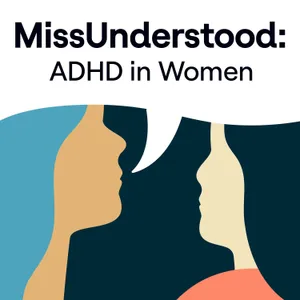
From Understood, this is The ADHD Channel for Women — the first-ever podcast channel for women with ADHD. For decades, women with ADHD have been overlooked and undiagnosed. That’s finally beginning to change. But there’s still so far to go. That’s where The ADHD Channel for Women comes in. We’re a channel made by women with ADHD, for women with ADHD. And we’re talking about the things we want to hear. Women with ADHD need (good!) information, smart takes on ADHD topics, and so much more. Hang out with Cate Osborn and guests as they discuss ADHD, relationships, and sex on Sorry, I Missed This. Get answers to ADHD questions you didn’t know you had from Dr. Monica Johnson on ADHD and…. Or join journalist Rae Jacobson on Hyperfocus for deep dives, personal stories, and real talk about neurodivergence.
Latest Episodes
The most recent episodes — sign up to get AI-powered summaries of each one.
- Yesterday9 min
ADHD and narcissism: Why you keep getting called selfish
Ever been called selfish or a narcissist when you were trying your best? Some ADHD behaviors can look like narcissism from the outside: Interrupting, forgetting an important date, missing social cues, or talking at length about something you’re hyperfocused on can make it seem like you don’t care. But the behavior and the intention don’t always match.Licensed psychologist Dr. J explains what narcissistic personality disorder, or NPD, actually is, and why diagnosing it takes a full clinical evaluation, not an online checklist. Research suggests that for many adults with ADHD, the feeling of empathy is there, but executive function challenges can make it harder to show.Dr. J also covers what to do if someone calls you a narcissist: how to pause, ask yourself honest questions, and take real feedback seriously without accepting a label that doesn’t fit. Intentions don’t erase impact, and accountability isn’t the same as shame.For more on this topic Listen: ADHD and autism: Do I have AuDHD?Watch: ADHD and avoidance: Why you resist things you actually want to doFor a transcript and more resources, visit The ADHD Channel for Women on Understood.org. You can also email us at podcast@understood.org. Understood is a nonprofit where millions of people who are navigating neurodivergence find clear guidance, practical tools, and people who get it. To help us continue this work, donate at understood.org/podcast-donate. Hosted by Simplecast, an AdsWizz company. See pcm.adswizz.com for information about our collection and use of personal data for advertising.
- 1 weeks ago31 min
The ADHD safety net hiding inside a kink power dynamic | Sorry, I Missed This
Kink isn’t required to get something real out of a power dynamic. And for ADHD brains, it might be more than you’d expectSex and relationship coach Amanda Dames — The Kink Consultant — joins the show to talk about power dynamics and what dominance and submission can actually offer neurodivergent relationships once the stigma gets stripped away. Amanda and Cate start with the basics: what a power dynamic is, why it’s a negotiated role-play and not a real transfer of power, and how submission can function as agency rather than its opposite. From there, the conversation moves into what this looks like day to day — including a partner who quietly set household rules that ended up calming years of ADHD-driven chaos. And then into harder territory: the difference between structure that helps and control that doesn’t, how to tell the two apart, and what aftercare (a kink community staple) can offer any couple, kinky or not, after a hard moment.For more on this topicWatch: Kink, BDSM, and ADHD | Sorry, I Missed ThisWatch: Why neurodivergent women can’t stop reading smut and romantasy | Sorry, I Missed ThisWatch: Why good sex can make your ADHD brain spiral | Sorry, I Missed ThisFor a transcript and more resources, visit Sorry, I Missed This on Understood.org. You can also email us at podcast@understood.org. As kids head back to school, it's a good time to remember: not every student experiences the classroom the same way. Through My Eyes, a free interactive experience from Understood, lets you step into a day in the life of a kid with ADHD, dyslexia, or dyscalculia. See their strengths and challenges in a whole new way. Try it out here.Understood is a nonprofit where millions of people who are navigating neurodivergence find clear guidance, practical tools, and people who get it. To help us continue this work, donate at understood.org/give. Hosted by Simplecast, an AdsWizz company. See pcm.adswizz.com for information about our collection and use of personal data for advertising.
- 2 weeks ago15 min
ADHD and PMDD: why symptoms spike before your period (and what helps)
Some weeks you can handle anything. Then, seemingly overnight, everything feels impossible. Your mood. Your focus. Your patience with yourself. If that shift keeps landing the same week of your cycle, it might not just be PMS.In this episode, Dr. J — a licensed psychologist who works with people with ADHD — breaks down premenstrual dysphoric disorder. PMDD, a diagnosis recognized in the DSM-5-TR, goes well beyond typical PMS and shows up disproportionately in women with ADHD. Research suggests that 31–46% of women with ADHD also meet criteria for PMDD. And the overlap isn’t a coincidence. Both ADHD and PMDD are tied to dopamine regulation and sensitivity to hormonal shifts.Dr. J walks through what actually separates PMDD from PMS and why it so often goes undiagnosed. She also looks at what’s happening in the brain during the luteal phase — including why your ADHD symptoms, and even your medication, can feel different that week. And she offers practical, evidence-based strategies to make PMDD more manageable, like:Symptom trackingAdjusting diet and exerciseTalking to your provider about medication timingPlanning your schedule around your cyclePlus building the kind of self-compassion that makes hard weeks survivable instead of shameful.If you’ve ever felt like you lose yourself for a week every month, this one’s for you.For more on this topic Listen: ADHD and hormones Read: A guide to hormones and ADHD Watch: PMDD: Why women with ADHD are 4x more likely to struggle | HyperfocusFor a transcript and more resources, visit The ADHD Channel for Women on Understood.org. You can also email us at podcast@understood.org. As kids head back to school, it's a good time to remember: not every student experiences the classroom the same way. Through My Eyes, a free interactive experience from Understood, lets you step into a day in the life of a kid with ADHD, dyslexia, or dyscalculia. See their strengths and challenges in a whole new way. Try it out here.Understood is a nonprofit where millions of people who are navigating neurodivergence find clear guidance, practical tools, and people who get it. To help us continue this work, donate at understood.org/give. Hosted by Simplecast, an AdsWizz company. See pcm.adswizz.com for information about our collection and use of personal data for advertising.
- 3 weeks ago30 min
I’ve never felt like a good woman: ADHD and femininity | Sorry, I Missed This
In this episode, a complex conversation about ADHD, femininity, gender, and why talking about the hard stuff is important.Cate sits down with Rae Jacobson, host of Understood.org’s Hyperfocus podcast, journalist, and a producer on this show. They talk about something they’ve both struggled to name: the collision between ADHD, femininity, and gender expression. They dig into what it felt like to watch other girls “get it.” The tidiness. The calm. The effortlessness. All things that executive dysfunction made feel out of reach. They talk about the pressure to be nurturing, organized, and endlessly available — and what happens when your brain doesn’t cooperate with any of it. And they look at the research on outcomes for women and girls with ADHD.For more on this topicWatch: The “devastating” findings of a decades-long ADHD studyWatch: Head, heart, hormones: Why women’s ADHD care should treat the whole person For a transcript and more resources, visit Sorry, I Missed This on Understood.org. You can also email us at sorryimissedthis@understood.org. As kids head back to school, it's a good time to remember: not every student experiences the classroom the same way. Through My Eyes, a free interactive experience from Understood, lets you step into a day in the life of a kid with ADHD, dyslexia, or dyscalculia. See their strengths and challenges in a whole new way. Try it out here.Understood.org is a nonprofit organization dedicated to empowering people with learning and thinking differences, like ADHD and dyslexia. If you want to help us continue this work, donate at understood.org/give Hosted by Simplecast, an AdsWizz company. See pcm.adswizz.com for information about our collection and use of personal data for advertising.
- 4 weeks ago10 min
ADHD and autism: Do I have AuDHD?
If you’ve been seeing AuDHD everywhere online and wondering if it might describe you, you’ve come to the right place. What does it actually mean to have both ADHD and autism? Dr. J breaks down where these two conditions overlap, where they diverge, and why so many people are recognizing themselves in this label for the first time. We cover shared traits, what AuDHD can feel like day to day, and how to know when it’s time to talk to a professional about diagnosis.For more on this topicRead: What is AuDHD?Watch: ADHD and justice sensitivity: Why you can’t just “let it go”For a transcript and more resources, visit The ADHD Channel for Women on Understood.org. You can also email us at podcast@understood.org. As kids head back to school, it's a good time to remember: not every student experiences the classroom the same way. Through My Eyes, a free interactive experience from Understood, lets you step into a day in the life of a kid with ADHD, dyslexia, or dyscalculia. See their strengths and challenges in a whole new way. Try it out here.Understood.org is a nonprofit organization dedicated to empowering people with learning and thinking differences, like ADHD and dyslexia. If you want to help us continue this work, donate at understood.org/give Hosted by Simplecast, an AdsWizz company. See pcm.adswizz.com for information about our collection and use of personal data for advertising.
- Sep 3, 202623 min
The brain is the last frontier of privacy. And you’re the target. | Hyperfocus
Your smartwatch tracks your steps and your pulse. Soon, devices like it could track your brainwaves, and even tell if the wearer is neurodivergent. Brain-monitoring wearables that purport to help with focus, sleep, and even ADHD are already being sold online. This is called “neurotechnology,” and it’s a fast-moving market with almost zero regulation. Stephen Damianos of the Neurorights Foundation joins us to unpack the potential promise — and dangers — of this emerging technology. We discuss the unique risks it poses for neurodivergent people, and why your brain data might be the most valuable, and least protected, information you own. For more on this topic Explore: The Neurorights Foundation Watch: Is “ring of fire” ADHD real? For a transcript and more resources, visit Hyperfocus on Understood.org. You can also email us at hyperfocus@understood.org. As kids head back to school, it's a good time to remember: not every student experiences the classroom the same way. Through My Eyes, a free interactive experience from Understood, lets you step into a day in the life of a kid with ADHD, dyslexia, or dyscalculia. See their strengths and challenges in a whole new way. Try it out here.Understood.org is a nonprofit organization dedicated to empowering people with learning and thinking differences, like ADHD and dyslexia. If you want to help us continue this work, donate at understood.org/give Hosted by Simplecast, an AdsWizz company. See pcm.adswizz.com for information about our collection and use of personal data for advertising.
- Aug 27, 202627 min
An Emmy winner’s trick for ADHD idea overload (Live show!) | Sorry, I Missed This
We recorded our first-ever live show in front of a studio audience! Emmy Award–winning writer, director, and producer Adam Reid, co-creator of “Tiny Chef,” joined Cate to talk about ADHD creativity: what works, what doesn’t, when to dig in, when to let things go, and why finishing things isn't always the point. Adam talked candidly about being diagnosed with ADHD at 45, after years of building an Emmy-winning creative career without knowing why his brain worked the way it did. And he and Cate shared how they make it work (or not) as neurodivergent creators. Check it out! For more on this topic Read: ADHD and creativity Watch: Cate answers your burning ADHD questions For a transcript and more resources, visit Sorry, I Missed This on Understood.org. You can also email us at sorryimissedthis@understood.org. As kids head back to school, it's a good time to remember: not every student experiences the classroom the same way. Through My Eyes, a free interactive experience from Understood, lets you step into a day in the life of a kid with ADHD, dyslexia, or dyscalculia. See their strengths and challenges in a whole new way. Try it out here.Understood.org is a nonprofit organization dedicated to empowering people with learning and thinking differences, like ADHD and dyslexia. If you want to help us continue this work, donate at understood.org/give Hosted by Simplecast, an AdsWizz company. See pcm.adswizz.com for information about our collection and use of personal data for advertising.
- Aug 25, 202612 min
ADHD and justice sensitivity
Why do small unfairnesses hit some people so much harder? Dr. J breaks down justice sensitivity: The intense reaction to perceived wrongdoing that’s especially common in ADHD and AuDHD brains. Learn about the four types of justice sensitivity, why emotional dysregulation, hyperfocus, and impulsivity make it stronger, and how lived experience shapes it. Plus, practical in-the-moment and long-term strategies to channel your sense of fairness — without burning out or blowing up. For more on this topic Watch: ADHD and avoidance: Why you resist things you actually want to do Listen: ADHD and rejection sensitivity For a transcript and more resources, visit The ADHD Channel for Women on Understood.org. You can also email us at podcast@understood.org. As kids head back to school, it's a good time to remember: not every student experiences the classroom the same way. Through My Eyes, a free interactive experience from Understood, lets you step into a day in the life of a kid with ADHD, dyslexia, or dyscalculia. See their strengths and challenges in a whole new way. Try it out here.Understood.org is a nonprofit organization dedicated to empowering people with learning and thinking differences, like ADHD and dyslexia. If you want to help us continue this work, donate at understood.org/give Hosted by Simplecast, an AdsWizz company. See pcm.adswizz.com for information about our collection and use of personal data for advertising.
Get The ADHD Channel for Women summaries in your inbox
Free AI-powered daily recaps. Key takeaways, quotes, and mentions — in a 5-minute read.
Get Free Summaries →Free forever for up to 3 podcasts. No credit card required.
You Might Also Like
Listeners also like.

ADHD for Smart Ass Women with Tracy Otsuka
Explores the strengths and brilliance of ADHD in high-ability women, helping them embrace their unique brains and thrive.

Imperfect Love
A psychologist answers real-life questions on love, self-acceptance, and personal growth using a mindfulness-based approach.

Ready For Love with Hilary Silver
A therapist examines how women can reclaim self-trust and reshape their lives by changing internal beliefs and patterns.
Dysregulated Kids: Science-Backed Parenting Help for Behavior, Anxiety, ADHD and More
A therapist explains the brain science behind children's behavioral and emotional challenges and offers research-based parenting strategies.

How Hard Can It Be? with Diana Maria Riva
A weekly conversation for GenX women navigating midlife challenges, from empty nesting to self-identity, with humor and honesty.
Mind If We Talk?
Two people share raw, intimate conversations about emotional struggles while a therapist guides understanding and growth.
ResponseABLE Parenting
A podcast helping parents understand their reactions and develop mindful, effective strategies for raising strong-willed children.

The Tamsen Show
A journalist explores health, reinvention, and relationships with experts and women reshaping their lives.

The Happy Women Podcast
Two women share inspiring stories and discuss politics, pop culture, and lifestyle tips to improve communities and society.

Everyday Wellness: Midlife Hormones, Menopause, and Science for Women 35+
A nurse practitioner shares science-based strategies for managing midlife hormones, menopause, and women's health.

Cultivating H.E.R. Space: Uplifting Conversations for the Black Woman
Black women discuss healing, empowerment, and resilience through honest weekly talks on health, relationships, and personal growth.

Hello Hormones with Dr. Carrie Jones
A functional medicine doctor explains how hormonal changes affect women’s health and offers science-based solutions to manage symptoms.
About The ADHD Channel for Women
From Understood, this is The ADHD Channel for Women — the first-ever podcast channel for women with ADHD. For decades, women with ADHD have been overlooked and undiagnosed. That’s finally beginning to change. But there’s still so far to go. That’s where The ADHD Channel for Women comes in. We’re a channel made by women with ADHD, for women with ADHD. And we’re talking about the things we want to hear. Women with ADHD need (good!) information, smart takes on ADHD topics, and so much more. Hang out with Cate Osborn and guests as they discuss ADHD, relationships, and sex on Sorry, I Missed This. Get answers to ADHD questions you didn’t know you had from Dr. Monica Johnson on ADHD and…. Or join journalist Rae Jacobson on Hyperfocus for deep dives, personal stories, and real talk about neurodivergence.
Customized Recaps
AI-powered recaps with compact key takeaways, quotes, and insights.
Straight to Your Inbox
Get key takeaways from The ADHD Channel for Women in a 5-minute read.
Save Hours Every Week
Stay current on your favorite podcasts without falling behind.
Frequently Asked Questions
What is Podzilla's The ADHD Channel for Women daily summary?
It's a free AI-powered email that summarizes new episodes of The ADHD Channel for Women as soon as they're published. You get the key takeaways, notable quotes, and links & mentions — all in a quick read.
How does the The ADHD Channel for Women podcast summary work?
When a new episode drops, our AI transcribes and analyzes it, then generates a personalized summary tailored to your interests and profession. It's delivered to your inbox every morning.
Is this an official The ADHD Channel for Women product?
No. Podzilla is an independent service that summarizes publicly available podcast content. We're not affiliated with or endorsed by Understood.org.
Can I get summaries of other podcasts too?
Absolutely! The free plan covers up to 3 podcasts. Upgrade to Pro for 15, or Premium for 50. Browse our full catalog at /podcasts.
How often does The ADHD Channel for Women release new episodes?
The ADHD Channel for Women publishes 2x weekly. Our AI generates a summary within hours of each new episode.
What topics does The ADHD Channel for Women cover?
The ADHD Channel for Women covers topics including Education, Fitness, Health & Fitness, Mental Health, Self-Improvement. Our AI identifies the specific themes in each episode and highlights what matters most to you.
Start getting The ADHD Channel for Women summaries tomorrow morning.
Free forever for up to 3 podcasts. No credit card required.
Free forever for up to 3 podcasts. No credit card required.