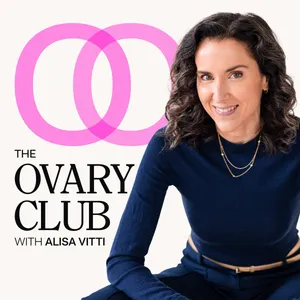
Free Daily Podcast Summary
The Ovary Club with Alisa Vitti: Daily Summaries Delivered
by Moxie Media
Welcome to The Ovary Club with me, Alisa Vitti, your source for women's hormone truth from someone who's been pioneering this conversation for over 20 years. If you want to join the club, here's what you need to know: your ovaries are a key driver of how you feel, function and age. They track everything and it's time you start working with them. And no, your body doesn't operate like a man's, so your health strategy shouldn't either. That's why I'm here to help you deal with hormone symptoms naturally, slow hormonal aging, and biohack like a woman. Inside The Ovary Club, we do things differently. This is gender-specific science designed to help optimize your health through every decade of life. Why listen to me? I'm a women's hormone and functional nutrition expert, bestselling author of WomanCode and In the Flo, and the creator of the Cycle Syncing® Method and Flo Living. So if you're ready to join the club, consider this your invitation to fall in love with your amazing female body and start living in sync with your hormones.
Latest Episodes
The most recent episodes — sign up to get AI-powered summaries of each one.
- 5 days ago58 min
23: How to Eat for Your Hormones Without Making Food Miserable with Giada De Laurentiis
Food is one of the most powerful tools we have for hormonal health, and somehow it has become one of the most confusing. Protein targets, fasting windows, carbs, fats, blood sugar, meal timing, supplements, food quality... women are trying so hard to get it "right" that eating can start to feel like another full-time job. And somewhere in all of that advice, we have lost the part where food is supposed to taste good, fit into an actual life, and be something we enjoy. In this episode of The Ovary Club, I sit down with Giada De Laurentiis to make eating for your hormones feel practical again. We get into what happens when the way you have always eaten no longer feels like it is working for your body, why hormone health is about more than simply choosing "healthy" foods, and how to build an approach to eating that can actually survive a busy life, travel, restaurants, family, and everything else women are carrying. Most importantly, we talk about how to do all of that without taking the joy out of food in the process. Giada De Laurentiis is an Emmy Award-winning chef, nine-time New York Times bestselling cookbook author, and one of the most recognizable culinary voices in the world. Born in Rome and trained at Le Cordon Bleu in Paris, she brings a perspective on food that has always gone far beyond calories and macros. This conversation brings that philosophy into the hormone conversation, and into the very real question so many women are asking: How do I eat in a way that supports my body without making food miserable? What's Discussed: Why hormone changes can begin in your early 40s even when standard lab results still appear "normal." Why eating foods that seem healthy may still leave blood sugar, cholesterol, inflammation, and energy moving in the wrong direction. How fasting and meal timing can work against some women in midlife instead of supporting their metabolism. How protein, carbohydrates, fats, and the way meals are structured can change metabolic health. Why fiber becomes especially important for digestion, gut health, and estrogen metabolism in menopause. Why HRT can be helpful without replacing the nutrition and lifestyle foundations your body still needs. How to eat for your hormones without turning food into restriction, perfectionism, or another source of stress. Free Guide: The 90-Day Reset Roadmap: Most women quit fixing their hormones right before it actually works, because nobody told them what to expect. Your body works in cycles, not days, so real change shows up over about three of them. I mapped it out month by month in a guide called the 90-Day Reset Roadmap, so you know exactly what is normal and when to expect the shift. Get it free here: alisavitti.kit.com/ Learn More About Alisa Vitti: Instagram: @alisa.vitti Website: alisavitti.kit.com Learn More About Giada De Laurentiis: Instagram: @giadadelaurentiis Website: giadzy.com & giadadelaurentiis.com Books: https://www.giadadelaurentiis.com/books
- 1 weeks ago1h 10m
22: Why Broken Sleep After 40 Is Not Something You Should Accept with Dr. Andrea Matsumura
If you are waking up at 3 a.m. every night, getting enough hours but still feeling exhausted, or suddenly having trouble sleeping when you never used to, please stop writing it off as "just perimenopause." Yes, your hormones are changing. But that does not mean every sleep problem after 40 should automatically get blamed on hormones and left there. Women can have real sleep disorders in midlife that show up very differently than the symptoms most doctors were trained to look for. In this episode of The Ovary Club, Dr. Andrea Matsumura and I unpack why broken sleep after 40 is more complicated than "your hormones are changing," and why so many women are still not getting the right answers. We talk about the sleep problems that are commonly missed in midlife, what your 3 a.m. wake-up may actually be telling you, and why some of the most popular sleep fixes may not be helping the way you think they are Dr. Andrea Matsumura is a board-certified sleep medicine physician, certified menopause practitioner, and founder of the D.R.E.A.M. Sleep Method. She has built her work around something that should have happened a long time ago: looking at women's sleep through female physiology. Her framework considers daily habits, your sleep environment, emotions, circadian archetype, and the medical conditions that can quietly keep women from getting restorative sleep. What's Discussed Why estrogen changes can disrupt the melatonin signal helping you stay asleep. The four-part sleep pattern Dr. Matsumura keeps seeing in women entering menopause. What may really be happening behind the 3 a.m. wake-up. Why women with sleep apnea often do not look like the sleep apnea patient you are picturing. Why your own melatonin production can take a major hit by midlife. The problem with taking high-dose melatonin right before bed. What to ask when you know your sleep is not normal but no one has investigated it. If you are doing all the "right" things and still waking up exhausted, this conversation will give you a very different way to look at what might be going on. Thank You to Our Sponsors: FLOLiving: Get 25% off with the code podcast25 at floliving.com The 90-Day Reset Roadmap: Most women quit fixing their hormones right before it actually works, because nobody told them what to expect. Your body works in cycles, not days, so real change shows up over about three of them. I mapped it out month by month in a guide called the 90 Day Reset Roadmap, so you know exactly what's normal, and when to expect the shift. Get it for free here: https://alisavitti.kit.com/e9c34804dc Learn more about Alisa Vitti: Instagram: alisa.vitti Website: alisavitti.kit.com Learn more about Dr. Andrea Matsumura: Website: andreamatsumuramd.com Instagram: @drandreamatsumura YouTube: @DrAndreaMatsumura
- 2 weeks ago45 min
21: 5 Fertility Biohacks That Actually Work After 35 From a Women's Hormone Expert
If you have ever been told, "Well, you are over 35," as if that is the end of the fertility conversation, I need you to hear this episode. Of course age matters. I am not arguing with biology. But there is another piece of fertility that I pay very close attention to, and it can tell us so much more about what is actually happening with your ovaries than the number on your birthday cake. I have lived this myself. I had PCOS, was told when I was younger that having children could be very difficult for me, conceived my first daughter at 37, and had my second two months after turning 44. None of that happened because I found some magic fertility trick at the last minute. There were very specific things I had been doing for years to support my hormones, my ovaries, and my fertility, and in this episode I am walking you through the five biohacks I believe made the biggest difference. So whether you are trying to conceive right now, getting ready for IVF, coming back from a loss, or sitting there thinking, "I definitely want kids someday, just not yet," this conversation is for you. We are getting into the things I wish more women were told to think about before fertility becomes urgent, including a few that probably are not even on your radar yet. What's Discussed: Why your chronological age is not the only age that matters for fertility. My own fertility story and what I had been doing long before I was ready to conceive. Why fertility is much more than simply whether or not you ovulate. The difference between taking a prenatal and actually preparing your ovaries for conception. The fertility biohack most women would never think to put on their preconception list. Why some of the "healthy" habits women are following may actually work against fertility. The overlooked nighttime factor that can change what happens hormonally in your next cycle. If becoming a mom is something you want now or someday, I do not want you waiting until you are actively trying to start thinking about your fertility. There is so much more to this conversation than age, and that is exactly what we are getting into in this episode. Thank You to Our Sponsors: Veracity: Veracity's Metabolism Ignite is a great alternative to GLP-1s. Code INTHEFLO20 gets you 20% off: tinyurl.com/ Learn more about Alisa Vitti: Instagram: alisa.vitti Website: alisavitti.kit.com
- 3 weeks ago42 min
20: The Science Behind Your Libido + Why It Changes Across Your Cycle and Perimenopause
In your 40s, libido can start feeling completely unfamiliar. One week you cannot keep your hands off your partner. The next, they initiate and you would genuinely rather finish your to-do list. And suddenly your brain goes there: Am I not attracted to them anymore? Is something wrong with our relationship? Why do I feel so different? This is where understanding female biology can save us from making a hormonal shift mean something it may not mean at all. Desire changes across the menstrual cycle, and the way it shows up can change again during perimenopause. Sometimes it is spontaneous. Sometimes your body needs touch, connection, foreplay, emotional safety, or simply enough space to get out of your head and back into your body. In this solo episode of The Ovary Club, I am breaking down what happens to female desire across your cycle and through perimenopause, what your libido can reveal about your overall health, and the unexpected ways to support it in midlife. And no, this is not another conversation telling you to put on some lingerie and "get in the mood." We are going much deeper than that. What's Discussed: Why your sex drive is not supposed to feel the same throughout the month. Spontaneous vs. responsive desire and why confusing the two can create unnecessary relationship worry. Why lubrication naturally changes across the cycle. What libido can reveal about your overall health. What desire may look like during each phase of your cycle. Unexpected ways to support libido and sexual response. The everyday habits that can quietly shut desire down. Thank you to our sponsor: Veracity: Veracity's Metabolism Ignite is a great alternative to GLP-1s. Code INTHEFLO20 gets you 20% off: https://tinyurl.com/2pxh4j5r Free Guide: The 90-Day Reset Roadmap: Most women quit fixing their hormones right before it actually works, because nobody told them what to expect. Your body works in cycles, not days, so real change shows up over about three of them. I mapped it out month by month in a guide called the 90-Day Reset Roadmap, so you know exactly what's normal, and when to expect the shift. Get it for free here: alisavitti.kit.com/ Learn more about Alisa Vitti: Instagram: alisa.vitti Website: alisavitti.kit.com
- Sep 1, 202655 min
19: The Cortisol Loop Hijacking Your Hormones with Dr. Taz Bhatia
Stress is often presented to women as a vague explanation for symptoms no one has investigated deeply enough. You are exhausted, anxious, unable to sleep, gaining weight, or noticing that your cycle has changed, and the conversation ends with advice to relax. But what if stress is not the end of the explanation? What if it is the beginning of a physiological loop affecting nearly every system involved? In this episode of The Ovary Club, I sit down with Dr. Taz Bhatia to examine what happens when a healthy stress response stops resolving and cortisol begins running the show. We trace the progression from feeling constantly activated to disrupted sleep, unstable blood sugar, low progesterone, sluggish thyroid function, inflammation, burnout, and chronic disease. We also explore why ignoring your intuition can become a stress input of its own, what cortisol testing can and cannot reveal, and how to build a recovery plan without overwhelming an already overwhelmed body. Dr. Taz Bhatia is a triple board-certified integrative medicine physician, bestselling author of Super Woman Rx and The Hormone Shift, and founder of hol+. Her clinical approach combines Western medicine with Chinese medicine, Ayurveda, nutrition, emotional health, and nervous-system regulation to identify the individual drivers keeping each patient stuck. Want to go deeper with this episode? Get my free guide to stress-proofing your hormones: https://alisavitti.kit.com/55777c884d What's Discussed: What separates ordinary stress from the cortisol loop and why the body can become unable to switch it off. How cortisol dysfunction progresses from constant activation to reversed rhythms, daytime exhaustion, insomnia, and hormone disruption. The hidden cortisol inputs women may overlook, including the physiological cost of repeatedly ignoring their intuition. Why chronic stress affects women differently and how cortisol can drive androgens, blood sugar instability, weight gain, PMOS, and difficult perimenopause symptoms. How cortisol interferes with progesterone, thyroid function, insulin, testosterone, ovulation, and the wider hormonal axis. The tests and personal data that may help reveal cortisol dysregulation when a standard laboratory panel appears normal. How Dr. Taz sequences recovery and the practical routines that help women begin breaking the loop without adding more pressure. Thank You to Our Sponsors: FLO Living supplements: Get 25% off with the code podcast25 at floliving.com Free Guide: The 90-Day Reset Roadmap: Most women quit fixing their hormones right before it actually works, because nobody told them what to expect. Your body works in cycles, not days, so real change shows up over about three of them. I mapped it out month by month in a guide called the 90-Day Reset Roadmap, so you know exactly what's normal, and when to expect the shift. Get it for free here: alisavitti.kit.com/ Learn more about Alisa Vitti: Instagram: @alisa.vitti Website: alisavitti.kit.com Learn More About Dr. Taz Bhatia: Website: doctortaz.com hol+: holplus.co Instagram: @drtazmd
- Aug 25, 202636 min
18: The Muscle-Hormone Connection Every Woman Needs to Know
For years, women have been told to focus on the number on the scale. We count calories, spend hours doing cardio, and chase smaller bodies, believing weight is the biggest marker of health. But one of the most powerful things a woman can do for her hormones has very little to do with losing weight. It has everything to do with building muscle. Muscle is far more than strength or appearance. It helps regulate blood sugar, supports insulin sensitivity, lowers inflammation, protects ovarian function, and influences everything from PMS and fertility to perimenopause and healthy aging. In this solo episode of The Ovary Club, I explain why muscle may be the missing piece behind stubborn weight, cravings, fatigue, mood swings, hormone symptoms, and metabolic dysfunction. I also share the simple strength training approach every woman can start, no matter how busy life feels. If you've ever wondered why eating well and doing more cardio still hasn't given you the results you expected, this episode may completely change the way you think about women's health. Want to go deeper with this episode? Insiders get to submit questions and receive monthly Q&As directly from Alisa. Join here: alisavitti.kit.com/products/the-ovary-club What's Discussed: Why muscle is one of the body's most important organs for hormone health. The connection between muscle, blood sugar, insulin, and ovarian function. How muscle may help slow ovarian aging and reduce inflammation. Why women with more muscle often experience fewer hormone symptoms during perimenopause. The surprising signs you may have lower muscle mass than you realize. The minimum amount of strength training research shows women actually need. How protein, creatine, and progressive overload help support muscle and hormone health. Thank You to Our Sponsors: FLO Living (supplement): Get 25% off with the code podcast25 at floliving.com Free Guide: The 90-Day Reset Roadmap: Most women quit fixing their hormones right before it actually works, because nobody told them what to expect. Your body works in cycles, not days, so real change shows up over about three of them. I mapped it out month by month in a guide called the 90-Day Reset Roadmap, so you know exactly what's normal, and when to expect the shift. Get it for free here: https://alisavitti.kit.com/e9c34804dc Learn more about Alisa Vitti: Instagram: alisa.vitti Website: alisavitti.kit.com
- Aug 18, 202654 min
17: The Thyroid Problem Hiding Behind Your Hormone Symptoms with Dr. Amie Hornaman
By the time perimenopause begins, fatigue, stubborn weight changes, irregular cycles, low progesterone, low mood, and fertility struggles can all be folded into the same explanation: hormones are changing. But what if some of the symptoms women are taught to expect during this transition are also pointing to a gland that rarely gets included in the conversation? Most women hear about the thyroid in relation to metabolism, yet its reach extends through the cycle, ovaries, ovulation, progesterone, fertility, and the wider endocrine system. In this episode of The Ovary Club, I sit down with Dr. Amie Hornaman to uncover why thyroid dysfunction can be hidden inside what looks like perimenopause, why having the thyroid checked is not always the same as having it fully evaluated, and what women may be missing when every symptom is treated as a separate problem. We also examine the surprising research connecting long-term hormonal contraceptive use with thyroid risk and the overlooked overlap Dr. Amie calls thyropause. Dr. Amie Hornaman is a functional medicine clinician, founder of the Advanced Thyroid and Hormone Clinic, host of the top-rated The Thyroid (and Hormone) Fixer Podcast, and author of The Thyroid Fix. Through her clinical work, she helps women investigate persistent symptoms, understand the thyroid markers that standard testing may leave out, and explore more individualized approaches to thyroid and hormone care. Want to go deeper with this episode? Insiders get to submit questions and receive monthly Q&As directly from Alisa. Join here: alisavitti.kit.com/products/the-ovary-club What's Discussed Why the thyroid belongs in the conversation about cycles, progesterone, fertility, and perimenopause. The first thyroid question Dr. Amie asks when hormone symptoms do not fully add up. The surprising link between long-term hormonal contraceptive use and thyroid risk. What can happen when the body is not converting thyroid hormone efficiently. What "thyropause" means and why it can overlap with perimenopause. Why some women continue to struggle even after starting thyroid treatment. The thyroid markers that may reveal what a basic panel leaves unanswered. Thank You to Our Sponsor: FLO Living (supplement): Get 25% off with the code podcast25 at floliving.com Free Guide: The Lab Request Checklist: Struggling with hormonal issues that you just can't figure out? Get the exact labs to ask your doctor for so you can measure progress instead of guessing. alisavitti.kit.com/ Learn more about Alisa Vitti: Instagram: @alisa.vitti Website: alisavitti.kit.com/ Learn more about Dr. Amie Hornaman Website: dramie.com The Thyroid Fix book: thyroidfixbook.com Instagram: @dramiehornaman Facebook: facebook.com/groups/dramie YouTube: youtube.com/dramiehornaman TikTok: @dramiehornaman 7-Day Thyroid Healing Kickstarter: fixyourthyroid.com/7daykickstarter
- Aug 11, 202636 min
16: The Questions Women Are Asking About Hormones Over 35, Answered by Women's Hormone Health and Functional Nutrition Expert
Could the workout clothes you wear be affecting your hormones? Can you reverse perimenopause? What does a sudden chin breakout after 35 reveal about your hormonal health? And why can ADHD symptoms feel harder to manage before your period? In this solo Q&A, I'm answering questions submitted by Ovary Club Insiders about the hormone concerns so many women are trying to make sense of. We're talking about synthetic fabrics and endocrine disruptors, ovarian aging, fertility with low AMH or one ovary, hormonal acne, recurring yeast infections and UTIs, creatine for women, and the connection between ADHD symptoms and the luteal phase. I'll help you connect these concerns to the systems involved, including estrogen, progesterone, ovarian reserve, blood sugar, muscle mass, sleep, gut and vaginal health, and dopamine. You'll leave with a clearer understanding of what may be happening in your body, what to start tracking, and which supportive steps may be worth exploring. Want to go deeper with this episode? Insiders get to submit questions and receive monthly Q&As directly from Alisa. Join here: alisavitti.kit.com/products/the-ovary-club What's Discussed 00:05 Can synthetic workout clothes, lingerie, and other fabrics affect your hormones? 07:30 Can you reverse perimenopause, or support healthier ovarian aging? 13:10 Why chin acne can suddenly appear after 35. 21:50 Low AMH, fertility with one ovary, IVF, and natural conception. 29:35 Recurrent yeast infections, UTIs, and the vaginal microbiome. 37:30 Creatine for women: muscle, brain health, and hormone changes after 35. 43:12 Why ADHD symptoms can become harder to manage during the luteal phase. Thank You to Our Sponsor: FLO Living (supplement): Get 25% off with the code podcast25 at http://floliving.com Free Guide: The 90-Day Reset Roadmap: Most women quit fixing their hormones right before it actually works, because nobody told them what to expect. Your body works in cycles, not days, so real change shows up over about three of them. I mapped it out month by month in a guide called the 90-Day Reset Roadmap, so you know exactly what's normal, and when to expect the shift. Get it for free here: alisavitti.kit.com/ Learn more about Alisa Vitti: Instagram: @alisa.vitti Website: alisavitti.kit.com/
Get The Ovary Club with Alisa Vitti summaries in your inbox
Free AI-powered daily recaps. Key takeaways, quotes, and mentions — in a 5-minute read.
Get Free Summaries →Free forever for up to 3 podcasts. No credit card required.
You Might Also Like
Listeners also like.

Hello Hormones with Dr. Carrie Jones
A functional medicine doctor explains how hormonal changes affect women’s health and offers science-based solutions to manage symptoms.
Live Like a Girl with Dr. Mindy Pelz
Dr. Mindy Pelz explores women's health through hormone science and wellness conversations to help women live in rhythm with their bodies.
Everyday Wellness: Midlife Hormones, Menopause, and Science for Women 35+
A nurse practitioner shares science-based strategies for managing midlife hormones, menopause, and women's health.

hol+ with Dr. Taz MD | The Future of Medicine is Holistic
A physician explores holistic health through the interconnected physical, mental, emotional, energetic, and social dimensions of wellness.

hol+ with Dr. Taz MD | The Future of Medicine is Holistic
Explores holistic health by connecting physical, mental, and emotional factors like hormones, inflammation, and stress with expert discussions.

SHE MD
Obstetrician Dr. Thais Aliabadi and women’s advocate Mary Alice Haney discuss women’s health issues with experts and celebrity guests.
The Thyroid (and Hormone) Fixer Podcast: Thyropause, Menopause, Metabolism and How to Fix It
A doctor explains science-based approaches to managing hypothyroidism and Hashimoto’s symptoms such as fatigue, weight gain, and brain fog.

Own Your Health
Katie Brindle discusses health, ageing, and wellness topics with expert insights and personal anecdotes to help listeners improve their well-being.
You Are Not Broken
Explores sex, hormones, and midlife for women with science, humor, and candid conversations about body and mind reconnection.
Treated with Dr. Sara Szal
Dr. Sara Szal explores holistic health solutions through conversations with experts and patients seeking mind, body, and soul healing.

Afterpause
Evidence-based guidance on menopause, hormone health, sleep, and metabolism from a certified wellness coach and women's health experts.
unPAUSED with Dr. Mary Claire Haver
A board-certified OB-GYN hosts candid discussions with experts and leaders on women's health, identity, and empowerment in midlife.
About The Ovary Club with Alisa Vitti
Welcome to The Ovary Club with me, Alisa Vitti, your source for women's hormone truth from someone who's been pioneering this conversation for over 20 years. If you want to join the club, here's what you need to know: your ovaries are a key driver of how you feel, function and age. They track everything and it's time you start working with them. And no, your body doesn't operate like a man's, so your health strategy shouldn't either. That's why I'm here to help you deal with hormone symptoms naturally, slow hormonal aging, and biohack like a woman. Inside The Ovary Club, we do things differently. This is gender-specific science designed to help optimize your health through every decade of life. Why listen to me? I'm a women's hormone and functional nutrition expert, bestselling author of WomanCode and In the Flo, and the creator of the Cycle Syncing® Method and Flo Living. So if you're ready to join the club, consider this your invitation to fall in love with your amazing female body and start living in sync with your hormones.
Customized Recaps
AI-powered recaps with compact key takeaways, quotes, and insights.
Straight to Your Inbox
Get key takeaways from The Ovary Club with Alisa Vitti in a 5-minute read.
Save Hours Every Week
Stay current on your favorite podcasts without falling behind.
Frequently Asked Questions
What is Podzilla's The Ovary Club with Alisa Vitti daily summary?
It's a free AI-powered email that summarizes new episodes of The Ovary Club with Alisa Vitti as soon as they're published. You get the key takeaways, notable quotes, and links & mentions — all in a quick read.
How does the The Ovary Club with Alisa Vitti podcast summary work?
When a new episode drops, our AI transcribes and analyzes it, then generates a personalized summary tailored to your interests and profession. It's delivered to your inbox every morning.
Is this an official The Ovary Club with Alisa Vitti product?
No. Podzilla is an independent service that summarizes publicly available podcast content. We're not affiliated with or endorsed by Moxie Media.
Can I get summaries of other podcasts too?
Absolutely! The free plan covers up to 3 podcasts. Upgrade to Pro for 15, or Premium for 50. Browse our full catalog at /podcasts.
How often does The Ovary Club with Alisa Vitti release new episodes?
The Ovary Club with Alisa Vitti publishes weekly. Our AI generates a summary within hours of each new episode.
What topics does The Ovary Club with Alisa Vitti cover?
The Ovary Club with Alisa Vitti covers topics including Nutrition, Fitness, Health & Fitness, Alternative. Our AI identifies the specific themes in each episode and highlights what matters most to you.
Start getting The Ovary Club with Alisa Vitti summaries tomorrow morning.
Free forever for up to 3 podcasts. No credit card required.
Free forever for up to 3 podcasts. No credit card required.